

Central America: A Quest for the Progression of Economic Value. Bonus-Season V. Episode 9. Sugar-Sugar America. Part 9. The Cuban Sugar Machine
Dear exceptional readers:
Today, we will continue our study and analysis of the Cuban Industry, focusing all our efforts to comprehend what ocurred between 1898 and 1912. Last week, we described the context of the island of Cuba from the point of view of the geopolitical circumstances. However, since slavery was officially abolished in the 1880s, Cuba spent certain years in the process of transition from slaves to free workers, and this new labor approach strategy was almost finished by the Spanish Crown when the War of Independence from Spain and the Spanish-American Wars started.
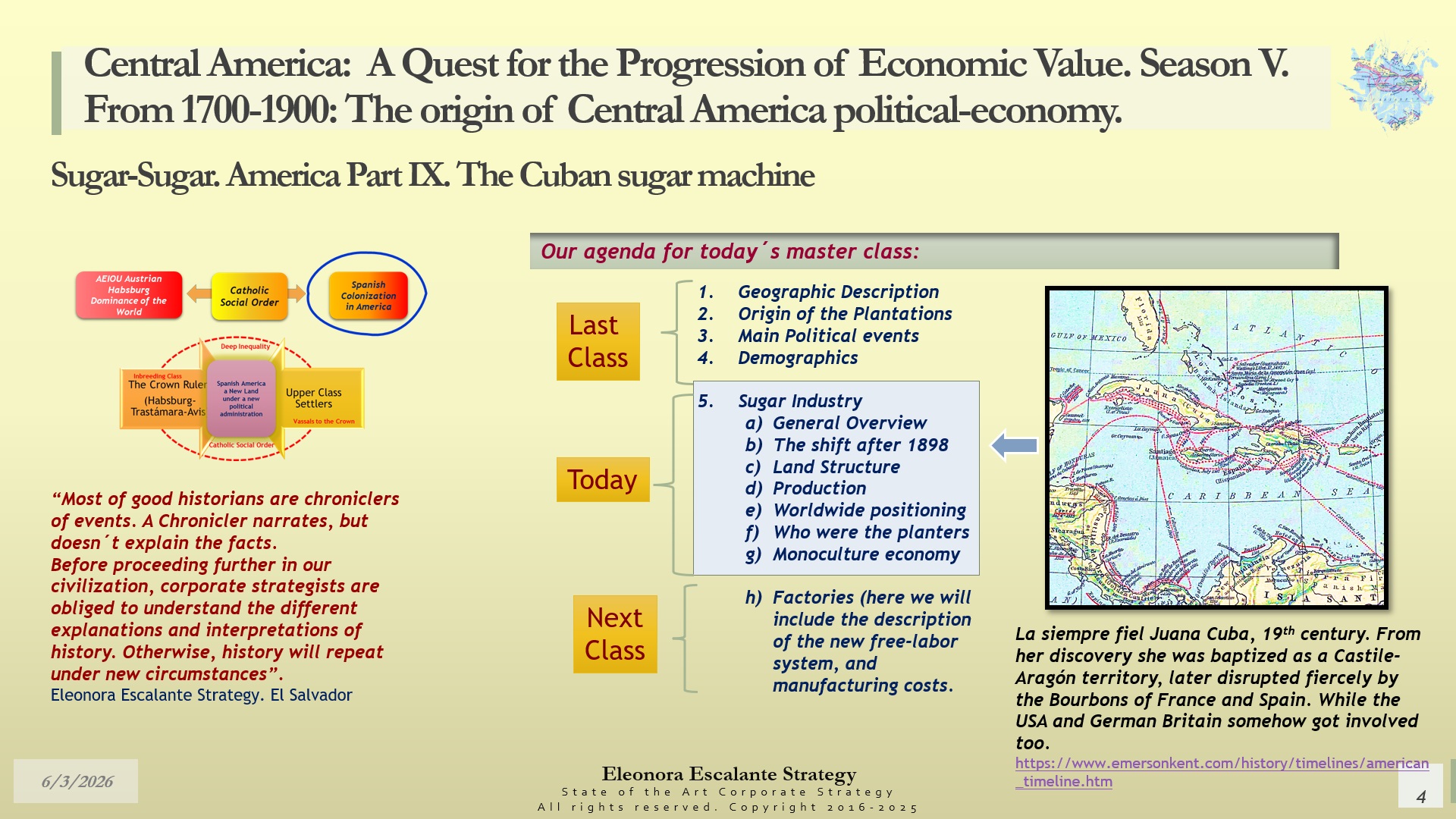
With the occupation of Cuba by the USA in 1898, there were multiple challenges and decisions for the Sugar planter class of Cuba. The war military forces of the USA directly accompanied Cuba´s transition into a Republic, first between 1898 and 1902, and then after 1906 for another three years. Our agenda for today´s master class is as follows:
Sugar Industry
1) General Overview
2) The shift after 1898
3) Land Structure
4) Production
5) Worldwide positioning
6) Who were the planters
7) Monoculture economy
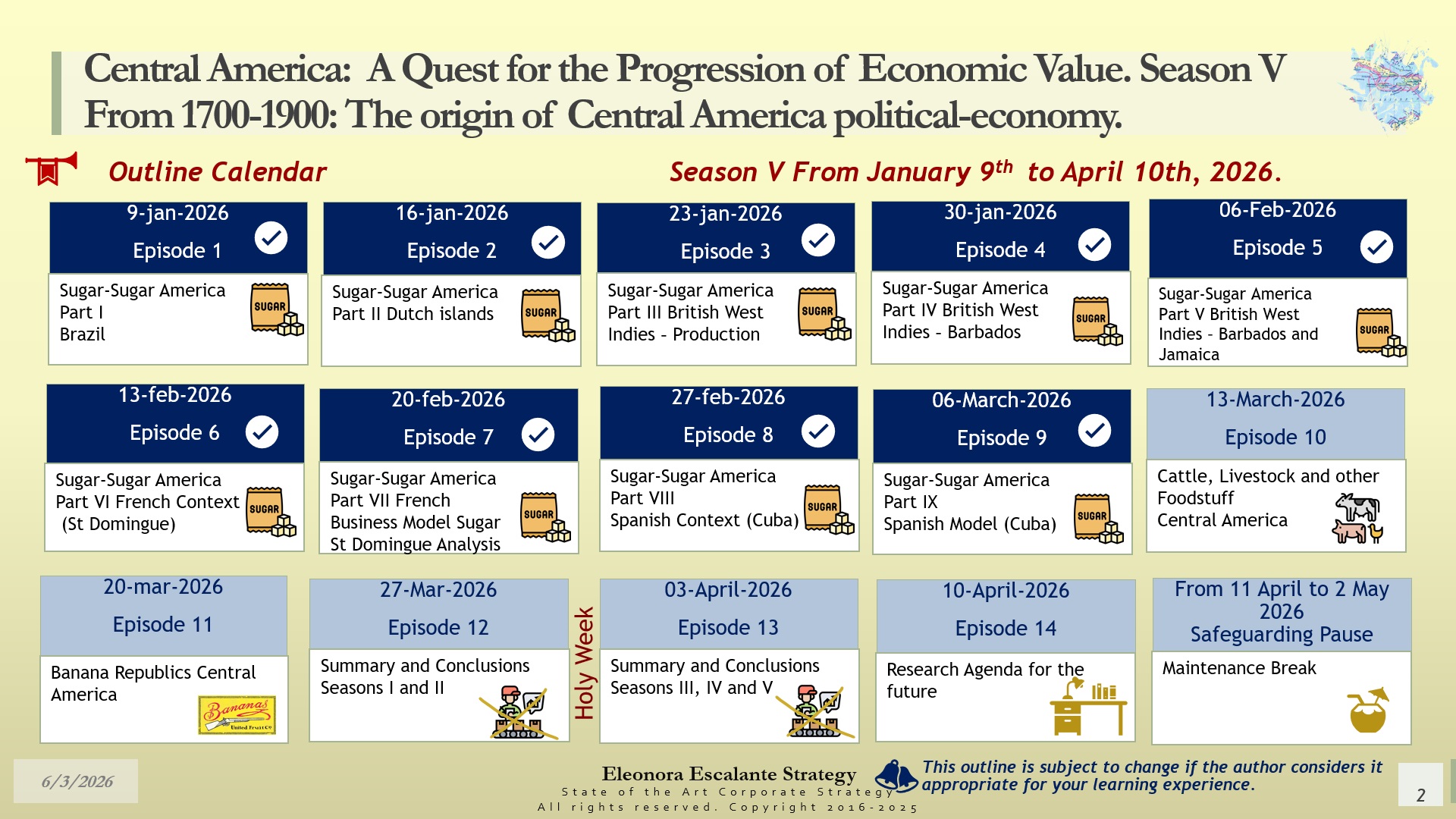
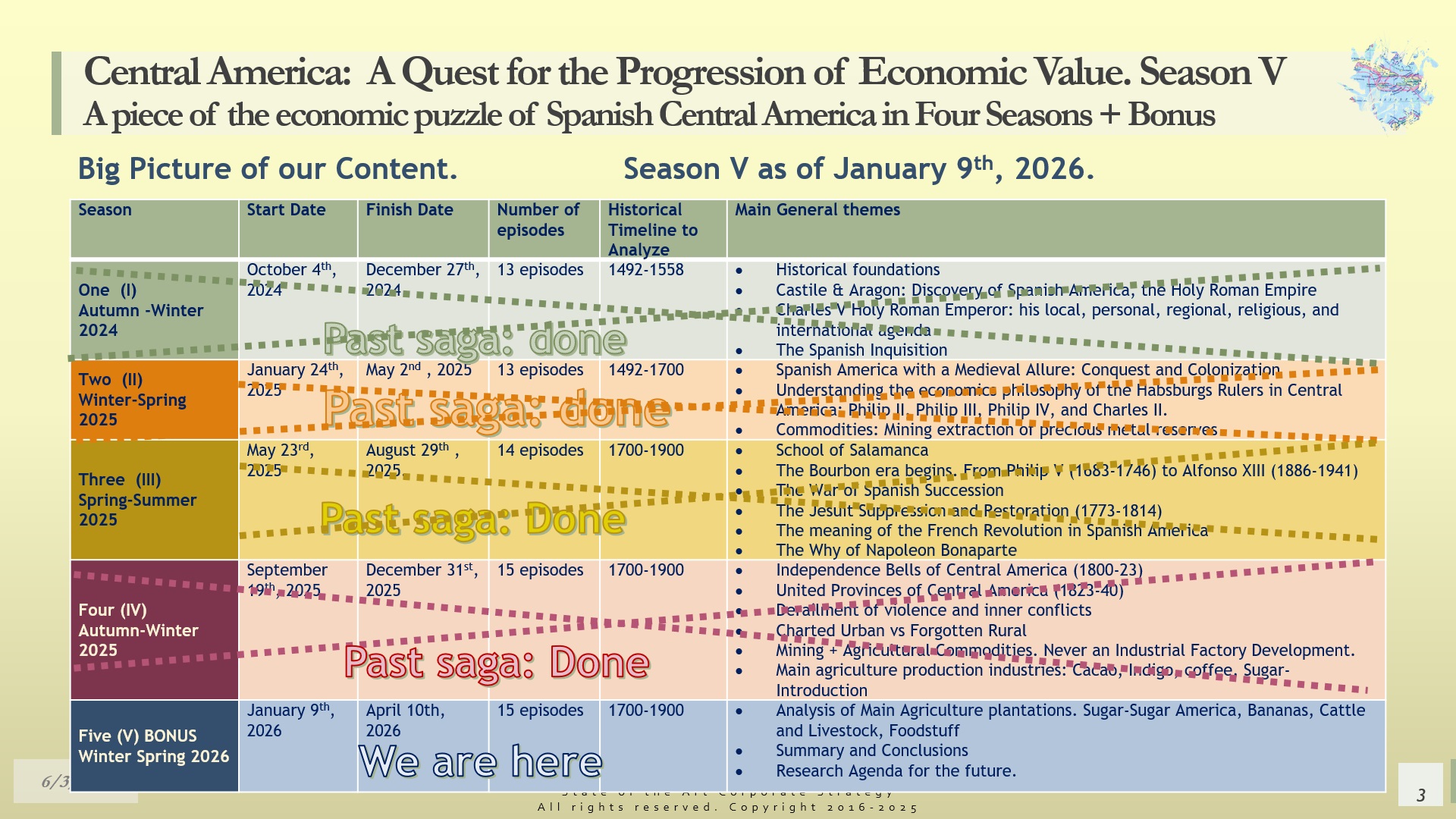
We will need an additional session about the manufacturing process of the new Centrales Azucareras that appeared after 1898. This change is well merited, given the objectives that we need to accomplish for the learning experience of our students. As usual, our frame of reference for the preparation of the strategic reflections is below. Proceed to download and print the slides from the PDF document. Look for additional information by exploring our bibliography. Do not forget to share this material with your loved ones and colleagues.
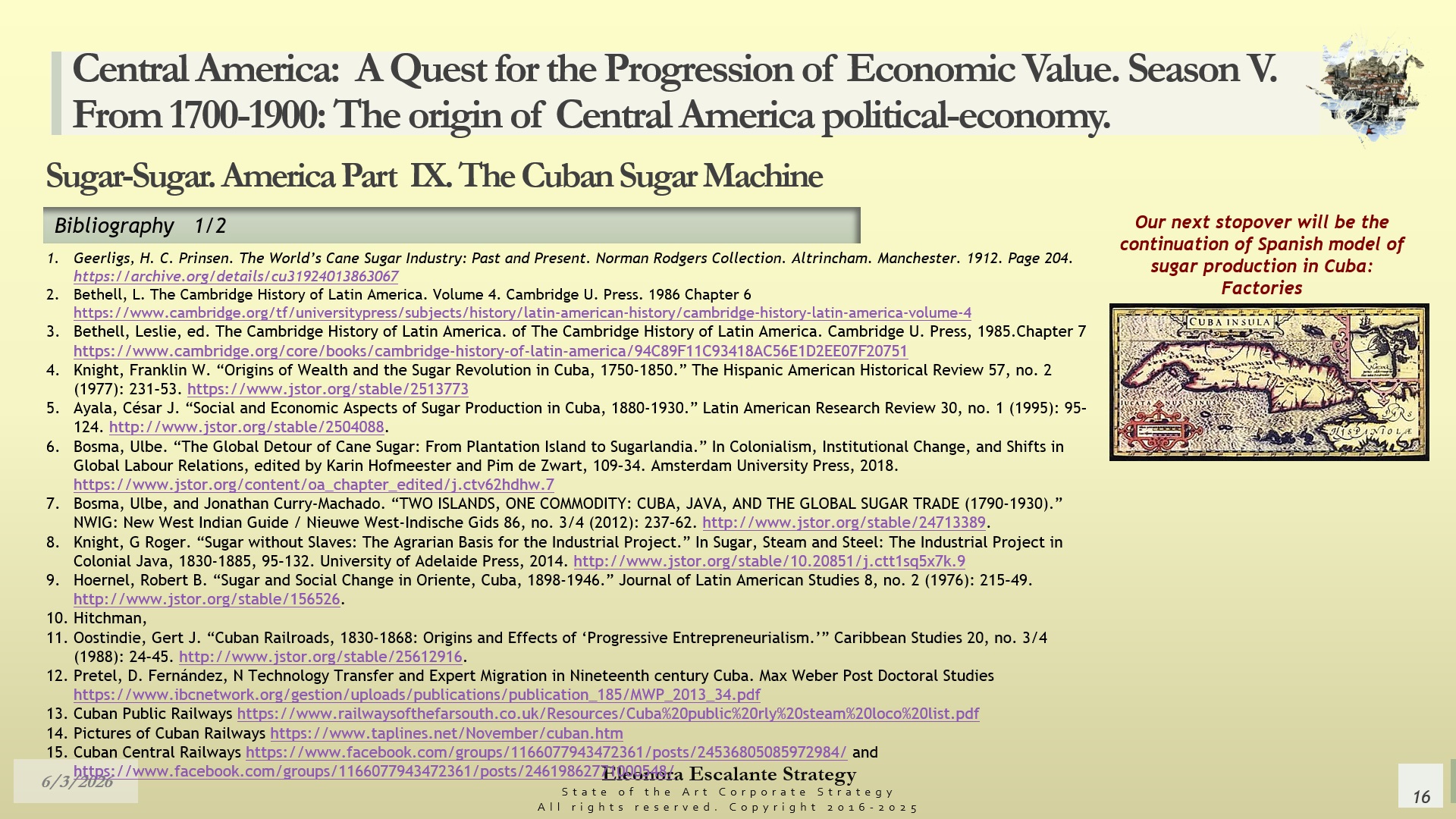
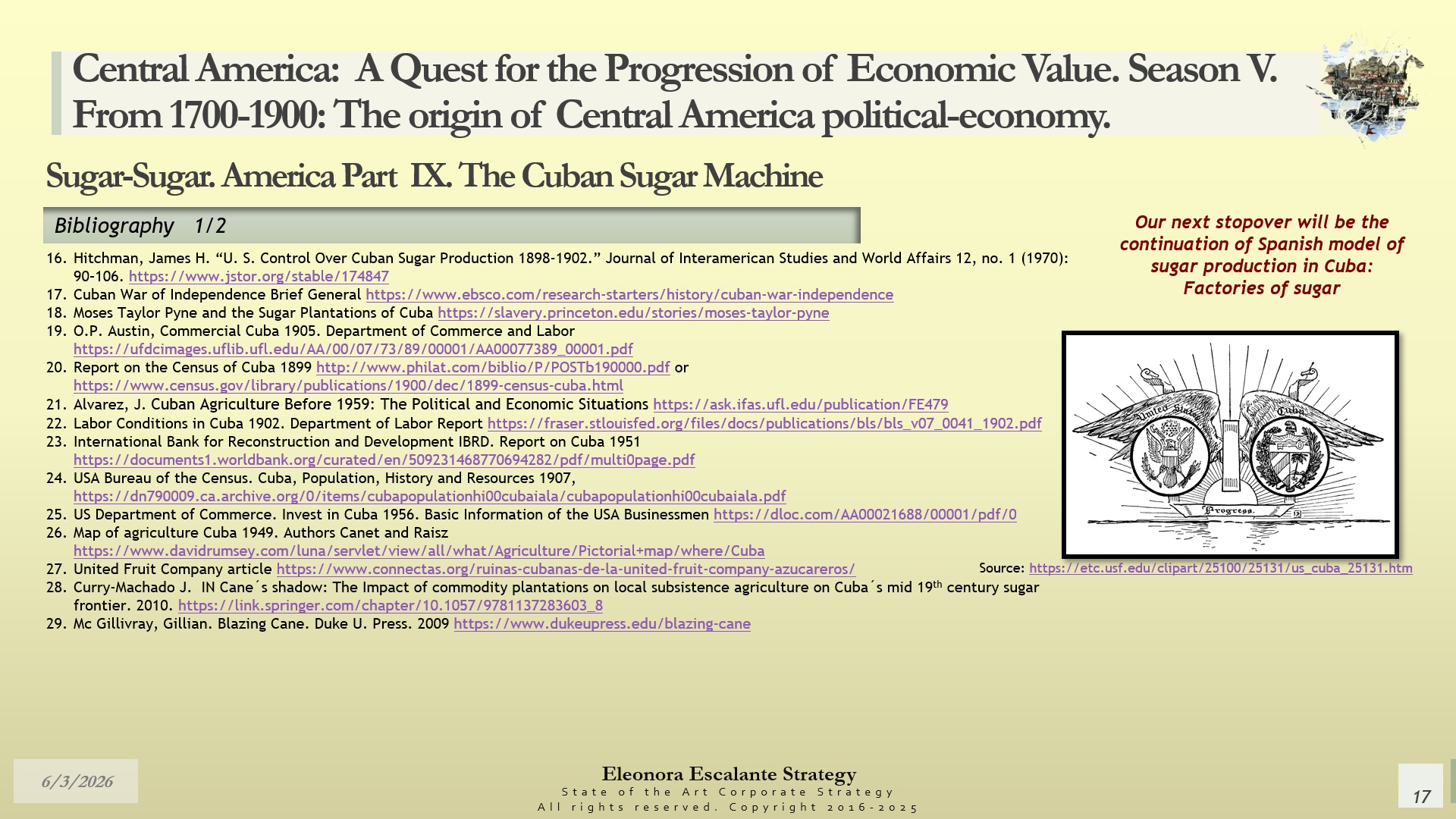
We kindly ask that you return next Monday, March 9th, 2026, to review our extra strategic reflections on this chapter.
We encourage our readers to familiarize themselves with our Friday master class by reviewing the slides over the weekend. We expect you to create ideas that are or are not strategic reflections. Every Monday, we upload our strategic inferences below. These will be discussed in the next paragraph. Only then will you be able to compare your own reflections with our introspection. We always give our students a couple of days to prepare well before our final reflection.
Additional strategic reflections on this episode. These will be in the section below on Monday, March 9th, 2026.

Public domain. Illustrative and non-commercial GIF image. Used for educational purposes. Used only for the public good, informative for this class.
Strategic Reflections on A Quest for the Progression of Economic Value. Bonus-Season V. Episode 9. Sugar-Sugar America. Part 9. The Cuban Sugar Machine.
Spain’s gradual abolition of Slavery in Cuba.
The Traditional Cuban Planters (mostly Criollos and Spanish Peninsulares who invested in the old business model before the 1880s) were challenged to change the labor foundation of the plantations. Cuba imported more than 700,000 African slaves (mostly illegally) during the 19th century. With it, the Spanish Crown was responsible and won the contest of the highest slave traffickers of the last wave of annual forced African slave migration rate, called “intensity of slave trade”. However, although the rest of the Empires abolished African chattel slavery, the African workforce continued laboring in the plantation’s fields, either forced into sharecropping or other milder forms of coerced labor. It took at least a couple of decades or more to stop the human trafficking and the chattel bondage as a labor production factor. Let´s see the following table to grasp how the empires ended the slave trade to America. The shift wasn´t automatic, but gradual. Each empire took different measures and actions to compromise in getting out of the transfer of slaves to America, and in freeing the slaves.
| Empire | Final Official day of the slave trade & labor abolition | Observations |
| Britain | 1833 | Despite that Britain Parliament eliminated slave traffic in 1808, slavery wasn´t eradicated until 1833 with the Abolition Act. Slaves had to remain for a further 7 years with the planters under unpaid apprenticeship. |
| France | 1833-1848 | France process to freed slaves in her colonies was slow and progressive. The decree of total abolition occurred in 1848. |
| USA | 1865 | With the ratification of the 13th Amendment to the Constitution. |
| Dutch | 1863 | + 10 years of transition to free the slaves. The Dutch Republic compensated the Planters, not the slaves. |
| Spain | 1886 | Cuba was the last keystone of Spanish slavery. In Puerto Rico it was abolished in 1869. |
| Portugal | 1888 | The last of the empires to abolish slavery in Brazil. |
In our next chapter, we will provide an analysis of the gradual abolition and the transformation of the African “Colorados” of Cuba into “patrocinados”. The chattel bondage of the Cuban plantation society did not disappear as an action of magical art. It took more than a decade (1878-1895), and we will describe this process in detail next Friday, and we will also dig deeper into the industrial changes implemented in the factories and the consequences of these changes.
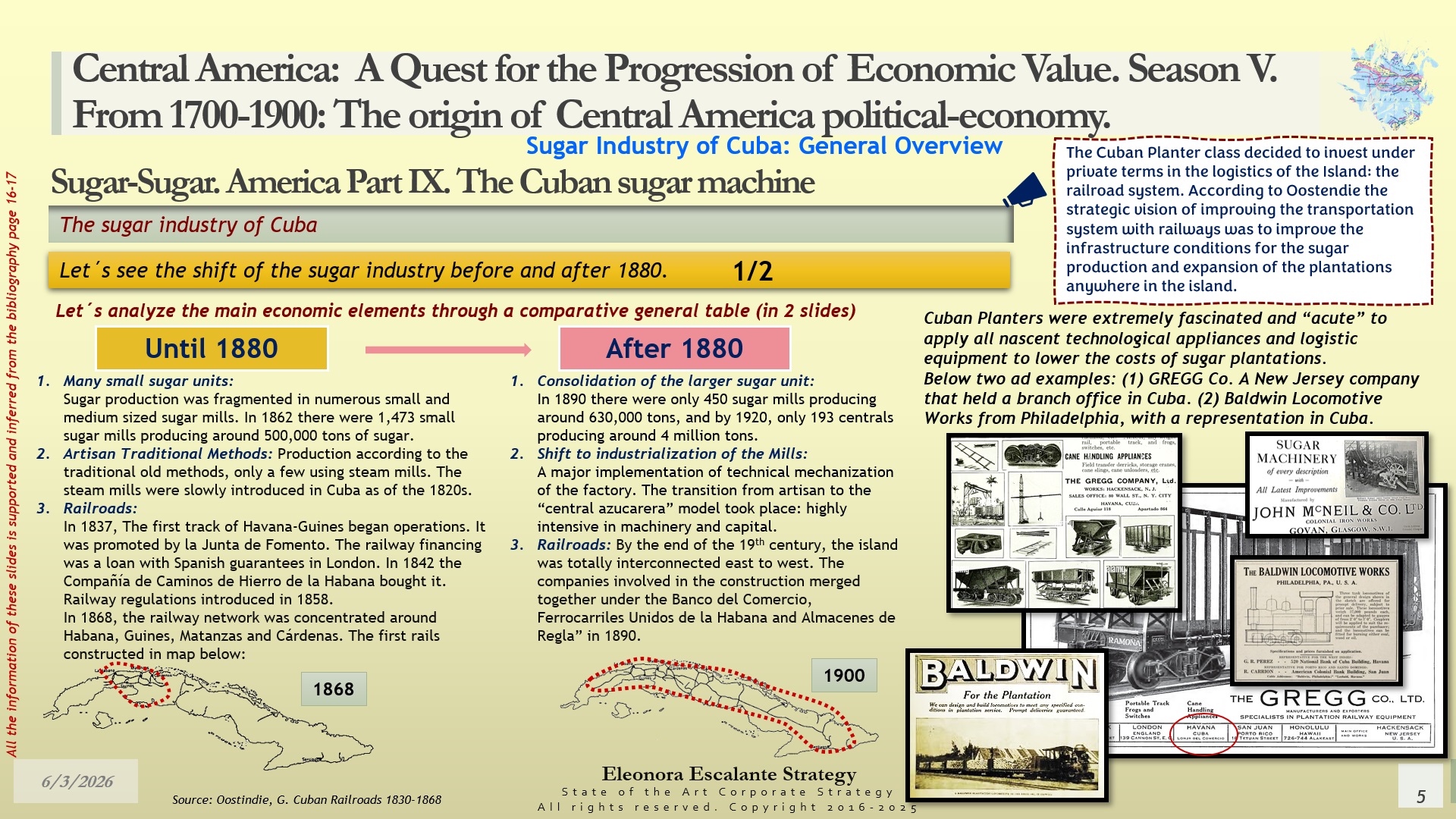
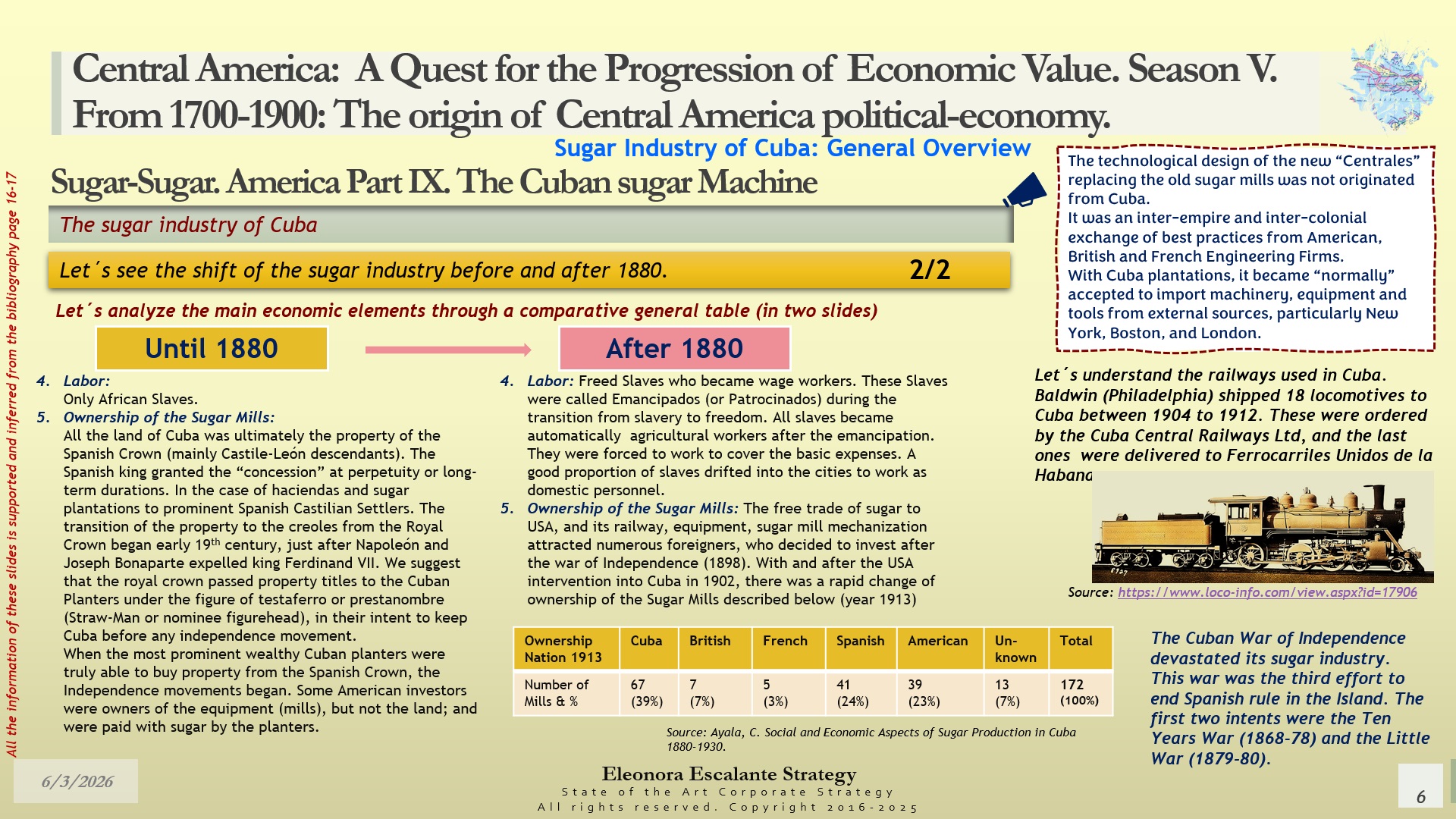
Explaining the shift of the Cuban planter class before and after the Spanish-American War. Slides 5-6. As a general overview, we have made a comparison of the sugar industry changes in Cuba before and after the abolition of slavery. We decided to describe it as before and after 1880, as the year in which the Cuban planters totally lost the hope to keep their African slaves as the essence of their plantation system. The pressure to change labor made them look for technological support. Believe it or not, the removal of slavery as an institution caused the most dramatic disruption of the plantations: in their quest to find ways to reduce costs in other portions of the value chain, the Cuban planters decided to apply the principle of economies of scale and mechanize the factories: the bigger, the better. They absolutely decided to apply every single technological innovation from Europe or the USA to logistics, equipment, and finance. The eagerness of the Cuban Planters to reduce costs was beyond any rationale. They thought that by paying the workforce, they had to pull profits from the industrialization or mechanization of the mills. Finally, the Cuban Spanish planters were obliged to share their land with Foreign Investors, mainly from the USA, who helped to recover and consolidate the industry and the territorial distribution of land ownership into fewer hands.
What occurred to the Cuban Industry during the first USA intervention (1898-1902)? Slide 7.
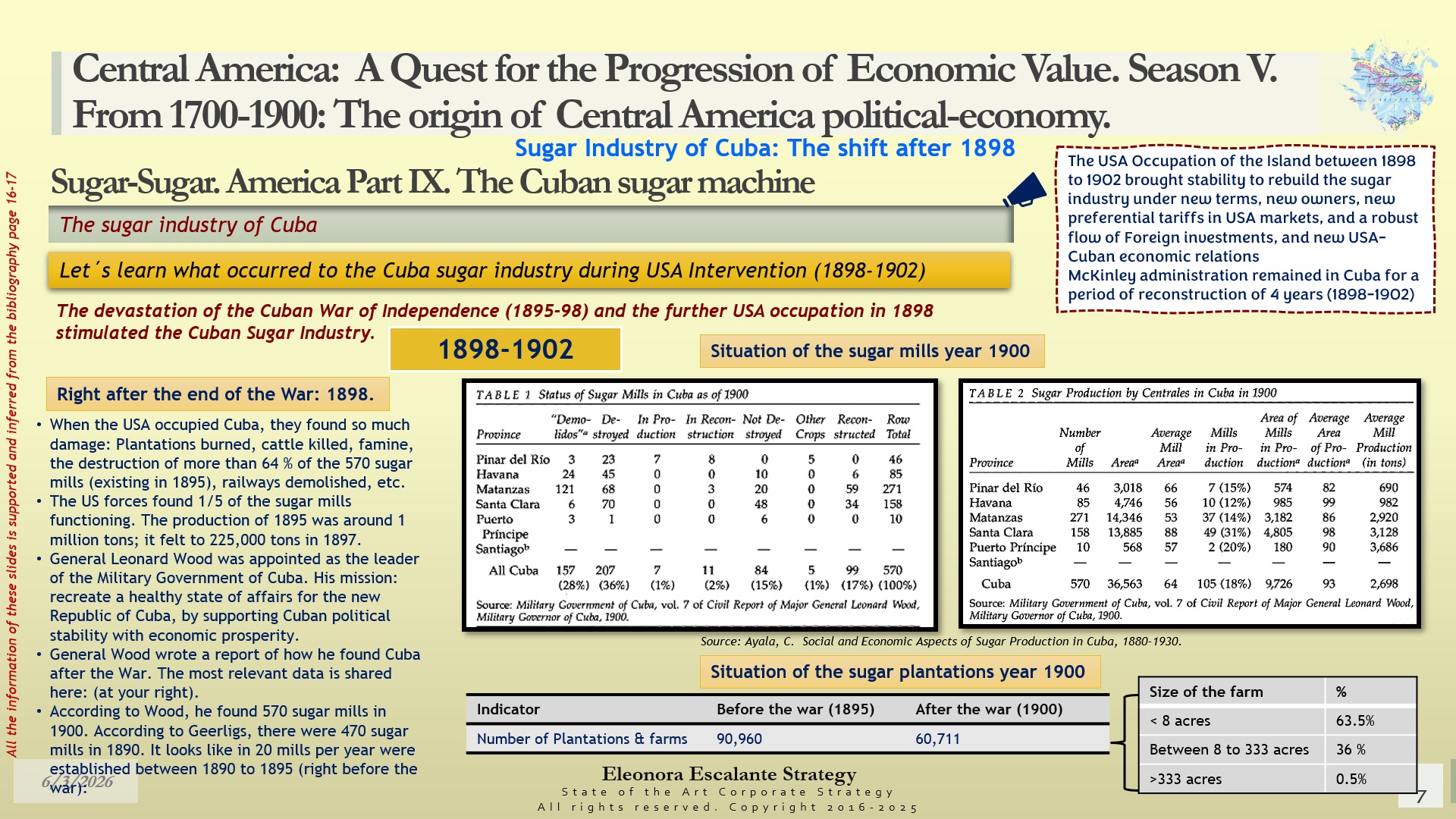
Right after the end of the last War of Independence from Spain, the Spanish-American War broke out. Without American intervention, Cuba would have never been cut from Spain. The war was brutal and ultra-violent, not just from the point of view of the tragedy of losing people (thousands of slaves died), but also economically. Slide 7 shows two tables illustrating how the American military found the island, once they seized it from Spain in 1898. President McKinley appointed Major General Leonard Wood as the Military Governor of Cuba, and he reported a census and inventory of the Cuban situation that he encountered then.
The status of the sugar mills in Cuba as of 1900 describes not just a desolation, but a smashed annihilation of the industry (2). From 570 mills, Americans found that only 1% of them were producing in Pinar del Río province, while 64% of the mills were demolished or destroyed. 99 mills were reconstructed after 1898. See slide 7. Additionally, before the war (1895), there were 90,960 farms, while in 1900, there were 60,711. The size of the farms was also inventoried: 99.5% of the farms were below 333 acres or 10 caballerias, while only 0.5% was considered a big estate. In regard to the production, Cuba produced 1 million tons of sugar in 1895, but this number was reduced to 212 thousand tons in 1897.
These numbers show us how an intervention war, not only destroyed the whole industrial sugar infrastructure, but it also decimated 100 years of investment efforts of the Cuban Planters. The population was also cut down, particularly in the western provinces of Pinar del Río, Habana, Matanzas, and Santa Clara (Las Villas). There is no clear consensus about the loss of lives between 1887 and 1898; however, Robert Porter, in his report Industrial Cuba 1899 (3), has estimated that at least 400,000 people died because of the war, through the reconcentration of inhabitants to the east side of the island, disease, starvation, and slaughter. Moreover, the calculations might be misleading, because it is possible that more slaves could have died in that conflictive decade.
The land structure of Cuba during the USA intervention (1898-1908) Slide 8. Slides 8-9. In our mission to comprehend how the land structure and its utilization were affected between 1898 and 1908, we have prepared slides 8 and 9. We have corrected some figures, given the mismatch of the numbers found in the analyzed data. However, we were able to confirm, review, and amend the congruency of the data from the following three reports prepared by the US War Department and the US Department of Commerce and Labor at that time:
- Commercial Cuba – 1905. Under the responsibility of the statistician Oscar Phelps Austin, chief of the Bureau of Statistics of the Department of Commerce and Labor under President McKinley’s administration (4)
- Industrial Cuba – 1899. Under the responsibility of Robert P. Porter, Special Commissioner for the United States to Cuba and Porto Rico (3).
- Report on the Census of Cuba – 1899. Under the responsibility of Liut. Col. Joseph P. Sanger, Director of the Census of Cuba, War Department Office Director, in conjunction with statistical experts Henry Gannett and Walter Willcox (5).
After verifying and adjusting certain numbers that were unrelated, Eleonora Escalante Strategy Data Research was able to analyze the comparison between the Cuban information of 1899 and the 1908/1910 World´s Cane Sugar Industry report of H.C. Prinsen Geerligs (6). Our strategic reflections are as follows:
Situation found by the USA in 1899. Slides 8-9
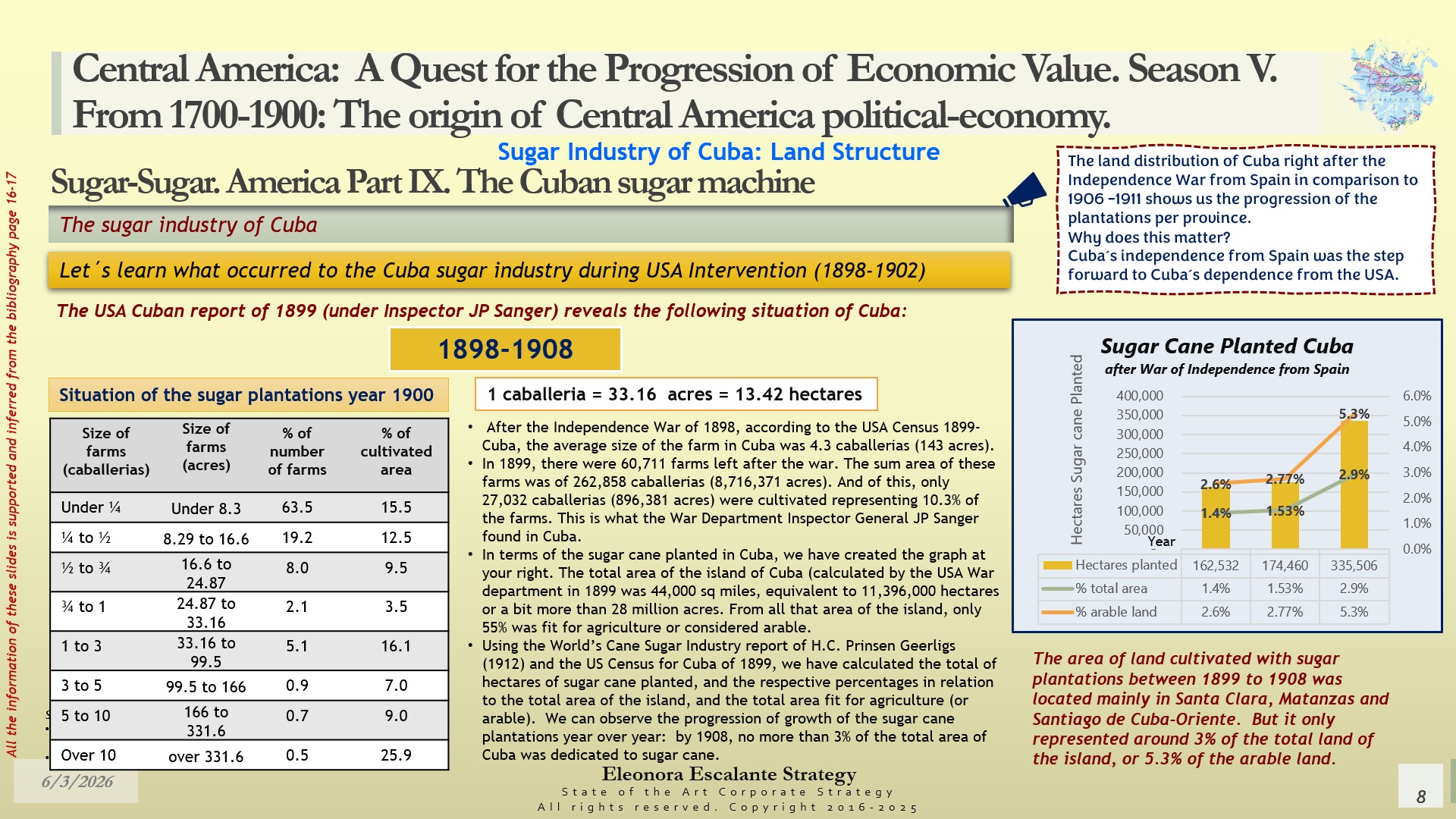
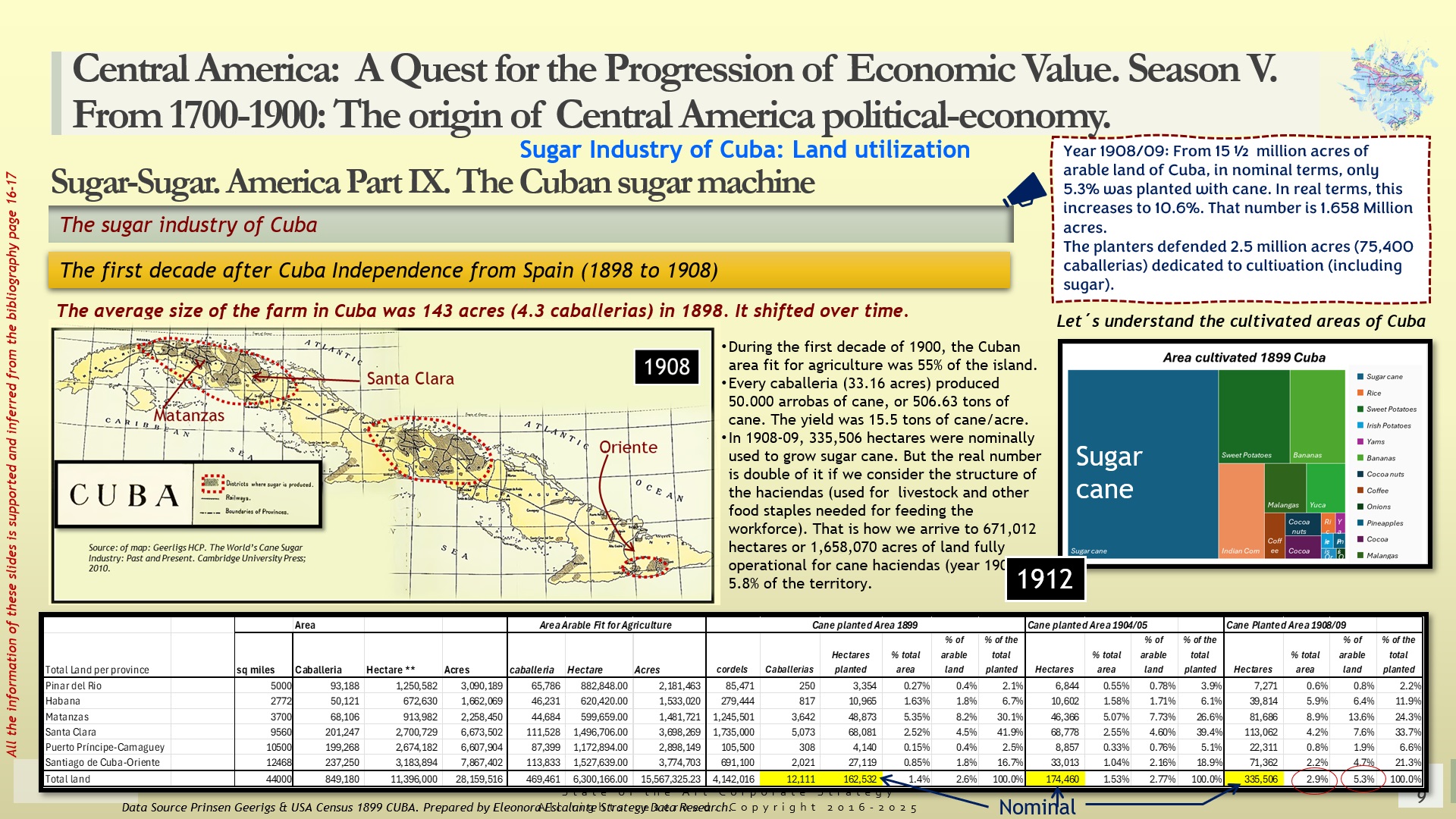
- First, we must differentiate the terms and the measures. Not all the land on the island was utilized for agriculture. Immediately after the occupation of the USA military forces in Cuba, only 55% of the land was properly fit (arable) for plantations and other cultivars. The farms possessed cultivated areas and non-ploughed portions of land.
- Additionally, we need to comprehend the units of land measure in Cuba: 1 caballeria cubana = 342 cordels =13.42 Hectares = 33.16 acres. 1 hectare= 2.471 acres. The caballería cubana, which measured 13.42 hectares, was based on old medieval Spanish land grants given in concession to the military order knights by the Spanish Crown, as a form of patronage or reward upon retirement from the position of cavalry officer. The caballeria cubana, which became the standard measure for farmland in Cuba, was calculated as a courtyard quadrangle of 432 varas x 432 varas (or 366 m x 366 m). The term caballeria comes from “caballero,” or knight or cavalry officer. One caballeria is a plot of land designed as a reward from the Spanish crown for a Spanish Medieval caballero, or knight or cavalry officer.
- The US departments of war, commerce, and labor found that in 1899, only 1.4% of the total area of the island was planted. In 1904, this shifted to 1.53%; and by 1908, around 3% of the island, or 335,506 hectares. These were nominal percentages.
- From the total amount of cultivated land, only 55% represented sugar plantations in 1899 (right after the end of the war). The rest of the cultivars were dedicated to bananas, corn, sweet potatoes, malangas, and others. Tobacco embodied only 10% of the cultivated area. We have kept the caballerias as a measure of Cuban land, and we also provided the equivalent in hectares and acres (under Cuban Spanish conversions of this time).
- Since the outstanding operational sugar mills were only 7 in all territory by 1899, the production of sugar was at its lowest point. The sugar cane planted area was at its lowest level in history: Only 165,532 hectares (or 12,111 caballerias). By 1908, this area was a bit more than double (335,506 ha).
- In relation to the number of farms and the size of the farms (1899). Right after the war, there were 60,711 farms (measuring an aggregated total of 262,858 caballerías cubanas). From these, only 27,032 caballerias were cultivated, and from these, only half were fully dedicated to sugar plantations. 99.5% of the farms were below 331.6 acres (or 10 caballerias), and 0.5% represented big estates in the hands of a minimum number of foreign planters. See slide 8. The table of the size of the farms shows us that 89.9 % of the farms were all below 1 caballeria. The inference is bold: Cuban farms right after the war were multi-atomized and fragmented into small unit farms of less than 13.42 hectares each. Only 10.1% of farm owners held plantations above 1 hectare. However, do not forget that only 10.3% of the total island land was cultivated. It looks like the Spanish crown (Castile) granted around 10% of the island to its military order knights and descendants, whereas the rest of the island was not yet expanded into plantations.
Situation of the plantations in 1908-1917. Slides 9 to 12.
- As mentioned before, and according to Geerligs, in 1908, 335,506 hectares of land were nominally used to grow sugar cane. However, we should differentiate between nominal and real indicators. If we accept Geerligs Cuban agricultural farm yield of 15.5 tons of cane/acre (37.75 tons/ha), this ratio is nominal. In real terms, we must consider the structure of the haciendas, in which half of it was used for sugar, and the rest for other food staples, tracts of forest land, houses, roads, unproductive plots, pastures, and the unproductive marabu. Geerligs considered it appropriate to duplicate the cane planted area for a real indicator. See slide 9.
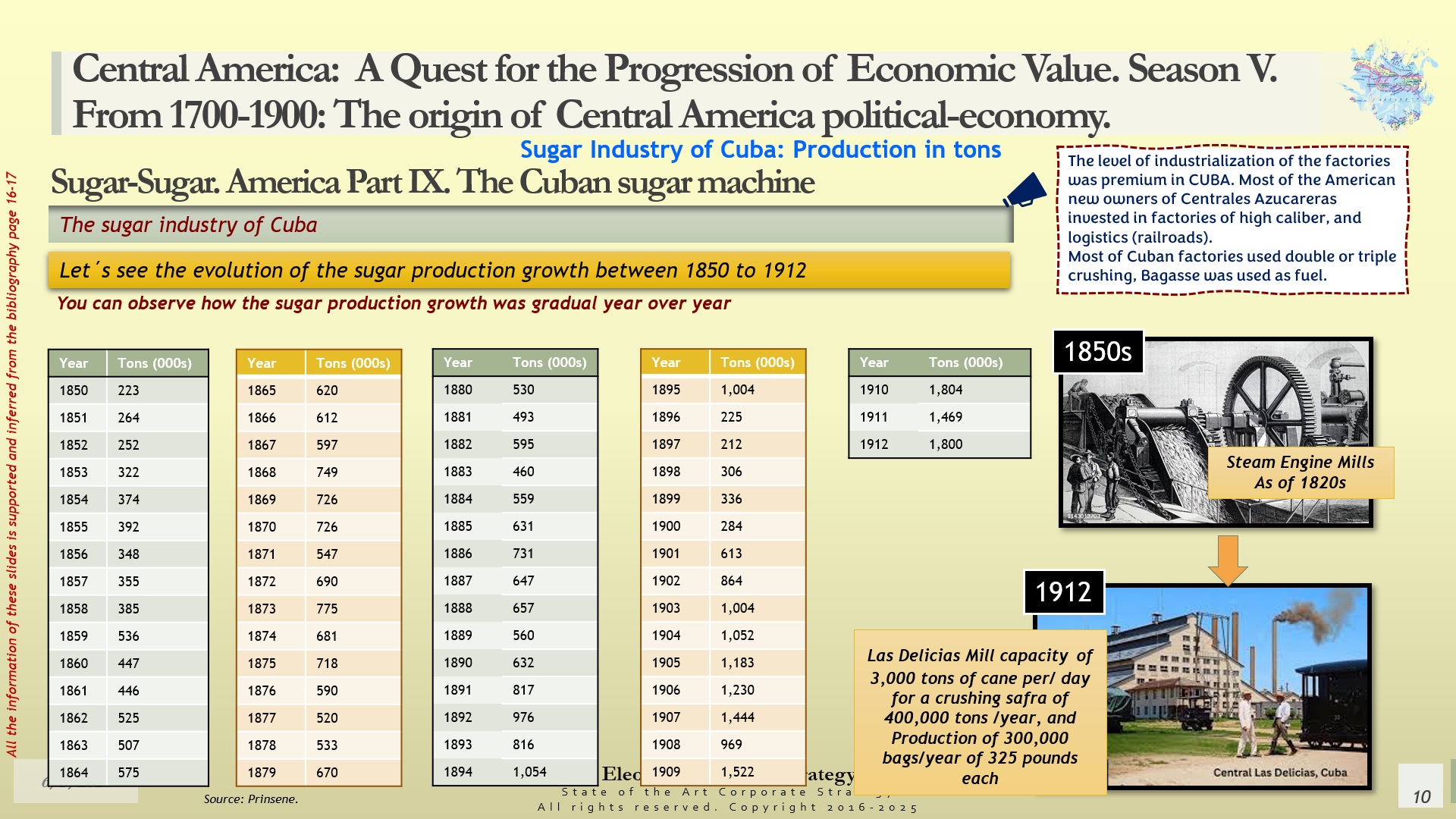
- The Production of sugar was positively correlated to the number of acres (caballerias) planted. The more extensive the land planted, the greater the aggregate augmentation of sugar tons produced by the mills. Look at how tragic the period between 1896 and 1901 was for the Cuban Sugar industry. Production hit the bottom then, but gradually rose until the safra of 1903. Slide 10.
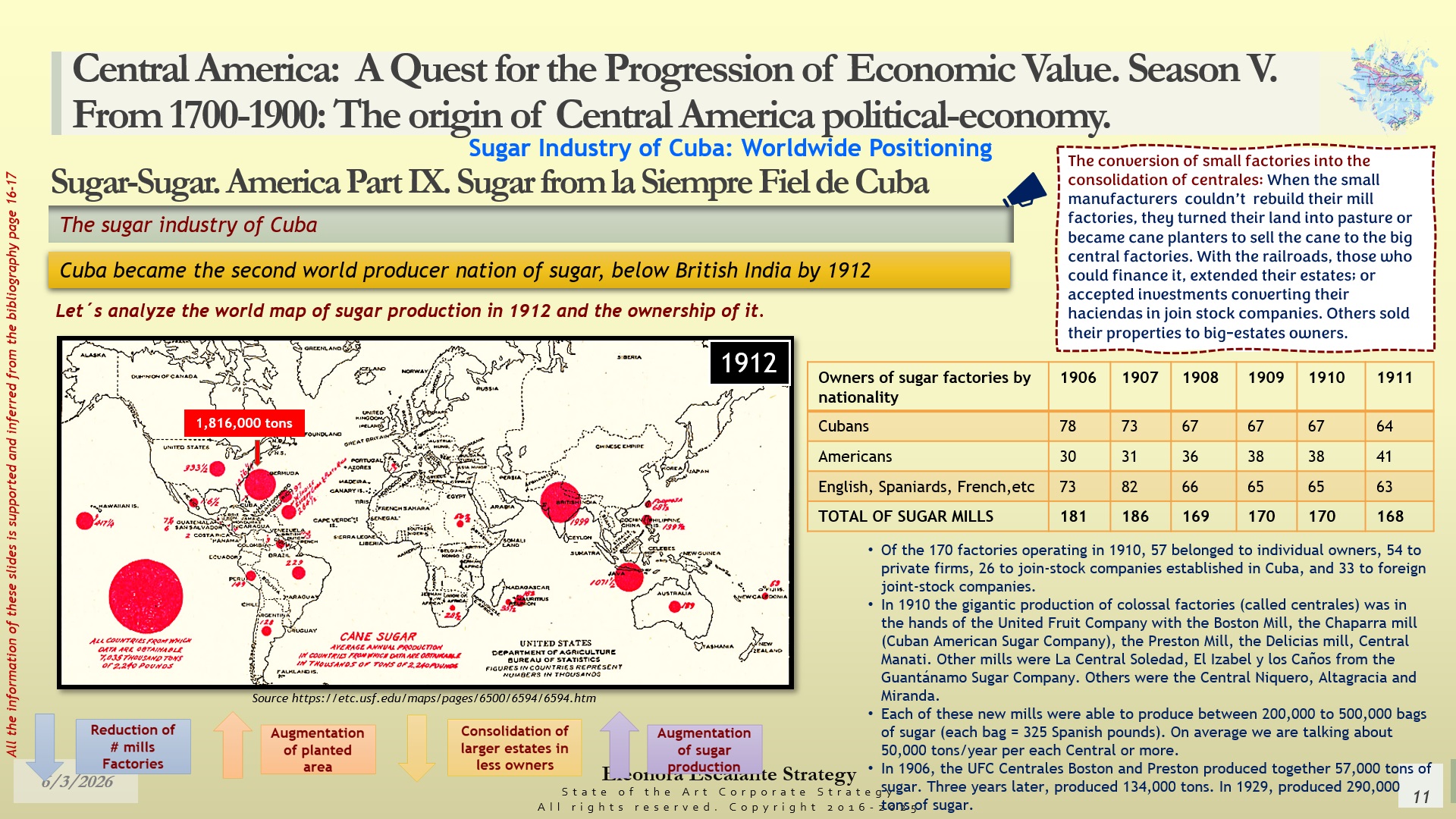
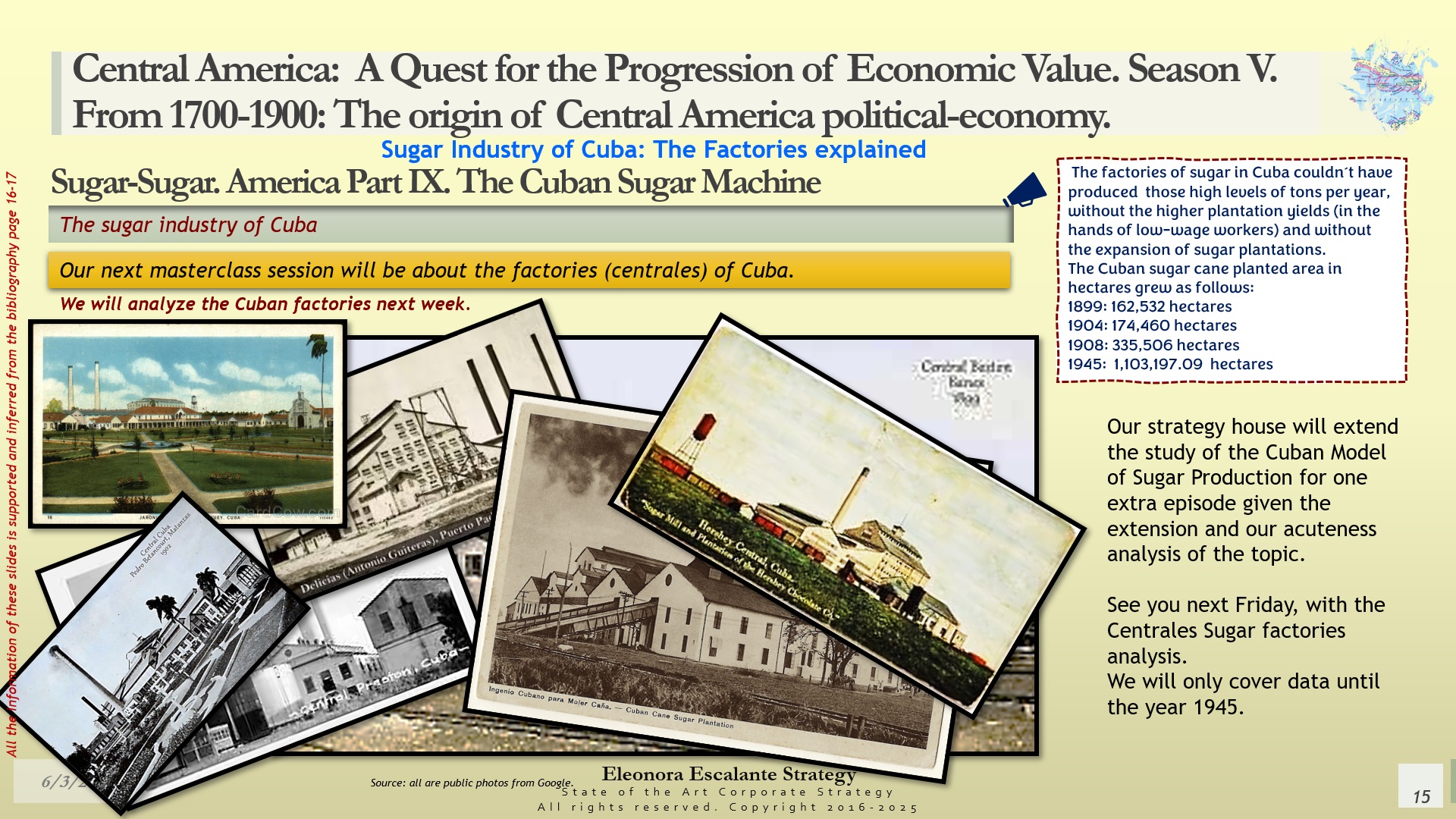
- This trend continued until and beyond 1912, when Cuba produced 1,816,000 tons of sugar, the second rank in the world, only below British India. See slide11. By this time, the old sugar mills were already gone, consolidated and transformed into centrales azucareras. The reduction of traditional mills allowed the introduction of the mega-centrales, financed mainly by foreign investors from the USA, England, Spain, France, Denmark, Germany, etc. 63% of the sugar mills were in foreign hands. In comparison, Cuban planters held only 37% of the ownership. Even Hershey built a central in Cuba between 1916 and 1946. We will explore the operational aspects of the sugar factories in our next episode.
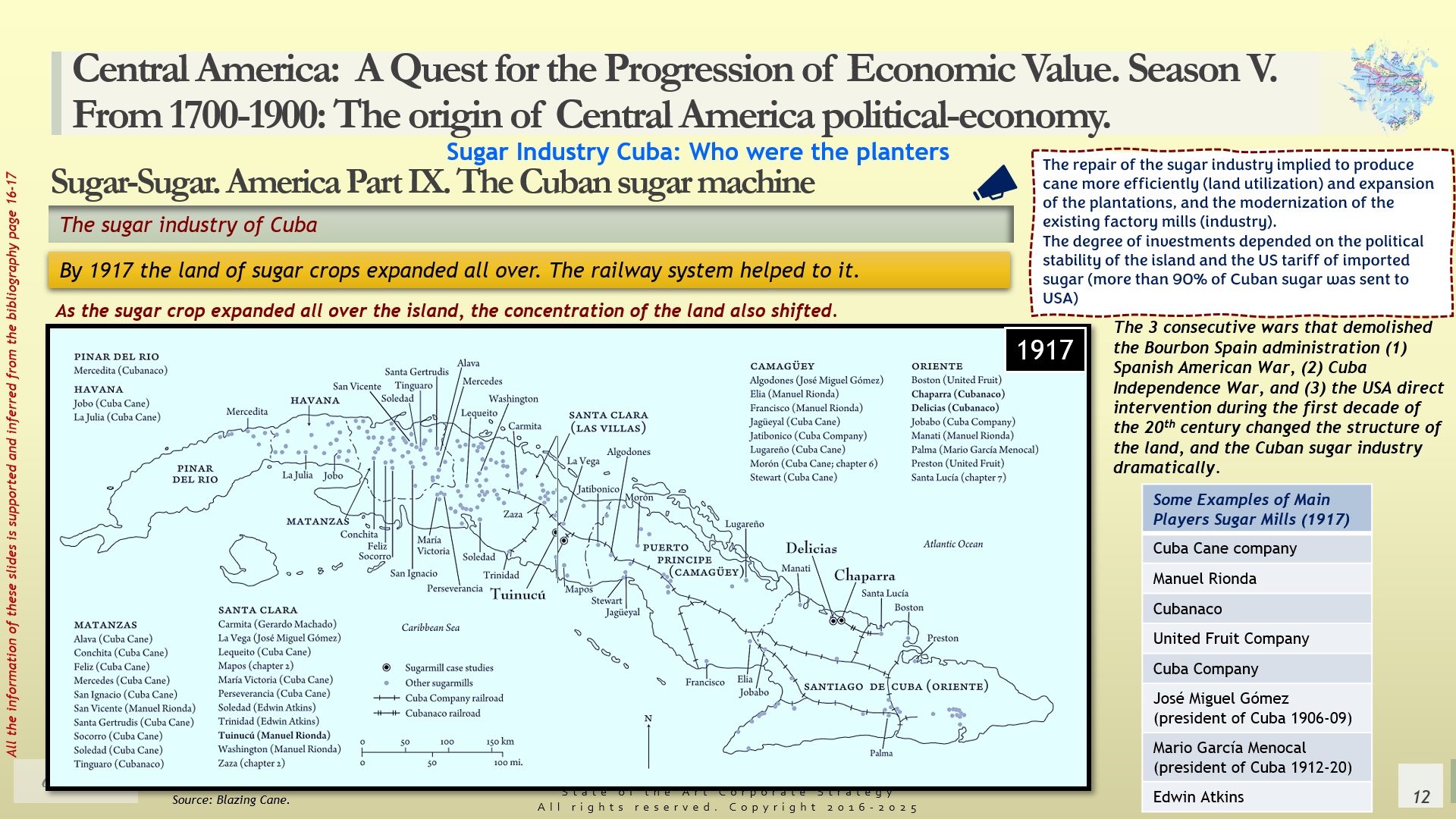
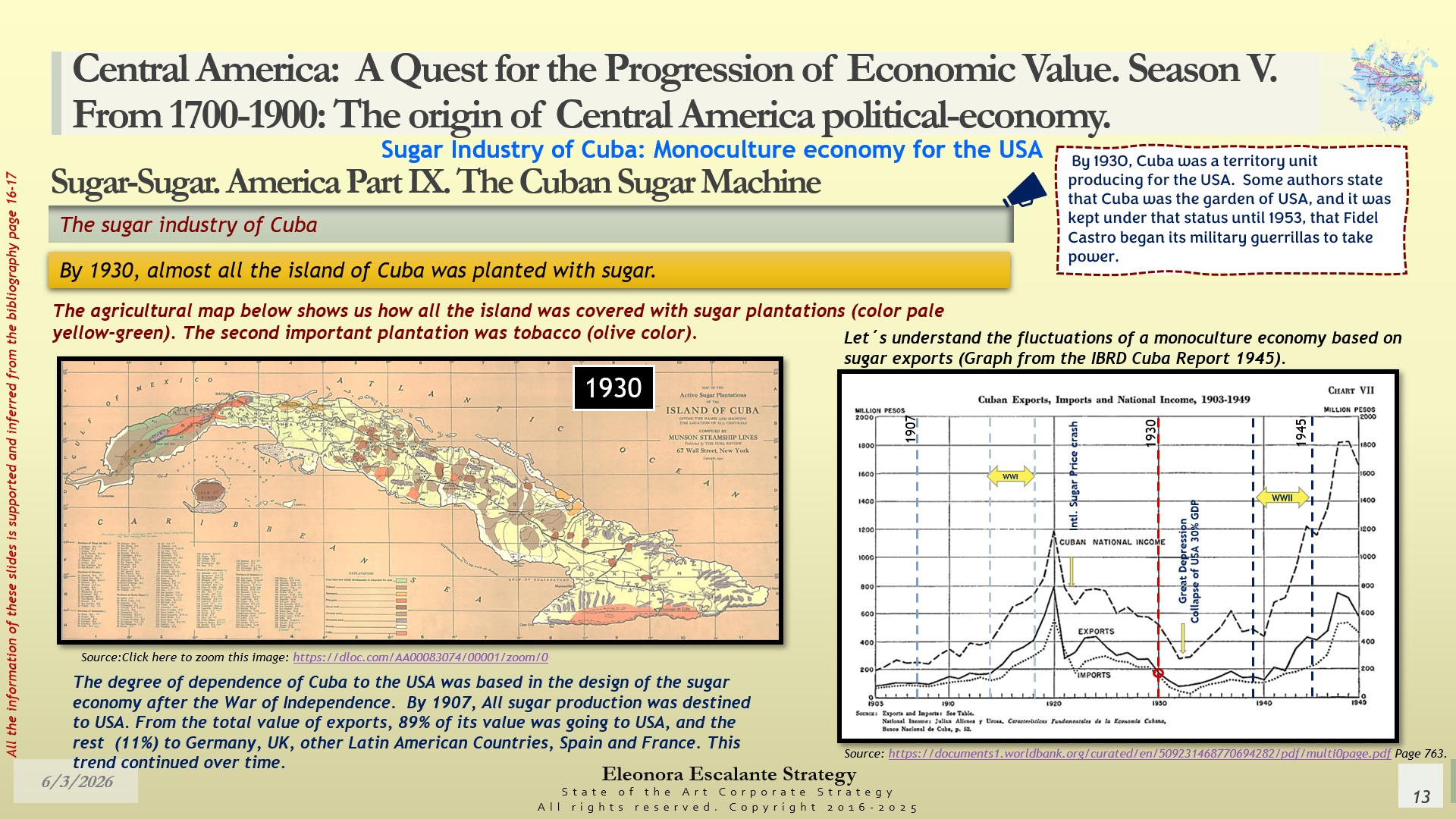
- Ownership of the mills and the land: The land of Cuba was characterized by its intensive expansion in planting sugar cane after 1898. This made Cuba a monoculture economy serving the USA market. A monoculture implies the great extent to which individual farms were dedicated only to one crop: sugar cane. Cane production utilized about 55% of all the cultivated farm acreage, but it was mainly concentrated in the central and eastern regions (where the Americans installed their main factories). Slide 12, prepared by McGillivray (7), shows us the main sugar owners of mills and their respective land by 1917: the United Fruit Company from Boston, Cuba Cane Co., Cubanaco, Manuel Rionda, Edwin Atkins, José Miguel Gómez, and Mario García Menocal. According to Hitchman (8), before the Spanish-American War, the American Estates and mills were owned by Atkins (Centrales Soledad and Trinidad), Kelly´s Teresa, Ponvert´s Hormiguero, Ceballos and Rionda´s Narcisa, and Tuinicu. Then, during the USA intervention, more American centrales were established by the United Fruit Company, the National Sugar Refining Co., the Cuban-American Sugar Company, and several individual investors (Havemeyer, Ex-Congressman Hawley, Post, Mollenhauer, Farr, Rigney, Preston, and Clark). All these American investments were characterized by large landholdings, modern machinery, efficient methods of planting and harvesting cane, and large factories. The railroads were already repaired and connected all Cuban territories by then.The cane grower was called a colono. A “central azucarera” was a concentration and consolidation of several old ingenios into a single, large-scale industrial facility. The colonos, small owners of little plots, renters, and large planters who did not grind their own cane, served and sold their harvested cane to the centrales exclusively. By 1903, Americans owned or partially owned 12 sugar centrales and produced 13% of the sugar crop. It is important to note that in less than 5 years (1898-1903), the minifundios of sugar cane plots began the process of conversion to latifundios, and the practice of renting land to produce cane for the centrales was immersive and widespread. By 1900, white foreigners and the traditional Cuban planter class owned or rented small farms covering up to 85% of the cultivated territory, most of which were smaller than 1 caballeria. “Of the cultivated areas of the farms (9), 40.7% per cent were owned by whites, and 44% were rented by whites, making the total occupied by whites 85% (mentioned previously).”During the U.S. control period, small farms were consolidated into large sugar estates. Small farmers were heavily indebted, and many sold their land to the big planters. The rise of the large-landed sugar estate began before the independence War from Spain, but the transformation and consolidation of this system deepened between 1900 and 1930. With the “advent of the bigger and more efficient centrales”, the ownership of the land went to a few companies and individuals, many of them foreign.
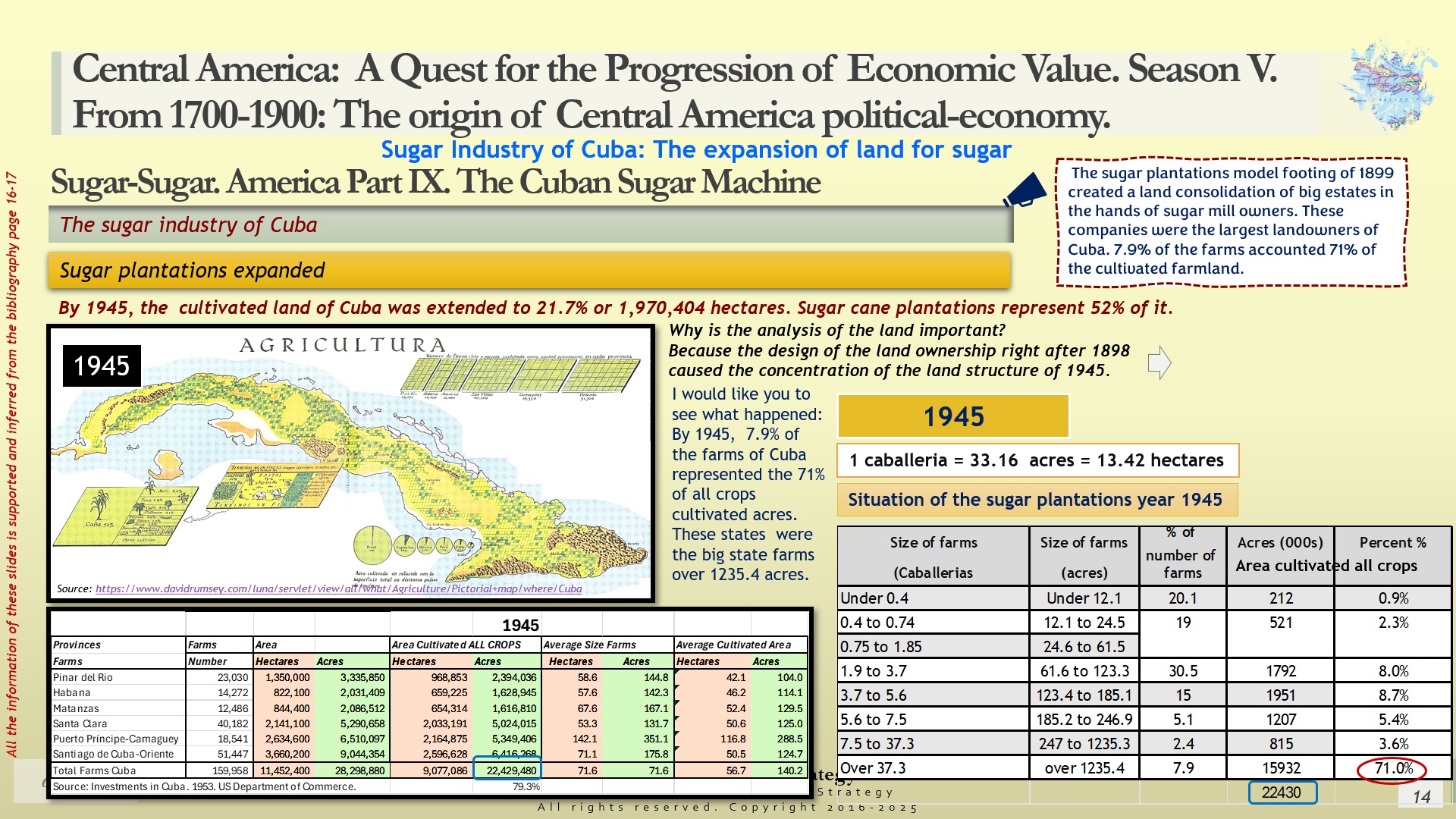
Situation of the plantations from 1920s to 1945. Slides 13 and 14. By 1945, land ownership had shifted in favor of large estates (10). The total cultivated area of Cuba was 4,867,310 acres. More than 71% of all that cultivated farmland belonged to 8% of the farmers. See slide 14. Each of these larger-estate farms was above 1,235.4 acres (500 Ha). Coincidentally or not, these big estates were in the hands of the central owners.
To be continued…
Closing words.
Today´s chapter is about understanding the land structure of Cuba, right after the USA occupation of the territory in 1898. We have analyzed the consequences of the decisions of the Cuban Planters (in terms of territorial land distribution) until 1945. We can perceive not only the consolidation of land in the hands of a few planters, but also the total transformation of its structure in less than 45 years. In 1900, 92.8% of all farms were below 1 caballería; by 1945, only 49% were below 1 caballería, and 92.1% were below 37.3 caballerias (1235.4 acres).
Announcement. Next week, we will continue with an additional third episode about the sugar plantations of Cuba. It will be an economic analysis of the factories (centrales azucareras) established right after the USA took Cuba as a “colony”.
Musical Section.
During our closing bonus season V, we will return to the symphonic, philharmonic, or chamber orchestra compositions. Today we have chosen the Havana Chamber Orchestra (conducted by Daiana Garcia) mingled with Emmet Cohen Trio. This concert is a lovely value proposition of a fusion of two distinct ensembles, provoking a delicious harmony. Enjoy!
More information about the artists can be found by clicking below:
Emmet Cohen: https://www.emmetcohen.com/
Havana Chamber Orchestra: https://festivalnapavalley.org/artists/havana-chamber-orchestra/
Thank you for reading http://www.eleonoraescalantestrategy.com. It is a privilege to learn. Blessings.

Sources of reference and Bibliography utilized today. All are listed in the slide document. Additional material will be added when we upload the strategic reflections.
(1) Chronology of the abolitions of Slavery https://www.portail-esclavage-reunion.fr/en/documentaires/abolition-slavery/chronology-of-abolitions/
(2) Ayala, César J. “Social and Economic Aspects of Sugar Production in Cuba, 1880-1930.” Latin American Research Review 30, no. 1 (1995): 95–124. http://www.jstor.org/stable/2504088
(3) Porter, Robert Industrial Cuba – 1899 https://www.gutenberg.org/files/41463/41463-h/41463-h.htm#page_090
(4) O.P. Austin, Commercial Cuba 1905. Department of Commerce and Labor https://ufdcimages.uflib.ufl.edu/AA/00/07/73/89/00001/AA00077389_00001.pdf
(5) Sanger, J. Report on the Census of Cuba 1899 http://www.philat.com/biblio/P/POSTb190000.pdf or https://www.census.gov/library/publications/1900/dec/1899-census-cuba.html
(6) Geerligs, H. C. Prinsen. The World’s Cane Sugar Industry: Past and Present. Norman Rodgers Collection. Altrincham. Manchester. 1912. Page 204. https://archive.org/details/cu31924013863067
(7) McGillivray, Gillian. Blazing Cane. Duke U. Press. 2009 https://www.dukeupress.edu/blazing-cane
(8) Hitchman, James H. “U. S. Control Over Cuban Sugar Production 1898-1902.” Journal of Interamerican Studies and World Affairs 12, no. 1 (1970): 90–106. https://www.jstor.org/stable/174847
(9) Sanger, J. Report on the Census of Cuba 1899 http://www.philat.com/biblio/P/POSTb190000.pdf
(10) International Bank for Reconstruction and Development IBRD. Report on Cuba 1951 https://documents1.worldbank.org/curated/en/509231468770694282/pdf/multi0page.pdf
Disclaimer: Eleonora Escalante paints Illustrations in Watercolor. Other types of illustrations or videos (which are not mine) are used for educational purposes ONLY. All are used as Illustrative and non-commercial images. Utilized only informatively for the public good. Nevertheless, most of this blog’s pictures, images, and videos are not mine. Unless otherwise stated, I do not own any lovely photos or images.
Sources of reference and Bibliography utilized today. All are listed in the slide document. Additional material will be added when we upload the strategic reflections.
 Eleonora Escalante Strategy - Strategic Reflections Think Tank