
Value propositions: Theory and Cases. Episode 1. Introduction.
After 20 days of vacations, here we are with a soaring spirit to begin a new year and a new saga. We will leave the historical approach of the Enlightenment period, and we will position ourselves in the 21st century. With all its edges, implications, troubles, and trends. So, let´s begin.
Value Propositions at its essence.
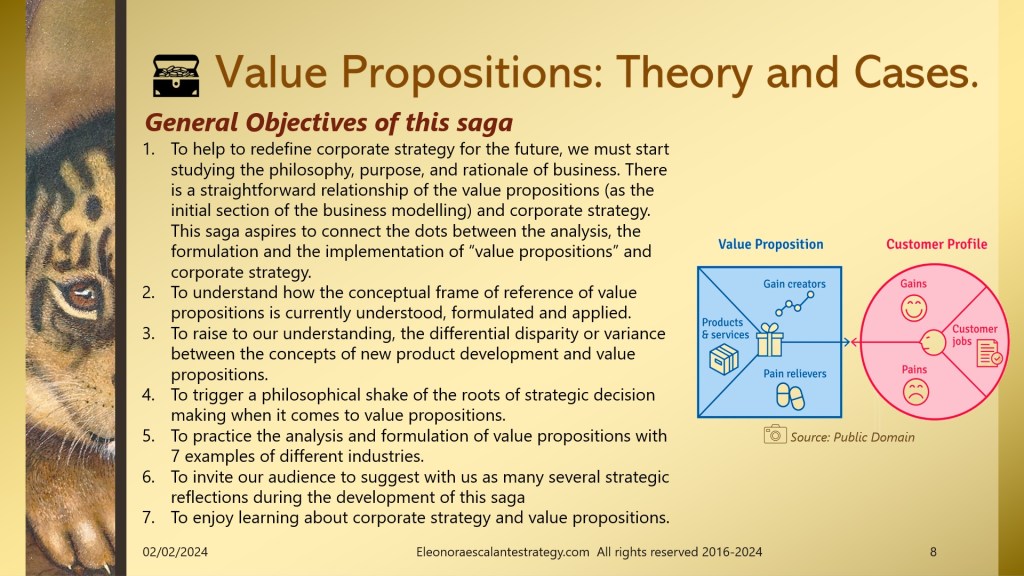
During the next 14 weeks, we will be committed to exploring the correct meaning of this term. From today until the beginning of May, we will sail the waters, of this conceptual representation, and the journey will take each of us to a stimulating understanding of how we think when it comes to defining our products and services in the first place. Value propositions are usually the first thing that every single entrepreneur or business owner must design seriously. Without a clear conception of our value proposition process, it is almost impossible to design a correct business model.
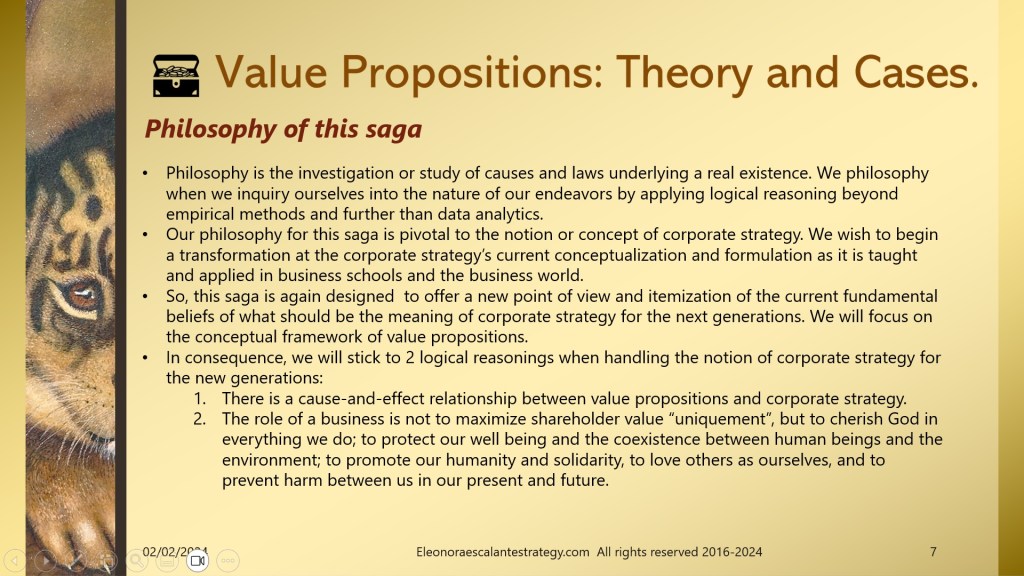
The value proposition process is the most delicate and relevant step when defining our business model. In consequence, it is not to take it lightly. The action of comprehending our customers’ needs and wants is more than a contemplative observation exercise. It also implies a visionary conscious educational aspect that most of the time is neglected or denied by the entrepreneur. It also implies a love-ethical integral mentality, a specific set of selfless attitudes, and a well-balanced/stable state of mind. These three factors should be rooted in the innovator, the product designer, the inventor, or the scientists who spend months (sometimes years) inventing prototypes of products and services. The spirit of goodness and a helping attitude towards others should be embedded in those who carry several testing loops of those new products. The love for our planet must be ingrained in those who check the different value propositions attaining distinct development levels for the different customers (buyers, end users, intermediaries, influencers, saboteurs, etc). The value proposition is a process that links what customers want and need with the product or service that we are planning to sell. We will study this process in detail, bit by bit, in such an easy way, that we expect all our readers to become proficient in this matter.
Value Propositions in theoretical terms are not always a reality.
Theory and practice sometimes aren´t good company to each other. Many times our theories do not match with reality. And when this happens, then it is time to review the philosophical premises of our theories. But also we must check the purpose of our consumers. Either our theory can´t be sustained anymore, or reality is so deflected or awry from ethics, from our ideals, and from the traditional system of “how it should be”. When our theories don´t answer what occurs in reality, that is a sign of caution. Something must be really wrong. Usually, the reason for this deviation is not in the consumers’ preferences, but in those who can create collusion or manipulation of the economic variables that weren´t influenced in the past, but today the maneuvering using disruptive technologies is everywhere. When we live in conditions of ill political-economic systems, we can find monopolies in every single industry that you can name. And with monopolies, it is very hard for free market theoretical frameworks to function. Particularly if the governments do not act to regulate the dysfunctional causes of those monopolies.
In theory, the value proposition concept is usually straightforward. It is so easy to understand and formulate, but in practice, the implementation could be completely erratic. In addition, value propositions are not static. These flow dynamically, sometimes in disruption, as a sea storm, not just because of the competitive dimension of the different players, but also because in theory, value propositions lack the quality control or the scrutiny of the designer´s purpose, or the problem solver’s real justifications.
Any inventor can procure a specific design of a product, as a result of a value proposition analysis. What happens if the inventor´s aim is fame and glory? What happens if the inventor´s purpose is to help humanity? What occurs if the architect of the value proposition is out of mind or is erratic or capricious in its pursuit of profits, and only cares about making money to gain power at all costs, at the expense of the well-being of the people? In terms of commercial terms, a value proposition might be excellent in methodological terms, but a complete failure in long-term value social-community aspects. In addition, if the customer profile comes from the segment of the masses or the non-educated majority, the truth is “majority is not always right”. Furthermore, if the majority is mistaken, and we design a product for massive consumption, based on an inaccurate value proposition map; then, as product designers, we can make awful mistakes that our civilization will endure sooner or later. Who scrutinizes the value proposition designers? Is there a government agency that will come to our rescue? Is there a magical Godmother that will help us? Or do you think that the Genie of Aladdin will come to grant us a wish? Probably not.
The core script of this saga is to discover, explore, and investigate thoroughly what we hold as the current theoretical framework of value propositions, not to find mistakes for the sake of an indictment finger-pointing of accusation. Not at all. On the contrary, in the academic game of improving every single theory that we hold close to our management practice, it should be natural and habitual to add new findings to the existing theories. It is a sign of deep trouble if we aren’t doing it. So, we expect to aggregate our own design-based research aspects to the value-proposition theory, and we will also revise and adjust the existing framework with our added-value notes.
Old practice in business history.
For thousands of years, all our inventions have been created and improved to solve our needs and wants. The Business Model canvas theory of Alex Osterwalder and Yves Pigneur is new. Their book “Business Model Generation: A Handbook for Visionaries, Game Changers, and Challengers” is the first idea that comes to our mind when we think about business modeling. Osterwalder and Pigneur filled a theoretical gap, that was being shaped “in theory” since the 1950s. But business modeling per se didn´t begin with their canvas. The history of business modeling is as old as our civilizations, it doesn´t start with Osterwalder-Pigneur books. Regardless that we didn´t have a consensual theoretical framework, coined with that branding name “business modeling”, be sure that there are ancient roots of the term value proposition beyond the last century.
Scope of the saga “Value Propositions: Theory and Cases”.
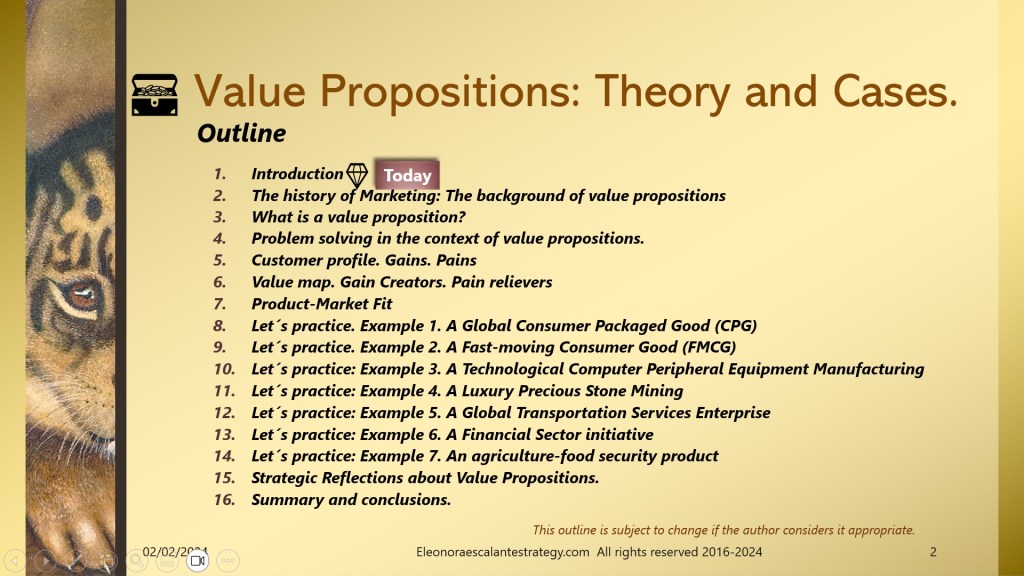
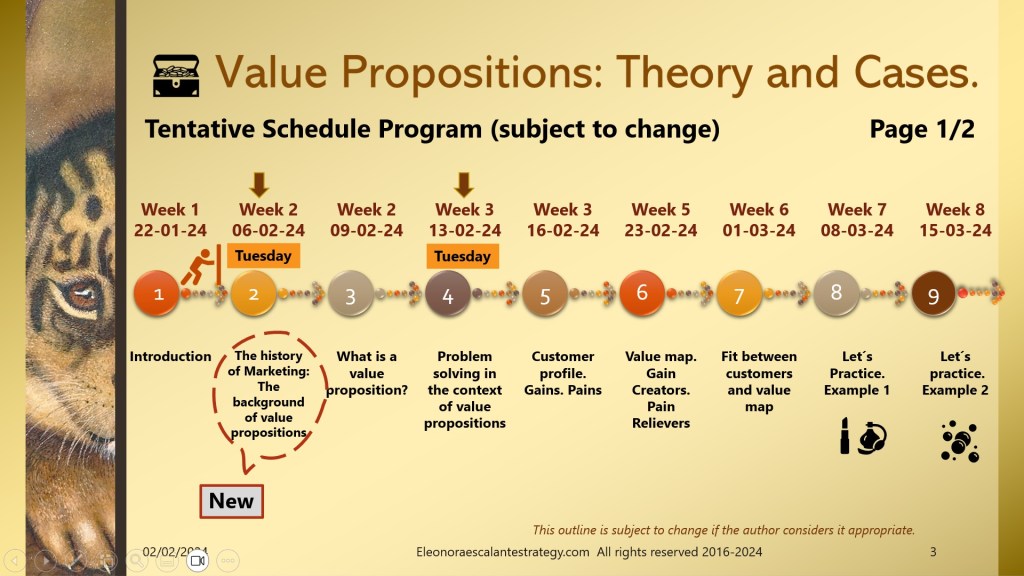
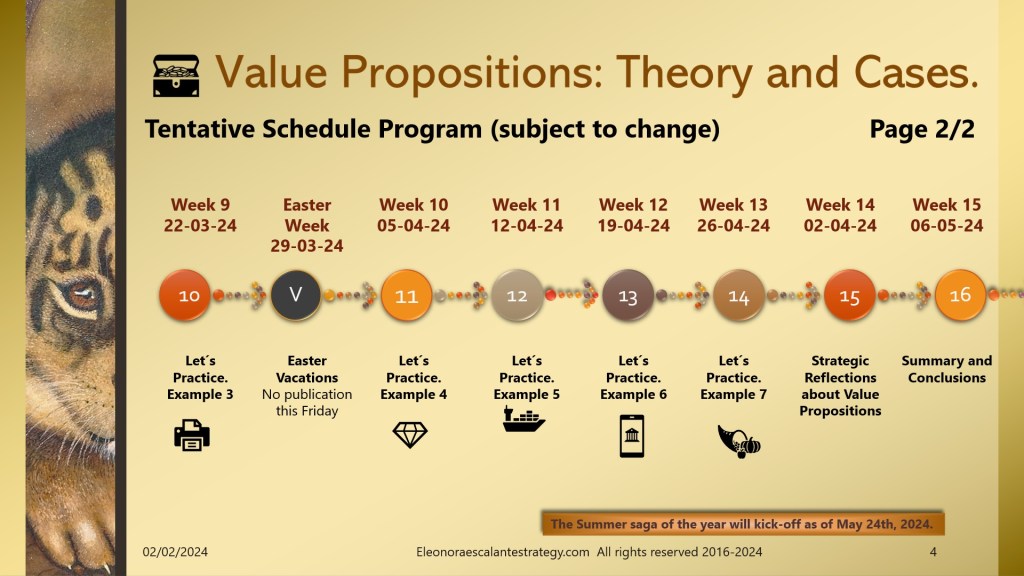
Our beloved Spring saga of the year will last 14 weeks in total. During the first six episodes, we will plunge deeper into the existing theory, covering the original philosophical and historical aspects of the notional frames of reference that have been used in the past. Particular industries have their own methodologies for business modeling, and we will also show you how to find them. After that, we will proceed with examples and practical exercises. We expect to show you at least 7 enterprises or entrepreneurial initiatives. Each of them is of a different industry. We will disclose the specific details of each practical example on the day of our scheduled publication, not only because we wish to keep a surprise effect on our readers, but also because we wish to astonish your thoughtful reflection with each of our episodes. Certainly, at least we will comprise three value propositions of products of massive consumption usage all over the world; one of the luxury industries; one related to logistics; one coming from the financial sector; and finally, we will also include one of the agriculture-food area. If there is time, I will include an infrastructure-civil works or public sector engineering value proposition example too.
This saga examines the link between theory and practice. In addition, it is expected to be the kick-off for a profound improvement of the theories of business modeling generation. As usual, I always dedicate our analysis to the new strategic management frameworks that might be utilized by the business owners of the future generations. Accompany us on this delightful journey of revelations!
“Value propositions: Theory and cases” saga outline, purpose, rationale, philosophy, and objectives.
We invite you to read the following document. All your anticipations about this saga are included in it. You can download it or share it if you wish.




Announcement.
This spring saga will last 16 episodes plus the grand finale, from January 22nd to May 6th. We will publish only on Fridays (occasionally, if required we will add more additional episodes on Tuesdays), at the latest before 11:59 pm (CST). Our next episode will explore the historical aspects of the term “value proposition”.
Musical section.
This saga is about improvement, amelioration, upgrading, and advancement much required in the theory and practice of value propositions. Value propositions are the first step in our business modeling frameworks. If the value proposition is improper, then our business model is mistaken. Therefore, we will also share the music of classical progress that marked a before and after in the composer´s headway. The spirit of the selected pieces of music reflects a “step up” in our ladder of musical knowledge. Let´s enjoy Vivaldi’s interpretation of a sea storm. Violin Concertos Op. 8 No. 5 In E Flat Major, RV253: La Tempesta Di Mare composed by Antonio Vivaldi.
Thank you for reading http://www.eleonoraescalantestrategy.com. Blessings see you on our next episode.

Sources of reference and Bibliography utilized today. None.
Disclaimer: Eleonora Escalante paints Illustrations in Watercolor. Other types of illustrations or videos (which are not mine) are used for educational purposes ONLY. All are used as Illustrative and non-commercial images. Utilized only informatively for the public good. Nevertheless, most of this blog’s pictures, images, or videos are not mine. I do not own any of the lovely photos or images unless otherwise stated.
 Eleonora Escalante Strategy - Strategic Reflections Think Tank