
Value Propositions: Theory and Cases. Final Episode 25. Summary and Conclusions.
We are here to make you think.
Today we are blessed for your presence with us since January. My utmost appreciation to all our readers who stayed with me since then. With this last chapter, we are closing “Value Propositions: Theory and Cases” with joy and satisfaction. Realistically, from the technical point of view, we concluded the saga last Friday. I have nothing else to add to each of the examples. Each example’s strategic reflections were compelling, and we truly believe we have illustrated how to use the Pigneur-Osterwalder tool. We didn´t land into the whole business model framework: We only focused on the Customer Value Proposition (CVP) section and all our inferences focused only on CVPs. With this in mind, we have completed the spring-summer literary saga of 2024. We have accomplished the objectives of our spring-summer literary academic content. We have fulfilled more than what was initially planned, and we expect that you have mastered the art of understanding how to do any type of CVP to continue testing and refining your versions.
When designing CVPs, never forget that true love for your clients matters. True love will make you prevent harm when you launch products and services. A genuine affection for your clients will also stop you from rolling out spoiling products for your communities. An honest devotion to integrally offering the best to your clients will dissuade you from undertaking businesses just for money, at the expense of the well-being of people. Most of the current disruptive high-tech products, including Artificial Intelligence (AI) wouldn´t fit with the needs and wants of our “customer jobs”, and this is enough distinction to halt them. Artificial Intelligence only applies to a minuscule set of procedures that require strong and robust regulation in place (usually for medical recovery of patients with challenging health troubles). However, AI should never be offered to the masses of populations through information technologies. Artificial Intelligence (AI) can´t be designed to displace the human cognition of individuals (1). Initially, in January, I was planning to design the CVP for Open AI products as Chat GPT, to show you the high degree of unfit between the customer profile and the value map, but then I thought it wasn´t worth my time. The merit of Eleonora Escalante Strategy is to retain its role as a state-of-the-art corporate strategist by choosing the most relevant crucial problems in the world. Nevertheless, today I only mention that I had the intention to show you with clear CVP evidence, how far have we trespassed our limits, in our quest to push AI not as a force for good, but as the “destruction of human cognition”.

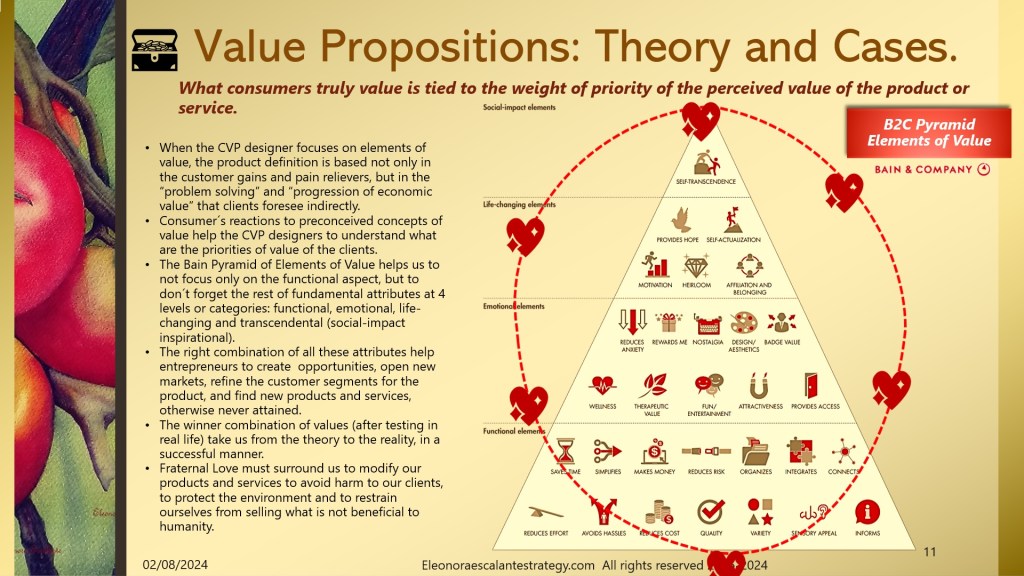
A CVP evaluates human wants and needs when humans perform activities or tasks in their daily lives. But the needs and wants do not only represent physical, functional, or emotional pain relievers or gain creators. We must always elevate our elements of value to a social impact level, to self-transcendence. Let´s reflect that several levels of pains and gains must be unraveled by providing pain relievers and gain creators. If we categorize them using the traditional Maslow´s approach, we find physiological, safety, social esteem, and self-actualization hierarchies. If we categorize them by using the Bain Pyramid of Elements of Value (2), we find functional, emotional, life-changing, and social impact levels. During the identification process of pains and gains, when building a customer profile, we determine the causes of our problems. During the identification process of pain relievers and gain creators, when designing the value map, we specify the elements of value that help us to create several products and services. We are obliged to discover our products/services pain relievers and gain creators, through a prioritization of elements of value. We use the B2C Pyramid of Elements of Value from Bain and Company, and it works. By using this categorization of Elements of Value, we have filled the empty gaps of the tool of Pigneur-Osterwalder, because we can differentiate between functional, emotional, and life-changing or social impact levels at this initial stage of our business modeling; and we can create additional adjacencies or keep our products above the functional/emotional trap. The rest of our inferences have been included in each of the 24 episodes that we have published, and we truly expect that you can read them again, now that the saga has been finalized.
We also close this saga by reminding our readers, why we are state-of-the-art corporate strategists. Eleonora Escalante Strategy performs problem-solving, critical thinking, and strategic reflections. Our content is “state of the art” and we will explain it again for you below.
Our role as state-of-the-art corporate strategists:
We are here to make you think. Our assessment “tends to address current matters in contrast to other combined retrospective and existing approaches”. As a result, we provide new perspectives on the issues, and we always point out new areas for further research. We discovered that history and philosophy are not separated from business and economics, because there is no truth in our critical and systematic evaluations, without understanding the origin of the problems. Our state-of-the-art reviews are based on an integral problem-solving mindset, a specific acumen that characterizes us.
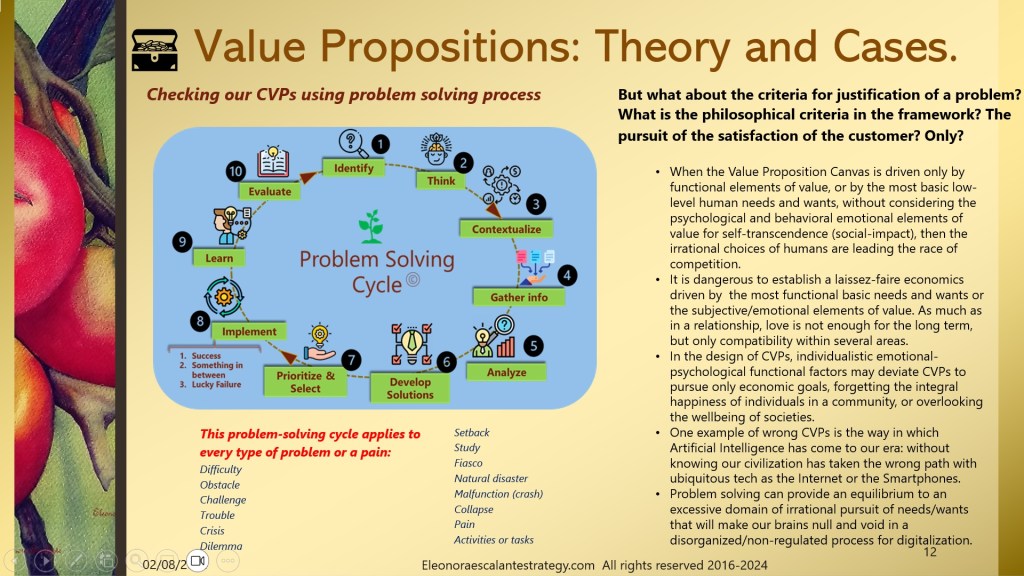
While we study and analyze the most urgent matters on earth, we perform it from our domain. We use the existing strategic management frameworks to explain the philosophical and historical origins of our problems and to show you their benefits and limitations. Although we do this, every saga has different approaches. Every journey is a discovery inquiry. When something is not well conceived in the strategic framework, it arises by itself. We are responsible for making you think about it. We simply try to shake the paradigms of the frame of reference. We try to prove with evidence, how the framework has unchained the current consequences (dramatic outcomes given the incorrectness of the framework, or positively correlated when the scaffold is correctly structured). Finally, we evangelize with a wake-up call for practitioners in the matter, so they can at least think about how to review, transform, and improve the structure of the framework. If needed, we push the boundaries to go back to the roots of the theoretical background because we can´t carry it for future generations. Many of the current pitfalls in digital-virtual disruptive technologies are the consequence of a wrong framework of reference (at the corporate or business strategy levels).
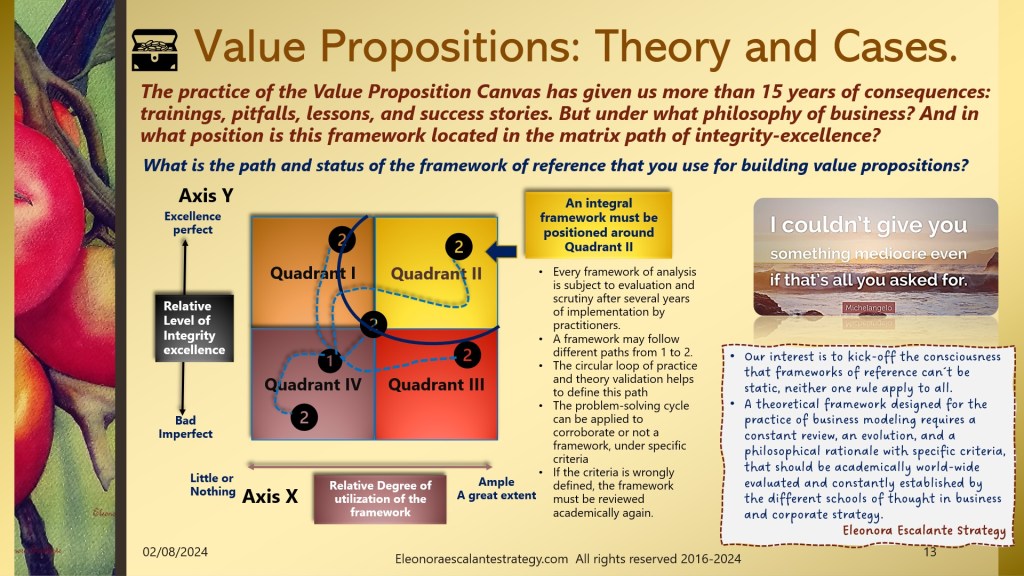
A ship without a good thinker skipper may float but it will fail in arriving at the desired destination. We are not producing our sagas, to suggest to continue doing the same “things” that you will study at top strategic management courses in well-recognized universities. We have already passed that stage, and despite their relevance, a long time ago, we observed that our corporate strategic decision-making is not well theoretically oriented. And we are reaping the consequences of it. With the NAIQIs, we are completely lost in our journey to making prosperous societies.
While we perform a state-of-the-art analysis, we are not here to blame anyone, not to accuse the original creators of our current strategic frameworks (at the strategic corporate, business, and functional levels). Not at all. On the contrary, we are convinced their framework designs were performed using systematic and quantitative research methods, and they recreated historic observations into a model. Everything was done properly from the point of view of “how it happened to those who succeeded beyond their competition”, but that doesn´t mean it is the way to go for the future. We are trying to establish a change from “how it happened” to “how it should be”, if we wish to fix the most outstanding problems on the planet. And that is the distinction of Eleonora Escalante Strategy value proposition.

Humbly, we can´t blame any of our strategic business gurus for what is happening. We all have been trying to do the best we can. Some have done it by inventing the frameworks. Others as users of the frameworks. The goal has always been to reach economic success, but no one ever left the warfare mentality of our ancestors. By accepting competition from the mercantilist way of doing business, capitalism didn´t review itself first with the conviction to self-improve its own value proposition. Since the Enlightenment, our history of economics has simply intensified to win capitalism over socialism, and it was impossible to dig into the philosophical quality control of the fathers of capitalism economics premises. In this context, whatever was working for economic success in capitalist economic theories was the trend to go, and with two World Wars, a Cold War, and so many warfare conflicts succeeding during the last century, no one was able, to react on time and ask about the consequences of those “fashionable strategic frameworks”. Additionally, there has always been a profound paradox between economics and business. All this mess began when the marketing thought separated itself from the historical-philosophical-economic principles, in its quest to please the customers. Information technologies came simply to make this conflict evident: The implementation of the high-tech without regulation has created an inherent collusion between the customer, the business owner, and the rest of the value-chain stakeholders. This collaboration mesh is simply collusion, and it has eroded the transparency of capitalism in gigantic monopolistic industries at the level of the Big Five: Alphabet (parent of Google), Amazon, Apple, Meta (operator of Facebook), and Microsoft; or the Magnificent Seven, which includes Nvidia and Tesla.
I can only write as I do now because I have had the time to re-study and evaluate everything during the last decade. And it hasn´t been easy, it has been an enormous task. And I am still in the process of discovery. As a result, we are here, in this universe to shake the roots of thinking of those frameworks. We are here to contribute to a positive transformation of our “skewed” theoretical models. If we don´t do it, we will be in no time under a new system of “je ne sais quoi capitalism”: I dare to call it digital begging feudalism.
The first month of the saga “Value Propositions: Theory and Cases” also included a voyage in time to the history of economics (and marketing). We wanted to find out why corporate strategy has been what it has been since the 1800s. We traveled in time, to a period where the field of strategic management didn´t exist in black and white, but it was inherently embedded into the decision-making of the rulers of Europe. It coincides with the period in time in which the intellectual premises of business schools started to flourish in Europe and America. We discovered that the theoretical aspects of economics and business weren´t unique, but quite eclectic. It took almost a century for the German, the English/Scottish, the Swiss, the Italian, and the Austrian fathers of business to disseminate their theoretical influences to our uppermost business schools programs being developed at Harvard, Michigan, Wisconsin, NYU, Northwestern, Ohio State, Illinois, and John Hopkins Universities.
In terms of economics, 4 schools of thought have been relevant to our days: The Classical economics (called the British School) laissez-faire of David Ricardo and Malthus; the Austrian School of Economics, under the flag of Carl Menger with its marginal utility concept; the German Historical School of Economics, which involves historical facts and induction reasoning applied to policy making for further industrialization and modernization of the State; and the Walrasian Lausanne School. Over time, the German Historical School trained and groomed most of the first economists who unlocked economics and business administration university programs in North America. In contrast, the Austrian School members continued their impact through the LSE, NYU, and Northwestern. During this saga, while exploring the roots of marketing thought, the intellectual genealogy of marketing took us to explore the rhetorical conflict between the Prussian and Austrian Schools, and we cleverly noticed that the original Austrian School fitted much better with the appropriation of “customer is king” premise in marketing academics after the end of WWII. After Menger, the custody continued with Von Mises, Schumpeter, then Hayek and Machlup. Consistently the marketing conceptual tools tied to the Austrian School, took the spotlight in most of the business schools, and remarkable authors (such as Kotler) continued developing marketing frameworks based on the Austrian School philosophy of “the client individualism, self-interested behavior, and the pursuit of satisfaction of needs/wants of the customer”.
Capitalism comes from a philosophy of warfare competition. Sadly but that is the truth. Capitalism’s origins come from a history of warfare, the dominant conquering of new territories and labor, and a total dedication of mindset power to control the economic resources (land, human labor, mining, etc.) for wealth creation. In the building of empires and their respective societies, capitalism won over socialism simply because the pattern for wealth creation and prosperity was quicker in capitalist emerging societies. And also because communism, the most radical form of socialism was fully immersed in corruption and persecution of Christianity. Mercantilism, as the nidus of capitalism, that emerged with the discovery voyages of the 15th-16th century, was the corporate strategy decision of that time to expand those resources and amplify the power of the emperors involved. The competition for control, dominion, and authority between the European rulers of that time (France, Britain, Spain-Austria, Germany, and Russia) gave birth to mercantilism. And, mercantilism coined our capitalism. Afterward, every single step in the further evolution of this economic system has been accompanied and empowered by cycles of innovation and technological advancements, without little or almost no regulation in place. The classical economics of the Laissez-Faire era was activated as an alternative to the mistakes of imperialism regulations before the 19th-century movements of Independence. Capitalist Free markets gave to this earth one of the freest impulses to attain inexorable and unstoppable wealth creation by opening the doors to so many sophisticated industries and new economic sectors, in comparison to the past civilizations which based their wealth in agriculture, and construction of infrastructure.
The history of our pace of innovation.
All our ancient civilizations’ economic activities were performed around 2 economic premises: (1) Expand the power of the empires through war for the dominion of the weakest, and once established (2), Provide a certain degree of organization for economic/social stability. The philosophy of this economic growth was the pursuit of the greatest: bigger is better. To stabilize the empires under new territories, the emperors required a Government organization with clear responsibilities: procuring enough food/basic shelter for their populations (to avoid crisis or social disruptions), erecting royal and/or government structures, building cities (urban solution), and/or building public works for the needs and wants of the communities (socially stratified around the feudal sovereign), in a wide range of formats. The common denominator of infrastructure works since 3000 BC to our days has always been:
- Transportation systems, including maritime solutions: here we include the type of transport (for example, ships, horses, steam locomotives, trains, automobiles, buses, electric cars, high-speed trains, trams, metro, balloons, planes, helicopters, jet planes, etc.); and the infrastructure of the medium of transport in each phase of development (trails, canals, roads, ports, train stations, then railways, highways, airports, etc.).
- Water supply: water supply collection (groundwater, wells, springs, surface water, snow, saline water, brackish water), water treatment structures, distribution of water (aqueducts, canals, pipelines, operation and maintenance, etc.).
- Wastewater disposal: infrastructure for domestic and industrial disposal, water treatment procedures and facilities, etc.
- Stormwater and rainfall management: Rainfall and surface runoff processes, river and reservoir routings, drainages, etc.
- Solid waste collection, recovery, treatment, and disposal: collection and transfer operations of garbage, processing, recovery and reuse, treatment and disposal options, etc.
- Hazardous waste: these are the 20th century’s newest projects technologies and infrastructure to manage the pesticides from agricultural lands, gasoline leakage from service station tanks, heavy metals from plating solutions, pulp and paper industries, stone-clay and glass manufacturing, machinery, radioactive wastes from nuclear power plants, etc. The century of hazardous waste began with WWI, with the advent of the chemical and allied products industries. Additionally, hazardous waste generators do not only come from these industries, but also from commercial sources, and institutional sources such as hospitals, laboratories, military installations,
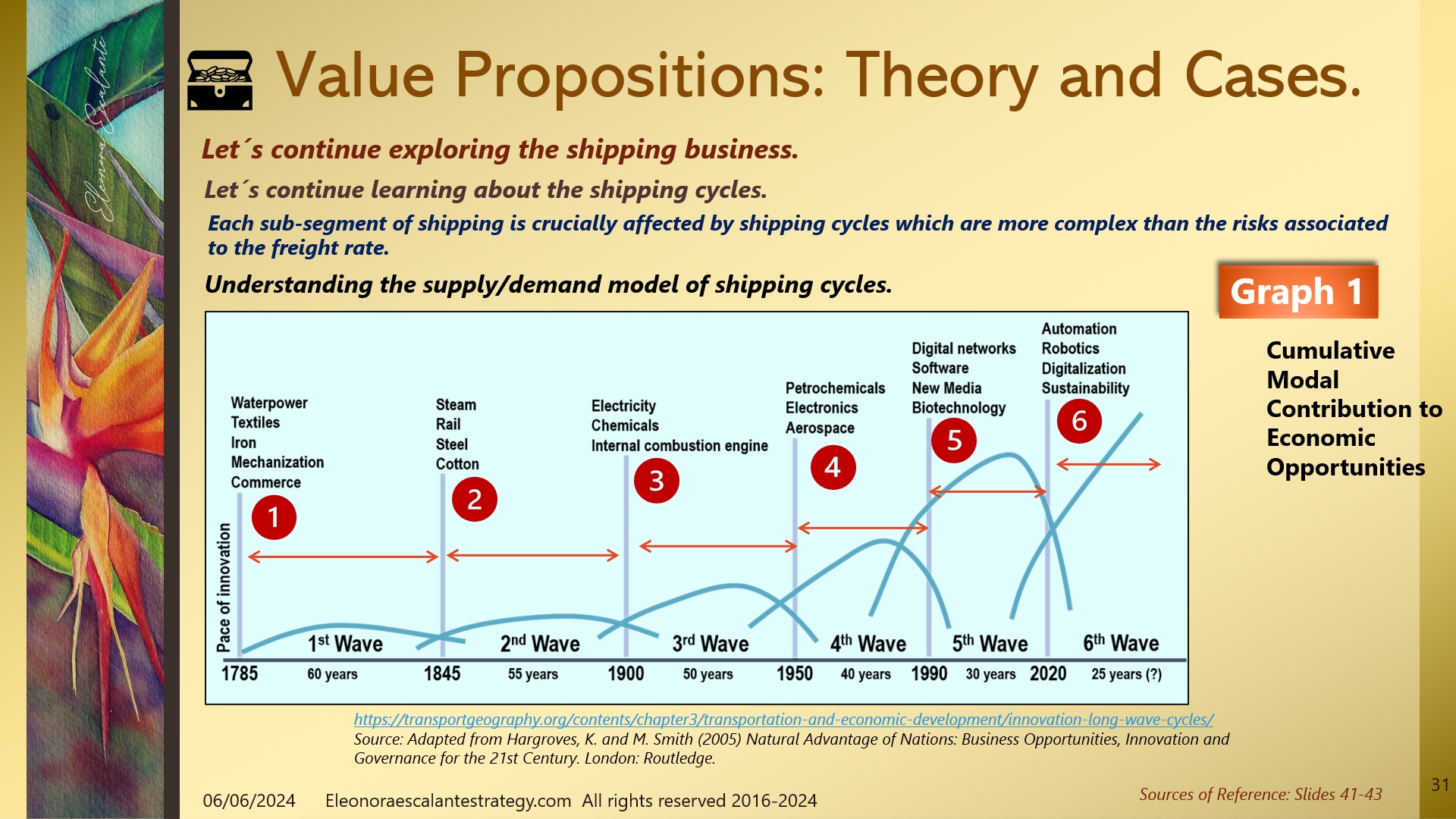
Let´s reminisce the evolution timeline of our pace of innovation (From example 5):

1500-1780:
Between 1500 to the French Revolution, corporate decision-making was a mess of gigantic proportions because the feudalism mindset was so permeated in a new emerging merchant system. For example, every merchant wanted to earn an elite title, while the old nobles were fighting for the king’s probity of their domains. These profound feudal ideological inconsistencies maintained the nobility aspects of feudalism knitted with the new emerging class interests: the traders or what is now the exporters-importers of goods of the world. The technical and financial innovations were used for warfare. Slavery as a racist labor foundation for the new industries development: the new trading routes systems that connected the Asian riches, the American goods, the spices, the agricultural resources, different crafts, textiles, and artisan mining of gold, silver, and precious stones. Mercantilism (from the merchants) established a modus operandi, that still exists today in our most developed economies. The low-cost strategy is the perfect example of how mercantilism is hidden under the capitalist flag.
1785-1880: With the advent of the steam power technologies, industrial imperialist capitalism gave birth to the concept of factory, or manufacturing at the largest scale, while coal and metallurgy production were driving the connectivity railways and trade growth within the British/French/Dutch empires new industrial cities. By the time of Queen Victoria, the British Empire swallowed the world and the rest of the monarchies through the marriages of the Saxo Coburg Gotha descendants with the rest of the royal houses of Europe (Prussia, Greece, Denmark, Sweden, Norway, Finland, Belgium, Bulgaria, Romania, Russia, Spain, France, Serbia, and other German Nobility houses). Hemophilia is the legacy that royal monarchies of Europe had to endure and is the saddest proof of evidence of this period of European empires´ affiliation.
1880-1970:
When electricity as an invention took humanity like a storm, petroleum and coal competed to create energy, the Ford automobile epoch commenced, and with it, the chemicals, and the incipient oil and gas industries began. The figure of the State with a monopoly capitalism opened the doors for the multinational corporations (MNCs). Two World wars didn´t stop the settlement of capitalism all over the planet, except for Russia, China, and other minor regions. The cradle of aviation initiated, the pursuit of new ways to create energy resources apart from fossil fuel sources for electricity production, such as geothermal, hydroelectric, natural gas, nuclear, other gases, solar thermal and photovoltaic, and wind.
1970-2010:
The petrochemicals, telecommunications, electronics, and aerospace industries joined the party of wealth creation. The Supply Chain concept was the result of the new global production networks. A new era of corporate global capitalism appeared. Aviation as an industry continued its development, and the Internet was recognized as the highway of communications. E-commerce roots began.
2010-current:
With the recognition that most of the industries in the world have prospered with inherent pollution and little care for the environment, oceans, and the air; a new wave of green power alternative production plus decarbonization of the atmosphere began. We have arrived at the United Nations SDGs, in the middle of one of the most perverse waves of innovation, pushed by information technology, digital networks and devices, software, telecom internet infrastructure, etc. We are not answering to human wants and needs anymore, but the construction of a virtual Internet capitalism everywhere, with the containerization of goods and services coming from Asia, was the result of that challenge. Almost all local or domestic industries from every nation have been troubled by the traders of mercantilist low-cost strategies embraced by the Chinese economic model around 30 years ago.
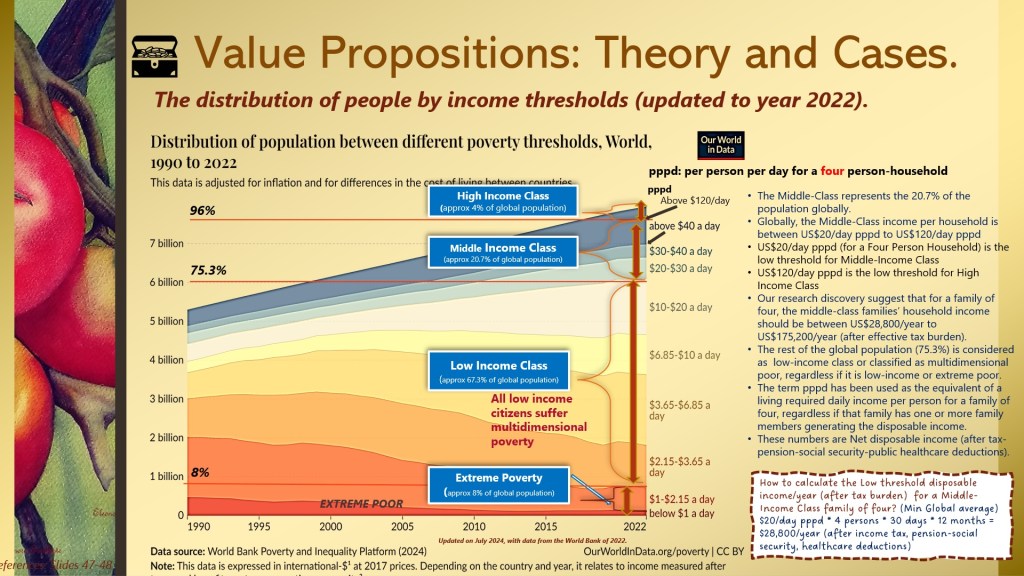
Nowadays, we are living in what we have called the multidimensional combo of the NAIQI era: Nanotechnologies, Artificial Intelligence (including automation and robotics), Quantum processing, and the Internet. No one knows if this current wave of innovation will bring enough prosperity and wealth creation for the middle-class and low-class population members, who represent around 96% of the population. Eleonora Escalante Strategy is convinced that this new evolution shift is not properly devised, and it is not going well. For the first time in 6 waves of innovation since the first industrial revolution, what is coming with the NAIQI has no head or tail. To go from real to virtual is truly killing the economic old system in all its features and formats. The quest for opening “virtual jobs”, is disgracing not just the arts and the artisan capabilities; but it is degrading one of the most sophisticated neurological human processes: it is dismantling our brains’ capacity to do things on our own, and it is passing human cognition to machines. Psychologically, this is the first time, in which the combo of NAIQIs, has been absurdly and irrationally agglutinated to exercise a momentum that affects the human capacity for innovation, and the marvels of the brain functions. The NAIQI era is blocking the cycles of hereditary linkage of brain evolution that humans began since we have found records of history. We are going back to the times of the cavern art of the Lascaux Caves, not just literally in our appreciation of art, but because by functioning into the NAIQI era, we are officially rejecting to educate and work hard to help our brains to think and stretch our intellectual progression. By giving up our own cognition, and passing it to the machines, we have decided to stop learning on our own. And this is just an example of so many other thoughtful activities that humans are starting to give up. Several recognized experts and scientists have been doomed by the fallacy that evolution, collaboration, and the harmonious coexistence of man and machine are possible under the current terms of the NAIQIs, but this is simply radically wrong. Why? Because we are moving into the NAIQIs without any limit, zero regulation, and no tollgates of any control or howsoever, and all of those who could be opposed to it, are simply spectators filled with curiosity to find out what will happen. Even the most remarkable thinkers are only an audience of “let´s see and watch out”, monitoring who will detonate the threshold to stop the NAIQI era, while everyone is seated in the amphitheater (an allegory of the Roman circus), trying to believe that the NAIQI can be a complement of humans, while, deep down in the bottom of their hearts, all the audience knows that AI has come to replace us.
Artificial Intelligence is hurting Human Cognition.
Our human cognition, the “sacrosanct activity that only belonged to humans”(1) is being harmed at its core by artificial intelligence (all together with the combo of NAIQIs), and with this damage, our capacity to think, to reason, to do critical reflections, and create inventions, which placed us at the top of the intellectual hierarchies over other animals, is also being damaged.
Those who foolishly and naively believe that embracing AI means collaboration for humans, not only have forgotten our history but have no idea of the vulnerability of our capitalist system. Where are we going with the NAIQIs? We must be aware of all that is driving our businesses, and how or why the NAIQI technologies are leading us to a time of “je ne sais quoi” digital feudalism, in which if we assume it, we all are paving the road for our kids to become digital beggars without comprehending it.
Artificial Intelligence (all together with the rest of NAIQI), is marking a fundamental shift in the history of mankind.
Human beings never trespassed the limit of doing business, by considering that replacing their own human cognition is the way to go. What is worse is the ubiquitous and rapid adoption in which AI is advancing and taking our conventional human cognition processes: understanding skills, expertise, developing intelligence, and critical thinking. Without knowing, corporate decision makers have built a machine-driven ecosystem, in which humans are the slaves of these machines. This is more than disinformation, lack of ethics, or worrying about asking for AI industry regulation. We are igniting our own machine substitutes, reducing the middle class, and triggering social climbing trepidation that barrens human recognition by meritocracy. Is it possible to establish the rules of the game under a machine-driven ecosystem monster?
Value Propositions: Theory and Cases has finished. But we will continue navigating in our quest to put love for God, love for humans, and love for the environment at the core of everything we do. Now we are simply evangelizing to you that each strategic management framework requires a philosophical adjustment that goes beyond adding ESG indicators, or the famous corporate social responsibility (CSR). Corporate strategic designers (professors and advisors from top consulting houses) are required to humanize their jobs and put fraternal love for people at the core of every single decision-making about the firm products and services, the company scope, scale, and geographic growth.
See you on August 30th, with our Fall-Winter saga of the year: Central America: A Quest of Progression of Economic Value. Joys for you!
Thank you for reading http://www.eleonoraescalantestrategy.com. Blessings see you again in three weeks from now.

Sources of reference and Bibliography utilized today.
(2) https://media.bain.com/elements-of-value/#
Disclaimer: Eleonora Escalante paints Illustrations in Watercolor. Other types of illustrations or videos (which are not mine) are used for educational purposes ONLY. All are used as Illustrative and non-commercial images. Utilized only informatively for the public good. Nevertheless, most of this blog’s pictures, images, or videos are not mine. I do not own any of the lovely photos or images unless otherwise stated.
 Eleonora Escalante Strategy - Strategic Reflections Think Tank