
Central America: A Quest for the Progression of Economic Value. Season II. Episode 13. The School of Salamanca (I)
Dear adorable readers:
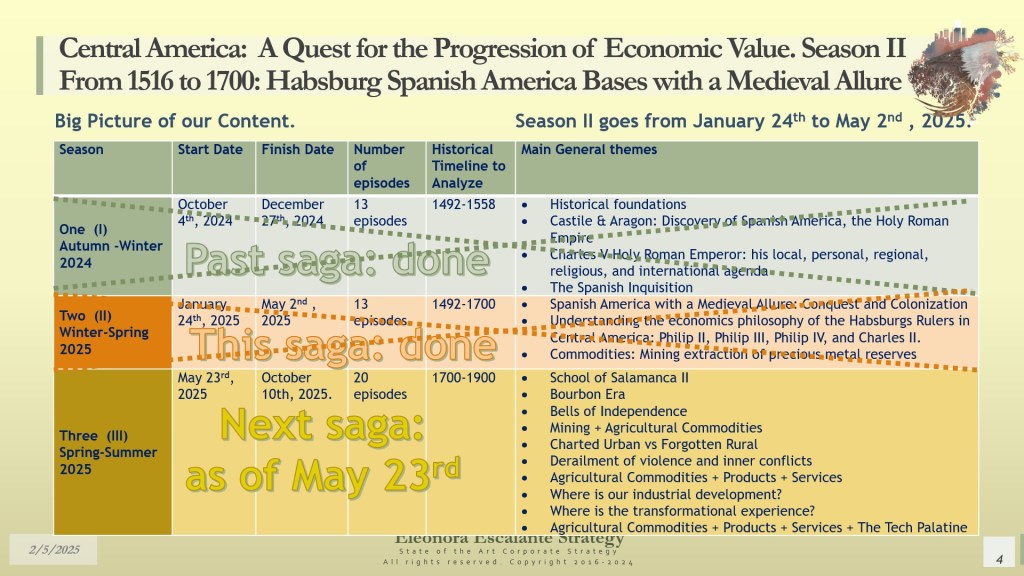
Season II of the saga “Central America: A Quest for the Progression of Economic Value” has been completed today. We appreciate your attention to our first three months of mindset development. We will continue with season III in three weeks from now.
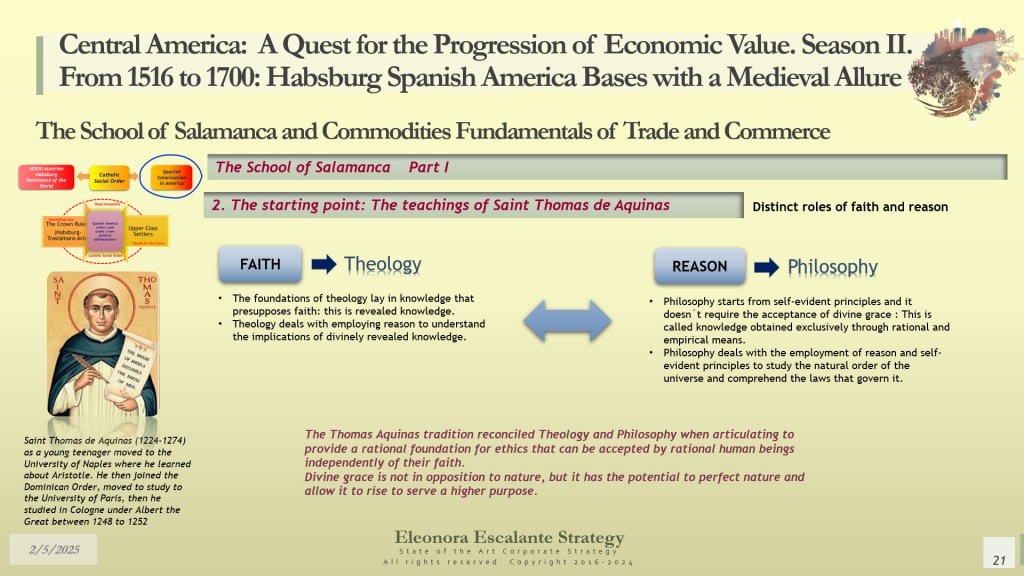
The School of Salamanca is relevant to understanding the philosophical framework that guided the decision-making of the Kingdom of Guatemala’s further growth and evolution. What can I say about the School of Salamanca? It was a group of studious Dominican and Jesuit theologians (mainly) who tried to include God and St. Thomas of Aquinas in the teachings of their time. The Dominican order was established in Salamanca by 1244. The Dominicans started by teaching grammar, logic, and theology, and by 1480, the Salamanca Dominican institution received the right to award academic degrees from the Papacy in Rome. Francisco de Vitoria was the founder of the School of Salamanca, and he was a lecturer on reconciling St. Thomas Aquinas with the different legal, political, ethical, and economic problems of Spain. Our presentation today includes the precedent context of the School of Salamanca, who was who in that intellectual movement, and the main teachings of St. Thomas of Aquinas. As a Bonus material, we have included a detailed chronology on usury-credit as of the year 1300 BCE to 1854, when England abolished its laws of usury.
The School of Salamanca (first part) is described, analyzed, and scrutinized below. Feel free to download and print the material, please. You can pass it to your friends, colleagues, etc.














We always upload our frame of reference (package of slides) on Friday, and we return after the weekend to provide the additional strategic reflections on this chapter.
We encourage our readers to get acquainted with our Friday master class by reading the slides over the weekend. We expect you to create ideas that might be strategic reflections or not. Every Monday, we upload our strategic inferences below. These will appear in the next paragraph. Only then will you be able to compare your own reflections with ours. If you don´t practice the effort to create your own strategic reflections after reading the frame of reference, you lose the opportunity to learn. Don´t waste the chance to study these topics, please. You have no idea how important it is for your decision-making. It is beyond learning to read, analyze, expand, infer, and create your thoughtful reflections. These are strategic reflections for your soul.
Additional strategic reflections added on Monday, the 5th of 2025.

- John H.A. Munro. Today´s strategic reflections concerning usury are derived from the work of Professor John Munro (1938-2013). His work at the University of Toronto Center of Medieval Studies has not only guided us to comprehend the history of usury, but to understand what was the exact moment in time when God´s laws for three religions: Christianity (Protestants and Catholics), Muslims, and Jews, became irrelevant for the rulers of Europe. Our strategy house is especially appreciative of the written papers of Professor Munro. We truly mean carrying gratitude for his legacy to all of us.
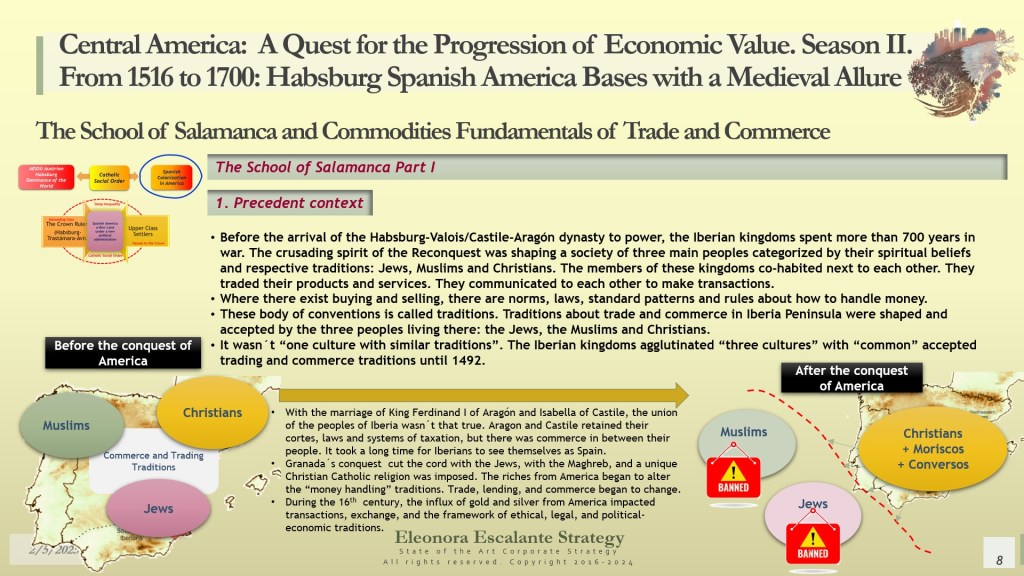
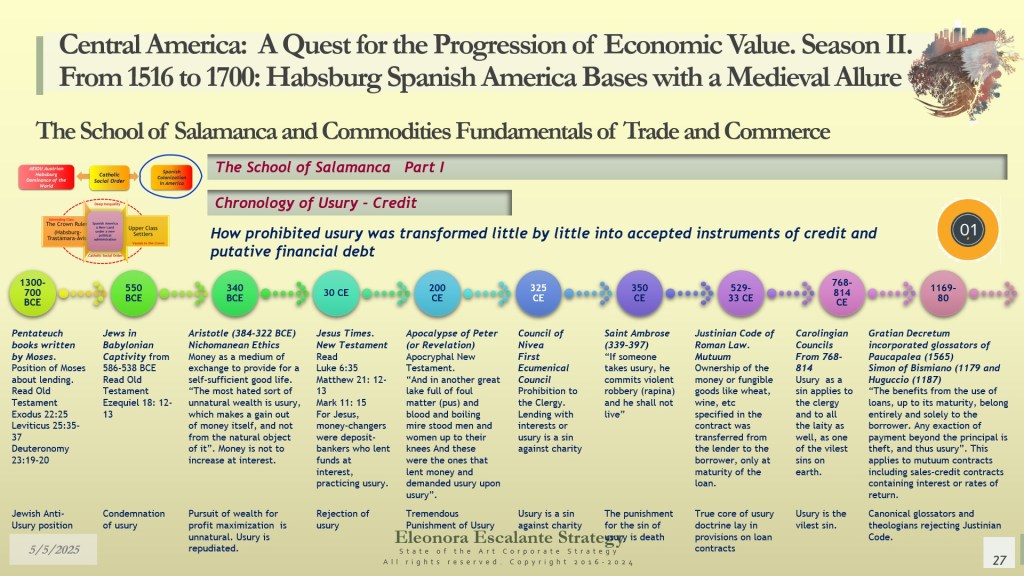
- Common element of the economic thought of Jews, Muslims, and Christians before the discovery of America? Despite that the Iberian kingdoms were engaged in warfare before 1492, they were living close to each other and they executed commercial transactions. At the bottom of the population, people had an attitude towards money. At the top of it, kings and court members also had a mindset towards coffers and finances. We have been extremely careful to show you all the considerations that you must foresee to understand how the rulers of European Empires were able to expand their wealth. Money was required for their plans. But money exchange can’t be understood without comprehending the term of usury. Since the Pentateuch of Moses, usury was defined as a sin. The Old and New Testaments depicted it as such. The same occurred for Muslim conventions and Jewish traditions, despite that Jews were forced to become the bankers of everyone else. The Iberian kingdoms held three populace groups who believed that lending money and asking for an incremental amount over the principal in the form of an interest rate, gambling, or currency exchange profit was a sin that implied a condemnation and rejection (excommunication and mortal sin, taking you to hell). Beyond the Bible, slides 8 to 10 show us an introduction to this topic.
- Greek Economics in Spain. Slide 11 describes the positions of Plato and Aristotle about money. The elements of Greek economics traveled through Islamic authors to the Maghreb and then to Muslim Spain. See slide 12. Averroes (1126-1198) was able to integrate elements of ancient Greek thought with Islamic traditions, and these entered the Iberian Muslim territories’ leaders.
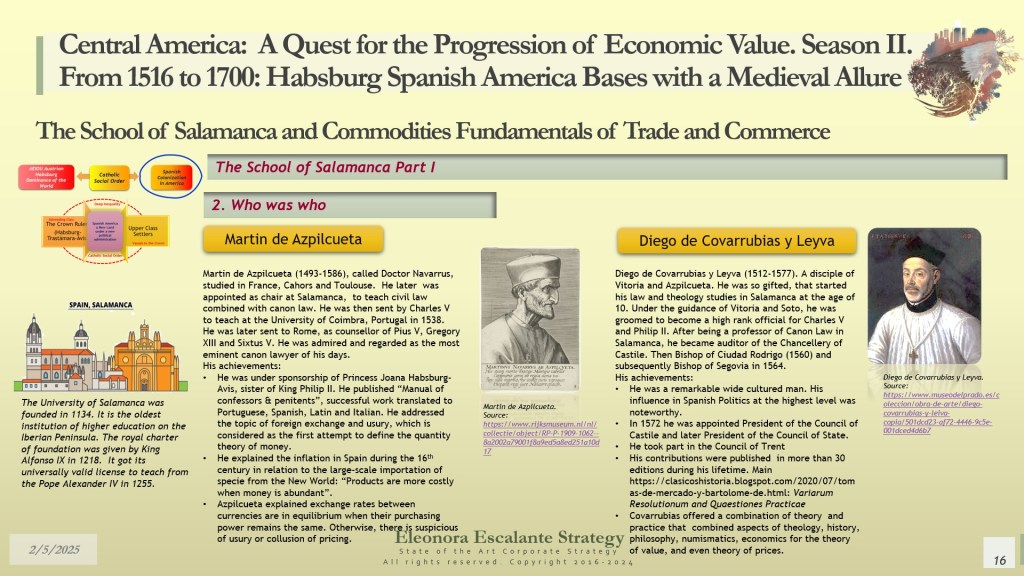
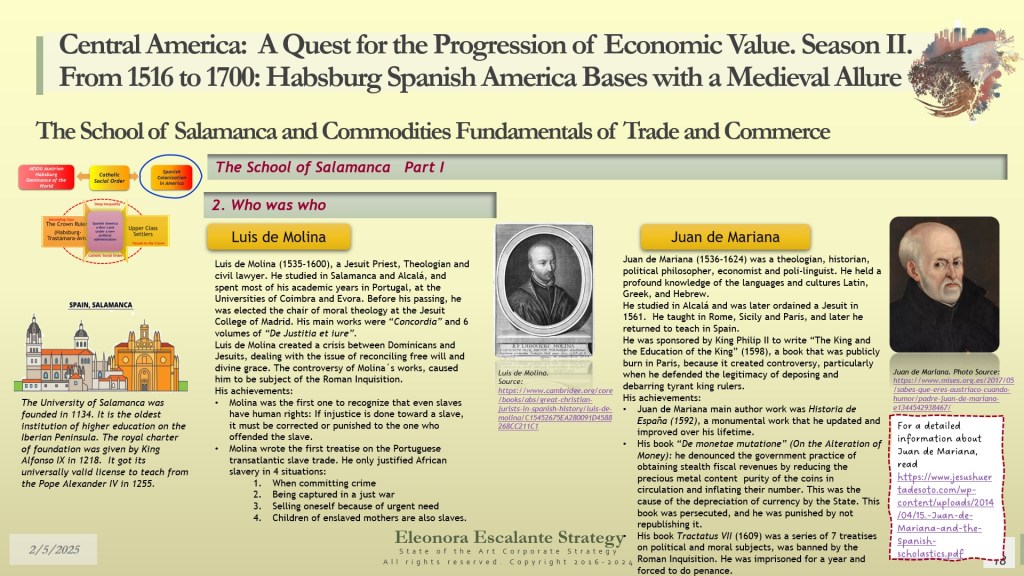
- The School of Salamanca. We have built an infographic summary of the main elements of the School of Salamanca (slide 14). For today, we have organized the profiles of the main representatives of the School. The section “who was who” (slides 15 to 19) describes the main achievements of Francisco de Vitoria, Domingo de Soto, Martin de Azpilcueta, Diego de Covarrubias y Leyva, Bartolomé de las Casas, Tomás de Mercado, Luis de Molina, Juan de Mariana, and Francisco Suarez. We have included Melchor Cano and Bartolomé Carranza to show you the conflicting difficulties that arose between them, too. We avoid tagging them as Spanish Scholastics because they were not dogmatic. They were theologians who tried to solve issues that were complicating the Habsburg rulers of Spain. The School of Salamanca was Dominican in spirit. And Dominicans were anti-usury at its essence. Dominicans not only preached against the usurers in the eternal fires of Hell, but they also had a huge impact on most secular members of the Iberian kingdoms’ courts and government officers, particularly tax collectors. The Dominican perspective was aligned with anti-usury bans. The decretals of Pope Gregory (r 1227-1241) influenced the order by commanding Christian rulers to expel all usurers and to nullify all wills and testaments of unrepentant usurers. Any priests who permitted Christian burials of usurers were themselves punished as usurers too. In this context, Francisco de Vitoria developed a profound admiration for St. Thomas of Aquinas. More than 30 of his students expanded professorships, even in México (with Alonso de la Vera Cruz), and the Kingdom of Guatemala. Look at this connection, please. Vitoria and his colleagues tried to include “God’s teachings of Aquinas” into monetary economics. His movement ended by the mid-17th century.
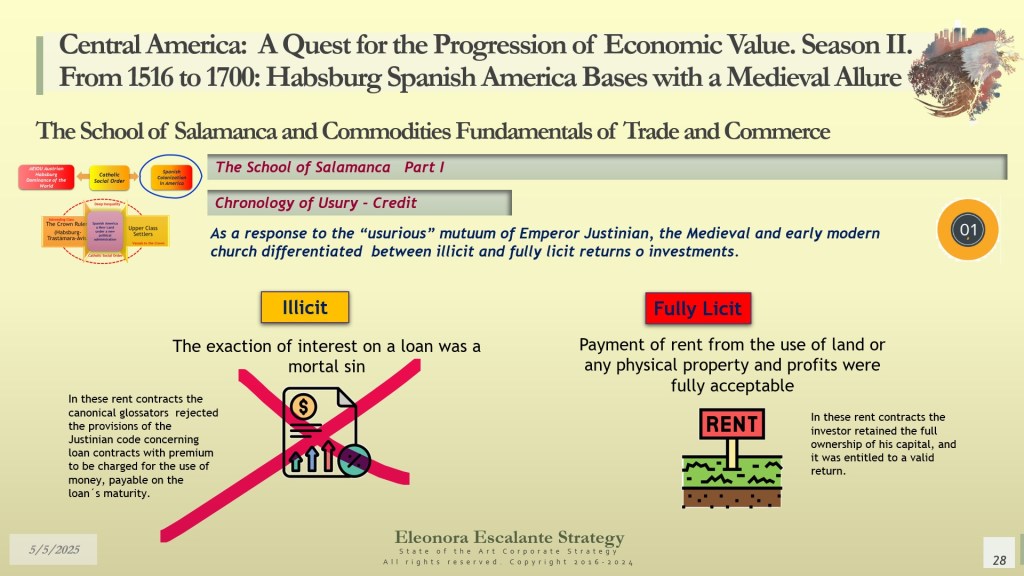
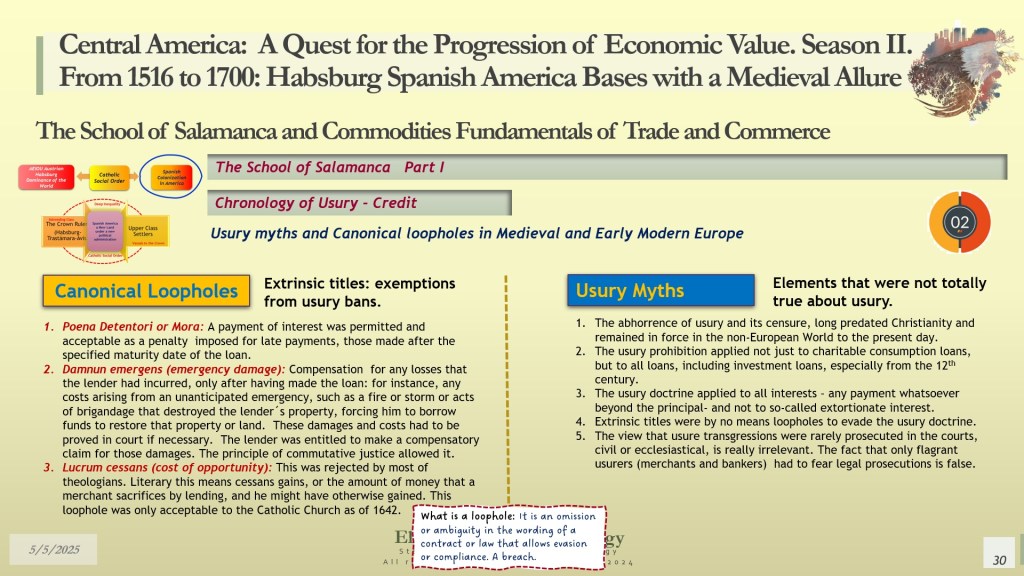
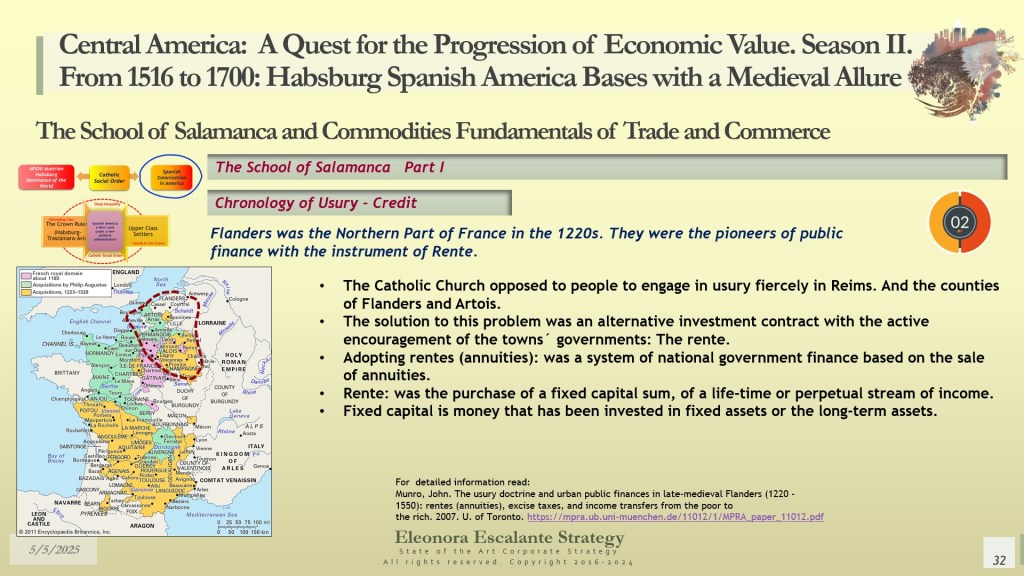
- The study of the term usury: The most important part of our master class today is the bonus material that you will find from slide 25 to 35. This material is so relevant because most of the difficulties of the financial aspects of Spain during the Habsburg rulers, the posterior international finance instruments of the European Nations, the development of the stock exchanges, and the issues of our times (including our current cryptos) are derived from the moment in time when usury evolved to become an accepted instrument of credit by all the European nations. I encourage you to print the Bonus material and read the chronology, please.
- God´s laws against usury were forgotten as of 1542. Coincidentally, it was under Charles V, HRE, that the Habsburg Netherlands opted to legitimize usury. Charles V used the same formula as the Roman Empire by legalizing interest payments on loans up to a maximum limit of 12% per year. He limited it only to commercial loans. What happened then? The bills of exchange became fully negotiable credit instruments. The expansion of the credit supply began. Like a roller coaster, the rest of the kingdoms under the Spanish Empire followed the Low Countries’ example. From 1542 to our day, usury has been the norm of prosperity and wealth creation. The bonus material slides are self-explanatory.
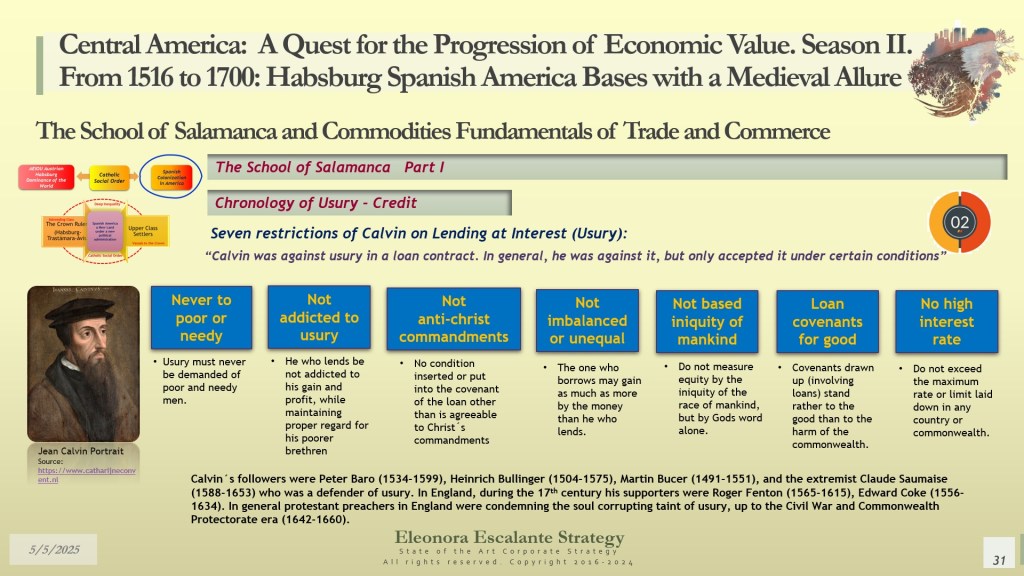
- What are the teachings of God when using credit? From the point of view of Biblical commandments of Moses, Jesus, and Apostle John, any loan with an interest rate, or any annuity, is usury. Priests from the Catholic side, and preachers from the Protestant Reformation side as Luther, Zwingli, Calvin, and their followers, condemned usury, despite that rentes or annuities on real estate property were accepted. Beyond that, gambling (differential betting) or currency exchange profits are also not acceptable. I would like you to read slides 30 and 31, please. Calvin was against usury in a loan contract, and he was bold to accept usury only under 7 conditions: the most evident, never use usury (charge interest rate on the principal) to a poor person or a needy individual. The poorest deserve lending that they can afford, but not usury. God is not against lending, but is against making profits on lending (with commissions, interest rate payments, negotiable invoices, currency exchange differentials, betting or gambling, etc). It was during the 16th century that both churches (catholic and protestant) were nullified in their quest to stop usury. Given the biblical definition of usury, the current crypto instruments fall into usury, too. Are we heading into the immoral wrong way again? We ask ourselves what Calvin, Zwingli, Luther, St. Thomas of Aquinas, Moses, Ezekiel, or even Jesus Christ would think of cryptocurrencies? The answer is clear as the water.
Announcement.
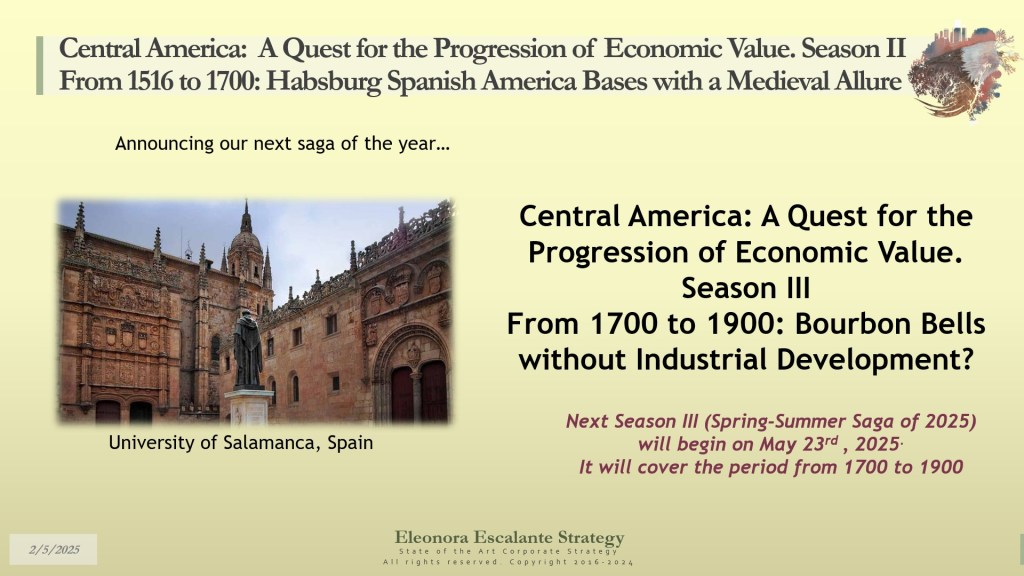
We are delighted to announce to you that this is our last episode of season II. We were obliged to close this saga with the School of Salamanca. It is in this University that Spanish America’s economic development was sealed and validated for the Habsburg-Valois/Castile-Aragon. We will continue studying the importance of the School of Salamanca in our first episode of Season III. Season III will cover the period from 1700 to 1900. For Season III, we have decided not to extend our analysis for the 20th century, which was a tough and complicated one for the descendants of Philip I Habsburg and Joanna of Castile-Aragón, given the two World Wars in Europe, and the political conflicts of El Salvador, Guatemala, and Nicaragua in Central America. However, the Bourbon Habsburgs will keep us busy as of May 23rd.
We will design a new saga about Central America Development for the 20th and 21st centuries with a new comprehensive approach later on, probably in 2026. We always fulfill our promises.
Thank you. I am infinitely grateful for your presence.
Musical Section.
Our selection of music during this saga will continue to explore adorable music produced between the 16th and 17th centuries. Season II is dedicated to the lute. Our choice for today´s episode is Xavier Díaz La Torre, a native of Barcelona, who specializes in music from the Spanish Golden Age. Díaz-La Torre is a virtuoso of the Lute, who has studied in Basel, Switzerland, and has taught in numerous international universities. He has also completed studies in choral and orchestral conducting. Enjoy.
Thank you for reading http://www.eleonoraescalantestrategy.com. It is a privilege to learn. Blessings.

Sources of reference and Bibliography utilized today. All are listed in the document. Additional material will be added when we upload the strategic reflections.
Disclaimer: Eleonora Escalante paints Illustrations in Watercolor. Other types of illustrations or videos (which are not mine) are used for educational purposes ONLY. All are used as Illustrative and non-commercial images. Utilized only informatively for the public good. Nevertheless, most of this blog’s pictures, images, and videos are not mine. Unless otherwise stated, I do not own any lovely photos or images.
 Eleonora Escalante Strategy - Strategic Reflections Think Tank