

Central America: A Quest for the Progression of Economic Value. Season III. The Jesuits Suppression and Restoration (1773-1814). Fernando VII Bourbon-Bourbon (1784-1833) Part II.
Dear great readers:
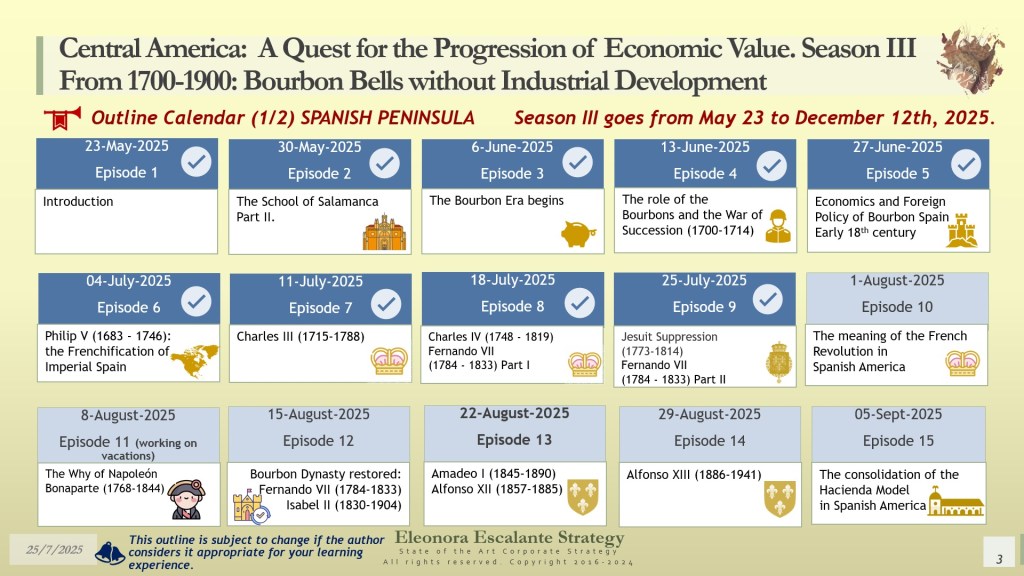
Our master class today begins with the dispatch of our frame of reference. We will display two topics:
1. The Jesuits’ Suppression and Restoration (from 1773 to 1814). This worldwide event has been one of the most dramatic situations that the religious Christian orders have ever experienced.
2. The first phase of the life of King Fernando VII Bourbon-Bourbon (1784-1833).
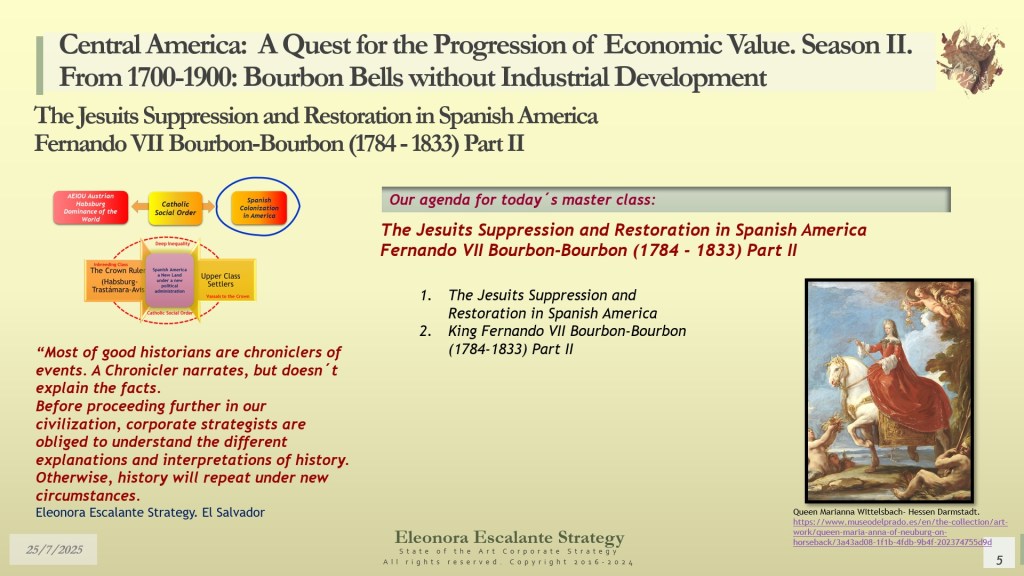
Why do we need to analyze the suppression and restoration of the Jesuits? You will read why. First, we will start by showing you that Europe (as the center of economic development for America) was dynamically changing, not just its borderlands between States, but also the monarch’s ideas. Europe was facing a bizarre recomposition of its family dynasties. The AEIOU Habsburgs´ “mission of the world” was being disrupted by the ascension to power of Habsburg former foes, a group of dynastic groups of German Families, which were predominantly Protestant. Even though the religious wars were formally ended in the 17th century, the accumulated resentment towards the Catholic Spanish Habsburgs was unstoppable on the rise. Unluckily, the Society of Jesus became a powerful arm of the Habsburgs in their quest to educate people and evangelize the whole newly discovered world. Additionally, the Jesuits were the largest school on earth (education at every level), and they were also growing in America. Second, we will continue to provide you with a brief synopsis of the Society of Jesus Taskforce’s Essential characteristics. The pinnacle of the sons of Loyola ocurred during the 18th century. More than 2,200 Jesuits were working just in the New World. The expulsion of the Jesuits ocurred first in Portugal (1759), later in France (1764), and finally in Spain and its domains in Spanish America (1767). We have analyzed the different patterns of these events. But we also explored dynastic historical reasons beyond. The Habsburgs of Castile-Aragon accumulated a series of enemies, particularly in the Holy Roman Empire. We discovered a specific pattern connected with the Wittelsbach family of Bavaria and the Palatinate, since the Wittelsbachs got close to them through marriages. We asked ourselves if the expulsion of the Jesuits was a personal revenge from the German Nations not aligned with the Habsburgs of Spain and Austria? We landed in the case of Queen Marianna Wittelsbach-Hessen-Darmstadt of Neuburg (1667-1740), the Palatinate’s second bride of Carlos II Habsburg, the Spanish sick king who died in 1700. We found in her a tremendous source of bitterness and grievance towards the Habsburgs and the new Bourbon administration. The Wittelsbach dynasty was invited to the Spanish Habsburg table because of their high-ranking fertility. The marriage of Queen Marianna of Neuburg was planned to conceive an heir for the Habsburg throne. But in the torturous process of his sterile husband, she was humiliated and repeatedly blamed for the lack of an inheritor. Eventually, she was dethroned by the first Bourbon of Spain. She was exiled to Bayonne in France, and she spent horrible years there. Yet, we have analyzed the context of the Bourbons Wittelsbach, and the Bourbons Wettin of Saxony as practically aligned with the New German English monarchy of the Hanover Dynasty. Were the Jesuits a hindrance to the Bourbons’ plans? If that is the case, then the expulsion of the Society of Jesus members was not only a removal of an impediment that was delaying the Bourbon reforms for America, but it was also a carefully designed revenge plan from the enemies of the Habsburg dynasty. Consequently, we also decided to share the point of view of Historian Jonathan Wright, who tries to answer the question: How could the most important catholic order of Europe be destroyed? Finally, we reveal to you how the reestablishment of the Society of Jesus happened in 1814, after 41 years of its displacement. King Fernando VII Bourbon is our last slide of today.
We encourage you to download and print the material below. Feel free to share it with your loved ones, and ask yourself questions. Get acquainted with our frame of reference. You will have the weekend to study it. On Monday, we will return to upload our strategic reflections.


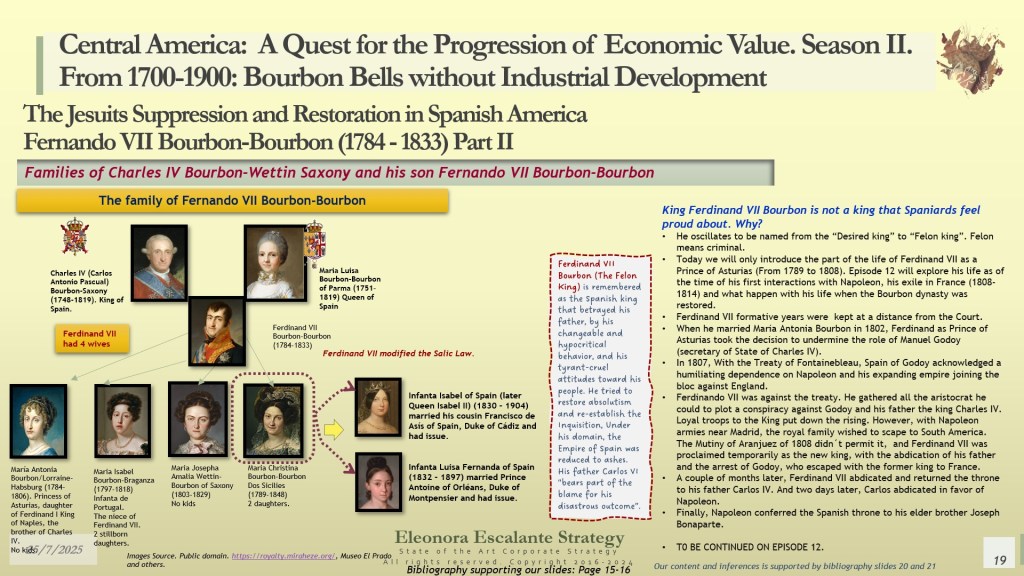

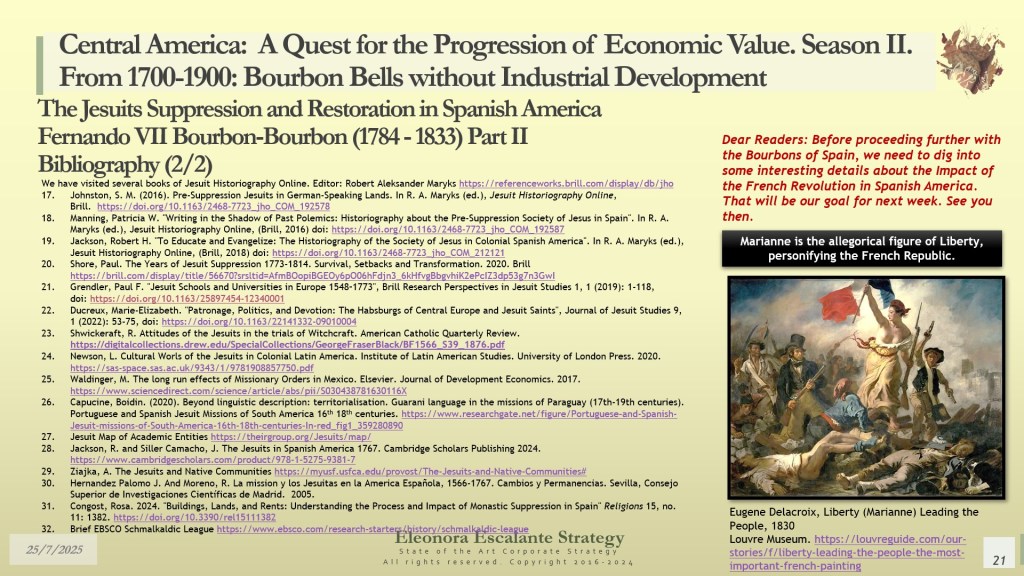

We request that you return next Monday, July 28th, to read our additional strategic reflections on this chapter.
We encourage our readers to familiarize themselves with our Friday master class by reviewing the slides over the weekend. We expect you to create ideas that might be strategic reflections or not. Every Monday, we upload our strategic inferences below. These will appear in the next paragraph. Only then will you be able to compare your own reflections with ours.
Additional strategic reflections on this episode. These have been uploaded on Monday, July 28th, 2025.
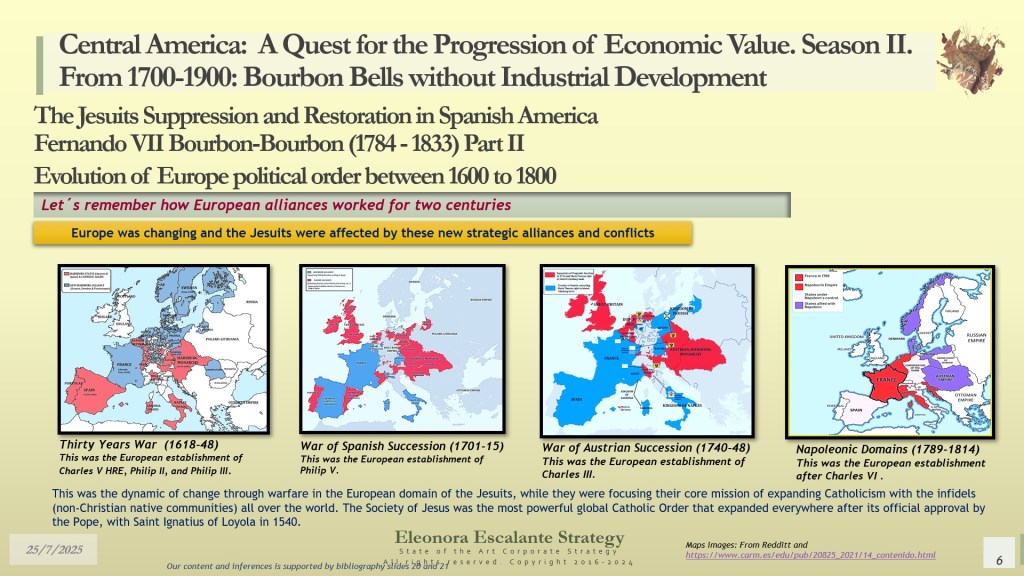
Evolution of the European political-territorial order between 1600 to 1800. Slide 6.
This slide is fetching. It explains in one shot how Europe was dynamically changing. Our aim is to show you a clear course of action on how a Bourbon family pact modified the territorial boundaries of the main dynastic owners of Europe. We can observe the territorial outcomes of the coalition and cooperation between the Bourbons (France-Spain) after the Spanish Habsburgs’ departure from Europe.
Let me explain it simply: with the abdication of Charles V Habsburg-Castile Aragon in 1556, the House of Habsburg was divided into two branches: The Senior Spanish Habsburg branch (owners of Spanish America), and the Junior Austrian Habsburg branch (owners of the Holy Roman Empire of the German Lands, Hungary, and Bohemia). In 1700, when King Charles II Habsburg passed away, the senior Habsburg branch of the family triggered the War of Spanish Succession, and the House of Bourbon Wittelsbach (with some Habsburg blood in their veins) took the spotlight place of Imperial Spain. As of Philip V Bourbon-Wittelsbach, it was clear that the grand strategy of the Habsburgs (the one designed by the patriarch Maximilian I) was going to enter into a process of restructuring, in one way or another. We already explained in our last episode that the Bourbon Wittelsbach were the new administration. This new Franco-Spanish Empire was expanding in Europe as much as in America. The strategic Wittelsbach family alliance was growing through acquisitions of new lands via warfare, specifically at the border of the east and south of France, in addition to dynastic matrimonial arrangements. All the available Bourbons and Austrian Habsburgs were marrying members of the “former German Protestant foes” of the Habsburgs.
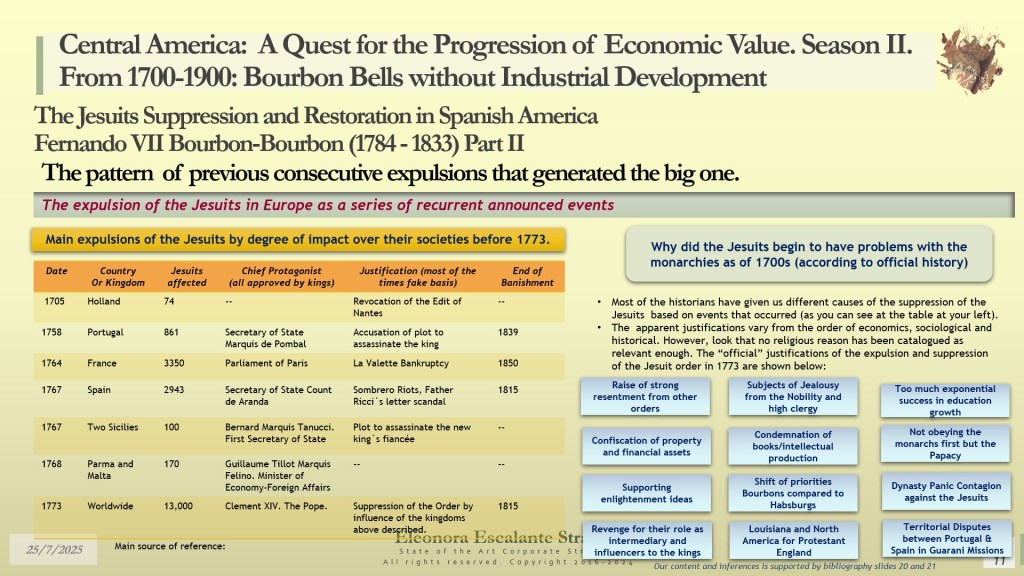
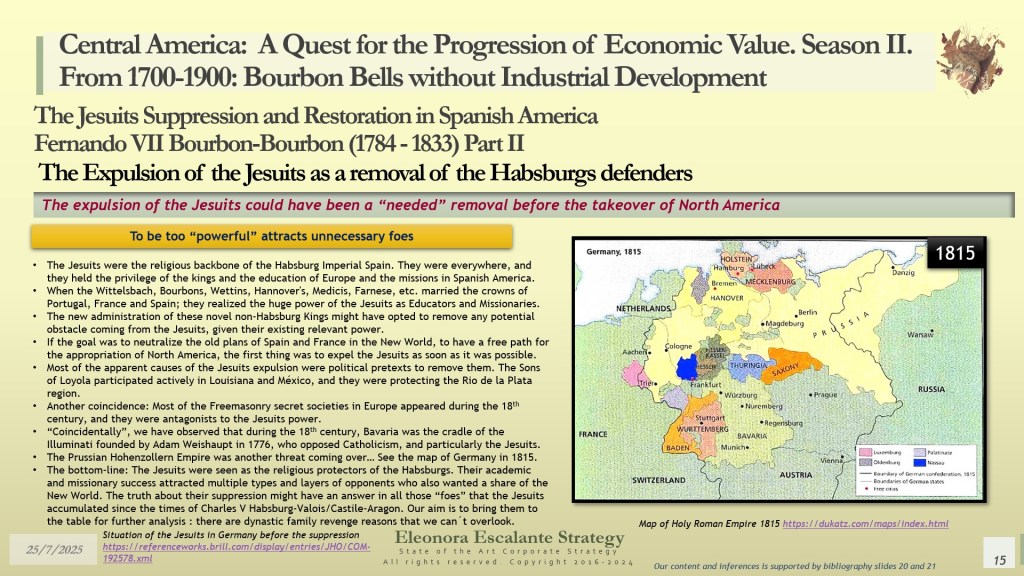
After the War of the Spanish Succession was over, there was a flow of marriages between German nobility members who were searching for inter-ruling relations with the Bourbons. The first Germans arriving at the top superstructure of the Bourbons were the Wittelsbach (Palatinate and Bayern) and the Wettin- Upper Saxony. We have already analyzed this point in previous episodes. Most of the Saxony nobles were pulled by the new Guelph-Hannover German Crown of Britain: Saxe-Coburg Gotha, Saxe-Weimar Eisenach, Saxe-Meiningen, Saxe-Altenburg, etc. The trend was to marry Protestant Germans, and the contagion was powerful. Britain’s official linkage with Saxony continued to pull the rest of the German members of the House of Saxony of Brunswick-Lüneburg and Guelphs (now Hannover) to other royal houses. The Württemberg, the Oldenburg (Holstein Gottorp), the Hohenzollern, the Hessen Darmstadt or Hessen-Kassel, the Anhalt-Zerbst-Dornburg, and the Orange-Nassau were also involved with the Hohenzollerns from Brandenburg, who were growing exponentially during the 18th century. It is in this context that the Jesuits, who were the robust intellectual educational arm of the former Spanish Habsburg administration, were banned from the Portugal-Spain-French Bourbon Wittelsbach headquarters and respective colonies abroad, using at least 12 apparent causes (some of them tricky or deceitful pretexts). See slide 11. Look at the coincidence: The pope dissolved the Order of the Jesuits in 1773, and suddenly each of the new dynastic German families linked to royals pulled their own intellectual order, or secret societies: free masons, Illuminati, Order of Saint John (Bailiwick of Brandenburg), the Teutonic Order of Prussia, etc. See the list of chivalric orders that were tied to Royal houses, please. https://www.icocregister.com/order-list/. Look at another coincidence: the viceroyalty of Río de la Plata was inaugurated in 1776, when the Jesuits were no longer working in the Guarani missions. On top of all these situations, the shift from Catholic to Protestant marked a robust flow of Protestant Germans to North America, and Catholic Germans and Italian migrants to South America, respectively.
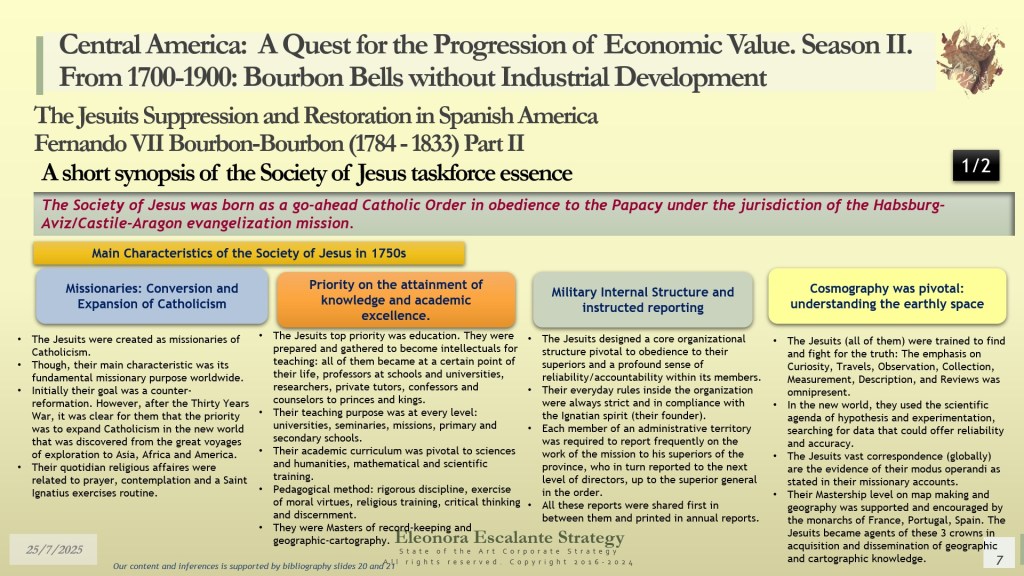
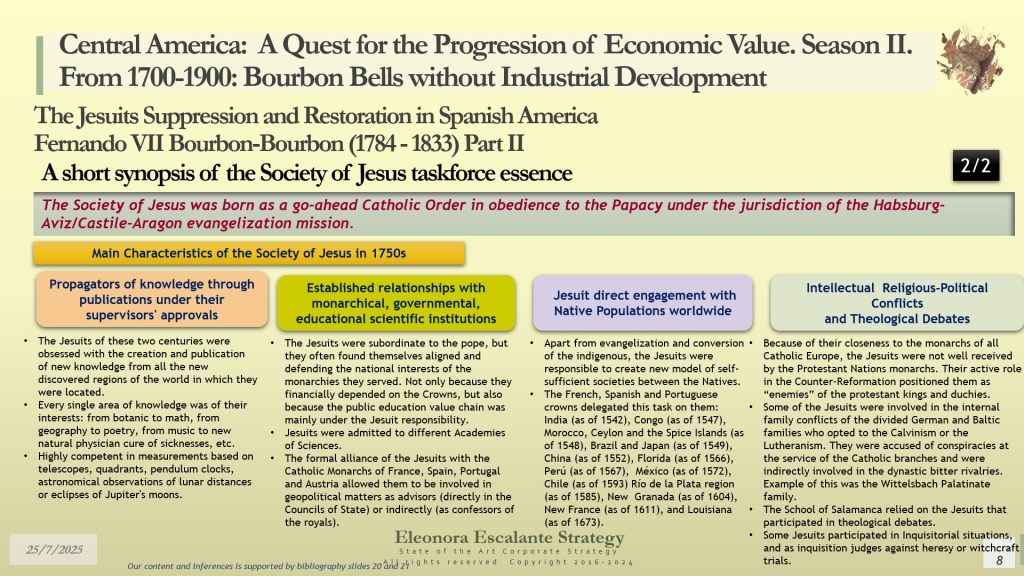
The Society of Jesus task force’s essence. Slides 7 to 10.
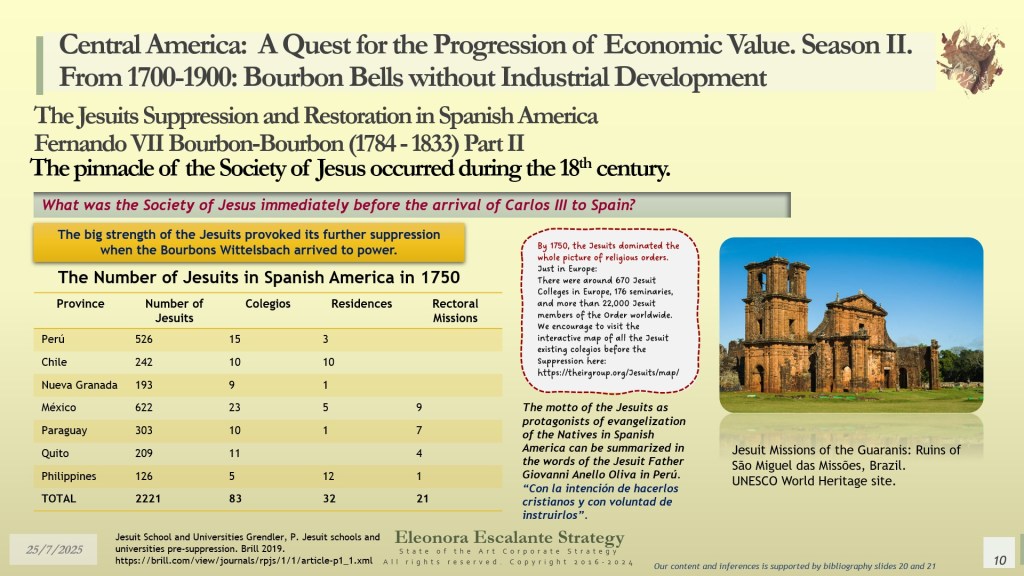
Our corporate strategy house has X-rayed the 8 essential characteristics of the Society of Jesus in the 1750s. Please read slides 7 and 8. By this time, the order had existed for more than 200 years, and its successes in education were being harvested and recognized everywhere. The scent of Catholic Europe was coined with the Jesuits. Educational Europe was largely and mainly on the shoulders of the Jesuits. The order of the Jesuits was at the pinnacle of its worldwide presence at that time. They were dispersed all over. In America, from the great lakes of the frontier with Canada, passing through all of Louisiana, México, Central America, New Granada, Perú, down to the Patagonia. They were also in India, China, and many other places in Asia. See slide 9 to verify their educational presence in Europe and their missionary critical authority in Spanish America. The Jesuits’ omnipresence in every Catholic European nation and colony, mixed with their strong connections with the royals of each Catholic dynasty, together with their educational core backbone, made them a “too big to fail.” That attribute was supposed to keep them untouchable. “Too big to fail” happens when an entity is so important to a society that a government or monarchy would not allow it to perish or be abolished due to the seriousness of the consequences. However, the German Bourbons and the German British Hannoverians thought that the Jesuits were not needed anymore (they had already finished all the conversion of the Natives of Spanish America, and they had created a robust educational system that any other order could take over and use). Suppose you see it with a magnifying glass, despite that the Wittelsbach of Bavaria were catholic, the Protestant Germans as a block were not planning a catholic development for the future; on the contrary, their vision was of a new protestant culture, with a new industrial economic system, and a different version of educational practices. The brick-and-mortar Jesuits’ establishment, with its educational work of 200 years, was an impediment, a hindrance, an obstacle that was required to be removed, and passed to other orders of their convenience. And that is what the three kings with economic interests in America did. The Portuguese Braganza-Wittelsbach, the French Bourbon-Wittelsbach-Savoy, and the Spanish Bourbon-Farnese Wittelsbach. These three monarchs decided to get rid of the Jesuits, expelling them under equal conditions as when the Jews and the Moors were expelled from Spain.
An interesting fact that we have confirmed using several historical sources: The Jesuits were returned to the Pope, to the same nation that suppressed them as a Catholic Order. And the Pope relocated them to other Italian states, Russia, Corsica, and Prussia (at least during the lifetime of Frederick II the Great, who welcomed them in Brandenburg). England received some former Jesuits, too.
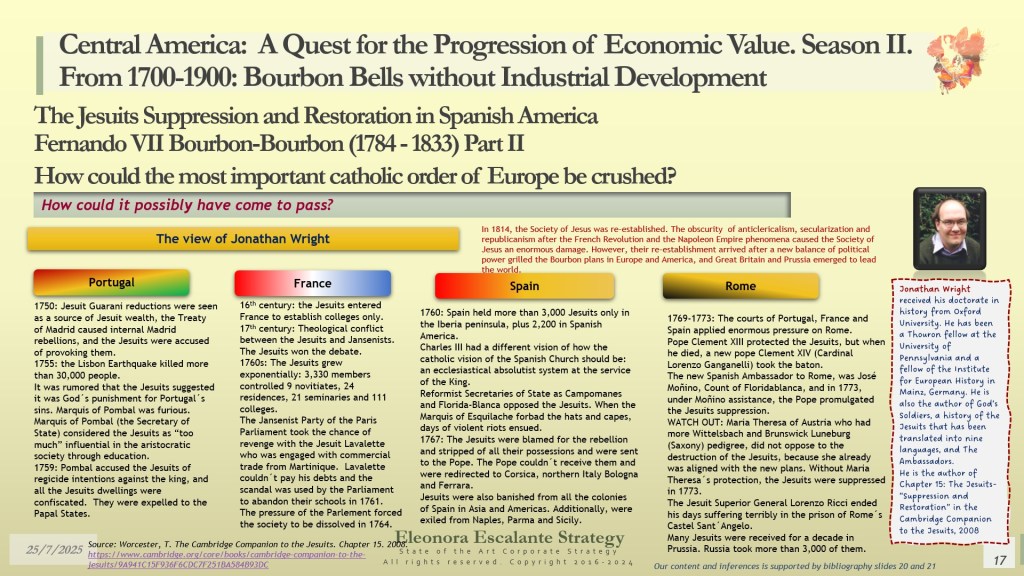
What type of decision was that? What caused the Jesuits´expulsion from the three main Royal Houses of the discovery of America? Why didn´t the Holy See Papacy defend them? Both used the Jesuits for 200 years for problem-solving of innumerable situations. In 1750, there was no other high-uppermost Catholic Order with the achievements of the Jesuits. Look at slide 10. However, their suppression was an announced process that began in the past. Look at slide 11.
Why was the Society of Jesus suppressed by the Pope in 1773?
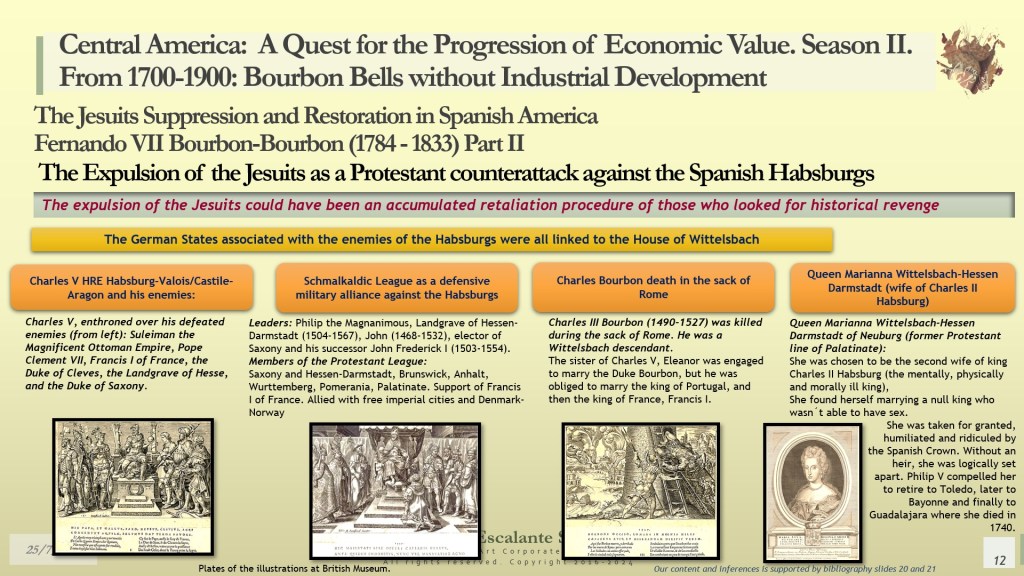
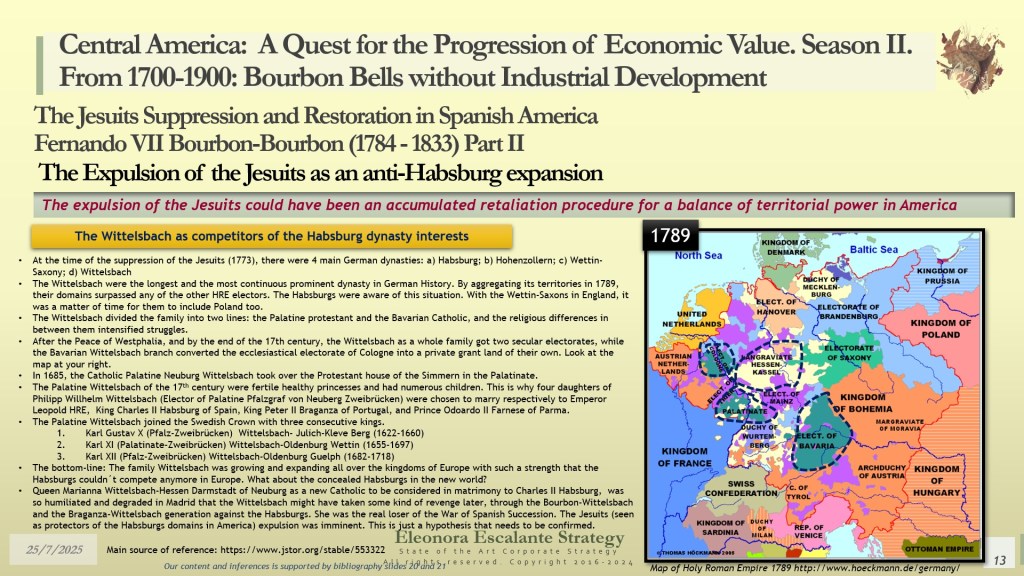
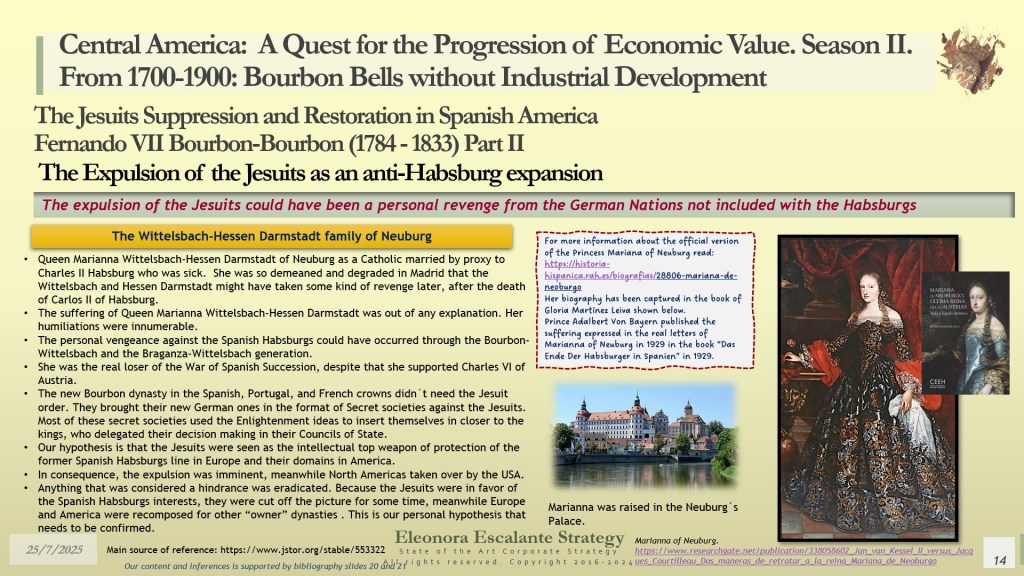
The answer: A multidimensional one. The “official justifications” found in every book about this event are all included in the 12 that we have gathered and written in slide 11. The Society of Jesus was suppressed not by one, or three, or six of those causes, but by the exponential boombox of simultaneous occurrence of all these 12 justifications, all mingled together with the revengeful motivations of the Wittelsbach members of the Bourbons and Braganza. Take note: if you read the 12 official justifications (slide 11) of the expulsion and suppression of the Jesuits in 1773, little importance is given to the subjective emotions of rage and family revenge. That emotional feeling, the “anti-Jesuit sentiment” of rancor or ill-feeling that was accumulated over 200 years (see slide 12) by all the foes of the Habsburgs who employed the Jesuits to accomplish their vision. We suggest that the omnipresence of the Jesuits in Europe was likely perceived as an absolutist Catholic religious blockage that was so powerful against the German protestant families (including the Netherlands) and the Evangelical Baltic families. When the last Spanish Habsburg died in 1700, there was a Queen from Neuburg, a Wittelsbach-Hessen Darmstadt, whom anyone could have considered irrelevant. However, she is the symbol of how far the Habsburgs could go to injure someone. Queen Maria-Anna of Neuburg was also a member of the Hohenzollern family of Brandenburg-Prussia, and she represents a spiritual sign of how severe and damaging the Habsburg Dynasty was against its competitors. We have explained the context of the Wittelsbach family in slide 13. Queen Marianna, as a relevant Wittelsbach member, was truly humiliated, dishonored, shamed, and wounded by the last Spanish Habsburg. And then, as a widow, by the same members of her Wittelsbach branch linked with the new reigning Bourbons. Spiritually explained, the offense perpetrated against Queen Marianna may be too superficial for some historians, probably because they are not women. But any lady on earth, royal or not, dreams of a marriage and raising children. In the case of Queen Marianna, that was her essential mission; she was chosen to procreate an heir for Spain. But her sick husband was a disaster. She was blamed for not being able to achieve it, and her lack of triumph provoked the War of the Spanish Succession. Ultimately, she was the real loser of the war. She was forced to leave Spain and establish herself in Bayonne, France, from 1708 to 1739, where she suffered innumerable complex circumstances. Official history has not recorded whether she was able to procreate in France with another man, but it could have been possible, and the revenge against the status quo of Spain was just a matter of time. We have shared all the contextual analysis and the possible family arguments of the Wittelsbachs in the character of Queen Marianna Wittelsbach-Hessen Darmstadt of Neuburg in slides 14 and 15.
The expulsion of the Jesuits was a move by the German Protestant dynasties with economic interests in America. Slide 16.
From slide 11, none of the multidimensional mix of the 12 justifications written by historians is as relevant as understanding the expulsion of the Jesuits from the perspective of the pursuits and revengeful feelings of a family. Particularly, in the context of a family that has been hurt so deeply. At the end of the day, it doesn´t matter if the Wittelsbachs were protestant (Rhine Palatinate) or Catholic (Bavaria). It was more than a religious family response. It was a family block that proceeded with an accumulated reaction as a historical, sociological, economic, spiritual, and personal/family vengeance. It was a block of leaders that represented so many other German Families that wanted revenge against the Senior branch of the Spanish Habsburgs, which was so weakened then, only in Europe. As we explained above, Marianna Wittelsbach-Hessen Darmstadt represents that grievance.
Now, let´s go to the economics in terms of territorial domains. According to our strategic hypotheses, the Spanish Habsburgs (who traveled concealed to Spanish America, didn´t care at all about Europe). They left for their riches in America, and they were already under other identities in each Viceroyalty, building cities and villages, temples and a Catholic organization that was already in place when the Jesuits were expelled. The only region that was not yet totally covered was North America. And that represented an opportunity for the new Protestant Germans of Europe. However, by the time that Charles IV Bourbon took the throne of Spain, the alignment of the new German British Saxony of Hannover monarchy with the Bourbons was already under construction. That is our hypothesis.
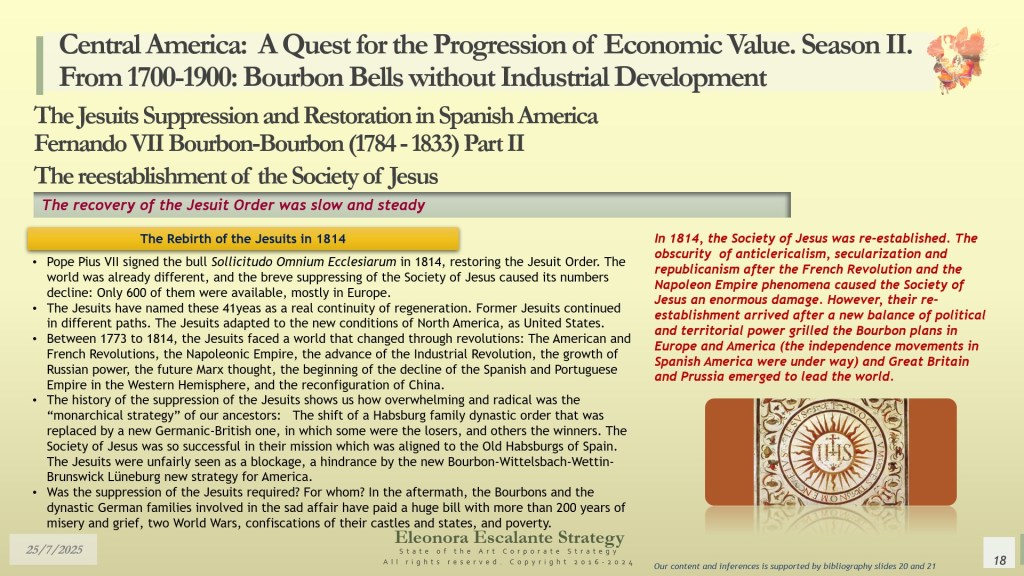
The temporal expulsion of the Sons of Loyola from the Catholic Church (1773-1814) was not against the Jesuits because of them, but against the position that they had held for 200 years with the Habsburgs. Please read that sentence again: it wasn´t because they did a bad job or not. It was because they were too big to fail. The Jesuits’ cumulative achievements for the Habsburgs were enormous. And the new German administration coming over for America wanted them out for some time. The Jesuits were the ultimate hindrance that stood in the way of the new territorial and power recomposition. The suppression took the Jesuits by surprise, as they held the “too big to fail” fallacy inside their hearts. Sadly, we believe they were seen as the Catholic representatives of the AEIOU mission of Maximilian I Habsburg. Even if they weren´t. But they were seen as a blockage against the new plans of the Protestant Germans (including the Germans from Britain). The non-Habsburg Germans sought a share of the wealth created by the Spanish Habsburgs, and the Jesuits were the main obstacle that was taking care of those Habsburg interests worldwide. The Congress of Vienna, held in June 1815, following Napoleon’s final defeat, attested to the growth of Prussia tied to the Netherlands and England. By that time, Louisiana of America was hijacked from the French Spanish Bourbon domains. Then and just then, the Jesuits were restored. See slides 16 and 17.
However, what Pope Clement XIV did against the Jesuits was not only repudiable and nastily abominable, but it was more than despicable. I am convinced that God didn´t like what the Pope did. The order of suppression by the Pope, “Dominus ac Redemptor”, was dated July 21, 1773. Eight days later, a 7.5 magnitude earthquake hit Antigua Guatemala, destroying the splendor of the city, the dwelling place chosen by the Habsburgs as a refuge, the lovely city which had served as the colonial capital of Central America for 200 years. Isn´t the justice of God real? This is not a coincidence.
To be continued…
Final Statement and Announcements:
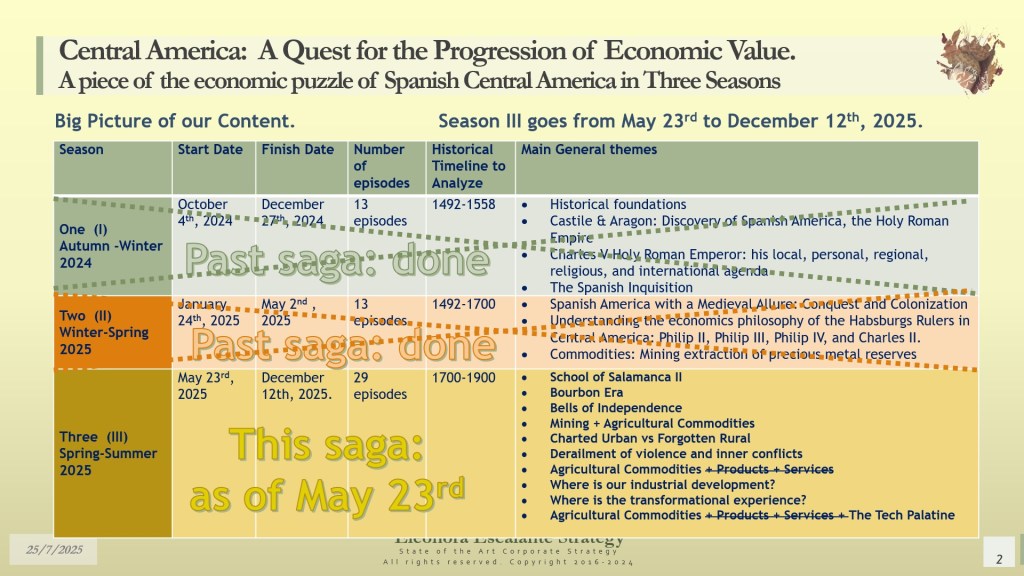
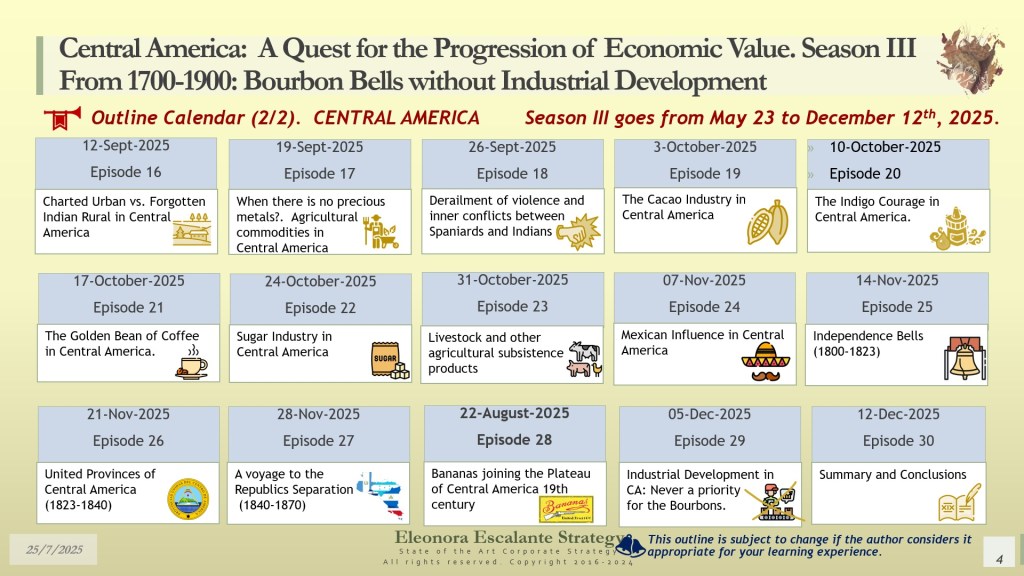
This episode is inspired by the figure of Queen Maria Anna Wittelsbach-Hessen-Darmstadt of the Palatinate Neubourg, who married the last Spanish Habsburg. We have attempted to explain the expulsion of the Jesuits from other dynastic perspectives, which are often overlooked by historians. We suggest that the Jesuits got into trouble because there was a generational shift that included accumulated motivations of revenge from other non-Habsburg German dynasties linked with the new Bourbons coming to power. Every relevant non-Habsburg European family had reasons to remove the Jesuits from their path into the territorial riches of America. The Jesuits were closely aligned with the Habsburgs’ objectives in the New World. The Society of Jesus was seen as an extension of the Habsburgs and the Pope. The new Bourbons could have considered the Jesuits as an impediment to their new dynastic plans. Our philosophical intention is to show you new ways of understanding the patterns of the resentful foes of the Habsburg dynasty, which were well ingrained in the families Wittelsbach (Bavaria and Palatinate) and Wettin-Saxony, once they got involved with the Bourbons of Spain and France, and the Braganzas of Portugal. We are trying to show you unexplored ways of understanding the facts in our search for new possible explanations of what ocurred during the 18th century against the Jesuits. Next week, we will offer our strategic reflections on the French Revolution and its impact on the world. There is a lot to learn during the following weeks. See you in our next episode. Thank you.
Musical Section.
Season III of “Central America: A Quest for the Progression of Economic Value” has assigned a new instrument for the rest of the year. It is the guitar!. Our selection of music during Season III will continue to explore the delightful music produced between the 17th and 19th centuries, featuring interpretations by virtuoso guitarists. We will embark on selecting the top 29 loveliest guitarists from the last five generations, who played music composed during the time of this saga. Our choice for today is the virtuoso Pepe Romero. He has achieved multiple recognitions for his work https://peperomero.com/bio. We have chosen a lovely Vivaldi concert with 80 high-school students performing on the guitar. Location: Austin, Texas.
Thank you for reading http://www.eleonoraescalantestrategy.com. It is a privilege to learn. Blessings.

Sources of reference and Bibliography utilized today. All are listed in the slide document. Additional material will be added when we upload the strategic reflections.
Disclaimer: Eleonora Escalante paints Illustrations in Watercolor. Other types of illustrations or videos (which are not mine) are used for educational purposes ONLY. All are used as Illustrative and non-commercial images. Utilized only informatively for the public good. Nevertheless, most of this blog’s pictures, images, and videos are not mine. Unless otherwise stated, I do not own any lovely photos or images
 Eleonora Escalante Strategy - Strategic Reflections Think Tank