

Central America: A Quest for the Progression of Economic Value. Bonus-Season V. Episode 6. Sugar-Sugar America. Part 6. The French Sugar Model. Saint Domingue´s Birth.
Dear magnificent readers:
Today, we will explore the sugar plantation model of the French Saint-Domingue territory. This part of the Island of Hispaniola was transformed into Haiti.
The sugar plantations of French Saint-Domingue were an economic effort of the Bourbon Kings of France to replicate the British and Portuguese model in their quest to become the most efficient existing sugar Atlantic colony. However, the French Bourbons were the last empire to enter the Atlantic competitive arena. It took them more than 200 years to find a roadmap in their productivity quest to establish their American territories. While the Spanish Habsburg Empire was consolidating its huge continent, the British Stewarts were establishing their 13 colonies and fighting for every inch of their British Atlantic islands. We will expand the study and analysis of French Sugar plantations of Saint Domingue in two episodes. Today is only about the context. Our next episode is about the French Sugar Business in the 18th century, and we will review the case of Toussaint Louverture and the Breda Plantations situation then. The Saint Domingue slave rebellion that began in 1791, which led to the independence of Haiti in 1804, is directly linked to the French Revolution. It was part of it, as much as the transfer of the French territories to the USA. After King Louis XVI Bourbon-Leszczyńska/Wettin Habsburg and his family were captured in Paris, the French Bourbons were under attack on every front of their territories, and the Saint-Domingue sugar slave system was dismantled.
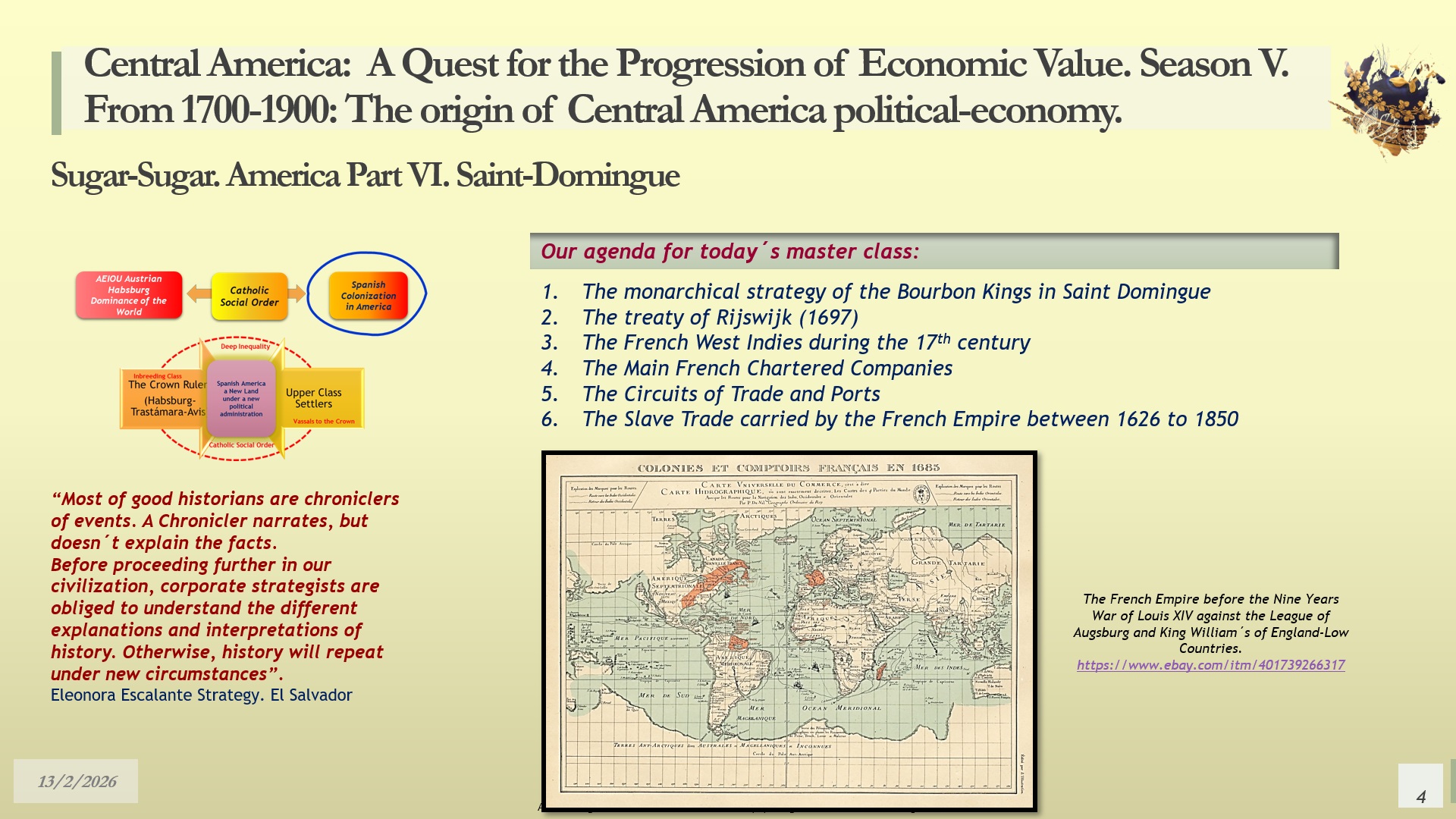
As mentioned previously, this episode is about explaining the context of the birth of Saint-Domingue as a French Colony. We have prepared the following agenda:
- The monarchical strategy of the Bourbon Kings in Saint Domingue
- The Treaty of Rijswijk (1697)
- The French West Indies during the 17th century
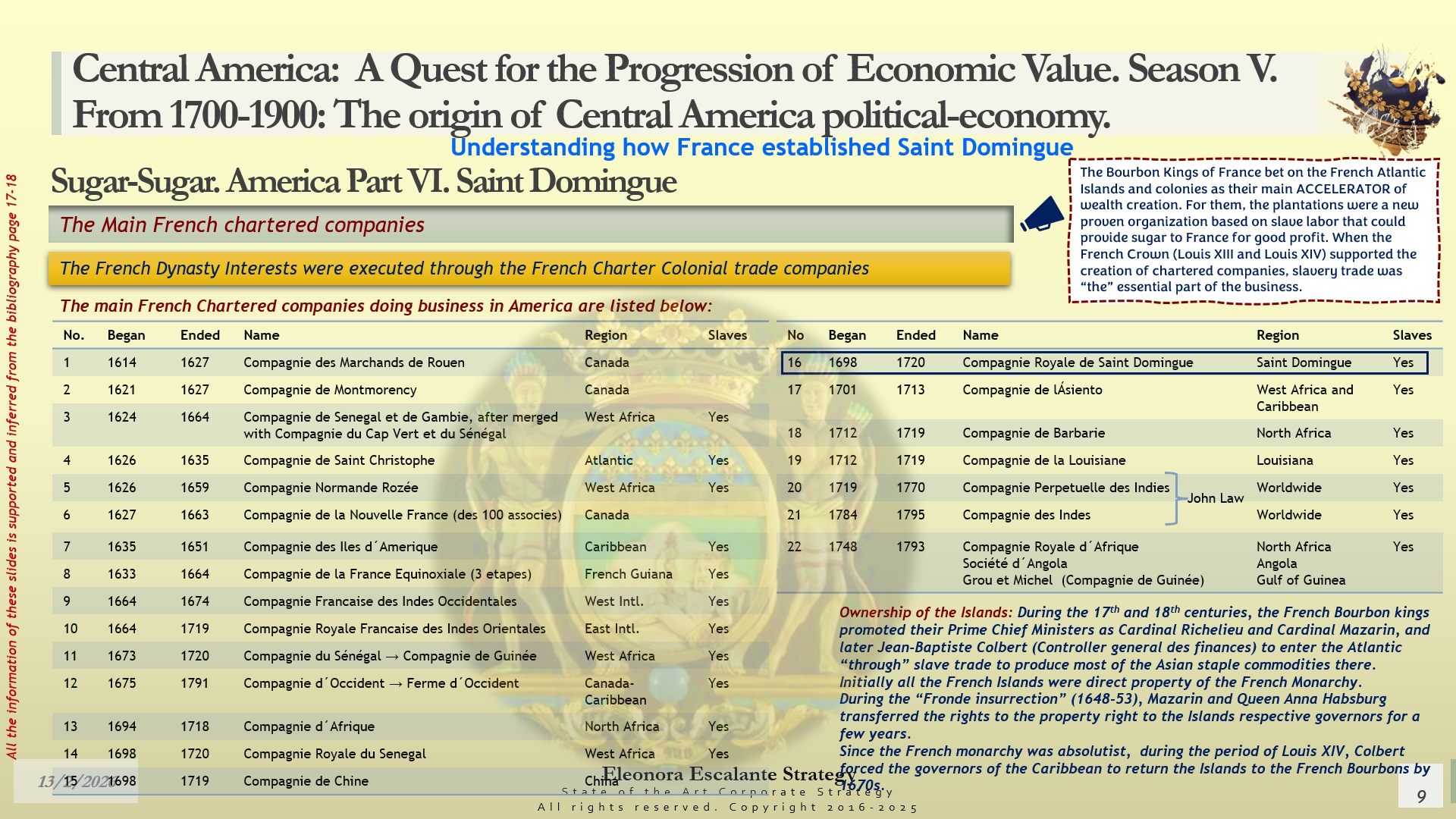
- The Main French Chartered Companies
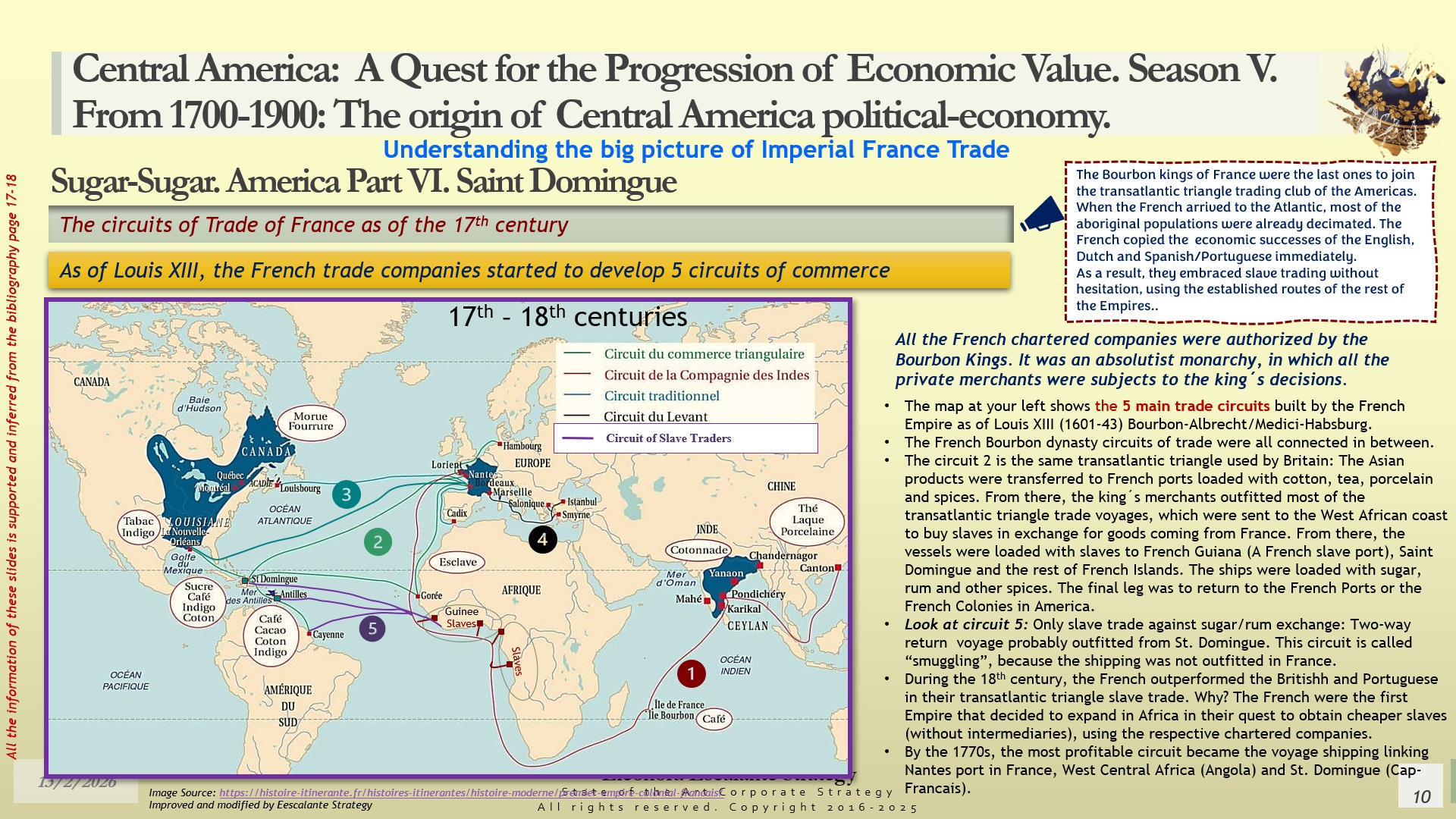
- The Circuits of Trade and Ports
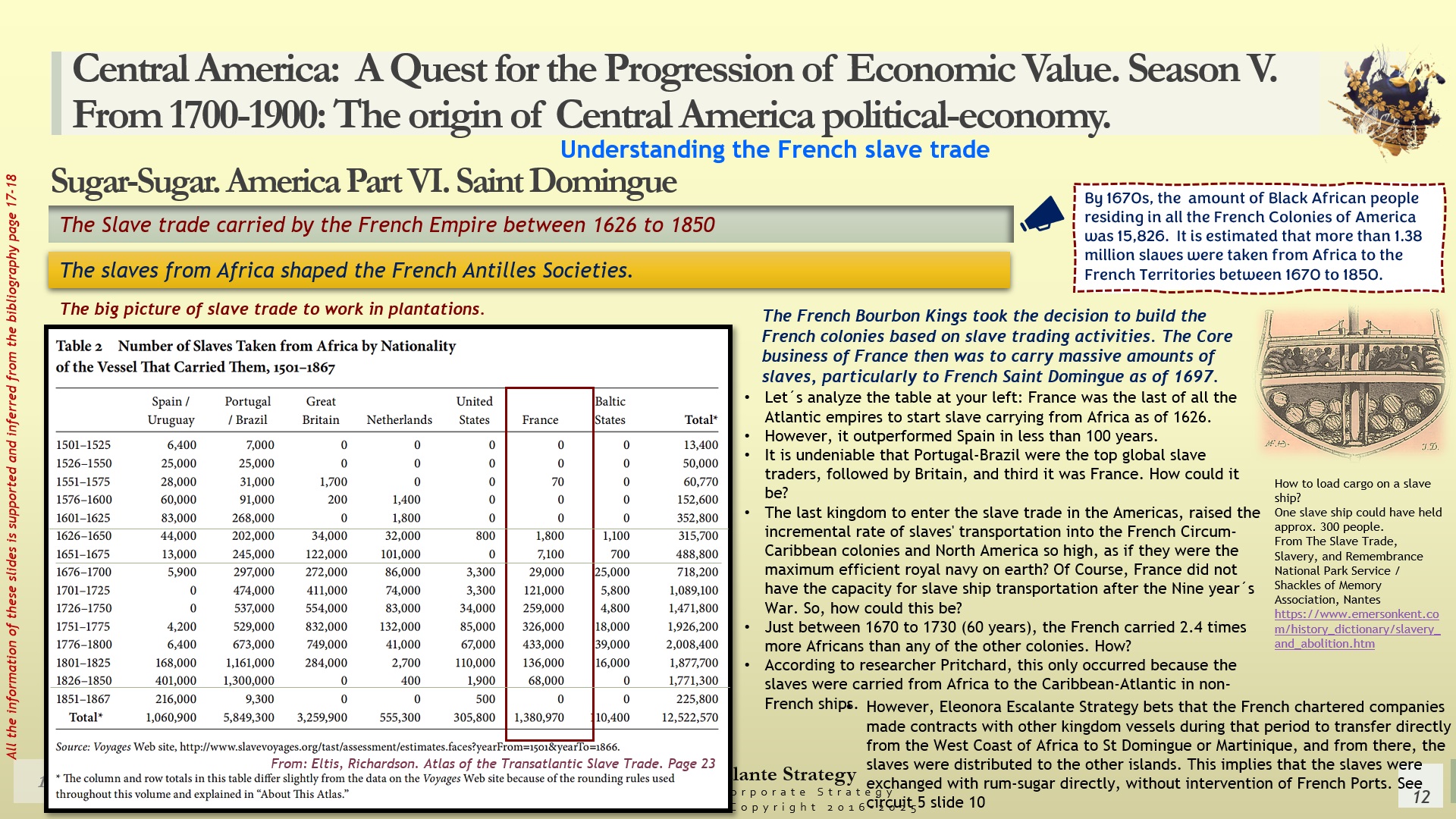
- The Slave Trade carried by the French Empire between 1626 and 1850
The following material is your preparation for the strategic reflections each Monday. Proceed to read it by downloading it in PDF (for a better view). We encourage our students to find additional information related to our themes by searching our recommended bibliography. Feel free to pass this material to your friends, colleagues, family, and professors. It is an honor to learn together.
We kindly ask that you return next Monday, February 16th, 2026, to review our extra strategic reflections on this chapter.
We encourage our readers to familiarize themselves with our Friday master class by reviewing the slides over the weekend. We expect you to create ideas that are or are not strategic reflections. Every Monday, we upload our strategic inferences below. These will be discussed in the next paragraph. Only then will you be able to compare your own reflections with our introspection.
Additional strategic reflections on this episode. These will be in the section below on Monday, February 16th, 2026.
Public domain. Illustrative and non-commercial GIF image. Used for educational purposes. Used only for the public good, informative for this class.
Strategic Reflections on “Central America: A quest for the progression of economic value. Bonus Season V. Episode 6. Sugar-Sugar America Part 6. The French Sugar Model-Saint-Domingue´s Birth.
The discomfort of being the last one into America´s riches. Slides 5 and 6.
The French Bourbon kings (as descendants of the House of Valois-Burgundy) were a dynasty that took the expansion route into America 100 years later. The presence of the French discoverers and colonizers didn´t happen simultaneously to the efforts of the Spanish Habsburgs in New Spain, Central America, and Perú. The Bourbon-Valois descendants of King Francis I Valois had a challenging time designing or conceiving a discovery-colonization strategy facing the Spanish, the Dutch, and the British. The French Monarchy was not prepared for it (they had no good navy, nor economic strength, and lacked the drive of the rest of the kingdoms during the 16th century). Despite that, Jacques Cartier explored the St. Lawrence River to establish New France (Acadia and Canada); most of the 16th-century French attempts to settle in North America were a failure, almost a complete disappointment. It wasn´t until 1608, under King Henry IV of France-Navarre (1553-1610), that Quebec was finally established for the fur trade. The French Caribbean colonization had to wait until the 1620s-30s. The settlement of the first French Atlantic colonies were responsibility and the mission of Cardinal Richelieu, Chief Minister of State and Grand Master of Navigation of France of King Louis XIII Bourbon-Albret/Medici-Habsburg (1601-43). His son, Louis XIV Bourbon-Medici/Habsburg-Habsburg (1638-1715) was the first French monarch who decided not just to continue the French conquest of North America, but to battle domestically and internationally for new territories.
To be the last one arriving at a new fountain of wealth is an “épée à double trenchant” or a double-edged sword. The French were not the pioneers who faced battle against the Aboriginal populations. The French did not lose time in trial-and-error procedures on how to monetize quickly when there is no silver or gold left. But in their quest to profit from America, the French copied the existing models of productive exploitation already proven by the rest of the Empires. The French kings’ discomfort as a consequence of being a latecomer to America provoked the relentless and urgent desire to surpass in every way those who started early. That is what we perceive as the philosophical drive of the monarchical strategy of the Bourbon Dynasty in the Caribbean, particularly in Saint Domingue. See slide 5.
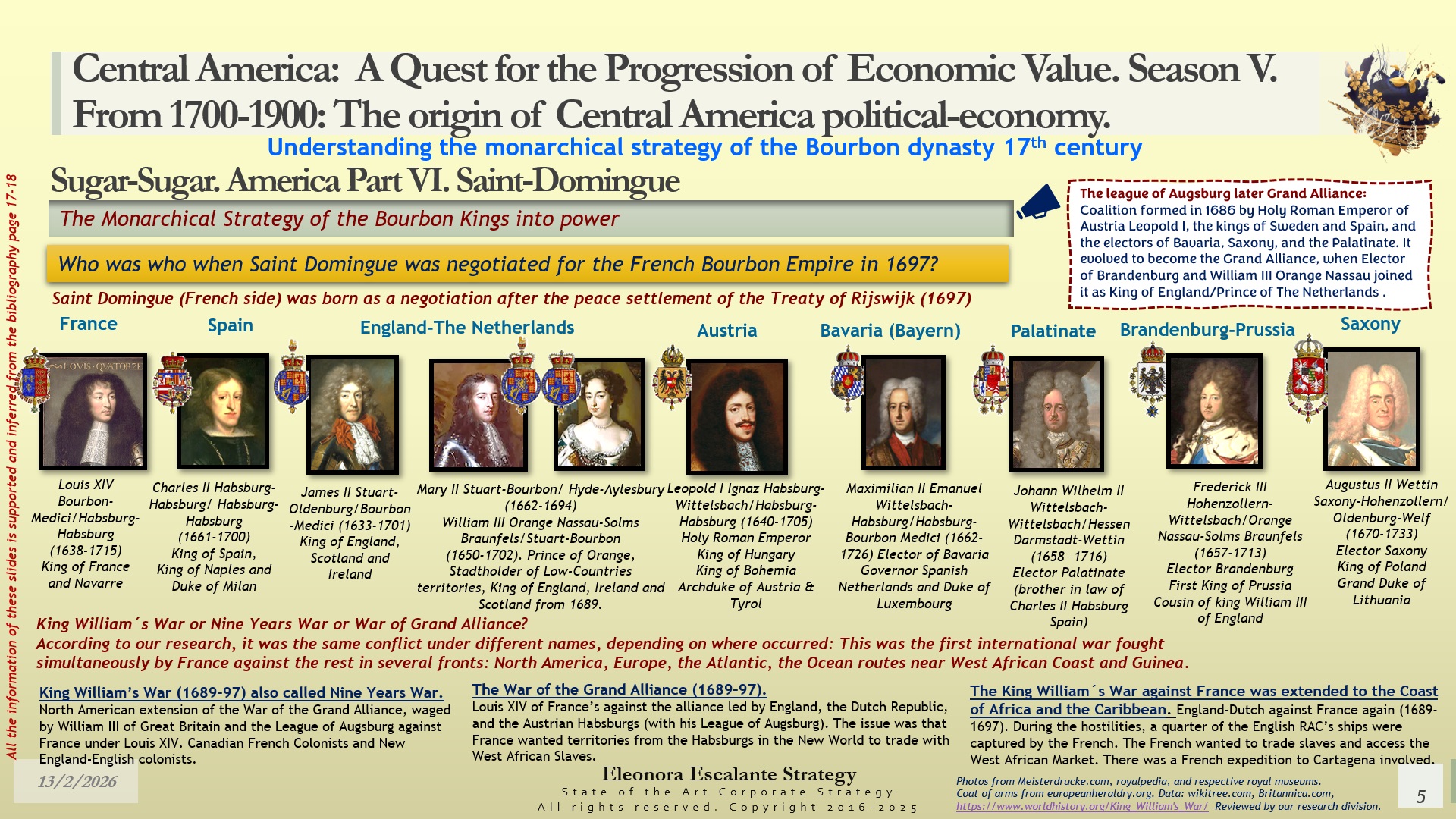
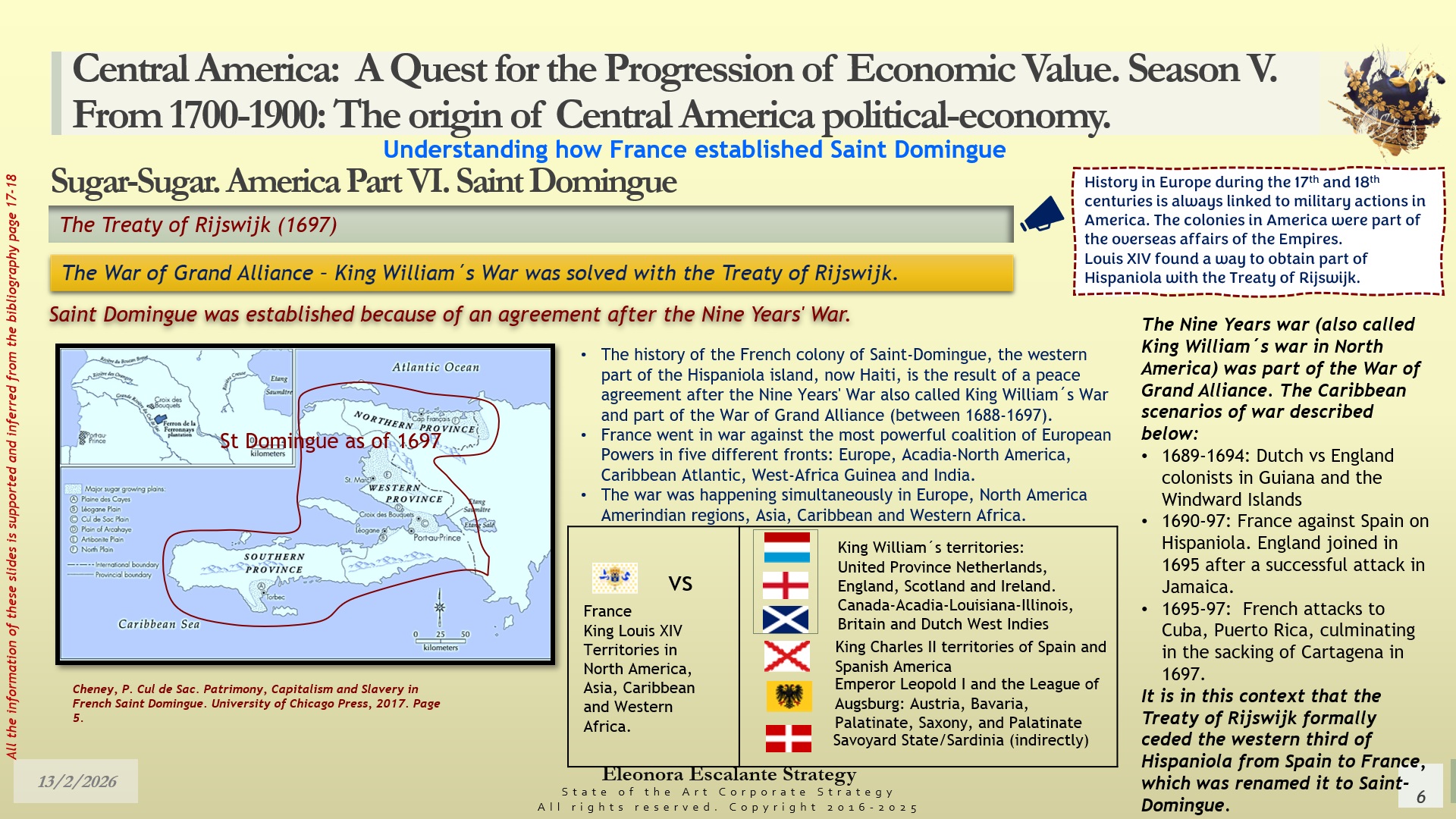
Right before taking over one-third of the island of Hispaniola (which was under Spanish domain), King Louis XIV went to war against his European king peers in at least 5 separate locations. The main transnational conflict in Europe was the War of the Grand Alliance (1689-97), but it was also portrayed under detached and distinct combat theaters: in North America, it was called King William´s War. In the Caribbean, Africa, and some parts of India, it was called the Nine Year´s war. Louis XIV went into a territorial war against the League of Augsburg (formed by Spain, Austria, and the German Holy Roman Empire electors of Bavaria, Saxony, Palatinate, and Brandenburg-Prussia). He also went into war in Acadia-Canada, where he battled against the king of England, King William III Orange Nassau-Solms Braunfels/Stuart-Bourbon. In the Caribbean, France was also in conflict against Spain, England, and the Dutch; while in Africa and India, the disputes were related to the domains of the fortification ports in the Western African slave posts and Pondicherry. Through the Treaty of Rijswijk (1697), all the European nations agreed to a peace agreement, and that is how Louis XIV extended his sugar empire in what is now Haiti. Before the Nine Years´ War, as of 1659, the French buccaneers and privateers had established themselves on the western portion of the islands of Hispaniola and Tortuga; in consequence, the Treaty of Rijswijk (1697) was merely the official cession of the western third of Hispaniola from Spain to France.
When analyzing the kinship ties of the monarchs who participated in the War of the Grand Alliance and its ramifications in other regions, it catches our eye to see the family connections between all of them. Louis XIV of France, Charles II of Spain, the Stuart-Bourbon Medici pedigree of King James II and Mary II Stuart, and then William III Orange Nassau who was also linked to Frederick III of Brandenburg. Leopold I was also part of the House of Habsburg family of Charles II. Take notice, who was the wife of Charles II of Spain? He was married to Marianna Wittelsbach Palatine-Wittelsbach/Hessen Darmstadt-Wettin Saxony of Neuburg, the new German queen from the Wittelsbach dynasty, who was expected to open the Spanish-American silver door to the ambitions of the rest of the electors of the Holy Roman Empire. The connection between the Stuart-Bourbon of England, the Orange-Nassau Bourbon of the Netherlands, and the Hohenzollern-Orange Nassau of Brandenburg-Prussia is more than evident. To the point that we may superficially envision that this war looks like a family quarrel for the riches of the Spanish Habsburgs in America, given the sickening inbreeding condition of Charles II, who died in 1700, a passing that kicked off the War of Spanish Succession later. See slides 5 and 6. Nevertheless, be sure that the primacy of the Bourbons to the Spanish and French thrones (after 1715) was just the beginning of all the economic disasters that came afterward with sugar in the Atlantic. In one phrase: The Bourbons took the slave trade seriously and earnestly.
Understanding Imperial France in the Caribbean. Slides 7 to 10.
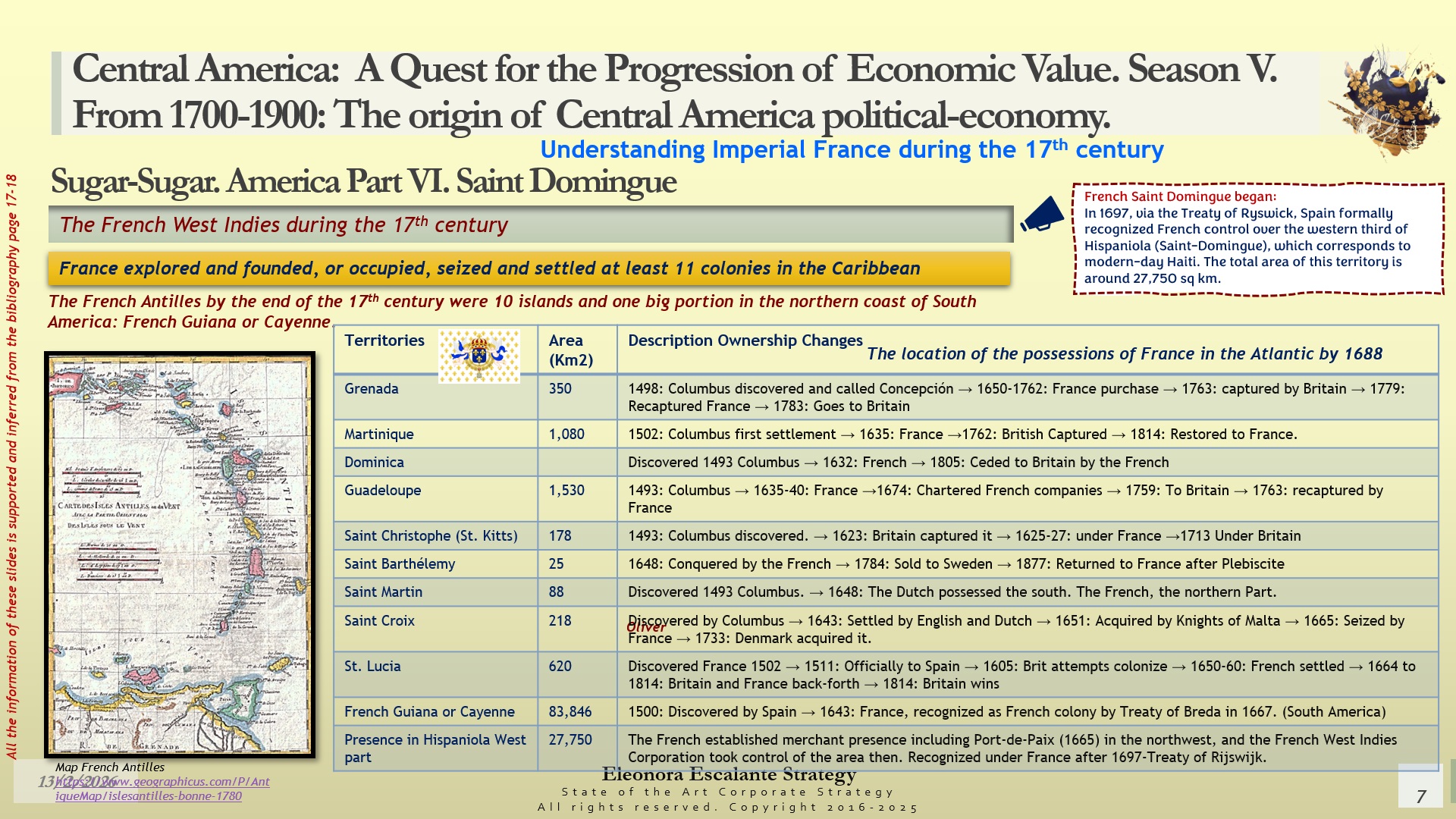
Slides 7 and 8 illustrate the situation of the French West Indies. We organized the data in a position of time (1688), right before the Nine Years’ War. The table on slide 7, the list of the Atlantic territories under the Drapeau Francaise, was in a dynamic flow. At that moment in time, France officially possessed 10 islands in the Caribbean and French Guiana. However, we are sure that you can perceive how hard it was for France to keep the ownership of the islands. The British (and Dutch) were in constant warfare to seize them. Each Empire was keenly interested in producing sugar. But not the Spanish. Spanish America’s priority had already designated silver production centers in New Spain and Peru.
Despite the warfare uncertainty, the French Planters managed to maintain the sugar production flowing into France. Louis XIV´s monarchical decision-making through his Ministers of State had already established a particular way to maintain the shipping of slaves from Africa and sugar to France under different routes of trade.
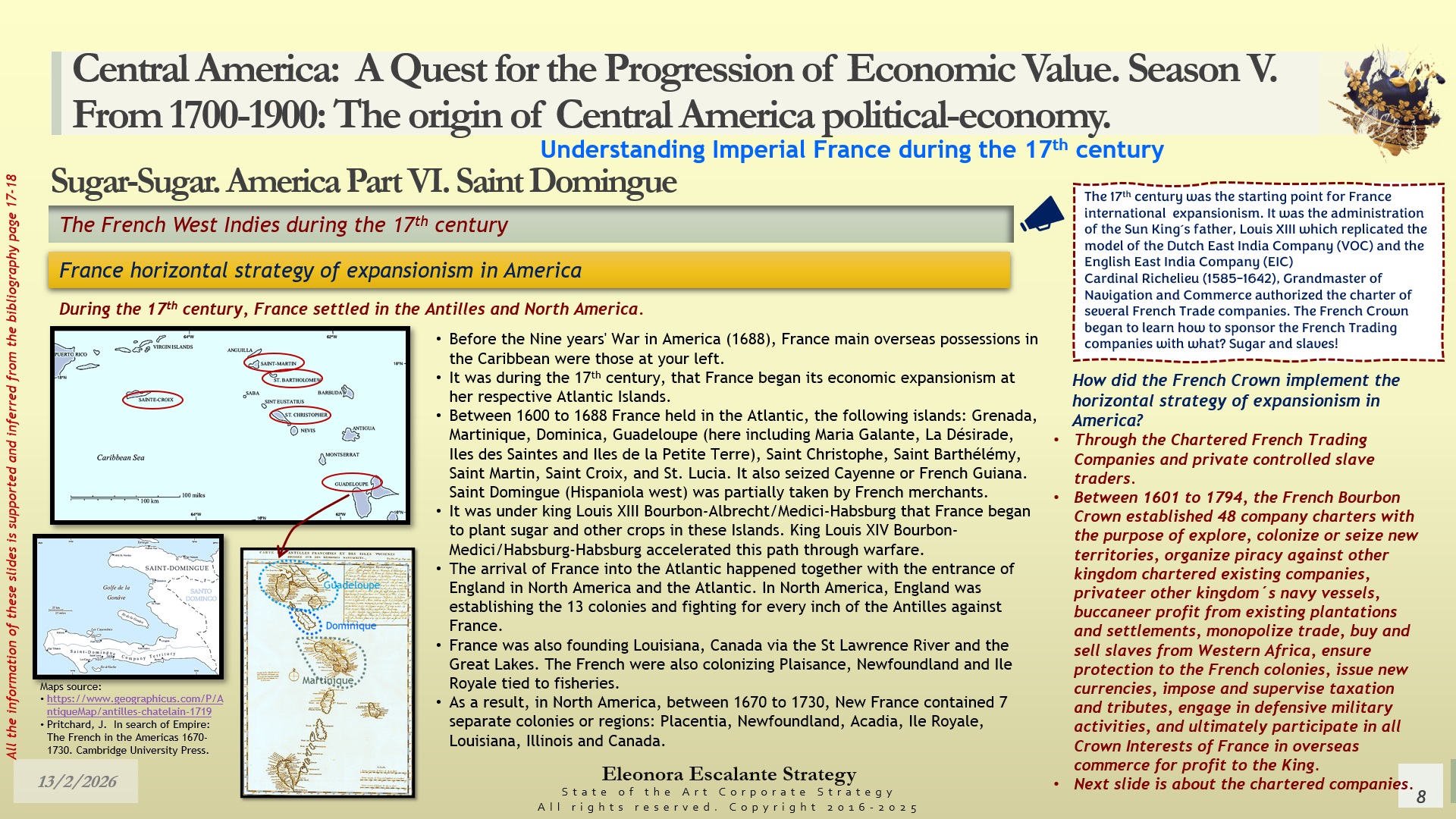
Slide 8 offers an overview of the French expansionist horizontal strategy during the 17th century. And then slide 9 shows us a list of the main 22 royal companies, totally dedicated to carrying manufactured goods from France to Africa (ship voyages outfitted in French ports) and trading in exchange for slaves at various West-African ports. Once the slaves were loaded in the ships, these continued the voyage to the French Caribbean islands, where they disembarked (mainly in Martinique, Saint Domingue, and Guadeloupe). The final leg was to carry sugar and other commodities to the French Ports.
Slide 10 is extremely essential for us. The royal chartered companies were a public state enterprise in which the Bourbon dynasty held absolute ownership. It wasn´t until the 1740s that the French State allowed private merchants to participate in slave trading.
Let´s not forget that any of the chartered Royal companies was in the hands of the Bourbon Dynasty. In an absolutist kingdom, every single royal company was fully retained by the King.
Understanding the slave trade of Imperial France. Slides 11 to 16.
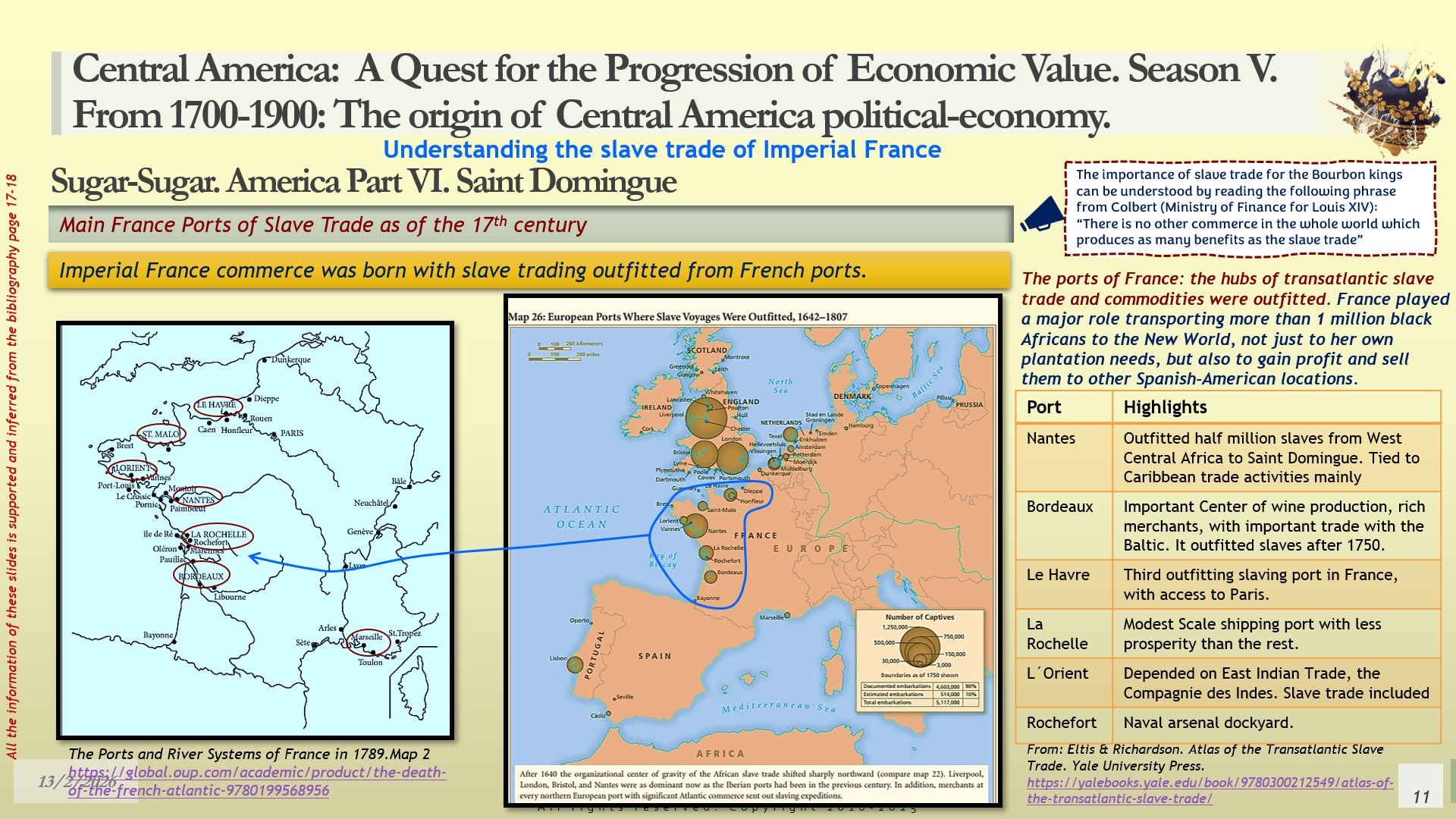
The royal Bourbon family, after Louis XIV, realized that the slave trade was the essence of their economic recovery and existence. Not even the most enlightened philosophes dared to recommend the halt of the slave trade by French ships in the New World. Ports like Nantes, Bordeaux, and Le Havre (slide 11) were fully engaged in the slave trade, and still to this day, that is why Nantes has kept its recognition branding of “City of Slavers”. See slide 11.
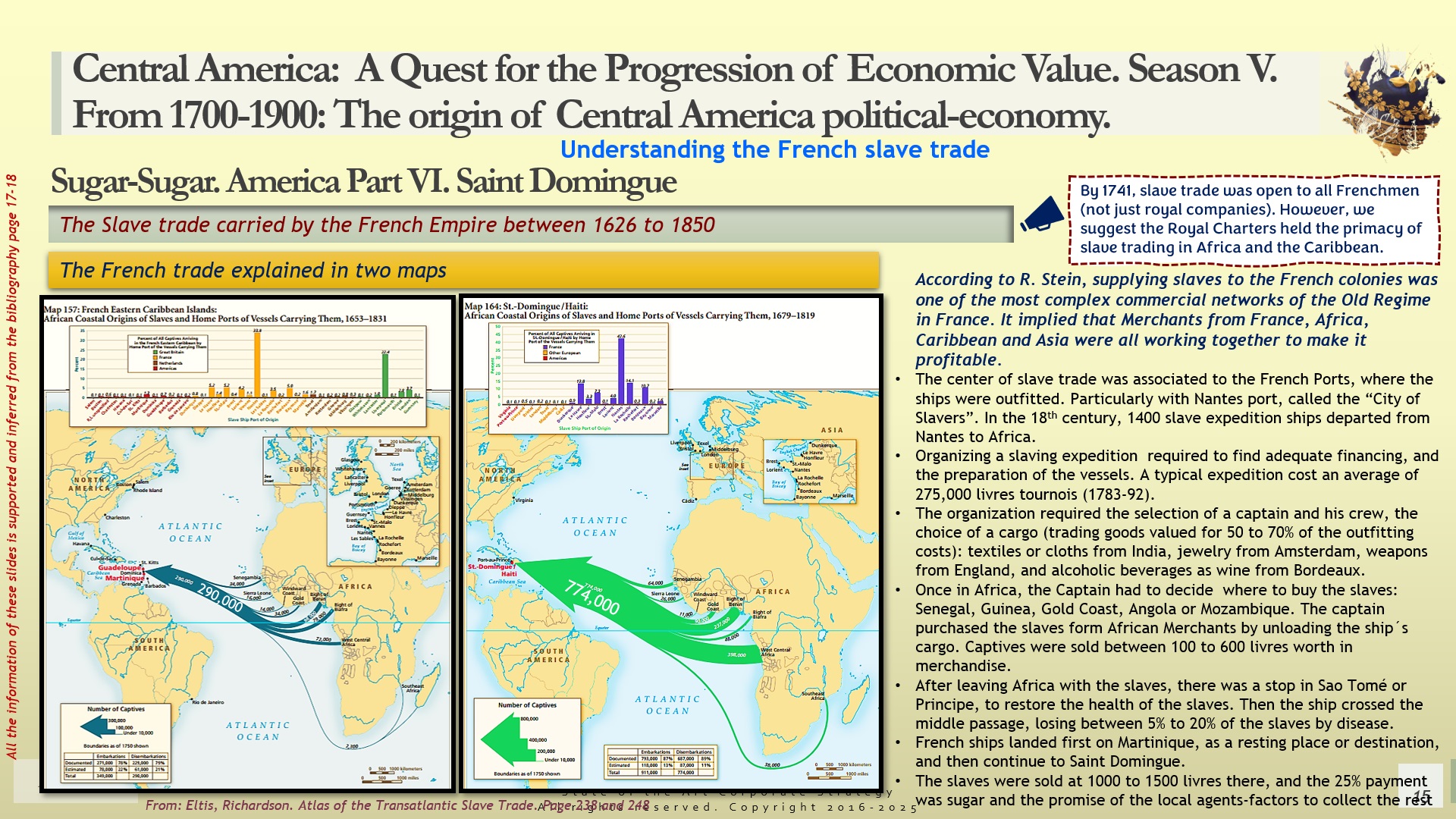
1,380,970 slaves were carried by the French. In total, to this day, the academic community specialized in the historical slave trade of the Empires has arrived at the conclusion that at least 1,380,970 slaves (data from Eltis- Richardson) (1) were transferred from Africa to the Atlantic Caribbean, Louisiana, and other territories of North America facing the Atlantic between 1626 and 1867. The French Bourbon kings were coherent in this value proposition. For them and all their courtiers (including planters), the economic revival of France was based on and was going to be developed through commerce and the slave trade from Africa to the Atlantic. No doubt about it. The rhythm of the slave trade growth of the French doubles that of any of the other empires in just 100 years (from 1687 to 1787). Slide 12 confirms it, and it is self-explanatory.
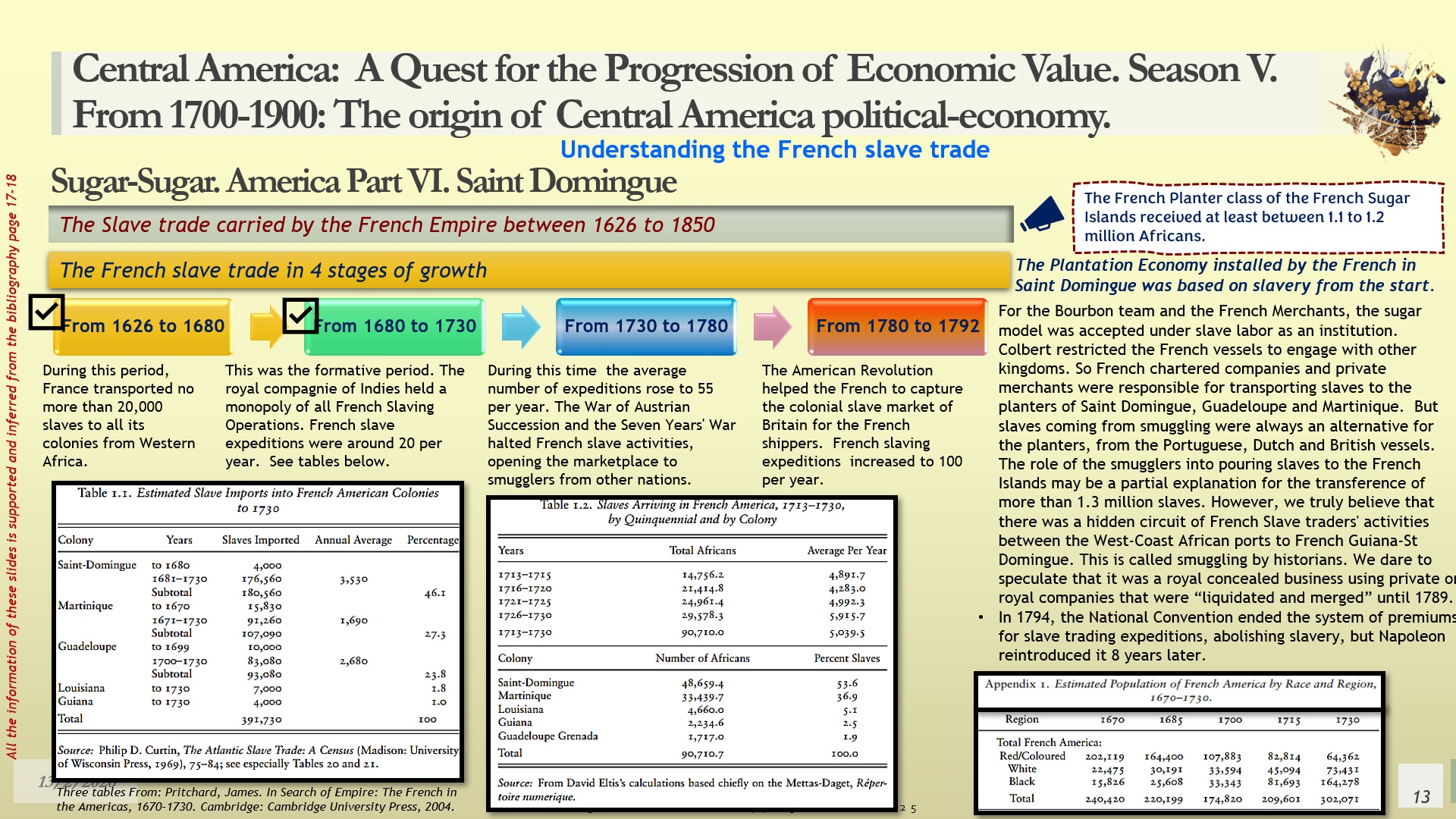
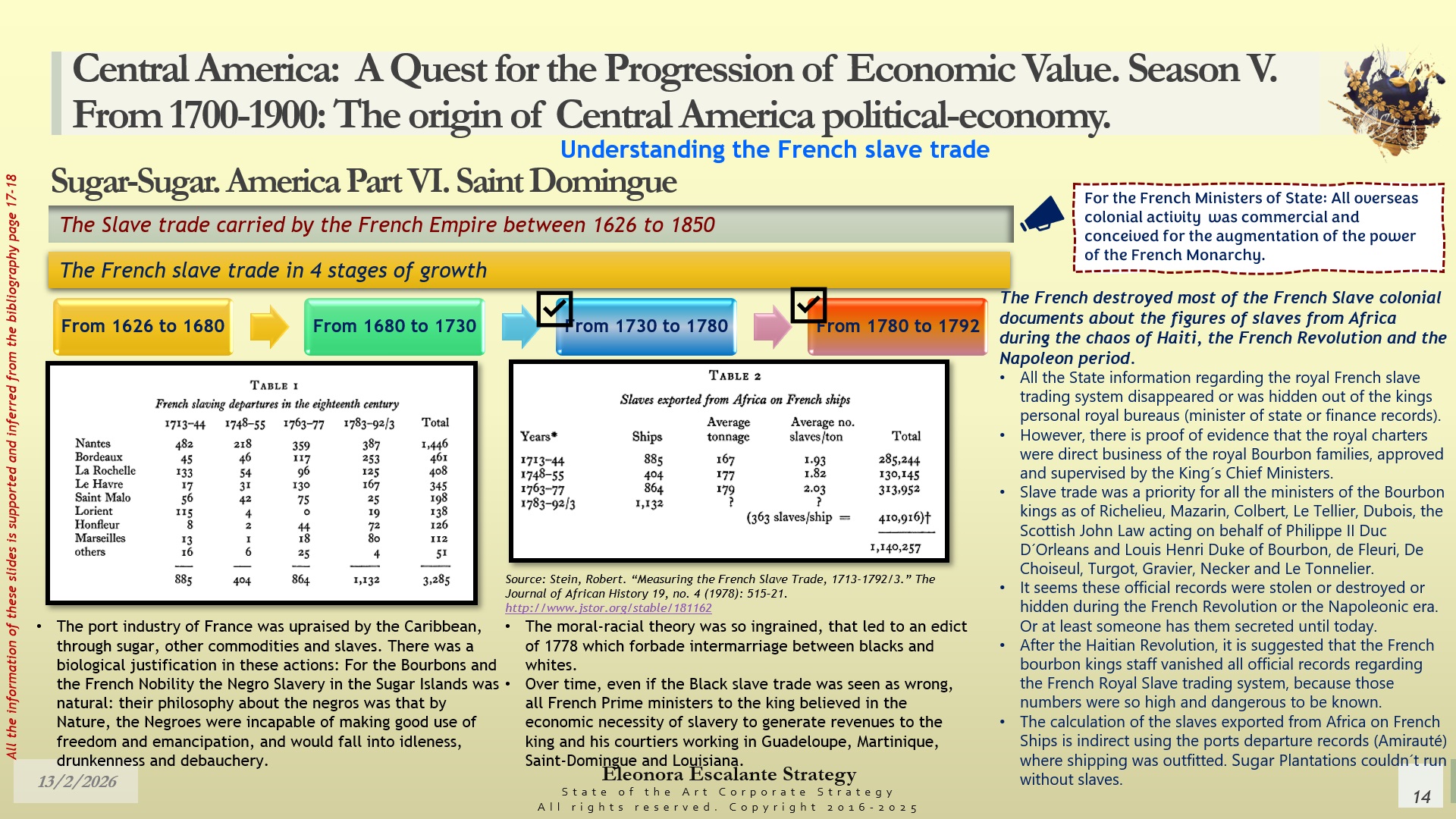
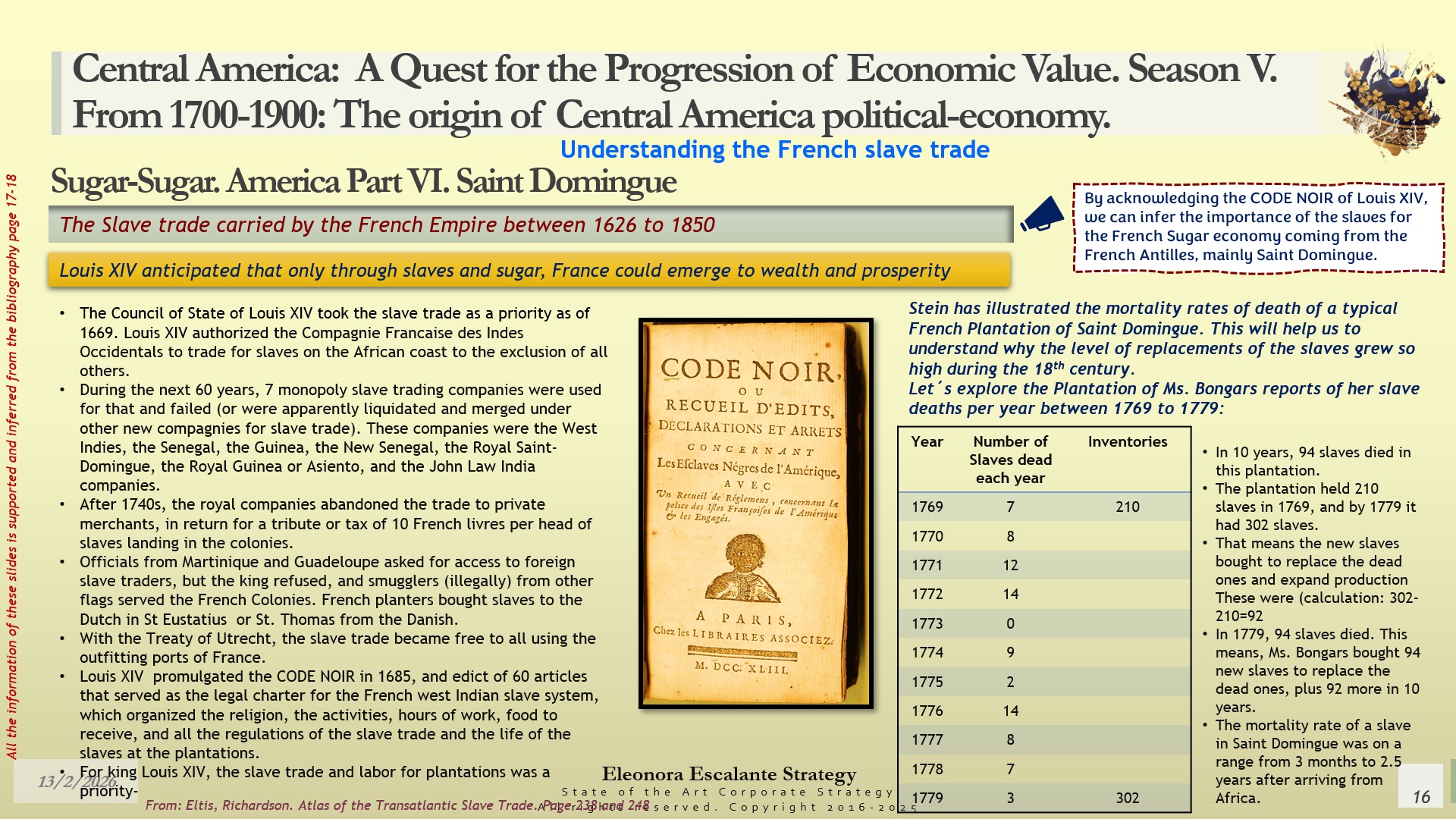
We have segmented the slave trade in 4 stages of growth: From 1626 to 1680, from 1680 to 1730, from 1730 to 1780, and then the last portion, from 1780 to 1792. See slide 13 to acknowledge the first two phases, please. You can observe the progression of economic value of the slaves, not just in the augmentation of the slave trade, year over year, but also the importance of French Saint Domingue in the development of it. The French monarchy used Saint-Domingue to produce sugar to unbelievable maximum limits, to a point at which every slave bought in Africa could not live more than 3 months to 2.5 years. Saint-Domingue’s prominent levels of sugar productivity relied on the enormous, cruel exploitation of the African slaves. Look at slide 14, please. In here, by the year 1978, scholar Robert Stein (1) was able to calculate all the historical information from the French admiralty ports, particularly those connected to French slaving departures during the 18th century, and he estimated the slaves exported (under official numbers) as reaching 1,140,257. This amount is lower than the Eltis-Richardson one of the paragraph above, which has been depurated and reviewed after Stein. Both investigations demonstrate that more than 1.1 million slaves migrating to America were under the responsibility of the French Bourbon dynasty. The research of Eltis-Richardson and Stein is based on the official reports of the outfitting of the French ships in the ports of Nantes, Bordeaux, La Rochelle, Le Havre, Saint-Malo, LÓrient, Honfleur, and Marseille. All this data is true and has been validated by multiple scholars. However, Eleonora Escalante Strategy believes that the number of slaves transferred to supply the French territorial needs of sugar plantations is greater than 1.3 million. Why?
There is another source of information, coming directly from the reports of the Secretary of State of the Maison du Roi of France (the personal archive files of the king). Most of the royal Bourbon official records about the slave trade during the 17th and 18th centuries have disappeared. No one knows where these documents are. Although it seems these were destroyed during the French Revolution, we believe these have been kept in secret by anti-royal agents during the same chaos. Some day, all those documents will appear in public, because more than one copy of the royal finances should have been guarded by the same ministers of state (who always kept a backup for their families´ survival in the middle of the Bourbon absolutist flow). Our perception is that the economic value of the slave trade for the Bourbon kings´ wealth is beyond the academic results of Stein, Eltis, and Richardson, measured only through the naval port ships’ departures. There is a fifth route used for the slave trade, the one that was not outfitted in France, but it is called “the smuggling business.” This direct route was also operating under the approval of the Bourbons. See again slide 10. This fifth route linked an aller-retour that fully loaded French smaller vessels with slaves from the West-African ports directly to Martinique and Saint Domingue, and it later returned with rum and sugar to Africa. All this data is still missing. During the 18th century, the rates of sugar productivity of French Saint-Domingue could only be attained if every slave lasted an average duration of less than one safra, and this is why we suggest that the slave trade for the French colonies was higher than 1.38 million, the amount of what has been calculated to this day.
To be continued…
Closing words.
This is the first of two episodes about the sugar plantations of French Saint-Domingue (now Haiti). We have dedicated this chapter to explaining the context of how the monarchical strategy of the Bourbon Kings from France was fitted into the context of creating wealth from the slave model of sugar production. Our goal has been to show you the roots of the French trade slave, and how the royal chartered commercial companies were part of the Imperial France value proposition of the 17th and 18th centuries. An interesting thing that has captured our attention is that during the 16th century, the French Bourbon dynasty was related (by blood) to the Stewart English monarchy. The marriage of King William III Orange-Nassau/Stuart-Bourbon, with his first cousin Mary I Stuart Bourbon/ Hyde-Aylesbury, is the institutional recognition of this alliance. If England-France-The Netherlands were a big family, why did the War of the Grand Alliance (called the Nine Years war) take place? Do you think the answer was the plantations of Saint-Domingue and the riches coming from the African slave trade?
Announcement. Next week, we will continue with the last episode of the French Sugar Production Model.
Musical Section.
During our closing bonus season V, we will return to the symphonic, philharmonic, or chamber orchestra compositions. In our quest to show you the work of the Haitian National Orchestral Institute project, we found a lovely initiative. Before the global pandemic, some Musicians of the Utah Symphony traveled to Haiti for a week. It was a teaching-learning experience that we truly wish could continue for the years ahead. Beyond “The desire to be better through music”, the youth of Haiti has the responsibility to reposition its country as a phoenix bird, to rebuild it with excellence, solidarity, and love, for the new generations to come. The meaning of the phoenix is rebirth, transformation, immortality, and renewal. Spiritually, it represents the idea of rising from the ashes after suffering. Enjoy!
Thank you for reading http://www.eleonoraescalantestrategy.com. It is a privilege to learn. Blessings.

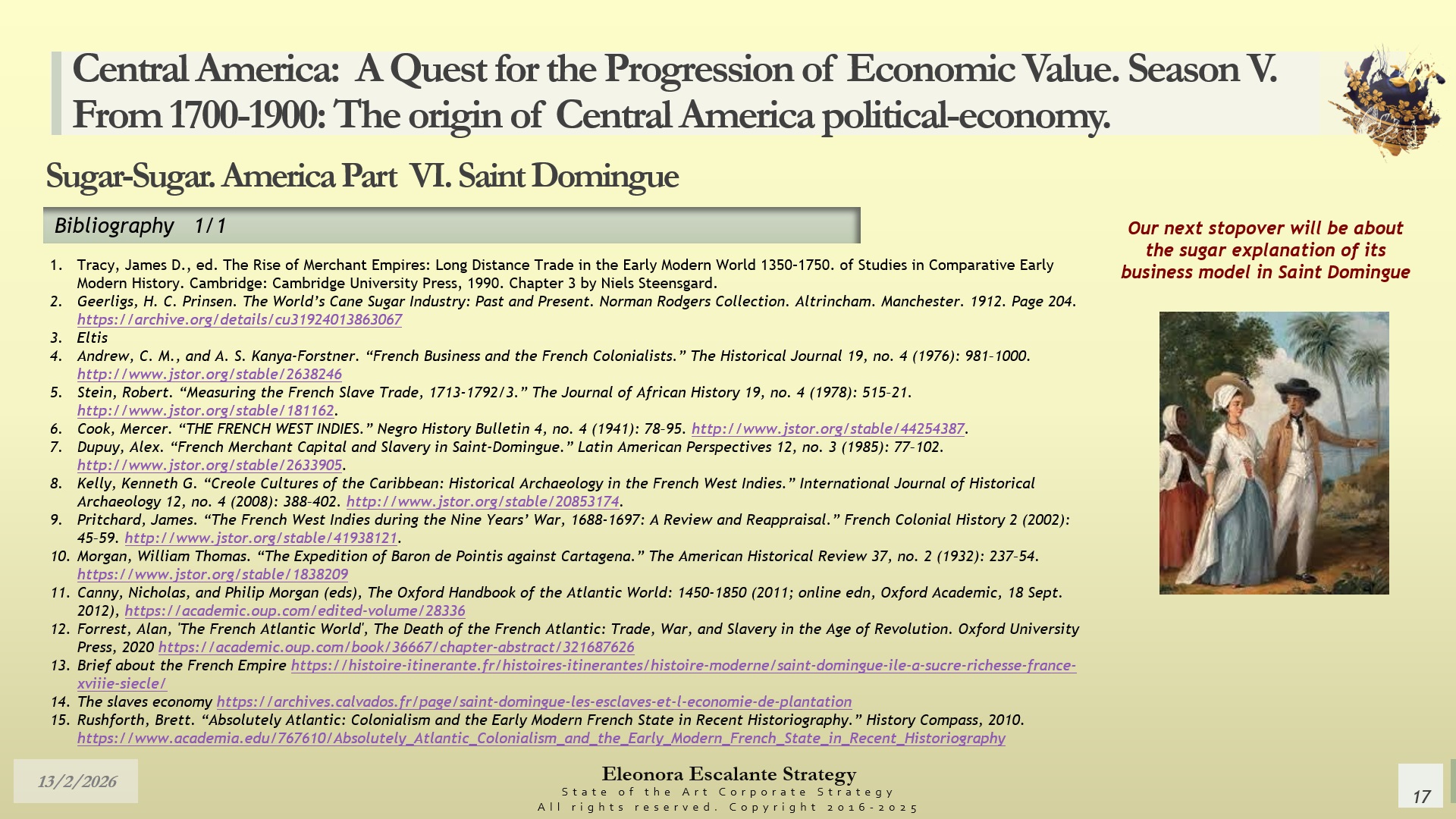
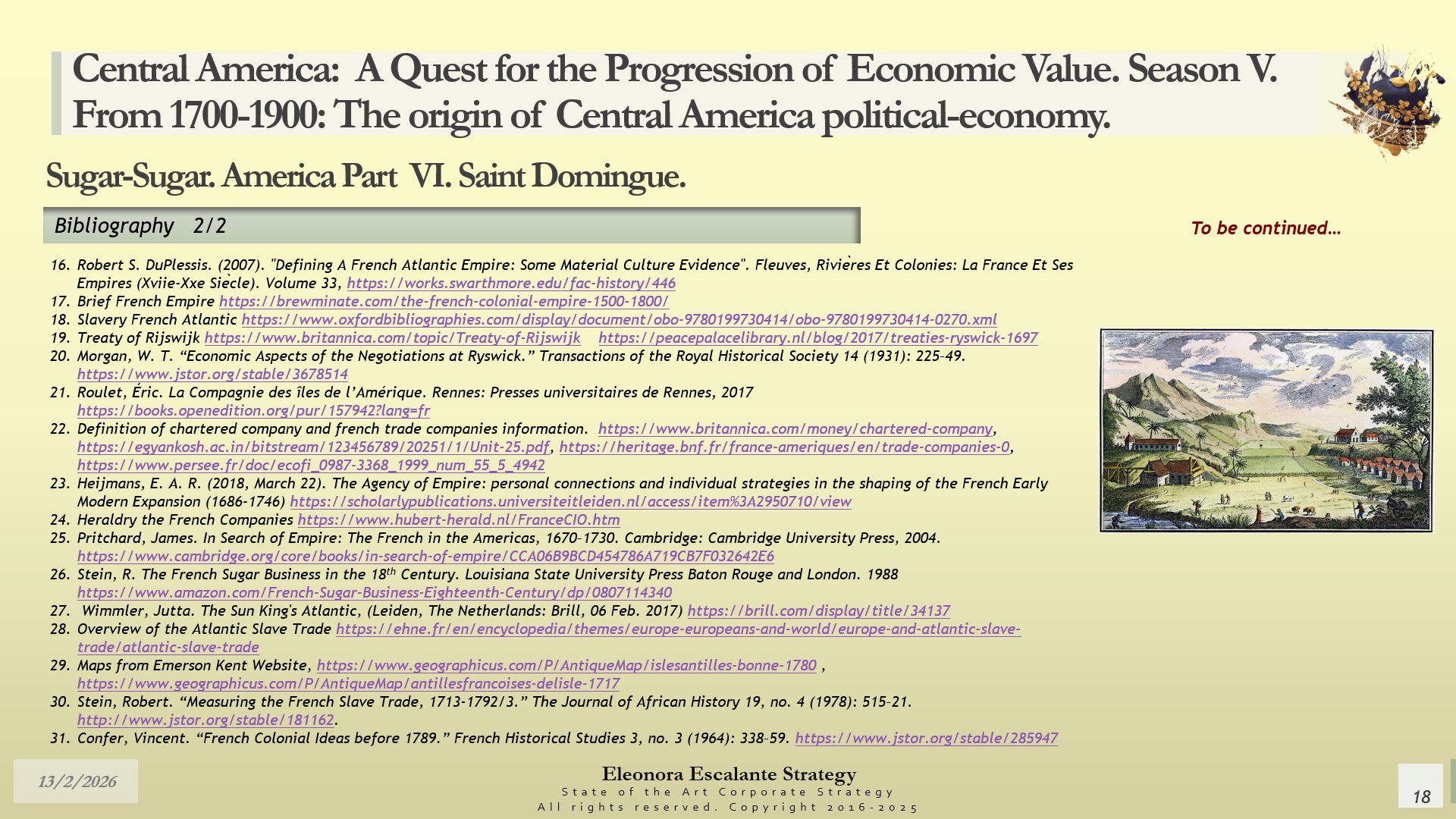
Sources of reference and Bibliography utilized today. All are listed in the slide document. Additional material will be added when we upload the strategic reflections.
(1) Eltis, D.; Richardson, D. Atlas of the Transatlantic Slave Trade Yale University Press. 2015. https://yalebooks.yale.edu/book/9780300212549/atlas-of-the-transatlantic-slave-trade/
(2) Stein, Robert. “Measuring the French Slave Trade, 1713-1792/3.” The Journal of African History 19, no. 4 (1978): 515–21. http://www.jstor.org/stable/181162
Disclaimer: Eleonora Escalante paints Illustrations in Watercolor. Other types of illustrations or videos (which are not mine) are used for educational purposes ONLY. All are used as Illustrative and non-commercial images. Utilized only informatively for the public good. Nevertheless, most of this blog’s pictures, images, and videos are not mine. Unless otherwise stated, I do not own any lovely photos or images.
 Eleonora Escalante Strategy - Strategic Reflections Think Tank