
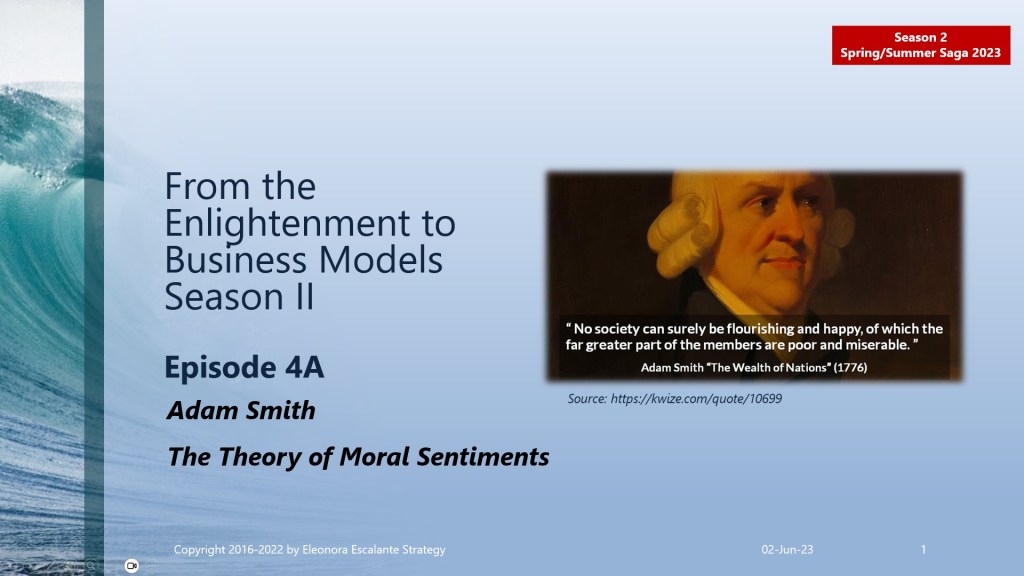
From the Enlightenment to Business Models. Season II. Episode 4a. Adam Smith Moral Sentiments
Bonne nuit a tous.
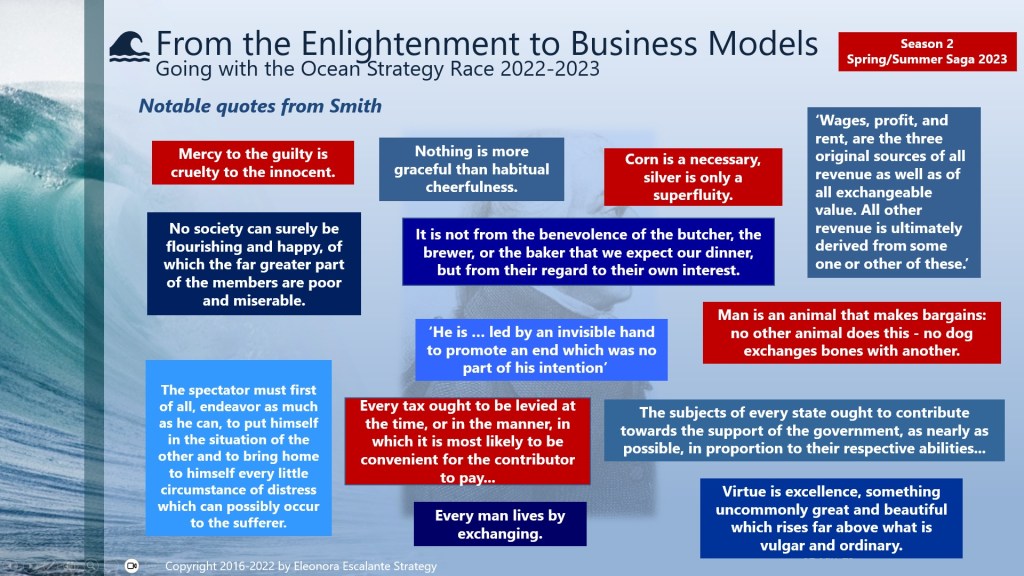
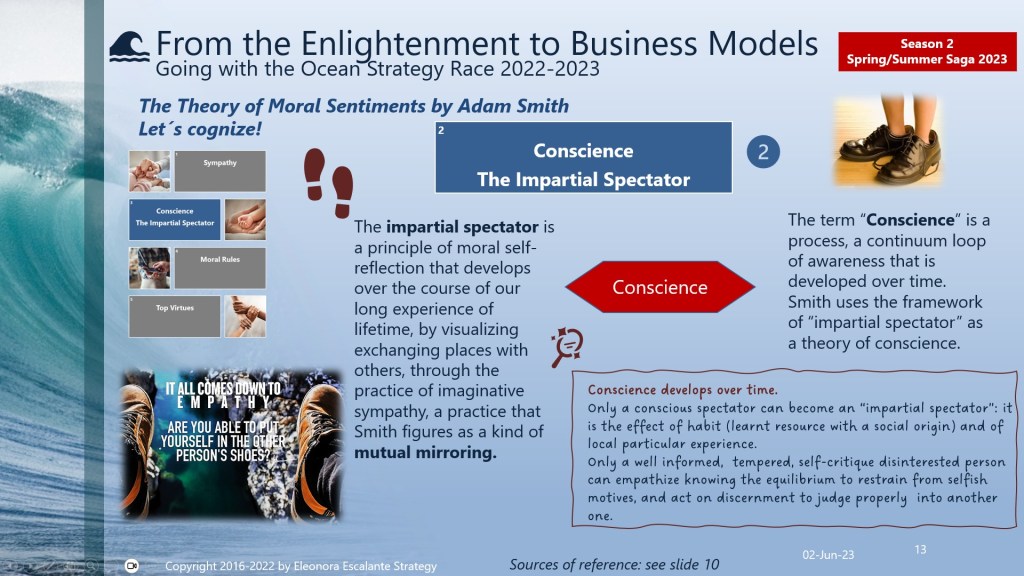
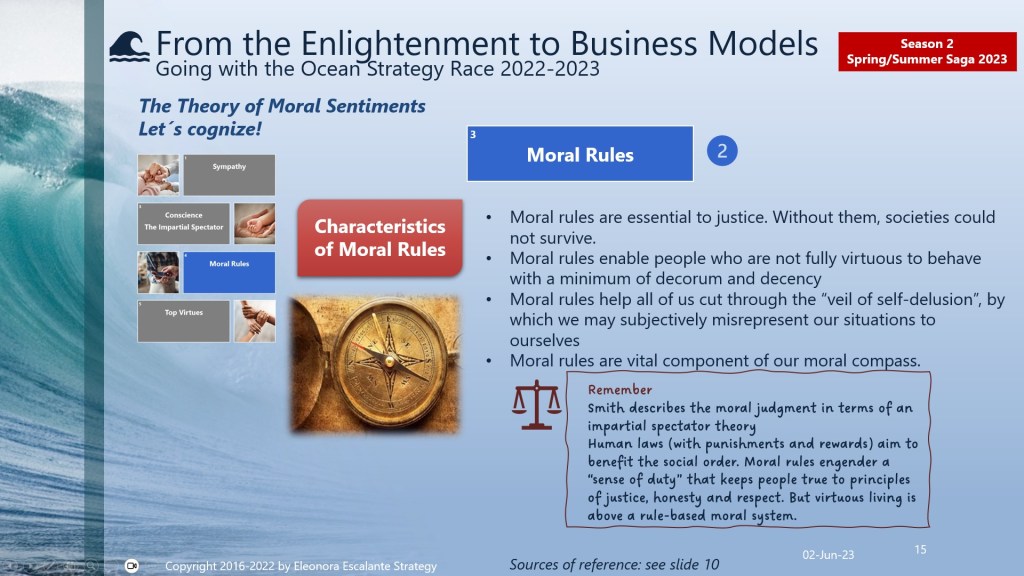
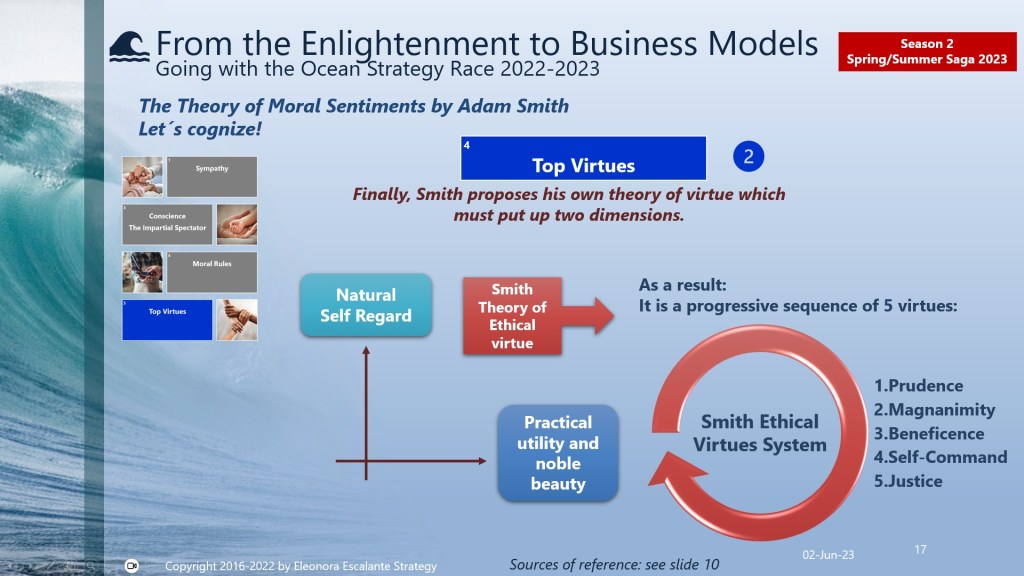
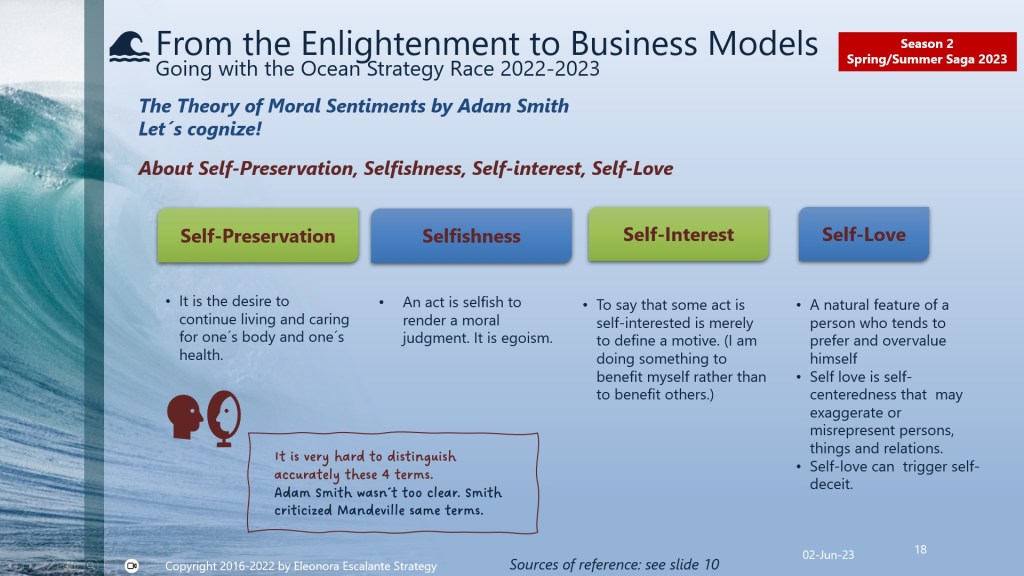
As a Friday present, I would like you to read thoroughly the following set of slides. These slides are the summary of my understanding of the book “The Theory of Moral Sentiments” which was written in 1759 by Adam Smith, a Scottish social and moral philosopher of the 18th century. Smith dared to write about certain characteristics that he observed about the evolution of societies. He also tried to reveal these attributes in two levels: at a personal level, and at the societal commercial level. Smith was living in Scotland, in the period of time of transition of power in Britain. The House of Stuart-Orange passed its baton of power to the House of Hanover, starting with George I of Hanover, the first British king who had no idea about how to communicate in English, but German. Adam Smith, also traveled around Europe for several years before the completion of his main famous work: “The Wealth of Nations”. He was curious about how to connect the dots between the prosperity of nations, in the context of Britain expansion all over the world, exploring different factors of progress, opulence, imports vs exports, commerce details, labor, and the state sources and uses of funds.
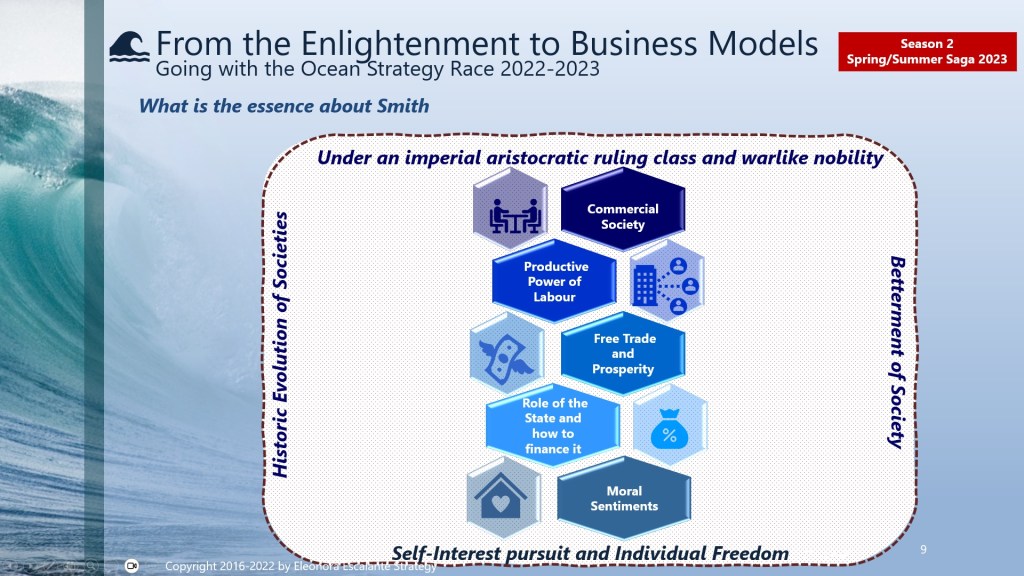
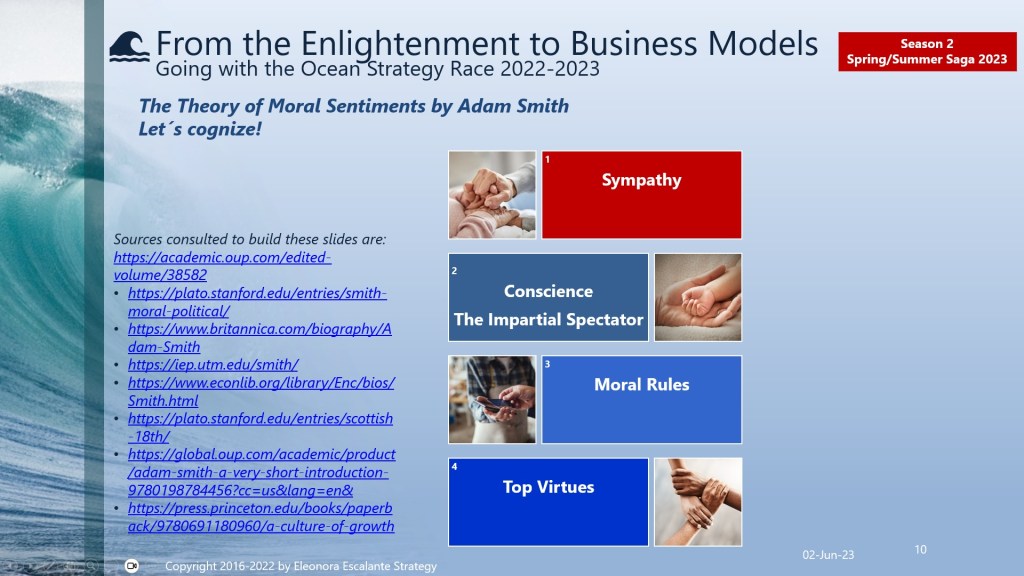
The essence of Adam Smith is mirrored in slide 10. My homework for you is to ask yourself the following question: Why do you think that Adam Smith was tangled in a dialectic of antagonistic theories? What caused this paradox?
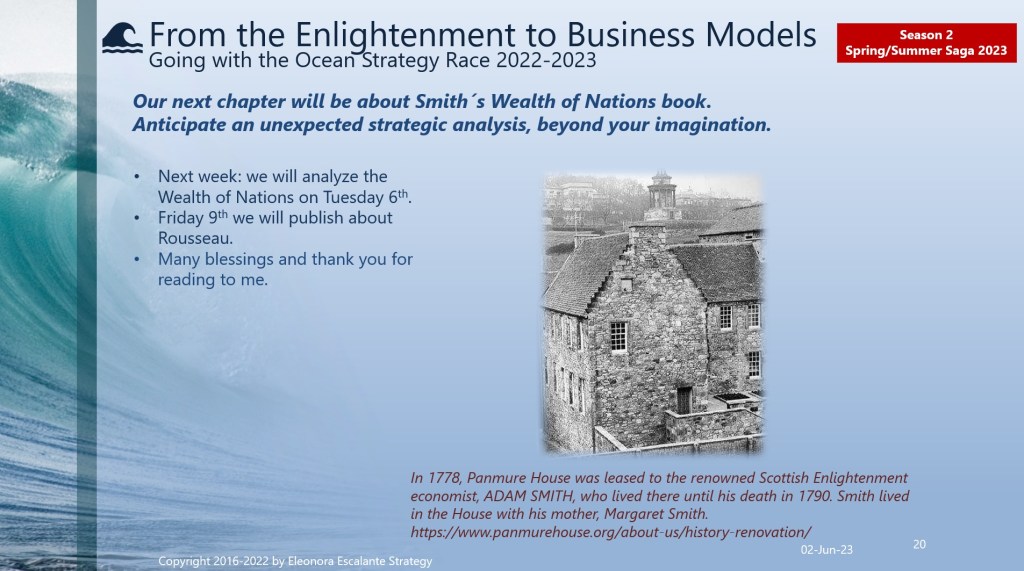
I agree with other researchers, that Smith wasn´t an economist, but a genuine observer of the evolution of economic systems. Today publication is your homework of preparation before the publication of next week strategic reflections. We have been exploring the social and moral ethics from the Moral Sentiments oeuvre, published in 1759. Next Tuesday 6th of June, we will proceed to add the content of the second main oeuvre: “An Inquiry into the Nature and Causes of the Wealth of Nations”, published in 1776. As usual, everything will be explained fully in my next publication (Tuesday 6th of Jun). I encourage you to read the bibliography that is attached in the slides.







Announcement.
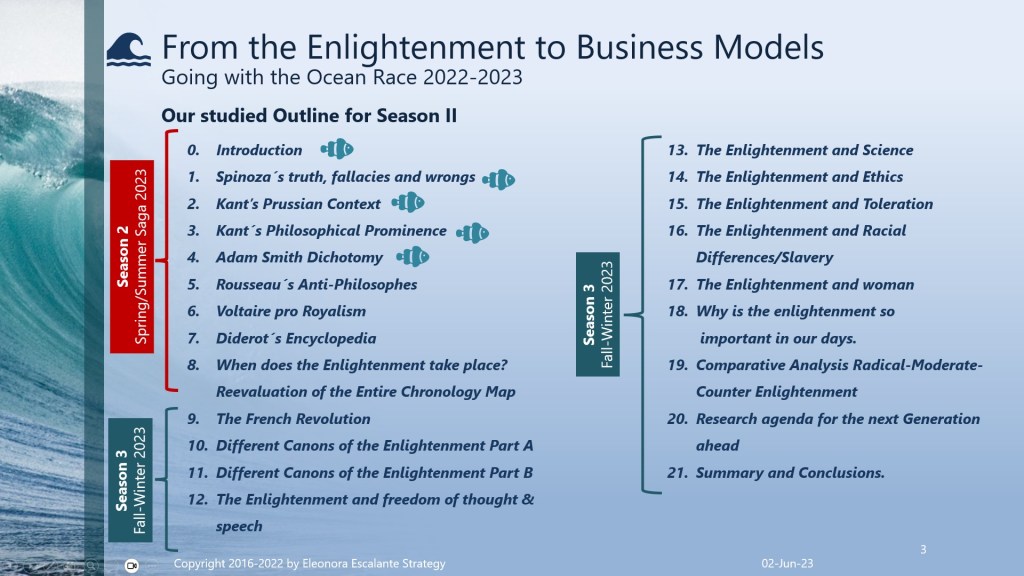
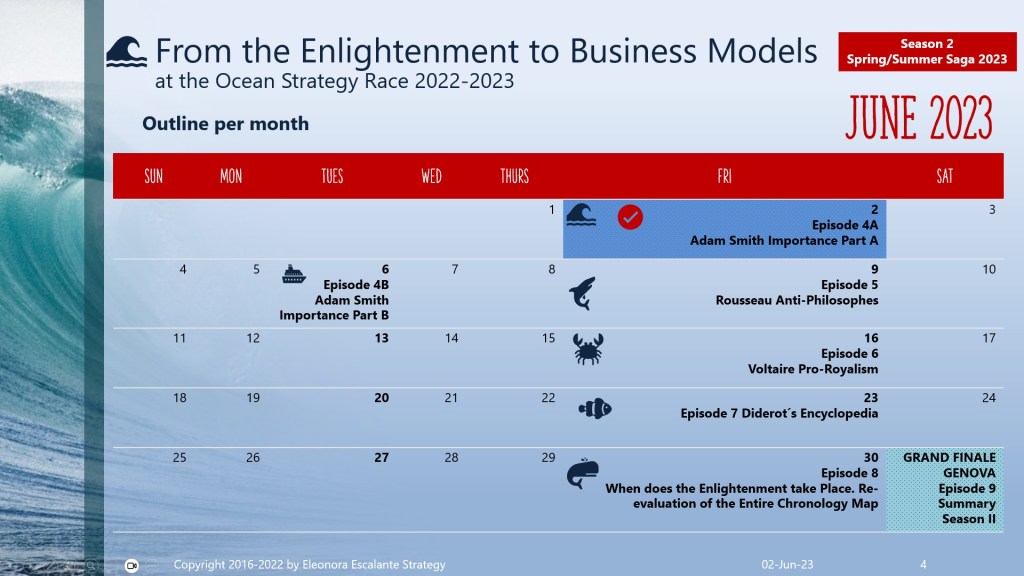
Next week we will publish twice. On Tuesday and Friday. Look at the outline included in the slides.
Ocean Musical Section
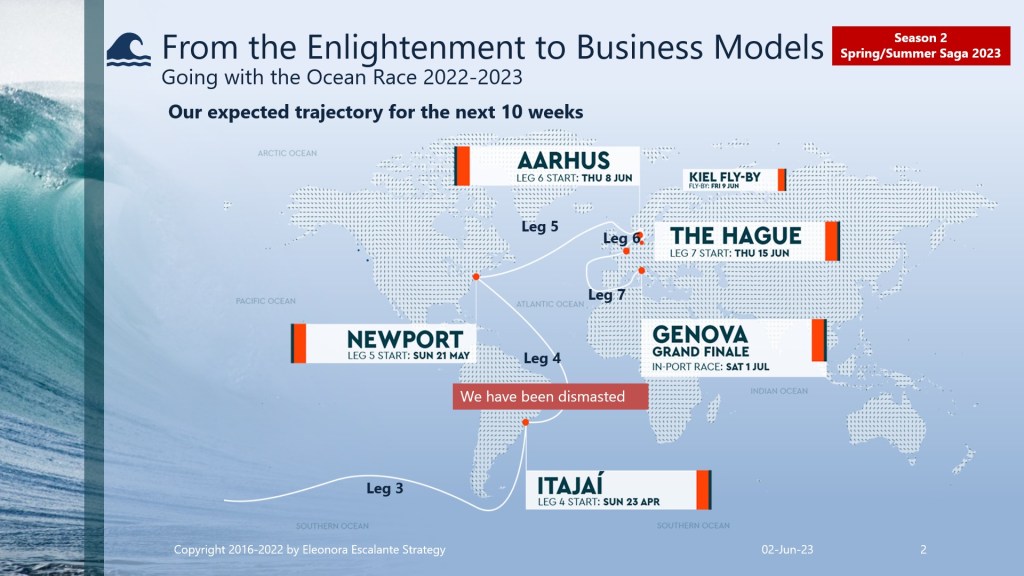
Our teams are preparing themselves in Aarhus.
Next Sunday, the teams will be conducting the In-Port Race in Aarhus, Denmark. Both categories of boats (the IMOCA and the VO 65 boats) will be racing together for Leg 6 and 7. The fleet is getting ready for the In-Port-Race that will take place on Sunday. At the time of this post, Biotherm team is traveling patiently, looking forward to arrive to Aarhus. I share the Breathtaking Footage From Newport To Aarhus. Lovely scenes from Leg 5. The first place of this leg was for Team 11th Hour Racing; second, for Holcim-PRB and third, for team Malizia. Congratulations.
Additionally, I also share a Double Concerto for Clarinet, Viola and Orchestra. Opus 88. The composer is Max Bruch. The Artists: Giovanni Punzi (clarinet), Eva Katrine Dalsgaard (viola), Tanja Zapolski (piano), Copenhagen Philharmonic, Vincenzo Millitarì (conductor). Enjoy!
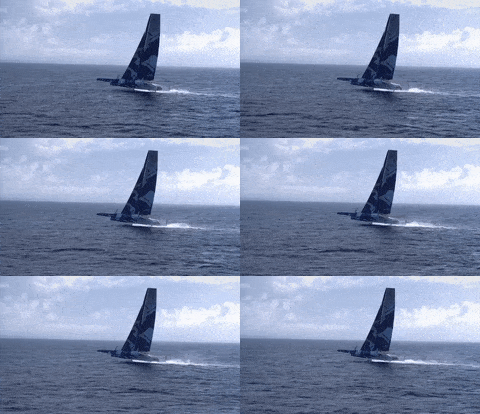
Leg 5 has been completed. Photo Source: https://gfycat.com/gifs/search/volvo+ocean+race+extreme
Sources of reference are utilized today. All are listed on the slides and below
Disclaimer: Illustrations in Watercolor are painted by Eleonora Escalante. Other types of illustrations or videos (which are not mine) are used for educational purposes ONLY. All are used as Illustrative and non-commercial images. Utilized only informatively for the public good. Nevertheless, most of this blog’s pictures, images, or videos are not mine. I do not own any of the lovely photos or images posted unless otherwise stated.
 Eleonora Escalante Strategy - Strategic Reflections Think Tank