

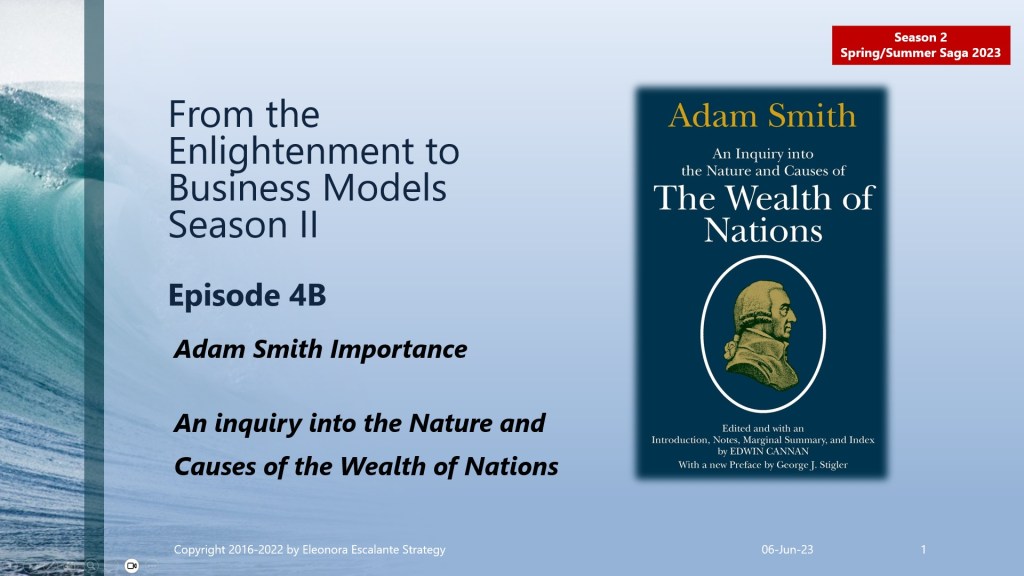
From the Enlightenment to Business Models. Season II. Episode 4b. Adam Smith Importance
Wishing you a lovely first week of June. As I stated last Friday, we have prepared the synthesis of Adam Smith´s book: “An Inquiry into the Nature and Causes of the Wealth of Nations”.
Find attached our document below. Download it and print it, please.
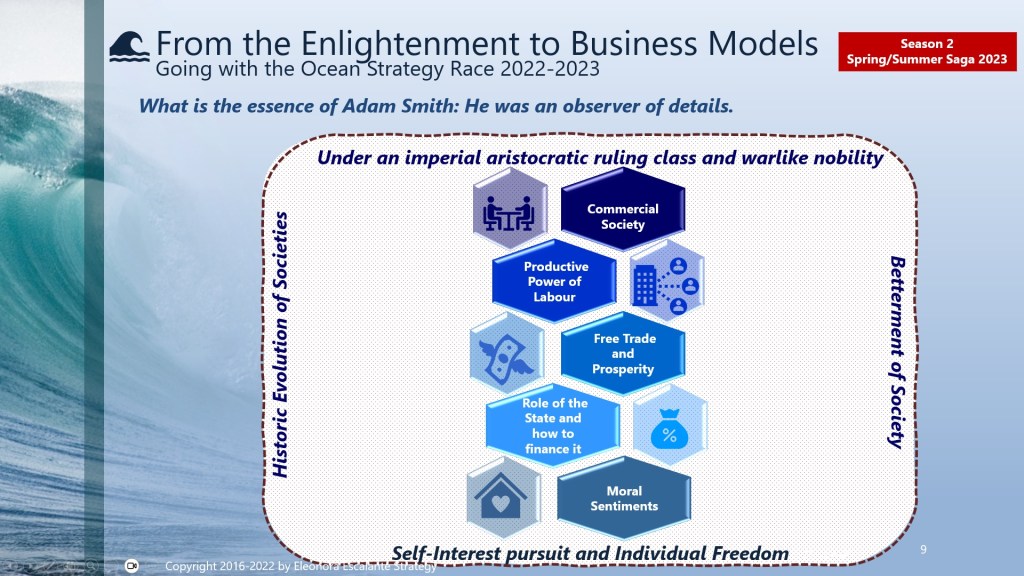
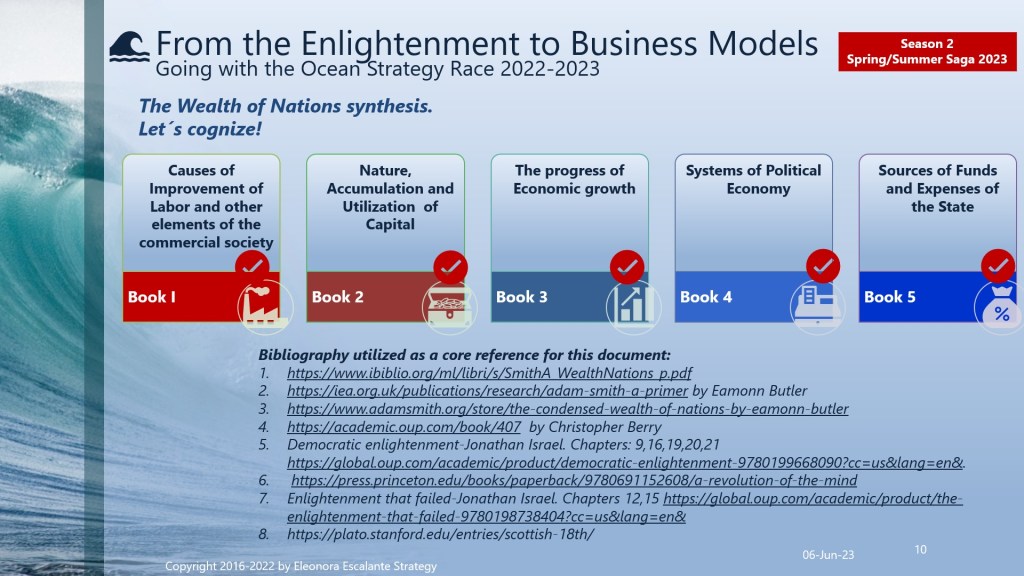
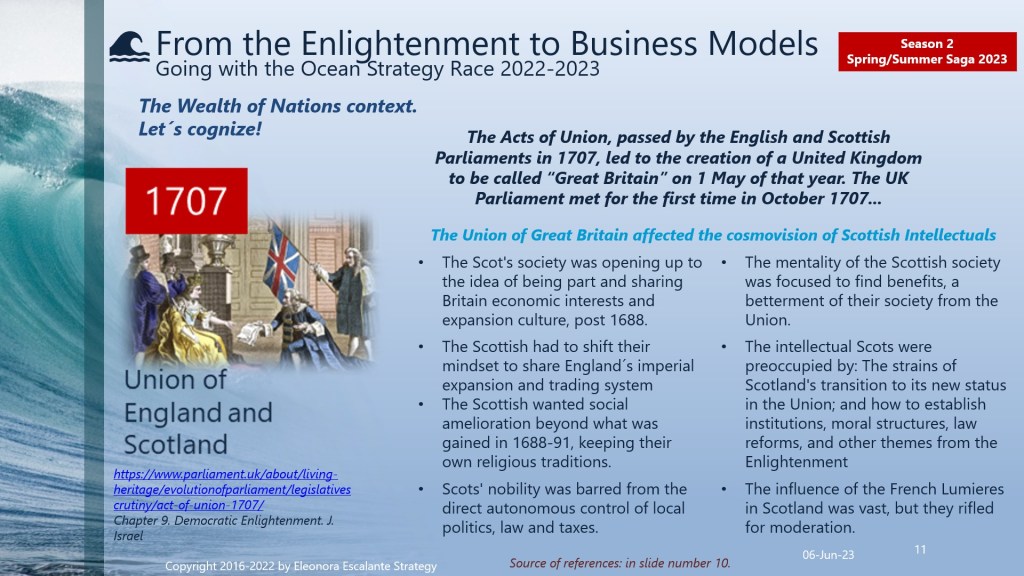
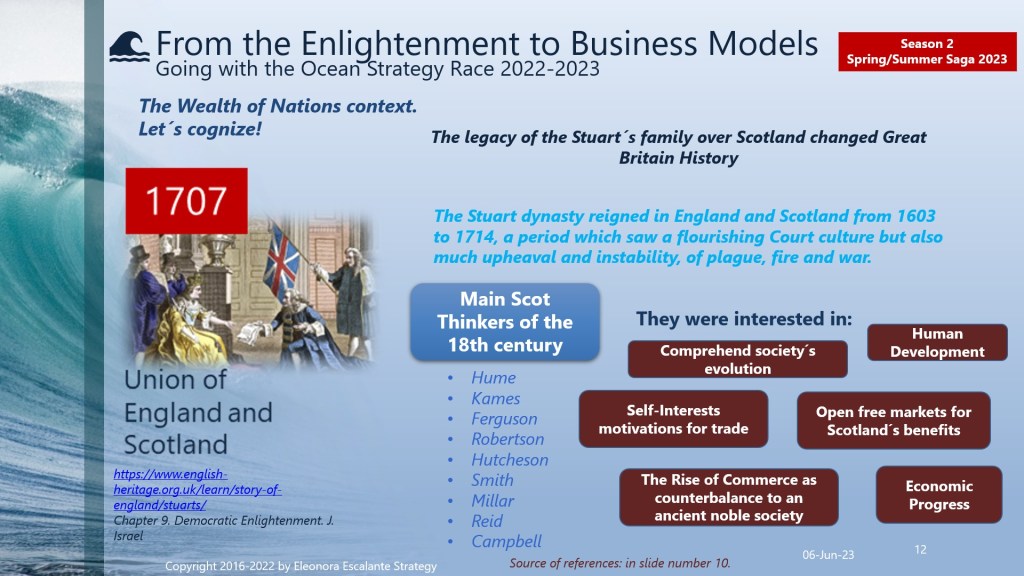
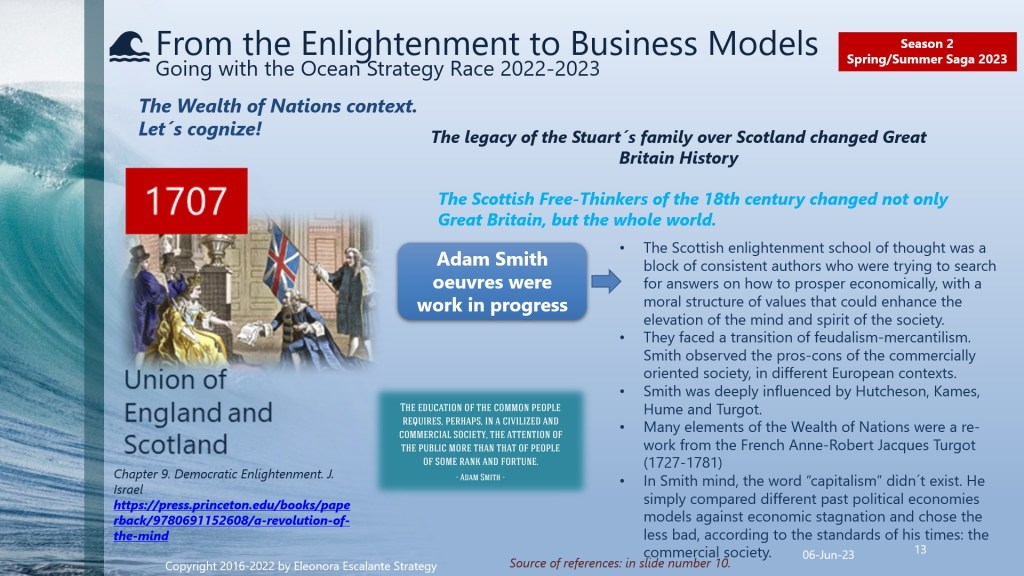
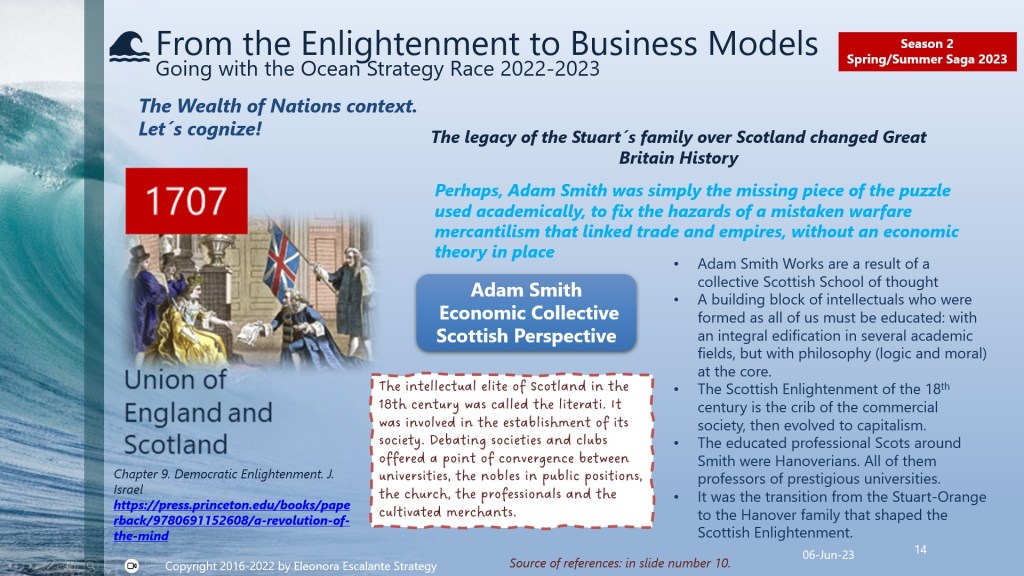
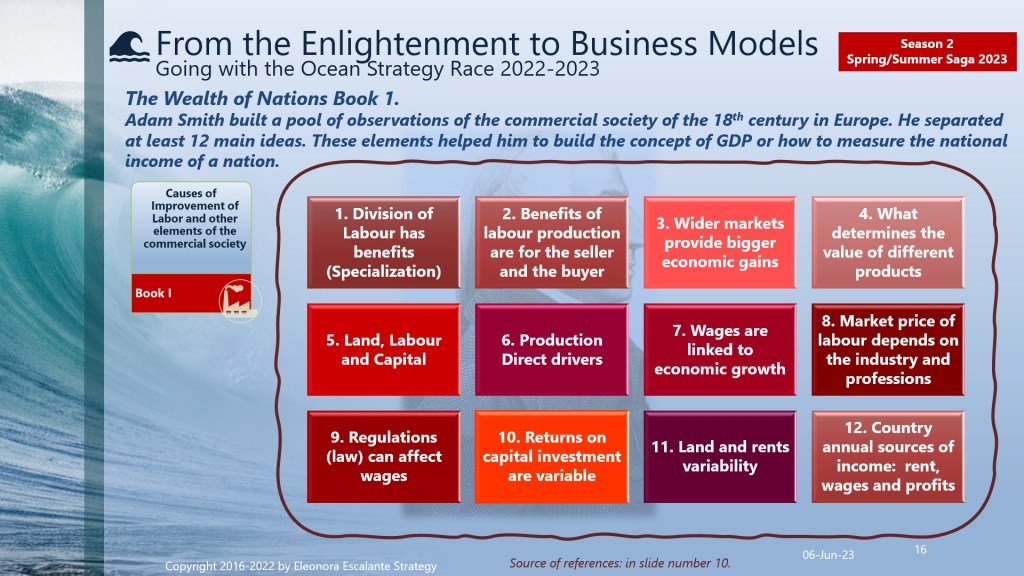
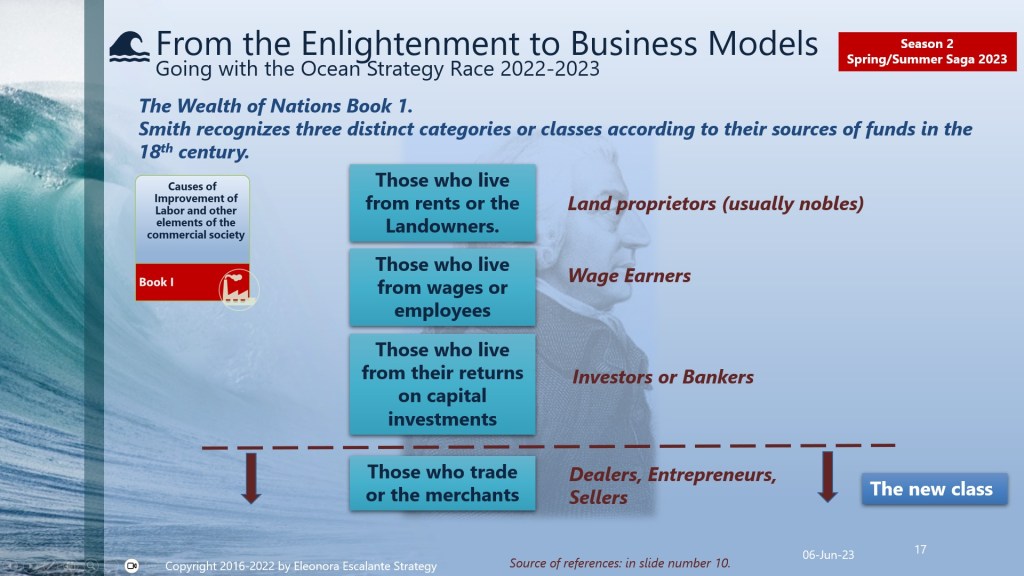
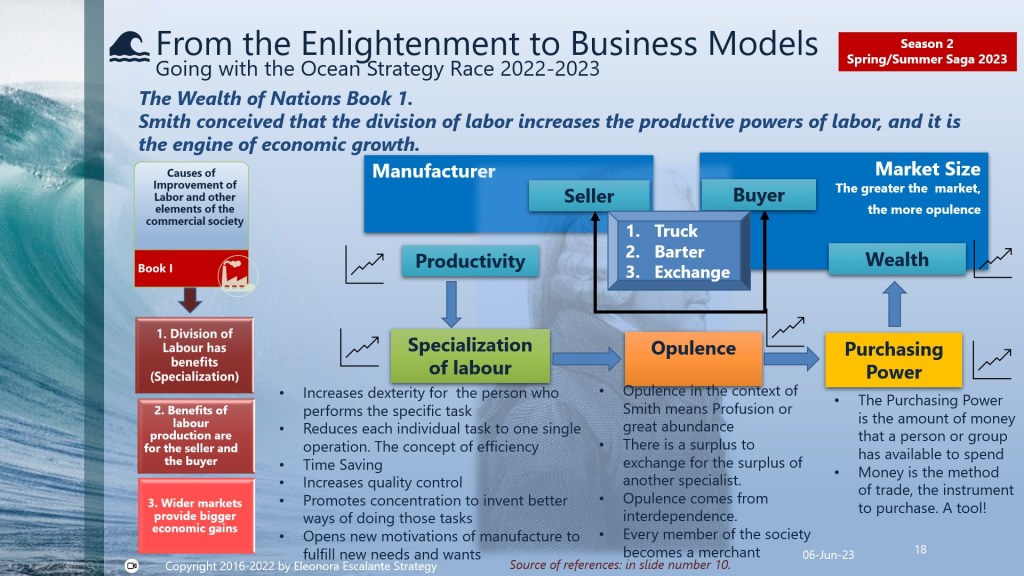
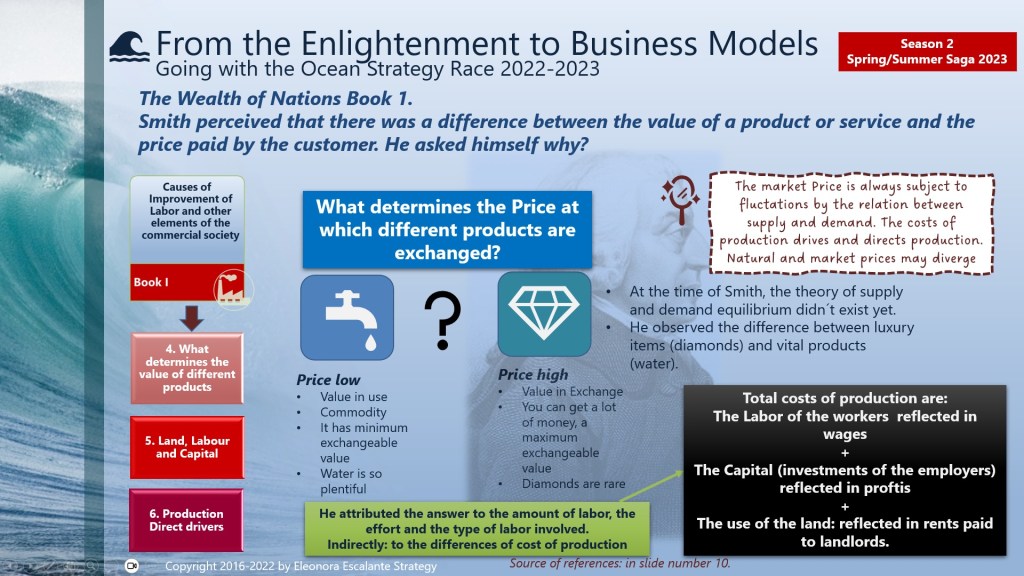
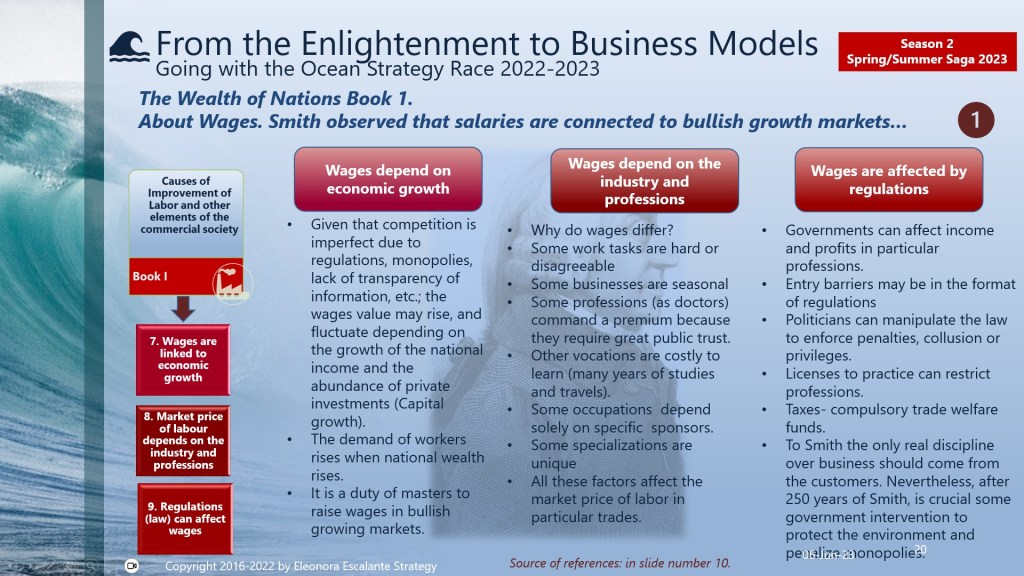
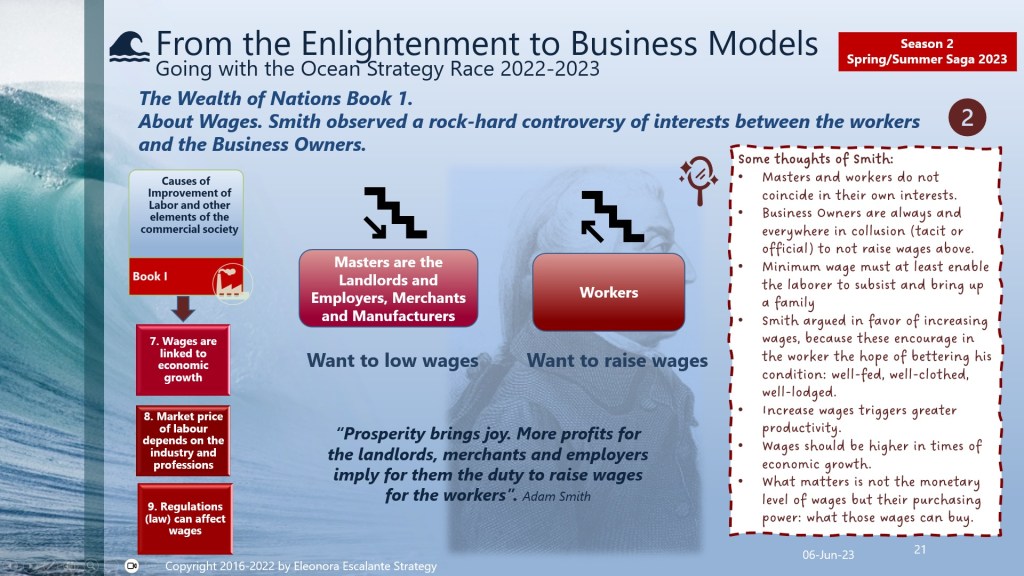
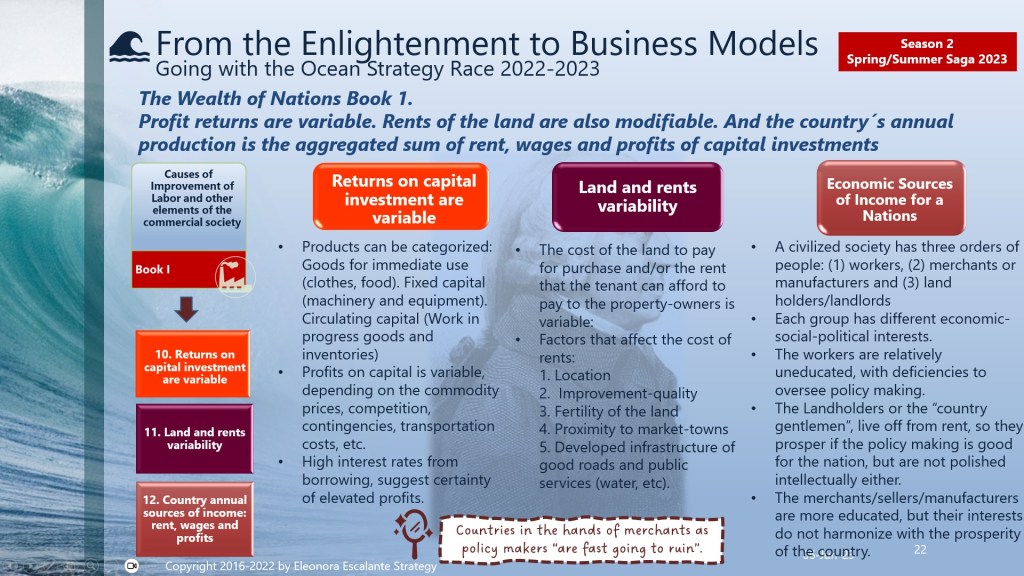
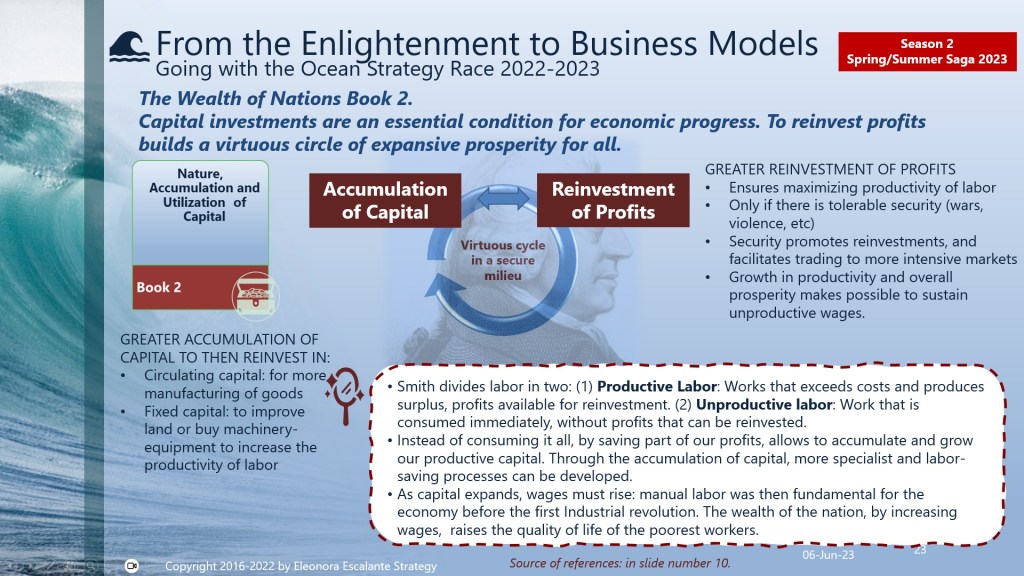
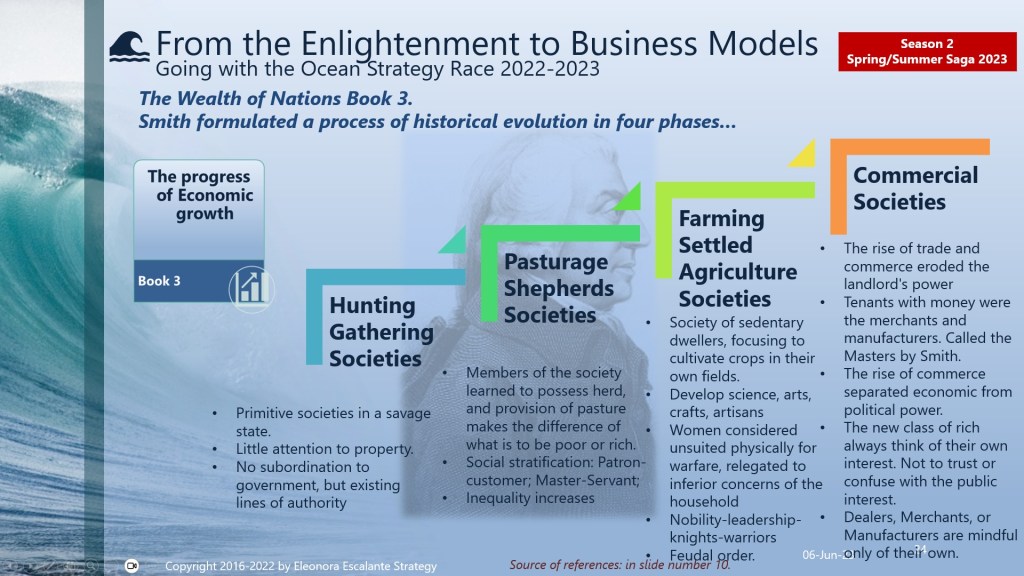
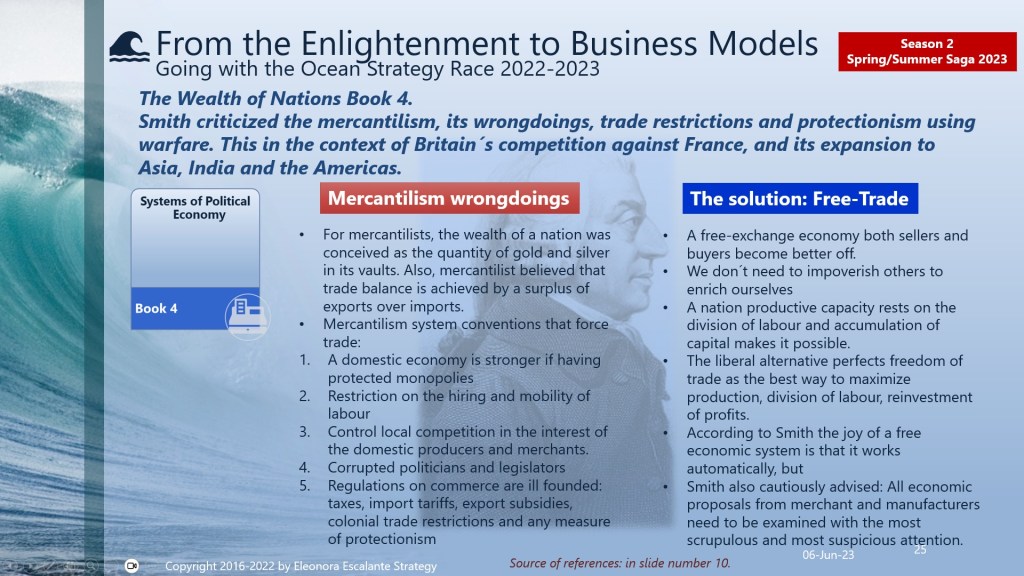
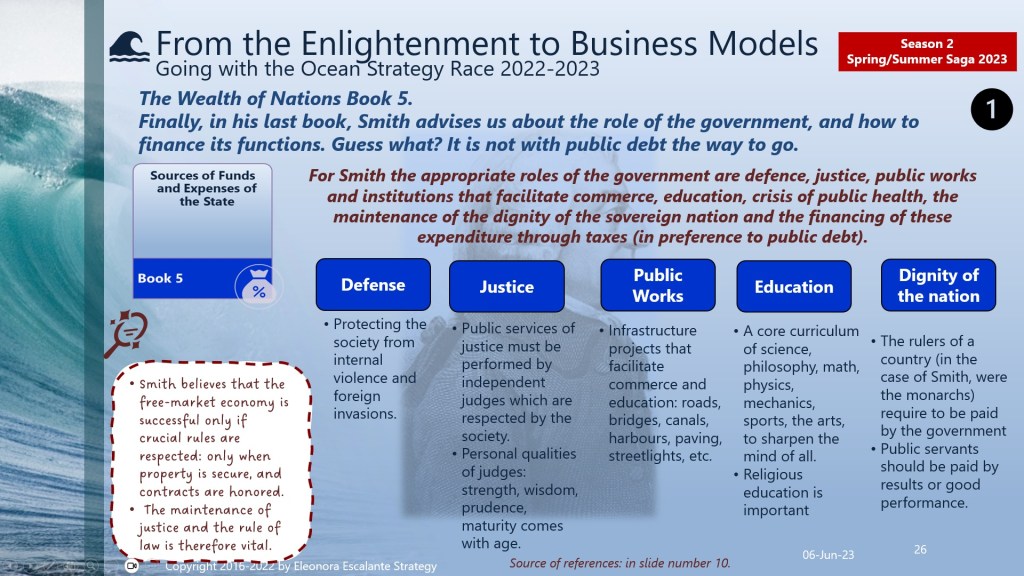
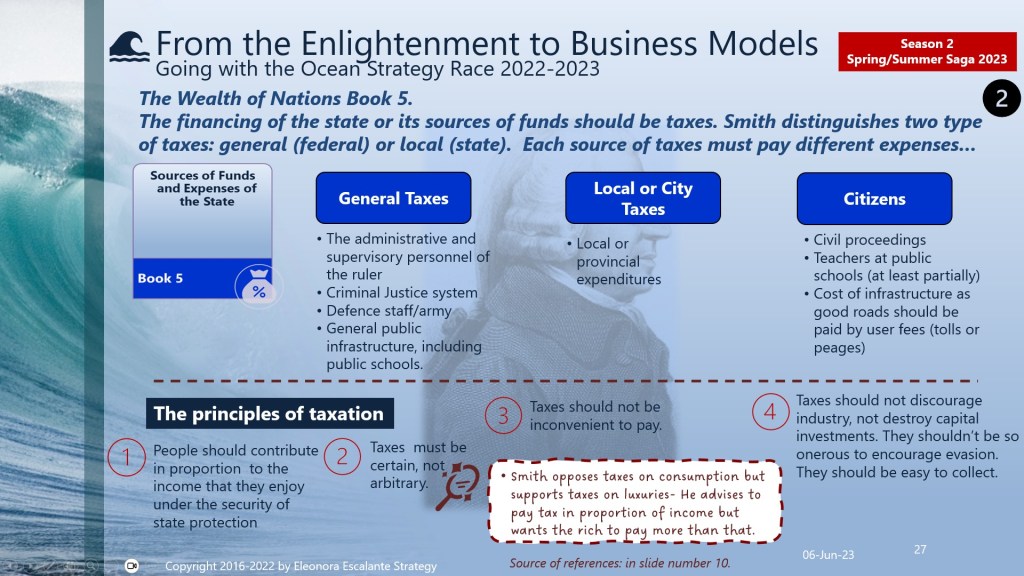
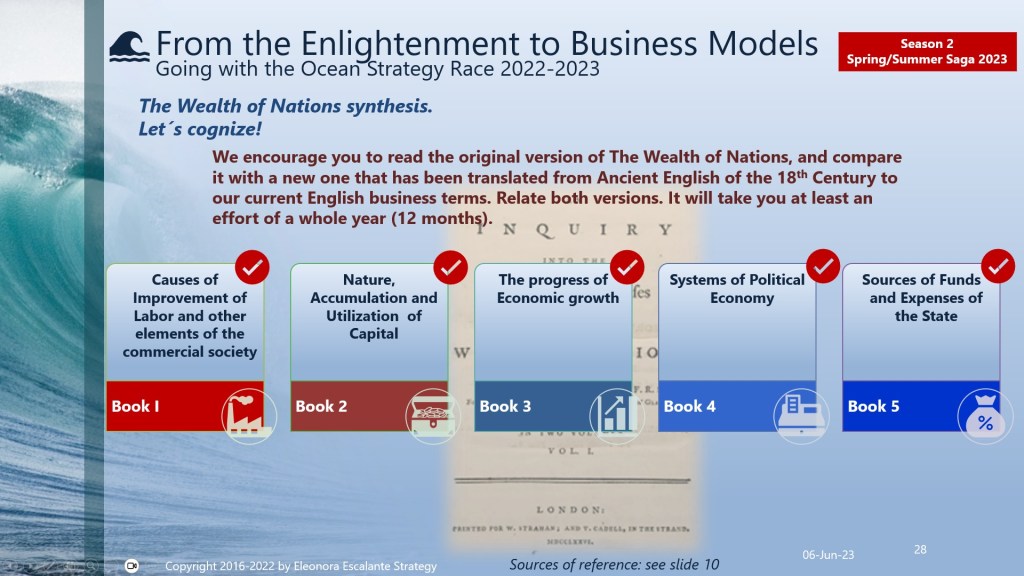
The essence of Adam Smith is mirrored in slide 9. My homework for you was that you could think about the following question, and try to answer it: Why do you think that Adam Smith was tangled in a dialectic of antagonistic theories? What caused this paradox? We will solve this maze today.
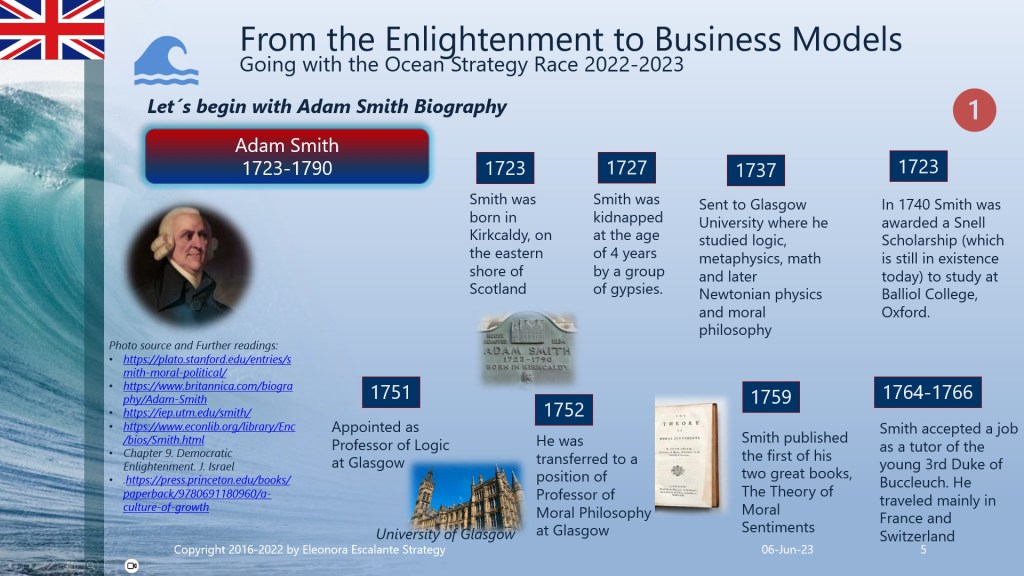
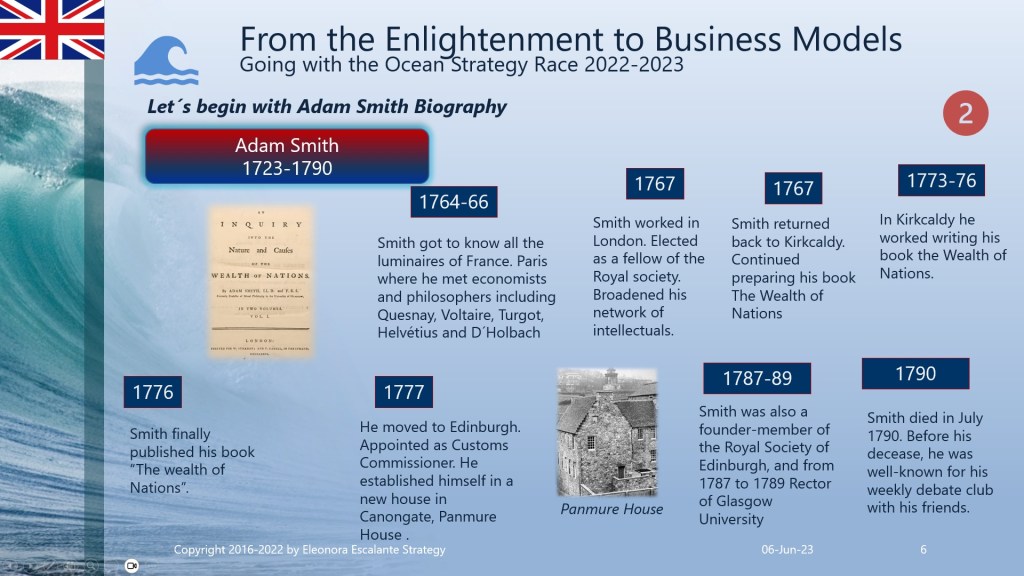
About Adam Smith’s life.
Adam Smith’s origins take us to Scotland, to the year 1723, specifically to a port city, Kirkcaldy. See the map below.
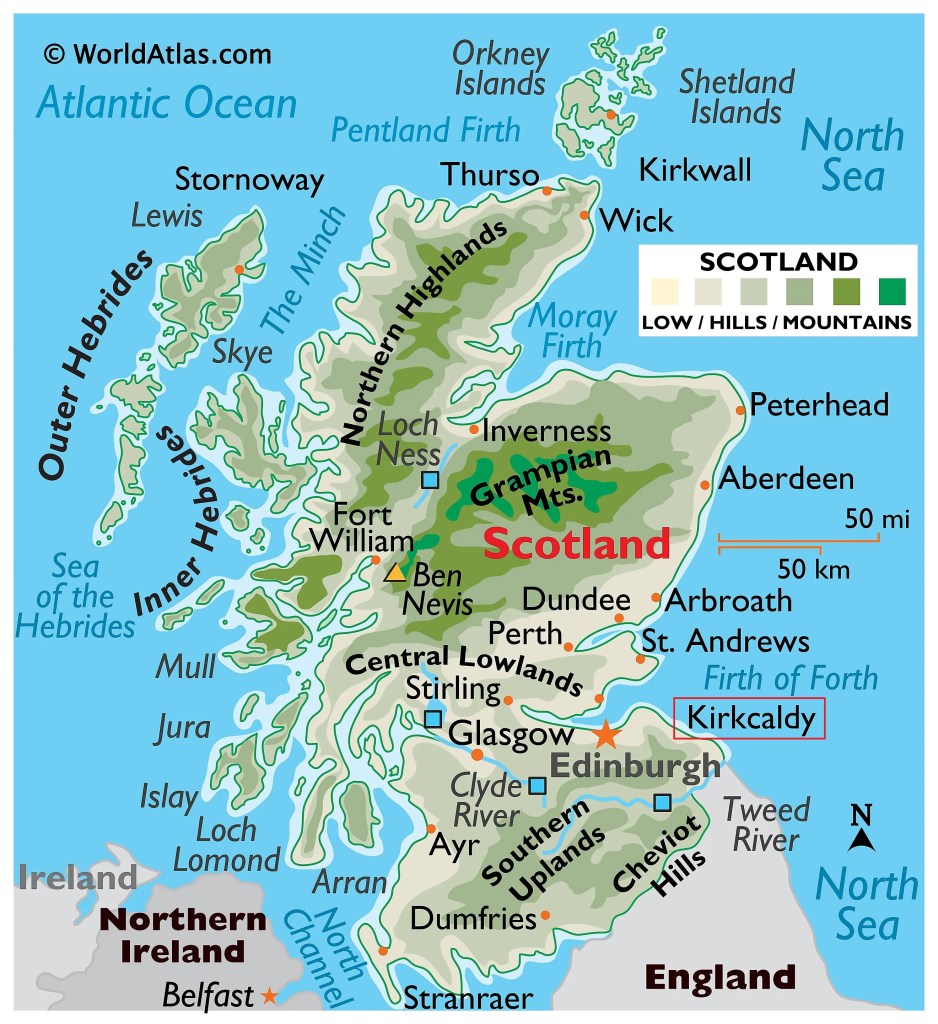
He was born into a middle-class family and was blessed with a fantastic high superior education at the University of Glasgow and Oxford (Balliol College). His career was related to teaching Logic and Moral Philosophy. In addition, he was a tutor of a young nobleman, the adoptive son of Lord Charles Townshend, and a remarkable politician under King George III who held various titles in the Parliament of Great Britain. Smith´s tutor position connected him to the French Luminaires in Paris while opening his mind through traveling around Europe. Two years of voyage exploration were enough for Smith to sketch his most relevant book “The Wealth of Nations”. From this experience, he was the fortunate recipient of a rewarding grant allowance for the rest of his life from the Townshend-Buccleuch Family, which allowed him to pay to return to his roots: Kirkcaldy. From there, Smith moved then to Edinburgh, where he accepted a public services position in the Customs Office. Read slides number 3 and 4.
Adam Smith was not alone in his authorship endeavors.
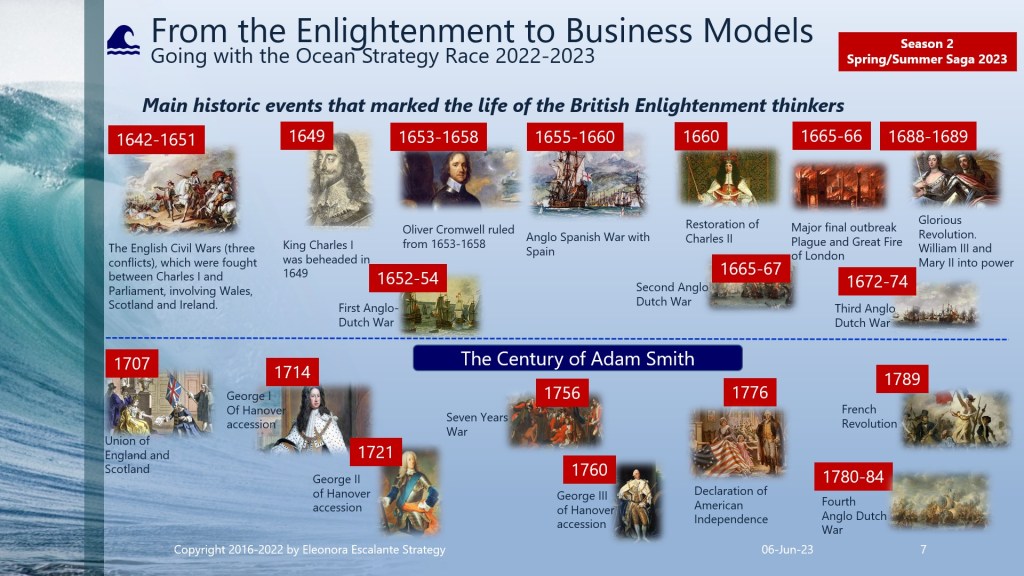
He was one of several Scottish relevant philosophers, who were living in the context of a transition between the Stuart dynasty (reigned from 1603 to 1714) to the Hanover ruling family of Great Britain. In consequence, he is considered a Hanoverian, because he lived under the Union of Scotland and England, a Great Britain ruled by two British Kings of Hanover (George II and George III). Smith is part of a consistent group of Scottish free-thinkers that focused their attention on a theoretical framework of the society’s historical evolution, human development, economic progress, prosperity, and the elaboration of a moral backbone structure that could stand Smith´s ideas of free trade with honor and success. Slides 11 to 14 explain this context in detail.
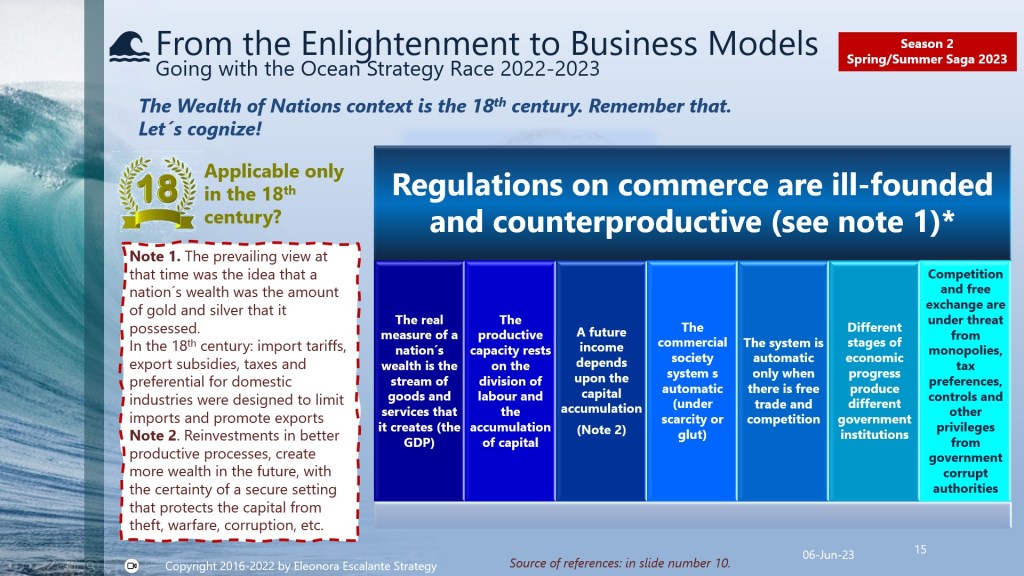
When Smith writes about regulations on commerce.
The context of the incipient commercial society that is clearly defined by Adam Smith is key to understanding the meaning of his books. The conception of Smith about opulence-division of labor-wealth creation was created to antagonize the mercantilist model of trading that was reigning during the 18th century. Slide number 15 is the summary of Smith´s message. Regulations for Adam Smith mean government intervention that altered the natural working of the markets in the context of Great Britain’s Imperialism. At that time, notice that most people in Western Europe were utterly and desperately poor, without land, without proper wages to survive with the minimum decency, and these communities were escaping from deprivation and from the religious persecution of the 16th century. North America opened a door to them. And Adam Smith released pioneering content on how to organize the political economy, in such a way that European Nations can recover from warfare, feudalism, and mercantilism wrongdoings.
Smith is not crucifying rules of justice, respect, and security of private property. He simply wishes to communicate that the wrongdoings of government intervention under the mercantilism premises of his context of life were not correct, and he offered the free-trade solution, as a proposition to solve or evolve from the mercantilism theoretical mistakes.
What is the essence of Smith?
I have prepared slide number 10 to answer the essence of Smith. But I encourage you to read slides 15 to 28 of this publication (the synthesis of the Wealth of Nations” book), and also, go back to our last post, to read the synthesis of “The Theory of Moral Sentiments” again. In summary, Smith´s mission was to utilize the historical human development progress theory of societies (slide 24) and offer a continuum of what he baptized as the commercial society. His human development theoretical framework implied a need for an acceptable theory that could support the fundamentals of wealth creation. Immersed in a change of paradigms, Smith professed a shift from a gold-silver accumulation to a refocus on other factors of wealth: division of labor, land, and capital investments profits.
Adam Smith was not alone in his quest for a new required theory.
His travels to Paris, where he met Turgot, his knowledge inherited from Hutcheson, his network of Scottish intellectuals, his colleagues and peers from Oxford, the Newton accompanying science, and his inspiration source of thoughts from the location of Kirkcaldy, Glasgow, and Edinburgh; including the support of his mother; permitted to Smith to shape what he left in his two books, and his reviewed editions. His honesty to propel the advantages and the dangers or difficulties of his new model were additionally included. Probably, we simply don´t drive our attention to the latter ones, but explicitly he also warned us, before his death in 1790, of the excesses of free markets, something that we are currently experiencing in this new forced transition to the digital economy.
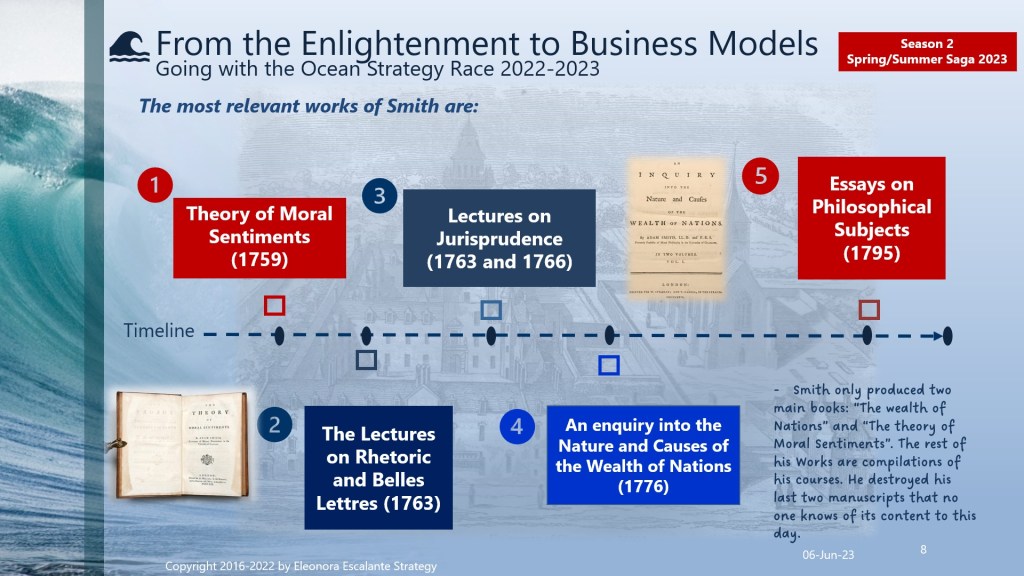
Adam Smith activated his theoretical framework with people. For him, people were the core. It was a crucial matter of the theme of wages, land, and of capital reinvestments. He was a loyal promoter of decent wages that could enhance the quality of life of those specialist workers who could earn a living for opulence (abundance). His concerns were also throughout the moral structure of society, and he knew that free markets without morals were not going to take us anywhere. Apparently “The theory of moral sentiments” was antagonist with “The theory of the nature of causes of the wealth of nations”. Not at all. A Logic Professor like Smith, couldn´t create an illogicality. It wasn´t a matter of white and black. Smith started with the moral explanation of the human being. In 1759 he began with the basics: sympathy, the impartial spectator, the invisible hand, and the distinction between moral rules and top virtues (property, prudence, benevolence, magnanimity, beneficence, self-command, and justice). Seventeen years later, he published “The Wealth of Nations”. To go from moral virtues to an explanation of the fundamentals of commercial society was a long process. I assume, that he never thought that his economist successors were not going to use “The theory of moral sentiments”, but only “The Nature and Causes of the Wealth of Nations”, to continue creating the theories that we have embraced during the 19th and 20th centuries. On the contrary, from what I have learned, Smith noticed in advance the perils and risks of leaving the baton of the political economy to the merchants and traders. And he warned us accordingly.
The result: after a couple of centuries and a bit more, we are reaping the consequences of dismissing the first work of Smith about moral sentiments. When our current frameworks of competitive advantage developed in the 1980s, these ignored the first part of the Smith moral structure.
Nowadays, “trade has benefited again, only the seller, not the buyer, and nations have been able to get richer at the expense of other nations who are still poorer”. Sadly, we are entering a stage of commercial-digital despotism; and we are not only hugging again the old view of economics (the mercantilism that Smith warned us), but we are preparing the way for a virtual economy, that has no real terms of exchange at all. In the origins of free trade, at least Smith truly cared for the wages of the people. He procured the raising of wages. Nowadays, with the virtual premises of making money, we simply do not care at all for anyone, not for the jobs of the real economy, not for the jobs of the knowledge economy, not for the jobs of the leisure economy (arts and sports), and not for the jobs of the land proprietors either. We foresee that we are privileging a new model (without moral rules or ethical virtues) that is taking us back to feudalism but without the physical assets that were the foundation of Smith´s neoclassic economics. The threat of going virtual is more than what anyone has ever evaluated these days.
To finalize: let´s ask ourselves the following question: How can we pretend to make a digital economy thrive without moral rules and ethical virtues that keep people in well-being and sanity? How to continue pushing for a digital economy that is replacing people and installing machines, including artificial intelligence? We wonder how far we are from doing business modeling theoretically right. This episode yearns to shake your mind about it.
Announcement.
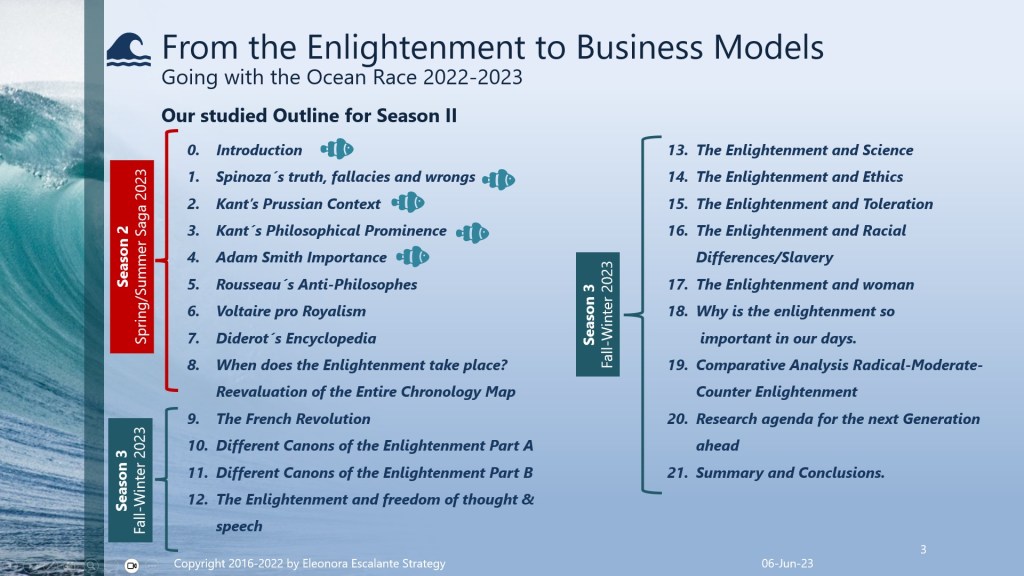
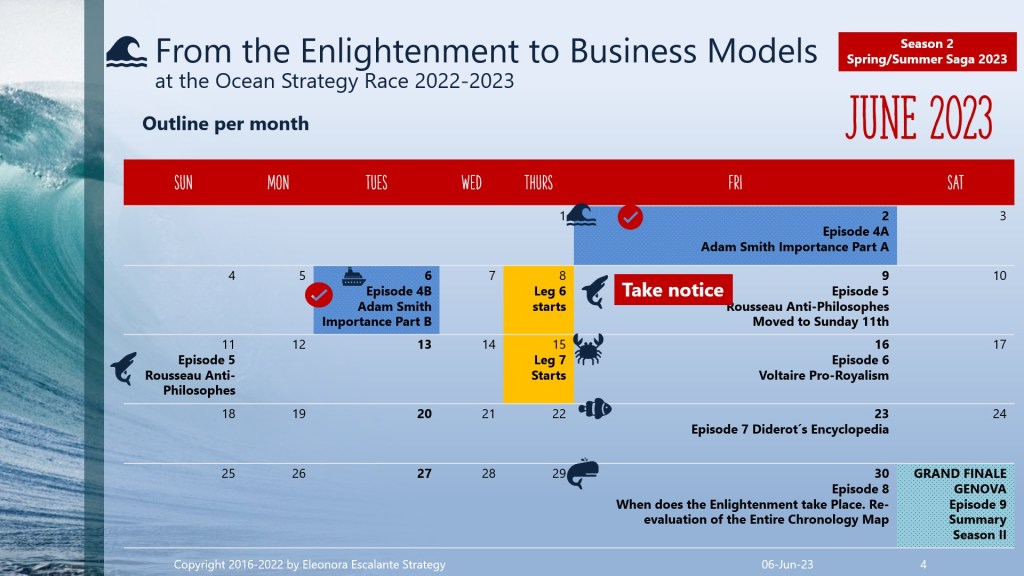
Next week we will continue with Jean Jacques Rousseau.
Ocean Musical Section
Publishing before leaving Aarhus for the Hague.
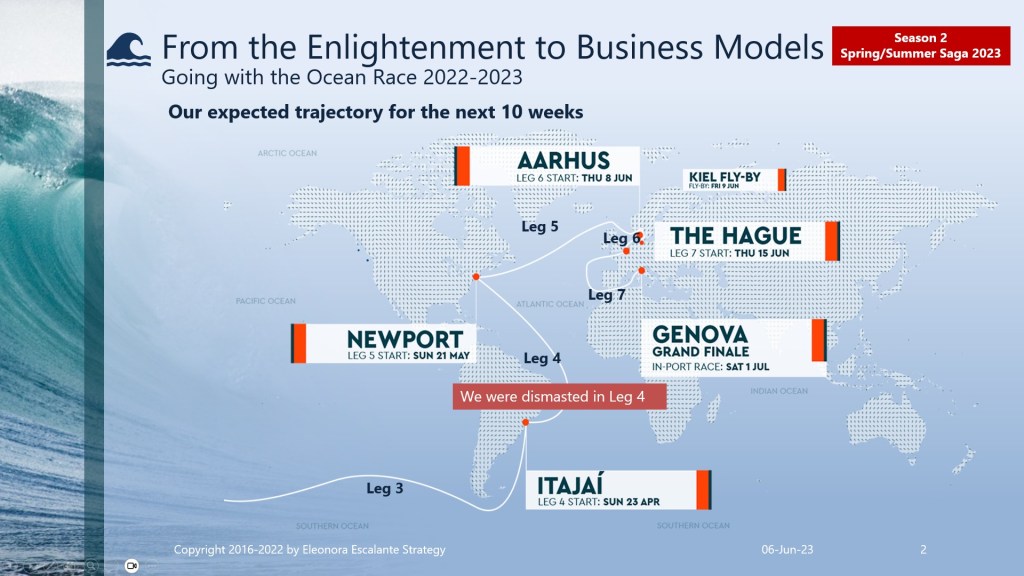
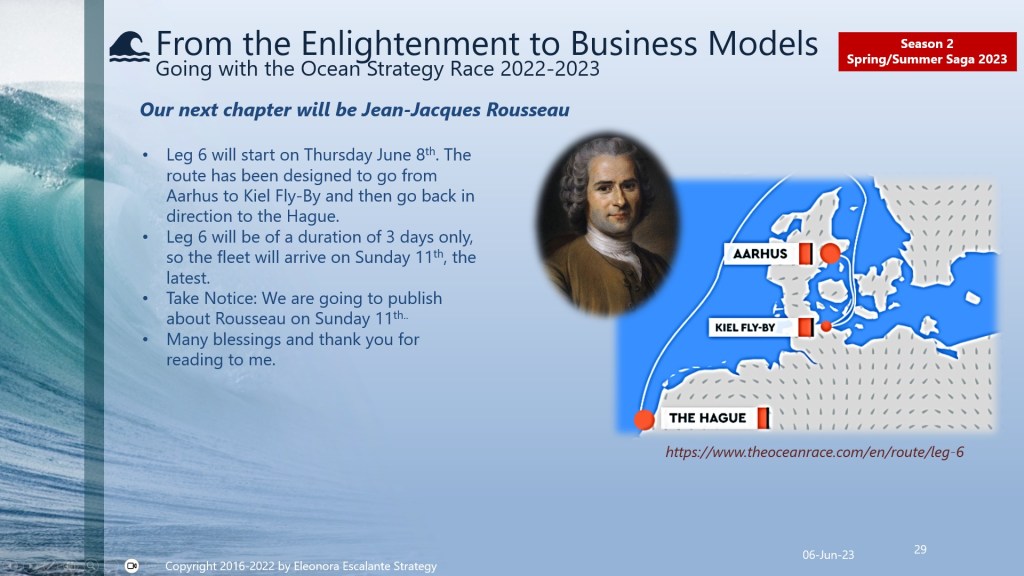
Leg 5 was completed last week. The Biotherm team finally arrived at Aarhus, after a difficult Leg 4 that kept them out of sight. Now, all the teams (10 boats) are almost ready for Leg 6, a trajectory that will take us first via Kiel-by Fly and then go up again, around the shore of Denmark heading to the Hague. It will be a short leg of 3 days, and it will be fun, hopefully safe, for all of us.
Today´s musical selection is about Scotland scenery. This video shows a spectacle of landscapes that will leave you speechless. “Scotland is one of the most magical countries in the world. Enjoy the music and the wonders of this lovely set-up of Scotland, the land of Adam Smith. See you next Sunday 11th with Jean Jacques Rousseau’s philosophy. Blessings and thank you for your patience and consideration.

Leg 6 will take us from Aarhus to The Hague. Photo Source: https://gfycat.com/gifs/search/volvo+ocean+race+extreme
Sources of reference are utilized today. All are listed on the slides.
Disclaimer: Illustrations in Watercolor are painted by Eleonora Escalante. Other types of illustrations or videos (which are not mine) are used for educational purposes ONLY. All are used as Illustrative and non-commercial images. Utilized only informatively for the public good. Nevertheless, most of this blog’s pictures, images, or videos are not mine. I do not own any of the lovely photos or images posted unless otherwise stated.
 Eleonora Escalante Strategy Strategic Reflections Think Tank