
From the Enlightenment to Business Models. Season III. Episode 10. Feudalism, Enlightenment and Toleration Part B.
Adorable readers, I wish you a fantastic weekend ahead. Find below all the work that I have done during the week. I am tired at the moment, so I will return to upload the strategic reflections before Monday. I would like to take some rest, before entering with the structure of the lovely strategic reflections about this topic. Understanding feudalism, and its connection with intolerance and violence is crucial. It is the foundational backbone of our future publications. Remember that in two weeks from now, we will begin to connect the Enlightenment with our main domain: Contemporary Strategy Analysis.










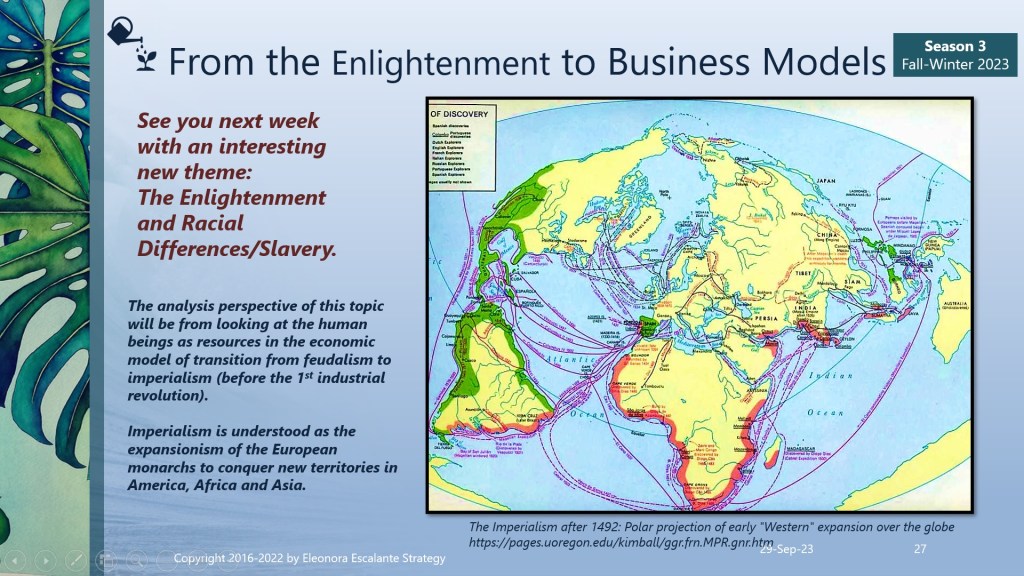
Let me remind you that, the whole purpose of this saga is to provide theoretical elements from our past, that can help us to make sense of the categories of changes that we need to commence to do in our business models, and strategic management theories. The Enlightenment was the moment in time in which our civilization was trying to conceive a new vision of society. The defective feudalism was not helping anyone, because its conceptualization was not properly designed. Our civilization has always been in warfare. Anywhere you look at it, there is an abundance of violence. Humans have been trying to solve their issues only through brutality, and that is the message of today. There is something in our brain that triggers us to use violence in the first place. And this is historically well-proven and documented. Warfare has been the continuum of human mentality since 6000 years ago. With the Enlightenment, the European Societies, which were in imperialism expansion to Africa, America, and Asia; were trying to replace the old feudalism with mercantilism. The imperialism definition that we are using in this saga is: Imperialism is the expansionism of the European rulers, a system of military domination and sovereignty over regions beyond established frontiers or borders. In this context, a new economic theory was emerging with the first industrial revolution in England: capitalism.
A mentality of warfare, can´t be changed in 400 years.
Our moral judgment is based on gathering the best knowledge available from historians and authors who have made their own assumptions, research, and theories. Please remember, our job is to provide strategic reflections of it. We do not mean to criticize the monarchs of Europe at the time of this saga, but we truly wish you to realize where are we coming from. The transformation of our societies from Feudalism to our days has been a trial and error process, with multiple edges, mistakes, and misfortune. A mentality of warfare, can´t be changed in 400 years. It takes a while to see ourselves as blessed humans capable of loving, forgiving, and helping others with our productive activities.
The slides have been separated into two sections: The first section of the slides is about Feudalism. The second part of the slides is about Locke, Bayle, Kant, and Spinoza´s doctrines of Toleration. I didn´t include Voltaire, because after careful deliberation, we perceive that Voltaire was a champion challenger of toleration activism, but he basically didn´t create a toleration theory by himself. Hume also wrote about toleration, but we have not incorporated him today either. In both sections of the slides, I have tried to link the topic of today, toleration or the lack of it, as the basis of our societies during the Middle Ages, Renaissance, and the Enlightenment. With the implementation of the first industrial revolution, two primary economic proposals (Capitalism and Marxism) were used to get rid of feudalism. But the feudalist mentality was kept intact, it still exists today, and you can see it in everything that humans do. Meanwhile, violence (warfare) and competition to economically kill the enemy continue, the intolerance will go on. Not in religion or race, but with our businesses, and with our human talent organization of it.
Our societies need a lot of love to change. The type of love that was taught to us by Christ. Only love can save us from making the same mistakes that our ancestors did. If we continue using our current competitive business theories, we will continue replicating roughness, warfare, and feudalism with our products and services.
For the time being, I will leave you with enough material for reading, studying, and analyzing. At the latest, on Monday 2nd of October, we will upload our strategic reflections and the explanations of some slides that might be important.

Homework for the weekend (now with our strategic reflections included):
Feudalism and Violence: Sources of Intolerance.
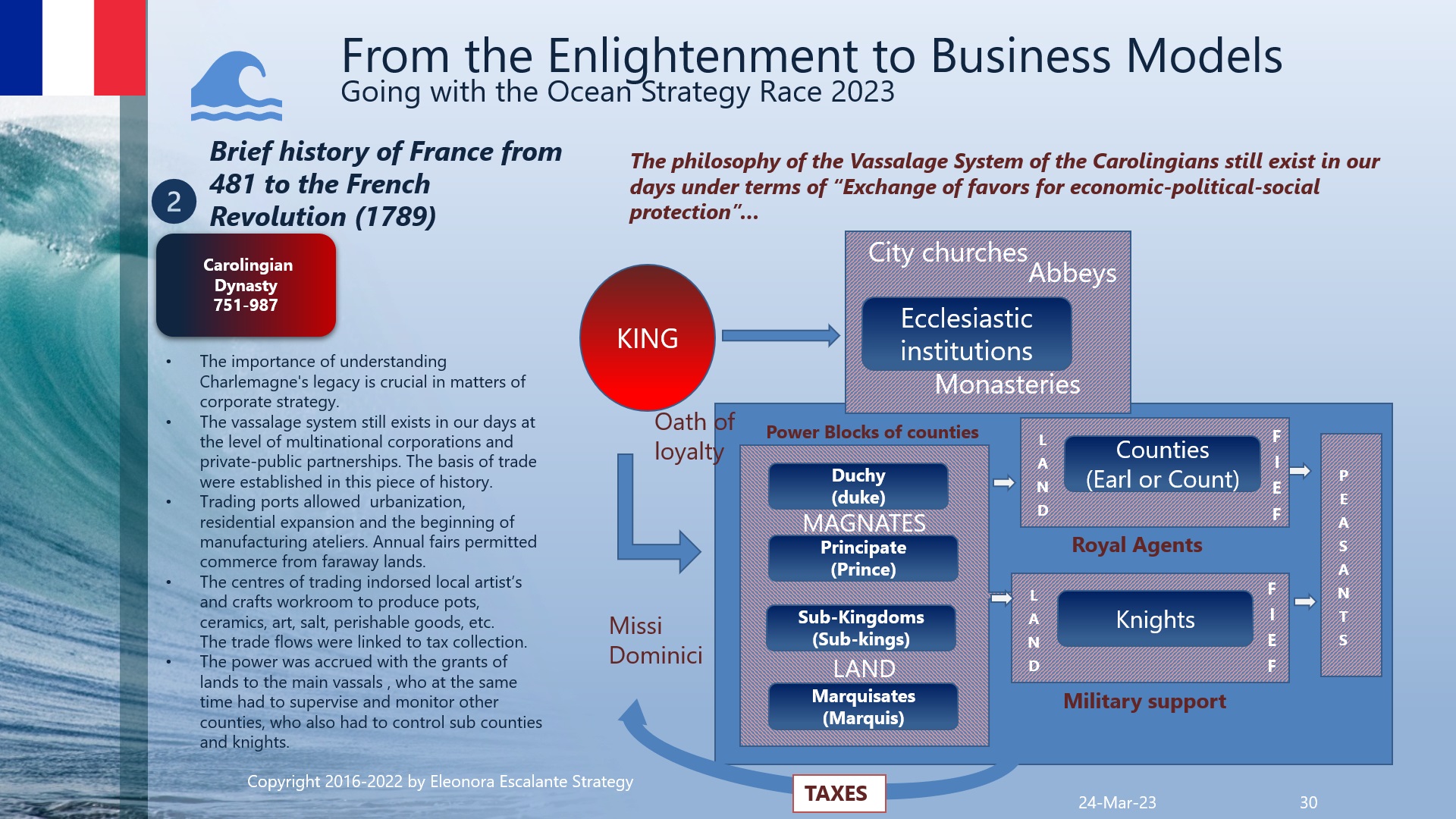
- Feudalism was a solution for the Middle-Age societies in their quest for protection, given the violent warfare environment. Can you explain the Feudalism Model? The Feudalism Model is described in full detail in slides 8 and 9. Our strategic reflection on this question is: Most experts or authors who have studied feudalism coincide with the following idea: “Medieval Feudalism was conceived as a natural response to the greatest need of the Dark Ages: Need for protection and security”(1). The Roman Empire left the following mental framework of the dominance of the land: the greater and bigger the territory, the better. That was the mentality of the leaders of Europe after Rome´s twilight as an Empire. Under the Kingdom of the Franks (481-751), the Salian Franks drove for this model of expansion. Emperor Charlemagne, who installed the Carolingian Dynasty (751-987), persisted in using this corporate strategy of conquering land as the resource of accumulation and power growth. Charlemagne is the precursor of the Feudalism Model that we have explored in this publication.
Moreover, since most European regions did not have the figure of a “state” (as we know it in the 21st century), the leaders of the different territorial zones followed what Charlemagne did. The formula of expansion under the Carolingian and Ottonian dynasties used the Catholic Church as a faithful player, particularly when they settled in and kept new areas under their domination. The utilization of oaths of loyalty and vassalage, in exchange for protection and immunity, all together tied to the Papacy, started here. Medieval Feudalism continued expanding, through Charlemagne’s descendants, who were constantly threatened by invasions of the Vikings, the Hungarians, the Muslims, and other internal conflicts. The nobility´s growth using the vassalage domination system entered into crisis gradually, but not until the 13th century when all the main families with larger states fought hard to dominate the rest of the feuds, and auto proclaimed themselves kings or emperors using the Pope as a stamp of approval. So it was a long process until the age of the Enlightenment.
We wish to remark that the Feudalism model was installed out of necessity. It was created in the Carolingian state of Charlemagne, in the 9th and 10th centuries, and from there, it was copied in Spain, England, and Eastern Germany. A clear example of this strategy materialized in Germany and it was successfully installed in Germany when Otto I, a simple German lord, was able to obtain the title of Holy Roman Emperor, which continued further until 1806. King Otto I and his descendants tried to use this impressive title to extend a Catholic Empire and hegemonic authority using the Papacy´s support from Rome. The Ottonian dynasty (919 to 1024) pulled the Carolingian Past to create the foundations of German unification through strategic alliances coming out of the Feudalism model. Feudalism was strengthened during that century because each German state or feudal principality lined in the territories of Saxony, Frisia, Lotharingia, Thuringia, Bohemia, Swabia, Bavaria and Carinthia had no other choice than to be equipped and get armed to use warfare to regain or keep control over the lands of the German part of the Carolingian royal extension of Charlemagne. This is the best example, I can show you, of how each king of Europe during the Medieval Ages was trying to extend territories through warfare, and feudalism was like the perfect tool that fitted as a glove for that purpose. Otto I strategy shows us how he tried to reorganize his Court from Bavaria, empowering its frontiers well into France and Italy, Hungary, through the Holy Roman Empire network of bishops demonstrating the king´s hegemonic influence over ecclesiastical and secular affairs. This couldn´t have been possible without feudalism.
In the context of warfare, small landholders or landless men knocked on the door of the local landlord magnates (as powerful nobles connected to the King). “These magnates (called Lords, or those who had noble titles: dukes, princes, marquis, earls, counts) were glad to have more men under their authority because these subordinates could serve in several useful ways. The system worked with the following benefits:
- The king secured knights and officials, and an aggregated number of military fighters, an army at almost zero cost.
- The Lords obtained recognition of considerable independence and the support of other lord-armed clients.
- The small landholders (transformed into tenants) and landless peasants obtained a good measure of political and economic security” (1).
Until here, everything seems to be convenient for everyone involved in the Feudal Pyramid. The Lords and the Vassals have duties and obligations to each other, with specific rights. Nevertheless, the fountain of unresolved problems was rising because of the blurry enforcement rules of the game. Private warfare was the solution to every single occasion of problems, and the circle of violence never ended. The royal court government of all these magnates was (in many cases) not only weak but with an incipient royal civil services administration. Great Feuds Courts (of powerful nobles) were sometimes superior in knowledge and army power to those of kings (particularly if the members of the Great Feud Courts attended Universities). The kings´ Courts, although in theory, were the high justice representatives; in practice, little intervention was exercised for their own vassals. In addition, the kings were dependent upon their vassals’ knights and armies. Each king had a sort of central government, who oversaw fiscal policies and requested a collection of resources (military and/or for warfare) from his kingdom vassals. The king was more powerful if he had an aggregated sum of “lower vassals, with enough income to live, with enough administrative machinery to keep his estates operating, and with a strong castle to withstand any siege” (1). Until the 13th century, the king of a state was unable to do taxation efficiently (usually kings never taxed the nobles), and they also had no power to legislate over the vassals. That is why the feudal states were thriving in the middle of impetuous chaos, with a decentralization model, throught mutual private contracts and direct personal relationships.
2. What is the difference between manorialism and feudalism?
Go to Slide number 9. Read the “pearl of wisdom section” that describes this difference. Our strategic reflection on this question is:
The feudal trading floor was the land and human work. Those who had land became tenant vassals by exchanging their property to a bigger landlord for security (Feudalism). Those who were landless became serfs by exchanging their human labor to a bigger landlord for security (Manioralism). In both situations, the social contract kept the tenant vassal and the serf under a “domination” scheme. Violence and warfare were the terror of the epoch, and there was no other manner to keep yourself alive but to join the tunnel of feudalism if you wanted to survive beyond the Lord´s castle territories. In both cases (feudalism and manorialism) there was a principle of subjugation in exchange for protection. In both cases, there was an accepted dogma of dominating/dominated. In both cases “violence eliminated those who led the resistance to it, and violence terrorized into submission”.
3. Can you explain why the fragmented medieval society transformed itself into a fiscal-military state?
As I explained in question 1 above, the lack of a central authority for law enforcement caused more troubles than benefits in medieval society. When kingdoms expanded following the Ottonian dynasty strategy, the rest of the rulers were performing a horizontal international expansion for growth. Since the papacy helped Germany to grow, it is obvious that the rest of the kings were going to try to replicate or find another similar strategy for defense and growth. The success of Germany using the figure of the Holy Roman Empire forced other regions, to do the same. It is obvious that for some kingdoms, a new religion under Christendom was needed. Luther and Calvin were part of these new strategies. And the religious wars were the mechanisms for joining more battles. Everything that was coming out of Europe involved violence. Even the new Christian religions!. It seems unbelievable, but that is our past. Full of violence. And the feudalism continued. Regions where the main Lords exercised weak control within their vassals, began to re-accommodate themselves by trying to go with other nobles-in-chief to gain more territorial control and increase their population (for the military requirements). In this context of complex issues, the need for a centralized government that could handle greater armies and military power required more sophisticated bureaus at the Kings ‘court levels. Not just in the art of making war, but to professionalize themselves at the new Universities that were popping up all over Europe. The money for executing the military strategies had to come from the vassals and respective sub-vassals, down to the bottom of the power feudalist pyramid. The taxation began by the end of the 13th century when the kingdoms realized they needed money to centralize the fiscal-military decision-making when expanding in size. Taxation also required fiscal offices with well-educated officials who could become aristocrats in exchange.
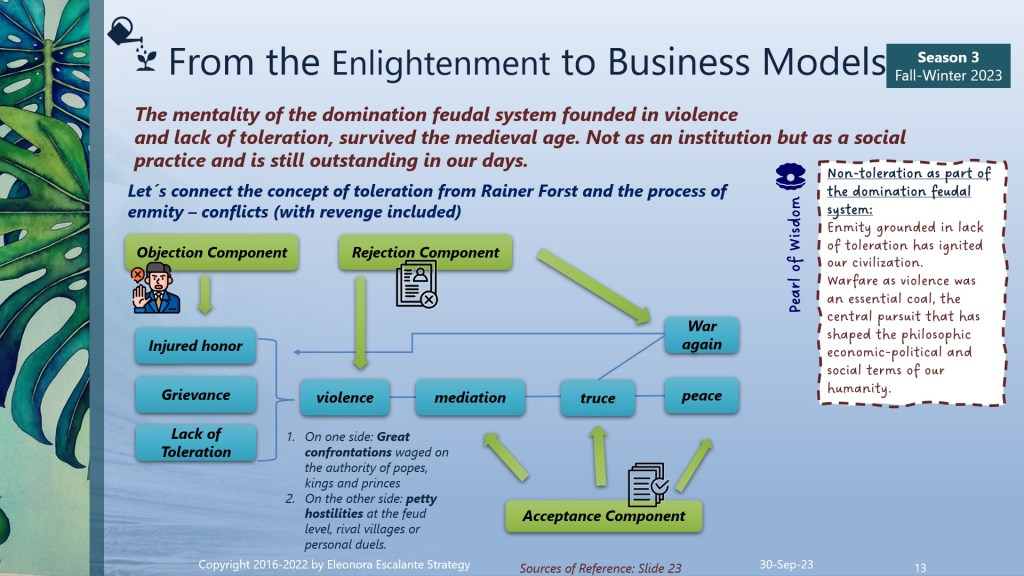
4. Why do we affirm that “Where there is violence, there is intolerance”.
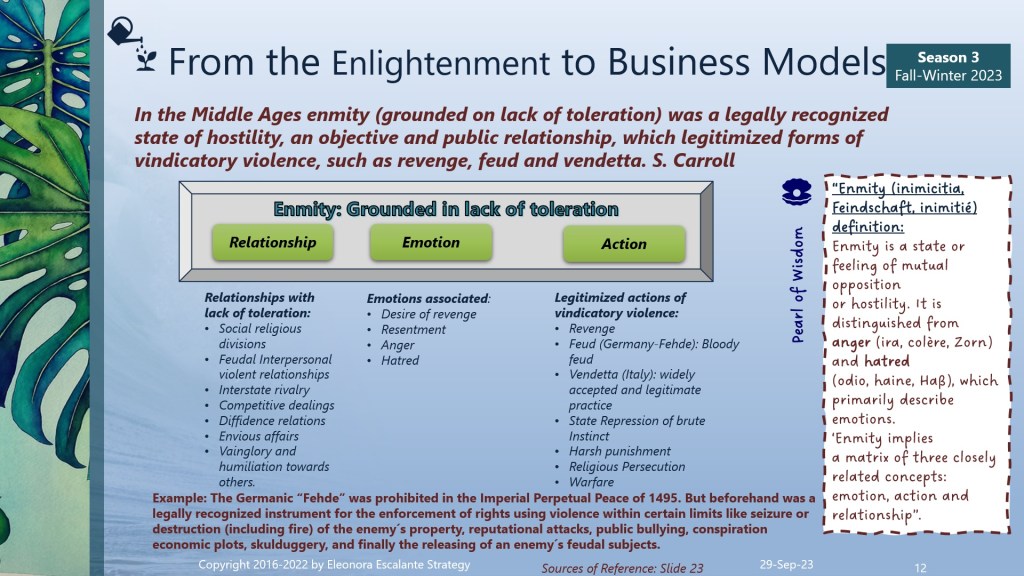
The answer to this question is in slides 12 and 13. As violence was the norm for problem-solving during the medieval ages, it is obvious that the hostility between feuds and the cruelty registered in the books from those years is nothing else than proof of evidence that humans were accustomed to aggression, fighting, sadism, bloodshed, savagery, not just in terms of military and physical force, but also in terms of personal punishment for any type of offense against the Lord or in between vassals. Since the dominated (tenants and peasants) were expecting some kind of justice administration from their lords, each feud had measures to punish. Sometimes cruel measures. In such a regime of oppression, enmity was the normal standard. And enmity is grounded in a lack of tolerance, or intolerance. Where there is violence around us, then there is intolerance.
5. Can you explain why Enmity was a legally recognized state of hostility that legitimized forms of revenge?
The term enmity in the context of the Middle Ages is developed in slide number 12. Feudalism thrived because of violence. Enmity is an aggregated concept that includes three components: relationship, emotion, and action. The relationships without “a good system of justice and law” provoked different situations that required a “solution”. Solutions of violence, intolerance, and revenge. Since everywhere around the fiefs and vassals was based on a culture of violence, the mayhem of being an enmity to another one who opposed included manners or procedures for applying punishment based on revenge. Revenge, in modes of German Fehde or Italian vendettas, was the rule of thumb. Society was used to enact enforcement of rights utilizing violence. Each Lord (in his territories) had his own instruments for revenge, so it was the main Lord’s punishment that branded the level of revenge measures for the tenant-in-chiefs and sub-vassals. For some magnates, it was perfectly normal to allow the economic destruction of the enemy´s property, to hurt the family members of the enemy (taking them as prisoners), or to free the enemy´s feudal labor. If the Lord of a territory was cruel, then he imposed more cruel punishments. For example: “payment of fines or forfeiture of estate, and various corporal sanctions including whipping, stocks, pillory, the removing of a body part such as a hand or foot, or capital punishment, normally by hanging, though certain crimes were punished by public burning” (2). The dungeons of the noble castles were fully equipped to torture anyone who was considered an enemy. Each private warfare between nobles was executed out of higher levels of evil and punishment. In consequence, revengeful activities were “legally” recognized by each feud to keep control under their authority. Punishment in the Middle Ages was about revenge retribution, but also about compensation and the restoration of social order.
6. Why do humans keep the mentality of domination-vassalage in our current times? How do you see it in your everyday life?
The installment of domination-vassalage has been kept until our days. It is the cruel legacy of our ancestors. It was during the 17th and 18th centuries that the freethinkers began to try to change the feudalist methods of punishment. But the warfare wasn´t out of the picture and remained until our days. Everywhere you look around, you can observe that dominating-subjugated relationship. Business Schools have implemented tremendous efforts to teach all future managers how to respect employees and see them not as human resources but as the most treasured talent capital. But still, this has not permeated all continents and all the corporate private organizations, and not even in families yet. Whenever you see a husband mistreating his wife as a slave at home, then you are facing the same mentality of domination-vassalage. Particularly in poor developing economies where women are not free to pursue studies or professions, but are secluded to stay at home, only for performing domestic chores. There are extremist countries, where women can´t even go out alone (without the company of a male of authority in her household), and this is what happened in medieval times.
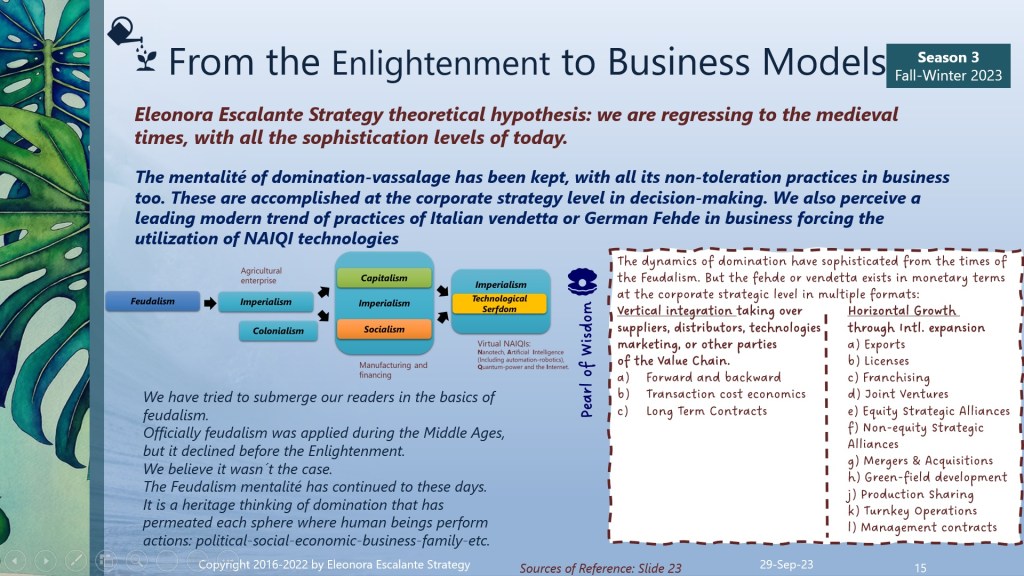
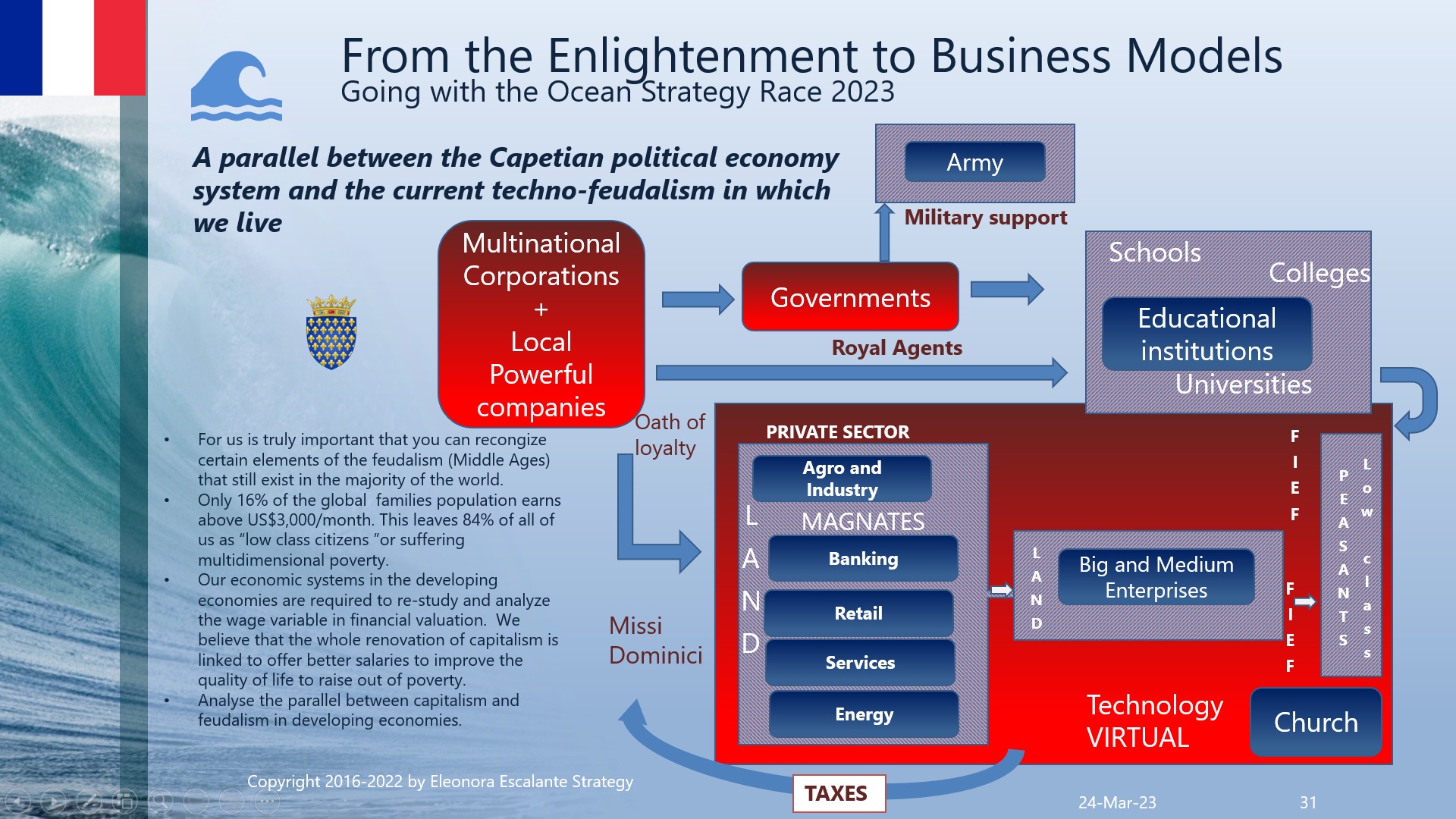
7. Do you agree with us, that we are returning backward to medieval times, using the technological model of serfdom (or technological feudalism)? Why?
The answers to this question are in slides 14 and 15. Our strategic reflection is well explained in the following 2 supplement slides below. We will have more episodes to explain this from the point of view of corporate strategy during the following weeks.
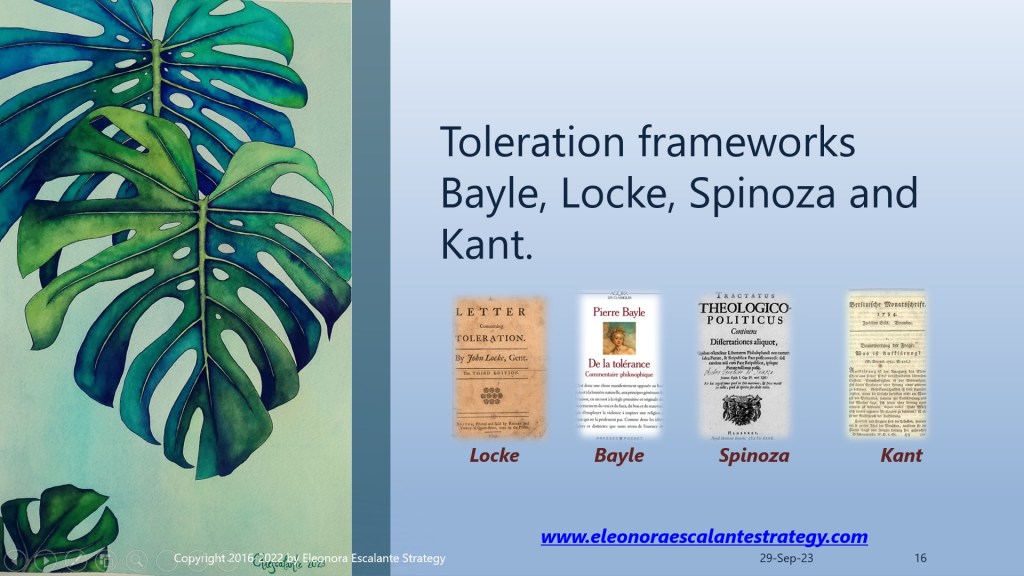
Toleration Frameworks: Bayle, Locke, Spinoza, and Kant.
- What are the main differences in toleration doctrines between these 4 freethinkers?
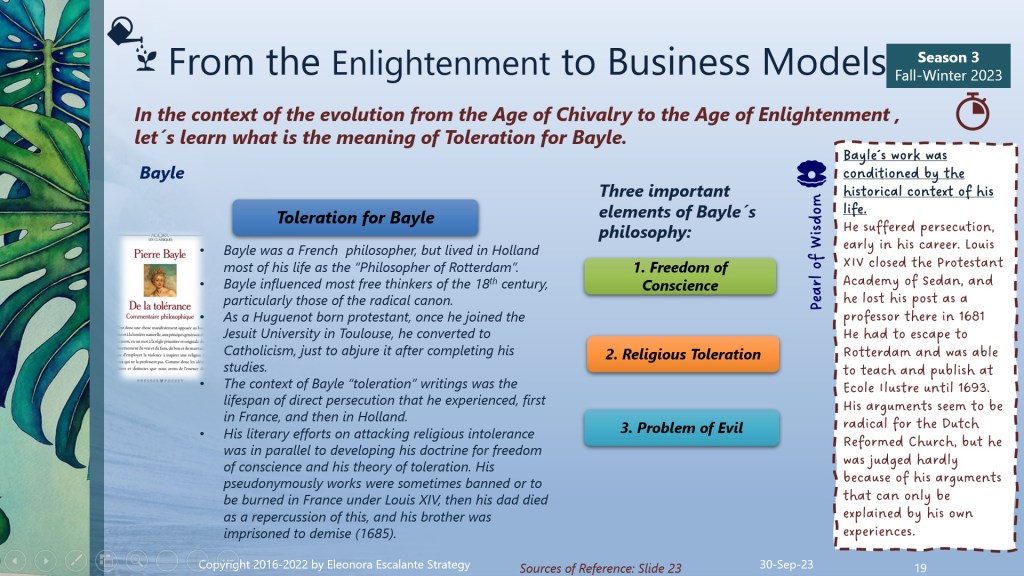
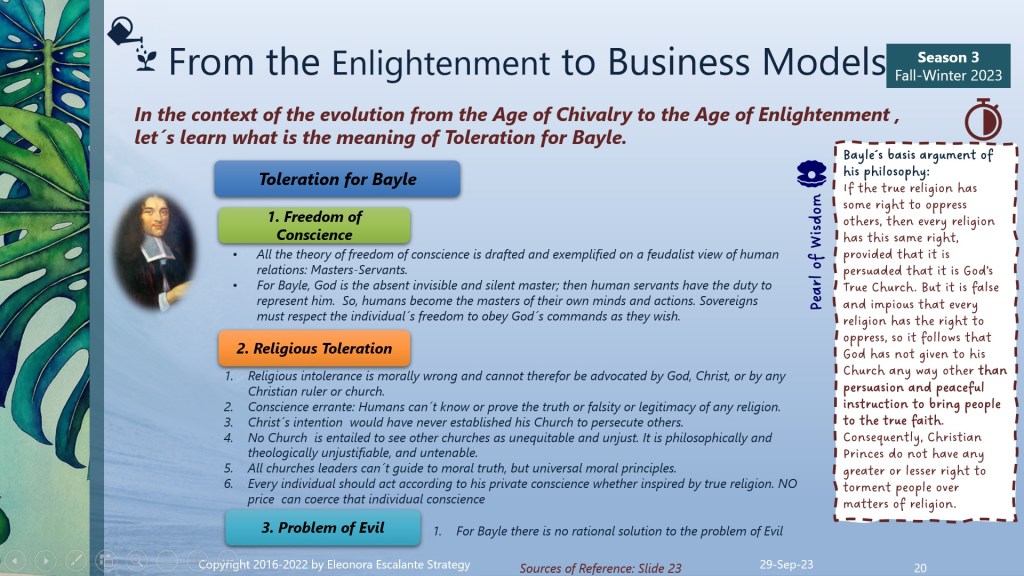
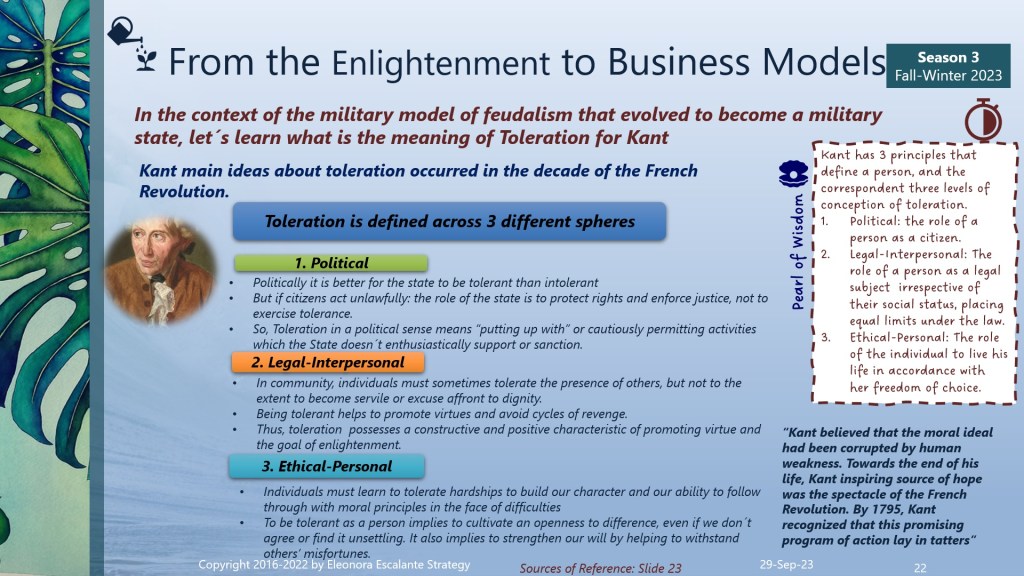
Look at slides 16 to 22. Our reflection: Each of the philosophes Bayle, Locke, Spinoza, and Kant exposed and created a toleration theory based on the context of destruction left by the conflicts about religious terms. This occurred because that was the context of the epoch. Only Spinoza extended the term toleration out of the context of religion. He was the first one to open the term toleration and link it to freedom of conscience, freedom of thought/debate, freedom of expression, and freedom of lifestyle. Amid the legacy of the Thirty Years War that left the Holy Roman Empire in a dispute between Lutherans, Catholics, and Calvinists; the peace of Westphalia (1648) tried to put some peace. Nevertheless, the confessional confrontation continued because societies were used to that level of intolerance and violence. The law may stop certain things, but cultural changes take several generations to happen. Resistance to any kind of theoretically grounded toleration remained everywhere. So, Bayle, Locke, and Spinoza differed not just in the time of their theories’ release, but also in terms of the extension of the toleration. Locke wrote the theory of tolerance for England. Locke was writing from his position as an English Philosopher living in exile in Holland. Bayle (for Christians) and Spinoza (for Jews) wrote their theories for the Low Countries, with extended comprehension in Germany and France. The latter suffered personal persecution because of the reigning intolerance. Probably Bayle´s legacy on toleration was luckier than the one prepared by Spinoza because Spinoza dared to express his ideas of a God that was repelled by the intolerant society of his time. Kant went further: He tried to mix the Prussian command authority of his kingdom, to suggest the enforcement of tolerance at three levels: political, legal interpersonal, and ethical-personal.
2. What are the similarities? The similarities between Bayle, Locke, Spinoza, and Kant are based on the rationale that all of them were trying to do something to stop the cruelty of their epoch. The 4 philosophers put the driving force of tolerance on the table, to generate awareness and some consideration to the nobles who were reading their clandestine oeuvres. By raising the toleration problem and its definition in their treaties or writing production, they were giving importance to the problem of lack of intolerance as the cause of conflicts. But the problem wasn´t a lack of tolerance only, it was a greater mix of causes. The toleration doctrines of these philosophers were pursuing a concept that was urgently required in Europe at that time: respect.
3. Why did Bayle, Locke, Spinoza, and Kant fail to see tolerance as part of the institutionalized regime of violence of Feudalism? None of these philosophers was able to leave written essays about the process of violence as the standard institution during the Dark Ages, the Renaissance, and the Enlightenment. Their views were about how to repair the issue of religious intolerance that was affecting Europe’s quality of life and future prosperity. As authors, their doctrines of toleration were needed for fixing that specific issue, in their specific context. But none of them saw it as a historical problem that could have an origin in Charlemagne. Only the Scottish enlighteners worked on the historical evolution of human beings. My personal impression about the medieval times and the Enlightenment is that humans have been utilizing violence all the time. So when violence is seen as normal by society, what the philosophers did, was outrageously peaceful, maybe it was all they could write (with boundaries of using pseudonyms or living in exile) in a heavy context of accepted and convened violence and persecution. Otherwise, the French Revolution would have never occurred.
The saddest thing is that in the 21st century, corporate decision-making is made by those who have accepted violence (in the format of revenge) against other people and are using it with businesses at the business modeling level. These decision-makers are always igniting the circle of violence, not using the land, but the NAIQIs (Nanotech-Artificial Intelligence, including automation and robotics, Quantum Power, and the Internet). Sometimes the kids of the generations who were mistakenly hurt, take it personally against the kids of their parents’ enemies, and the violent terror non-ending circle continues. In this case, the second generation has no reason or motive for hurting, but the hostility as a heritage from their parents remains. Violence (with intolerance included) never ends, when humans are unable to forgive, or when humans do not have Christ in their hearts. Violence continues to be expanded not just for personal revenge, but through business and commercial endeavors. Then the second generation continues with revenge to the next one. And subsequently. Generation by generation, the circle of violence has continued to our days. With the utilization of disruptive technologies, the expansion of the harm is viral. And the violence will continue virally, to exponential levels, if we do nothing about it. With the global implementation of the NAIQI-powered technologies, we are vulnerable to another type of systemic risks, with complex consequences for the next generations ahead.
Even the blue ocean strategy if utilized with evil motives, can bankrupt a whole system of living when using technological advancements inappropriately. After the iPhone (2007), only 16 years have passed by, and look at all the mess that we are currently observing in every single economic sector and industry. All our innovations in the hands of evil people who procure revenge and violence can wipe out our civilization.
Announcement.
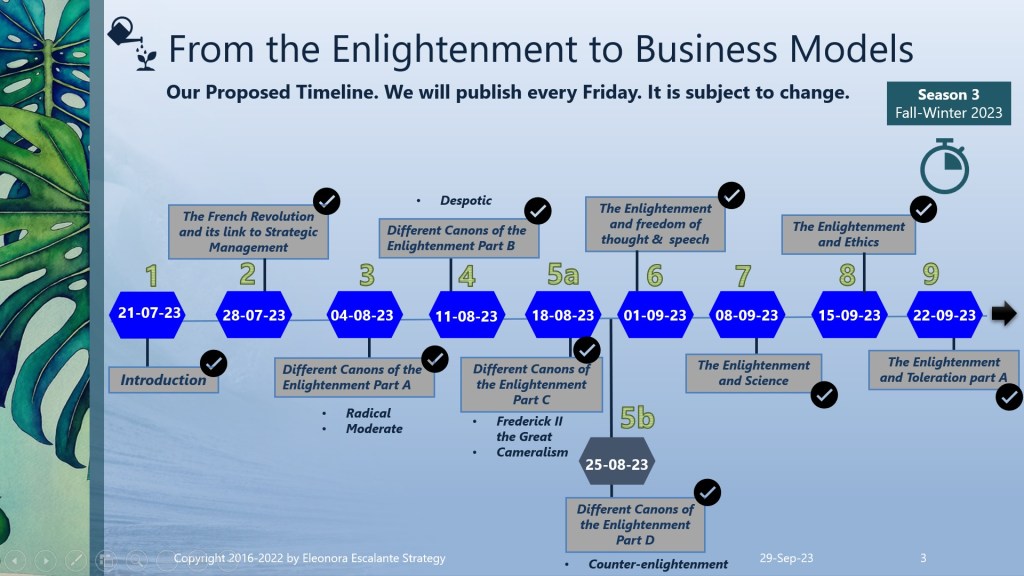
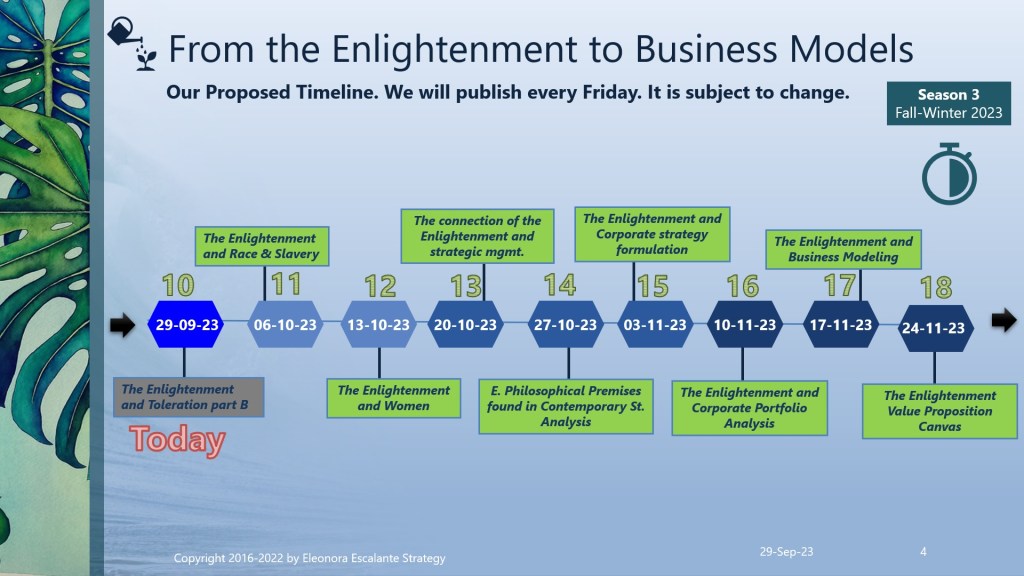
Our next publication will be next Friday 6th of October. We will continue our journey with the topic: “The Enlightenment and Racial Differences/Slavery”. Blessings and thank you for reading our episodes.
Musical Section
We have decided to continue sharing classical flute magical music from the Baroque.
Today our musical video is from the Neapolitan composer Giovanni Paisiello (1740-1816) one of the key composers of the Neapolitan School, primarily famous for his vast amount of operas written when in the service of Ferdinand IV of Naples. The Artists are Il Demetrio (ensemble) with Gabriele Formenti interpreting the flute. Cover: “Girl lost in contemplation of an image of the Virgin 1853”, by Georg Waldmüller (1793–1865)
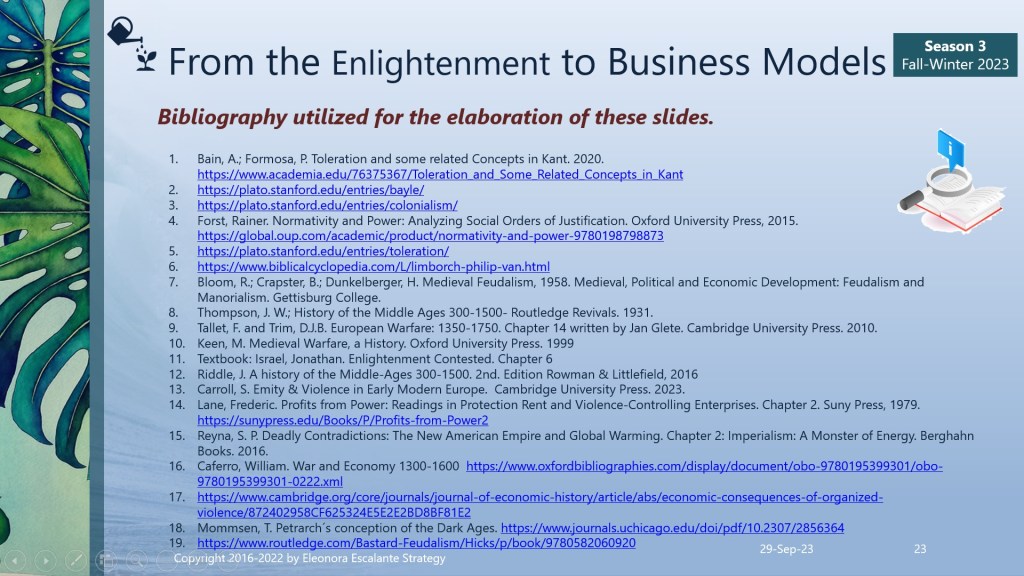
Sources of reference that were utilized today. All are listed in slide 23.
(1) Bloom, R.; Crapster, B.; Dunkelberger, H. Medieval Feudalism, 1958. Medieval, Political and Economic Development: Feudalism and Manorialism. Gettysburg College
(2) https://www.ncbi.nlm.nih.gov/books/NBK513552/
Disclaimer: Eleonora Escalante paints Illustrations in Watercolor. Other types of illustrations or videos (which are not mine) are used for educational purposes ONLY. All are used as Illustrative and non-commercial images. Utilized only informatively for the public good. Nevertheless, most of this blog’s pictures, images, or videos are not mine. I do not own any of the lovely photos or images posted unless otherwise stated.
 Eleonora Escalante Strategy - Strategic Reflections Think Tank