

Central America: A Quest for the Progression of Economic Value. Season I. Episode 8. Charles V: His Local Personal Agenda.
Dear amazing readers:
Discerning the personal life of Charles V Emperor in the middle of many sources of information.
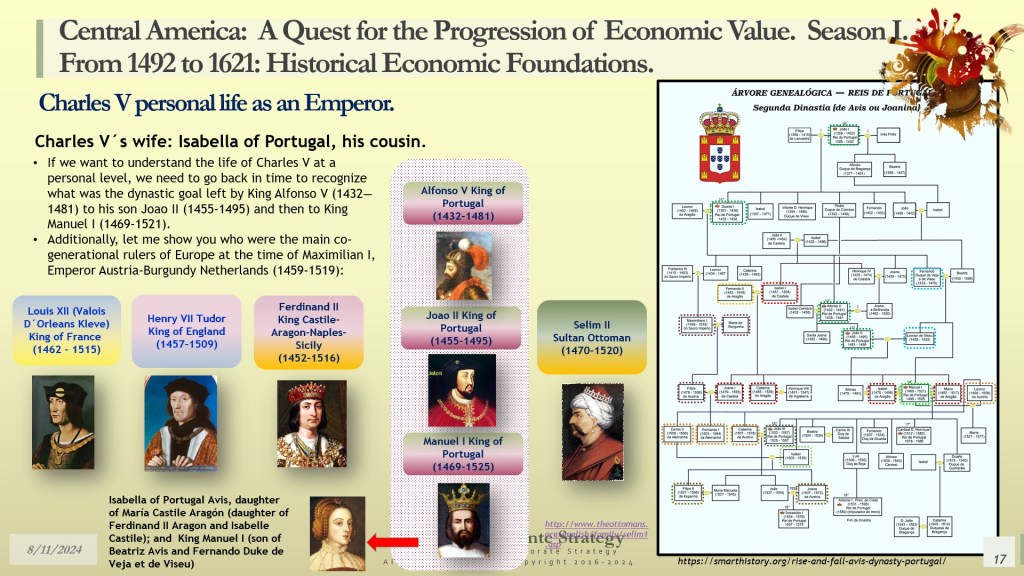
Charles V emperor’s life has been studied and aggregated in hundreds of books, by several historians of different generations. During the last 524 years after his birth, his role as King of Iberian Territories and Ruler of Burgundian lands, plus Emperor of the Holy Roman Empire of the German Nations was predominantly distinctive. He sealed the initial tone, the how, and the “savoir-faire” of the cradle of the conquest and colonization of America. Charles V also maintained a triple jump warrior referential model: his father-in-law King Manuel I of Portugal and Joao III (the brother of his wife); his parental grandfather Maximilian I of Austria; and his maternal grandfather Ferdinand II of Aragón. Even in the most flawed scenario, in which he neglected to supervise the conquest (which is not the case), he indirectly allowed what happened after 1519 in America. In words of today, he was the founder CEO, and Executive President of the Board of Directors at “Conquest America Inc.”. Given the particularity of this saga, we are focusing all our efforts on Central America, which is why we have narrowed it to Spanish America. Nevertheless, don´t forget that under Charles V Emperor and his subsequent descendants, the global empire visualized by Maximilian I Habsburg continued through other empires in North America and Asia, including France, England, The Netherlands, Germany, Portugal, and Spain.
Reviewing the files of the warfare winners, the files of the dominated losers, and the files of the silent observers of Charles V’s time. Each of the historian authors that we have visited to analyze the personal life of Charles V holds close similarities. But also, there are remarkable differences. Some of the historians of our bibliography are historiographers, and others are narrative specialists, academic researchers, or biographers. Most of them have tried to rebuild the life of Charles V Emperor with evidence from original documents of the archives of Spain, Germany, The Netherlands, the Indies, England, France, etc. However, what happens if those documents are fake? What can you expect of empires that fought via so much violence, lies, and subjugation of the dominated? There is another side of history that needs to be revealed. And there is still a lot of monumental work awaiting in the future, to cross-check all these sources of information and verify that all those reading historical files match in every kingdom archive (the files of the warfare winners, the files of the dominated losers, the files of the silent observers). The last biography about Charles V was written by Geoffrey Parker (2019), and he pursued that methodology as much as he could. Consciously, we can´t dismiss the wisdom of other historians such as William Maltby, Marty Rady, J.H. Elliott, Wim Blockman, Henry Kamen, etc. We are convinced that additional private oldies archives must be resuscitated from annals’ records which might have guarded and treasured other elements of genuine truth than the most recent 20th-century contemporaries.
The slides are always the core of our learning production.
The reason some weeks I am not able to provide the strategic reflections before Friday midnight, the due date of the weekly master publication, is precise and straightforward. There are some weeks that I dedicate most of the time to detailed reading, and to comparing our diverse sources of information. There are other weeks in which I devote my time to thinking, reflecting, and analyzing the scope of my observations. Both brainiac competencies are distinct in nature. I can´t examine without looking deeply over our printed books. One thing is to read and compare. Another one is to analyze, and then later, we reflect and write our inferences. I apologize for not writing everything yesterday, but this past week, I was reading three books simultaneously and I exceeded my workload. On top, I must sleep and recharge batteries, otherwise, exhaustion and fatigue consume cleverness and clarity of introspection. Any excellent writer-researcher always takes its time to complete and construct good material. Our work can´t be rushed under manufacturing efficiency paradigms.
The reality is that our publications are LIVE.
This means that we are working “on modus fastrack”. We are spontaneously doing it, without AI or another human external editorial aid, and that also takes precious hours of our time before uploading our content. The slides are always the core of our learning production. In consequence, we focus on finishing them first every Friday before midnight. That is our priority. therefore, we make them our deliverable primacy. Afterward, we flow with our writing added value. So let´s proceed.
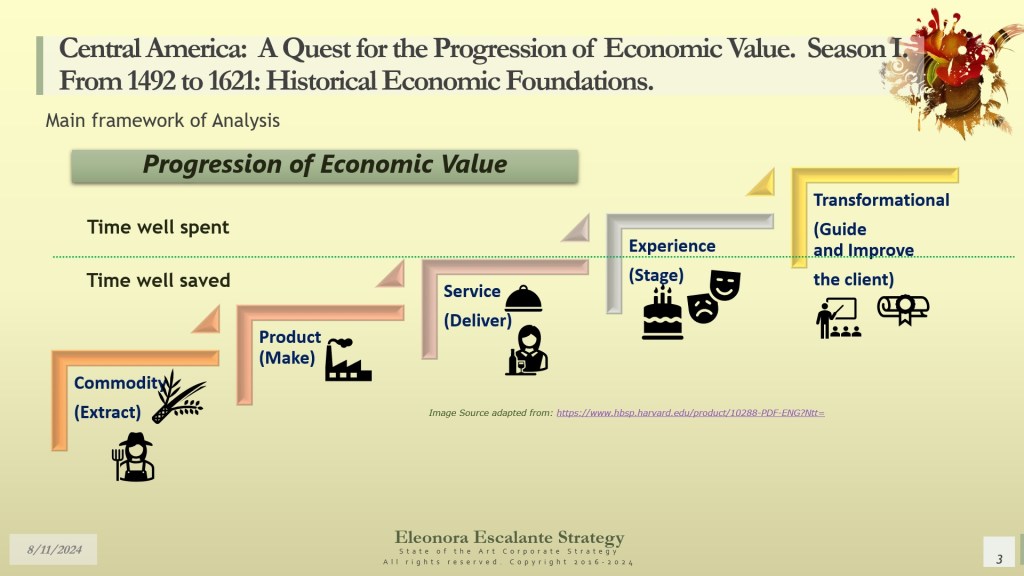
Our frame of reference is below: Please print this document or download the PDF version (which has enhanced clarity) and take notes. Look for additional information from our textbooks (bibliography) or over the internet, and ask yourself questions. Discuss with your friends or colleagues.











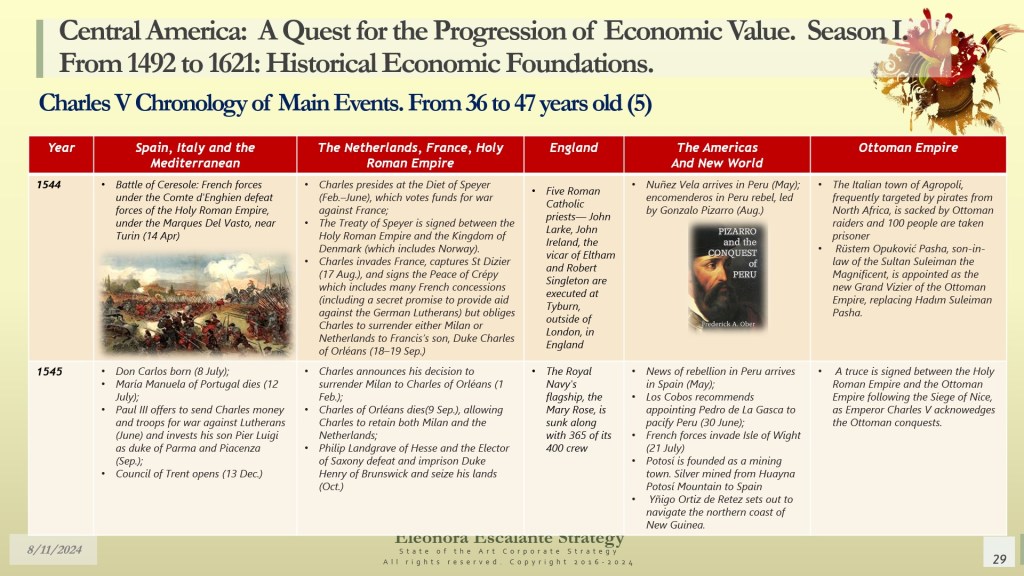
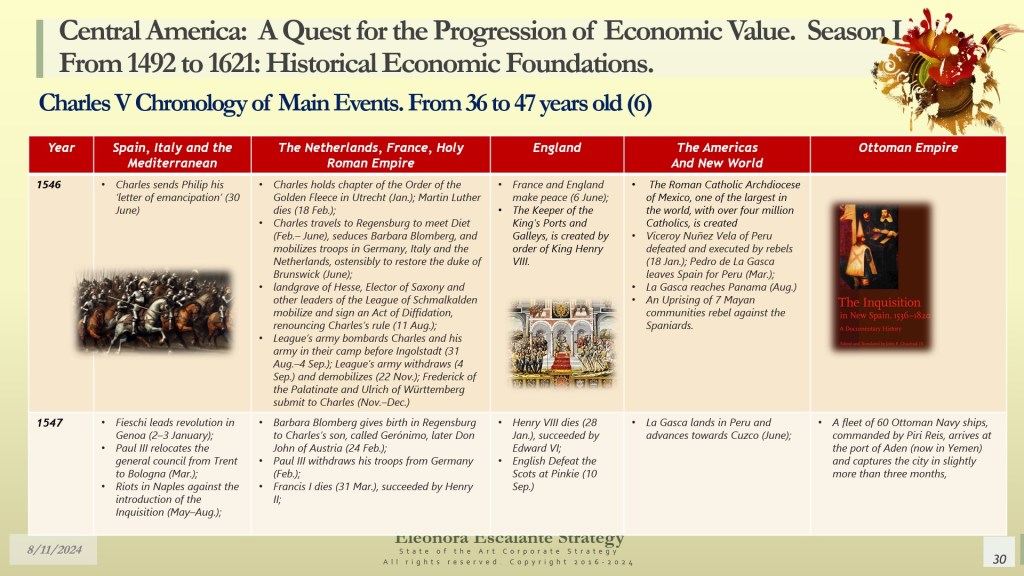
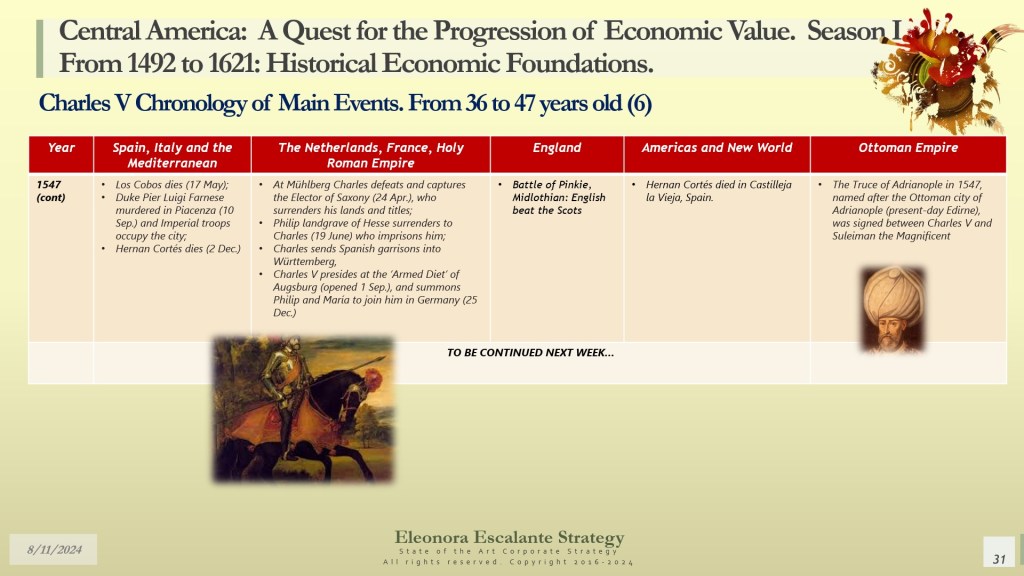
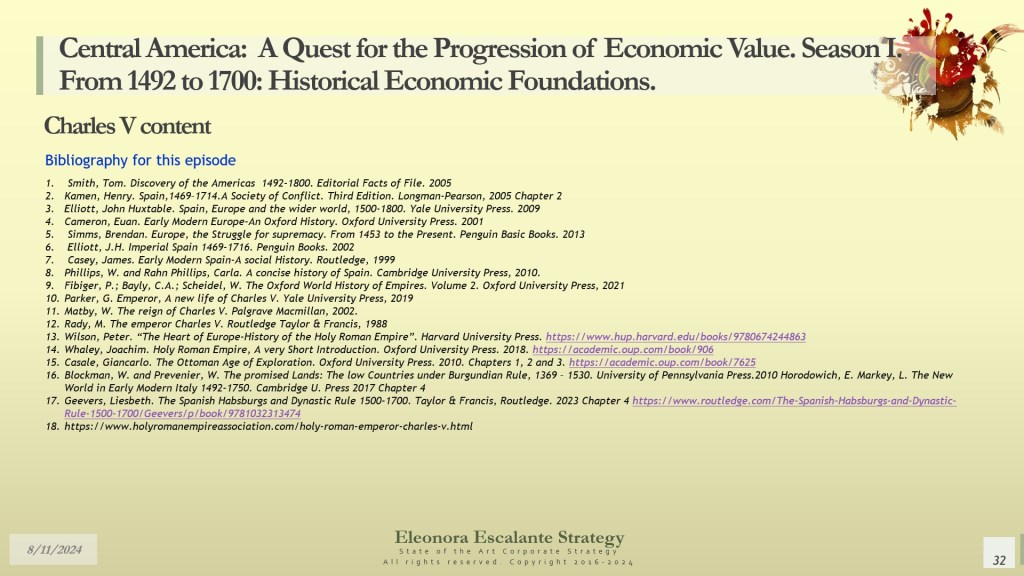

Did Charles V have time for a personal life?
The Emperor didn´t have a personal life that he could have envisioned for himself. He was pursuing the mandate of his grandfather Maximilian I. He was performing a job with his personal life. We foresee that his Flemish Advisors (all selected by Emperor Maximilian) were influencing all the aspects and dimensions of his life. It was the Habsburg dynastic agenda that was enforced over Charles V. Let´s define what personal life was in medieval times first. Particularly, a personal life for the highest member of the nobility of his time: A king, a duke, a count, an Emperor.
Charles V was an aristocrat (from the word aristos=best, and kratos=rule).
An aristocrat in medieval times was supposed to fulfill at least the first three of the following criteria, and at least some of the rest subsequent factors:
- Top pedigree (elite privileges of his hereditary house of birth),
- Wealthy (proprietary hereditary rights over territories and relevant household assets of prestige),
- Superior General Warrior (military success),
- Decision-making capabilities in times of pressure and urgent difficult matters (plus showing authority at organizing the art of government)
- Genius (intelligent, good decision-making, wisdom, polyglot, capable of writing, reading, and fluid speech)
- Domination over everyone living in his/her domains, particularly over the rest of the nobility, merchants, and peasants,
- Beauty and virtues (good look physical features, generosity, kindness, paternalistic ethical values)
- Patronage (support, encouragement, or financial aid to his community in several aspects: education, arts, political privileges, etc.).
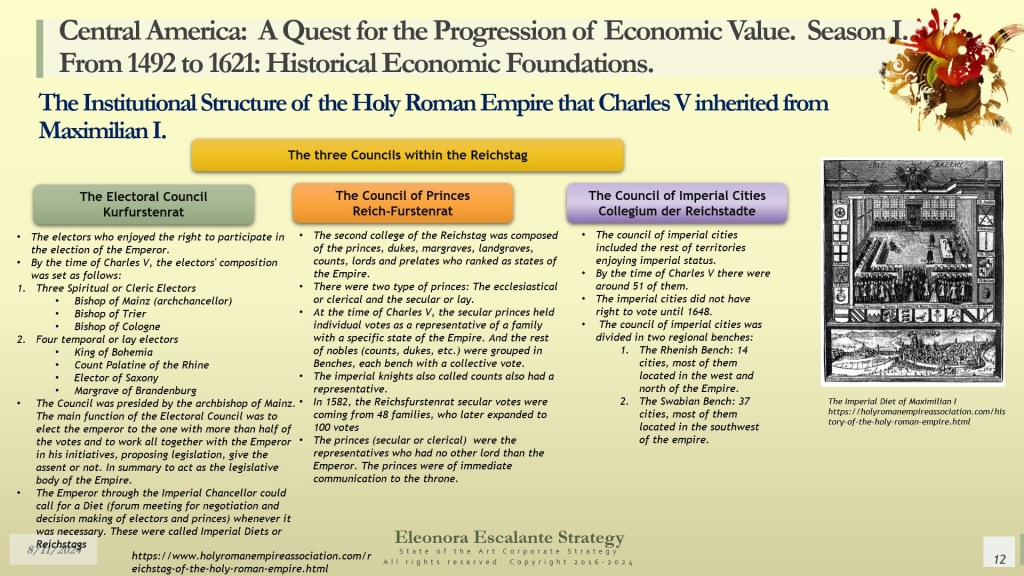
The concept of aristocracy was inherited from the Greek and Roman empires. And Maximilian was installing that same style of ruling the German polities in Europe. When Charles V inherited the Empire to defend Christendom, the Roman Catholic organization was also part of the aristocratic upper classes and did anything to soften the disadvantages of the historical aristocracy such as inequality, corruption, concentration of authority, nepotism, tyranny, and abuse of power. It was aristocracy in the context of constant warfare. Charles V was coming from a bubble of Burgundian musical poetry, and he had to face the external world, full of constant battles and quixotic incidents.
The personal life of Charles V as an aristocrat in medieval times is defined as the sum of the individual and private choices that he could make by himself to develop his own identity as a human being. Personal life included the following choices: habits, attitudes, tastes, moral standards, personal philosophy, behavior etiquette in public places, daily routine lifestyle, fashion-dress manners, quotidian hobbies, cultural and artistic interests, activities during leisure-vacation time, friends, dynastic families, and a mate (romantic partner). In the case of a future emperor, his court household represented the nest of the personal life aspects.
Charles V was raised as a Burgundian aristocrat with “an on-hold” Spanish kingdom & German empire.
As a child and teenager, Charles V was the product of matrimonial imperialism. Though never forget that he was Flemish, he was a pure French-Burgundian Flamenco with a Castilian mother. He wasn´t culturally Spanish. However, he was obliged to foresee and protect his inherited domains and patrimony to his successors. Between 1506 and 1516, he was being groomed at the court of his aunt Margaret. He was taught that his principal goal was to handle the hereditary territories as a personal possession and leave them, at least intact or multiplied, to the next generation”. Life at an aristocratic court in Mechelen and Brussels sealed his personality, personal life, and character of Charles V in such a way that his personal life was dictated by the mindset of those who raised him there. As an orphan he wasn´t accompanied by people who cared for his personal life, but by people who were complying with the orders left by Maximilian I for the pursuit of his global empire.
In consequence, Charles V didn´t build his own personal life but accepted the destiny of the personal life that was created for him by others. This occurred until the day that the Flemish advisors died (early 1530s). After the siege of Vienna, something of behemoth proportions occurred in the life of Charles V. And we envisioned that Charles V was trying to emerge with his own personal life by then. Too late. He was already an absent husband, delegating Royal Spain to the Empress Isabella; and moving back and forth to put out the fires of the German Protestantism, the Wars with Italy lands, the confrontations with the Muslims in the Mediterranean, and the continuous contentions with France. Charles V delegated Austrian conflicts with the Ottomans and the rest of the Hungarian neighbors to his brother Ferdinand II. We perceive that after 1530, he didn´t want to acknowledge the responsibility of Germany, a rebellious sign against the mandate inherited from his grandfather Maximilian in 1519. After 1530, the official history of Charles V shows us an Emperor who didn´t want or couldn´t be Emperor in Europe for whatever reasons. It looks like his time in Spain (from 1522 to 1529), the period of his life where he learned to be Spanish of Castile-Aragon; changed him completely (for better or for worse).

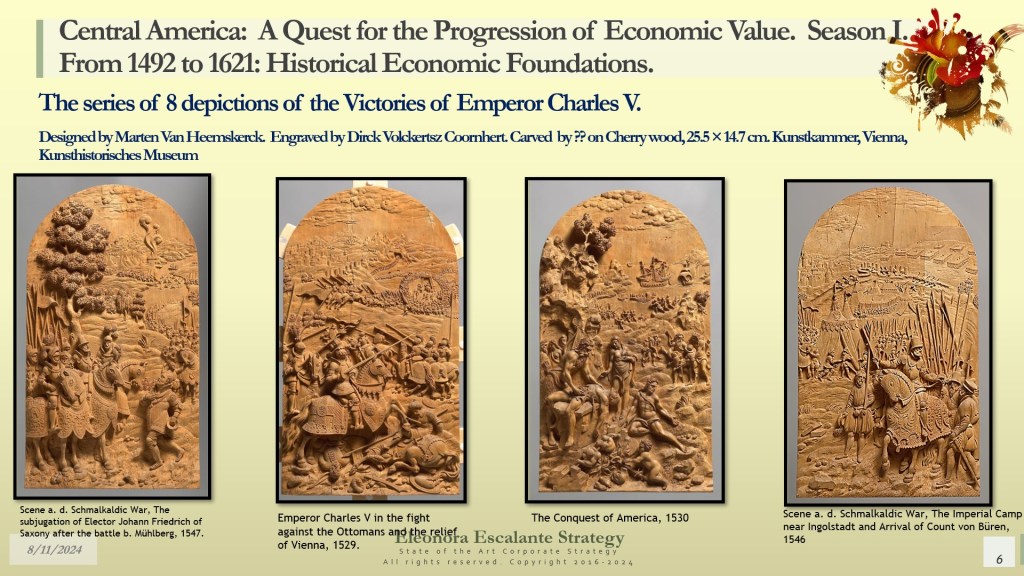
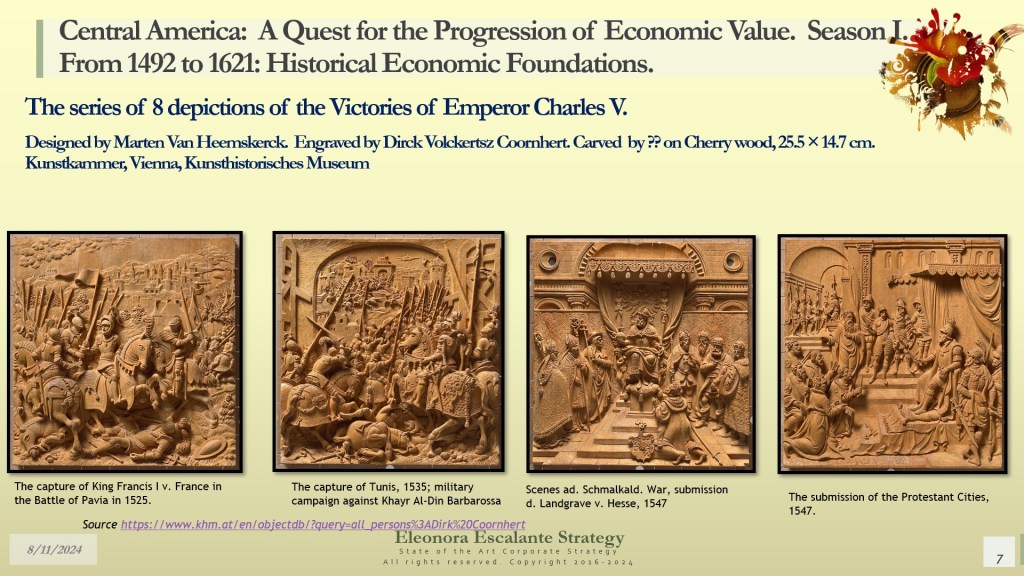
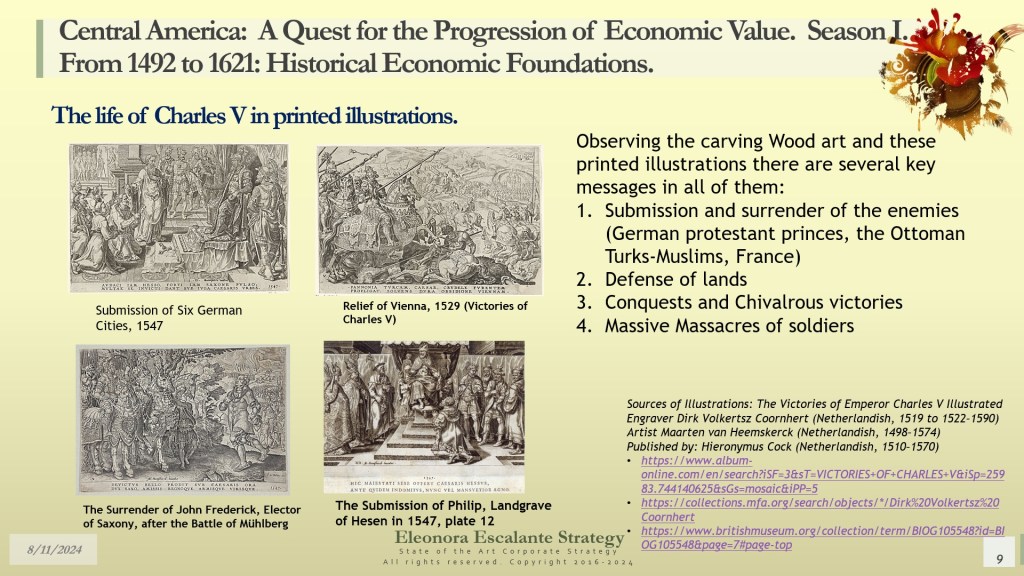
We have already mentioned in our last publication that we perceive that the “official history” of Charles V doesn´t have a smooth common sense. It looks as if we are studying two men: the one who was raised in Mechelen by Maximilian I and Margaret of Austria, a Burgundian immature chap of the Golden Fleece collar who was a slow scholar, null for decision-making; and a second royal dude, who appears transformed in a smart polyglot after three years of his marriage with Isabella Avis of Portugal. We also see a man who was focused on losing his time, resources, armies, and money on weird regional religious European conflicts that he knew he couldn´t win in advance, not even when using warfare. The artistic representations of the second character of Charles V, designed by a Dutch artist Marten Van Heemskerck, only express depictions of propaganda victories about battles that kept Charles V and the German princes busy, while others (maybe himself or another nearest royals) were leading the conquering and first steps of colonization of America. Take notice: Charles V was engaged in warfare for 23 of the 41 years of his reign.
The fate of being a non-liked Habsburg.
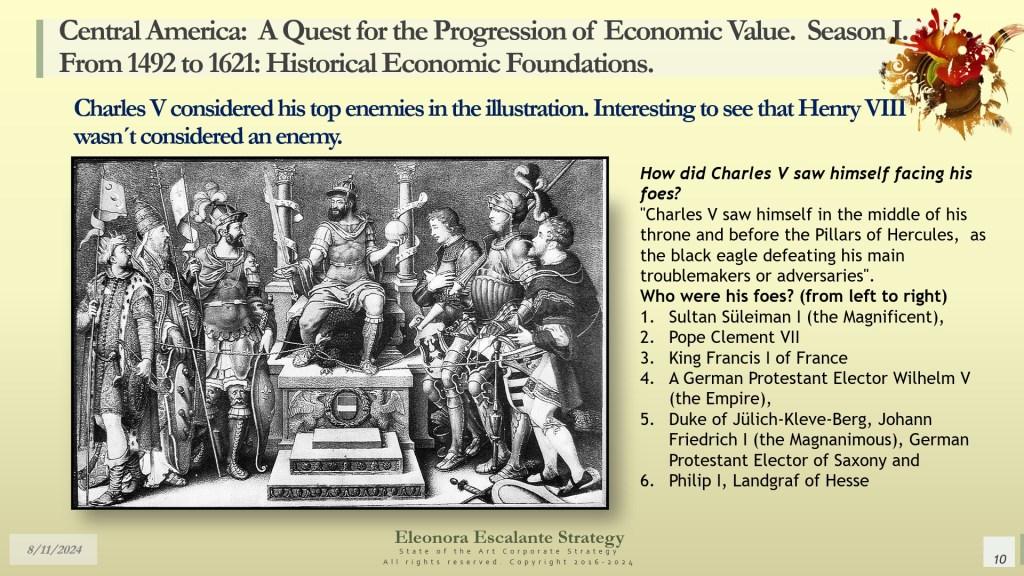
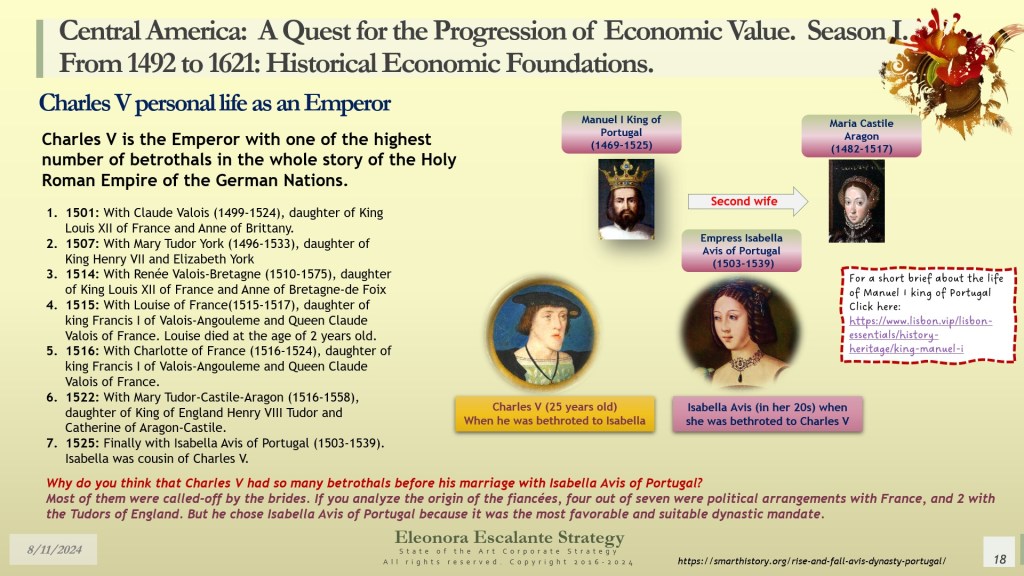
Another singular observation of Charles V’s personal life is that he was probably not liked. Maybe his disgusting jaw or “idiot” allure or his later warrior grandiose status of Emperor or imposed Catholic inquisitor spirit awoke more disrespect. It is not possible that 4 French brides-to-be could reject an Emperor. It is not thinkable that King Francis I (who later married Charles V´s sister Eleanor) did not esteem an Emperor who released his life after being imprisoned in Pavia. It is not possible that a Habsburg Emperor with a Spanish America of 30 times the size of Europe couldn´t be marveled with astonishment. We perceive the explanation for our observations resides in the fact that Maximilian I crucified Charles V’s life from the start. The hereditary nonvirtuous cycles of bribery, threat of force, and a sense of upstart unfairness given his ample acquisition domains. From every angle that we analyze the personal life of Charles V, we only notice an immense sense of envy of others towards him, a feeling that Charles V was sailing alone, that he didn´t have good friends or good employees inside his domain courts in Iberia, the Low Countries, Italy, or Austria. Not even his bankers from Augsburg were his buddies. Nor the Popes, the Ottomans, or the German Princes. We can detect how much the German Habsburg family wasn´t liked by everyone surrounding them. Did the issue about his personal deformed jaw only exacerbate the hatred animosity and hostility of facing an Emperor who had more than 76 titles on his armor?
Charles V as a husband and father.
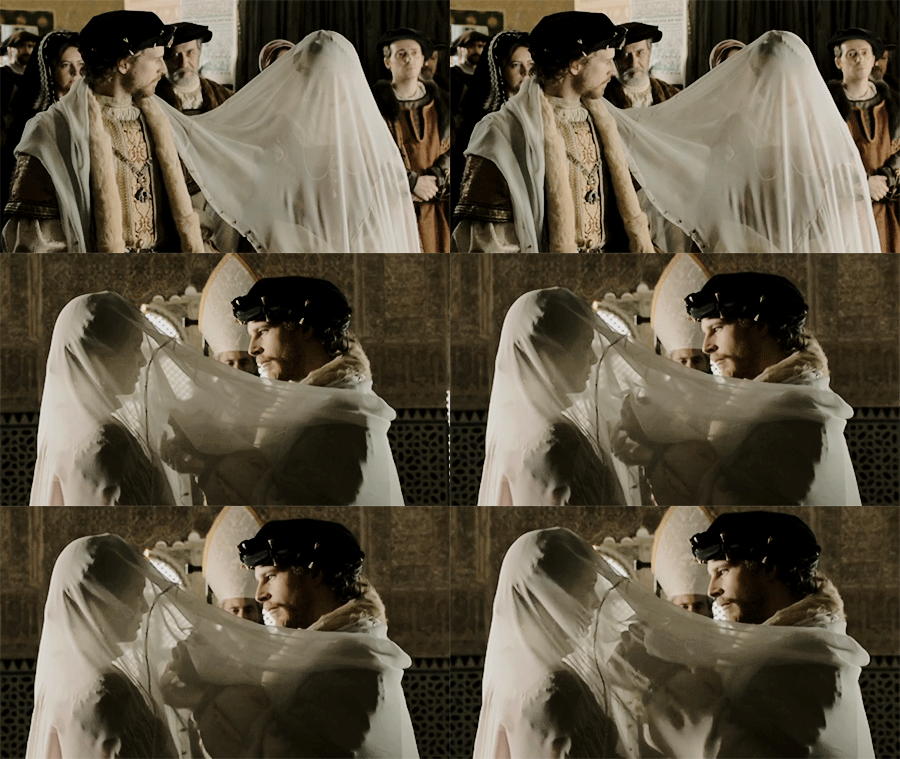
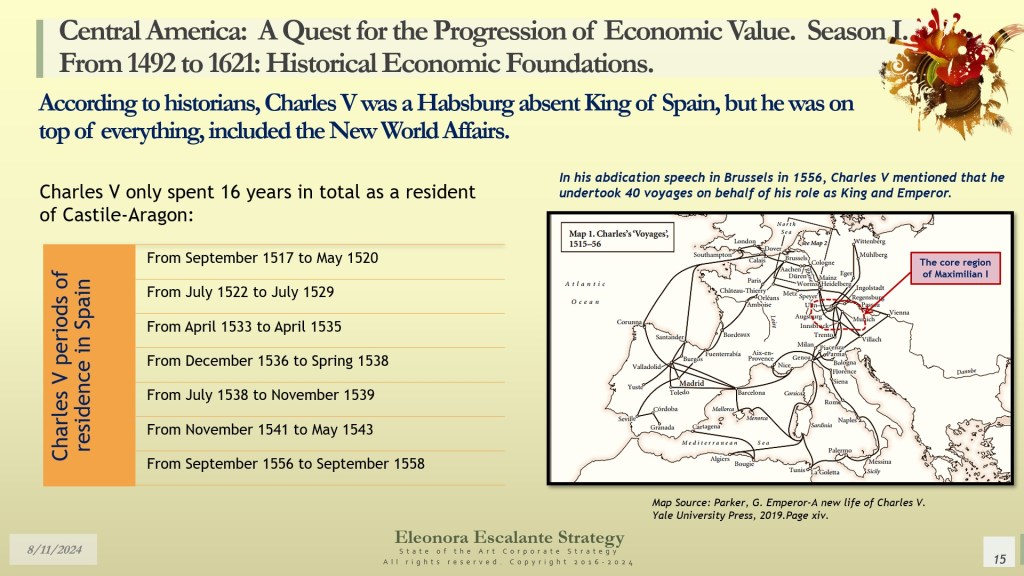
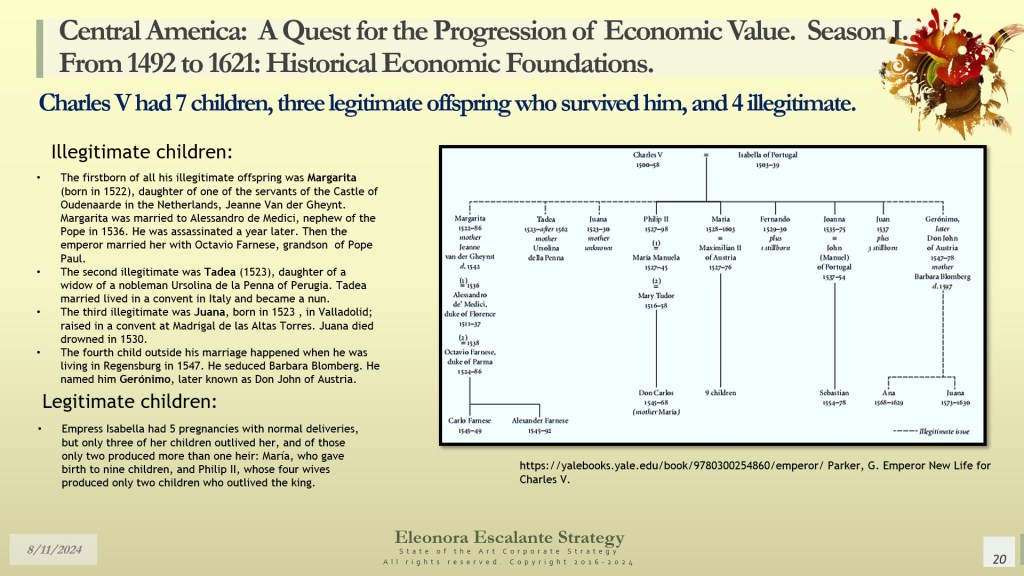
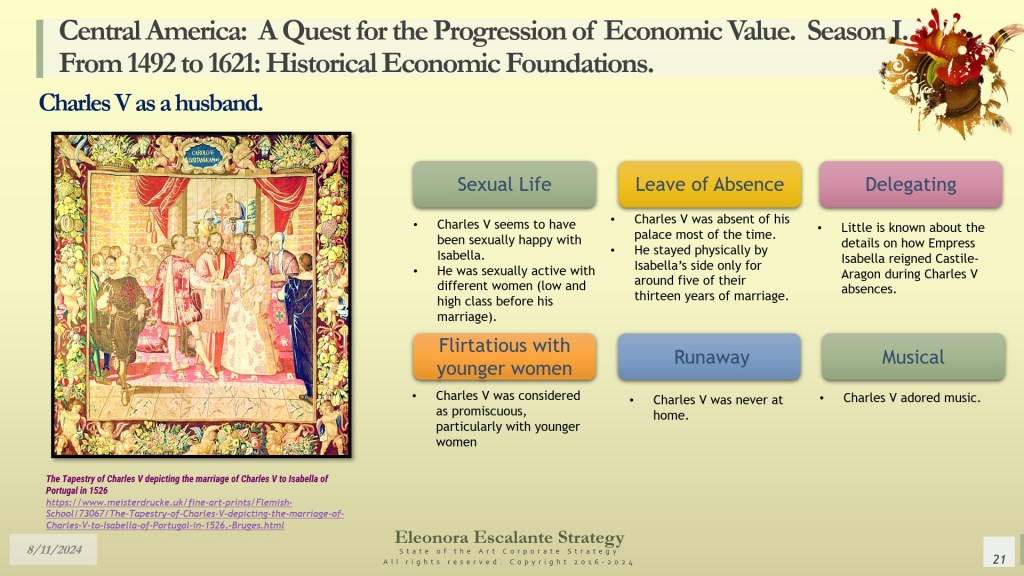
According to official history sources, Charles V accepted his dynastic matrimony as a mandate. He never met Isabella in person before his wedding in Sevilla in 1526, but most historians describe him as in love and looking forward to yielding numerous offspring. His marriage was majestic, and the Seville Alcazar received more than 100,000 people lining the route to the castle, just to see him and salute the royal couple for the celebration. Isabella of Portugal became a Queen-Empress, labeled as the most beautiful aristocratic woman of his time. After the wedding, the newlyweds decided to settle in the palace of the former Muslim Kings in the Alhambra. According to historian G. Parker, choosing Alhambra as his royal household was an essential strategic position to accelerate the Christianization of Granada. Charles V was very serious about this: he established “one college to train priests for the royal chapel and another one to train preachers”. The “Mandatos” aimed to Christianize the Moriscos, and all the artistic representations of his time explored the possibility of creating victorious visual, literary, and musical images for Charles V, who faced the Granada Muslim population. Charles V was raised in a culture of Burgundian artistic uprising victory. And he presented himself as such all over he could. A Burgundian characteristic of his time was to celebrate successes with processions, fireworks, public games, and musical parades were part of the medieval game. The Isabella-Charles team was pious and attended mass daily. Sacral music was the prerequisite for that quotidian ritual. Queen Isabella was also appointed to perform a solid patronage role for the arts, particularly music. However, Charles V was an absent husband and not a present father. His court propaganda team was a whiz in image-making showing plus-ultra power campaigns designed to fill that gap while he wasn´t in Spain. Isabella was left alone, in a country that wasn´t hers. Regardless that Isabella was Charles V’s cousin, and that she was prepared and raised with the Spanish culture and values of her mother, Isabella fulfilled the role of the Regent Queen of Spain (in Charles V’s absence). When Charles V’s responsibilities for warfare took him out of Iberian lands, as incredible as you can count, Isabella was left in the spectacular Alhambra or in any other of the royal palaces, without a spouse who was always traveling abroad. She remained in the epicenter of a Court that could have been full of intrigues and conspiracy plots. Believing that Isabella´s beauty was substantially authentic, we doubt that in the middle of her solitude and itinerant status, she wasn´t provoked by another Court male. Knowing the controlling temperament of Charles, it is probable that he commissioned his wife to people who supervised every inch of her movements. She died too young (36 years old), leaving her first son infant Philip II in the hub of tutors and courtiers who could have hurt him more. The history repeated again: Philip II was the second orphan of the Spanish Habsburgs Empire lineage, a curse received from his father. Read slides 15 to 24.
It is clear to us that Alhambra as a Royal Household was a beloved place for Isabella and Charles V.
Did Charles V travel to America once or two times?
Did he utilize a double or doppelganger to keep his commitments in Europe, at least after 1529? Or is it only a crazy hunch from my side? Why did “the official history” secret it? Who was Hernán Cortes? Who was Pizarro? Was the conqueror of New Spain and Perú in the hands of a noble, ultimately a close royal figure to the Emperor or the Emperor himself? And if not, why do we perceive that the chess game of Charles V’s history is not coherent for the context of his warfare timeline? We will try to answer all these questions soon.
To be continued…
Announcement.
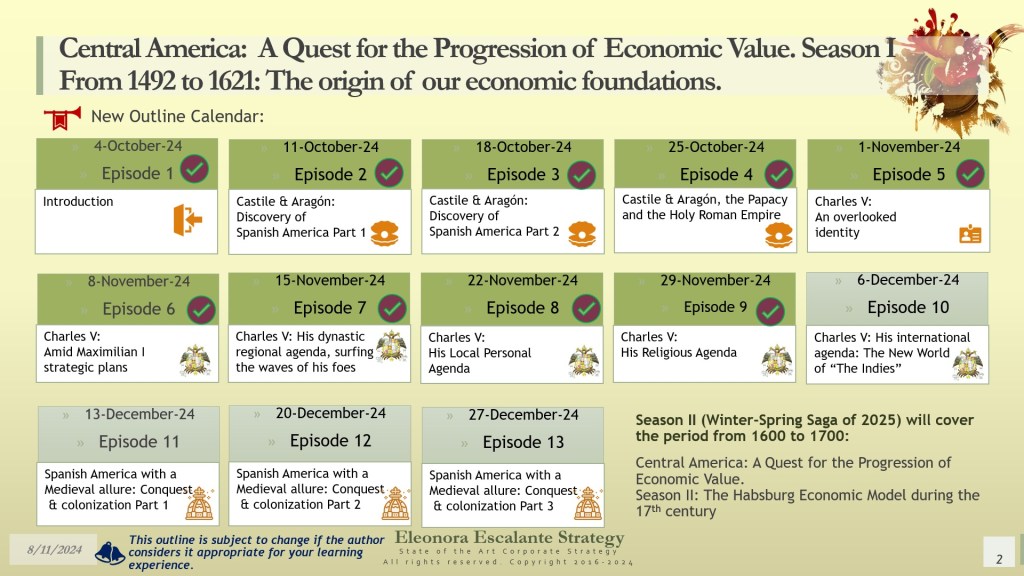
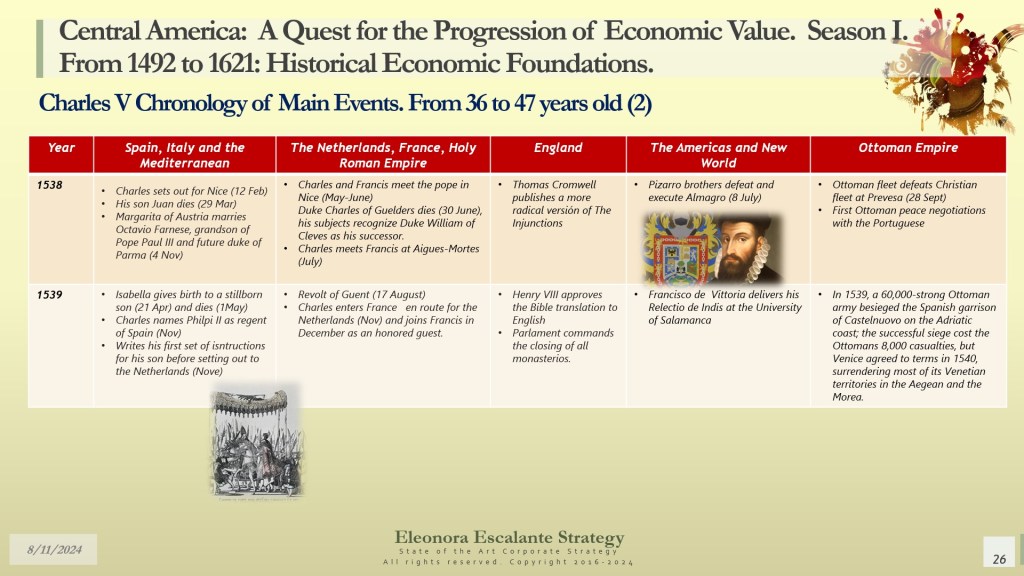
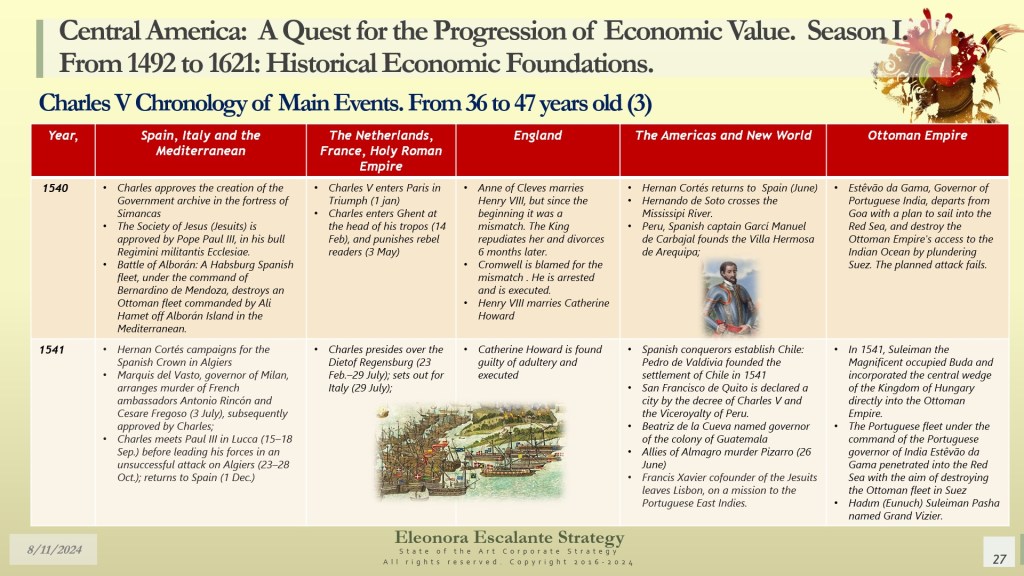
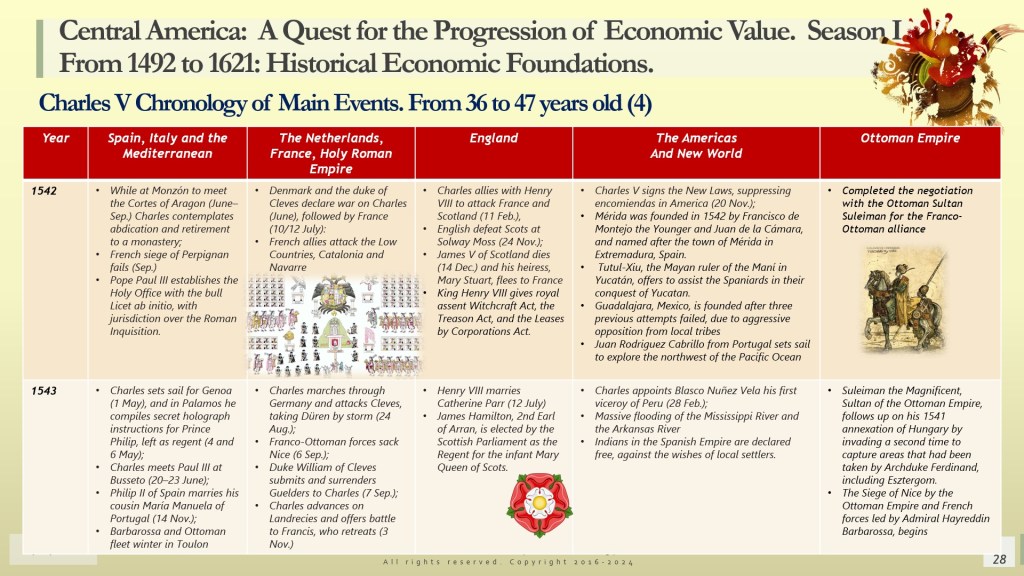
We have attempted to summarize the main aspects of Charles V.’s personal life. We have separated his religious philosophy and reserved a chapter for next week. Visit the outline calendar, which has been modified again. Next Friday 30th of November, we will continue with Episode 9 “Charles V: His Religious Agenda”. Our next chapter will include the last section of his chronological timeline between 1548 to 1558
Musical Section.
Our melodious selection of music during this saga will be served with songs and concerts that could have been listed on the most important Billboard during the century of our themes.
Today, we found this educational musical documental of Capilla Flamenca. “Capilla Flamenca was a vocal and instrumental early music consort based in Leuven, Belgium”. The group specialized in 14th to 16th centuries music from Flanders and takes its name from the historical Flemish chapel (Capilla Flamenca), the choir of the court chapel of Emperor Charles V. This is the Flemish music that surrounded the Household of Emperor Charles V. Charles V adored vocal music. When the emperor left Flanders in 1517, he took his best musicians with him to Spain to accompany him as a “living polyphony”. Charles V adored listening to Franco-Flemish composers such as Josquin Desprez, Alexander Agricola, Heinrich Isaac, Pierre de La Rue, Guillaume de Machaut, and Bernard de Cluny.
Until 2015, the ensemble Capilla Flamenca was comprised of: Marnix De Cat, countertenor; Tore Denys, tenor; Lieven Termont, baritone; Dirk Snellings, bass (died in 2015); Liam Fennelly, Thomas Baeté, Piet Stryckers, viola da gamba; Jan Van Outryve, lute; and Patrick Denecker, recorder.
Thank you for reading http://www.eleonoraescalantestrategy.com. It is a privilege to learn. Blessings.

Sources of reference and Bibliography utilized today. Shown in the set of slides.

Disclaimer: Eleonora Escalante paints Illustrations in Watercolor. Other types of illustrations or videos (which are not mine) are used for educational purposes ONLY. All are used as Illustrative and non-commercial images. Utilized only informatively for the public good. Nevertheless, most of this blog’s pictures, images, or videos are not mine. I do not own any of the lovely photos or images unless otherwise stated.
 Eleonora Escalante Strategy - Strategic Reflections Think Tank