
Central America: A Quest for the Progression of Economic Value. Season IV. Episode 3. Independence Bells (1800-23) Part I.
An October greeting opens our episode 3. Welcome to our reading experience of today, in which we will embark on the first of two chapters related to the Independence movements of Central America.
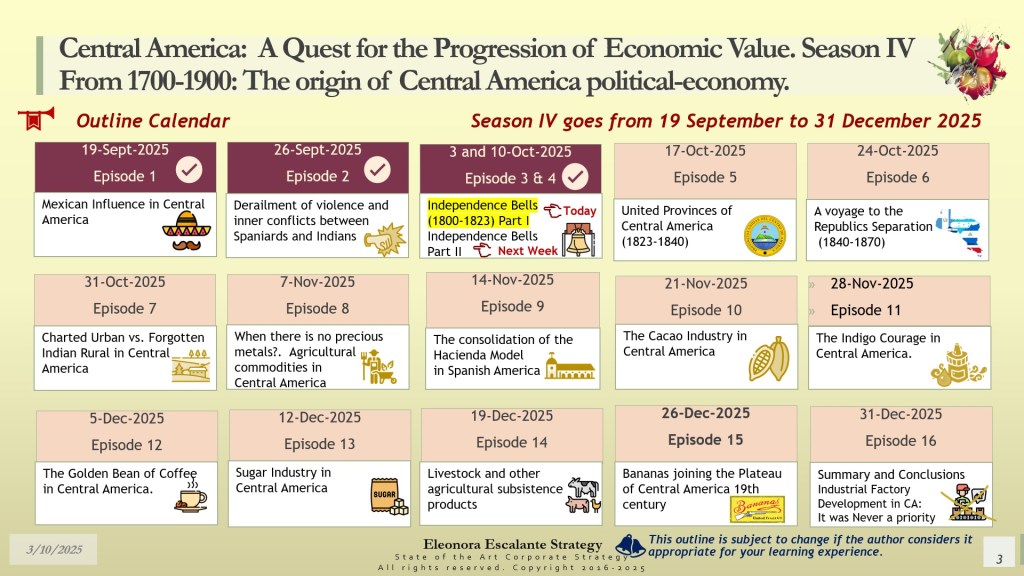
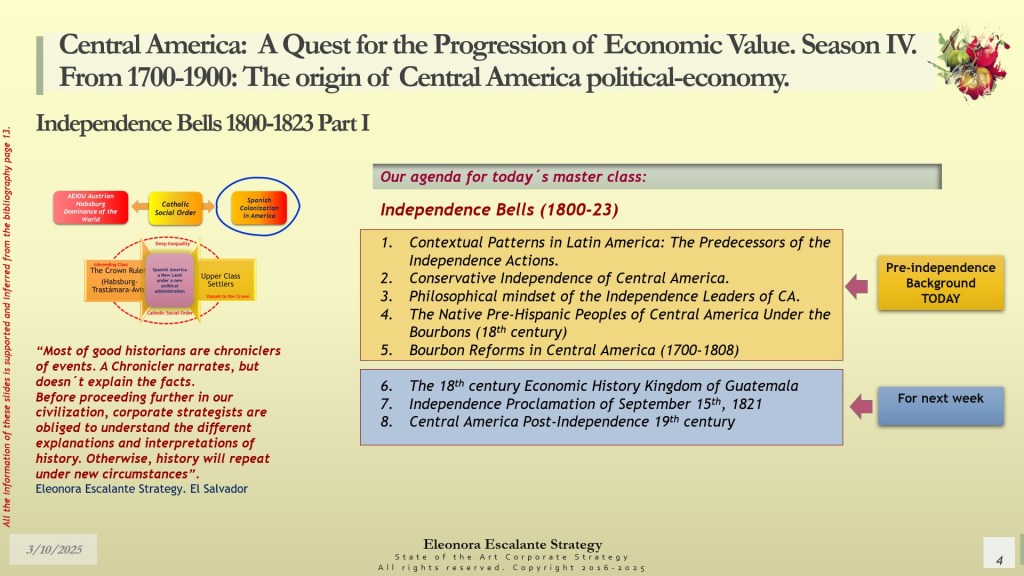
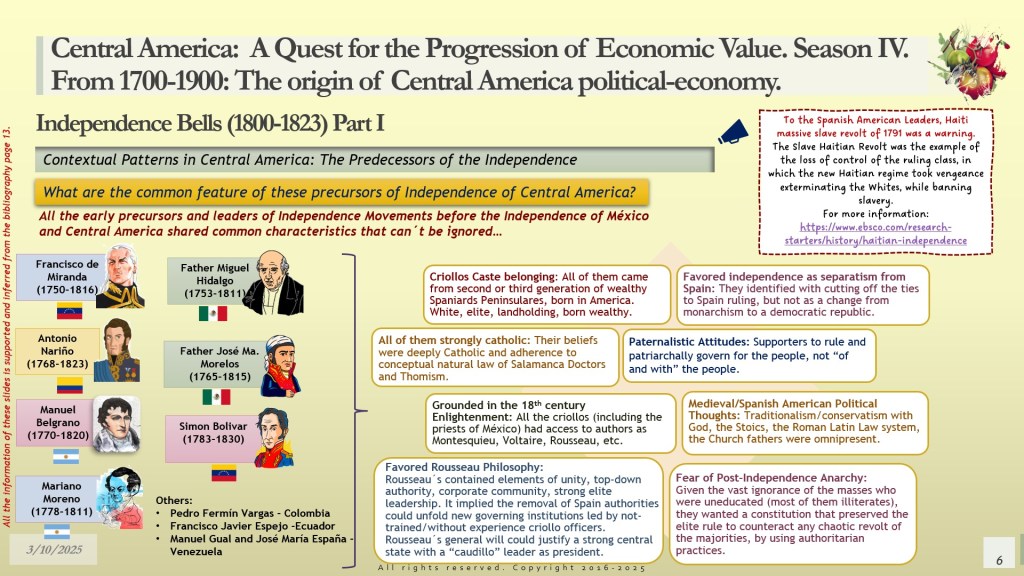
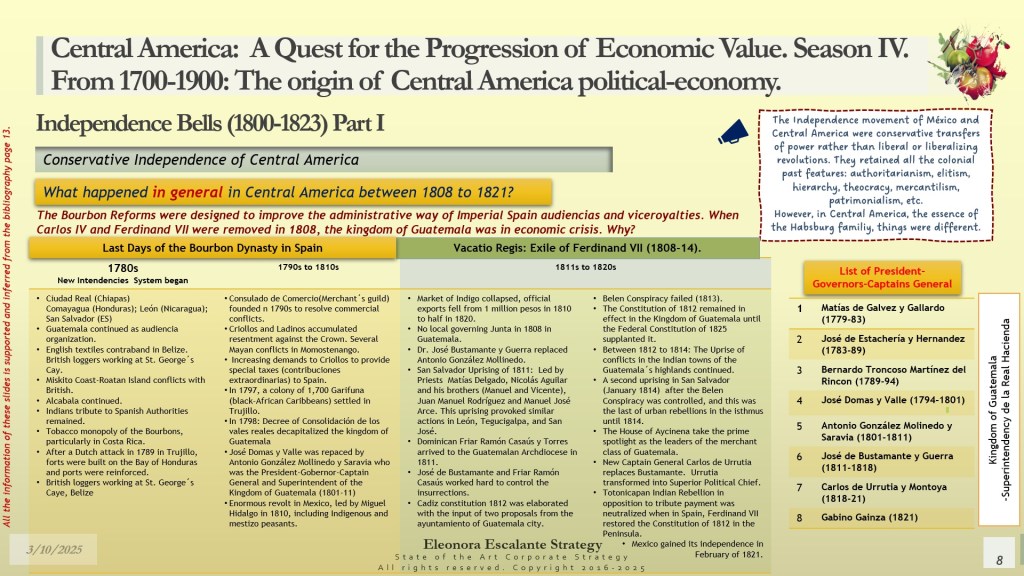
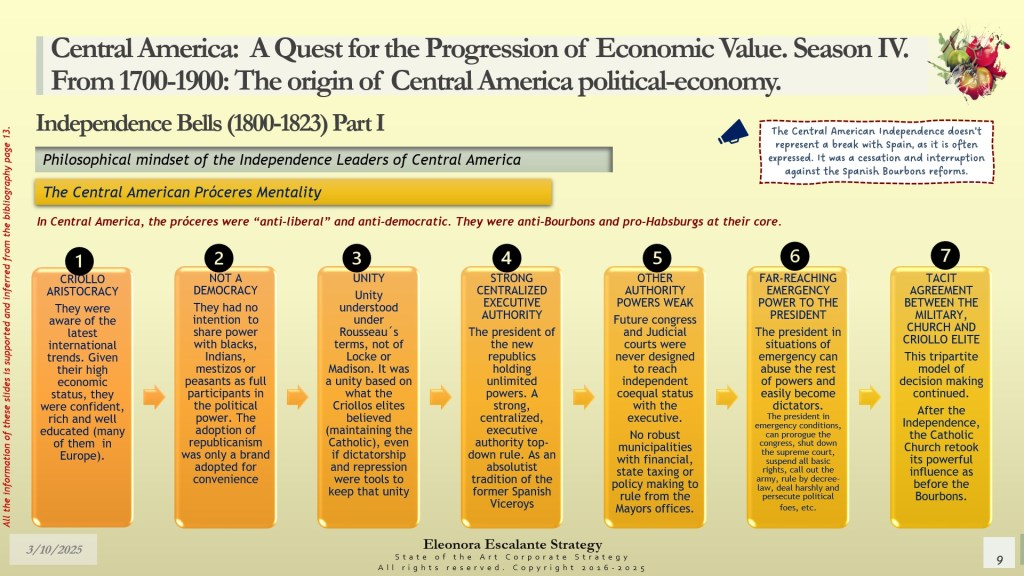
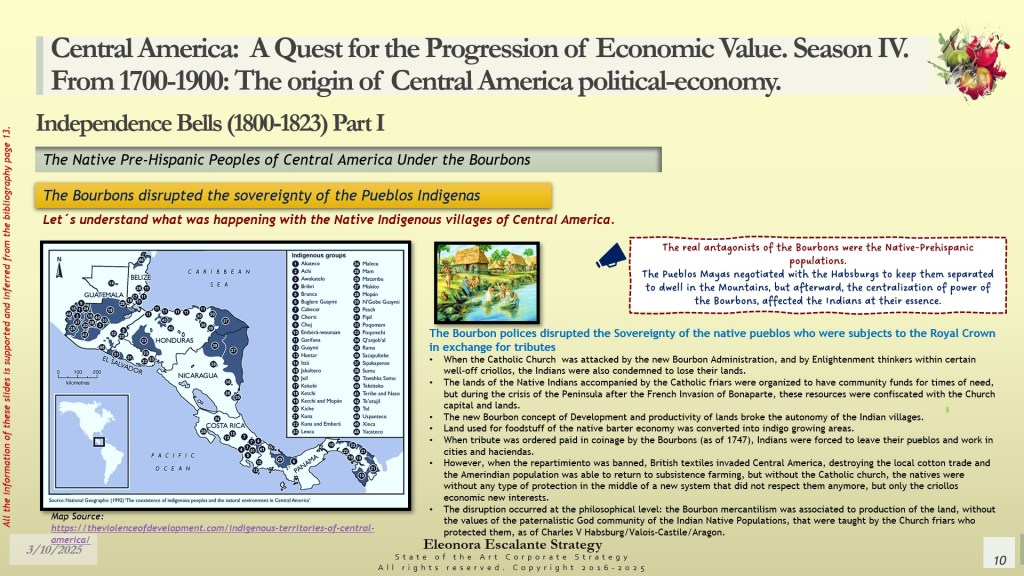
Given the constitutional relevance for Spanish America, our approach has been to divide the content into two publications. See slide 3, please. The reason: we wish to explore the philosophical foundation of the Independence of this region, from the point of view of a “Spanish Habsburg Royal Dwelling” territory that embraced one (or several) Habsburgs since Charles V HRE. We have dedicated this episode to the pre-Independence background. We have covered five contextual sections, which will prepare us for the Independence process analyses next week.
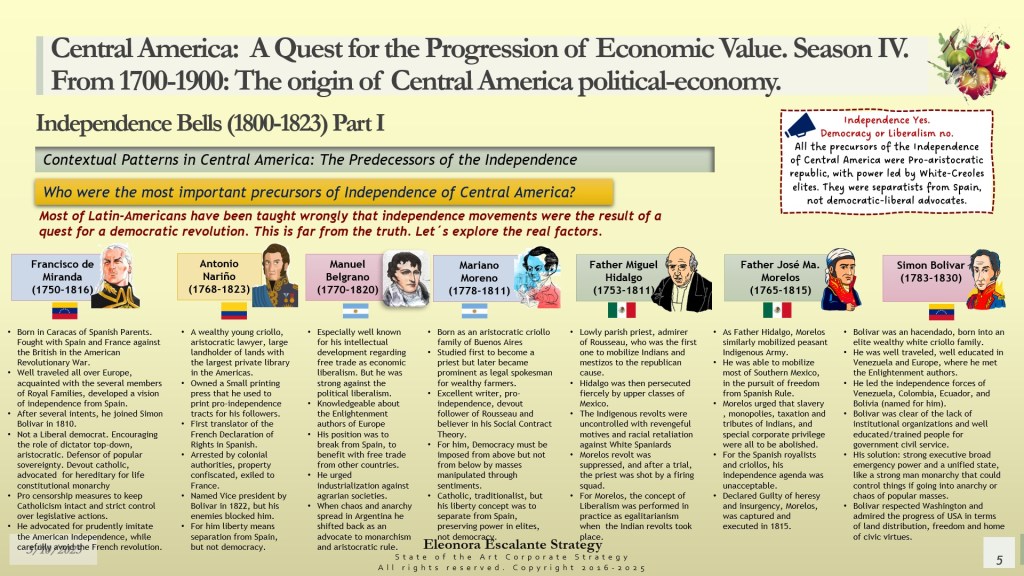
- Contextual Patterns in Latin America: The Predecessors of the Independence Actions.
- Conservative Independence of Central America.
- Philosophical mindset of the Independence Leaders of CA.
- The Native Pre-Hispanic Peoples of Central America Under the Bourbons (18th century)
- Bourbon Reforms in Central America (1700-1808)
Find our frame of reference below. Please take your time to read it and look for additional information. Use the Bibliography provided. Feel free to share it with your friends and colleagues. Print it. Write questions and any notes that spontaneously come to your mind while reading them. Without it, it is not possible to understand our inferences. Any good analysis always requires a studious reading.



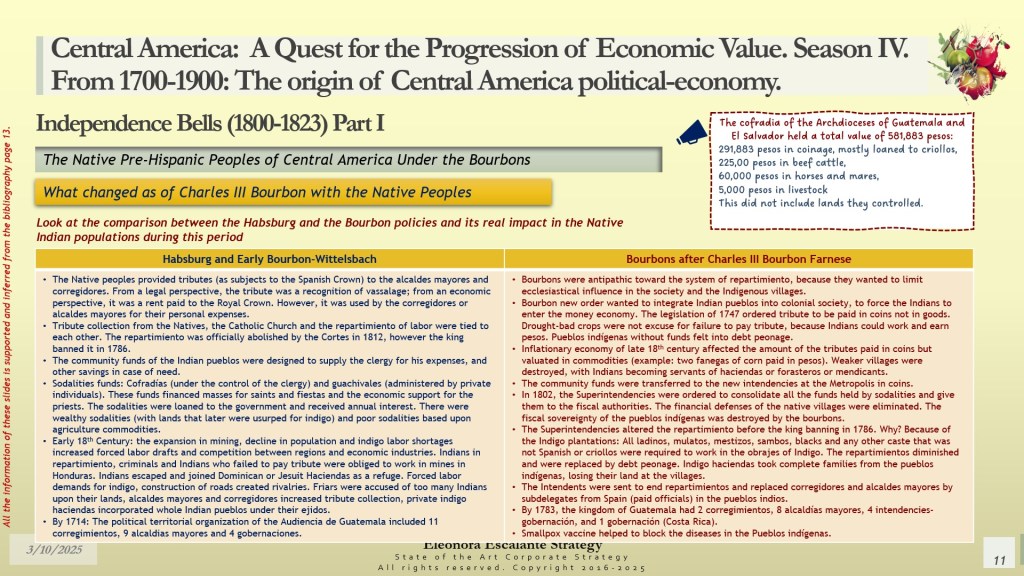

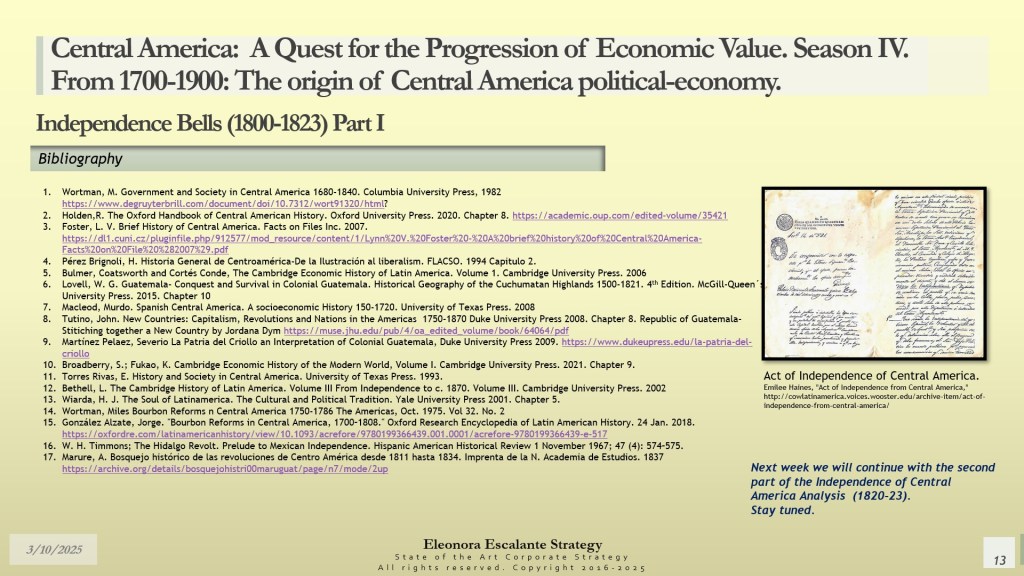
We request that you return next Monday, October 14th, to read our additional strategic reflections on episodes 3 and 4.
We encourage our readers to familiarize themselves with our Friday master class by reviewing the slides over the weekend. We expect you to create ideas that might be strategic reflections or not. Every Monday, we upload our strategic inferences below. These will appear in the next paragraph. Only then will you be able to compare your own reflections with our introspection. For this particular theme “Independence Bells 1800-1823), we will wrap up two weeks of consecutive work, after episode 4. Consequently, our additional strategic reflections on this episode will be published after the release of our next chapter.
Announcement.
Episodes 3 and 4 are exceptionally special. Most of the teachings about the Independence revolutions of Central America that have been passed down to us will be inspected and positively shattered in our analysis. And this fact has compelled us to divide the content into two. Today, we have introduced the foundations of our further study, which will be completed with Episode 4 material. Our next episode is “Independence Bells (1821-23) Part II.” See you again next Friday. Remember, we will add our total strategic reflections for the two episodes in episode 4. Thank you for reading to us.
Musical Section.
During season IV of “Central America: A Quest for the Progression of Economic Value,” we will continue displaying prominent virtuosos who play the guitar beautifully. However, we will select younger interpreters who promise to become the new cohort of classical guitarists in the future.
For this episode 3, we have chosen a young lady from Spain, Andrea González Caballero. The sweet tones of her technique during the interpretation of “Lejos de Casa” are so captivating, charming sounds that touch your soul, particularly for all of us who have lost our dwelling place or those who are so far from home. If you wish to learn more about her background and scholarly life with her guitar, click here https://andreagonzalezcaballero.com/. Enjoy!
Thank you for reading http://www.eleonoraescalantestrategy.com. It is a privilege to learn. Blessings.

Sources of reference and Bibliography utilized today. All are listed in the slide document. Additional material will be added when we upload the strategic reflections.
Disclaimer: Eleonora Escalante paints Illustrations in Watercolor. Other types of illustrations or videos (which are not mine) are used for educational purposes ONLY. All are used as Illustrative and non-commercial images. Utilized only informatively for the public good. Nevertheless, most of this blog’s pictures, images, and videos are not mine. Unless otherwise stated, I do not own any lovely photos or images
 Eleonora Escalante Strategy - Strategic Reflections Think Tank