
Central America: A Quest for the Progression of Economic Value. Bonus-Season V. Episode 12. Banana Republics Part 1.
Dear sweet readers:
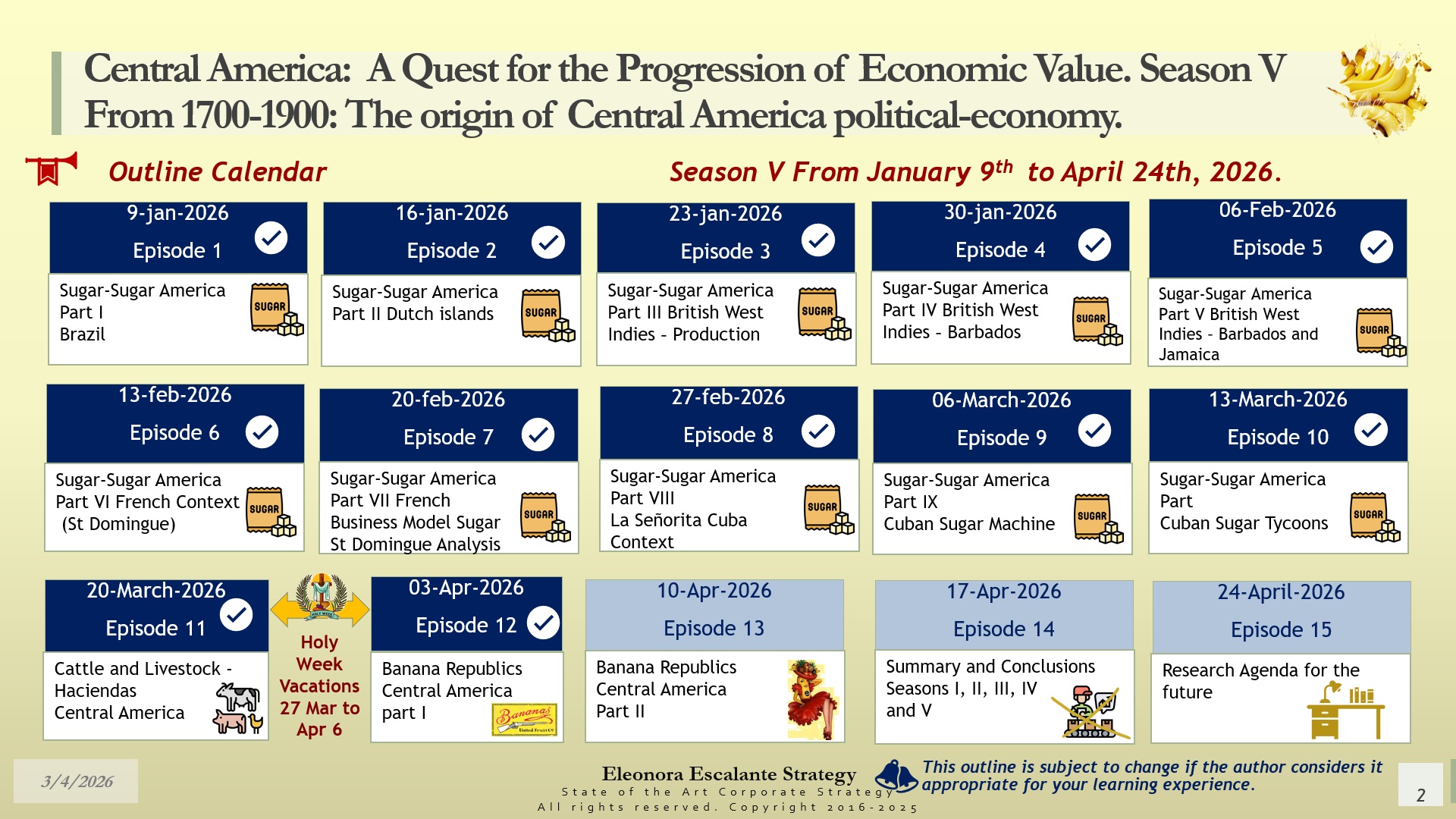
Good Friday is today. Our nation has been on Holy Week holiday since the 27th of March. Today is the commemoration of the crucifixion of Jesus and his Calvary. It is a day of profound discernment about the enormous love of the Son of God who sacrificed himself for our salvation. In our strategic house, we have been working as usual; we have not had a day of leisure. Last week, we were moving into a new neighborhood in town, which is the reason why I took a couple of days off for the process of changing our headquarters. It has been wearying and fatiguing. However, despite the holiday, we had to deliver our analysis no matter what. Our strategy house is committed to finishing this saga by the 24th of April, and we are preparing the gear, tools, and materials for our next epic about corporate and business strategy for coffee smallholder farmers.
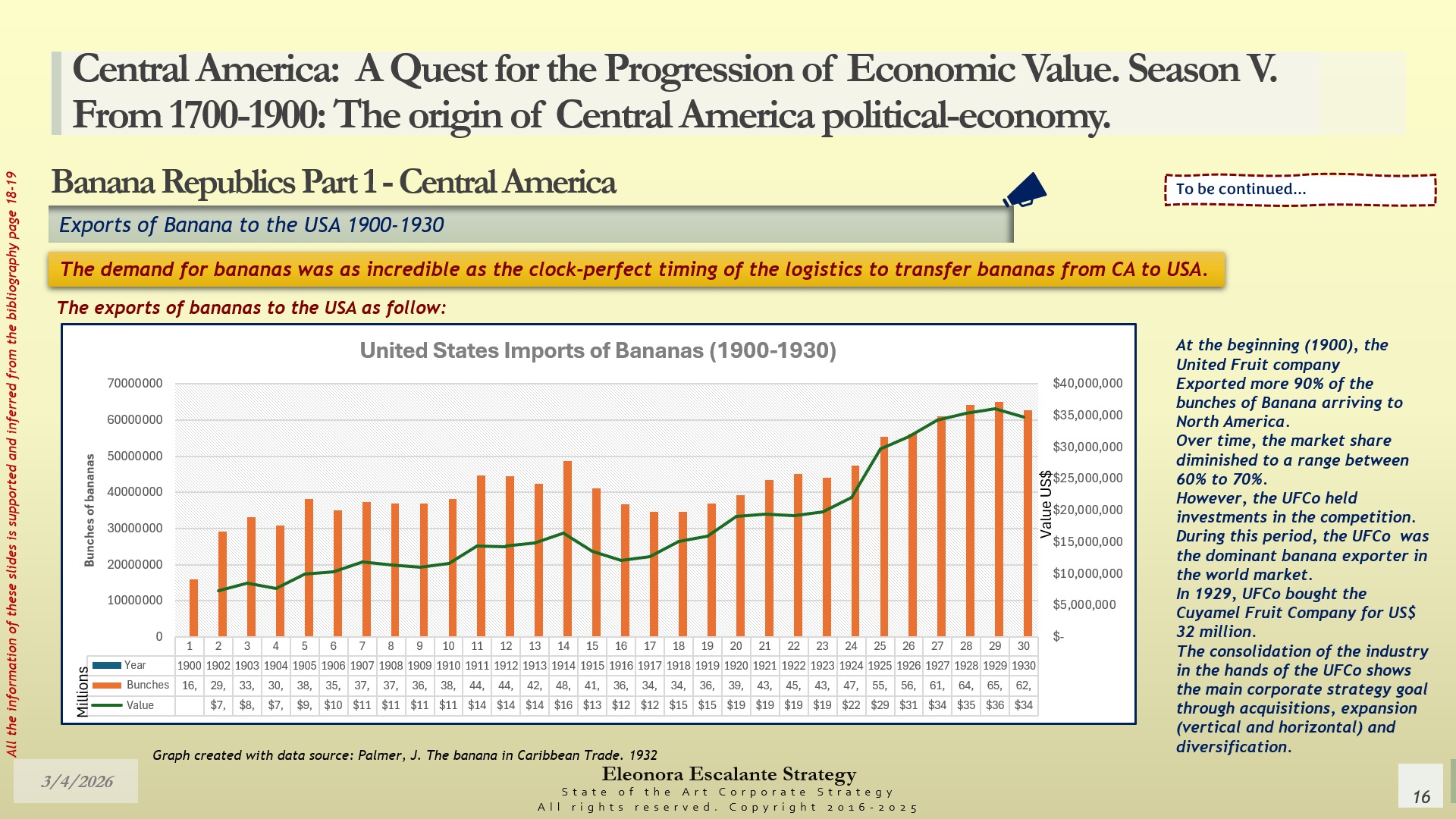
With the Bananas industry analysis of the origins of the United Fruit Company, we are completing all the relevant industries of this region. With this episode 12, we are dispatching the first section of Banana Republics, and we will continue with the second analytical segment next week.
Find the preparation material agenda for your master class below:
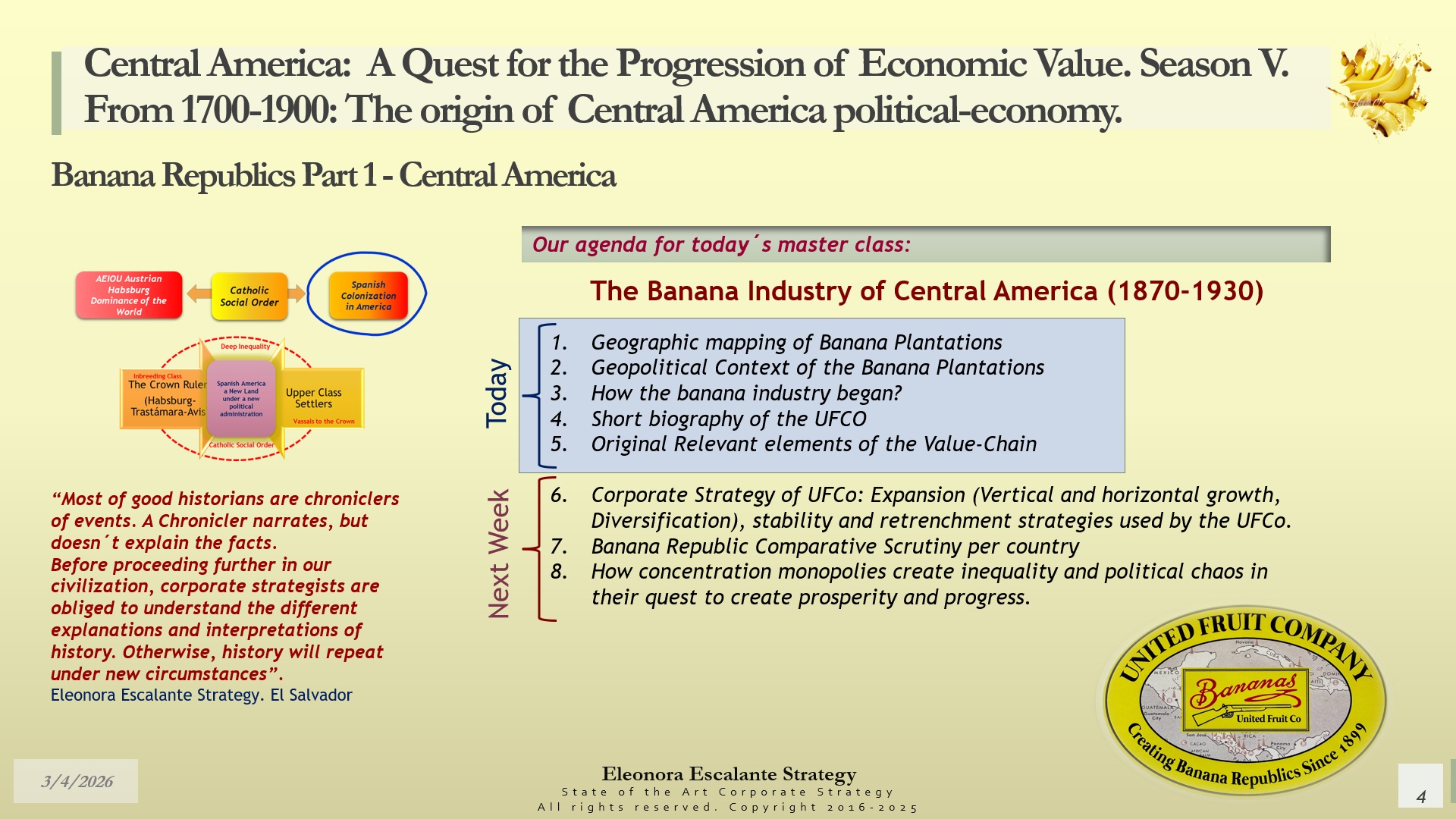
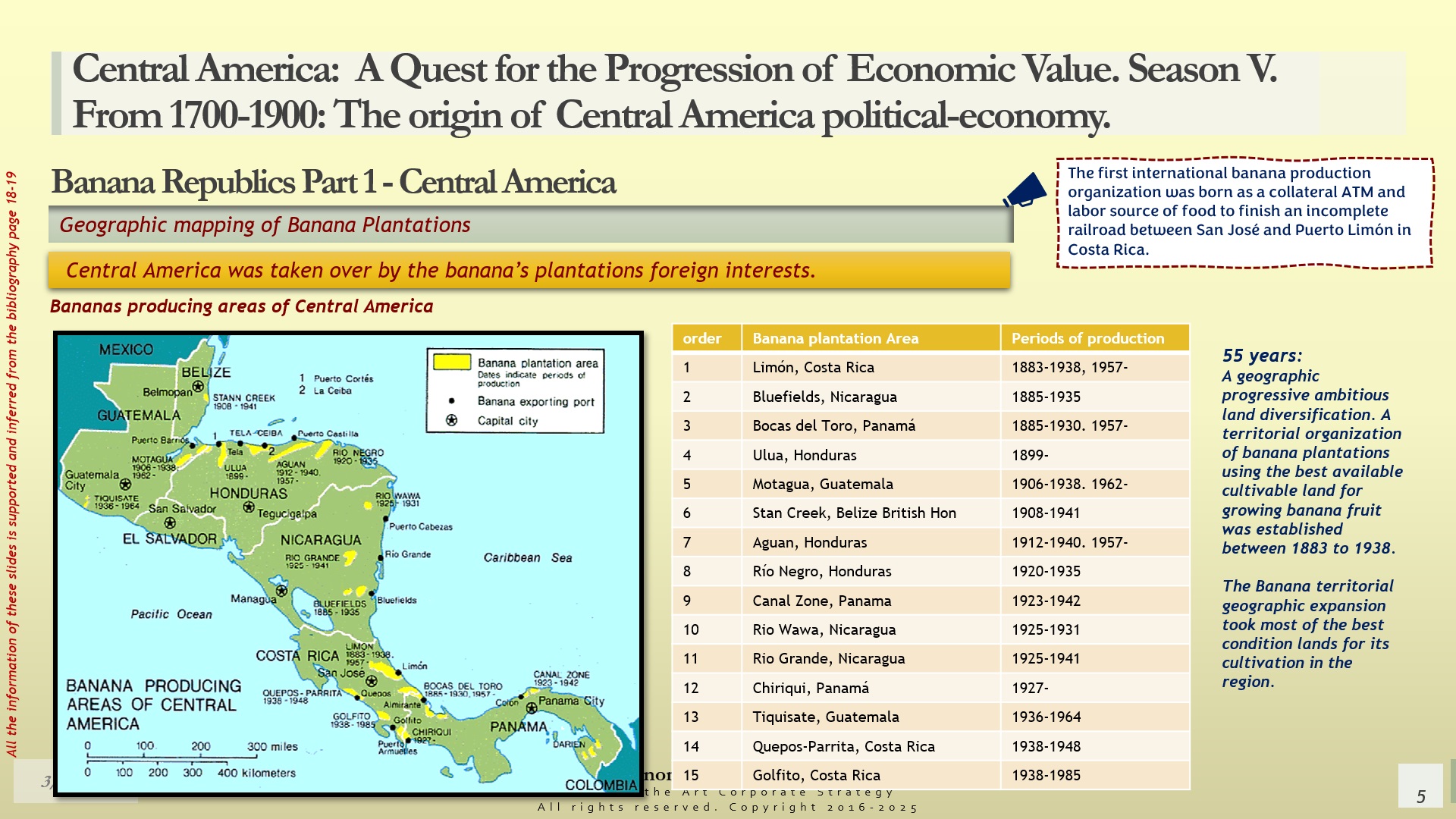
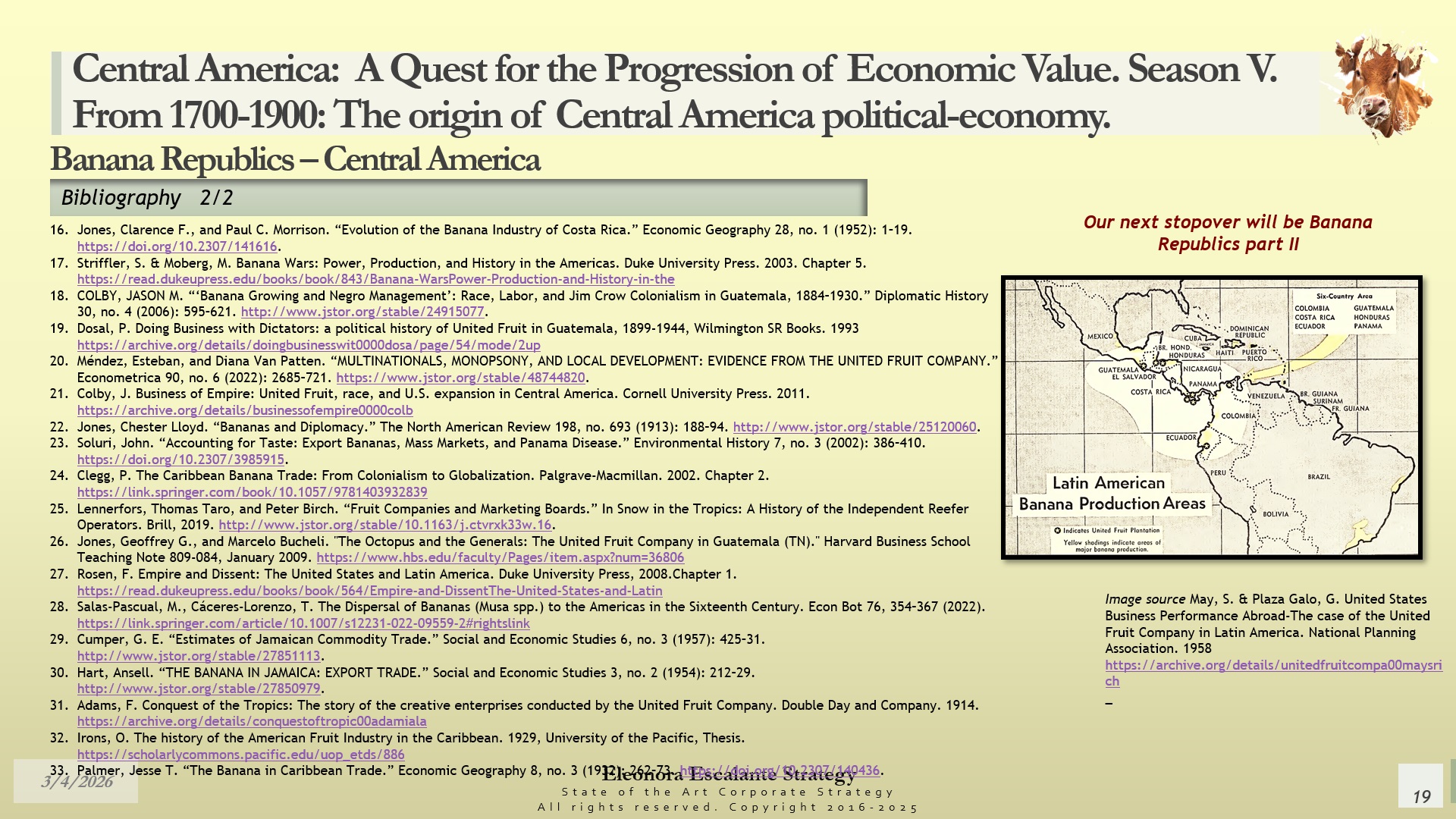
- Geographic mapping of Banana Plantations
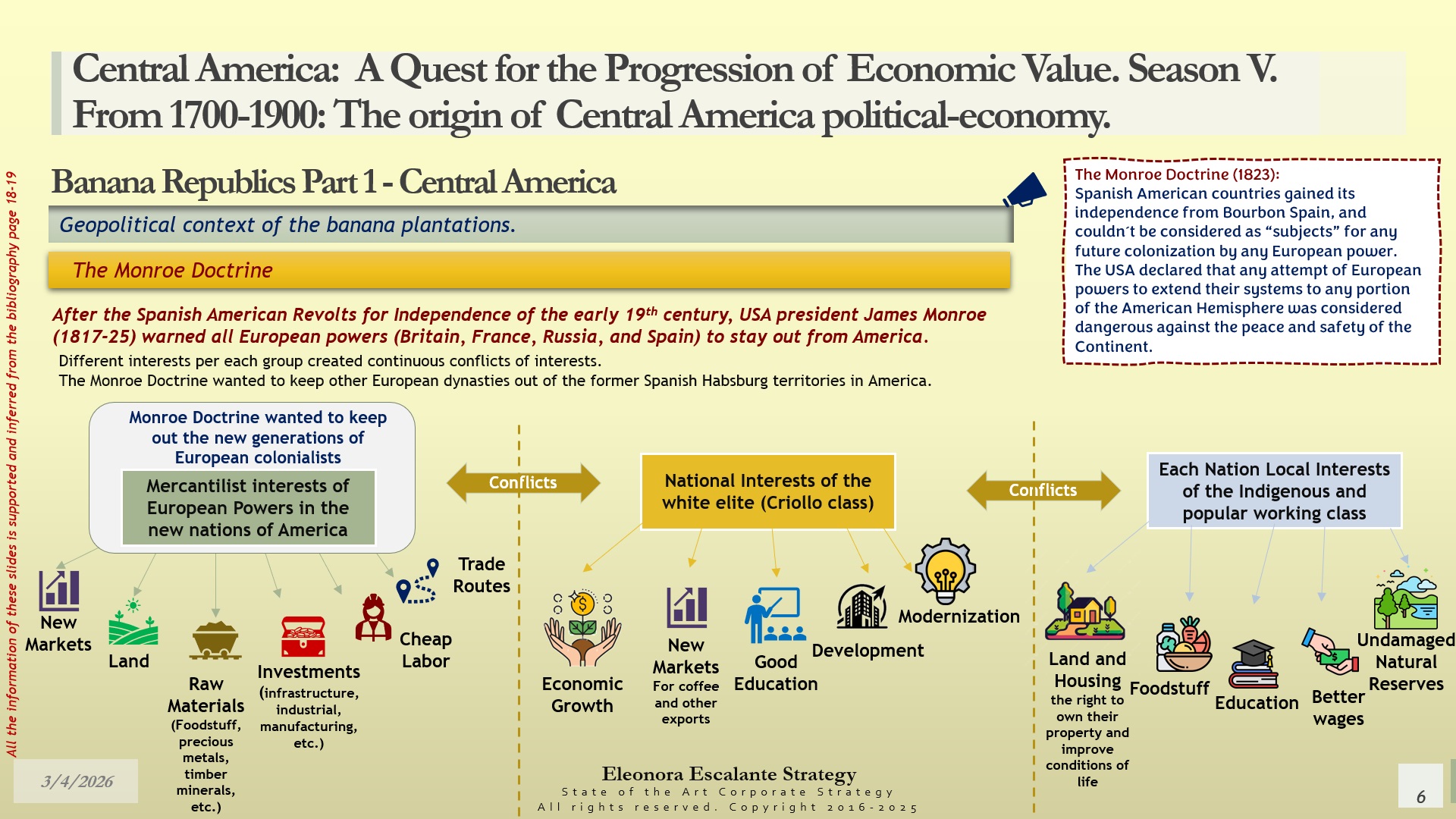
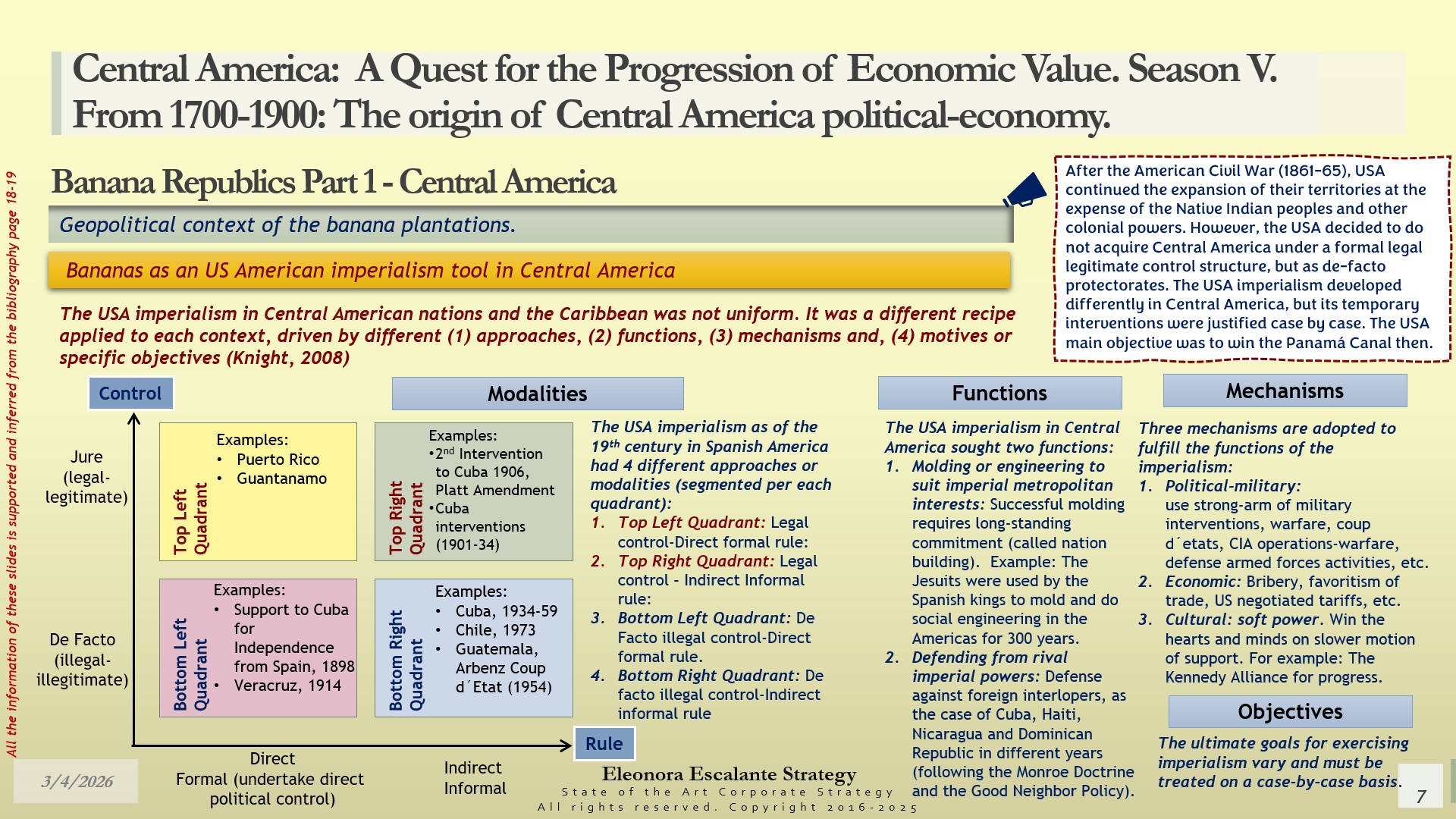
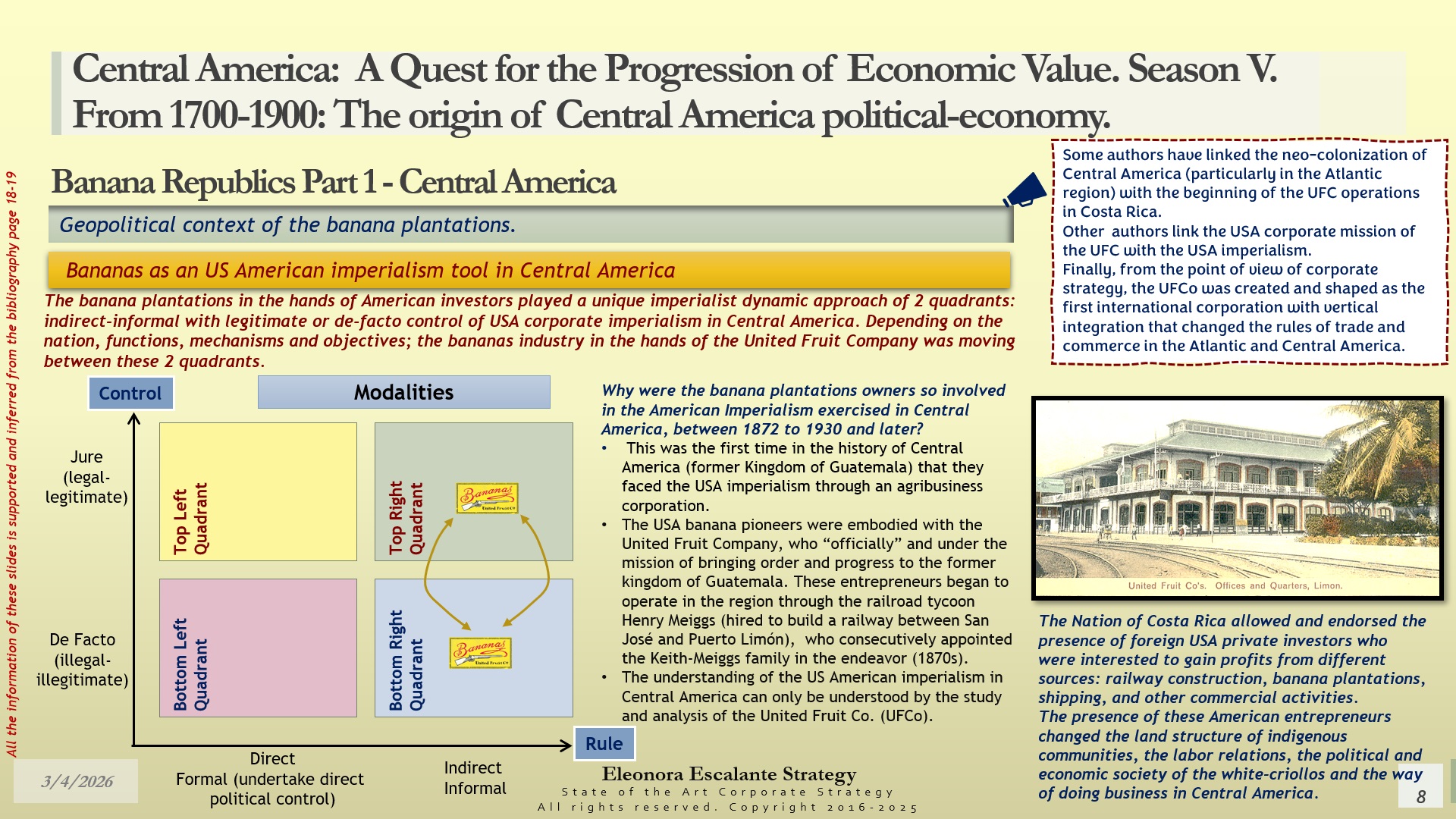
- Geopolitical Context of the Banana Plantations
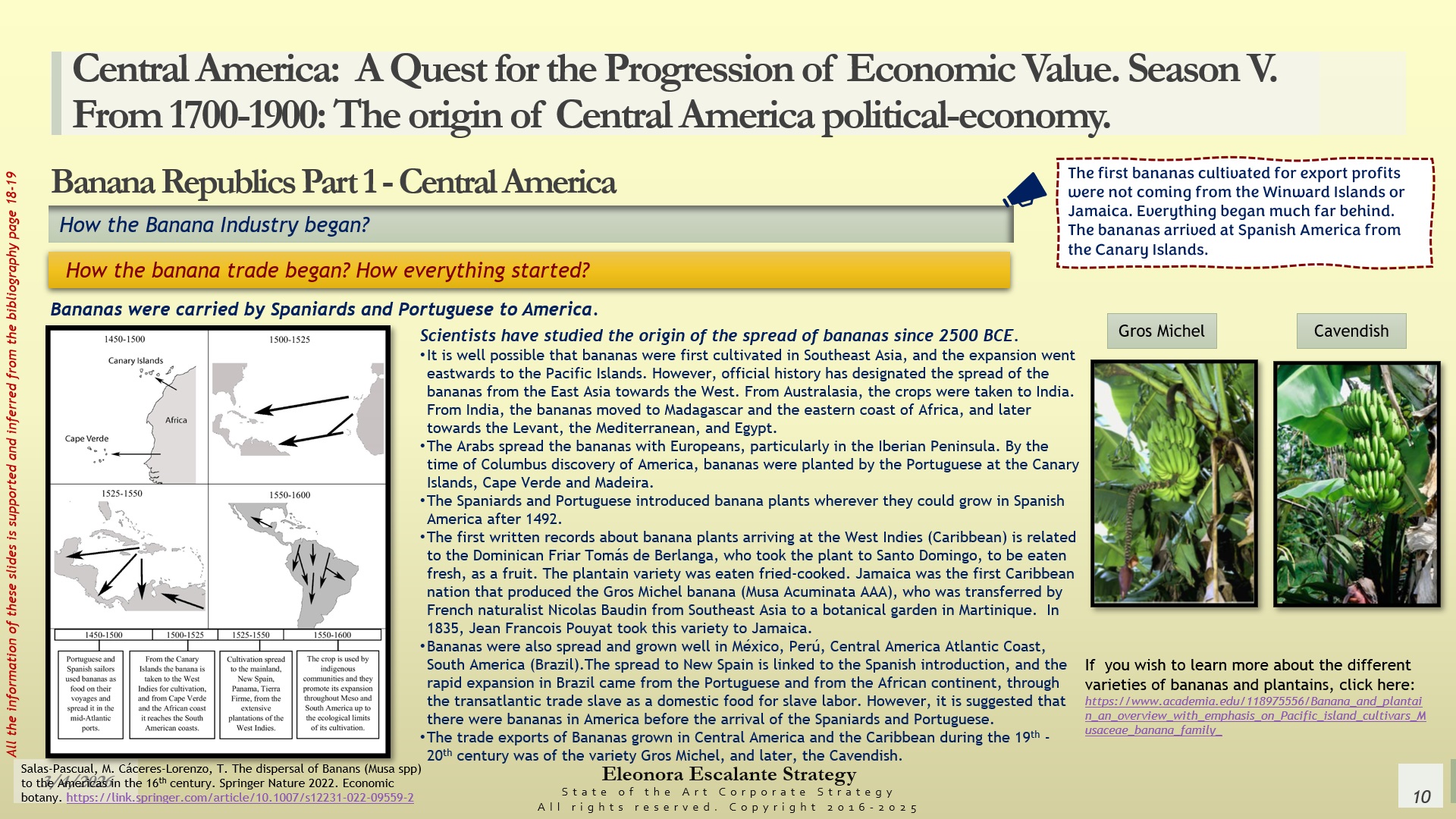
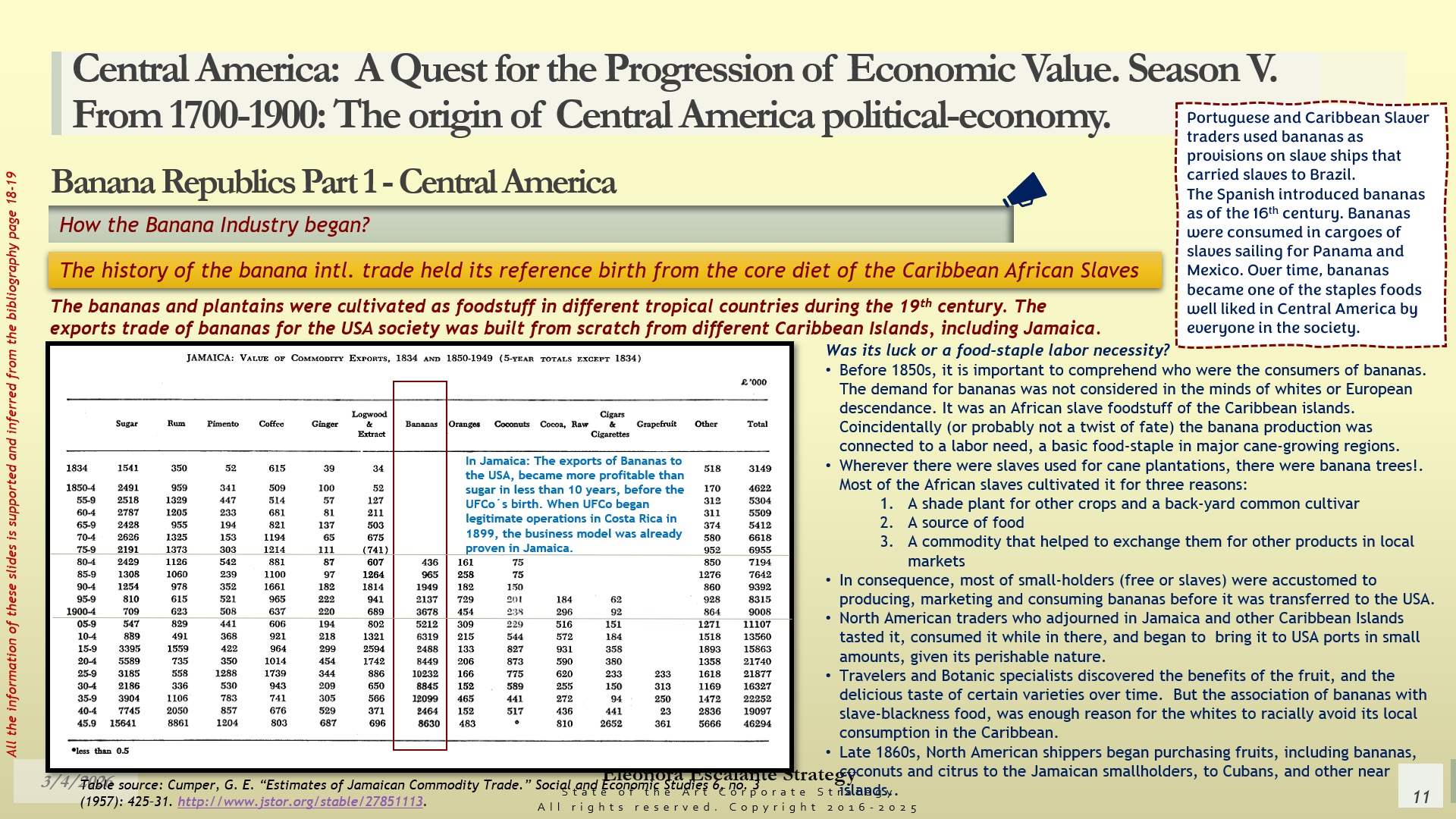
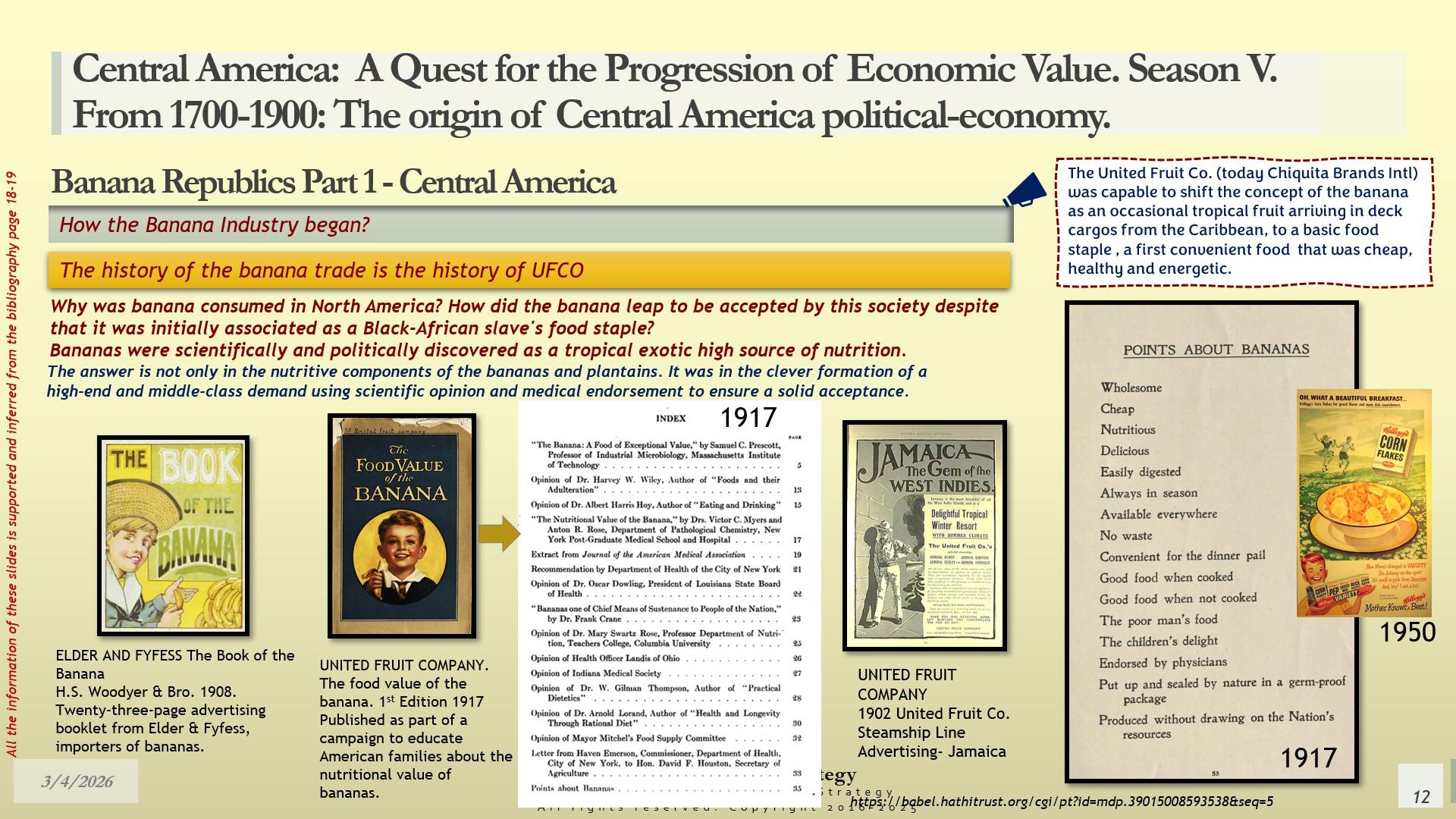
- How did the banana industry begin?
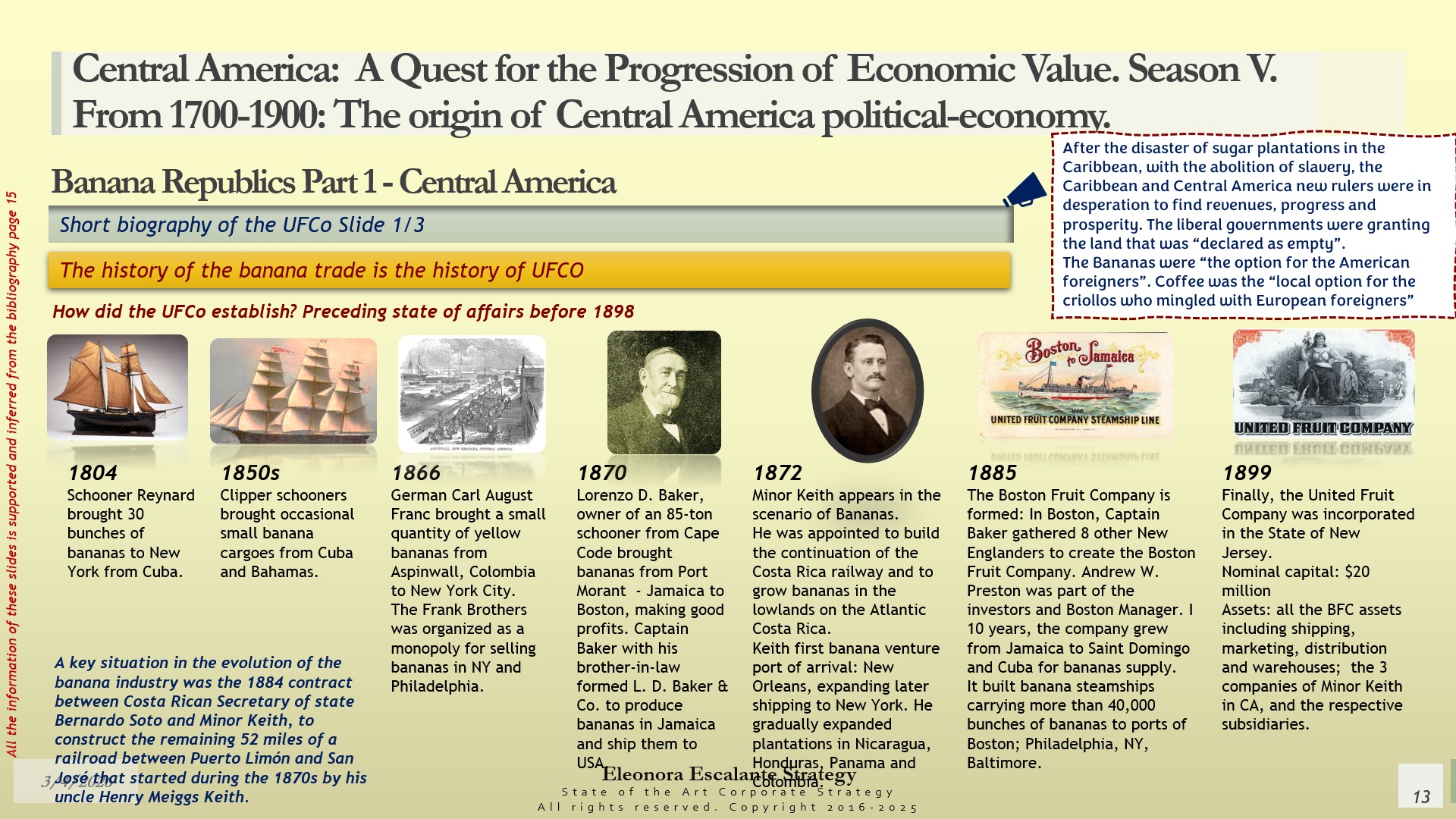
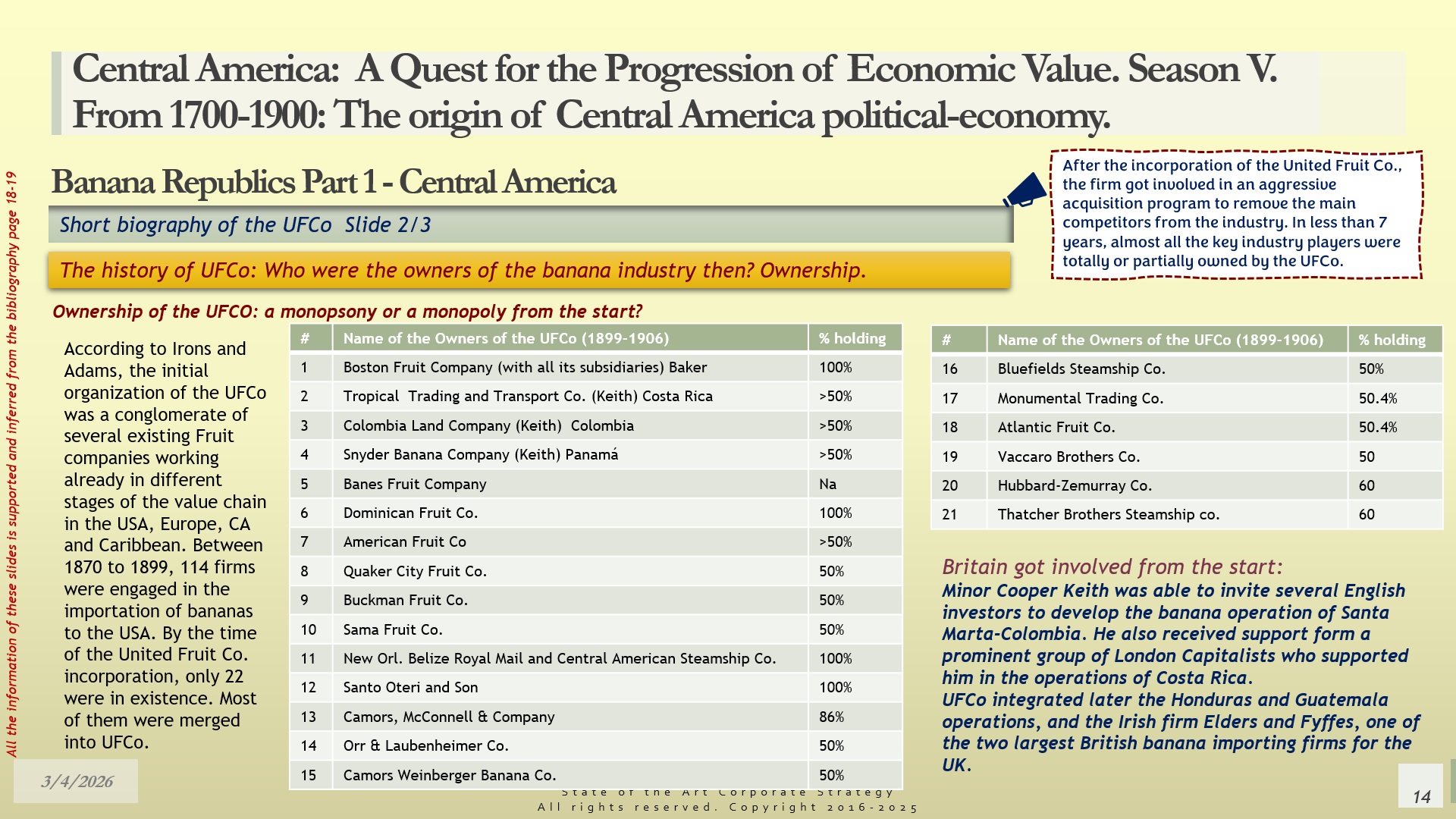
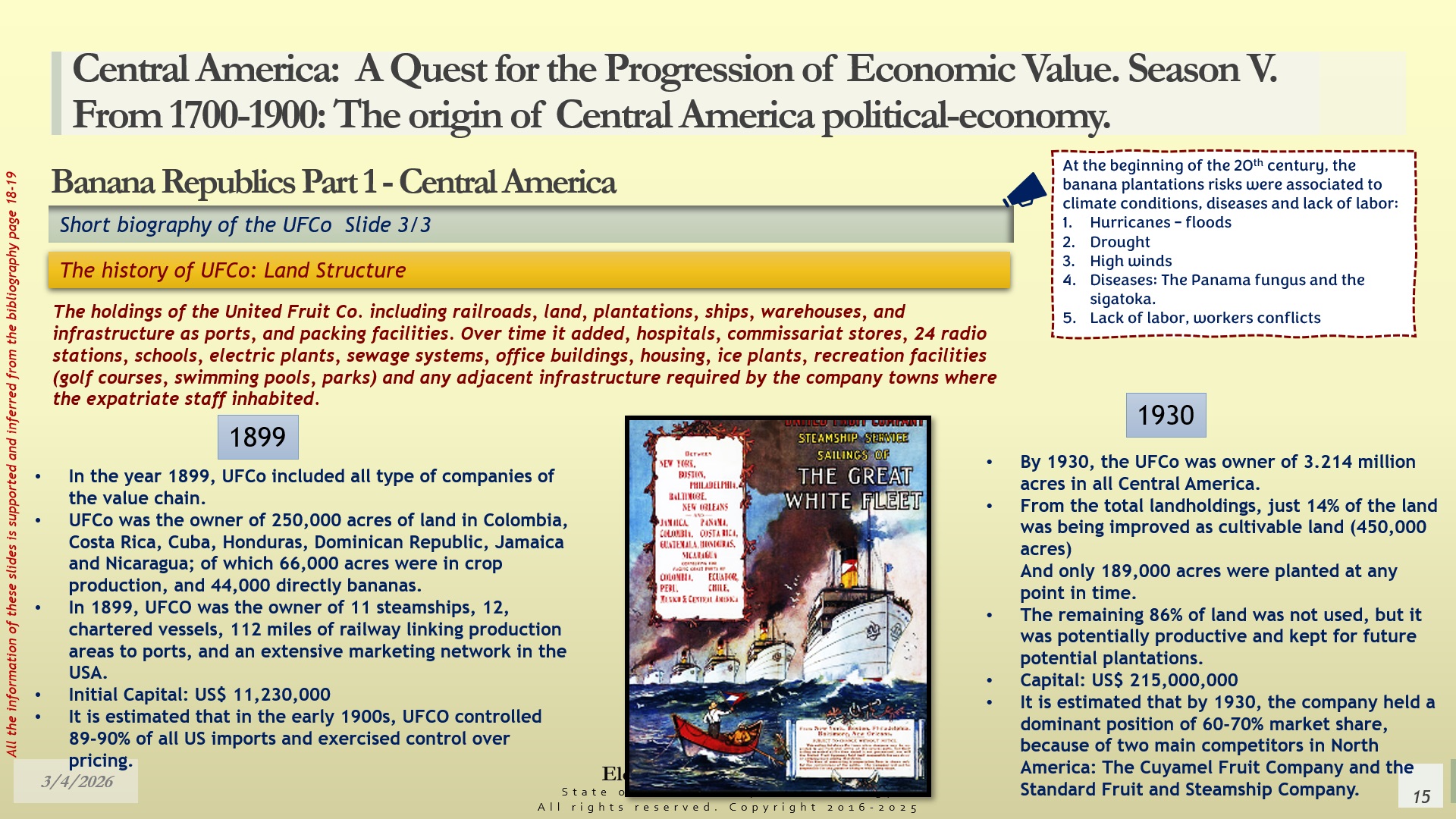
- Short biography of the UFCO
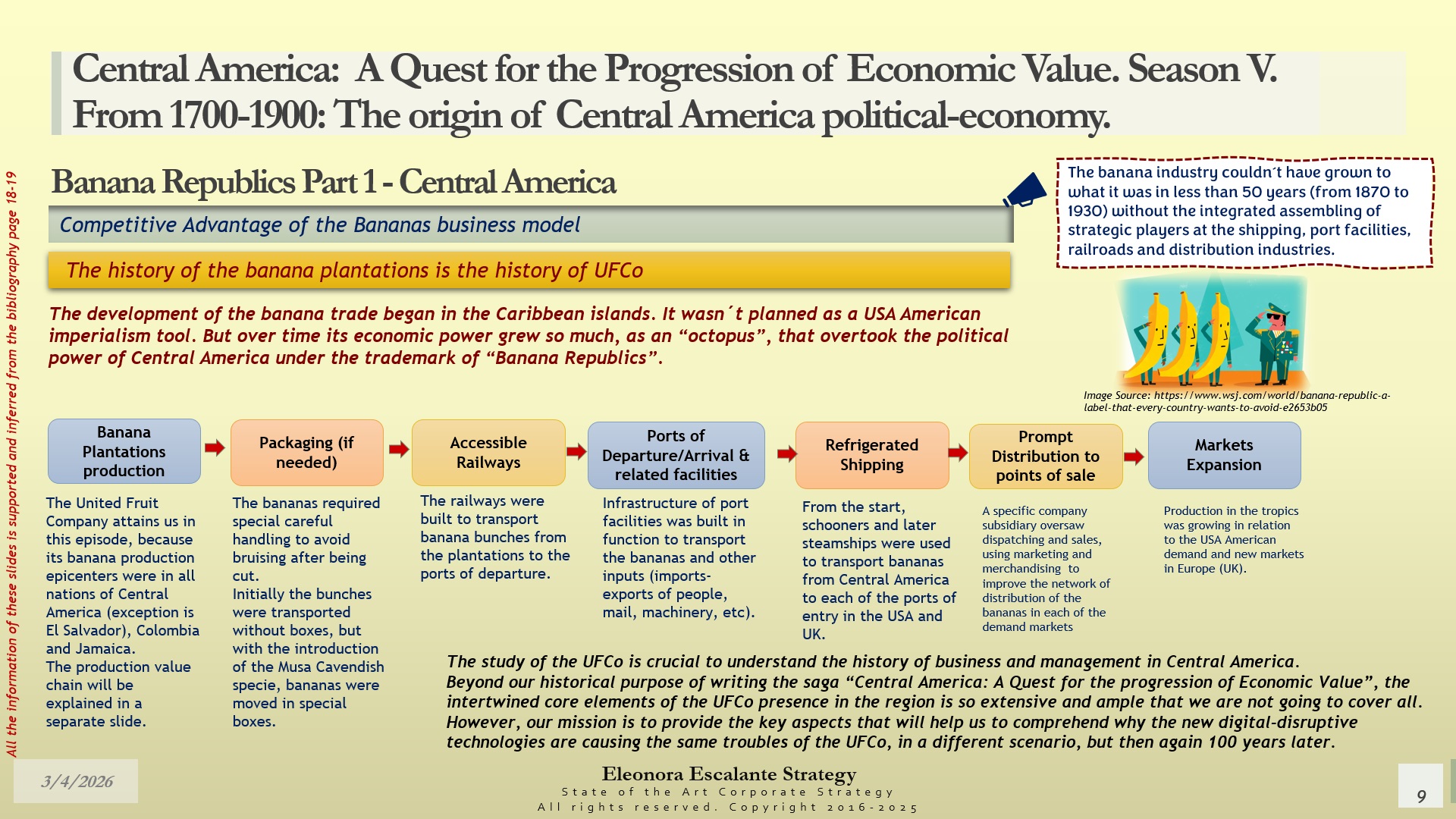
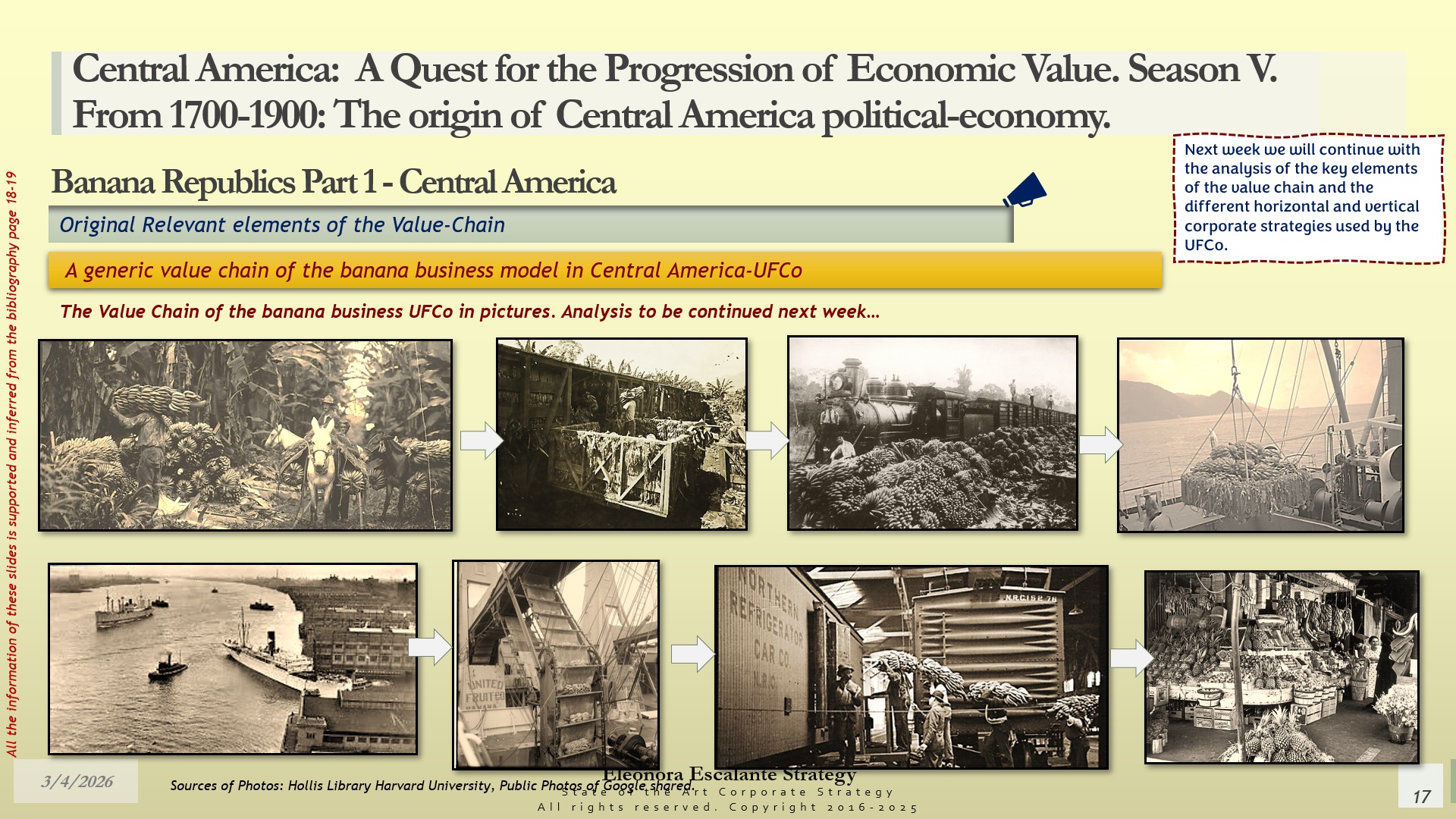
- Original Relevant elements of the Value-Chain
- Corporate Strategy of UFCo: Expansion (Vertical and horizontal growth, Diversification), stability, and retrenchment strategies used by UFCo.
- Banana Republic Comparative Scrutiny per country
- How concentration monopolies create inequality and political chaos in their quest to create prosperity and progress.
As a general recommendation, we encourage our students to prepare well before the strategic reflections that we add every Monday. Feel free to share this material with your colleagues, friends, professors, and others who would be interested in learning how multinational corporations began in Central America. The history of the banana industry as of the last quarter of the 19th century is the history of the United Fruit Company (UFCo). Anyone interested in the MNCs must dedicate several days to studying the UFCo, from the general to the particular, and from the micro-management of each operational hub to a macro-level analysis. A fascinating case in economics and corporate strategy for you.
We kindly ask that you return next Monday, April 6th, 2026, to review our extra strategic reflections on this chapter.
We encourage our readers to familiarize themselves with our Friday master class by reviewing the slides over the weekend. We expect you to create ideas that are or are not strategic reflections. Every Monday, we upload our strategic inferences below. These will be discussed in the next paragraph. Only then will you be able to compare your own reflections with our introspection. We always give our students a couple of days to prepare well before our final reflection.
Additional strategic reflections on this episode. These will be in the section below on Monday, April 6th, 2026.
Strategic Reflections on “Central America: A quest for the progression of economic value. Bonus Season V. Episode 12. Banana Republics Part 1“.
To be added in this space next Monday.
Closing Words.
The Central American Republics were set under an umbrella of foreign North American Investors, who sought to become rich by building the first business model of banana plantations after the abolition of slavery in the tropics. Central America was trying to build a value proposition about how to participate under neocolonial terms in the first stage of the international pseudo-capitalism. Planting bananas played an essential role during the first half of the 20th century.
Announcement.
Next week, we will continue with the analytical section of this chapter: Banana plantations Part II.
Musical Section.
During our closing bonus season V, we will return to the symphonic, philharmonic, or chamber orchestra compositions. Today, we have selected the Iberoamerican Youth Orchestra. This is the second part of the Concert performed in 2019, in México. The Centro Cultural Mexiquense Bicentenario (CCMB) hosted the Orquesta Centroamericana y del Caribe (OJCA) during the Dual Year Germany-México for the occasion of the 50 years Goethe Institute celebration.
Thank you for reading http://www.eleonoraescalantestrategy.com. It is a privilege to learn. Blessings.

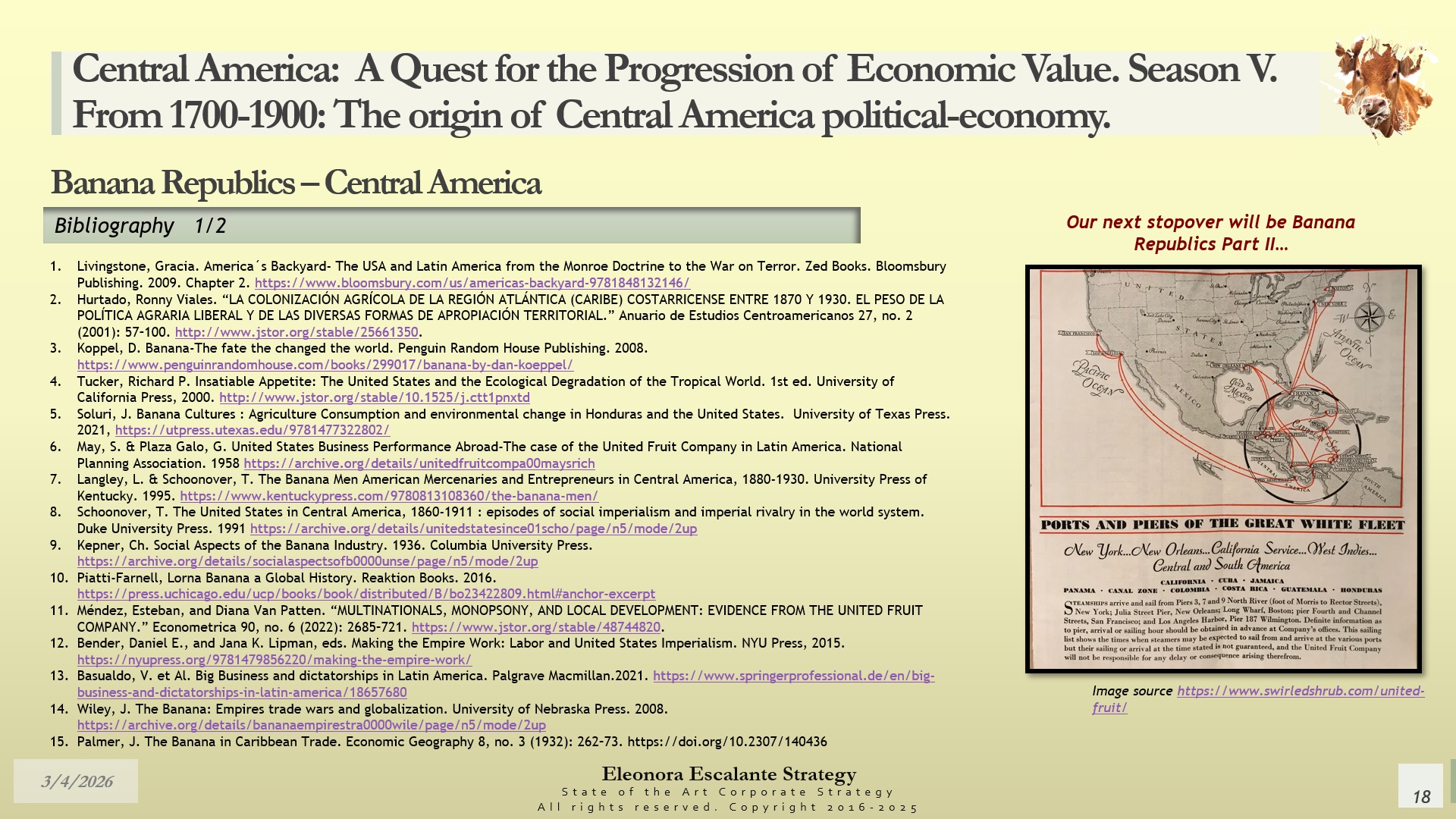
Sources of reference and Bibliography utilized today. All are listed in the slide document. Additional material will be added when we upload the strategic reflections.
Disclaimer: Eleonora Escalante paints Illustrations in Watercolor. Other types of illustrations or videos (which are not mine) are used for educational purposes ONLY. All are used as Illustrative and non-commercial images. Utilized only informatively for the public good. Nevertheless, most of this blog’s pictures, images, and videos are not mine. Unless otherwise stated, I do not own any lovely photos or images.
 Eleonora Escalante Strategy - Strategic Reflections Think Tank