
Central America: A Quest for the Progression of Economic Value. Bonus-Season V. Episode 12. Banana Republics Part 1.
Dear sweet readers:
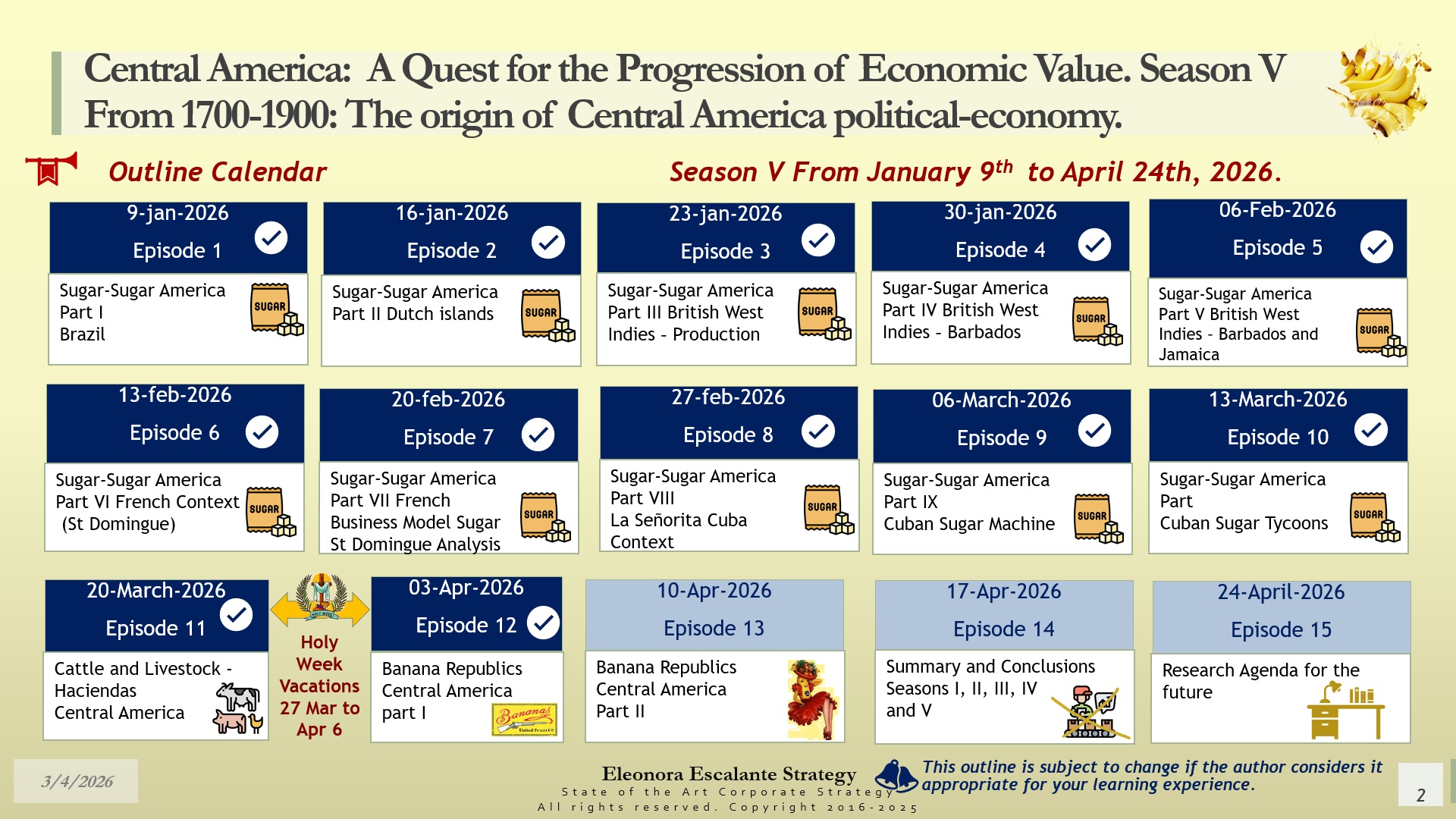
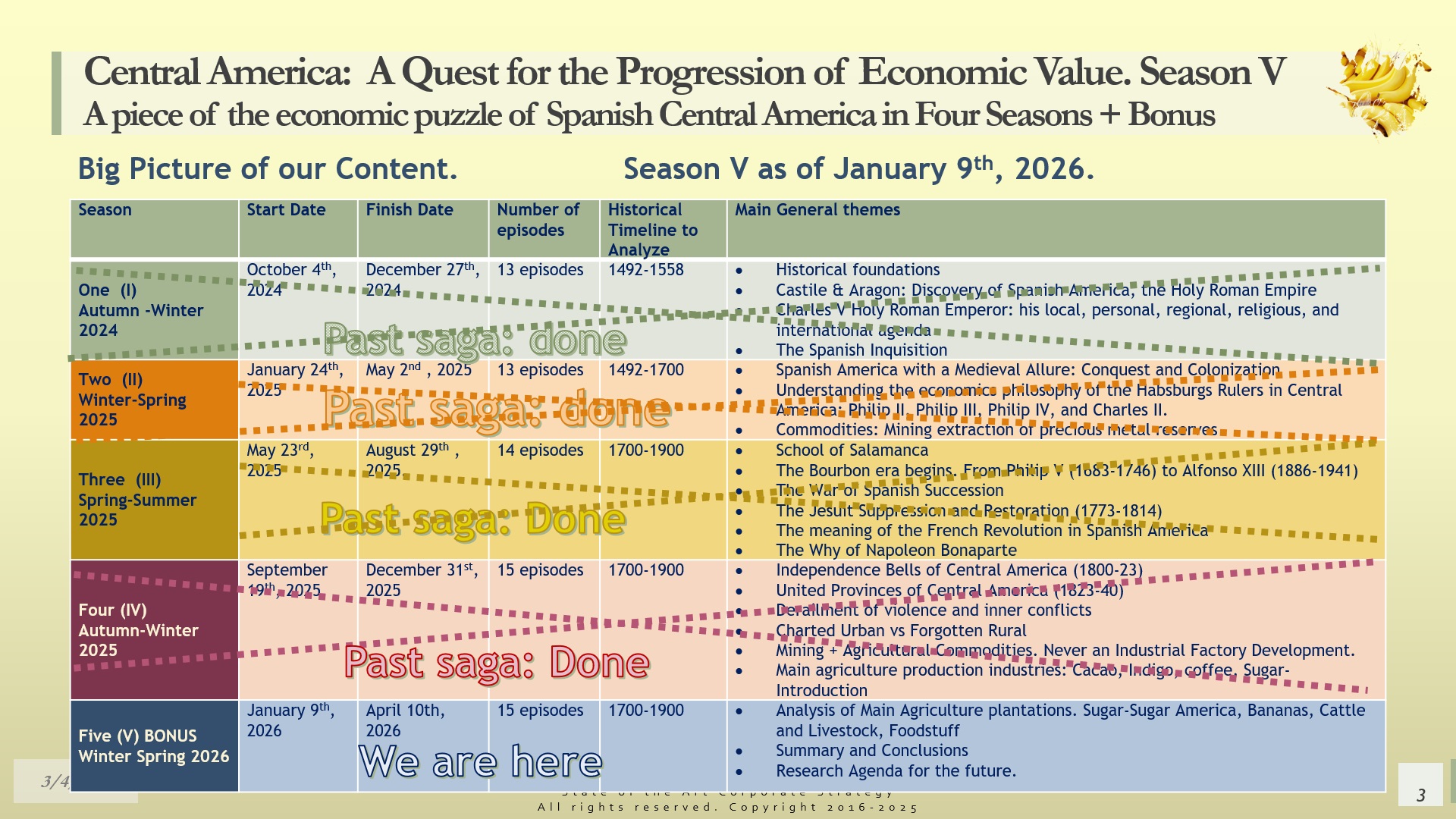
Good Friday is today. Our nation has been on Holy Week holiday since the 27th of March. Today is the commemoration of the crucifixion of Jesus and his Calvary. It is a day of profound discernment about the enormous love of the Son of God who sacrificed himself for our salvation. In our strategic house, we have been working as usual; we have not had a day of leisure. Last week, we were moving into a new neighborhood in town, which is the reason why I took a couple of days off for the process of changing our headquarters. It has been wearying and fatiguing. However, despite the holiday, we had to deliver our analysis no matter what. Our strategy house is committed to finishing this saga by the 24th of April, and we are preparing the gear, tools, and materials for our next epic about corporate and business strategy for coffee smallholder farmers.
With the Bananas industry analysis of the origins of the United Fruit Company, we are completing all the relevant industries of this region. With this episode 12, we are dispatching the first section of Banana Republics, and we will continue with the second analytical segment next week.
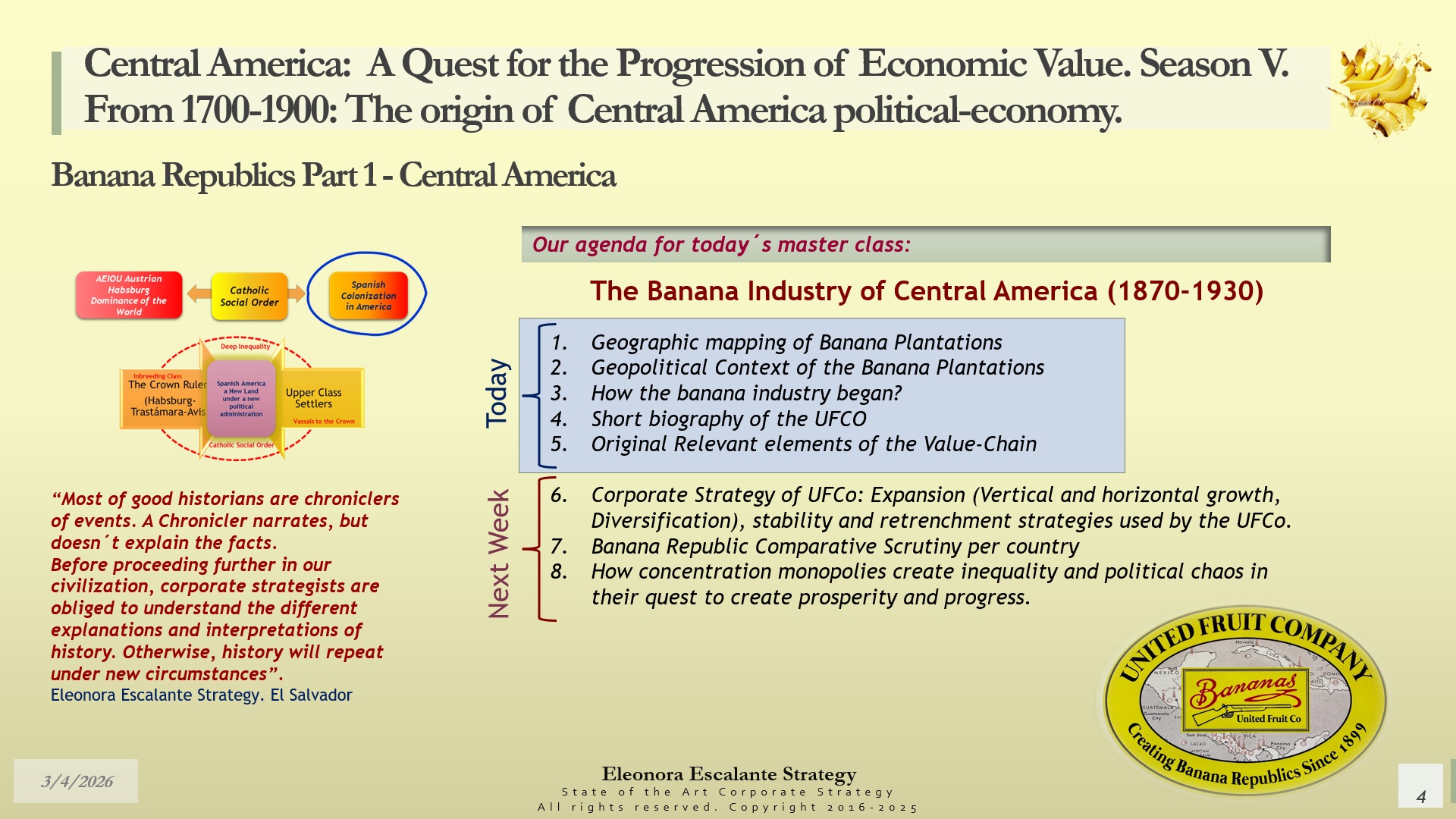
Find the preparation material agenda for your master class below:
- Geographic mapping of Banana Plantations
- Geopolitical Context of the Banana Plantations
- How did the banana industry begin?
- Short biography of the UFCO
- Original Relevant elements of the Value-Chain
- Corporate Strategy of UFCo: Expansion (Vertical and horizontal growth, Diversification), stability, and retrenchment strategies used by UFCo.
- Banana Republic Comparative Scrutiny per country
- How concentration monopolies create inequality and political chaos in their quest to create prosperity and progress.
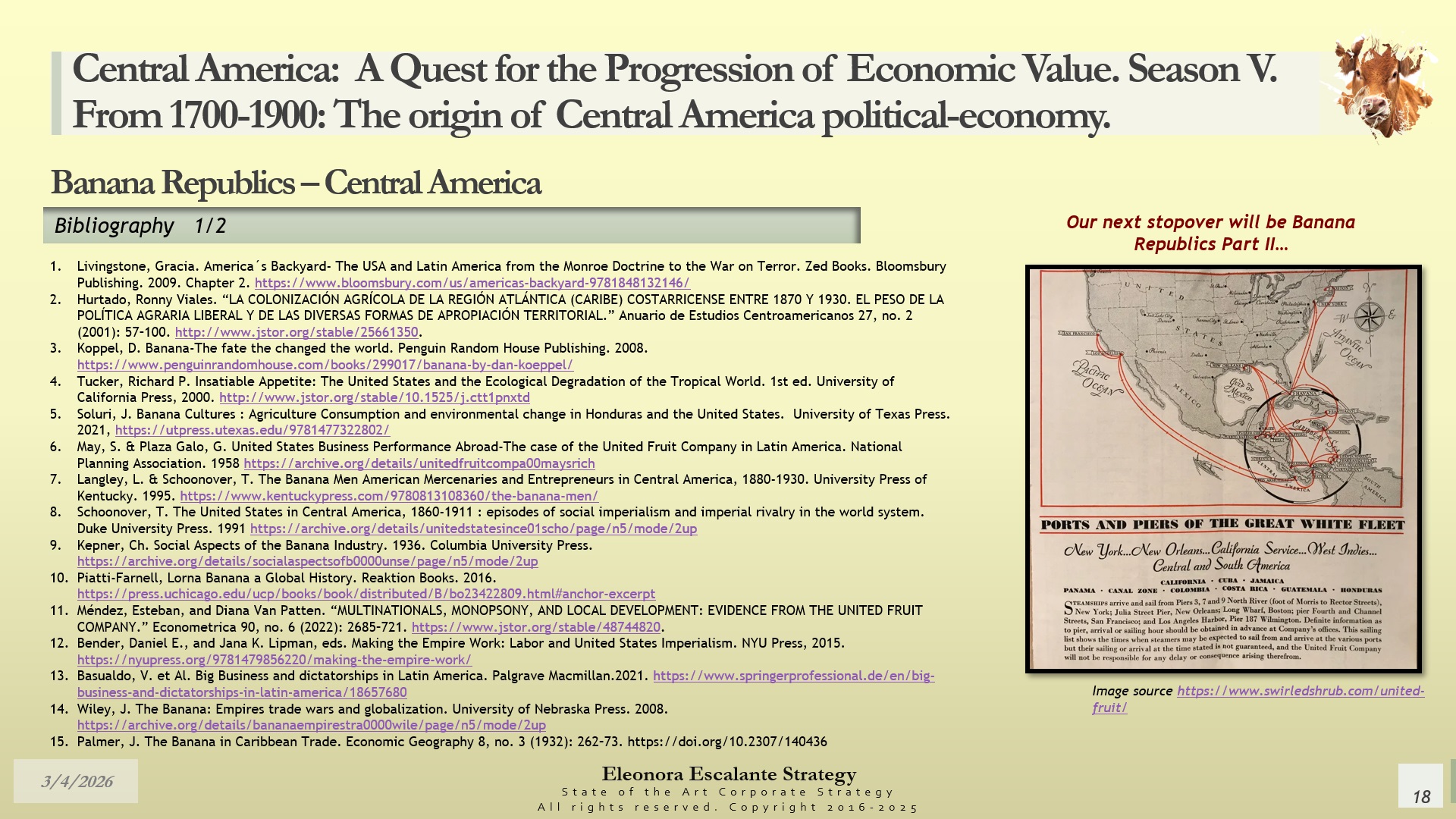
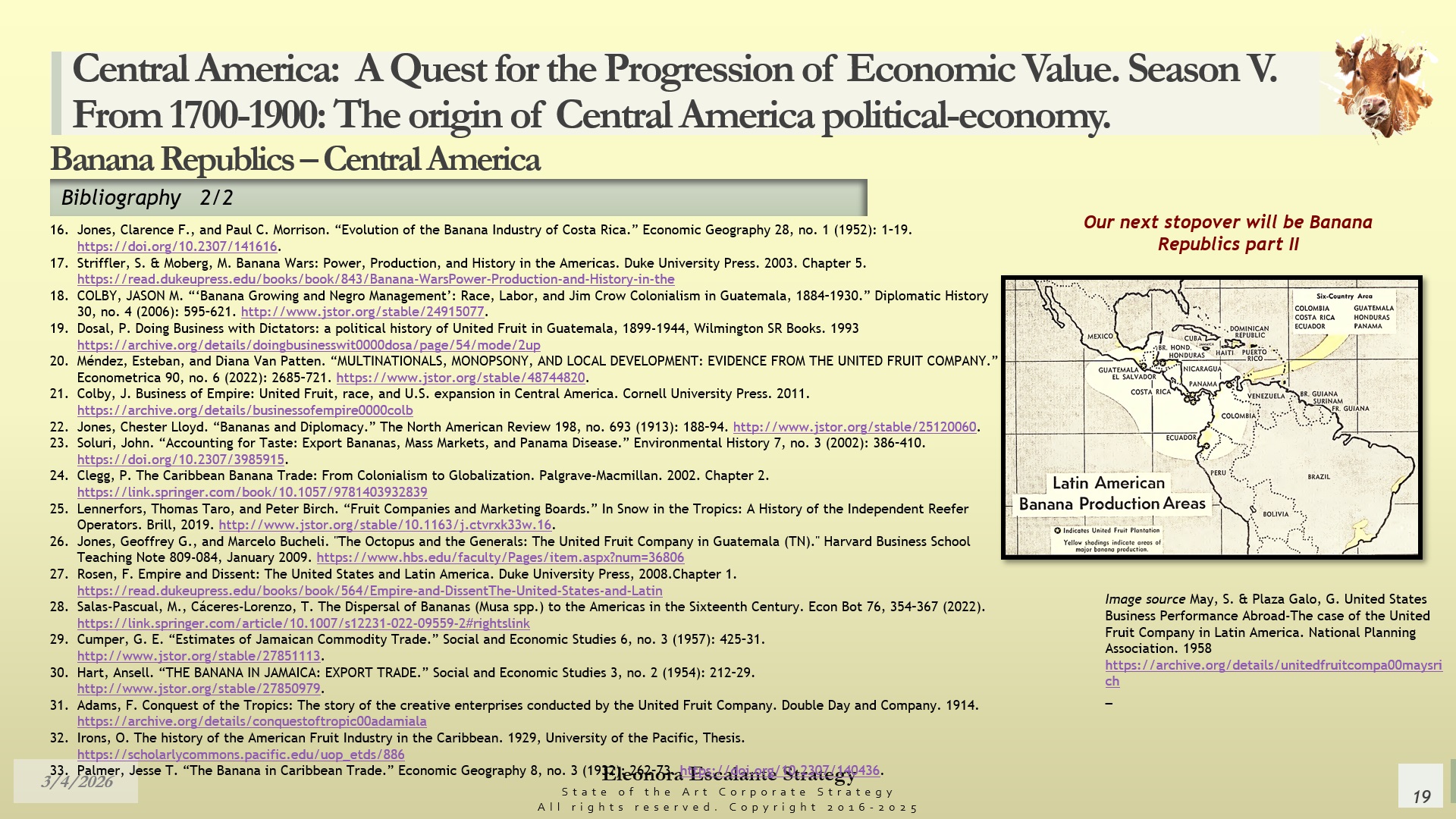
As a general recommendation, we encourage our students to prepare well before the strategic reflections that we add every Monday. Feel free to share this material with your colleagues, friends, professors, and others who would be interested in learning how multinational corporations began in Central America. The history of the banana industry as of the last quarter of the 19th century is the history of the United Fruit Company (UFCo). Our bibliography for this topic is amazing. We advise you to try printing it and reading it on paper. Please do not use AI tools to learn. Read, read, read at least one or two of our reference bibliographic materials (slides 18 and 19). Anyone interested in the MNCs must dedicate several days to studying the UFCo, from the general to the particular, and from the micro-management of each operational hub to a macro-level analysis. A fascinating case in economics and corporate strategy for you.
We kindly ask that you return next Monday, April 6th, 2026, to review our extra strategic reflections on this chapter.
We encourage our readers to familiarize themselves with our Friday master class by reviewing the slides over the weekend. We expect you to create ideas that are or are not strategic reflections. Every Monday, we upload our strategic inferences below. These will be discussed in the next paragraph. Only then will you be able to compare your own reflections with our introspection. We always give our students a couple of days to prepare well before our final reflection.
Additional strategic reflections on this episode. These will be in the section below on Monday, April 6th, 2026.
Strategic Reflections on “Central America: A quest for the progression of economic value. Bonus Season V. Episode 12. Banana Republics Part 1“.
“Only by learning how to think well will we be able to think well” (A. France).
Our approach during this saga is called “history to theory research on strategic management.” It has been used by other researchers at Harvard Business School and similar universities. We have tried to use the same academic methodology in our quest to introduce our readers to the original causes of economic development of Central America. Remember that our strategy house is engaged in creating theoretical frameworks that help us to understand corporate strategy decision-making. We are building the branch of the philosophy of the history of strategic management from our olden times, and we are dedicated to doing it with all our stamina, dedication, and distinction. Only by understanding the philosophical premises of the past thoughts of business, trade, and commerce will we be able to understand what we are doing and where we are going, and only then will we be able to accept our current wrongdoings and mistakes and change the route of our destiny. It is of higher wisdom to avoid repeating the same patterns of our former wrong philosophical premises.
How to add value to all the work that my academic peers have researched about the history of the banana industry in Central America?
First, gathering the truth as it happened. The history of the banana industry in the former kingdom of Guatemala (From the Soconusco-Oaxaca to Costa Rica) was not irrelevant. It has been one of the most interesting phases from the point of view of corporate strategy. It happened just around 100-150 years ago, in consequence there are descendants of the people who worked, partnered, or were direct witnesses of the situation as it ensued. The intellectual testimonies of people involved in the value chain of the production of bananas are not extraneous, nor difficult to find. At least there was one rural great-grandfather of ours who had the chance to see, hear, or live around the banana plantations in the region. Three Nobel Prize winners wrote about the role of the United Fruit Company (the company of our attention): Pablo Neruda, Gabriel García Márquez, and Miguel Ángel Asturias. Additionally, there are operational remnants in each banana nation that help us to validate not only the location of the company towns, but also the political, social, and economic actions of all the parties involved in the different scenarios of the banana productive plots.
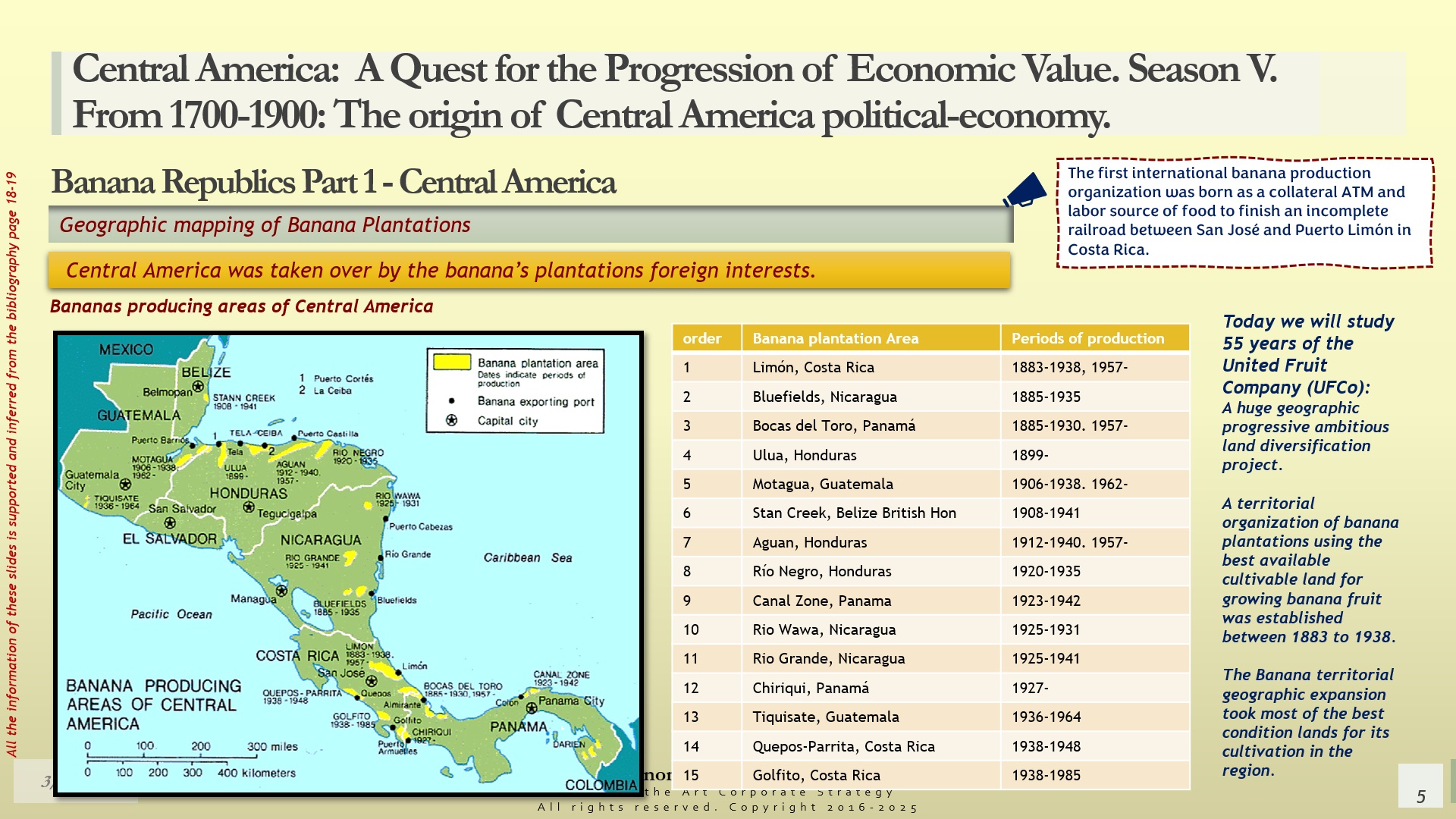
Geographic mapping of Banana Plantations in Central America (1870-1930s) and their relation to Britain.
Coincidentally or not, the banana plantations were initially plotted in the Atlantic region, particularly in the ancient coastal parts that were always under British supervision since the 17th century. See slide 5.
By the time of the nascent banana industry in Central America, Imperial Britain was in the hands of Queen Victoria Hannover-Mecklenburg Strelitz/Saxe Coburg Saalfield-Reuß (1819-1901). Britain’s economic interests were global, and Central America represented an important keystone. Why? Because Central America was geographically positioned as the solution for every empire that was engaged in shipping for trade. Central America was important for Britain as much as for the German Americans, the Netherlands, and France, not because of indigo, cochineal, or the recent coffee plantations, or the bananas, whose profits were not yet substantial on the horizon, but because of the dream to build and use an interoceanic Canal. The savings in time for the shipping of goods by crossing from the Atlantic to the Pacific Oceans, or the other way around, were a priority for Britain, which held a prominent position in terms of maritime power of the day. By the 1870s, Britain exercised indirect de facto control of most of the Atlantic Caribbean coast of the region.
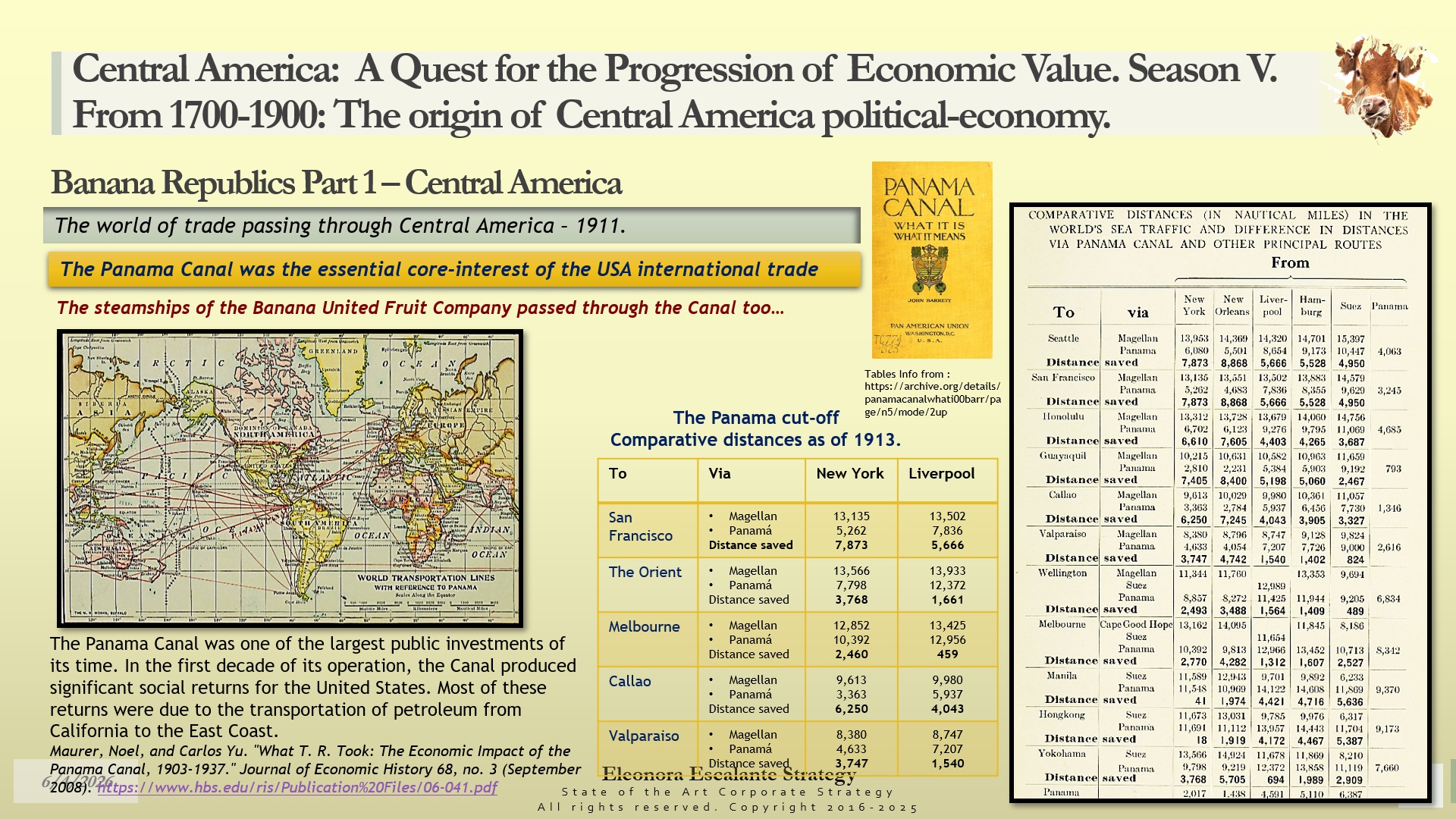
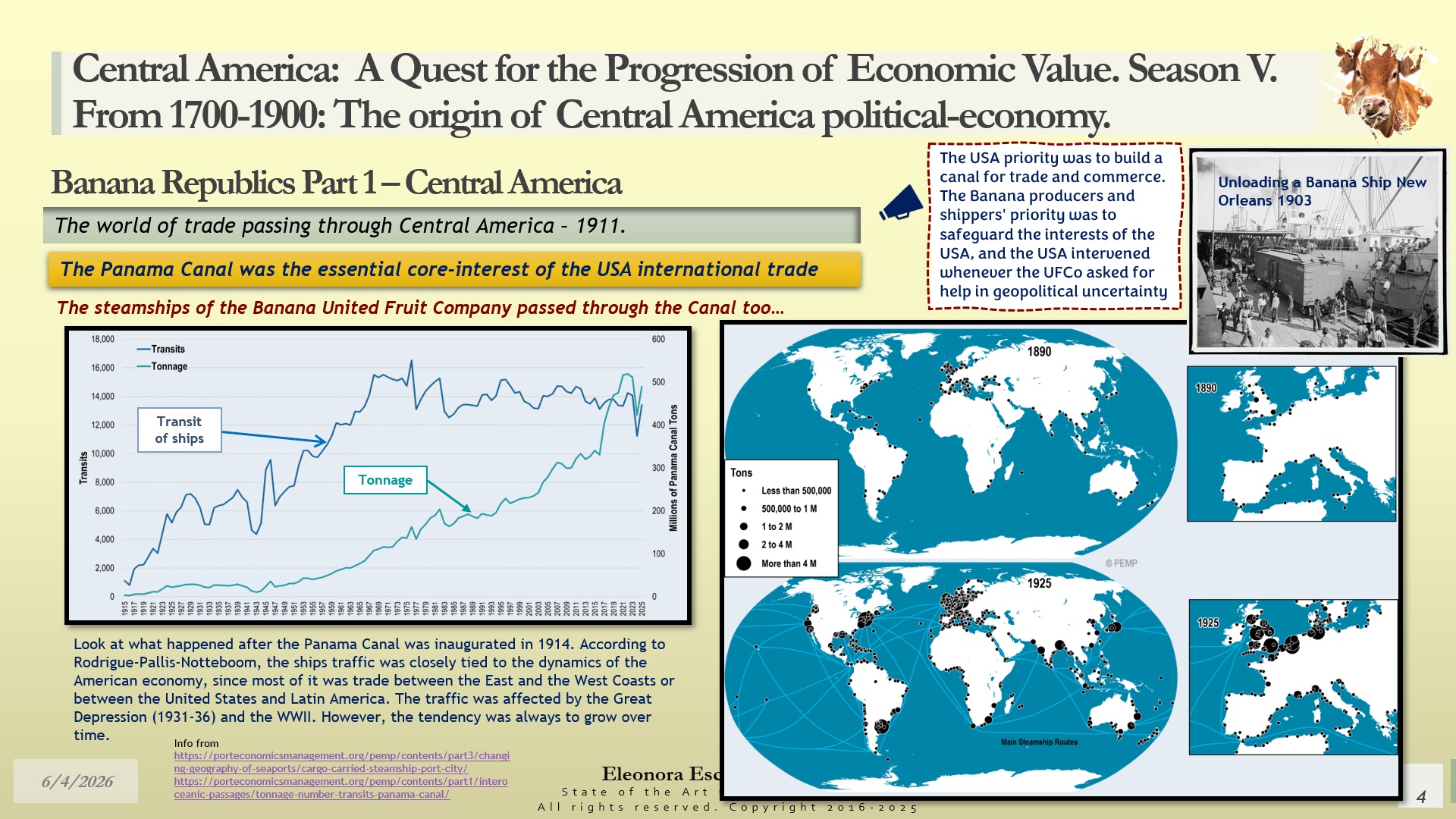
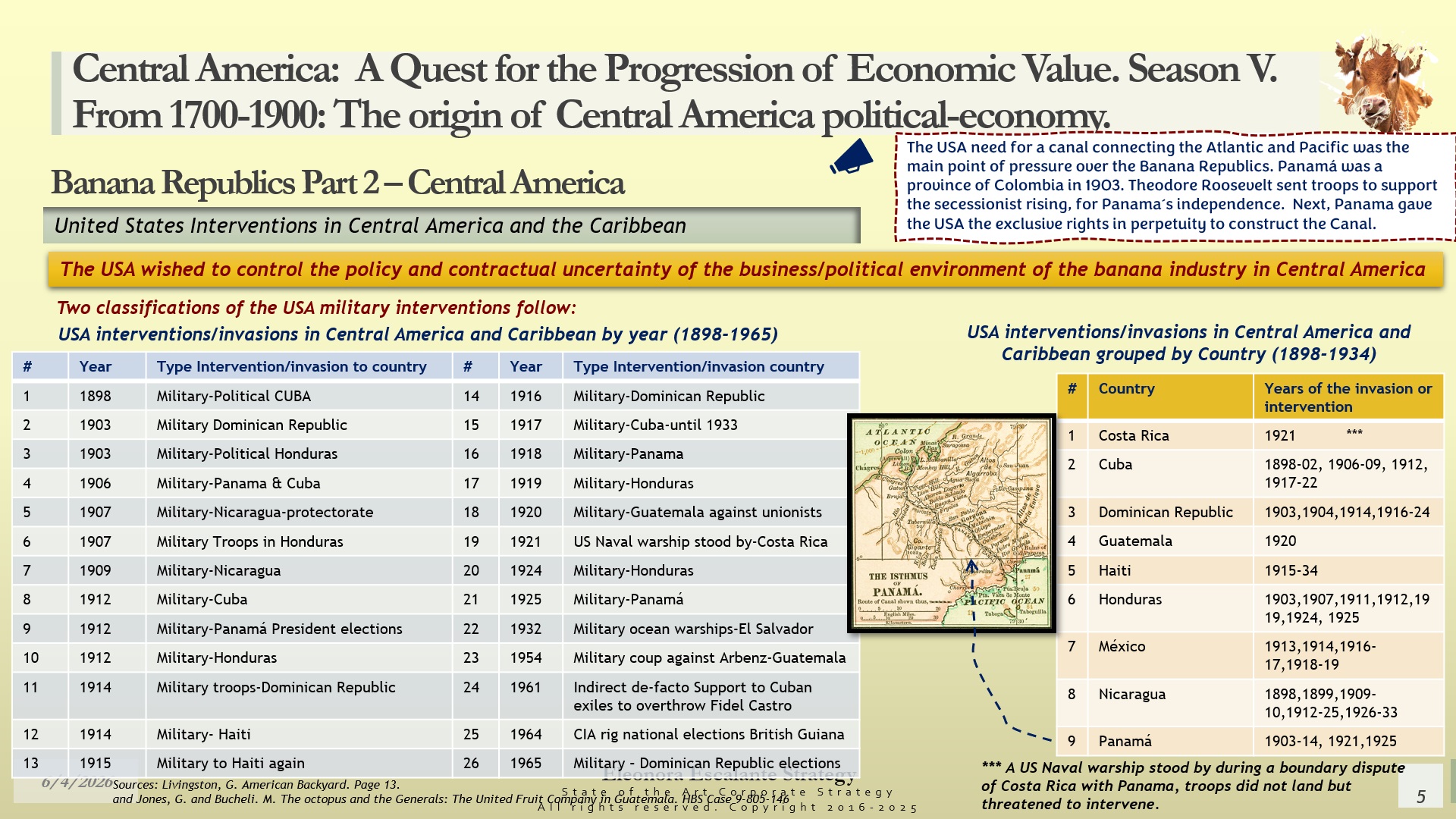
Another valuable piece of information: From 1849, Britain and the USA shouldered their respective ambitions and political maneuvers to win the contest to build a canal. Several options were studied between 1850 and 1900 (more than 30 alternatives). The USA favored the Nicaraguan Trans-Isthmian Route, following the traditional passage of Cornelius Vanderbilt. However, the French emerged with the first pioneer card when Ferdinand de Lesseps tried to build it with the Compagnie Universelle du Canal Interocéanique (1881-89). This initiative ended in disaster, and finally, the USA President Theodore Roosevelt’s military intervened to detach Panama from Colombia, and negotiated the construction of the Canal de Panamá between 1903 and 1914. See the impact of the Canal on global trade (slides 3 and 4 of the additional supplementary package below).
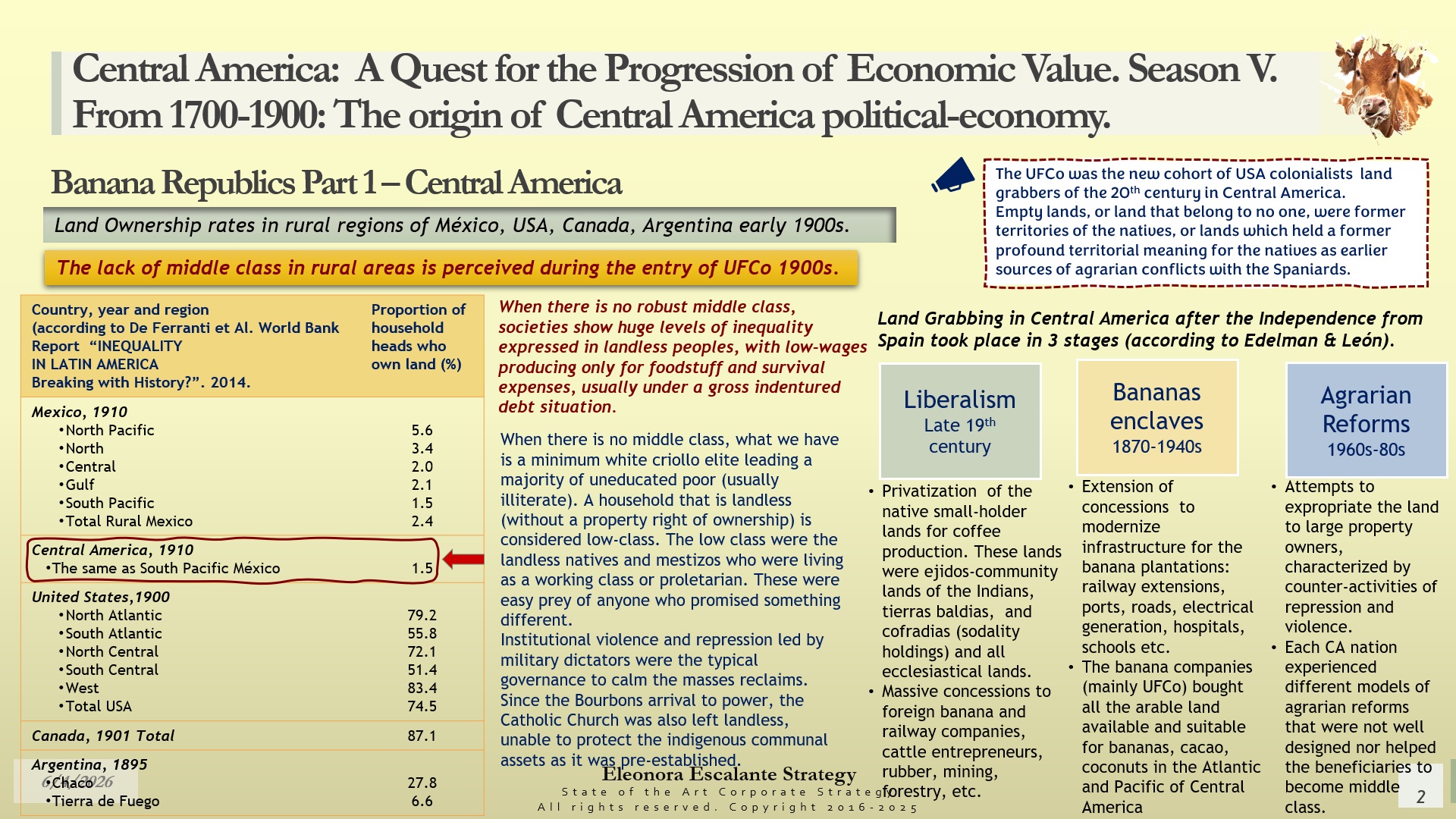
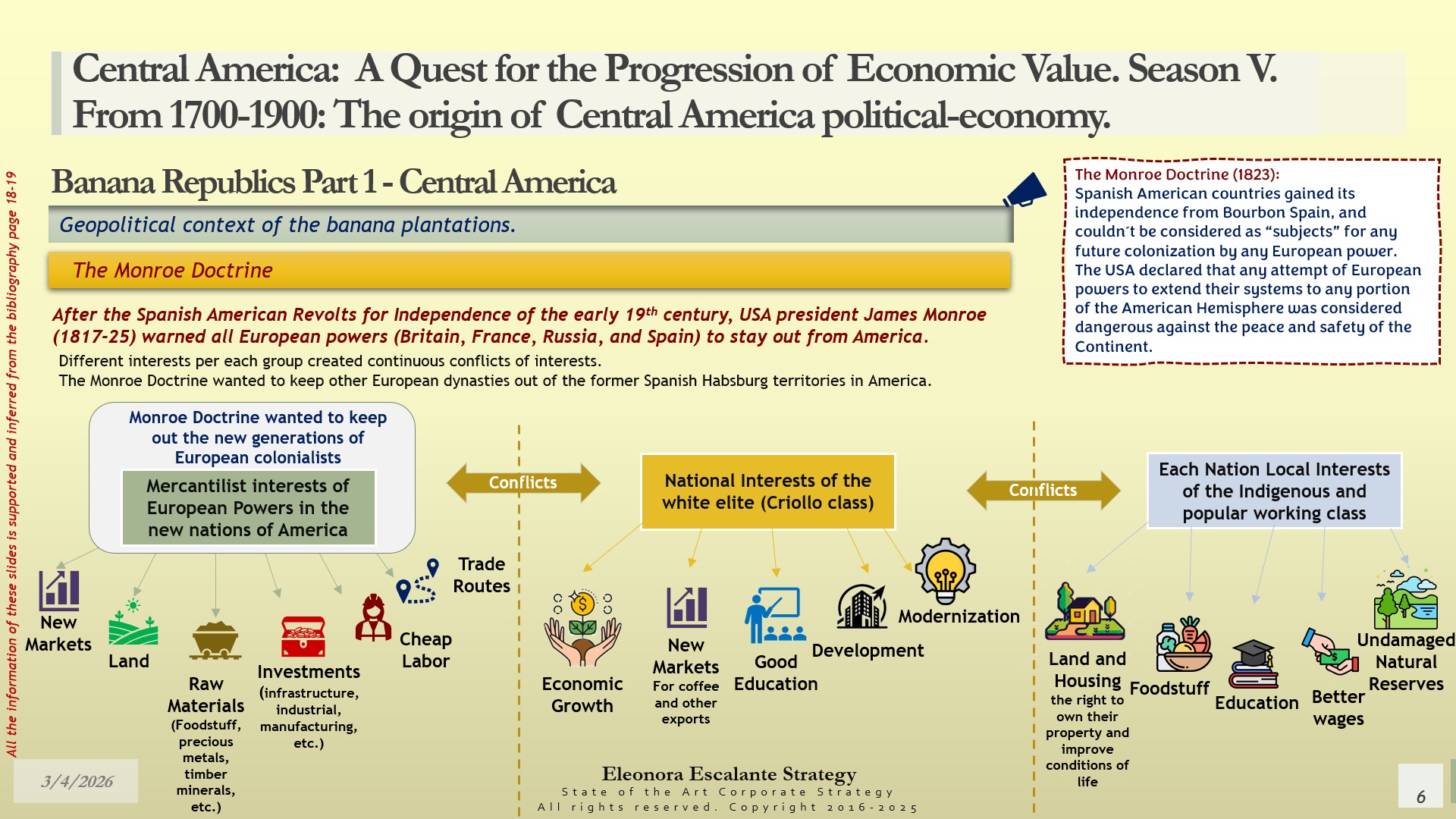
Geopolitical Context of the Banana Plantations. Slides 6 to 8.
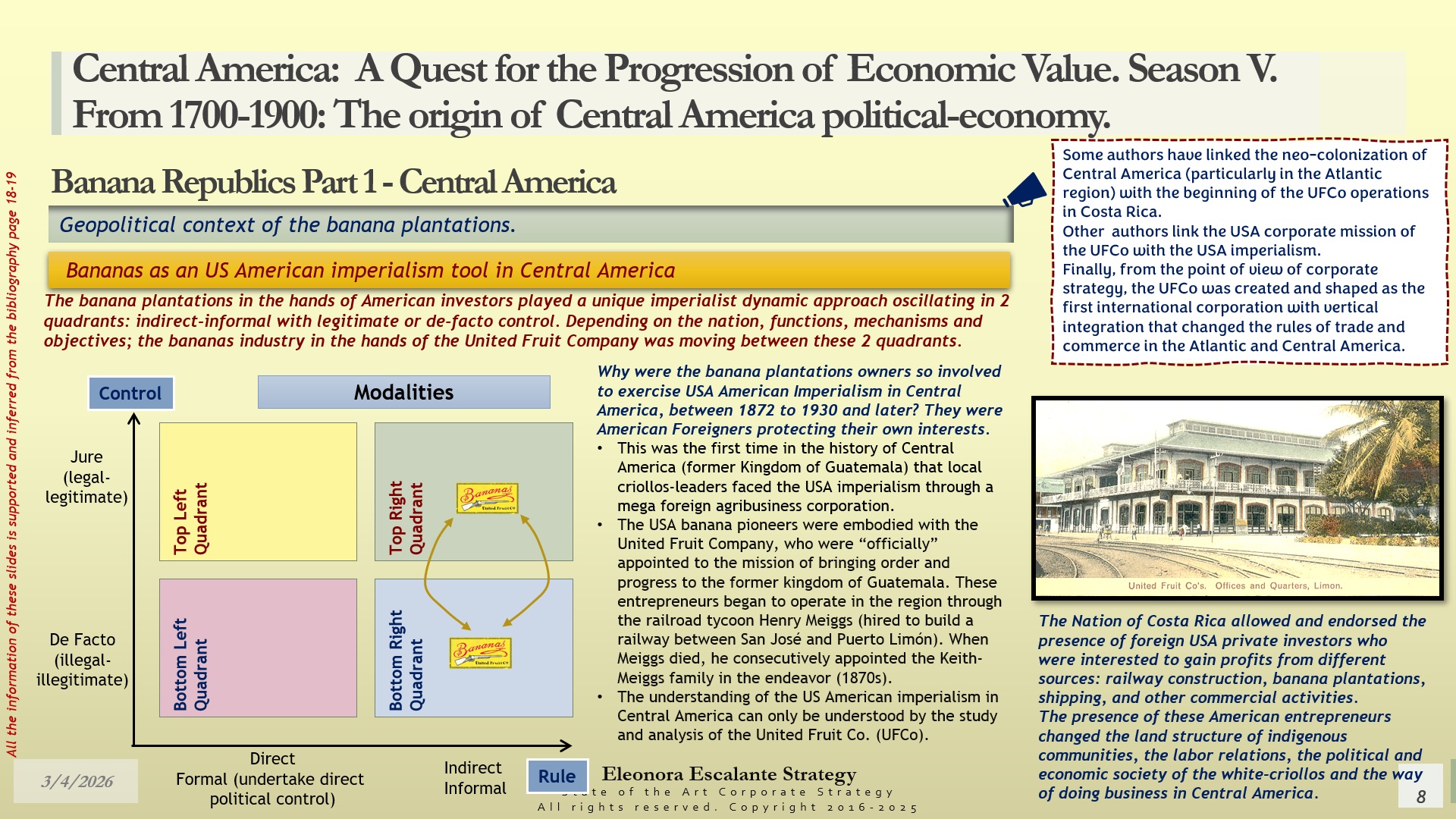
Three geopolitical scaffolding situations were occurring at the time of the banana plantations’ birth for international exports in Central America (1870s).
- The Monroe Doctrine: established by the USA President James Monroe (1817-25) to protect the independence of the Central American republics, under a USA de facto defensive shield. Slide 6.
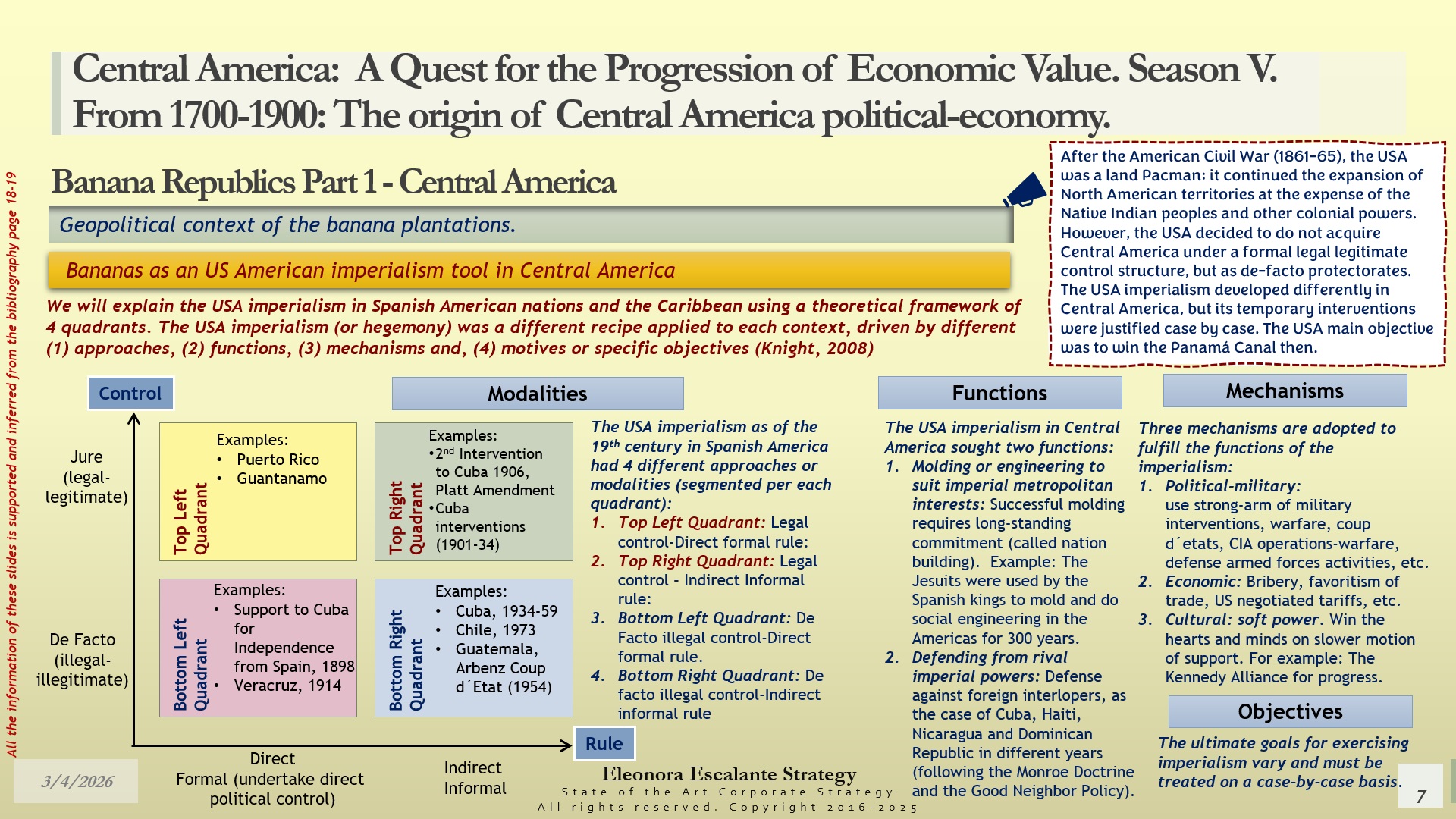
- American first direct imperialist businesses over the nations of the region: The banana plantations represented the largest ever foreign direct investments in the agrobusiness world of Latin America. It was the first time ever that an international corporation entered the region, promising prosperity, development, and modernization to the Criollo leading class. The first time ever that a corporation invested in railroads, infrastructure, telegraph, radio, ports, hospitals, schools, and other facilities, much required for their operations. The first time ever that land concessions were tied to productive projects, in which coordination represented the key factor for their success. The first time ever that USA imperialism was exercised through a commercial enterprise. The United Fruit Company (UFCo), established in 1899, was the first ever endeavor in which imperialism was put into effect for molding/social engineering and defending from any threat to the USA’s interests. The success of the UFCo over time adopted three functions of American imperialism in each of the nations of its plantations: Political-military, economic, and cultural. And it was the first time ever that a multinational corporation was able to exercise its power and control using informal means and jure or de facto methods (see slide 8).
- Incipient Formation of the governance structure to oversee international MNCs in Central America. None of the governments of Central America was ready or prepared to manage a relation of an MNC such as UFCo. The institutional government existing ecosystem, or “business environment as it is currently called,” lacked certainty. It was turbulent and unstable at the social, economic, and political levels. It was unregulated, with gigantic empty legal frameworks of enforcement in policies and contracts. The nation-building process of each Central American nation was in the cradle stage, and what is worse, there was no consensus about how to organize it better or strengthen it either. Big businesses like UFCo or its main quasi-competitor, Standard Fruit & Steamship Company, found in Central America the perfect place to do whatever they wanted to do, using good or corrupt methods, given the deep institutional weaknesses of the governments of the Banana Republics during the 20th century. See slide 5 of the supplementary package added today.

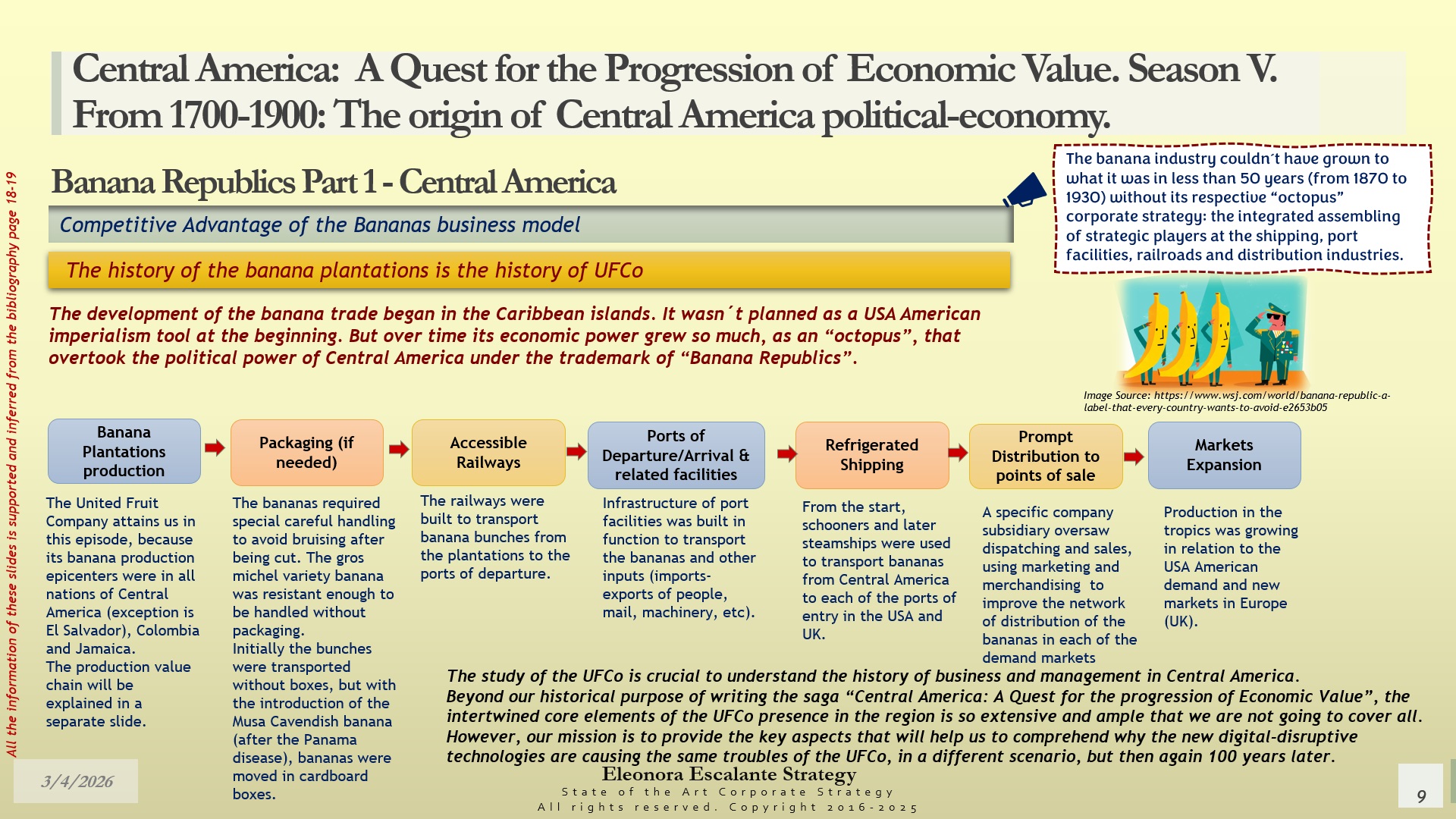
Competitive Advantage of the Bananas Business Model. Slide 9.
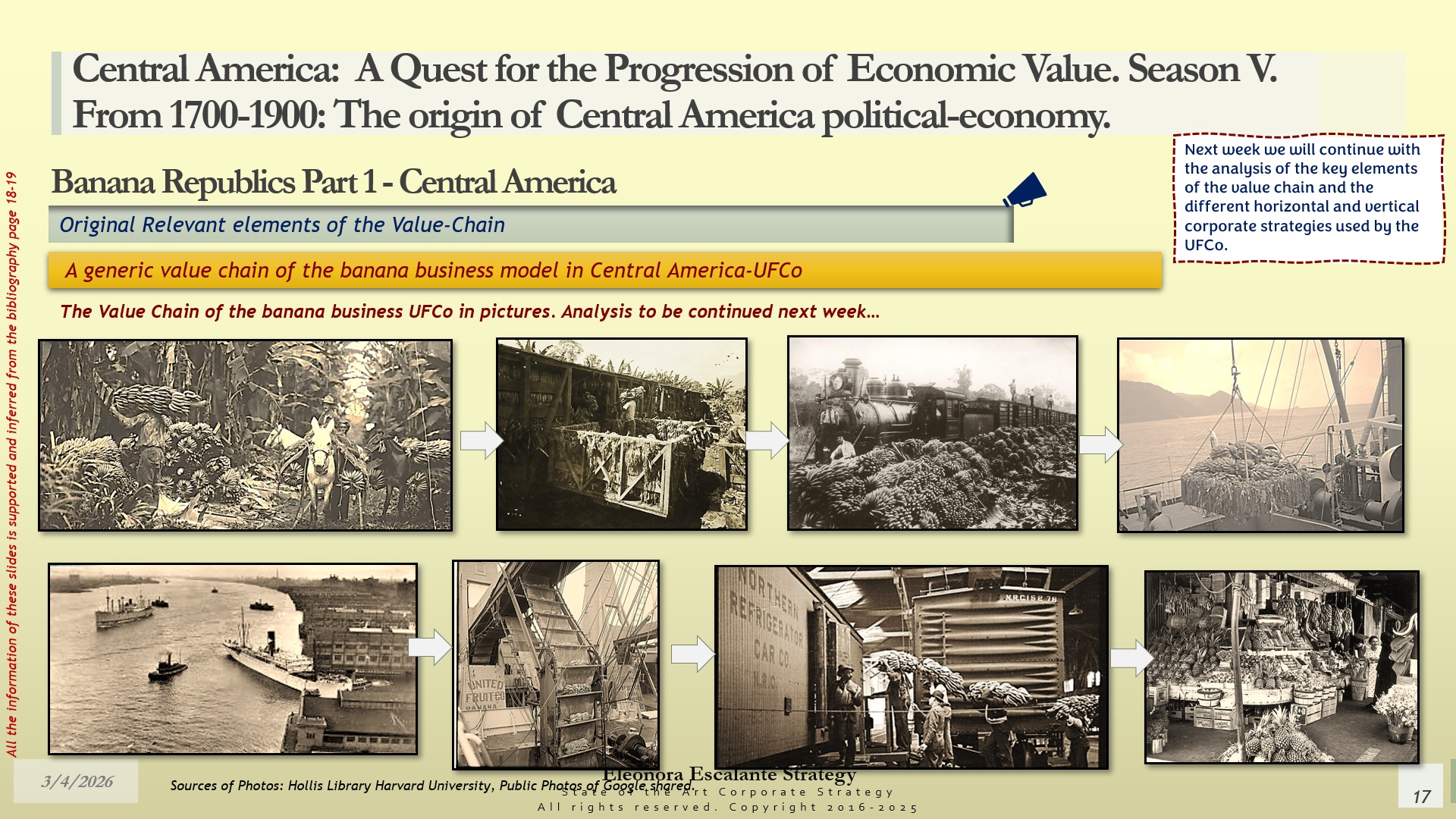
This business, in the hands of the UFCo, is the history of the banana industry. Even if there were competitors around it, the UFCo played the role of the leading bully, the pioneer on how to sell bananas (an extremely perishable foodstuff) under a just-in-time production and shipping, 70 years before the Japanese Toyota embraced it. The action of being the first one in the world to produce bananas and ship them in less than 15 days to North American and European Markets was not a piece of cake during the first decade of the 20th century. But Lorenzo D. Baker and Minor Keith joined forces to accomplish it without the Internet or today´s social media. And the UFCo was profitable. What was their competitive advantage? Being the first pioneer in weak and risky governance societies. A second key factor was the organization of the supply value chain in such a way that all the main activities of the company (operational, functional, and supporting) were fully vertically integrated. Moreover, the upstream, midstream, and downstream business strategies were fully controlled by the firm, from the clearing of the land before the planting, transporting the bunches by train, shipping, up to the delivery through different retail channels in the USA or the UK. We will explain this section in detail next week. See slide 9 to explore the generic value chain. For the UFCo owners, it seems that getting money was never an issue. Initially, they got directly involved and evaluated the business model with British Jamaican bananas, so the founders knew all the details and risks as if reading the Bible. Next, when they knew all the troubles that took to export the bananas, what they did was to cut or nullify every single operational, financial, legal, marketing, shipping, and distribution risk. They clearly defined solutions to every single problem, minimizing the probability of failure throughout all the components of the value chain. The UFCo founders used everything they could to reduce, mitigate, or eliminate the formation of those risks. Their competitive advantage was pivotal to the American foreign allure that linked them with exceptional political relations with the White House and many of its agencies. The UFCo power was embedded in their quest for excellence in every single stage of the value chain, using all the mechanisms available to grow. For Central Americans (at the top and at the bottom working class), watching a MNC operating in their land as an “octopus” was not a astonishment (they were used to handle the colonists from Spain or Britain): what represented a surprise was the scale of the obsessive endeavor, and the ruthless hardness or insensibility to the local host country needs, when reaching the highest economic results. The image of UFCo jeopardizing anything that could represent a blockage to the firm’s Just-in-Time Strategy has not disappeared in Central America yet.
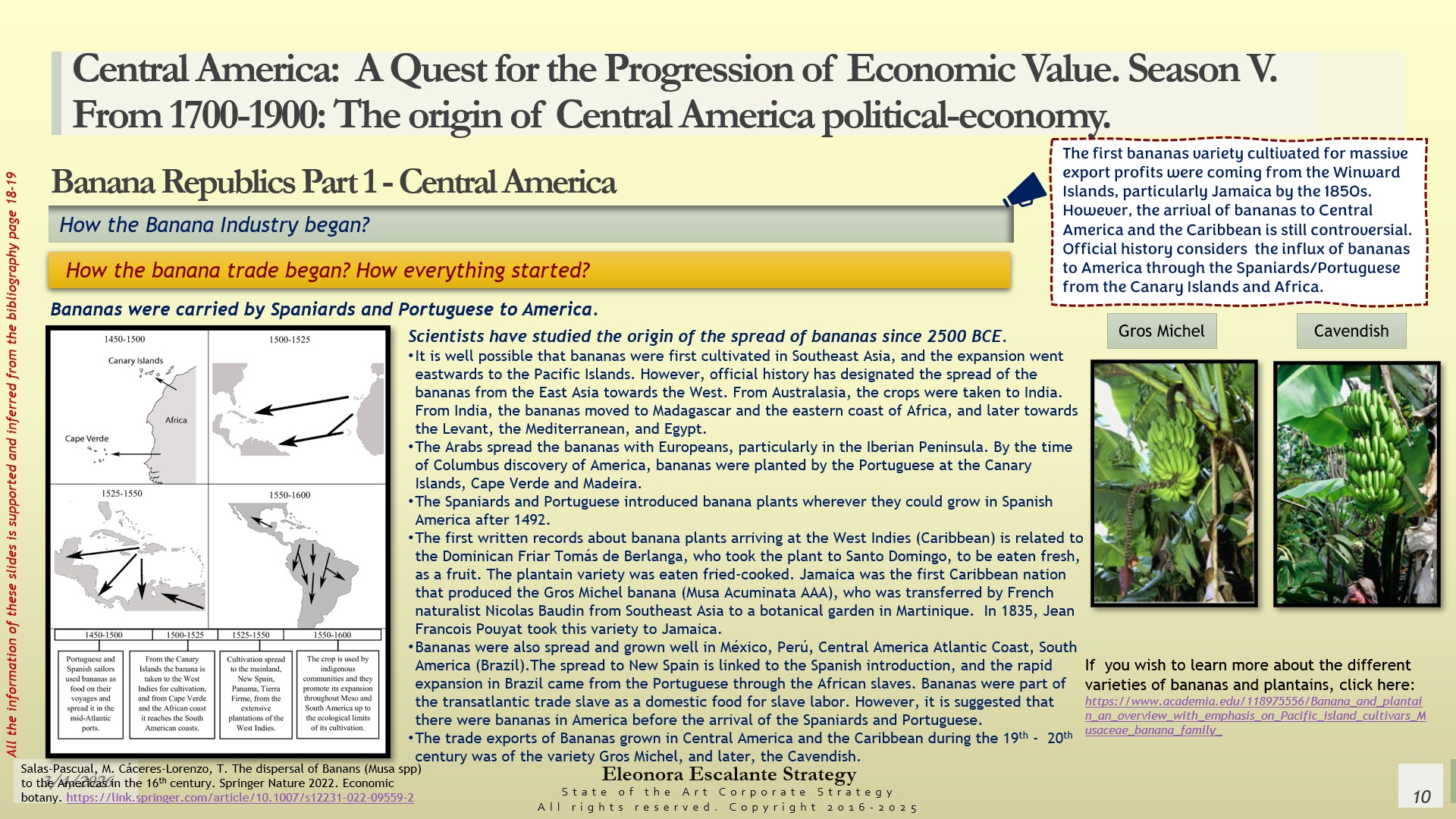
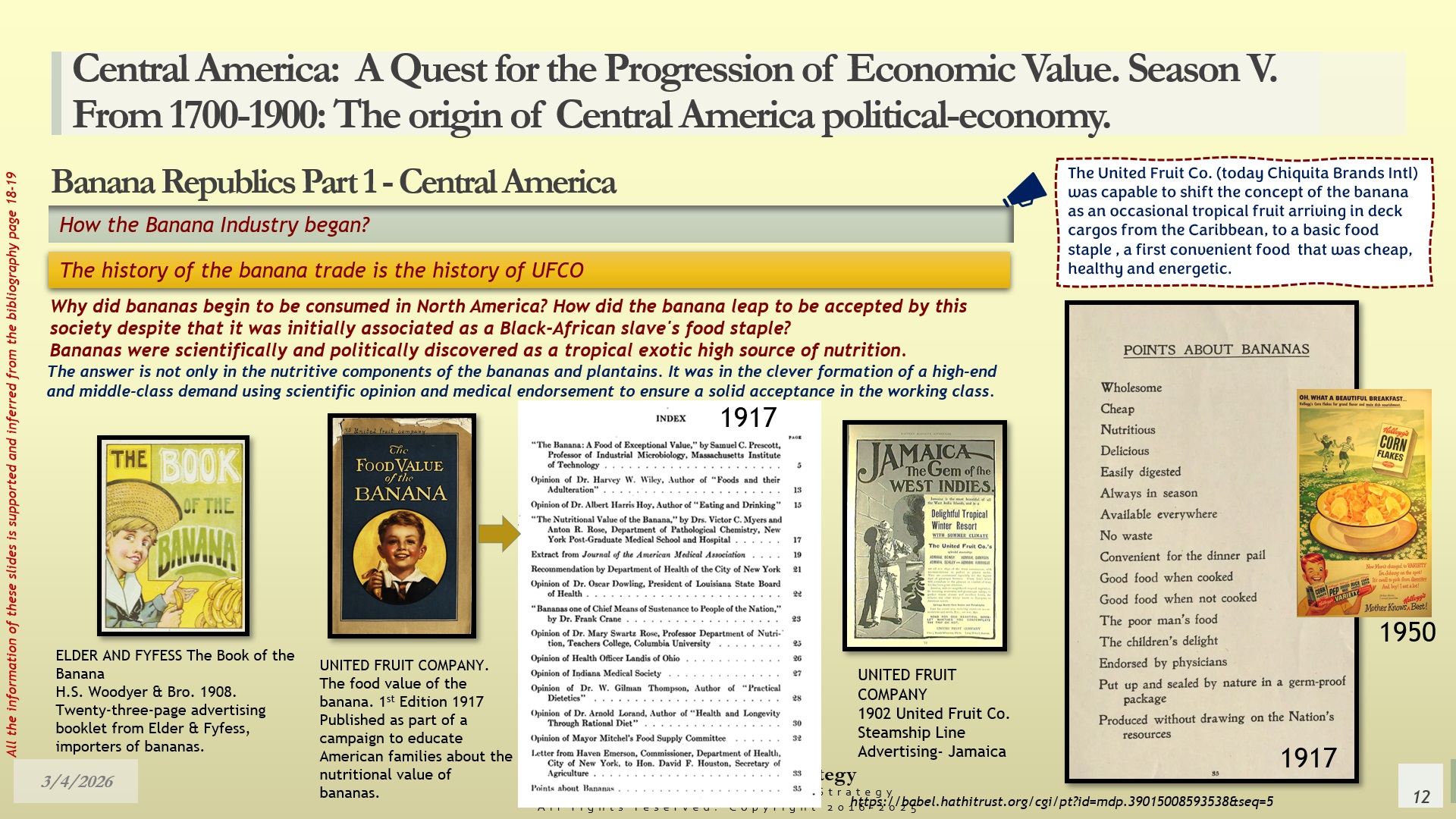
How did the Banana Industry begin? Slides 10 to 12.
There is a considerable amount of information regarding the banana republic industry online. We have selected the main relevant pieces that would help us to guide you in this masterclass. Let´s explore this section in detail.
There is a controversial value judgment in relation to how the banana plants traveled to Central America. We found academic papers that defend the bananas and plantains as coming from Asia, passing through India, moving to Europe and Africa, and then being transported by the Spaniards and Portuguese during the 16th century. There is another version that explains the bananas and plantains as a luxury foodstuff element that was nutritious enough to be part of the diet of the Inca and Aztec emperors. Predominantly, the first version looks like the most acceptable. Whatever the truth, it is certain that bananas and plantains (different varieties) existed and were grown during the time of the Transatlantic slave trade. African slaves kept banana plants in their dwellings, and their nutritive components were highly appreciated as a source of energy. This storyline was assessed by the white lords (despite their initial negative racial perception of the banana), and its natural deliciousness ended the discrimination against it as time passed by. British Jamaica began exporting bananas to the USA on a minor scale throughout the 19th century. This is the moment in time, in which a sea Captain Lorenzo D. Baker (a shipper from Cape Cod, Massachusetts), evaluated the waters of the business profitability, introducing the Gros Michel variety then.
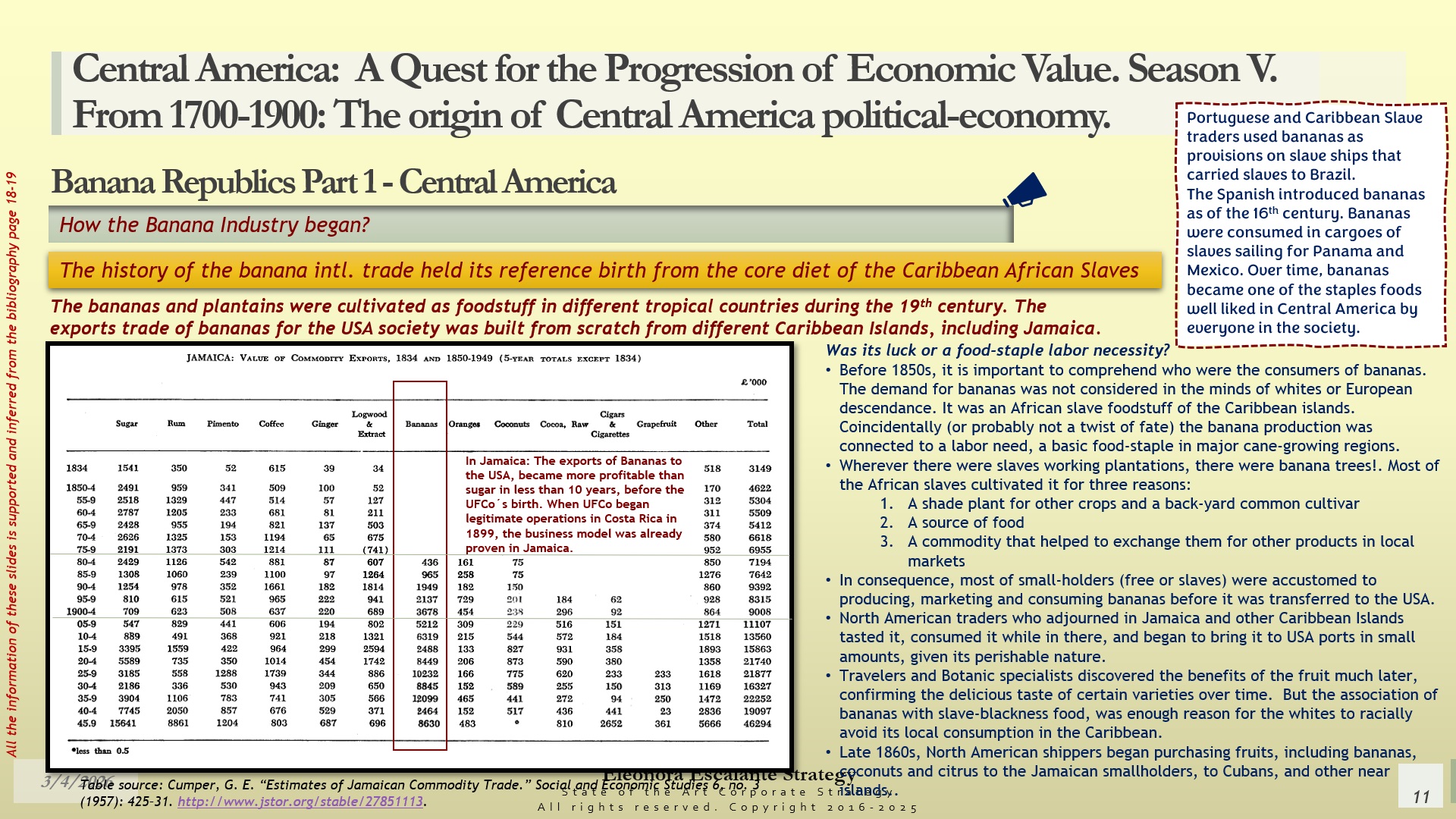
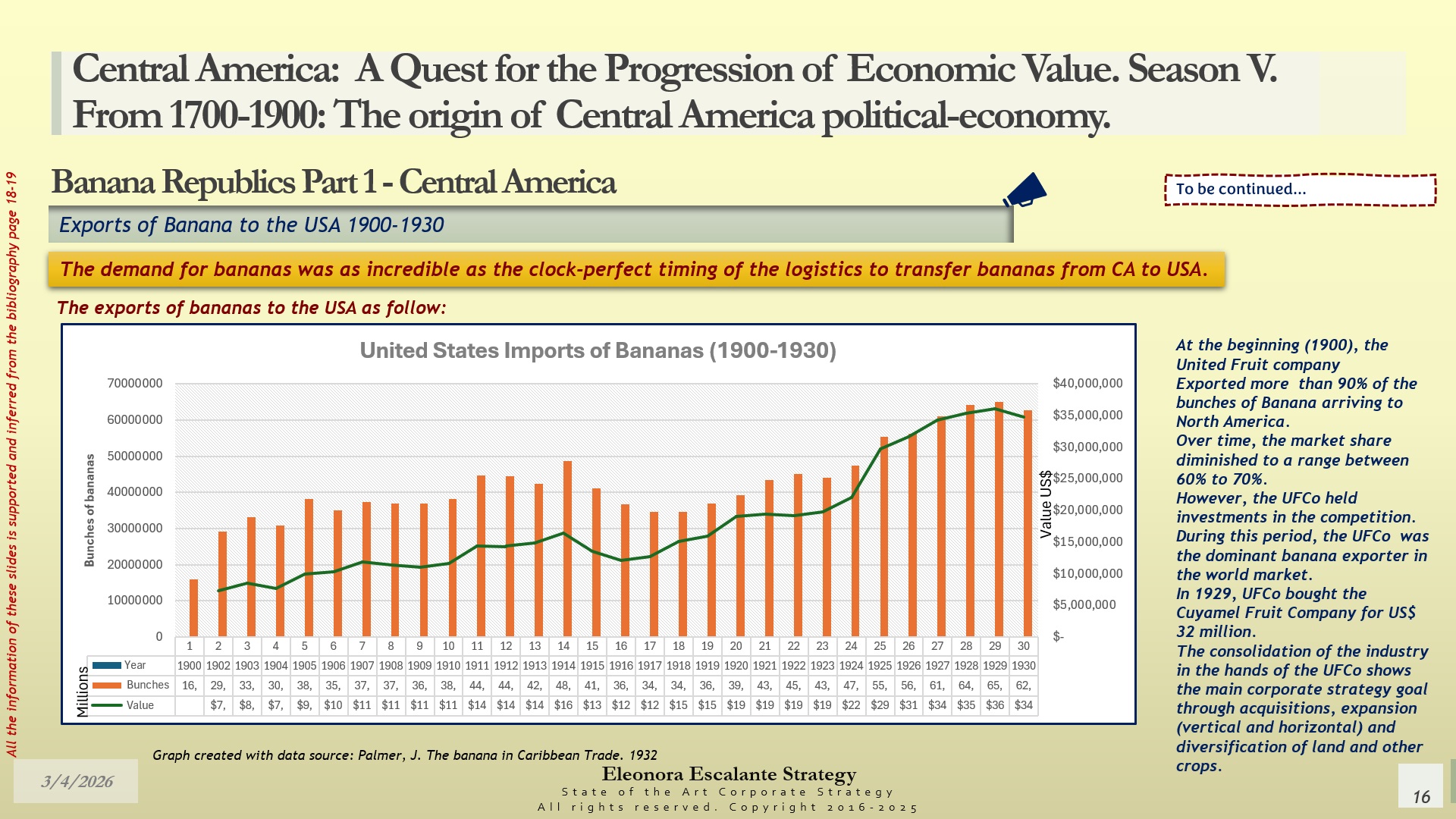
Slide 11 shows how the revenues from banana flourished after 1880, and this is mainly explained by the presence of Baker in Jamaica, who then established the Boston Fruit Company with his manager, Andrew Preston, in 1885. The reason bananas attracted several American firms to enter the industry was their profitability. It was easier to sell bananas than to go through the pain of harvesting cane, grinding it, and then refining it. In consequence, the banana plantations were selected without a doubt. Despite their perishable nature, it was easier than sugar. The banana plants were thriving in the region, and most of the labor was moved from British Jamaica then.
Finally, the engagement of the American banana importers was relying on modern administrative tools, machinery at the point of entry in the USA, and marketing methods, which helped to expand the acceptance of the product to all levels of American Society. Probably no American knew then that their bananas were carried by people who were miserably treated in the harvesting phase. See slide 12.
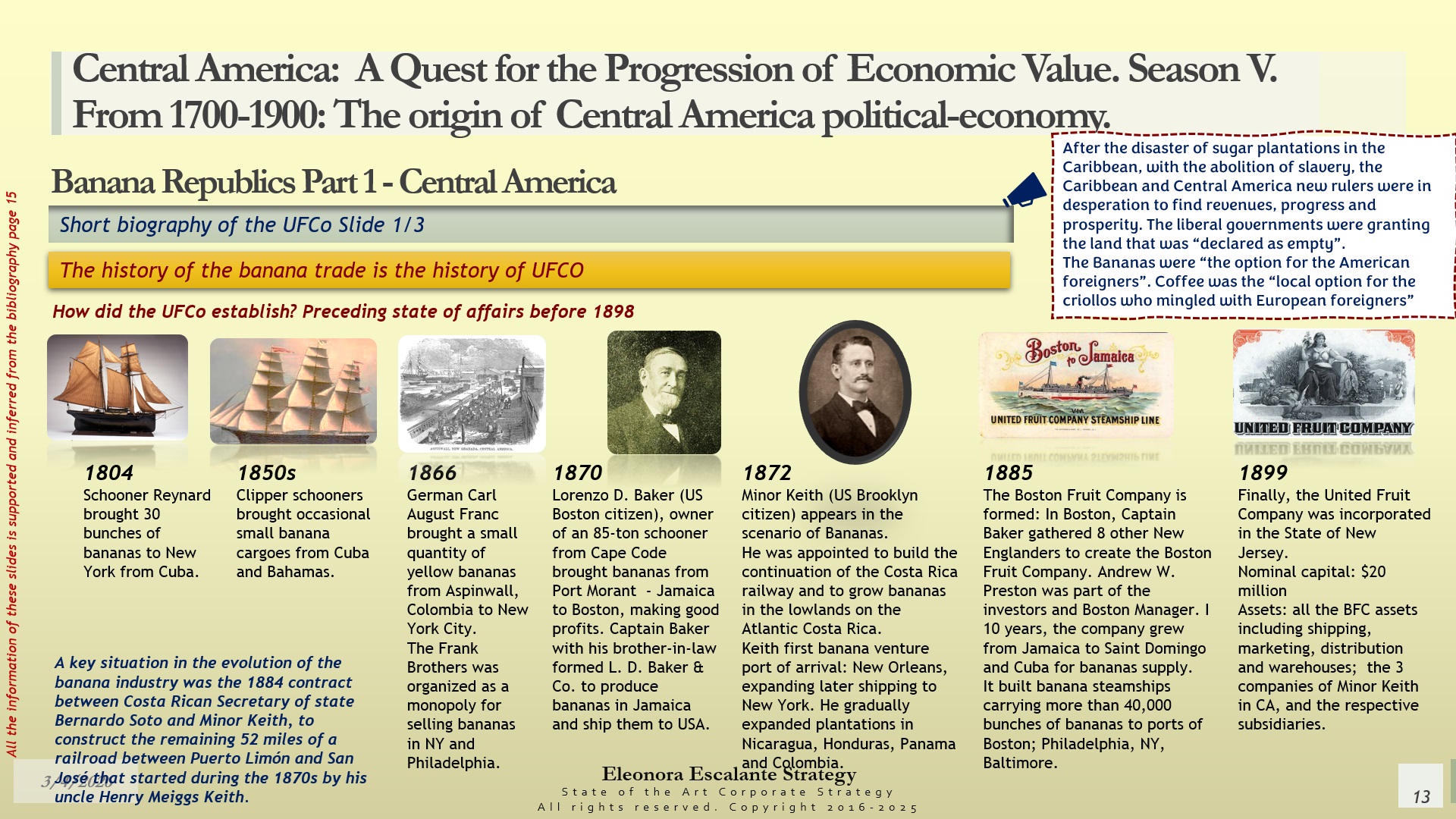
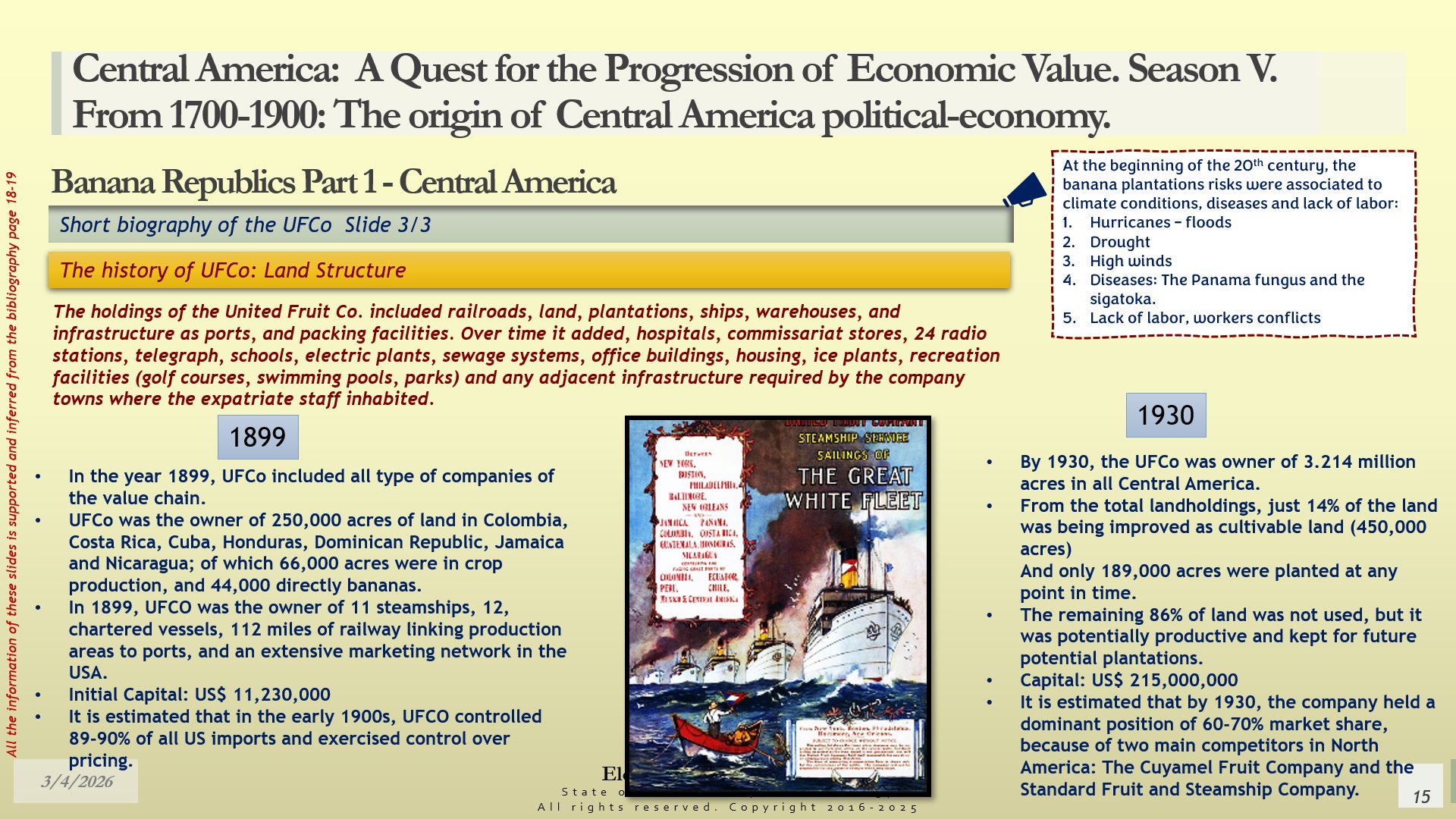
Short Biography of the UFCo. Slides 13 to 15
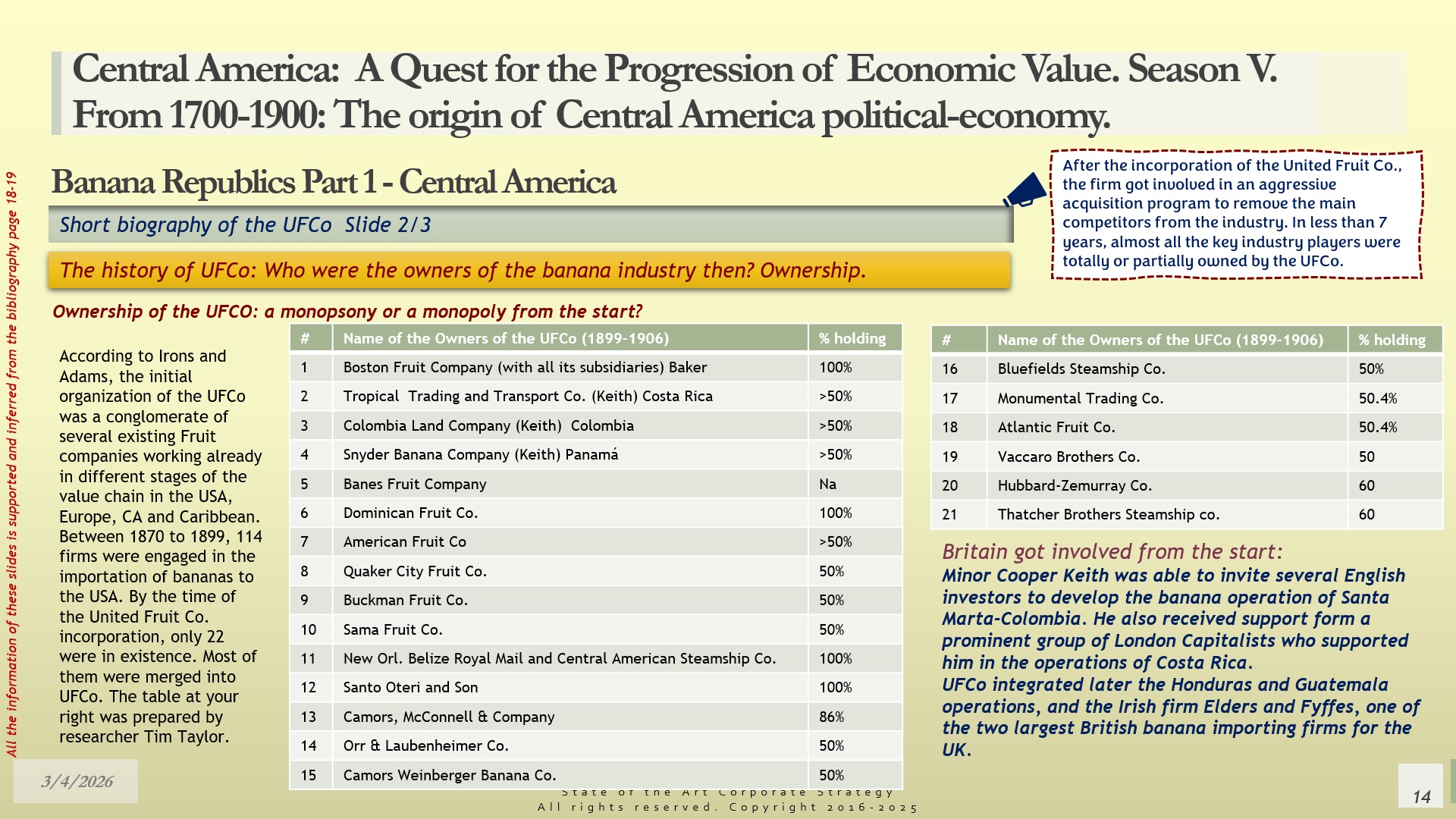
We have summarized the preceding events to the formation of the United Fruit Company in slide 13. By 1899, the Banana kingdom was incorporated in New Jersey, and although many authors defend its entrance into the fruit export markets as an oligopoly, the reality is that from the start, the UFCo was a monopoly. More than 21 companies invested as principal shareholders of the firm, and UFCo was partially or totally an owner of all of them. From the point of view of the supply side, the UFCo was a monopoly, but it also held a significant monopsony look on the demand side, through a subsidiary called the Fruit Dispatch Company, which was the exclusive company that managed the marketing and distribution of the bananas in most of the American ports. An interesting observation: British citizens participated in the UFCo endeavor from the start. See slide 14.
Lastly, to avoid the risk of losing the perishable banana load during the shipping trajectory from Central America to the USA ports, the Great White Fleet was introduced. The investment in these new mega-sized vessels (most of them refrigerated) was not casual either. UFCo was capable of bearing the financing risk of granting the survival of bananas during the transportation stage, with the best-built alternative vessel in the world. The investors behind UFCo weren´t fruit sellers or middle-class greengrocers, but powerful representatives of the British and American society of that time. It is possible that the legal owners of the UFCo were also frontmen or figureheads of influential individuals (maybe even concealed members of a royal house) who moved the corporate decision-making by pulling the strings behind the current known amphitheater. Queen Victoria was the empress of the world then. When she passed, all her children and grandchildren were already married to other royal members of the main relevant dynasties of Europe (Denmark, Russia, Prussia, all relevant German kingdoms or duchies, Sweden, Greece, Spain, The Netherlands, Romania, France, Luxembourg, Norway, etc.). When the Russian Romanov family was assassinated by the Bolsheviks in 1918, Russian Empress Elizabeth Alexandra Feodorovna Hessen-Darmstadt, who was the granddaughter of Queen Victoria, and her 5 kids were martyred by the Russian Communism.
If all the royal families of Europe mourned the Romanov martyrium, and the UFCo was probably financed by some of these dynasties, now you can comprehend why philosophically the UFCo was against anything that seemed to be or was tagged under the communist ideology in Central America. There was a profound wound in all the European royal families as of 1918. We suggest that the Banana Republic’s “anti-communist” pattern was influenced by the leadership structure of the MNCs, such as UFCo. Our idea as a contribution to solve the puzzle of why things happened as it ocurred, must be validated by other scholars. We conceive, and perceive this could be the reason why the UFCo and other big international businesses preferred to support military dictators in Latin America, rather than to leave the door open to new radical communist ideas that took the life of the Romanovs.
In our next episode, we will continue exploring the corporate strategy of the UFCo, analyzing the vertical and horizontal growth. We will also study the stability and retrenchment strategies utilized by the company, and how UFCo exercised American imperialism in each of the nations of Central America.
To be continued…
Closing Words.
The Central American Republics were placed under the umbrella of foreign North American Investors, who sought to become rich by adopting the first business model of banana plantations after the abolition of slavery in the tropics. Central America was trying to build a value proposition about how to participate under neocolonial terms in the first stage of the international pseudo-capitalism. Planting bananas played an essential role during the first half of the 20th century.
Announcement.
Next week, we will continue with the analytical section of this chapter: Banana plantations Part II.
Musical Section.
During our closing bonus season V, we will return to the symphonic, philharmonic, or chamber orchestra compositions. Today, we have selected the Iberoamerican Youth Orchestra. This is the second part of a Concert performed in 2019, in México. The Centro Cultural Mexiquense Bicentenario (CCMB) hosted the Orquesta Centroamericana y del Caribe (OJCA) during the Dual Year Germany-México for the occasion of the 50-year Goethe Institute celebration.
Thank you for reading http://www.eleonoraescalantestrategy.com. It is a privilege to learn. Blessings.

Sources of reference and Bibliography utilized today. All are listed in the slide document. Additional material will be added when we upload the strategic reflections.
Disclaimer: Eleonora Escalante paints Illustrations in Watercolor. Other types of illustrations or videos (which are not mine) are used for educational purposes ONLY. All are used as Illustrative and non-commercial images. Utilized only informatively for the public good. Nevertheless, most of this blog’s pictures, images, and videos are not mine. Unless otherwise stated, I do not own any lovely photos or images.
 Eleonora Escalante Strategy Strategic Reflections Think Tank