
Cacao and Coffee 101. Success Strategies for Small Farm Holders. Episode 2. A new philosophy beyond the circular economy.
Dear fantastic readers and students:
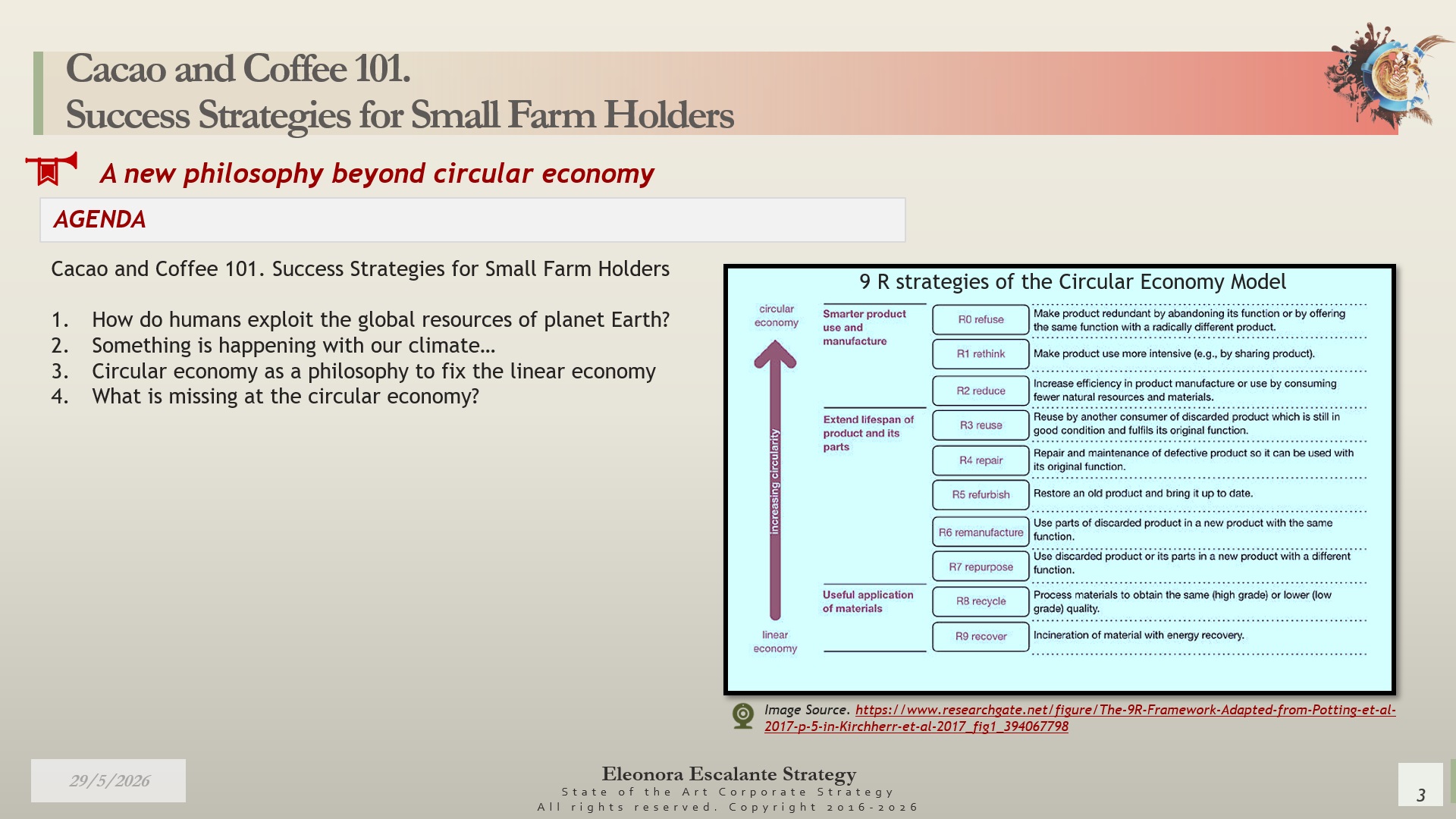
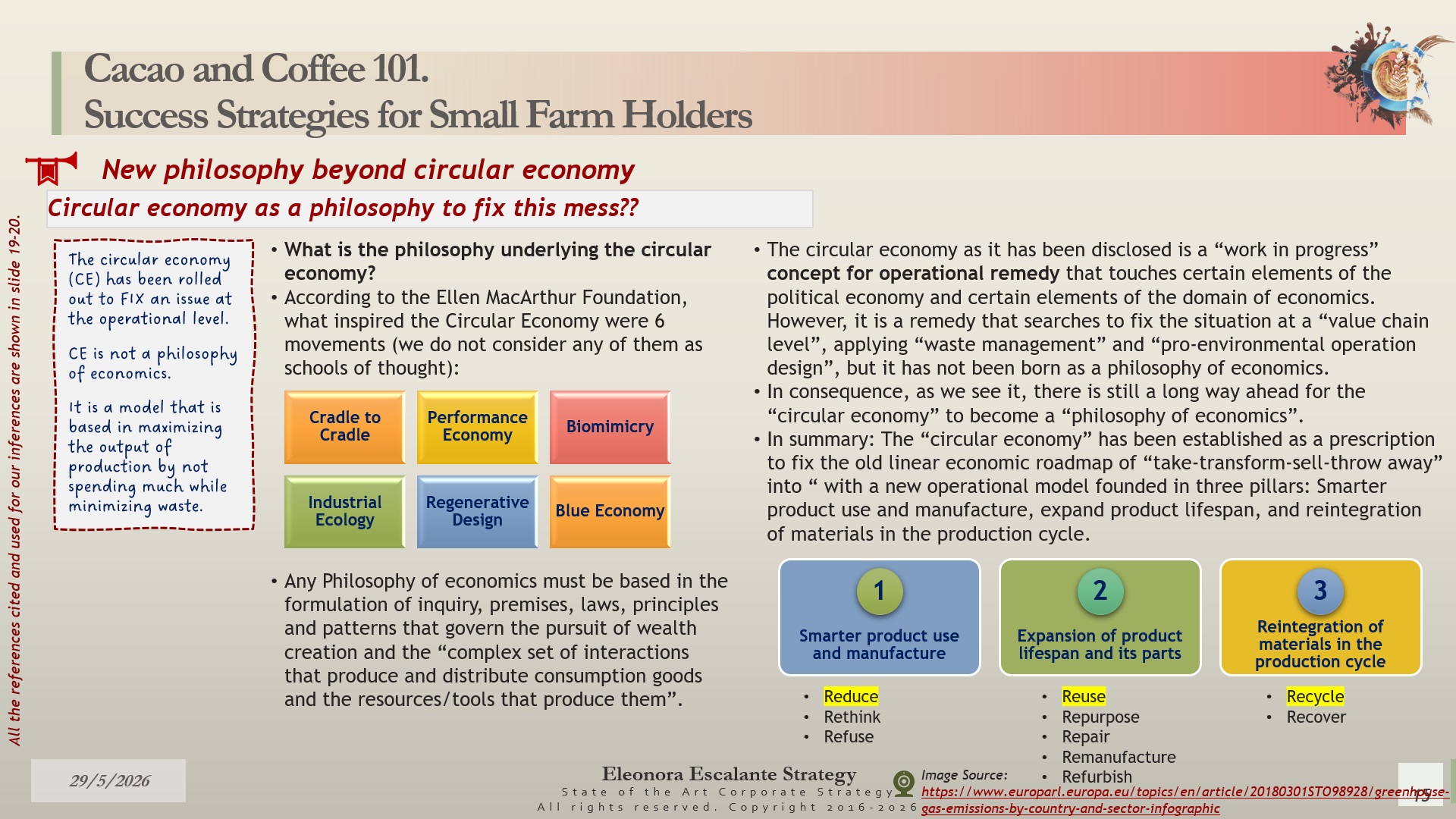
Our episode today is a masterclass that aims to help you expand your acumen regarding the circular economy “model”. The establishment of the “circular economy” elements has been a miracle of gigantic proportions since the year 2000. The Godsend happened through the United Nations Sustainable Development Goals. For us, it was a marvelous phenomenon to observe private corporations trying to incorporate elements of the circular economy through the SDGs into their corporate strategy. However, to include them as a marketing tool is easy. The complexity emerges when the processes of the manufacturing and the supply value chain need to be modified to comply with performance indicators. And it is more complicated when there are entangled supply value chains between different corporations in locations where the circular economy doesn’t have government policies and enforcement by the law. The situation is even more convoluted when business owners realize that they must invest (sometimes heavily) in changing their manufacturing plants, equipment, quality control standards, and radically stop harming the environment. Additionally, the circular economy requires continuous investments to educate society and the companies´ staff at all levels to change our past business philosophy at its core. Otherwise, at the end of each year, when comparing the circular economy benefits vs costs using a short-term vision, if the result is that profits are draining, the first one to blame is the poor 3R “reuse-reuse-recycle”, which nowadays has shifted to 9R “reduce-rethink-refuse-reuse-repurpose-repair-remanufacture-refurbish-recycle, and recover”.
Our world is in a deep frying state, living in unusual temperatures. Our content for today is our effort to contribute with new elements that can help all the business owners on earth (not just the cacao and coffee smallholders) to take the circular economy principles, the good academic and practitioner works, and link them into a philosophy accepted by everyone. There is an urgent context about the “circular economy” that needs to gain momentum forever, not as a trend or as a fashionable loop to care for the forest trees. The situation is more complicated than that.
Our world is in a deep frying status in high temperatures, and it is not improving year over year. With the global digital ubiquity, energy is required more than ever, and GHG emissions are rising exponentially. It is important to think about what needs to be done for the shift from the circular economy model as a remedy, to become a philosophy of science, and prioritize what industries, nations, and wealthy individuals will be required to repair the trouble at its core. Climate change (global warming) is a serious issue. So crucial that it will require all the main thinkers on earth to contribute to an adequate multidimensional solution, because it also touches how we are going to design our society in the future. At the end of the day, we pray that environmental ethics could blossom, and we can find a new moral philosophy beyond the fixing of all the damage that our ancestors have done since the first industrial revolution.
As usual, find the preparation material for your masterclass below. Print and read it. Take notes. Ask yourself questions. Follow the bibliography URLs for a better understanding. Feel free to discuss these topics with your family, colleagues, friends, and professors. We all learn when we share our ideas with others.
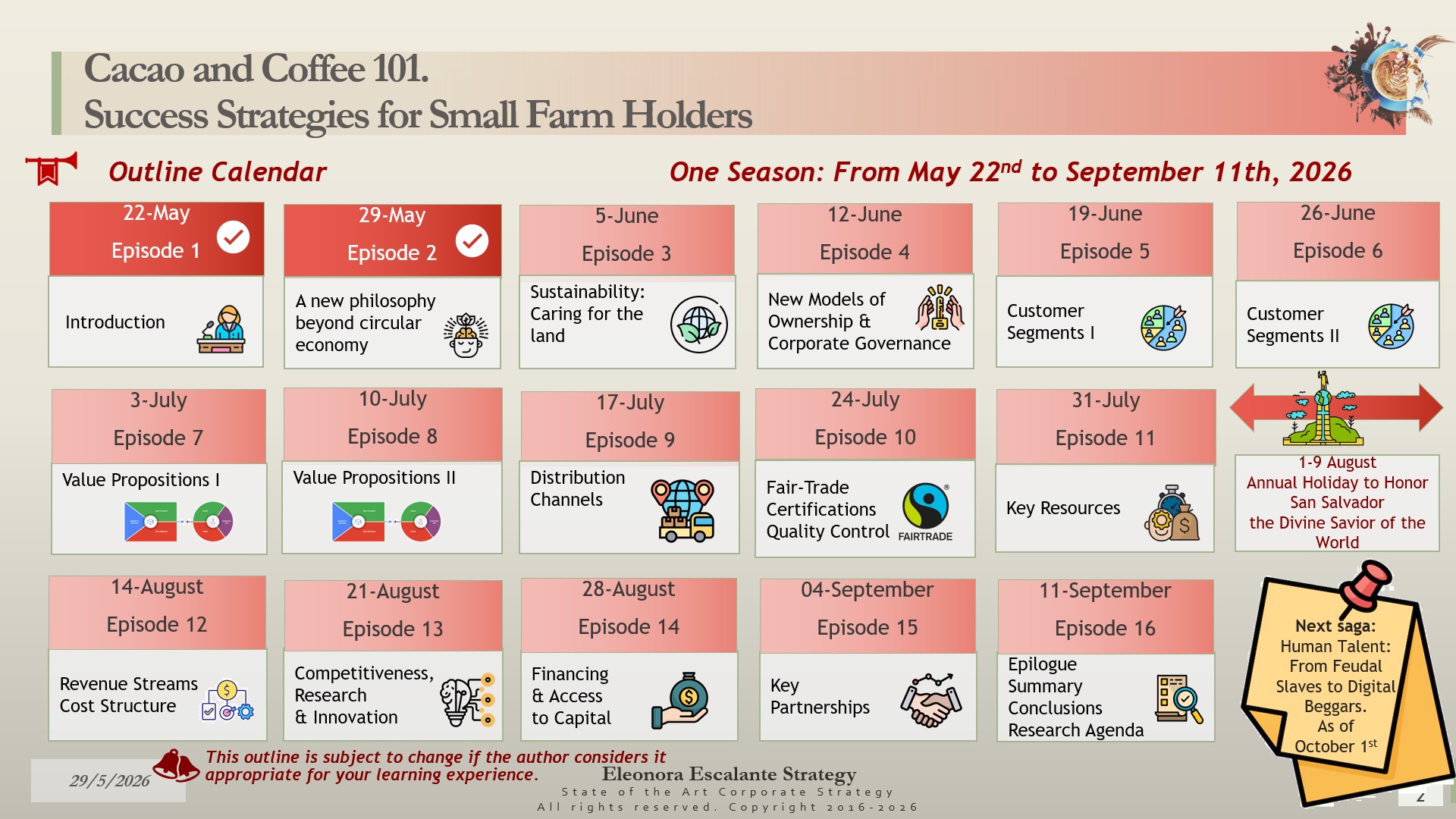
We kindly ask that you return next Monday, the 1st of June 2026, to review our strategic reflections on this chapter.
We encourage our readers to familiarize themselves with our Friday master class by reviewing the slides over the weekend. We expect you to create ideas that are or are not strategic reflections. Every Monday, we upload our strategic inferences below. These will be discussed in the next paragraph. Only then will you be able to compare your own reflections with our introspection. We always give our students a couple of days to prepare well before our final reflection.
Strategic reflections on this episode.
These will be in the section below on Monday, the 1st of June 2026.

Cacao and Coffee 101. Success Strategies for Small Farm Holders. Episode 2. Beyond the Circular economy. A New Philosophy.
How do humans exploit the global resources of planet Earth? Slides 4-6
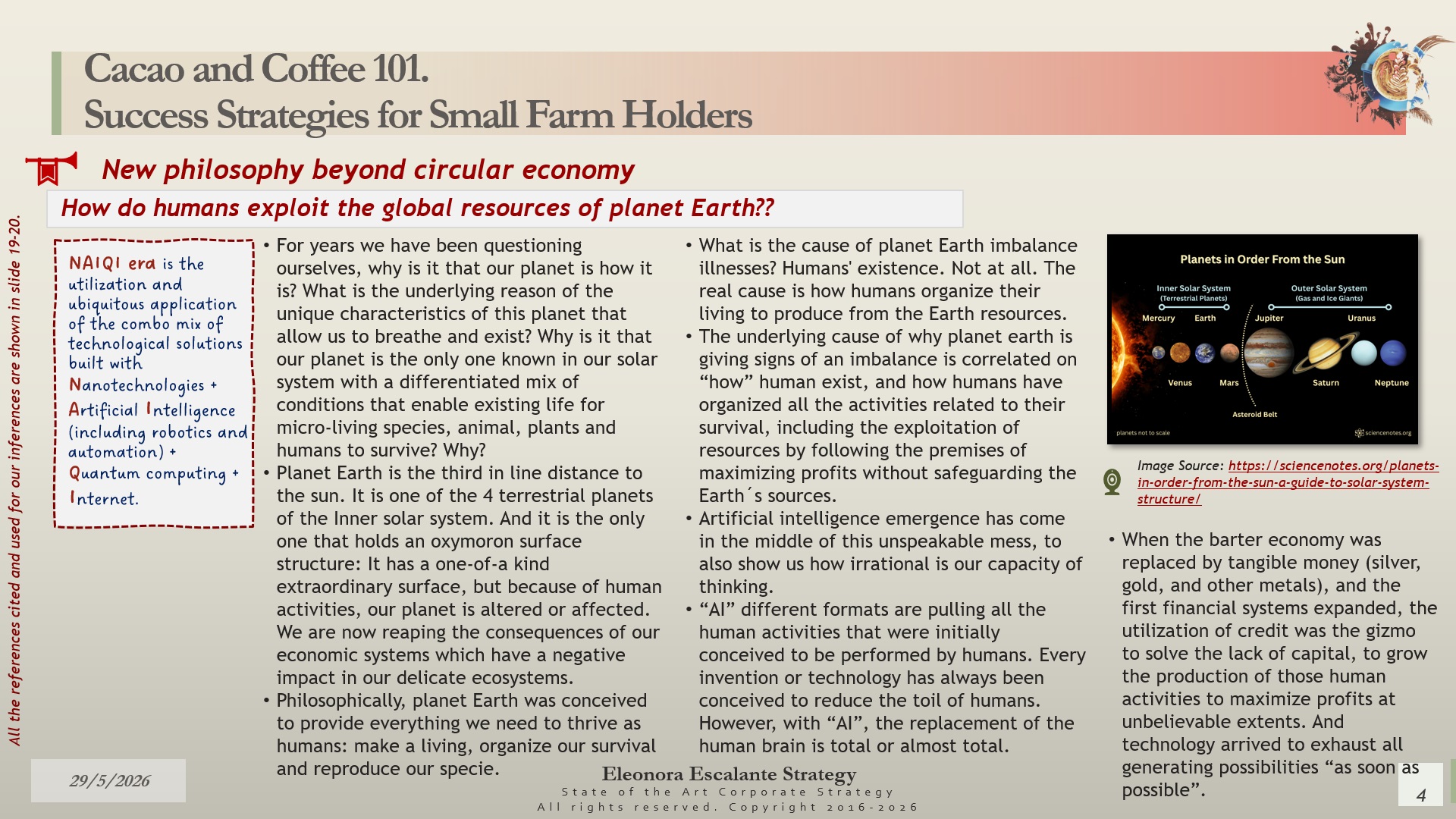
Answer. Not well. Irrationally and without caring for planet Earth. That is the reply. Historically, human beings have obtained, extracted, cut, and mined whatever is available (near or far) as a supply of raw inputs for all their activities. Additionally, human beings transform those raw materials into objects (perishable or preserved), and in the process, the manufacturing and added value imply an evacuation of residuals or their further elimination after one consumption. This irresponsible consumption has occurred since neanderthal times. Meanwhile, the planet did not have more than 2 billion people (in the year 1927), the irresponsible exploitation of resources was not an issue because the rates of mortality and disease were high. After the first Industrial Revolution, with all the medical innovation and sanitation improvements, the population of the world grew exponentially. Since 1960, on average every 12-13 years, we have added an additional 1 billion new inhabitants.
Demographically, the latter affair is vital to comprehend. By aggregating 1 billion people every 12-13 years, there is also a demanding need for more consumption of stuff like food, shelter, educational services, public infrastructure, and recreational experiences. There is also a burdensome need to reshape how our societies will expand, what type of mix between rural-urban areas is the most appropriate, and the jobs that will be required for the new cohort of adults of each generation.
Since our economic systems of the past have left us with a structural legacy of inequality and an imbalance between the rich and the poor, globally, the middle class has not yet extended to maintain the equilibrium between. This inherited social composition poses a dramatic challenge for policy makers, cooperation agencies, academic professors, scientists, governments, sociologists, philosophers, urban planners, and anyone involved in the promotion of new balanced societies, and/or the rehabilitation of sick societies that have shown high levels of extreme poverty and multidimensional deprivation in the low and middle classes.
The imbalance caused by irresponsible consumption (and production of goods and services) involves the imprudent and careless application of manufacturing and logistics models. In consequence, our planet has begun to show certain negative outcomes that can be measured in the atmosphere, particularly related to our climate and the environment. With 1 billion additional people every 12-13 years, the situation of how to oversee this imbalance is getting more complex. In the case of the coffee and cacao producers, the pressure to produce more beans is and will continue to be demographically explained, but it also emerges in this episode, because of the importance of coffee (and cacao) for those who consume it as an element of emotional value in their daily lives.
How do humans exist in this economic context? In slide 4, we remark that it is not human existence the cause of the planet Earth’s imbalances, but rather “how” humans have organized the production and consumption of goods in the organization of all the activities related to their survival. The exploitation of resources to cover the demand for these goods has historically pursued the premises of maximizing profits without safeguarding the Earth´s resources. And that has been the sin of our civilization. For centuries, the lack of convergence to admit that the resources were not infinite has hurt our present and future as a boomerang. The next wicked fault has been to use every technological advancement of the wisest to become selfishly powerful and rich, and in the process, with each invention, the result was the replacement or expulsion of humans in the progression of the manufacturing of goods. See slide 5.
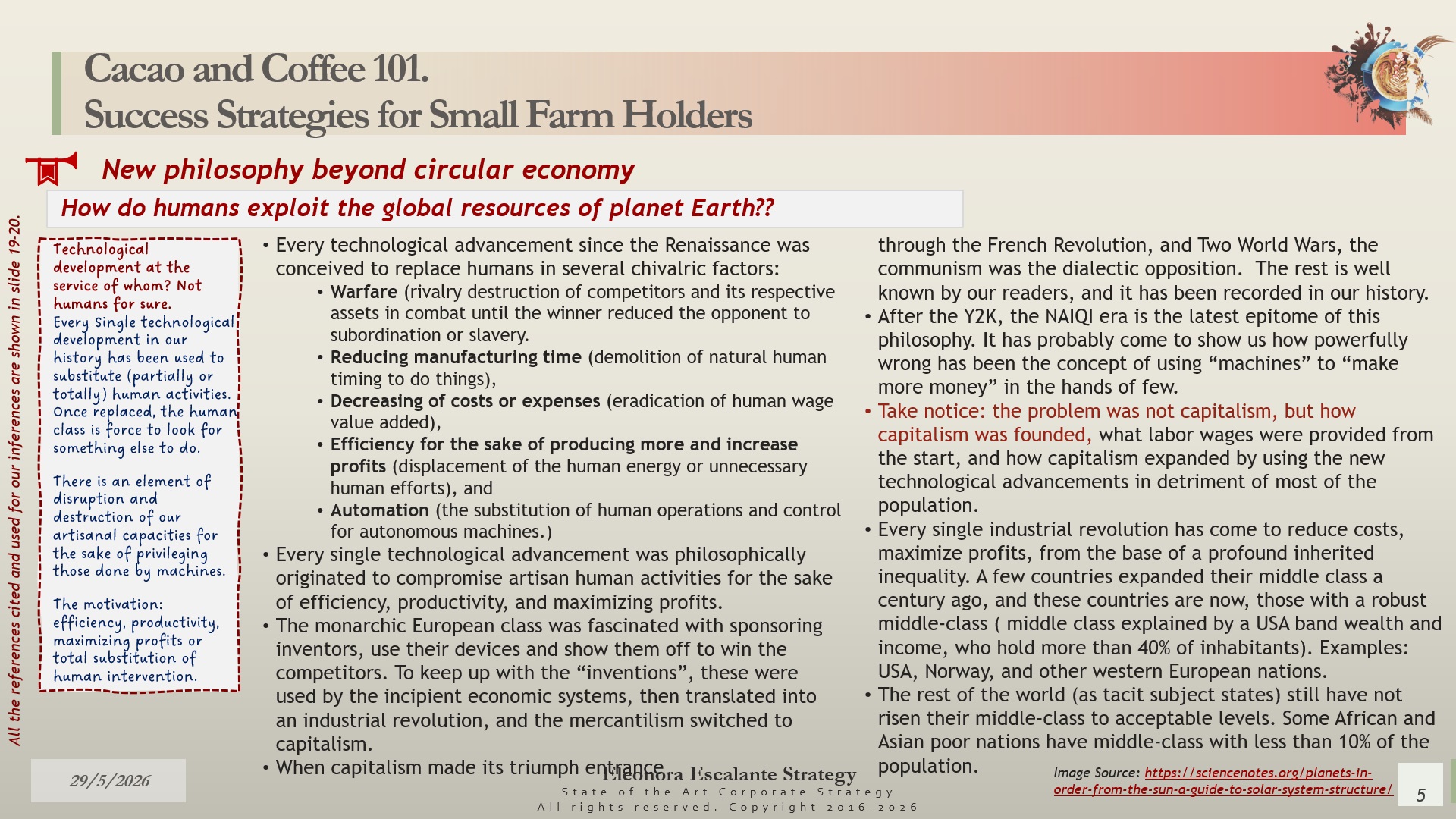
For example, the financial innovation of the first stock exchanges and the utilization of credit didn´t appear in 1602 with the Amsterdam Stock Exchange by raising the capital that the VOC (Dutch East Asia Company) required. The invention of the “bourse” occurred around 317 years before then, when in Bruges, the merchant activities shaped the village as a hub of European transactions of bills of exchange. Some years later, the Venetians established a national bourse house as early as 1322; the Genoese did likewise in 1397, and the Florentines followed suit in the fifteenth century (1). With the discovery of America, the expansion of money as a form of payment for consumption was supported by the introduction of the new physical silver currency coming from Spanish America, and this invention caused the barter economy to be replaced by the monetary one. What was the cost of this financial innovation? The exhaustion of the silver mines in México and Bolivia. When silver was finished, the damage to the environment in America was already done. We can continue with a list of all the main industries on the planet, and you will be surprised to acknowledge how far human beings have gone in the pattern of linking every invention (or technological advancement) with the exhaustion of the natural resource, including the replacement of human power as soon as the invention was massified. In summary, every single main or relevant innovation on earth that has required the utilization of raw materials extracted or pulled from the earth or the ocean, each of them has indirectly or directly caused collateral damage to the planet. Additionally, in history, we can notice how each machine, apparatus, or energy combustion technology used in manufacturing has displaced human labor to other industries. And this configuration in the production of goods and services has occurred for centuries, regardless of whether it is under capitalist or communist economies.
Historically, every technological advancement has been conceived to displace or replace human labor.
This pattern needs to be accepted and recognized by heart and mind by all of us. It is in our thinking traditions to make our lives easier. Humans have used their innovations for warfare (to win the enemy easier), for reducing manufacturing time (to drive down the time spent in making things), for decreasing the costs of production (to make things cheaper and profit more), for augmenting savings in every aspect of the value chain (particularly to eradicate the cost of human wages), for increasing efficiency (to displacing every single factor of production that blocks productivity), and finally for automating repetitive, difficult, or harmful activities (to substituting human power and passing it to machines, robots, and self-sufficient machines). The historic design of our economic activities is not only the pursuit to raise efficiency, productivity, and maximize profits. The pattern has been established to remove human power from the process. Of course, there are several harmful activities where the total eradication of human power is needed because the life of humans is at imminent risk of death. However, the real issue here is that the philosophy behind the first industrial revolution was the hard-hitting belief that producing more, quickly, and through machines, humans were being better off. To reach the highest levels of production for profits, using economies of scale was what mattered the most. Philosophically, with the First Industrial Revolution, by replacing the artisanal rural economy, humans were forced to change, and were totally substituted in their self-sustenance family functions. The families gave up on the rural DIY, accepting that they needed to get an urban job, to make some money, and lease or buy what was produced by others industrially. For example, in the past, it was normal for a family to have one or two cows, a modest herd of goats or sheep, chickens, a veggie garden, so every family procured their own cheese, cream, milk, eggs, and vegetables. Every family was in charge of baking their own bread. And so on. That mentality of self-sustenance was detached when the families were forced or shifted from their traditional rural homes to the urban cities. This transition from rural to urban caused humans to rely on industry, to pay for industrial products, and transform their philosophy of community and dwelling.
Before urban proletarianism, feudalism (as a form of slavery) was ingrained in society. The monarchs of Europe were fascinated with sponsoring inventors and using their devices, tools, and machines to establish a new source of wealth. And this thinking condition has a historical foundation. After fighting and acquiring land through warfare, the next priority was to use new inventions for profit from the resources of the land. Over time, mercantilism and then capitalism unfolded, but the low wages did not represent a thorough source of income for the bottom of the population, particularly in those regions of the world where the inhabitants were considered subjects to an Empire or a Kingdom. The only factor of differentiation to leave poverty behind at that time (before the 1820s), was through 4 ways:
- To become middle class as a merchant (serving the interests of the crown),
- To become middle-class as a court-bureaucrat or “nobility of robe” using the nobility connection to the king or the Church,
- To become middle-class as a “top educated member of the king’s staff” by gaining a unique, superior education, or by nurturing the gifted talents of brilliant individuals in the arts and universities.
- To become middle-class as a settler and producer in the new world (America), in new faraway societies that allowed or granted this path by “lucky chance” to the members of the Empire (not to the subjects). The subjects (original pre-Columbian populations in the case of America) had to pay tribute from their production of goods or become indebted labor.
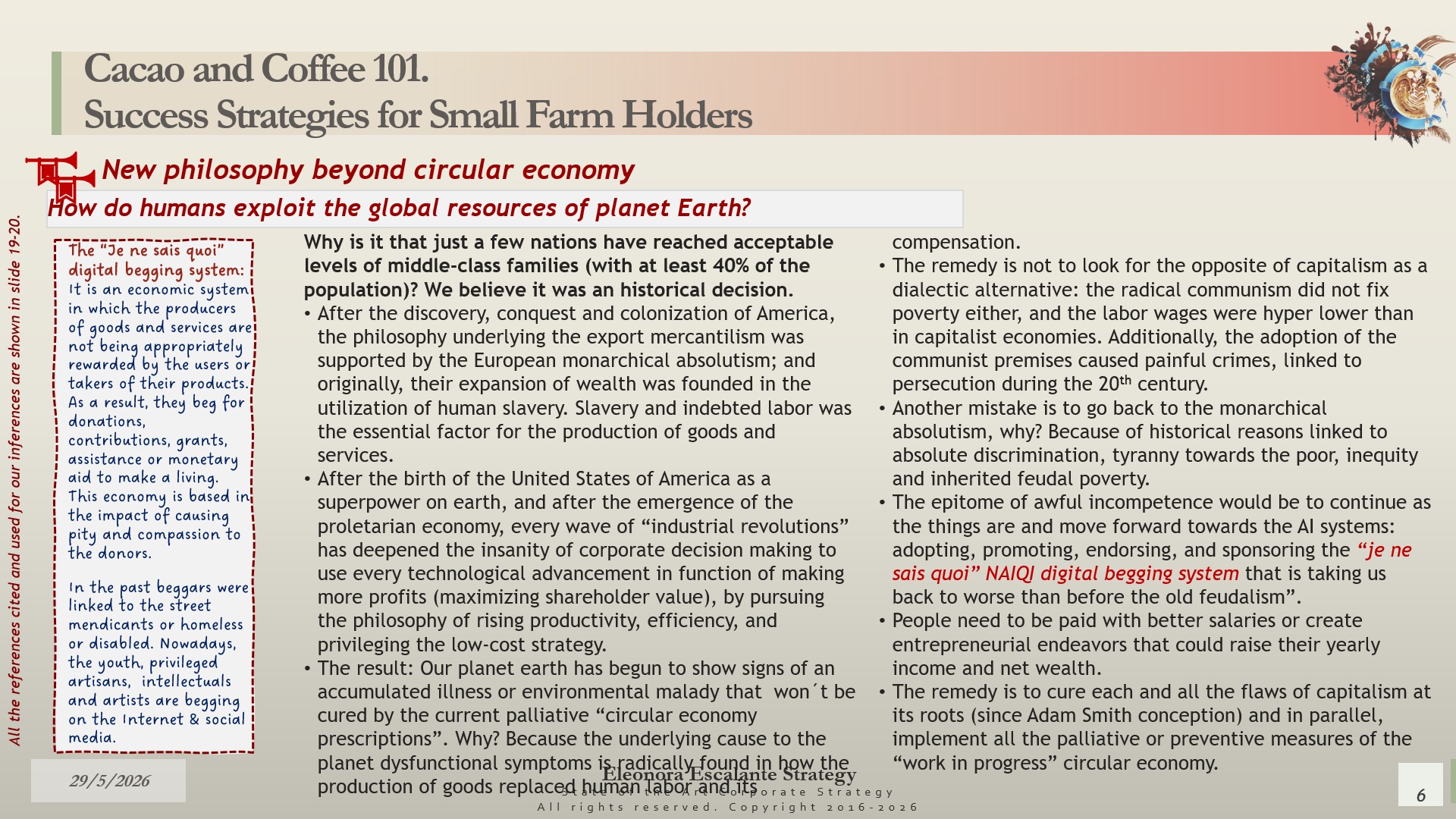
Why is it that just a few nations have reached acceptable levels of middle-class status in the world?
When feudalism was supposedly left behind, and the premises of capitalism were accepted by the kings of Europe, the nation of the United States of America (as we know it) was established after the French Revolution. With the USA establishment, the main population that came to North America was from Northern Europe (mainly Germans). The deal was to leave their European nations behind and settle in better conditions of life (particularly founding new villages and dedicating themselves to agriculture). These new German Americans coming to the USA didn´t arrive as feudal serfs, but as “new owners” of a “new land”, and their labor wages were always higher than those offered to the indebted laborers of Spanish America. In consequence, in Spanish America, the proletarian labor force was always paid less when slavery was abolished. Poverty in the Third World can only be explained by the fact that for centuries, the local populations were considered “subjects” to the respective empires that colonized them. After Independence, the native populations of these nations were left in “landless freedom” without basic welfare, and basic critical resources (such as land, education, decent shelter, and respective middle-class wages). The independence did not serve to provide opportunities to the poor, but to the criollos. The concept of human rights was non-existent then. There is an honorable rule of thumb between winners and losers that was forgotten: The indigenous native populations viewed land as a shared resource between victorious and defeated. This is why, in their quest to be near their ancestors, they agreed to work with the Criollos or descendants of Europeans who seized their properties. For the most rebellious indigenous, the loss of a territory often meant the possibility to negotiate the relocation to another new equivalent or valuable area to start all over again. In the mindset of the defeated, there was an implicit and coherent principle of restoration, which was not consciously applied then. Racial discrimination, along with a lack of long-term vision to embrace the lower class and convert it into the middle class, was also the norm then. However, the context of Central America at the end of the 19th century was under huge pressure to produce agro-export crops, and coffee was chosen then. Otherwise, recall that the USA was ready to intervene without notice. Remember the case of Cuba and Panama. For the USA, the interoceanic canal was an immense priority for trade.
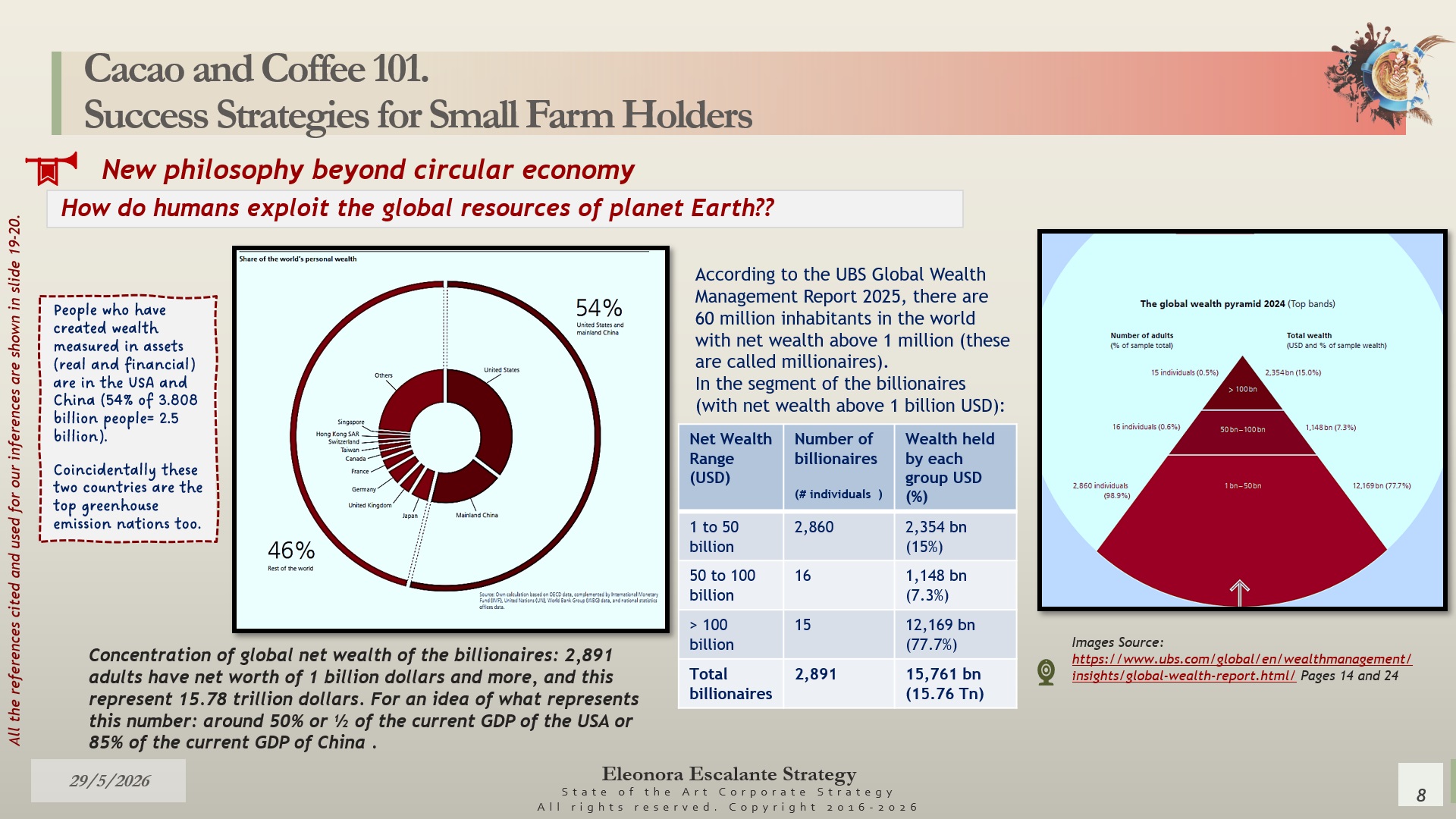
Analysis of the current global wealth in numbers. Slides 7 to 8.
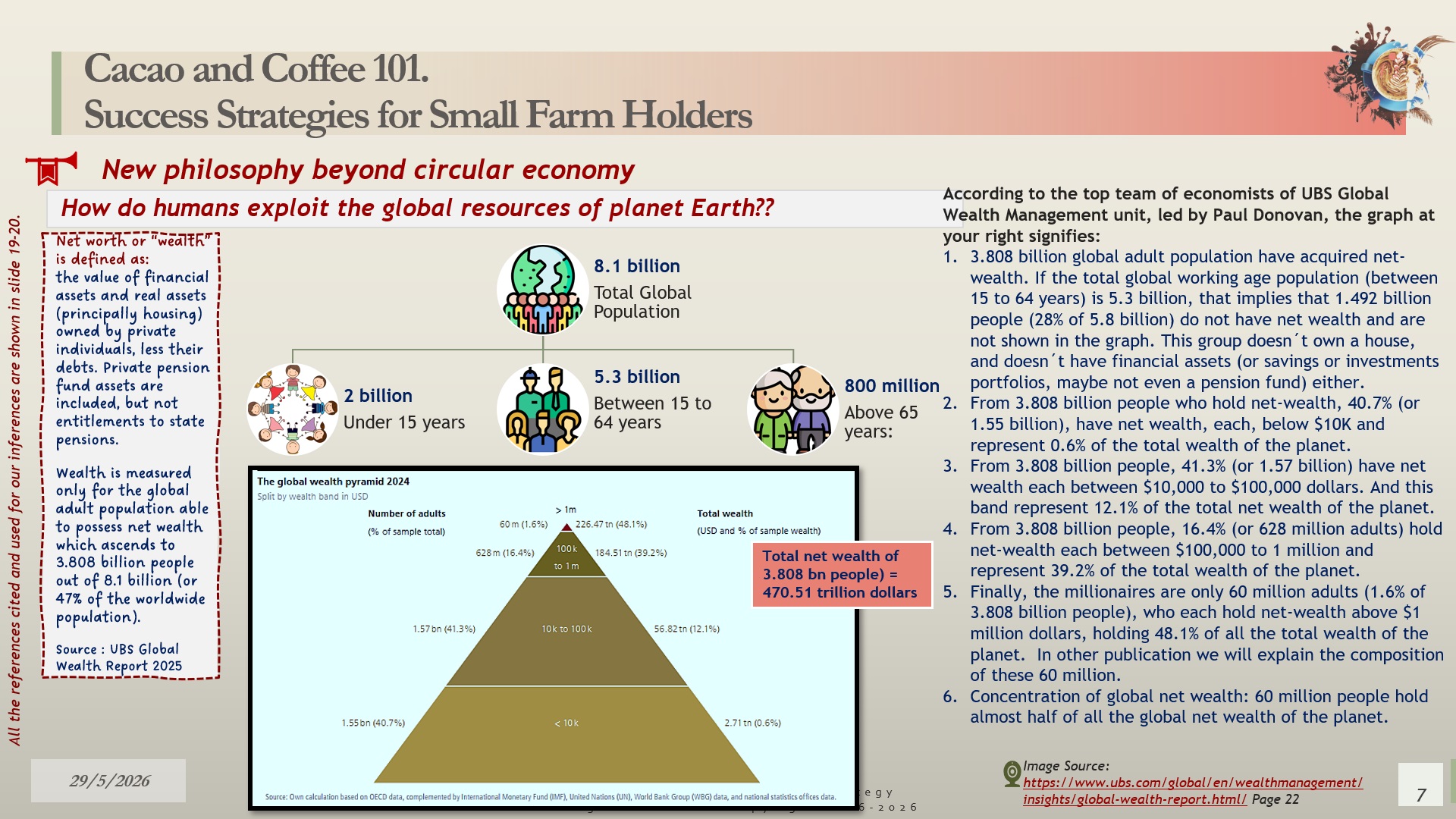
For this section, we utilized the data from the UBS Global Wealth Report of 2025 (2). To comprehend the analysis, we must understand how wealth has been defined. Net wealth is the amount of assets that a person owns (real assets defined as land, housing, and others; plus, financial assets such as savings, portfolio securities, stock of companies, etc.) minus the debt. Private pension funds are included, but not entitlements to government pension. For example, an individual owns a property, a house, a boat, and two cars, which sum to a market value of 1 million dollars, plus financial assets of $100,000 dollars. Nevertheless, he owes $500,000 to the bank. The net wealth of this person is $1,100,000 (-) $500,000 = $600,000.
Who was counted in this report? All the global population who possess net wealth. This group of people totals 3.8 billion (or 47% of the total inhabitants on Earth).
- From here, we can contemplate that less than half of the global population has net wealth. 5.3 billion people worldwide are economically productive between the ages of 15 and 64. Look at what has been exposed: not all the economically productive adults can hold net wealth, only 3.8 billion. The rest (1.492 billion) do not have patrimonial assets at all.
- 82% of 3.8 billion wealth-holders have between $0 to $100,000 dollars. 16.4% hold between $100,000 and $1 million, and only 1.6% or 60 million individuals embrace the title of millionaires.
- Now, let´s go to the total amount of wealth in the world, which amounts to $470.51 trillion dollars. Almost half of it (48.14%) is concentrated in the hands of 60 million individuals with net wealth above 1 million dollars. Can you perceive the degree of inequality or wealth disparity in which our planet is situated? This is the aggregated result of how wealth creation has occurred since historical times.
- Who are the billionaires of the world? Those who enfold net-wealth above 1 billion dollars. The first group, which owns between 1 billion and 50 billion dollars in net wealth, is 2,860 individuals. Only 16 have between 50 and 100 billion. And finally, the top above 100 billion dollars are 15 people. The bracket of the 2,891 billionaires, altogether, possesses 15.67 trillion dollars. However, do not forget that 60 million millionaires own 226.49 trillion dollars.
- 54% of the net wealth is in the hands of individuals from the USA and China.
Income of the world. Slide 9.
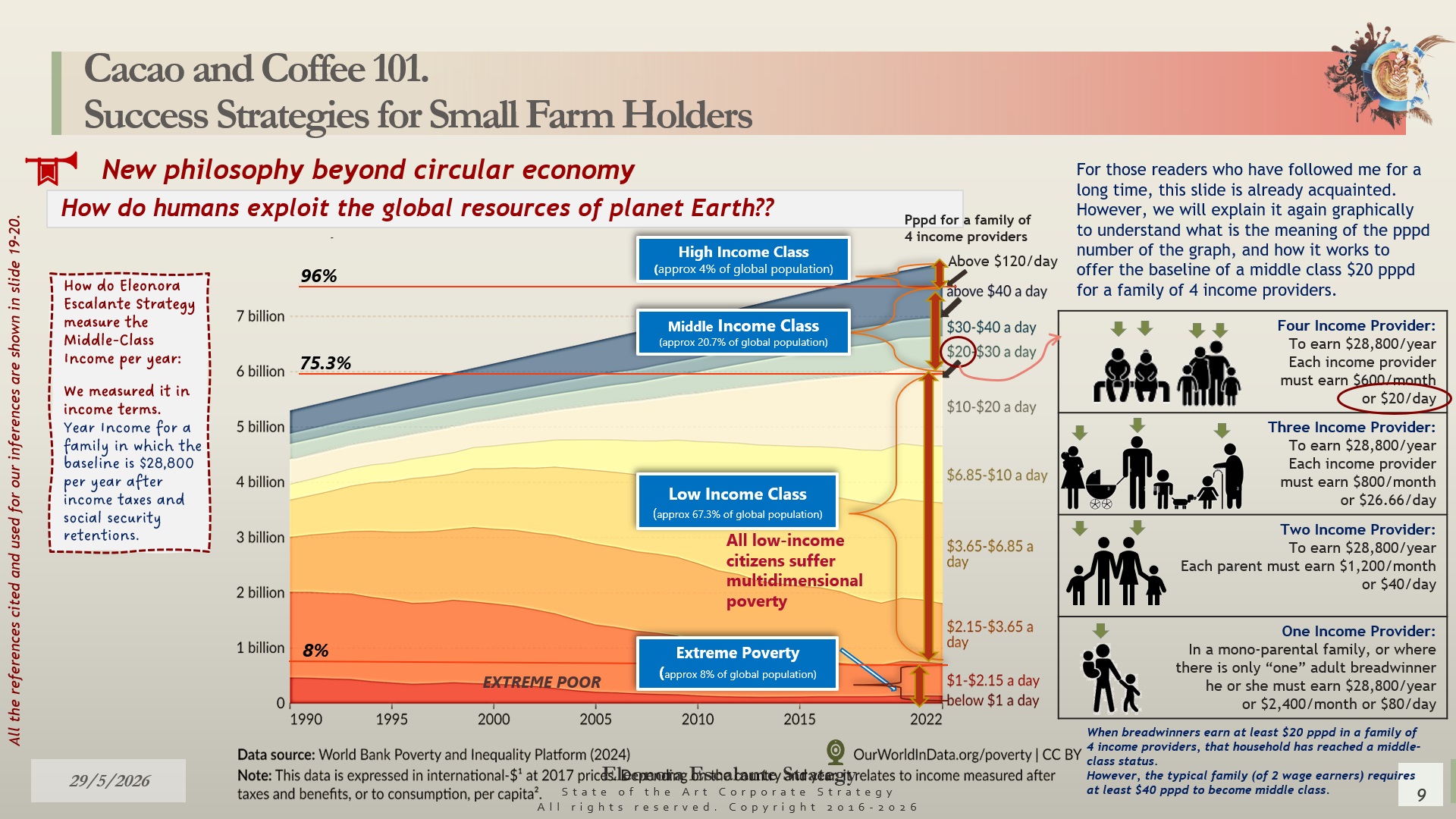
Our strategy house has already provided a detailed explanation and analysis of the level of income according to the minimum amount that is required to jump from the low-income class and acquire the low-middle-class status. We have defined the global middle class as a household that is capable of paying all the compulsory bills of the family and can establish a certain amount of savings for the future. Our lower middle-class minimum is a family income of $28,800 dollars per year (after income taxes and social security retentions), and the upper maximum is $175,200 dollars per year. This group, in which each adult in a family of 4 can earn $20 per person per day (pppd), signifies that 4 breadwinners are contributing to this specific household income. By income, this group represents approximately around 20% of the global families. However, the low-income class represents approximately 67% of the worldwide population (those earning between $3.00 to $10 per day). The World Bank has adjusted the threshold for extreme poverty (2025): all adults earning below $3.00/day in a family of 4 wage earners, for an annual family income of $4,320 after taxes.
It is important to comprehend that income that doesn´t generate net-wealth capital leaves you out of the statistics of the UBS Global Wealth report. That means, you are not producing patrimony for your family, nor the next generation to inherit. And if you are not an adult generating net wealth, that means that all you gain is totally consumed or spent (you are renting, not investing, or owning any real asset, you have no savings, nor any financial security investment for your retirement). As an adult, you can earn a wage of a middle-class or more, but if no net wealth is generated, your income is not enough (particularly if you don´t have a house, nor private savings, or any leftover income for something else). And this group of people is living paycheck to paycheck. This segment is extremely vulnerable because its economic position includes a significant degree of multidimensional poverty. When analyzing this situation, it leads us to the following question: How many members of the middle class are moving down into poverty or the lower class because of AI inventions, and will never be able to return to their original middle-class group?
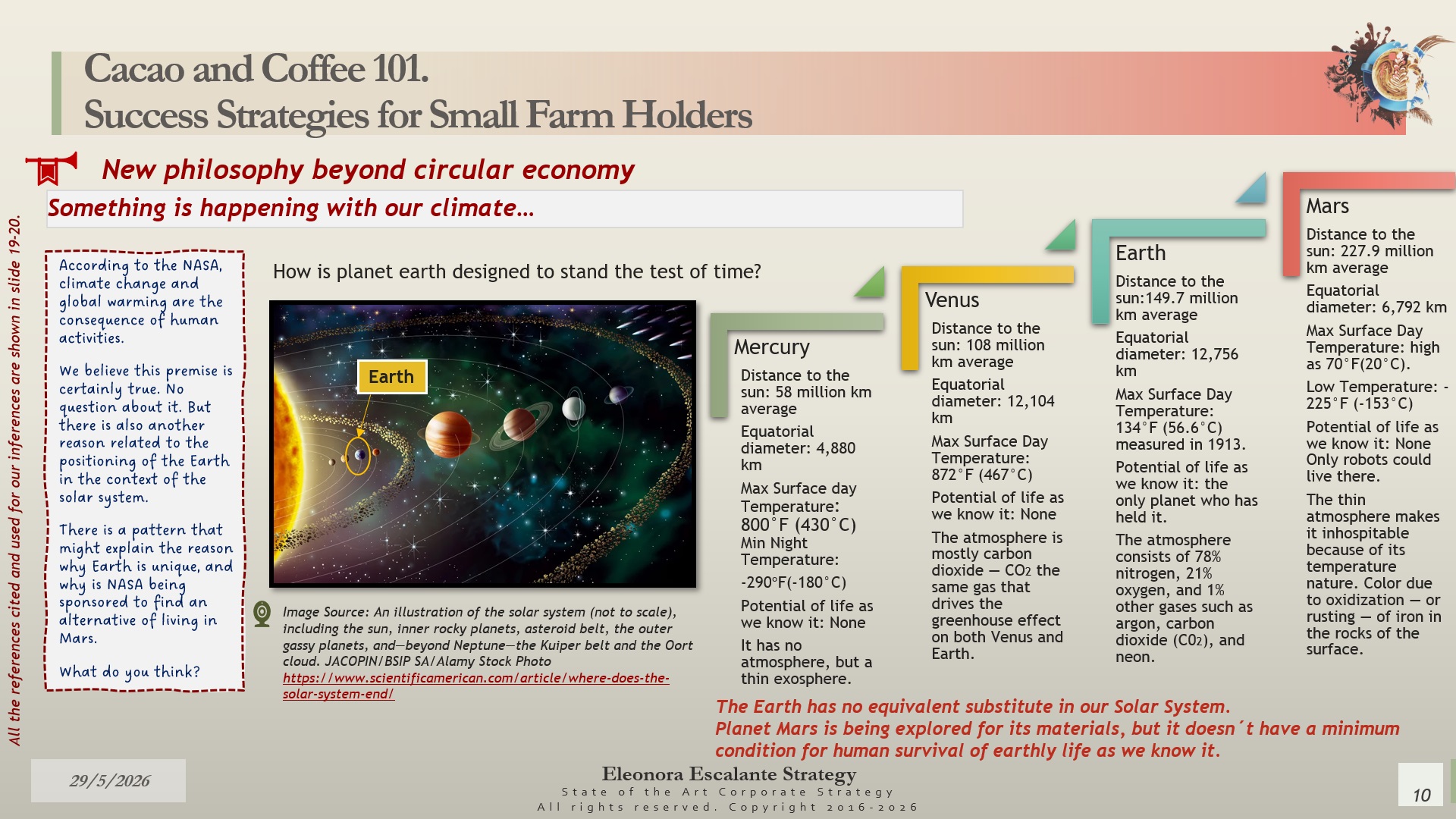
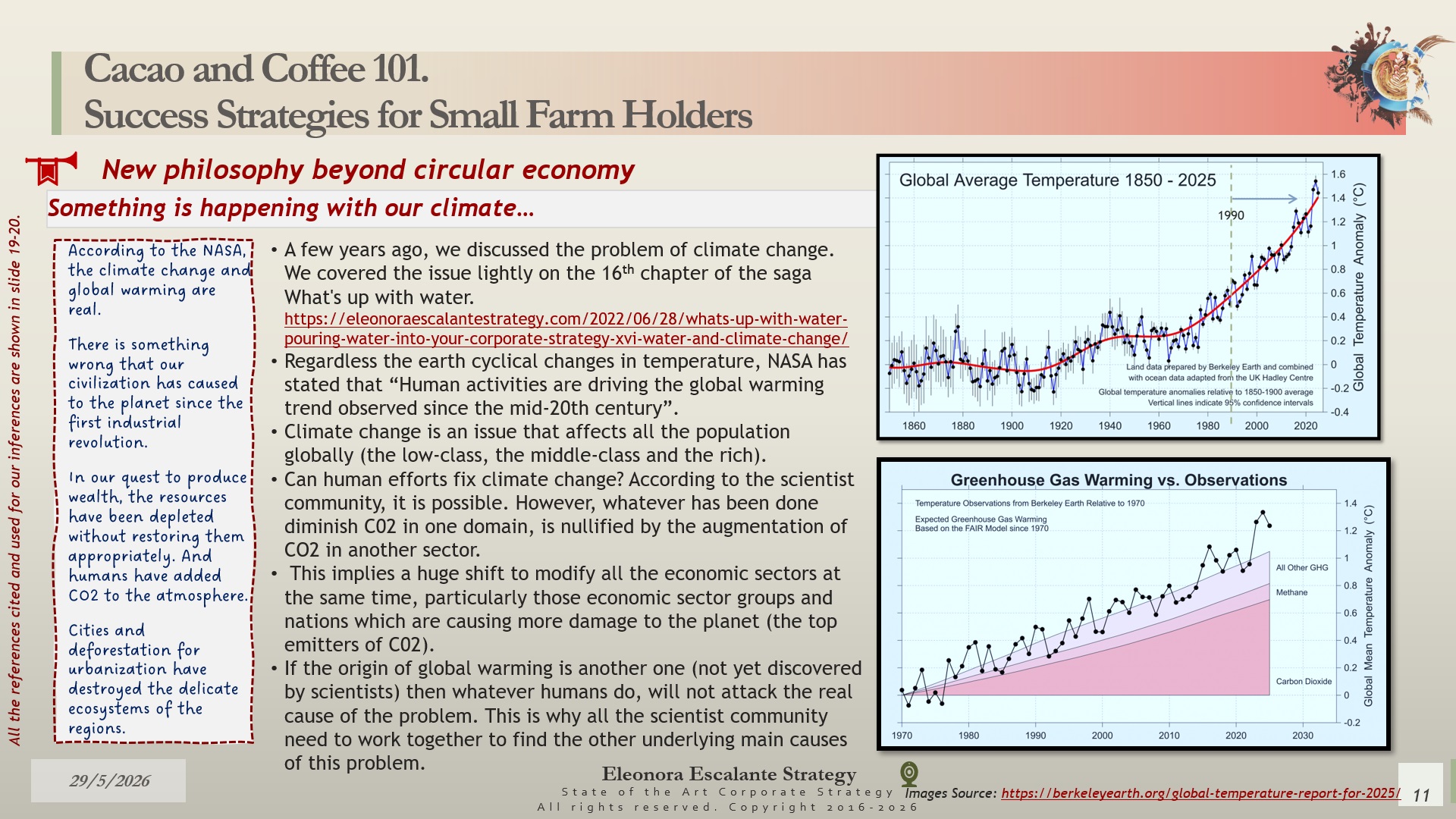
Something is happening with our climate. Slides 10 to 14.
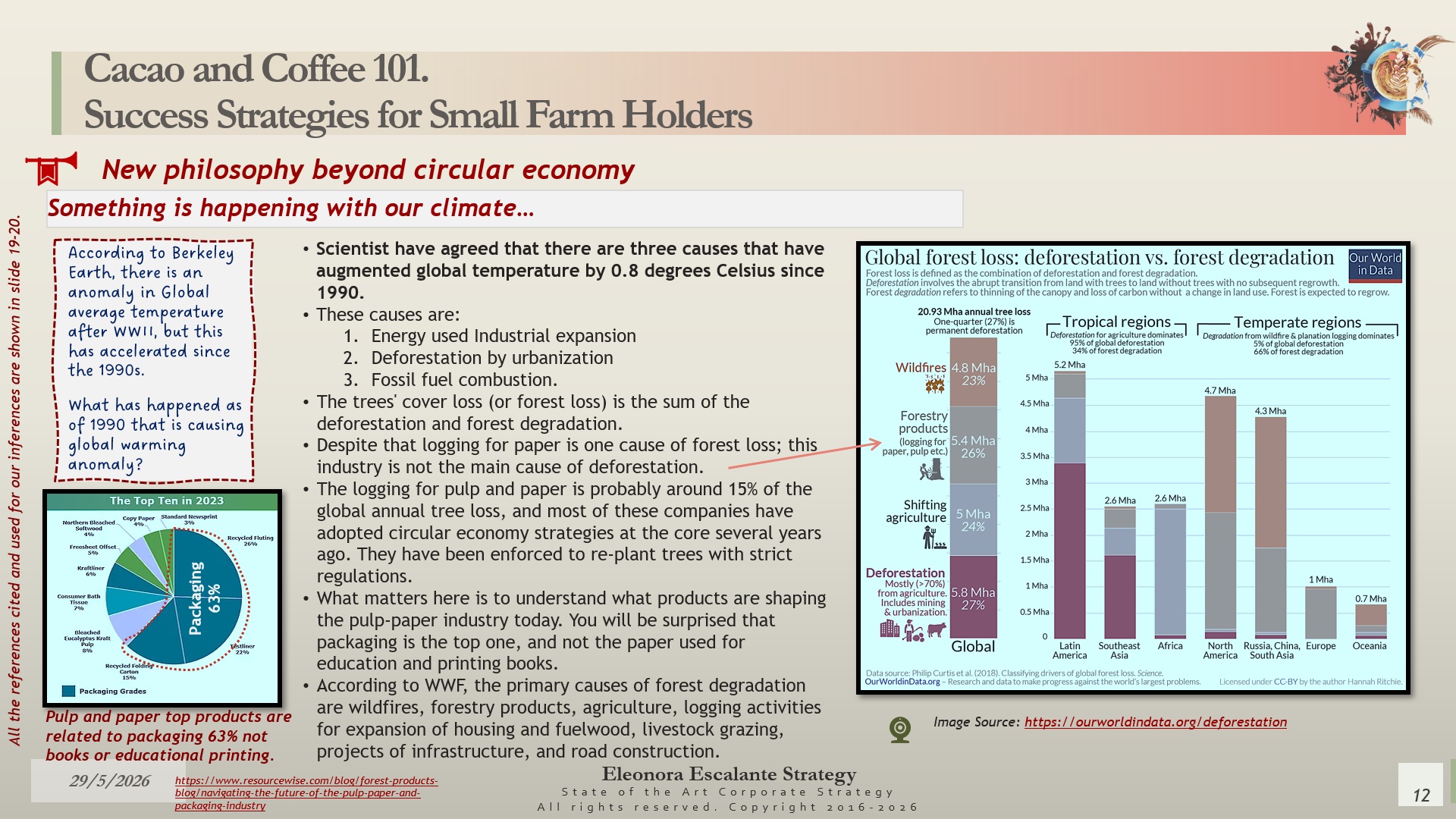
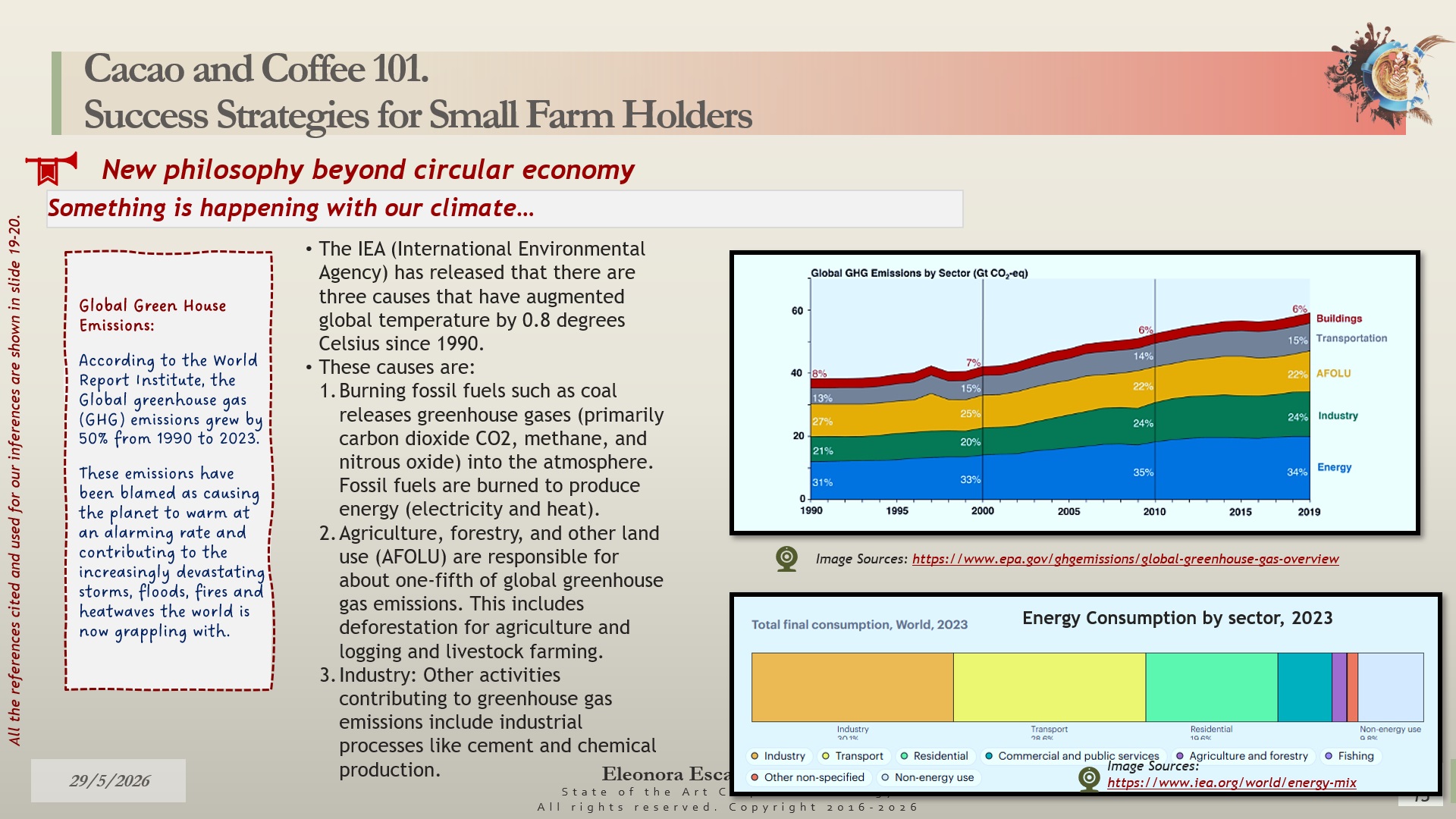
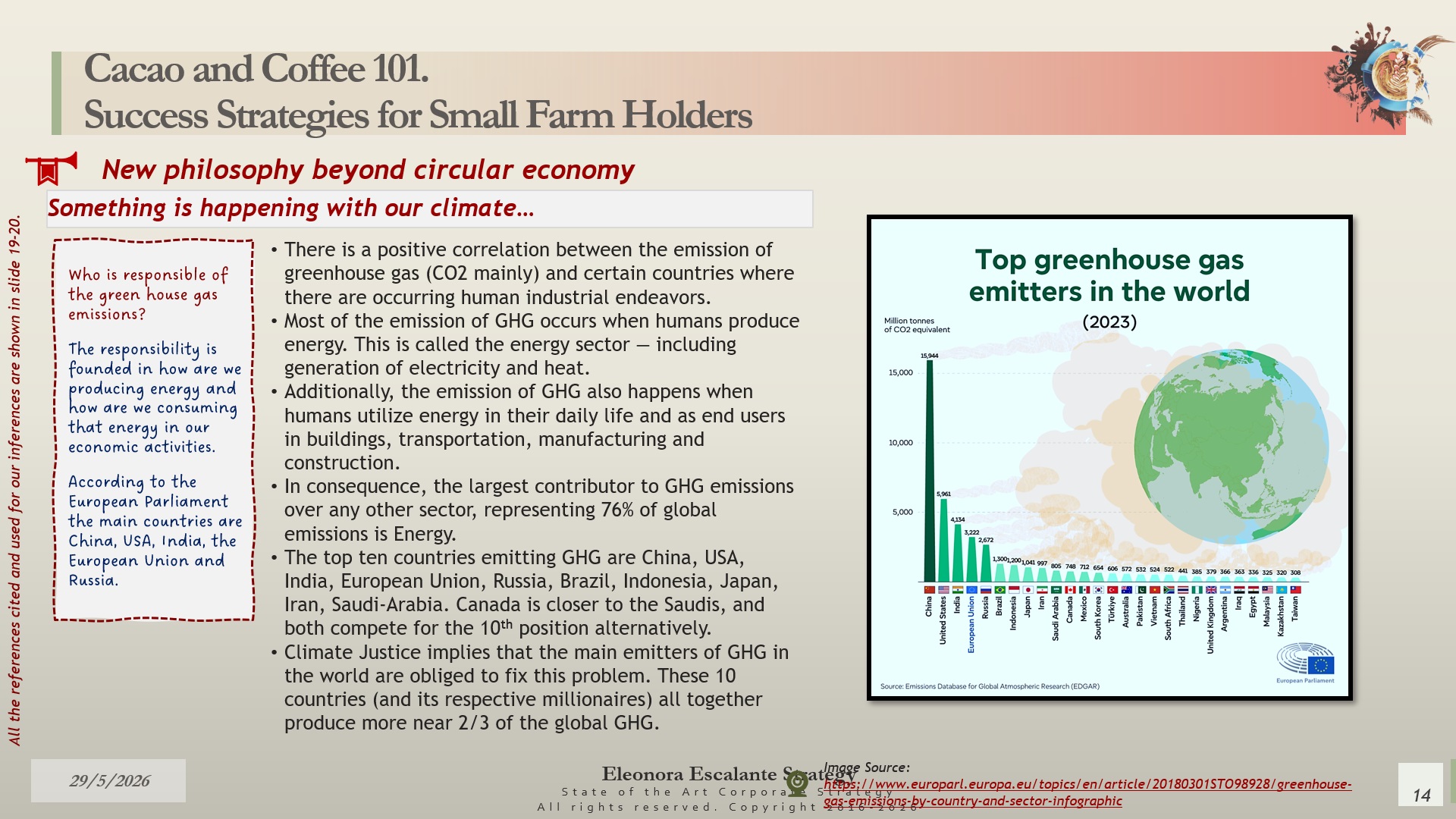
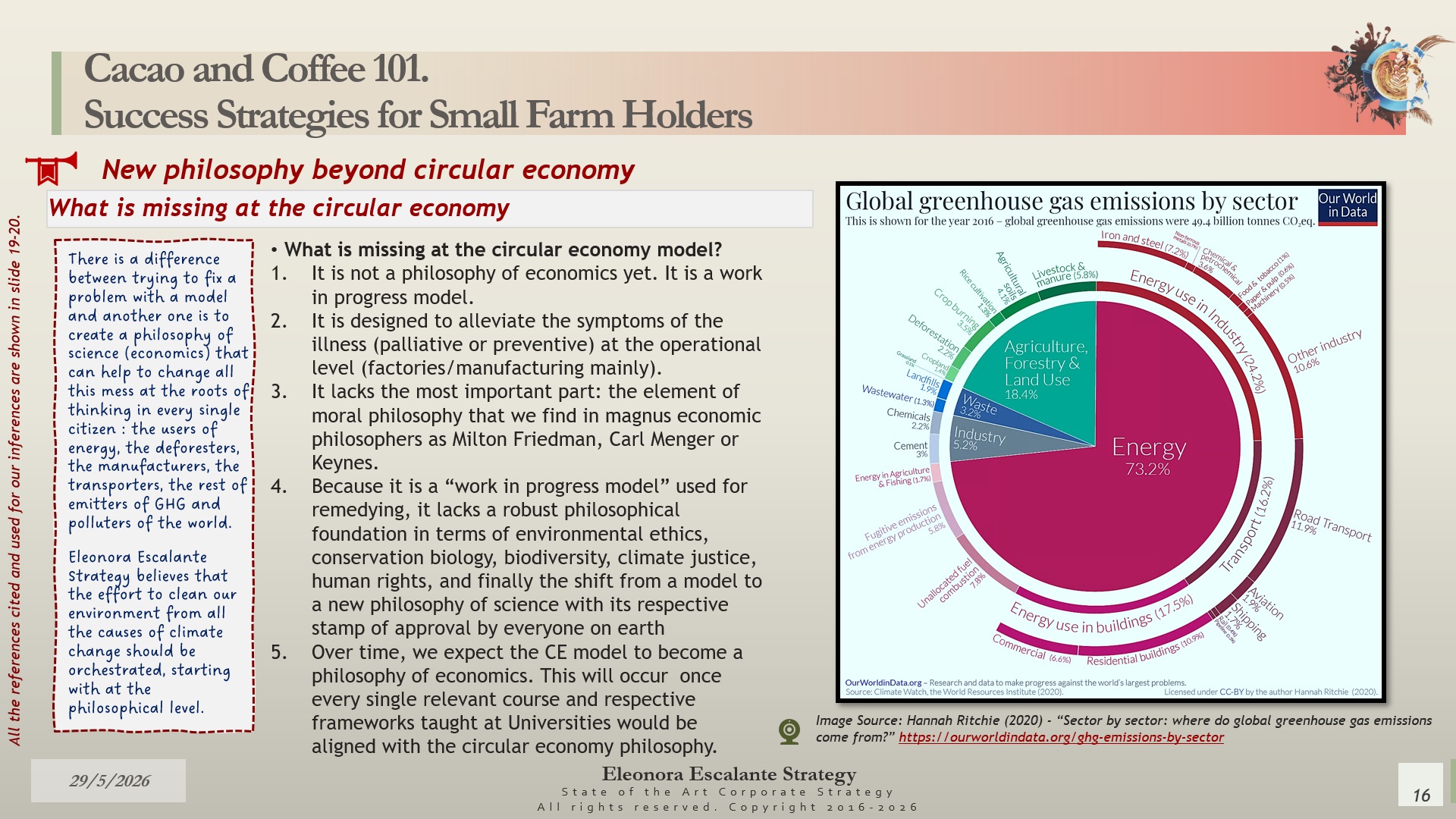
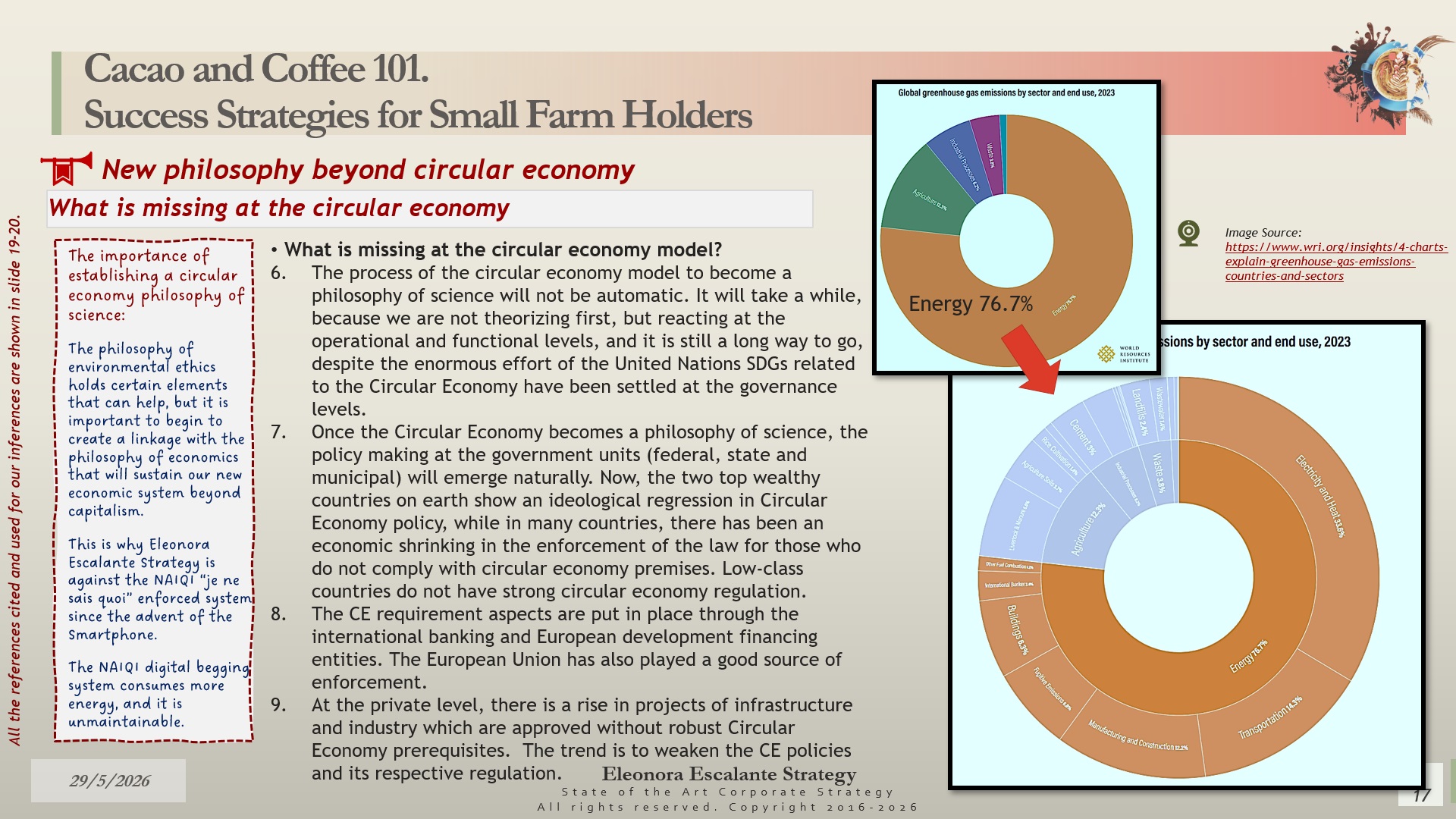
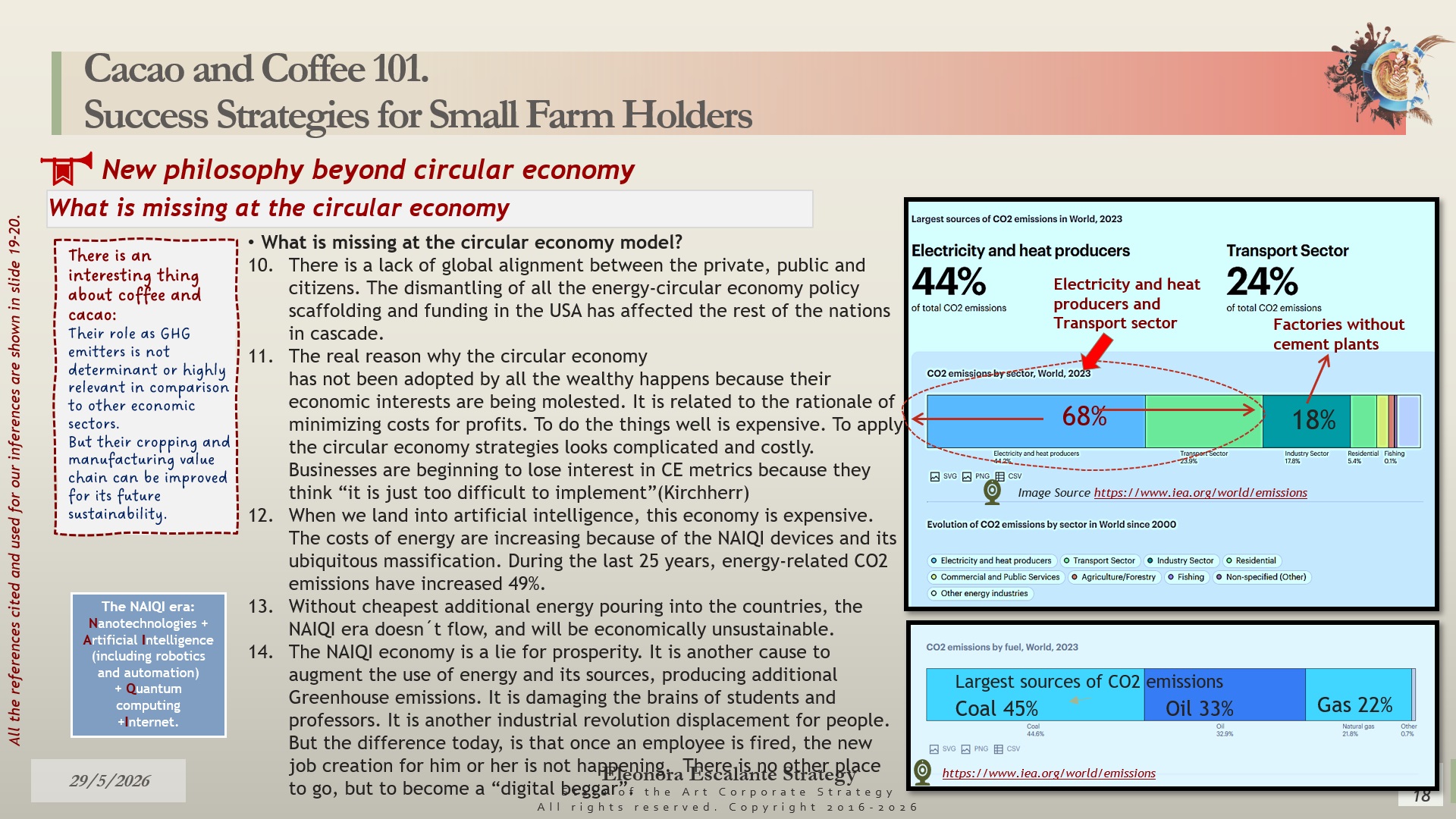
These 4 slides is our effort to summarize the current status of global warming, its main causes according to the scientists, the main economic sectors blamed for most of the global green house (GHG) emissions, the identification of the energy producers, and the energy consumers as the main emitters of GHG, and finally the discovery of the nations which account as the top GHG generators in the world. The slides are self-explanatory. We gathered the most reliable figures and knowledge from the main players of energy analysis and GHG worldwide: the IEA (International Energy Agency), the EPA (The United States Environmental Protection Agency), the NASA (National Aeronautics and Space Administration of the USA), and the independent Berkeley Earth Project, founded in 2010. In summary, all these institutions have confirmed independently and by their own means that there is an anomaly in the rise of the world’s temperature since the first industrial revolution (measured from 1850 to 2025). This global temperature anomaly is the rise of 1.4 degrees Celsius, with an alarming increment since the 1970s. This is affecting crops, oceans, and life as it is known on the surface. The three main causes of global warming are (1) how energy is produced and how it is consumed, (2) Global forest loss (deforestation and forest degradation), and (3) Fossil fuel combustion. These three situations have caused an accelerated increase in GHG, particularly during the last 30 years. According to the above cited scientist community, the GHG augmentation has driven nasty consequences that our civilization is facing: devastating storms, floods, fires, heatwaves, droughts, cold waves, infernal elevated summers, and the Arctic-Antarctic temperature imbalances. There are other climate consequences that are affecting the biodiversity and the natural species as we know them today.
Finally, the top three countries emitting GHG are China, the USA, and India, followed by the European Union, Russia, Brazil, Indonesia, Japan, Iran, Saudi Arabia, and Canada.
Circular economy is a philosophy to fix this mess?. Slide 15.
Initially, it is essential to reflect on a particular situation. The Circular Economy was born as a remedy, a medication to mend or relieve the symptoms of GHG and climate change. It was not incorporated into the economic systems as a philosophy. In consequence, there is a long way to go to convert it into a scientific discipline or a philosophy of science. A prescription for a serious sickness like cancer may be a temporary cure or may be a palliative treatment. But without a tumor extraction or chemotherapy, the cancer will continue. This is the reason the circular economy is only a model used at the operational level. The Circular Economy, without its formation as a philosophy of science, won´t be able to cure the illness of planet Earth. The challenge is to transform the circular economy principles into a moral philosophy, like environmental ethics, but with the foundation of a philosophy of economics. And we are still far from achieving it. A lot of work is required from all the good philosophers on earth. The reason we show you the status of social classes by level of annual income for a family of 4, and the global wealth findings, is to find a solution for net wealth inequality, at the same time that we are uncovering an integral philosophy of economics that can overcome the issues of capitalism, and influence and sustain the formation and design of the circular economy philosophy.
What is missing from the circular economy right now?
It is a work-in-progress model. It has helped a lot during the last two decades, because it has created a certain degree of consciousness among consumers. It has also become relevant for the most conscious CEOs and members of the board of directors of many corporations. However, the top nations and main industries involved in GHG emissions are required to take the baton to fix the core issue of climate change. For that to happen, there must be a consensus in the scientific community about how to target the main causes of global warming. Otherwise, what is happening now is that there are punctual efforts to reduce cutting trees (for example), but by shifting into the digital economy, because there is an increment of energy needed by consumers, then the energy producers continue to burn fossil fuels (coal, oil, and gas). The NAIQI economy (Nanotechnologies, Artificial Intelligence, Quantum computing, and the Internet) is not cheap. It is ultra expensive. During the last 25 years, energy-related GHG emissions have increased 49%. In consequence, without orchestrating the global solution, we are not improving anything. For example, whatever the small holders of crops (such as coffee or cacao) do to reduce GHG in the tropical belt of the world to help to save their forests and ecosystems, is being hindered by the emissions of the GHG of the top emitters in China or the USA. We all live in an interconnected world, and the solution to the problem can´t happen in isolation from one economic sector to another. Particularly, the concept of climate justice should be applied to the companies that pollute the world the most. If there is an additional cause to global warming (beyond GHG) that the world scientific community has not yet discovered, this should also be included as soon as possible.
If Artificial Intelligence, as an essential part of the NAIQI new economy, will require that the main polluters of GHG continue burning fossil fuels at unprecedent accelerated levels; or it will demand an intensification of energy consumption in data centers, industrial endeavors, expensive cryptocurrency mining, etc.; or if the AI society will raise the costs of running the economy at expense of the new jobs´ creation or cheapening of wages, then, the latter factors are enough reasons to stop the AI roll-out in organizations and large-scale initiatives. The AI era is not a bargain at the level of the real economy. It is also expensive at the level of virtual scaffolding. And it is also more costly on the society and individual basis: it has caused the annihilation of basic brain capabilities in the Z generation, and it is wiping out the thinking quality of another one (Generation Alpha).
Announcement. Our next episode will shift from the general of today, to the particular aspects of sustainability that all the planters of coffee and cacao must consider to create their own philosophy of planting and selling coffee and cacao beyond the circular economy.
Musical Section.
This saga is committed to raising the traditional musical instruments and their respective musicians over the digitally produced sounds. This saga is dedicated to the chamber orchestras.
Today, we have chosen the Academy of Saint Martin in the Fields (ASMF). https://www.asmf.org/. This orchestra is plusqua versatile. It can decouple in a reduced chamber ensemble, but at the same time, it has been able to keep the quality of a chamber orchestra performance. Its musical director, Joshua Bell, is one of the leading violinists of our time. Tomo Keller, the German-Japanese orchestra leader, is also well known for his vast experience and excellent quality as a soloist and violin concertmaster. For this episode, we have chosen the Coriolan Ouverture of Beethoven. This piece was composed by Beethoven in 1807, and it is characterized by its oximoronic dramatic waves between a sense of urgency and serenity. The ASMF played the Overture in December 2018 at the Berlin Konzerthaus.
Enjoy!
Thank you for reading http://www.eleonoraescalantestrategy.com. It is a privilege to learn. Blessings.

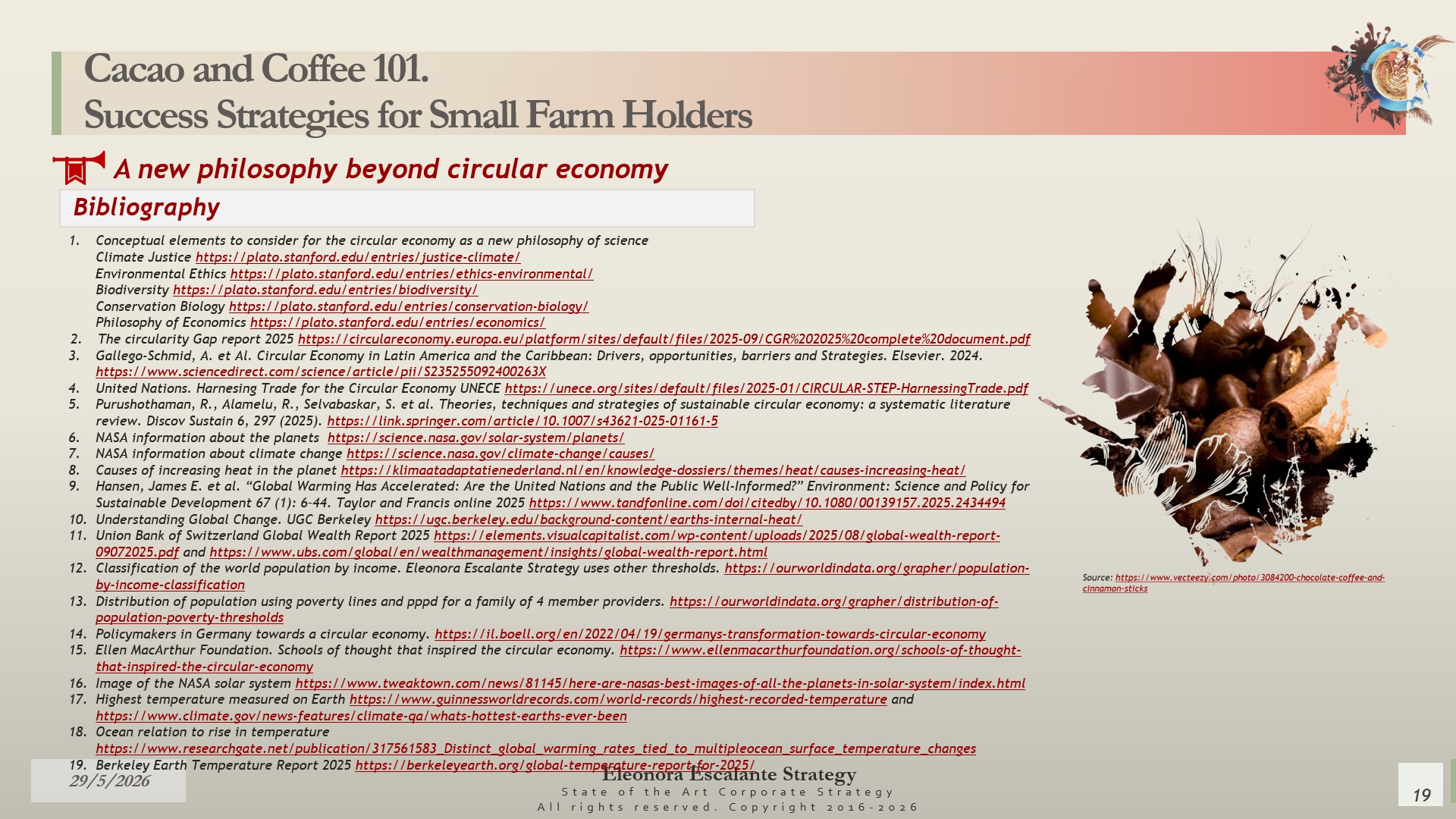
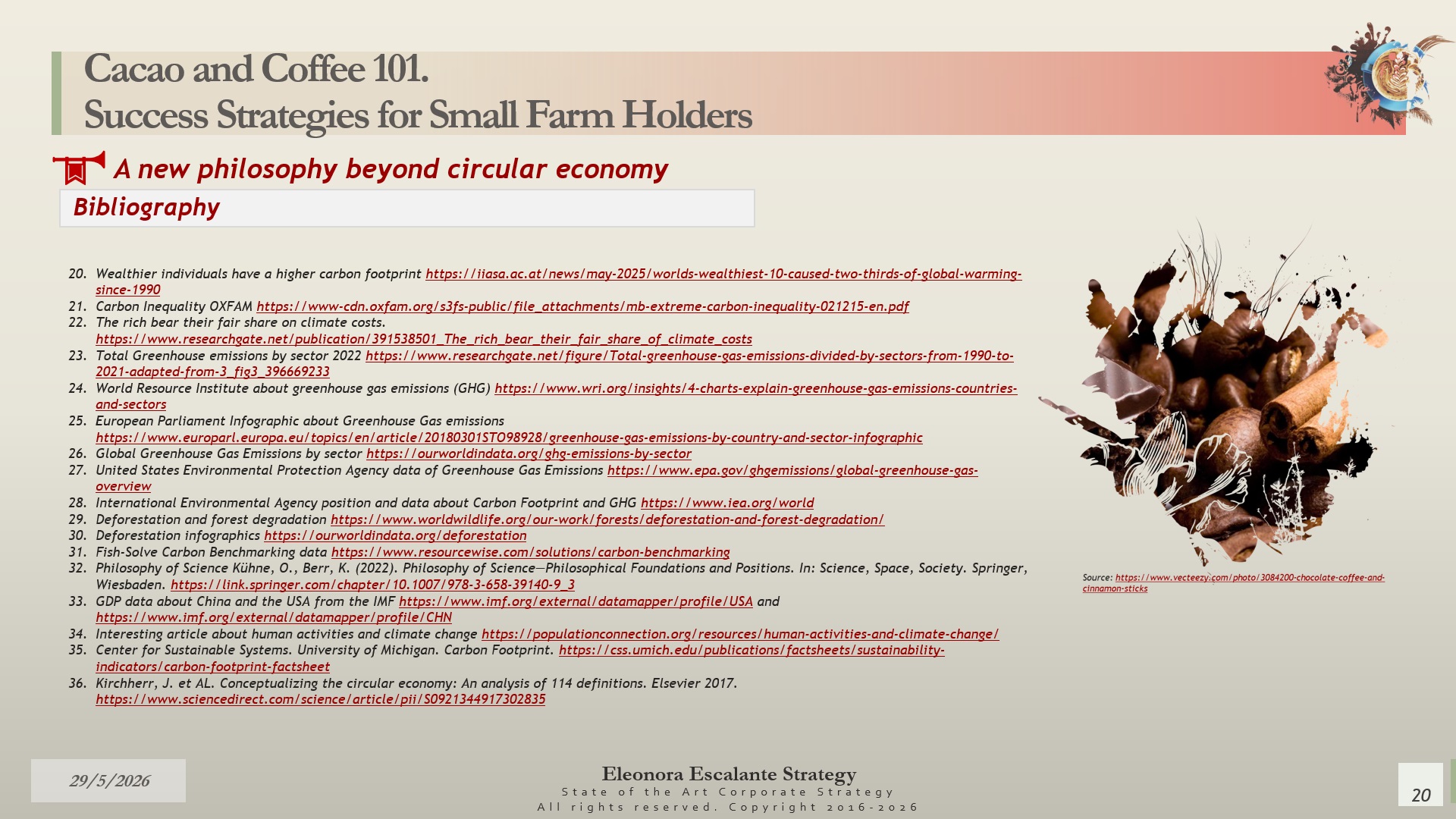
Sources of reference and bibliography utilized for today´s inferences. The bibliography is listed on the last slide of the reference reading material. Click the respective URL to trace them.
Bibliography in this post:
(1) The origins of the stock exchange: from the Ter Buerse inn to Wall Street https://museum.nbb.be/en/resources/origins-stock-exchange-ter-buerse-inn-wall-street
(2) https://www.ubs.com/global/en/wealthmanagement/insights/global-wealth-report.html
Disclaimer: Eleonora Escalante paints Illustrations in Watercolor. Other types of illustrations or videos (which are not mine) are used for educational purposes ONLY. All are used as Illustrative and non-commercial images. Utilized only informatively for the public good. Unless otherwise stated, I do not own any lovely photos or images.
 Eleonora Escalante Strategy Strategic Reflections Think Tank