
Central America: A Quest for the Progression of Economic Value. Bonus Season V. Episode 13. Banana Republics Part 2.
Dear incredible readers:
Here we are, believe it or not, this is our last episode about the Banana Republics under the vision of Minor Keith and then Samuel Zemurray. We are not going to cover the spell on how the UFCo was directly related to the coup d´etat against Guatemalan President Jacobo Arbenz in 1954. Our goal with the Banana Republics was to provide the elements of the roots of the United Fruit Company in the region of Central America, and we have focused all our energy on the period between 1870 and 1930. Minor Cooper Keith died in 1929, and a few years later, Keith was replaced with a new controversial figure from the UFCo competition, Samuel Zemurray (1877-1961). We have covered the diversification, the vertical integration, and international horizontal expansion. The corporate strategy actions related to stability and retrenchment strategy took place after 1930, when Zemurray took the lead of the UFCo.
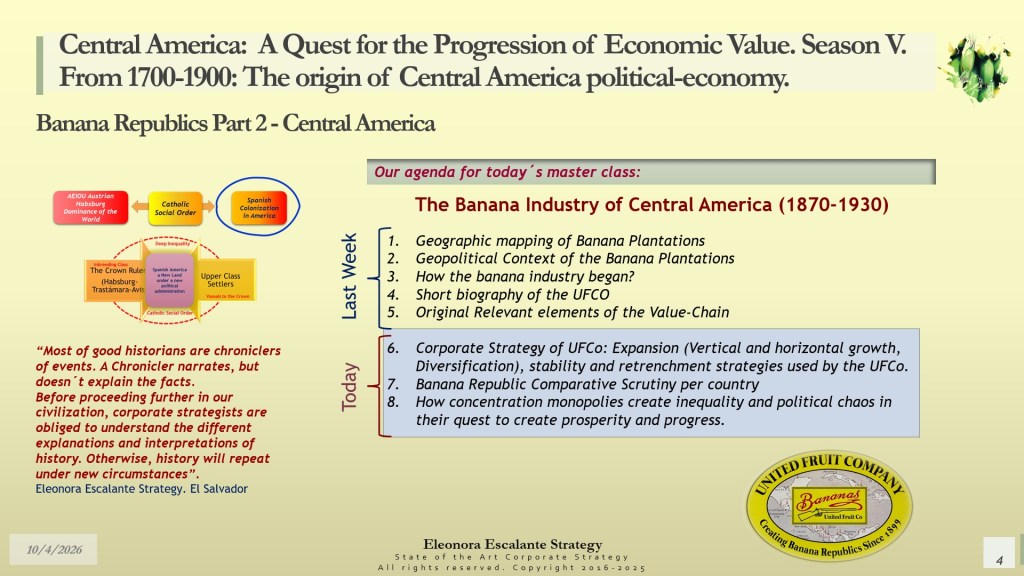
Our agenda for today is about three topics:
1. Corporate Strategy of UFCo
2. Banana Republic Comparative Scrutiny per country: We have included here Honduras, Costa Rica, and Guatemala. Colombia-Panamá is out of our geographical radar, and Belize-British Honduras was not included. El Salvador was not portrayed as a banana plantation.
3. Finally, the last theme is “How concentration monopolies create inequality and political chaos in their quest to create prosperity and progress”.
Find our reference material for your strategic reflections below. Feel free to download and share it with your family and friends. Do not forget to print it, and keep it in your binder. You never know if, one day, all this content will be of help to anyone involved in corporate strategy decision-making. The UFCo – Guatemala is a Harvard Business School case study (prepared in 2022 by my peers, Geoffrey Jones and Marcelo Bucheli); consequently, it is a significant resource for anyone interested in learning about global and international strategy in corporations. Our strategy house has added additional historical elements to this Harvard case study that might be relevant for the students.
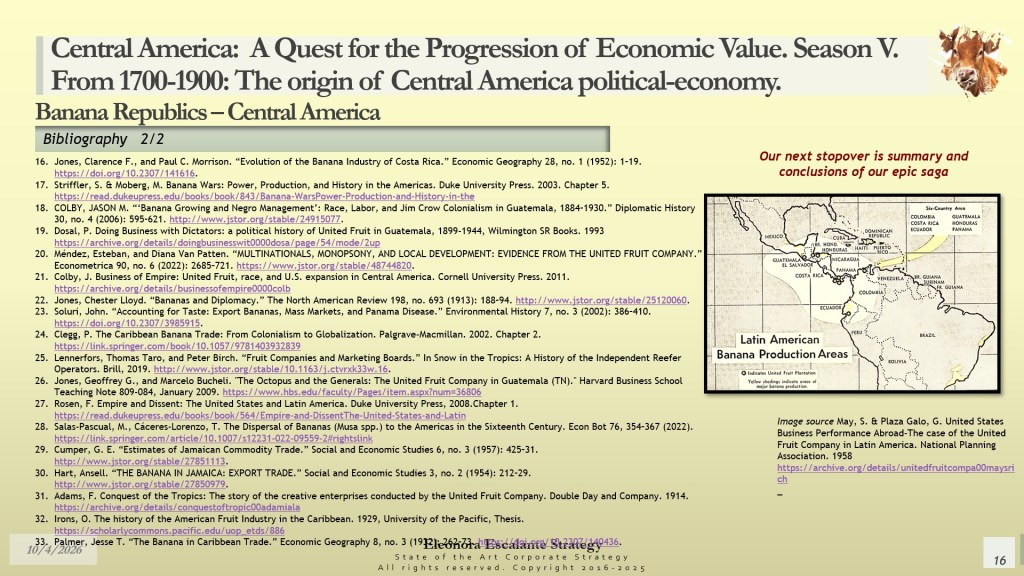
We kindly ask that you return next Monday, April 13th, 2026, to review our extra strategic reflections on this chapter.
We encourage our readers to familiarize themselves with our Friday master class by reviewing the slides over the weekend. We expect you to create ideas that are or are not strategic reflections. Every Monday, we upload our strategic inferences below. These will be discussed in the next paragraph. Only then will you be able to compare your own reflections with our introspection. We always give our students a couple of days to prepare well before our final reflection.
Additional strategic reflections on this episode. These will be in the section below on Monday, April 13th, 2026.
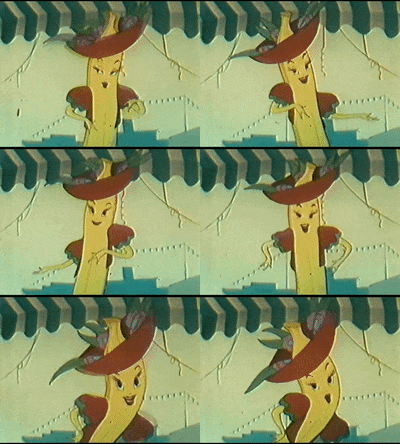
Strategic Reflections on “Central America: A quest for the progression of economic value. Bonus Season V. Episode 12. Banana Republics Part 2“.
How to define UFCo, an octopus company that was pivotal to bananas, but was growing significantly in other business divisions?
The United Fruit Company was a diversified multinational corporation (MNC) with agricultural operations in most of the Central American Nations. However, when Minor Keith and Lorenzo D. Baker decided to merge their respective companies, that move is classified as a form of international horizontal growth, and it was a mix of a joint venture-takeover (Since Minor Keith did not bring the 100% of his 3 companies´ shares into the formation of the UFCo). In comparison, the Boston Fruit Company put 100% of its effort into the table, and Captain Baker was already ahead of the game with its shipping connections in the Northeast. It was a production sharing arrangement. The diversification of the company occurred not only at the division level (or in our current terms, at the business unit level), but also at all the sections of the value chain. From the start (year 1899-90), UFCo gross revenues reached around $1.8 billion, and segmented its operations into the following areas (year 1899-1900): (Note: all the Revenue numbers have been taken from the Official Annual Reports of UFCO).
- Fruits (Bananas, Oranges, and Pineapples),
- Sugar Cane
- Miscellaneous (Coconuts, Cocoa, Coffee, Rubber, Para-grass, Guinea-Grass, Pastures and Miscellaneous)
- Livestock
- Shipping and Ports (wharves)
- Railways
- Telephone Systems
By the year 1913, the company expanded, and its income was $6.2 billion dollars then. UFCo segmented its operational divisions as follows:
- Fruits (Bananas and Oranges)
- Sugar Mills
- Miscellaneous (Coconuts, Cocoa, Coffee, Rubber)
- Pastures: Para-grass, Guinea-Grass, Natural Grass
- Livestock (cattle, horses, and mules)
- United Steamship Company Services
- Railways and Tramways (Owned and Operated)
- Telephone Systems
- Merchandise Stores
- Engineering: House, Buildings, infrastructure for company towns.
Finally, by the year 1923, the company quadrupled its revenues to $26.9 billion, and it owned and operated 35 ships (under the American fleet) plus 19 as British fleet. Additionally, it chartered 19 vessels from other companies. If we follow the increment of sales over time, let me ask our readers, how could it be that UFCo was able to grow its sales to $488.9 billion dollars in 1967? By 1967, the diversified company still kept the core business as bananas, which represented 64% of the revenues. Let´s see what the divisions of UFCo in 1967 were:
- Bananas
- Transportation
- Sugar
- Processed Food
- Other Fruits and Vegetables
- Fast Food Operations
- Communications
- All other
Can you see the progression of the economic value of the United Fruit Company by conducting business in Central America? When the company was established in 1899, Keith only shared his significant plantations in Costa Rica, while Baker shared his total Jamaican business. By 1923, it held additional positions of productive plantations and company towns in Colombia, Cuba, Guatemala, Honduras, and Panama. When Cuyamel Fruit Company was acquired, and Samuel Zemurray was named CEO-Director and Chairman, the company increased its revenues regardless of WWII. By 1957, the company was also operating in Ecuador and the Dominican Republic. Why did UFCo get so much bigger in such a short time? The core business started with bananas, and it continued as such over the years. However, by 1967, the company divested certain banana plantations in several nations (for different reasons), but the Chiquita banana business was sound and robust; it was growing (which means the company retrenched from geographical amplitude and focused on territories to continue planting bananas), without falling behind in its goals. In general, what was the corporate strategy key success factor of UFCo? Was it vertical integration? Was it diversification? Or was it horizontal international expansion? Or were all the synergies bundled in a combo boombox of all the existing recipes of corporate strategy?
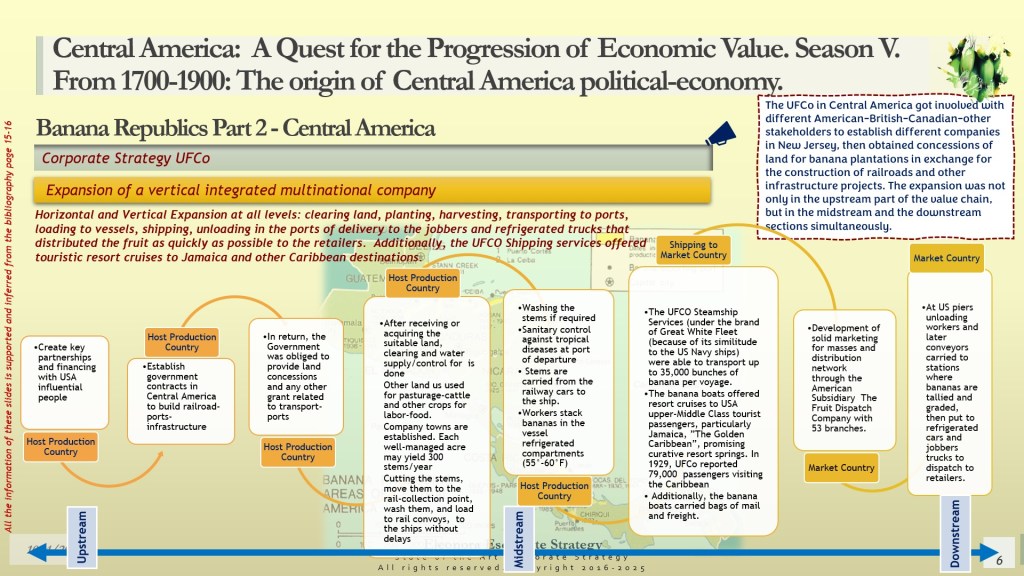
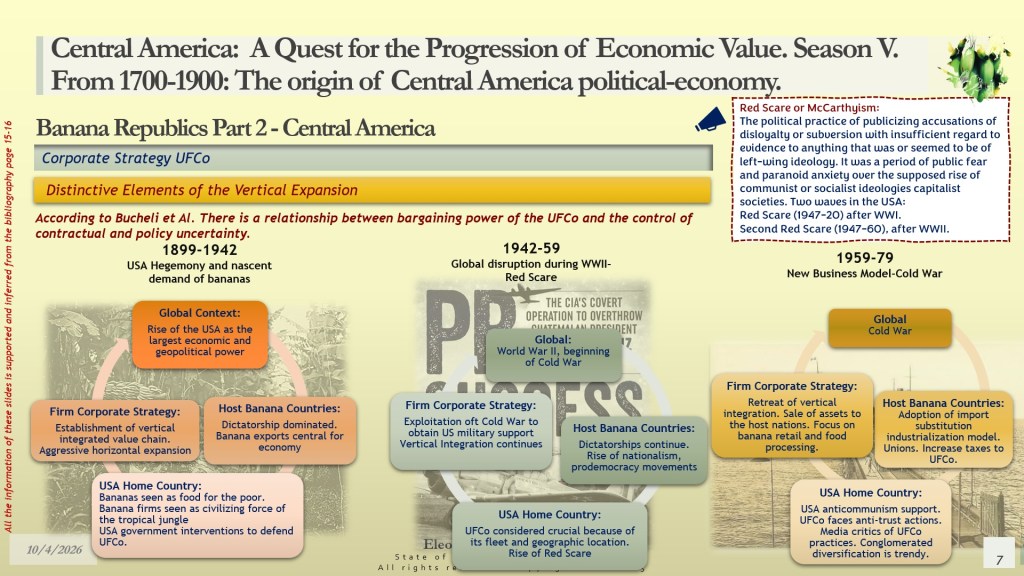
The key success factor of UFCO is explained. Slides 6 and 7.
The key success factor of UFCo was the combo boombox of all the corporate strategy existing recipes. UFCo’s key success factor was at the corporate strategy level, as much as the business and functional level. The essence was the UFCo’s capacity to grow organically with its own resources (not outsourcing to anyone else), putting bananas at the core of its corporation. During the first 40 years of existence, the UFCo did not rely on anyone else. Never outsourced its decision-making to another; it did not outsource the essence of the endeavor. It was reporting to hundreds of shareholders who owned the corporation, but it never outsourced the business model. Everything was made from scratch with its own resources allocation. Furthermore, UFCo was accompanying the whole banana value proposition with a full vertical integration of the operation in the tropics, while applying all the possible forms of horizontal growth (geographic expansion, joint ventures, acquisitions, green-field development, production sharing, and management contracts). Meanwhile, it was diversifying the land crops and transforming centers of costs into profitable divisions. Additionally, the medical division of UFCo was crucial to keeping the business afloat. From the start, the tropical diseases were an important labor barrier (Keith family members died, along with more than 4,000 employees). As a consequence, the UFCo invested part of its profits in the development of medical solutions to stop the yellow fever, malaria, etc. Deprived of healthy labor, the company was not going to succeed. Likewise, every plantation required a lot of people, people who could work at the rhythm of the production requirements that were demanded in the USA and Europe, for which the supply of bananas was being implemented and organized in each of the Banana Republics. Also, we can´t forget the public relations and marketing specialists of top-level that Zemurray hired to push the demand as high as possible. See slide 6. The analysis of Bucheli, Ciravegna, and Saenz (1) is about the bargaining power of UFCo in distinct phases of the life of the company. Bucheli has linked the bargaining power of UFCo with transaction cost economics, focusing on contractual and policy uncertainties. The higher the bargaining power of the company in one nation, the higher the vertical integration of the corporation, because the contractual risks are also higher (host countries with weak rules of law, inefficient justice systems, and a lack of enforcement for contractual arrangements). Moreover, the policy uncertainties are those connected to the political risks of a determined banana republic, such as changes in the super-structure government roadmaps, and the directions and outcomes from those changes. In consequence, the UFCo bargaining power declined in relation to the government of one nation if nationalism or state intervention (including expropriations) may happen. See slide 7.
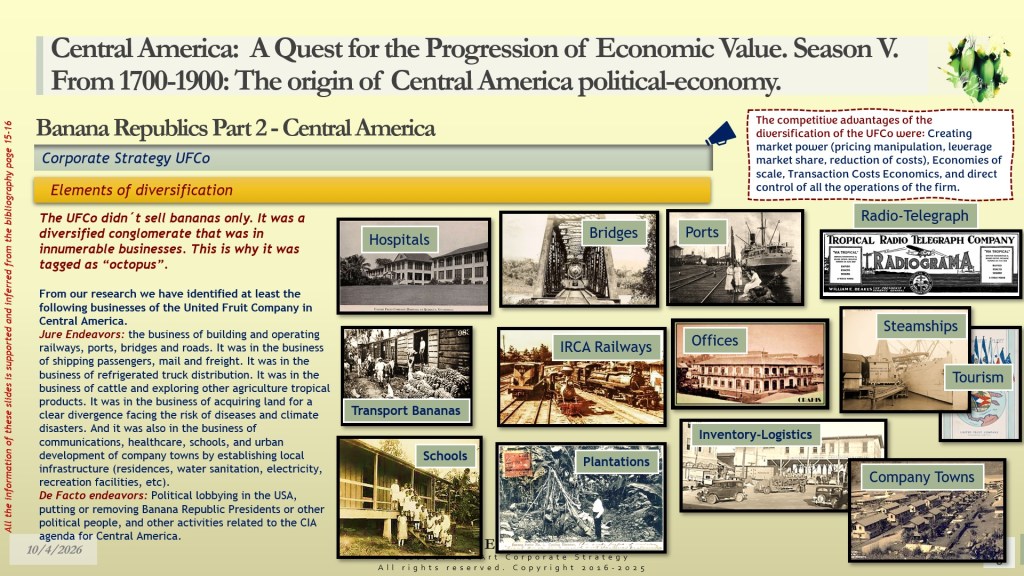
Elements of diversification. Slide 8.
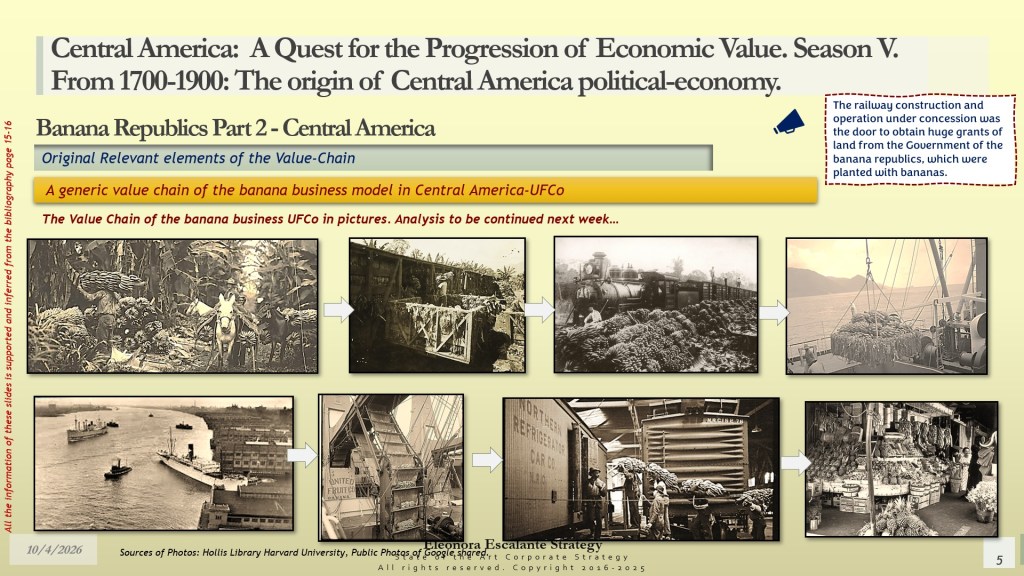
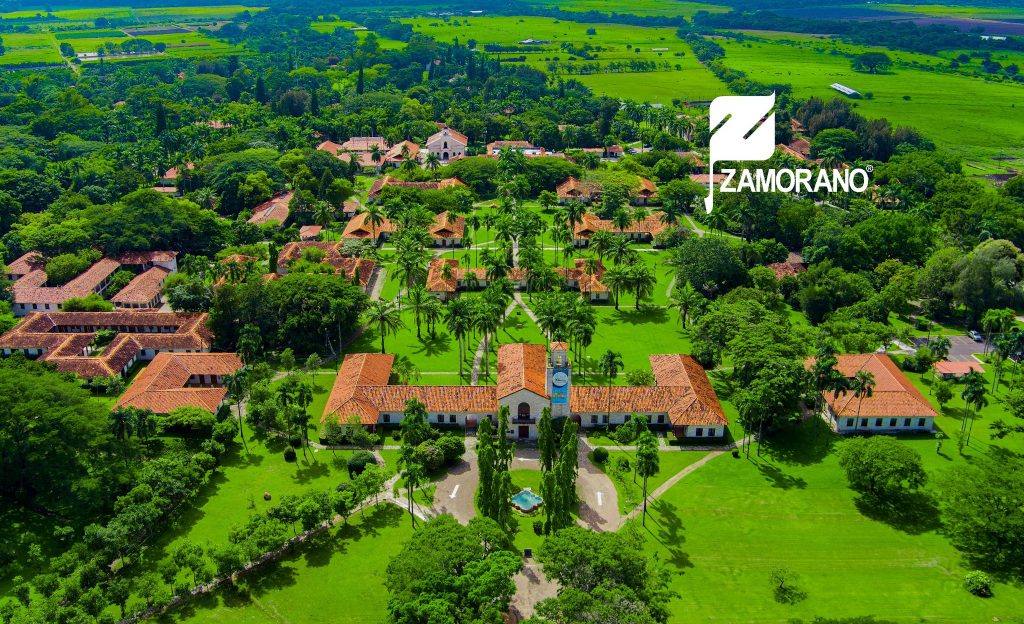
Despite UFCo’s core business continuing to be bananas, the company accompanied the bananas value chain with cost centers with the goal of reducing them to economize. Their decision to keep all the activities (upstream, mid-stream, and downstream) under the company was not merely and exclusively for bananas. For example, the United Fruit Shipping Company and Services was not only shipping bananas in refrigerated containers, but it was also shipping freight, mail, and people. The Great White Fleet was aggressively promoting the tourism voyages to Jamaica, with the purpose of healing those who had health problems in North America. Ports were mainly used to load bananas, but they also provided freight services to other planters. The IRCA (International Railways of Central America) was supplying its services to coffee planters, since this UFCo subsidiary was the monopoly for all types of railway transportation services in the region. The telegraph and radio were also private services that were set up to procure revenues for the company. The business of cattle was appropriately designed as a diversification tool that also served in the transportation of bananas. The Zamorano School of Agriculture in Honduras is also another example of the diversification of the UFCo in higher education. The UFCo also hired most of the graduates for its plantations. The education at El Zamorano was free to the students at that time.
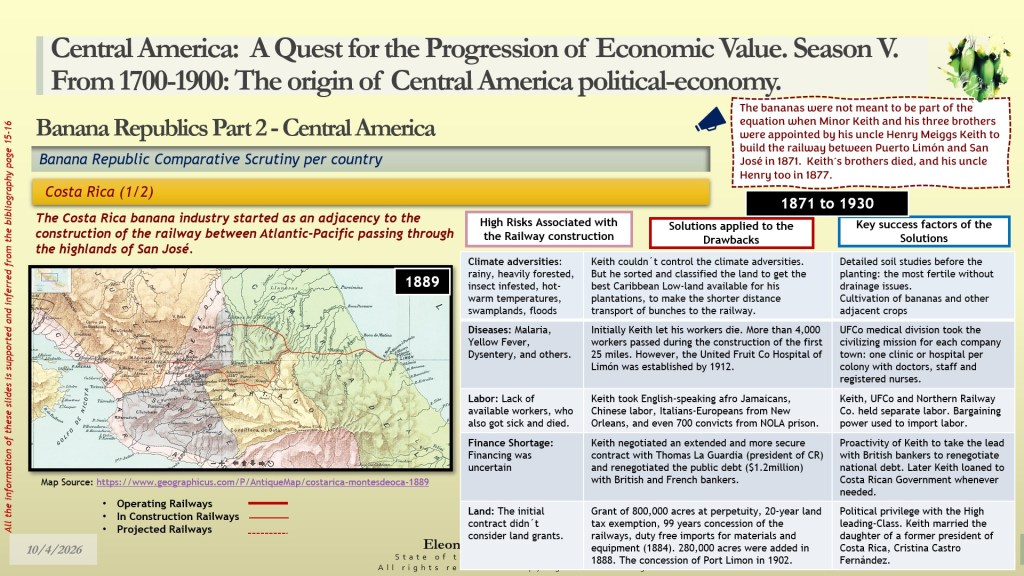
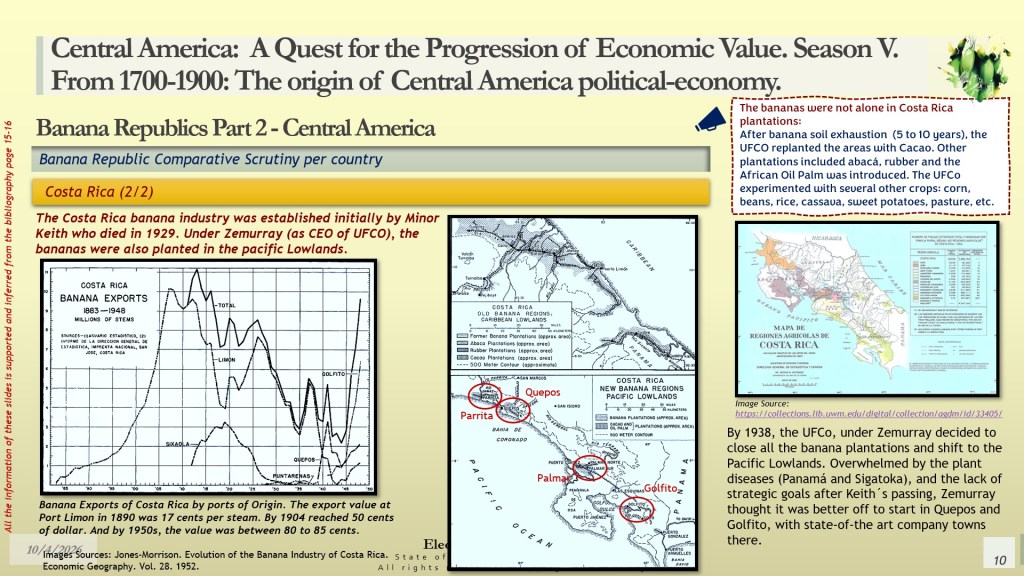
Costa Rica. Slides 9 and 10.
Our aim with these slides is to show you the importance of the railways in the banana business model. Let´s see the agricultural crop diversification first. Every time that UFCo faced an element of agricultural risk (such as the Panama and the sigatoka diseases or floods), they were able to move to other territories, where the disease couldn´t propagate. Look at slide 10, when the Limon Plantations were in crisis due to disease, the Sixaola plantation region was activated. This decision allowed the firm to continue producing without stopping between 1915 and 1920. Then, by the time Sixaola was not producing anything, the Pacific lowlands of Costa Rica were producing from Quepos, Parrita, Palmar, and Golfito during the 1940s. Certainly true, by 1938, UFCOs shifted all its banana plantations to the Pacific Coast. Moreover, at this time, Costa Rica was not as important in terms of production, because Guatemala and Honduras were heavily involved in producing more bananas ever! For example, in 1947, Guatemala, Honduras, and Panama banana plantations were produced from 96,571 acres, while Costa Rica was producing from 38,522 acres. In total, in Central America and the Caribbean, the UFCo was engaged in the production of agricultural products using 558,965 acres. Its crop diversification included sugar cane from Cuba, Cacao, Abaca, African Oil Palm, and others. This data has been taken from the UFCo Shareholders Annual Report of 1947-48(2).
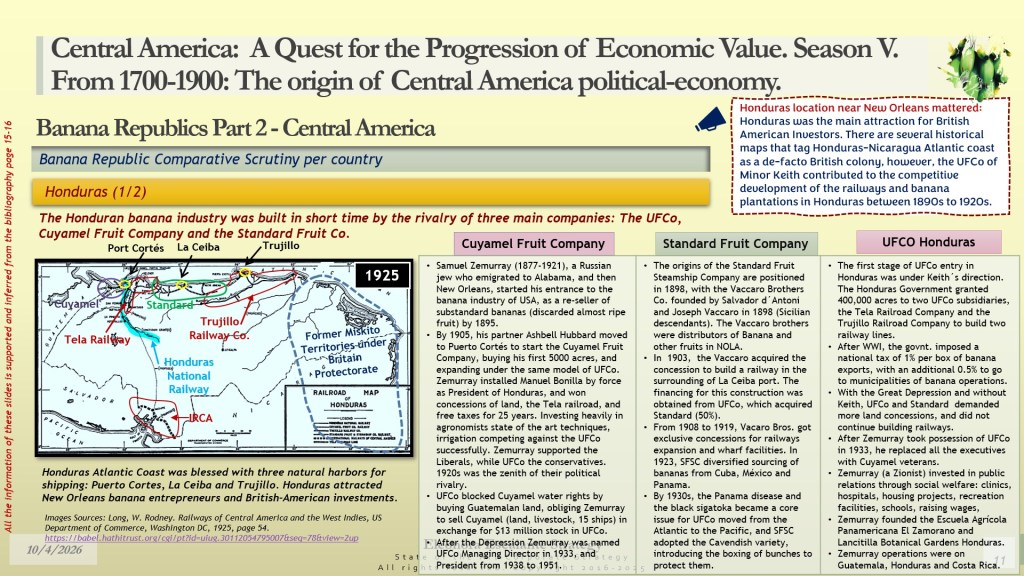
Honduras and the Miskito Kingdom. Slides 11-12.
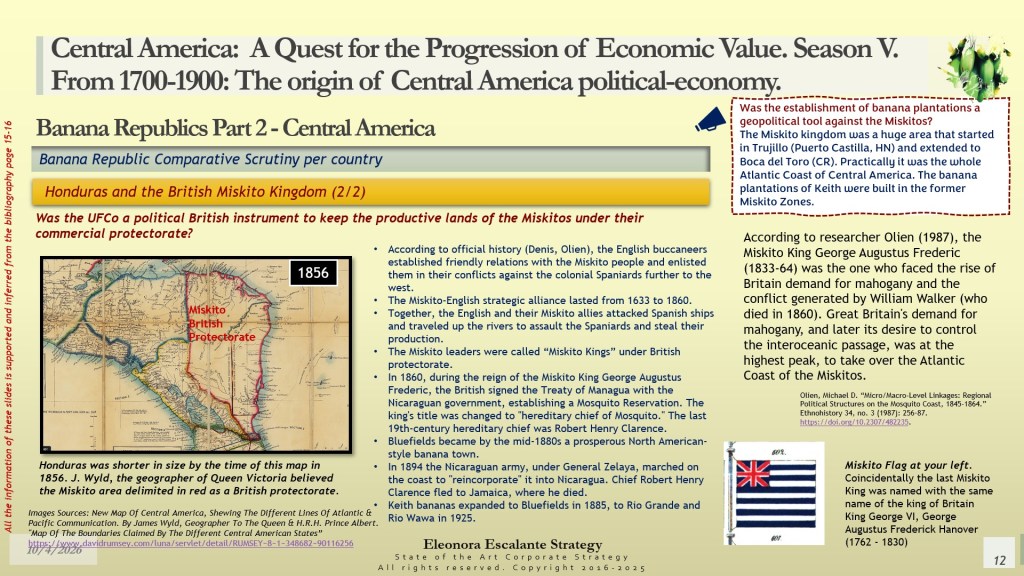
The banana republic of Honduras is a case study that needs to be re-studied, facing the territorial political risks that UFCo faced while working in the Miskito Kingdom. Despite that Nicaragua and Honduras negotiated the partition of the Miskito territories in 1860, UFCo could not work the corresponding land of the Honduran Miskito coast. Trujillo was the last enclave for the plantations. What happened to the banana plantations of UFCo in relation to the Miskito people? Were the Miskitos used as cheap labor for the plantations?
We have prepared slide 11 in our quest to show you the competitive map of banana plantations in Honduras. However, the snapshot is until 1931, when Cuyamel Fruit Company was acquired by UFCo, and Samuel Zemurray was hired as CEO and chairman of the company. The slide is self-explanatory.
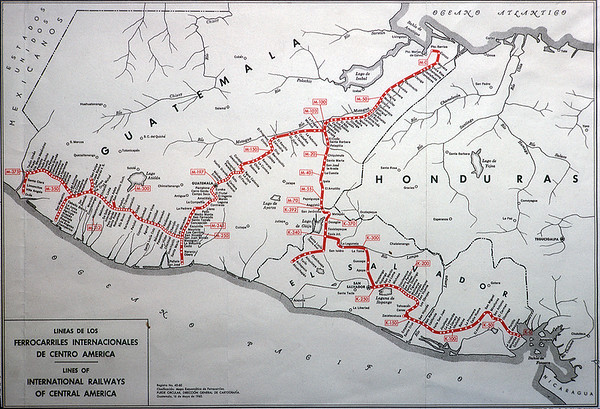
Guatemala. Slide 13.
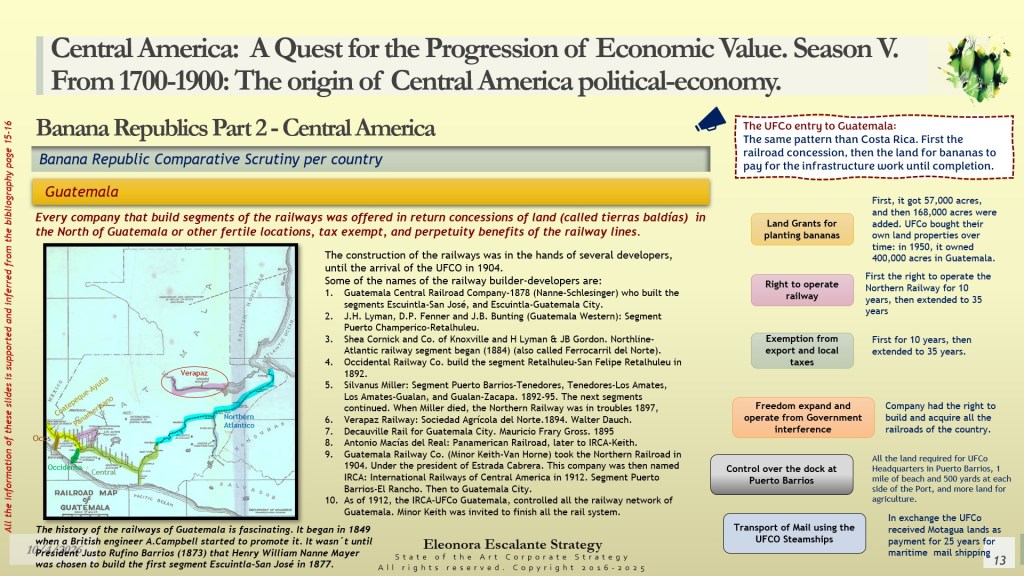
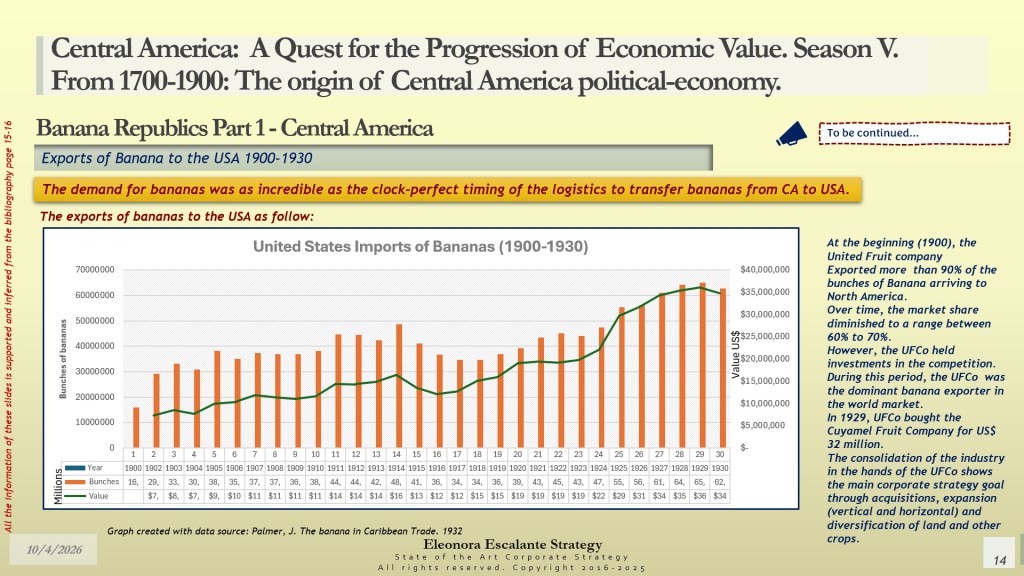
We have focused all our energy on explaining the railway system that UFCo swallowed once the IRCA was established. IRCA (International Railways of Central America) was the railway subsidiary of UFCO. The reason for showing you the Guatemala railway system is subtly an amazement. Guatemala´s banana plantations were first in the lower Motagua River Valley in the Atlantic Caribbean Lowlands, near the plantations of Cuyamel Fruit Company. Between 1913 and 1929, Guatemala´s banana exports to the USA were growing steadily, but not in a significant manner, when the great depression hit, and the Panama Disease took the Atlantic by storm. In consequence, the diversification of the land was set in place, and the UFCo Guatemalan operations in the Pacific Lowlands (Tiquisate) began (see map below). But the UFCo’s operations in Guatemala were not separated from the Geopolitical American economic interests. Tiquisate was not a good place for bananas. It wasn´t near a good harbor, it required the construction of communication and transportation systems, and the climate was not adequate. However, to keep the bananas moving to the USA, they were moved to the Atlantic. By the end of the 1930s, Guatemala´s average annual production was growing and reaching 167,000 tons (3). We will not cover the Arbenz situation of 1954 (4), and the intervention of the CIA in Guatemala´s coup d´etat, because it is out of our period of analysis. However, the students need to take notice of it and read it on their own. The case of the UFCo and its possible connections with the Massacre of Workers in the Banana Zone of Magdalena (5), Colombia, is also not analyzed today, since it is out of our Central American regional scope. Furthermore, to get acquainted with more details, we encourage our students to continue doing the following further reading by clicking the following URLs. This is an additional bibliography that we have used for this chapter.
Thank you. I wish our strategy house could have more time to explain the role of the Dispatch Fruit Company, its distribution logistics at the North American territories, and the marketing strategies in much more detail with UFCO, but we are running behind schedule. We have at least provided the elements of value that have not been contemplated or discussed by other researchers. And that is our contribution to this case. We have concluded our analysis for today´s master class: Our next publication is about the summary and conclusions of all the work that we initiated in October of 2024.
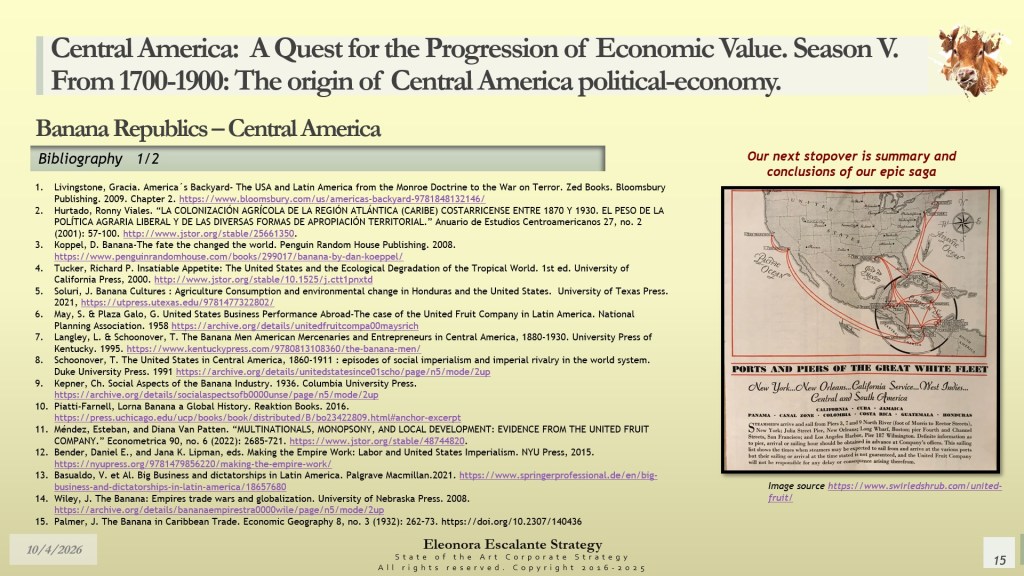
Bibliography used for today´s strategic reflections. Further reading for the students:
Closing Words.
The importance of learning about the Banana Republics lies in the mega dimension of the endeavor that took the region by storm. To build a banana empire, moving bananas to consumers in North America and Europe, using vertical integration, horizontal growth, and diversification could not have ocurred without the geopolitical support of the top spheres of influence of the White House and its agencies. Additionally, several elements made us consider the role of MNCs in emerging and developing economies. On the one hand, without the entrance of UFCo, several infrastructure, communications, and connectivity projects would have never been built. However, on the other hand, when the interests of the international corporations collide with
the economic interests of the majority of the population and the leaders of that nation, there is always greenfield chaos and social disruptions. Inequality is the consequence of not building business models to help the working class leave the low-poverty levels and jump into the middle class. Societies without a robust middle class are affected by companies such as UFCo, because once they exit, they don´t leave anything behind, but ruins of a productive engine that did not impact the improvement of the living conditions of the citizens of the host country. In the case of the digital AI era, the same story of UFCo can repeat again and again with the new AI Techie moguls who are well-skilled to act (using the same strategies) as UFCo did in the past.
Announcement.
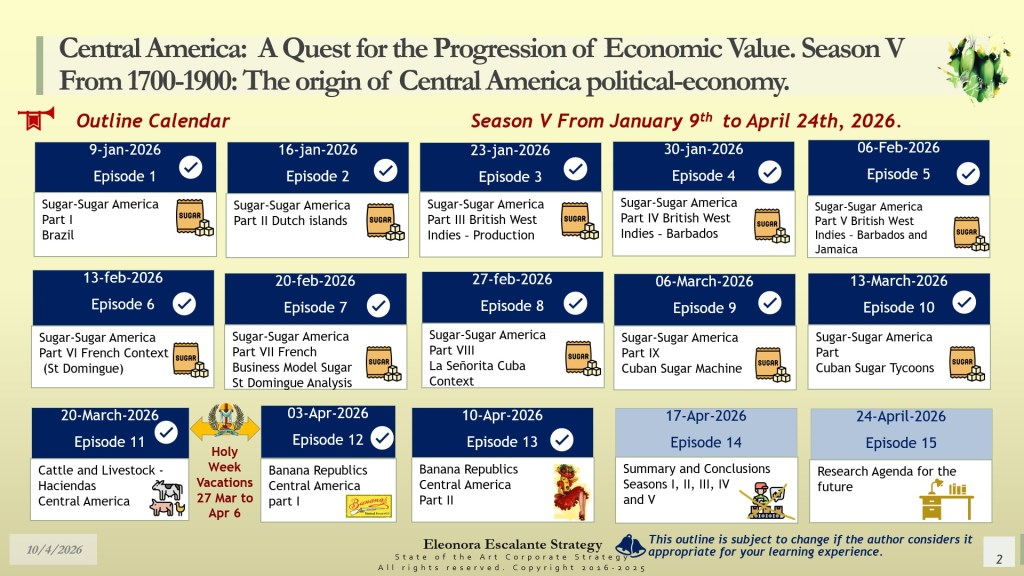
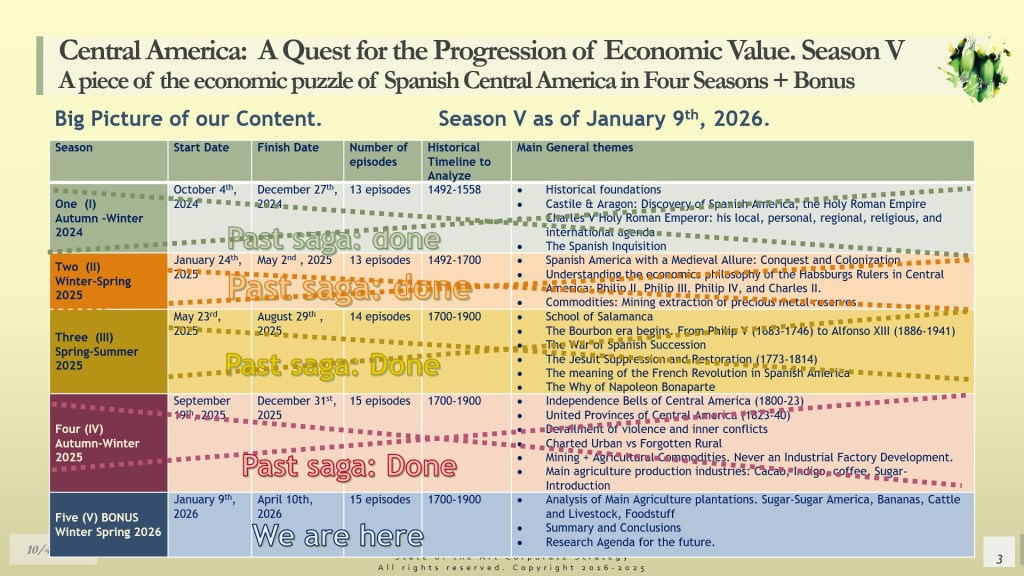
The saga “Central America, a Quest for the Progression of Economic Value” is almost accomplished. Our last episode will be on April 24th. Next, we will take 3 weeks of maintenance pause, to return with the Summer Saga: Coffee-Cacao Strategy 101 for Family Farm small-holders.
Musical Section.
During our closing bonus season V, we will return to the symphonic, philharmonic, or chamber orchestra compositions. Today, we have selected the Asia-Pacific Youth Symphony Orchestra Festival, Exchange Concert II. With the Hong Kong Children’s Symphony Orchestra
26 December 2018
Thank you for reading http://www.eleonoraescalantestrategy.com. It is a privilege to learn. Blessings.

Sources of reference and Bibliography utilized today. All are listed in the slide document. Additional material will be added when we upload the strategic reflections.
Additional Bibliography:
- Bucheli, M. ; Ciravegna, L. ; Saenz, L. F. The octopus that shrank : A historical analysis of how multinationals address policy and contractual uncertainty in a global value chain. Strategic Management Journal. John Wiley & Sons, 2023. https://www.researchgate.net/publication/372464292_The_octopus_that_shrank_A_historical_analysis_of_how_multinationals_address_policy_and_contractual_uncertainty_in_a_global_value_chain
- Annual Report 1948. United Fruit Company https://babel.hathitrust.org/cgi/pt?id=txu.059173003751015&seq=5
- Tucker, R. P. Insatiable appetite: The USA and the ecological degradation of the tropical world. University of California Press, 2000. Chapter 3. Page 151.
- Jones, G. and Bucheli, M. The Octopus and the Generals: The United Fruit Company in Guatemala. https//hbsp.harvard.edu/product/805146-PDF-ENG or https://economia.uniroma2.it/ba/globalgovernance/corso/asset/YTo0OntzOjI6ImlkIjtzOjQ6IjI2MTMiO3M6MzoiaWRhIjtzOjU6IjcxNzk5IjtzOjI6ImVtIjtOO3M6MToiYyI7czo1OiIxMWY3NyI7fQ==
- Elias, J. & Vidal, A. The worker’s massacre of 1928 in the Magdalena Zona Bananera – Colombia. An unfinished story. 2012. https://www.researchgate.net/publication/262504044_The_worker’s_massacre_of_1928_in_the_Magdalena_Zona_Bananera_-_Colombia_An_unfinished_story
Disclaimer: Eleonora Escalante paints Illustrations in Watercolor. Other types of illustrations or videos (which are not mine) are used for educational purposes ONLY. All are used as Illustrative and non-commercial images. Utilized only informatively for the public good. Nevertheless, most of this blog’s pictures, images, and videos are not mine. Unless otherwise stated, I do not own any lovely photos or images.
 Eleonora Escalante Strategy Strategic Reflections Think Tank