
Cacao and Coffee 101. Success Strategies for Small Farm Holders. Episode 13. Revenue Streams and Cost Structure. Ethiopian Coffee Part 1.
Dear stunning readers:
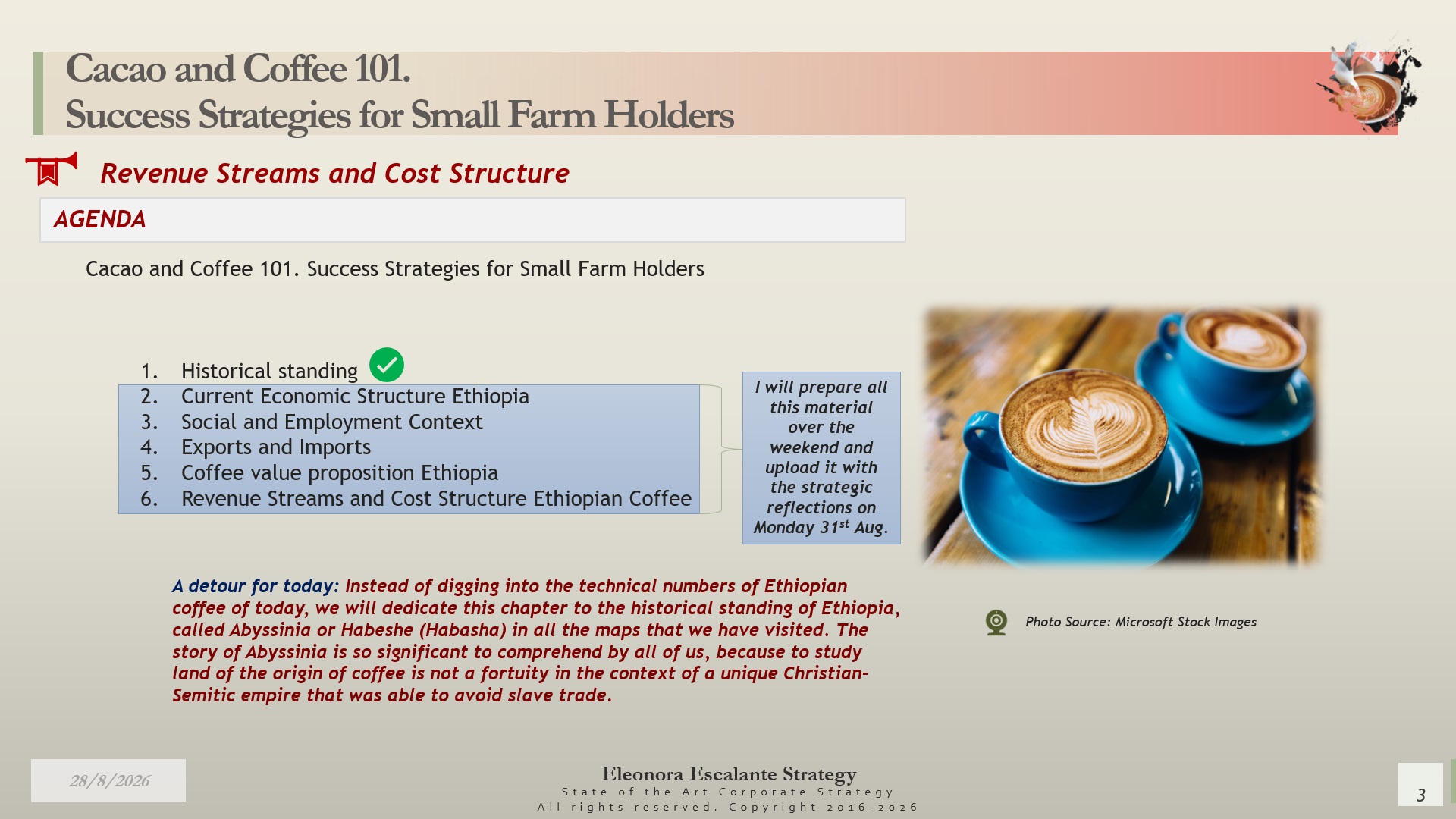
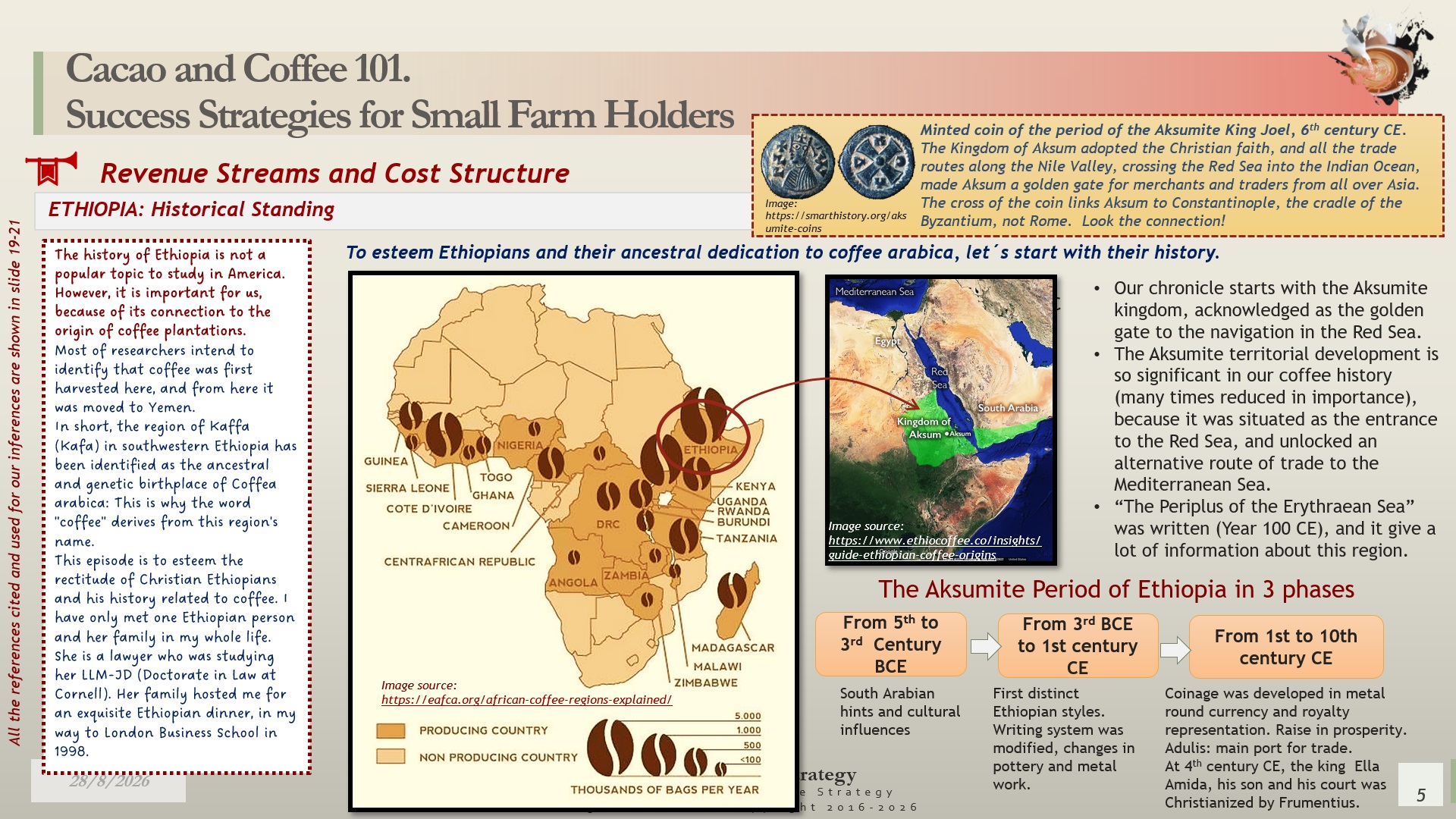
Today, we aim to share the first part of Ethiopian Coffee. Our masterclass always starts with a situational context that drags us into history. It is our aim to investigate what rationale was behind
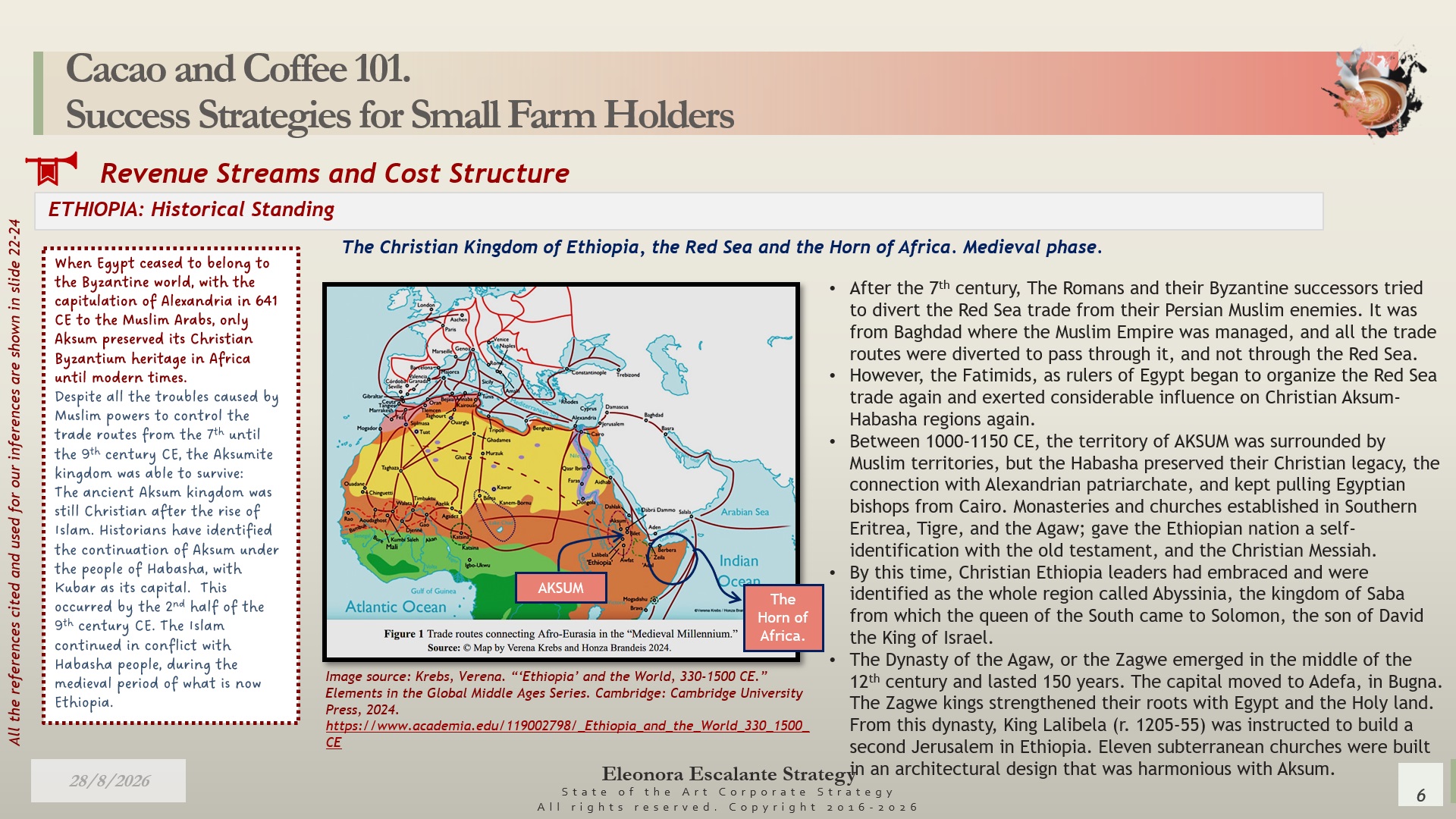
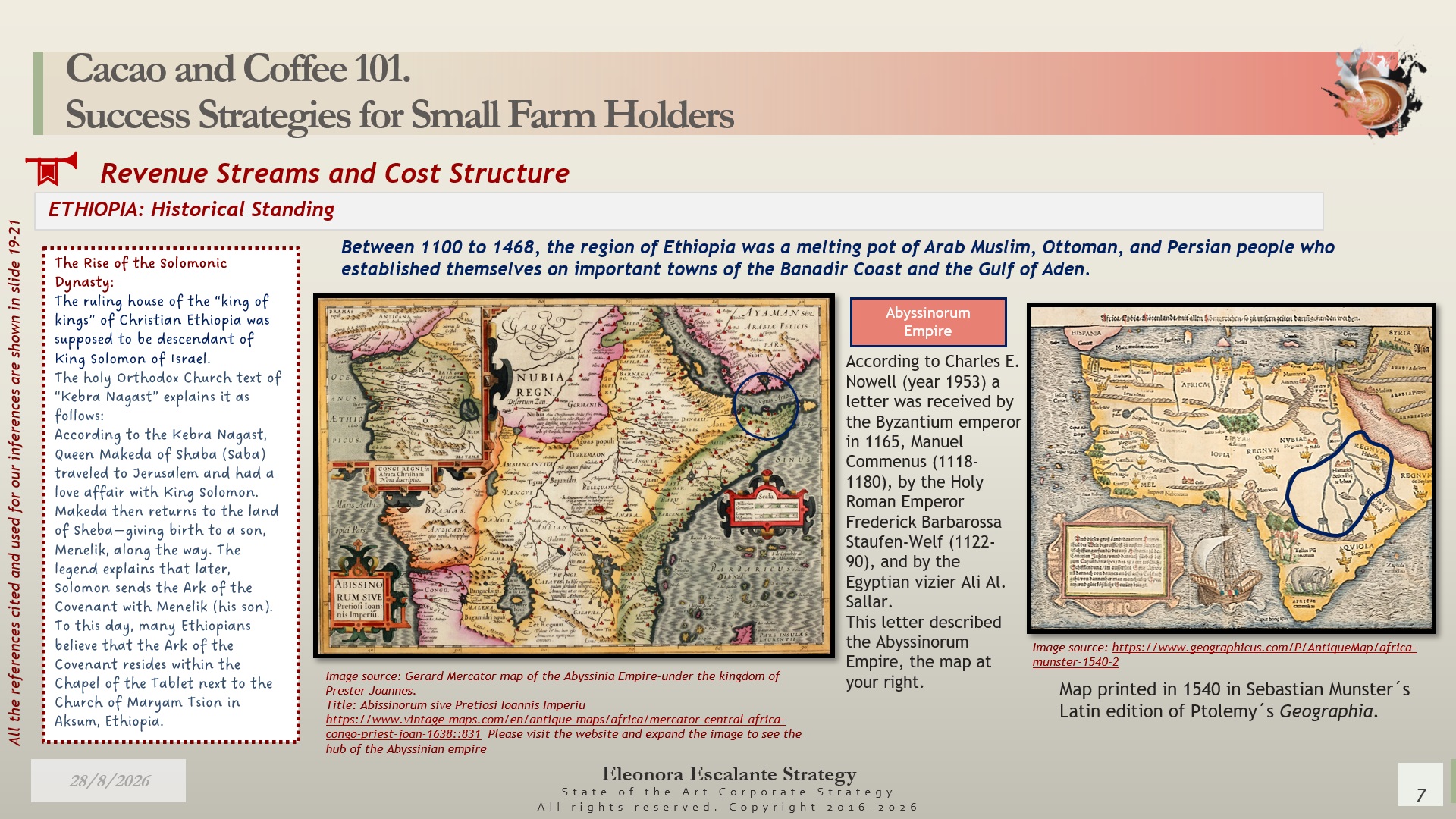
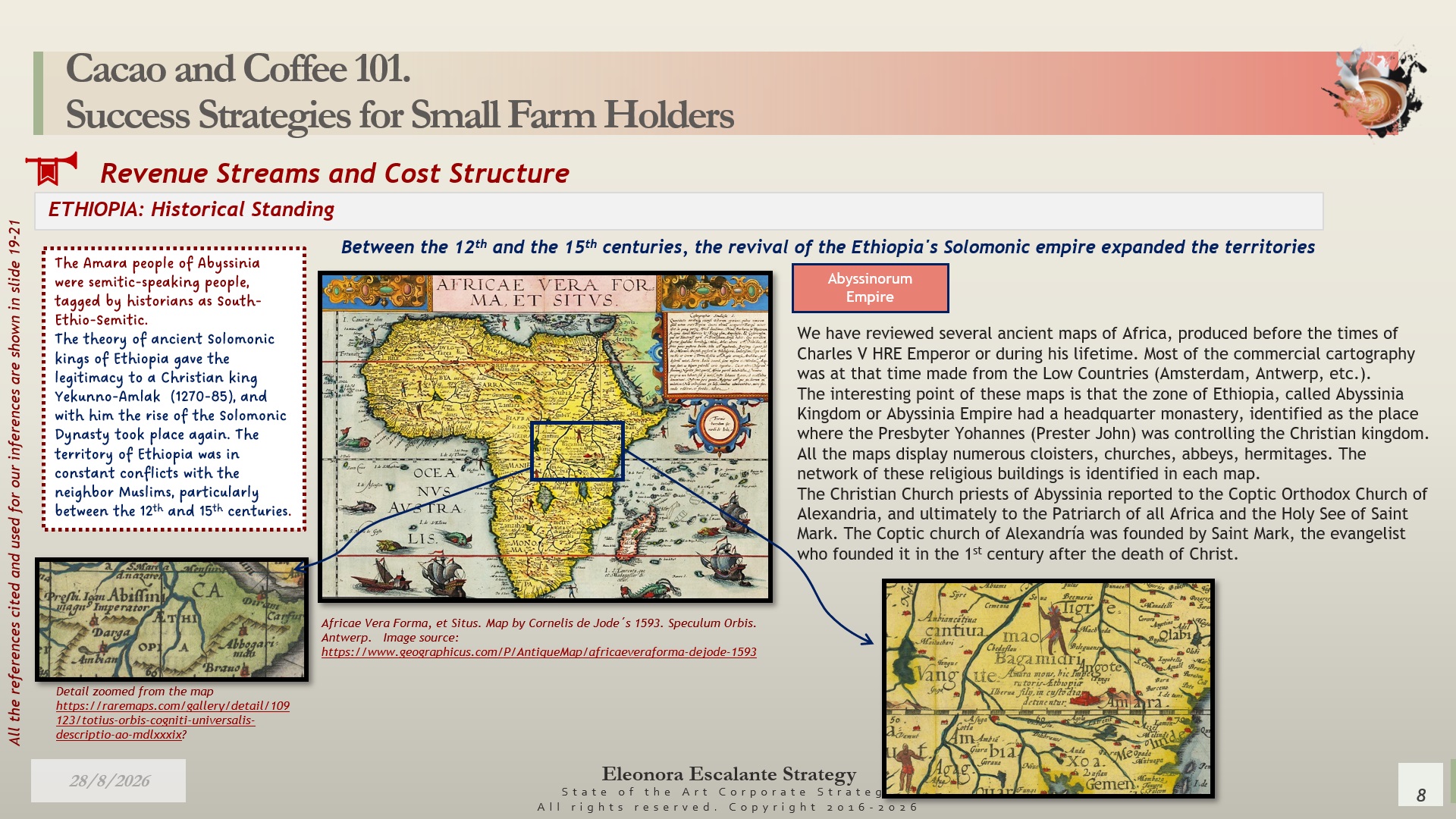
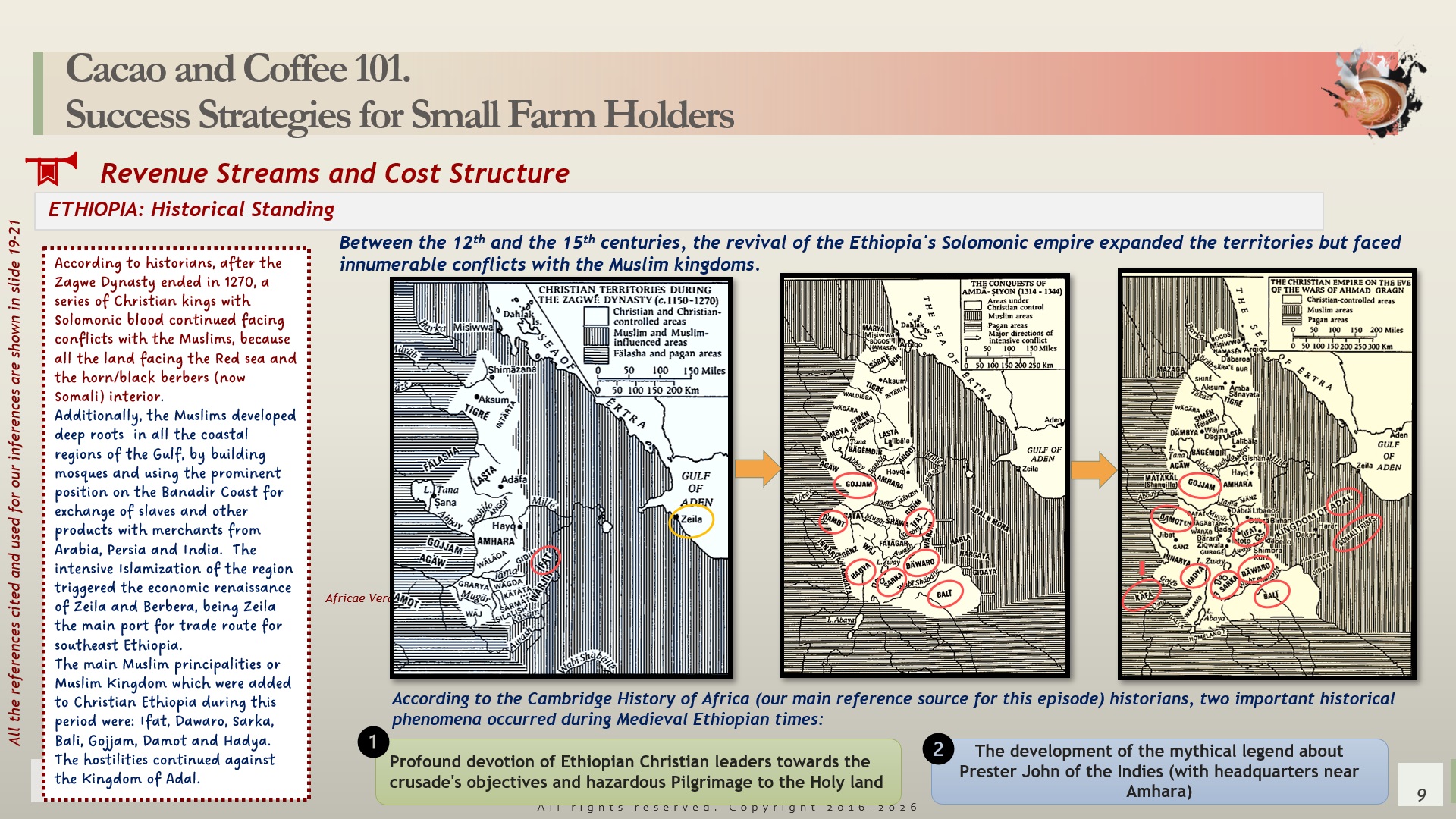
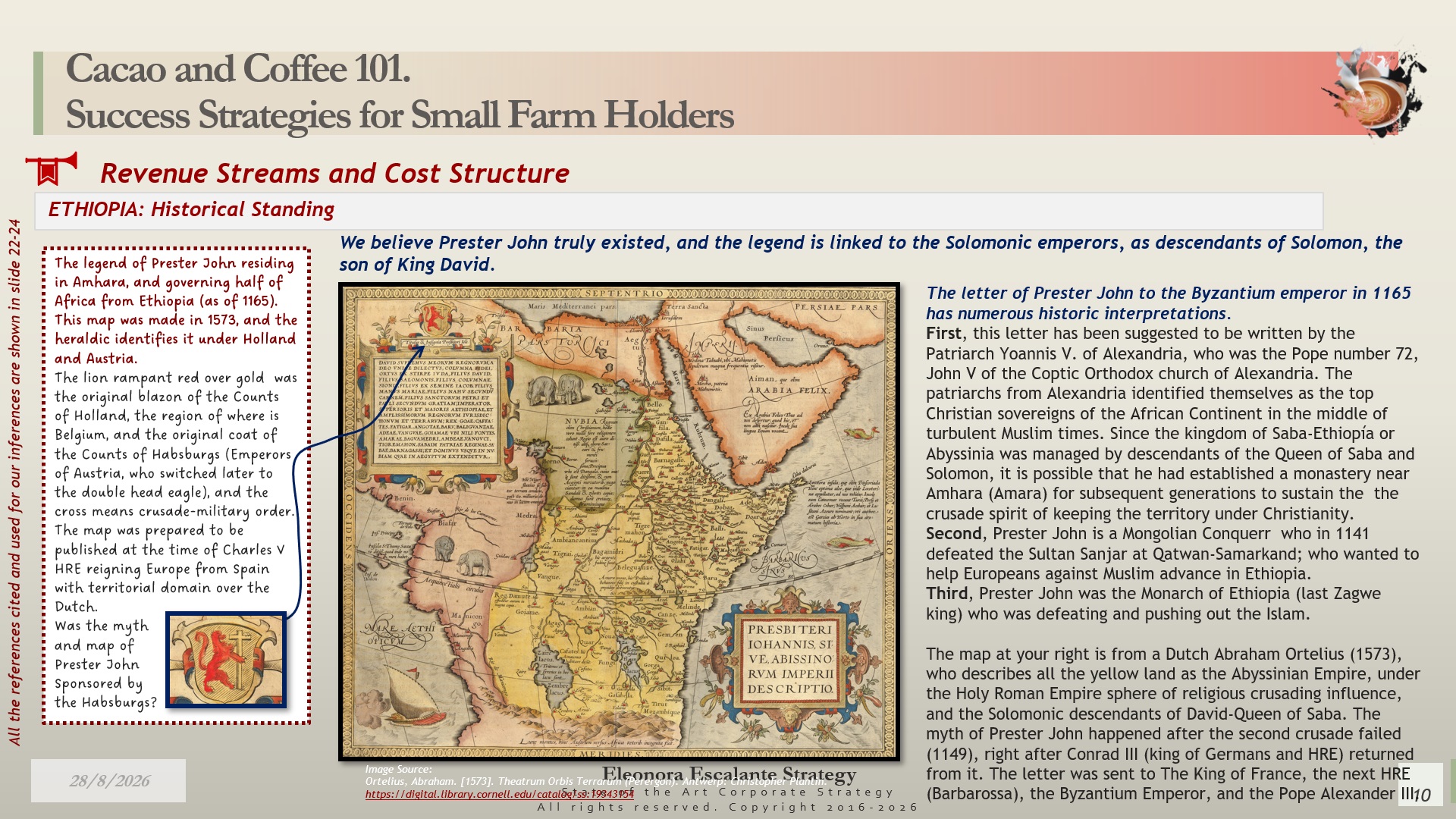
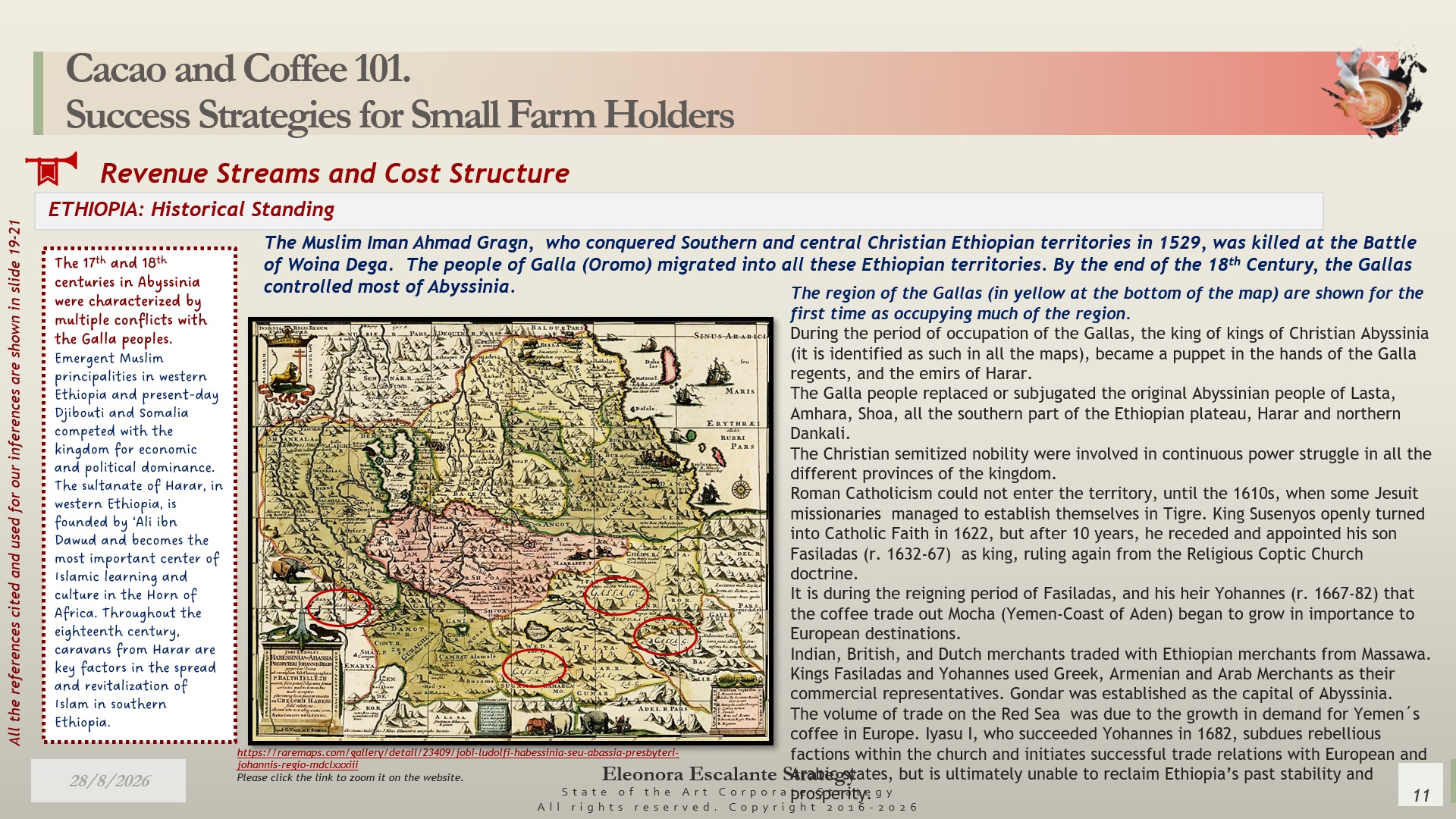
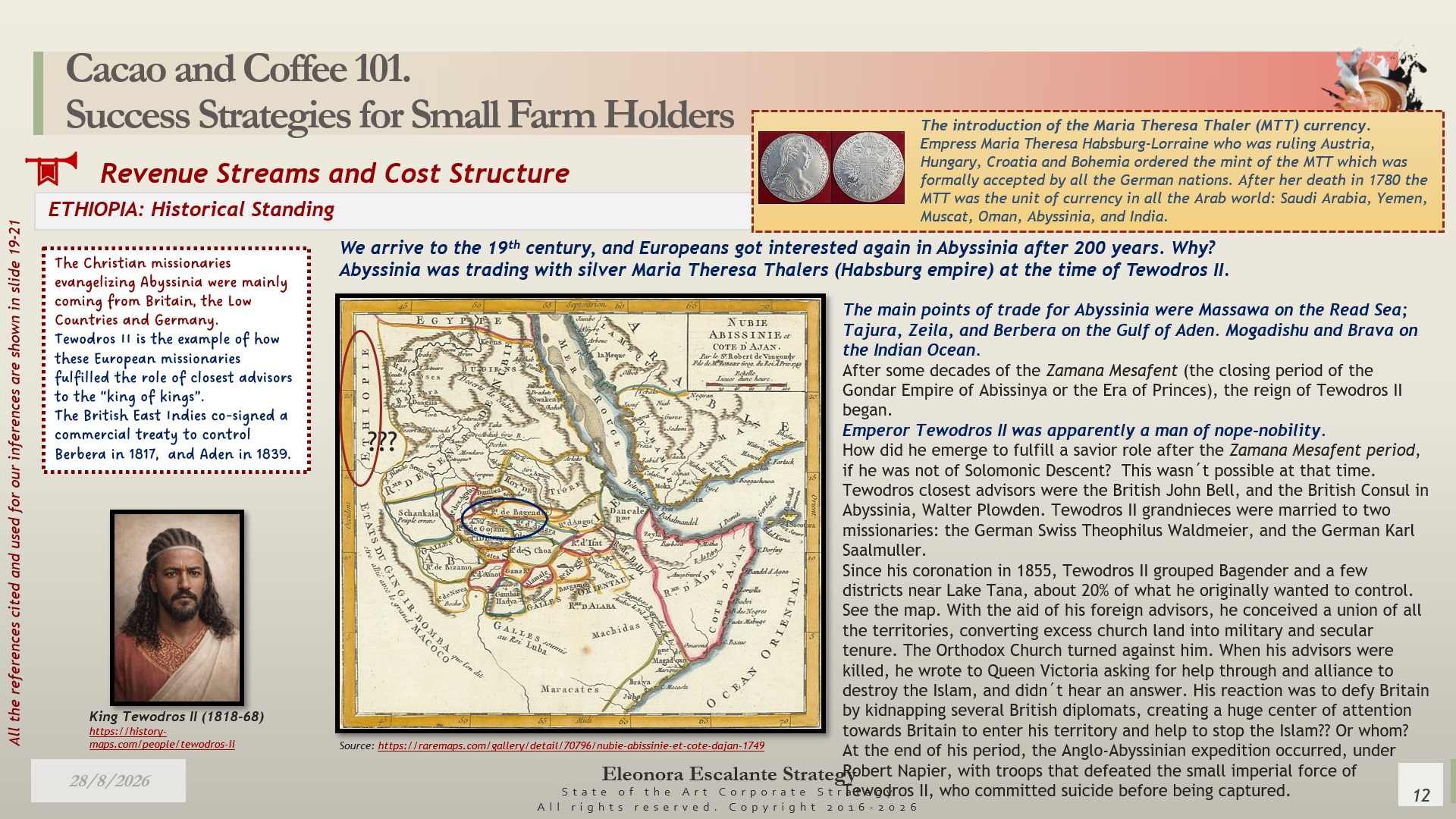
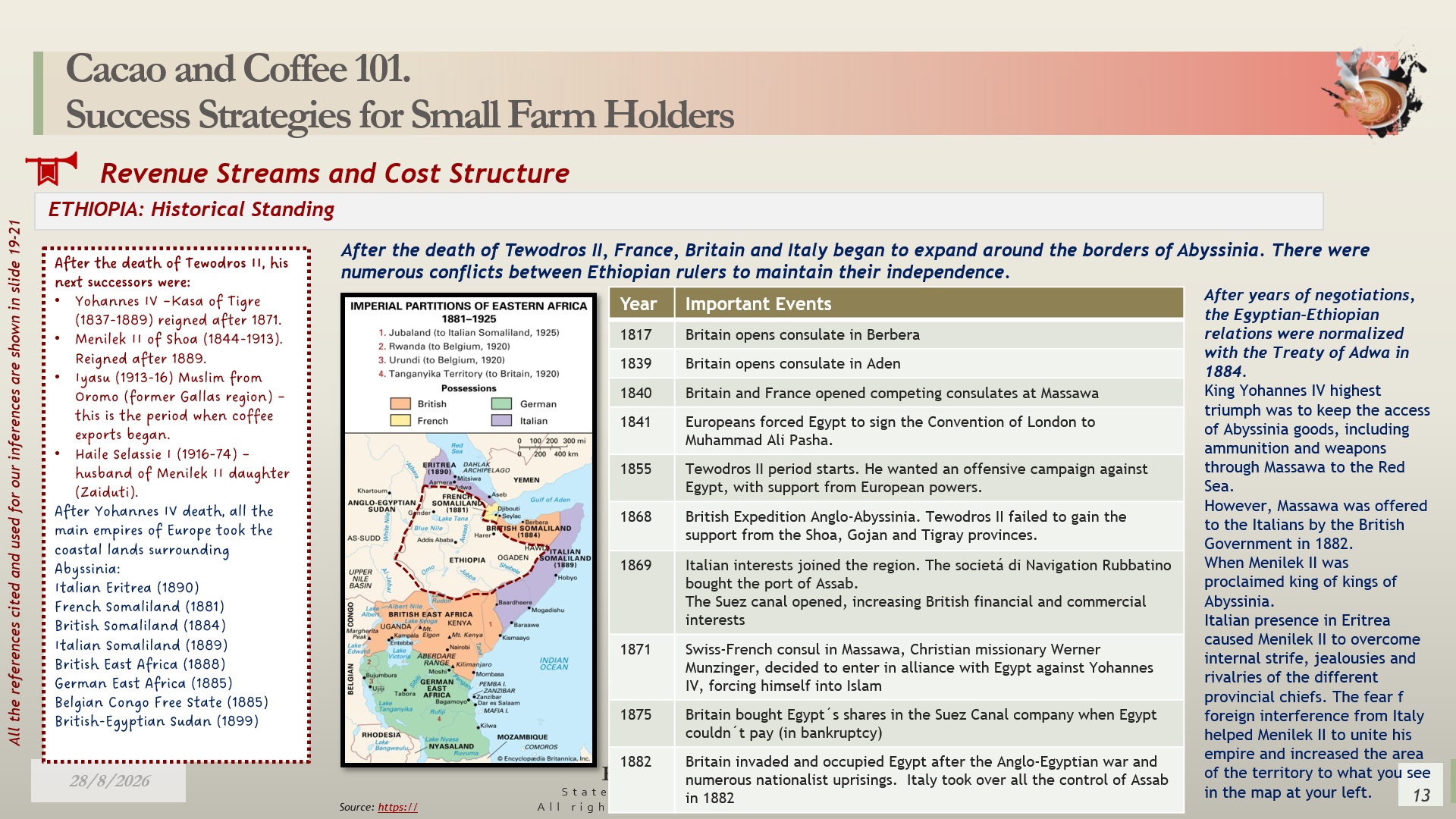
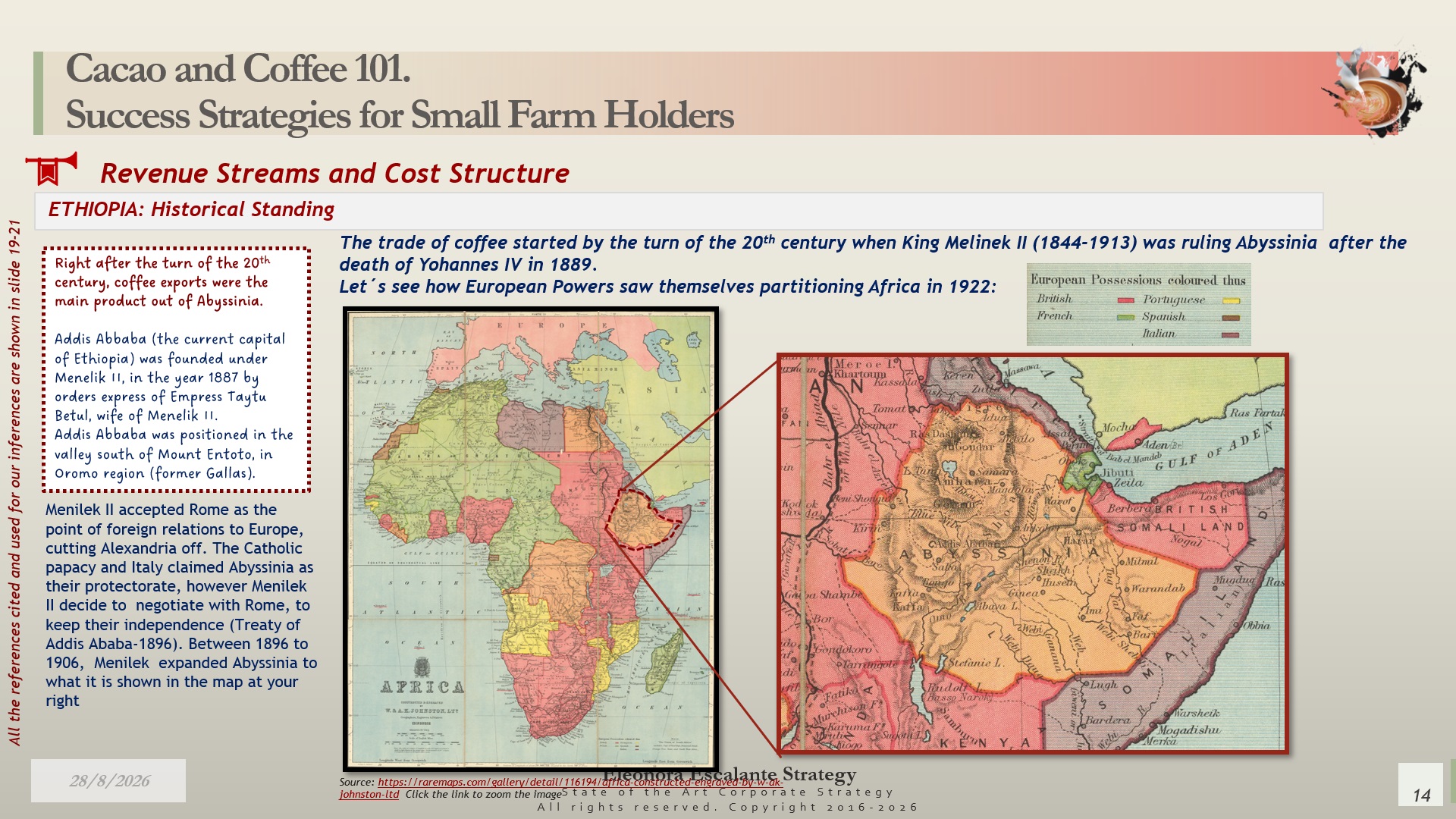
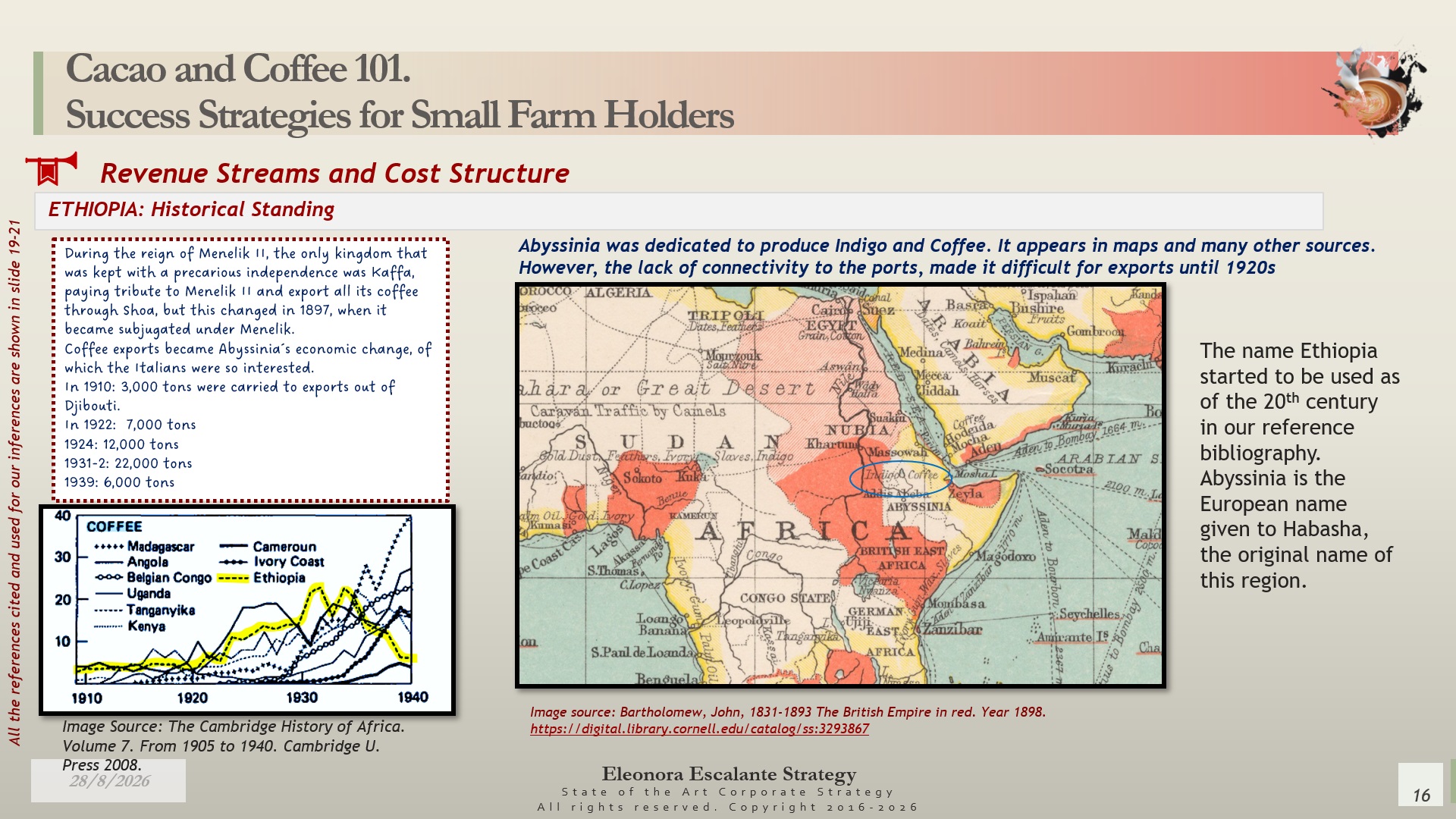
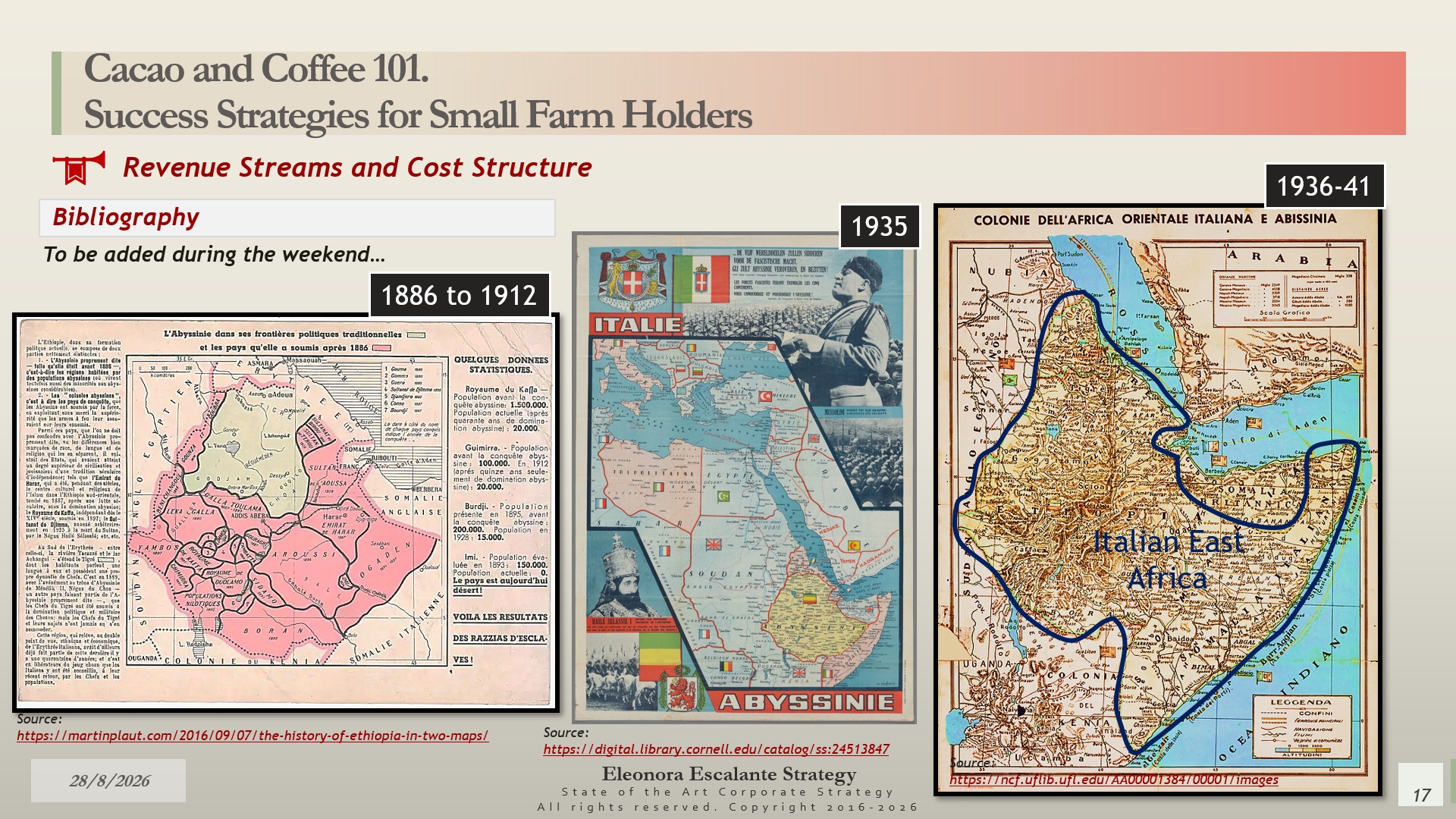
the coffee plantations of Abyssinia (the Habasha region). A complex web, sometimes obscure narrative with blurry interpretations has been designed to explain what ocurred in East Africa, including Ethiopia. For us, the first inquiry about Abyssinia was: how could this region remain “somehow free” from being captured for the transatlantic slave trade? And the second question that came to our mind was: How did Ethiopia (called Abyssinia until the 20th century) maintain its independence throughout the era of European colonization in Africa? And if we mix both queries: How did Abyssinia survive in the midst of more than 12.5 million Africans who were taken into captivity for the transatlantic slave trade, while keeping their Christian faith when facing Islamic and European domination in Africa?
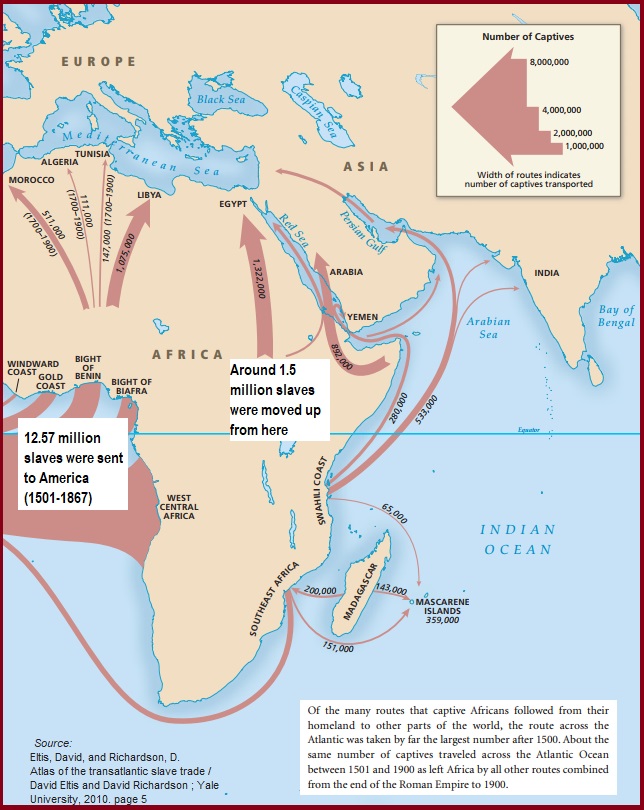
The answer to the first question is simple: Ethiopians (or Abyssinians) were not chosen to be part of the transatlantic slave trade because they were made captives for other regions; particularly, they were moved through the Red Sea, the Mediterranean, the Indian Ocean slave trade, Arabia, Turkey, Persia, and other parts of the Ottoman Empire. The answer to the second question is what we have prepared for you today.
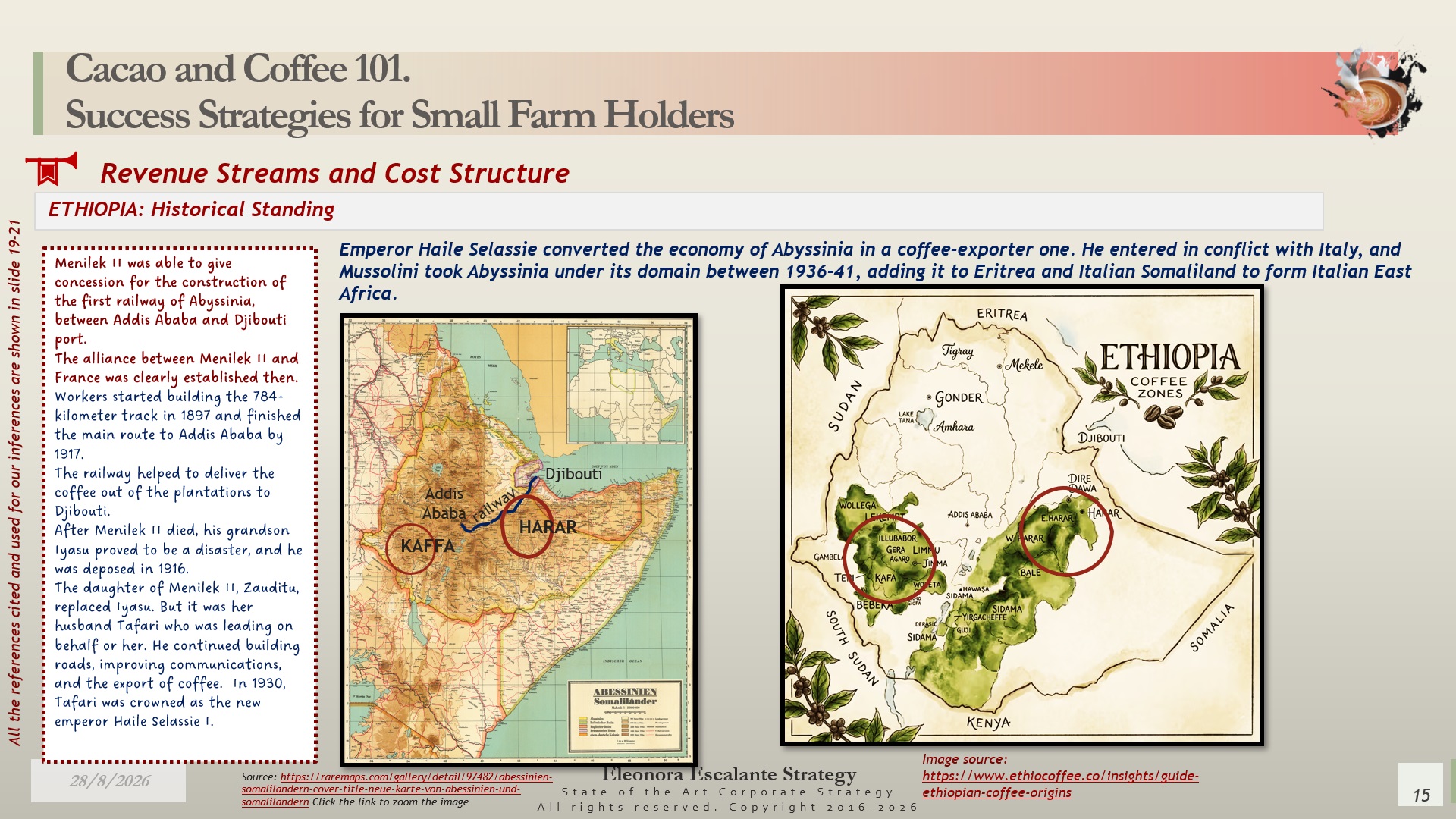
Why does it matter to study the history of Abyssinia? Why did we stay in history this week investigating it? Believe it or not… it has been because of coffee. Coffee was the first product that Abyssinia could have been able to produce to create prosperity and wealth beyond its borders. According to chroniclers, coffee was the spinal cord that leveraged the economy of Abyssinia for the first time ever in her history by the end of the 19th century. Although coffee grew naturally in the Kaffa and Harar provinces, even before it was planted in Yemen, the arabica red cherries were not cultivated on a massive scale. Coffee was not harvested for exports until the railroad connected Addis Ababa and Djibouti port at the entrance of the 20th century. Before explaining the revenue streams and costs of Ethiopian coffee planters, a third question came to us: why didn´t Abyssinia produce coffee for export earlier, if it was the cradle of coffee on earth? Was coffee flowing out of Abyssinia to European ports through alternative trading routes? Was the presence of Maria Theresa Thalers (currency in Abyssinia as of the 18th century) the consequence of trading coffee, ivory, and/or slaves?
Let´s find out the answers in history. Find our reference material for your masterclass below. Over the weekend, we will produce the rest of the content about revenues and cost structure, adding the bibliography. As usual, feel free to share this material with your loved ones. I am sure many have not yet unfolded the history of Abyssinia from the perspective of coffee.
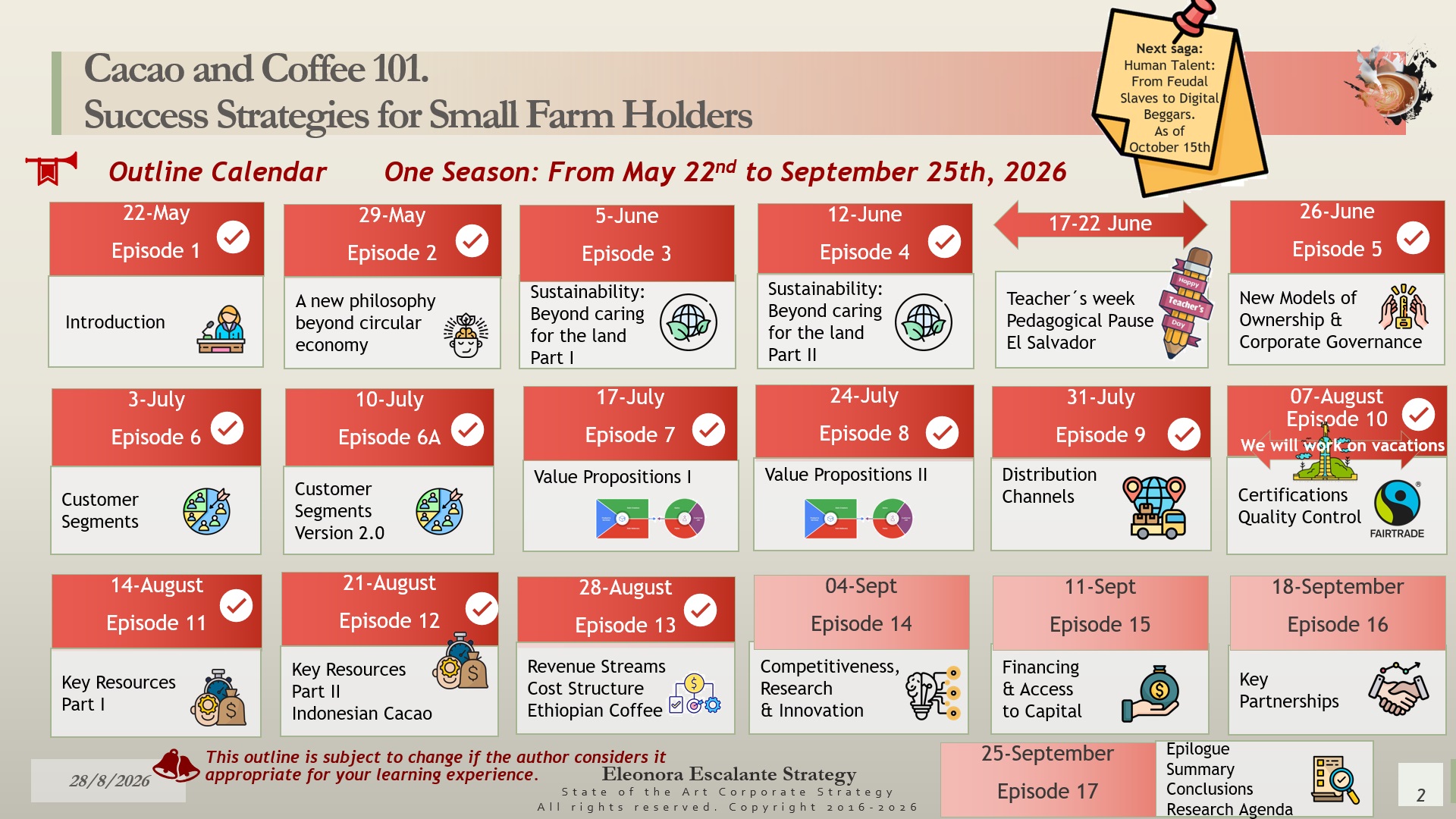

We kindly ask that you return next Monday, the 31st of August, to review our strategic reflections on this chapter.
We encourage our readers to familiarize themselves with our Friday master class by reviewing the slides over the weekend. We expect you to create ideas that are or are not strategic reflections. Every Monday, we upload our strategic inferences below. These will be discussed in the next paragraph. Only then will you be able to compare your own reflections with our introspection. We always give our students a couple of days to prepare well before our final reflection.
Strategic reflections on this episode.
These will be in the section below on Monday, the 31st of August of 2026.

Announcement.
We shifted our approach this week. We were interested to explore in the history of Abyssinia and the whereabouts of coffee plantations. To this minute, we are in a work-in-progress attire, in consequence we will add the section about revenue streams and cost structure during our precious weekend. Stay tuned.
Musical Section.
This saga is committed to raising the traditional musical instruments and their respective musicians over the digitally produced sounds. This saga is dedicated to the chamber orchestras.
Today, we have chosen the Brooklyn Chamber Orchestra. https://brooklynchamberorchestra.org/
Enjoy!
Thank you for reading http://www.eleonoraescalantestrategy.com. It is a privilege to learn. Blessings.

Sources of reference and bibliography utilized for today´s inferences. The bibliography is listed on the last slide of the reference reading material. Click the respective URL to trace them.
Bibliography in this post: This will be added accordingly with the strategic reflections.
Disclaimer: Eleonora Escalante paints Illustrations in Watercolor. Other types of illustrations or videos (which are not mine) are used for educational purposes ONLY. All are used as Illustrative and non-commercial images. Utilized only informatively for the public good. Unless otherwise stated, I do not own any lovely photos or images.
 Eleonora Escalante Strategy Strategic Reflections Think Tank