
Central America: A Quest for the Progression of Economic Value. Season III. EPisode 11. The Why of Napoleon Bonaparte.
Dear amazing, wonderful readers: Today, we will explore the life of Napoleon Bonaparte. According to official history, Napoleon has attracted numerous authors and historians who have shared the historiography of his life. His feats, his defeats, his achievements, and his impact in Europe after the French Revolution were products of a specific irrepeatable context that has been explored by all the strategic programs on earth.
Our aim for this episode is to provide a fluid roadmap of the Life of Napoleon (1769-1821), first during his formation years, then as a French General, next as First Consul, and finally, as Emperor of the French. For us, it has been a demanding filtering of information. We have explored different interpretations of what historians have described to us. Additionally, we have asked ourselves multiple times if, in reality, the Emperor Napoleon was swapped (temporarily) by the monarchs of the coalitions that fought against him. We certainly do not know. But the case of Emperor Napoleon hits our brainiac activity with the same level of suspicion as when we were reading the life of Charles V, Holy Roman Emperor. The lack of trustworthiness is not about his historiography. By far, there were multiple witnesses from each nation involved during the Napoleonic Warfare, so we have no doubt about what we have shared today. Our apprehension comes when analyzing the profile identity of Napoleon. Firstly, we suggest that the real identity of Napoleon Bonaparte is that of one of the monarchs of his time, who was born the same year as him (1768). Second, we have analyzed the possibility that Napoleon Bonaparte was switched immediately after his release from prison, when the Reign of Terror was coming to an end. If that is the case, then all the 18 Marshals might have been members of the royal houses who wanted to detain France, as well.
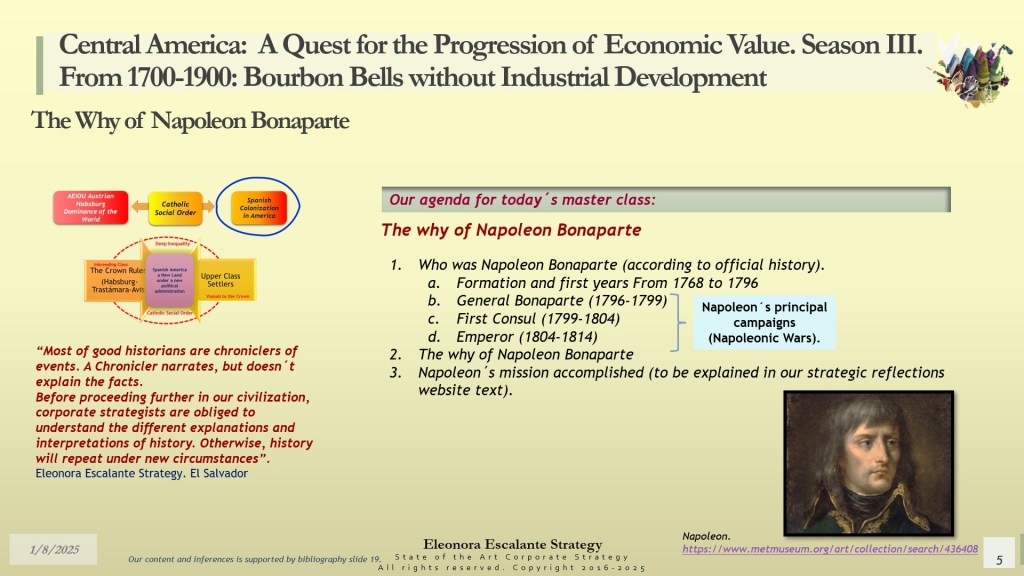
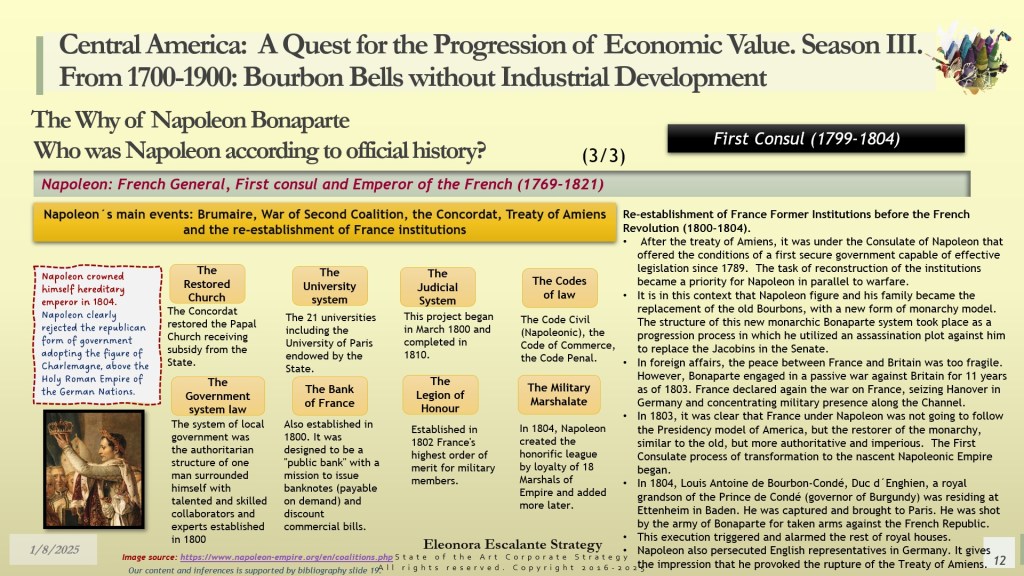
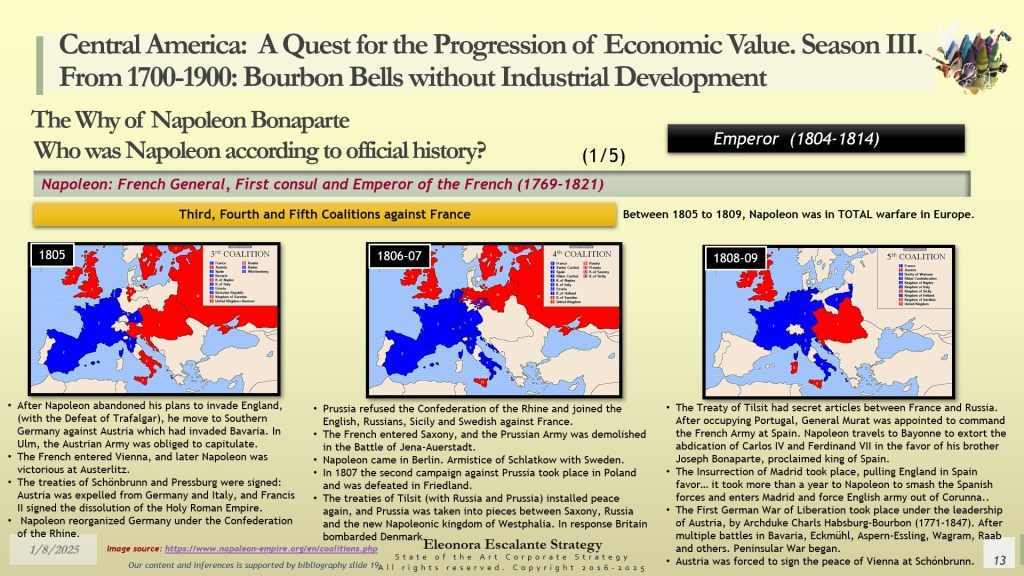
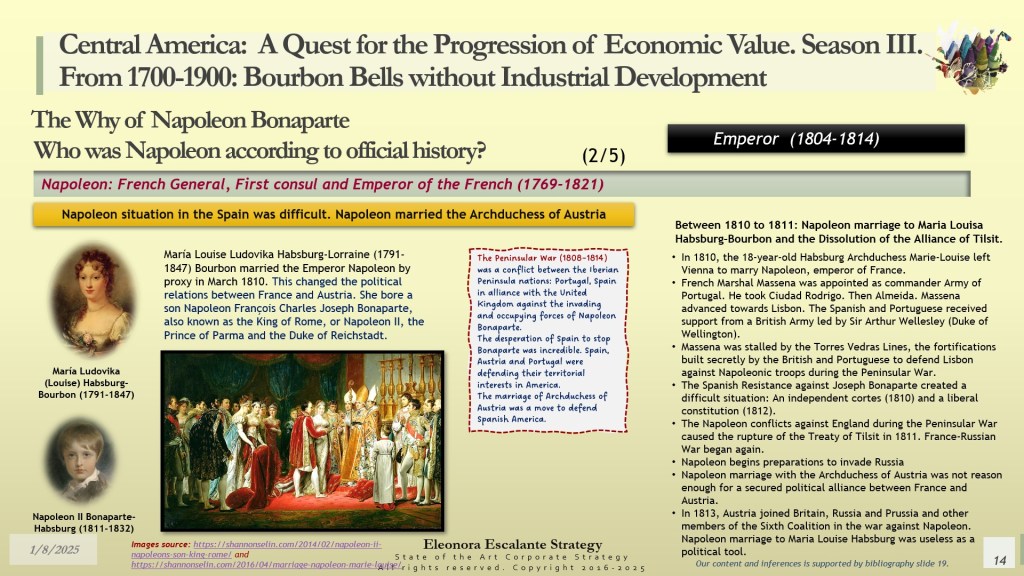
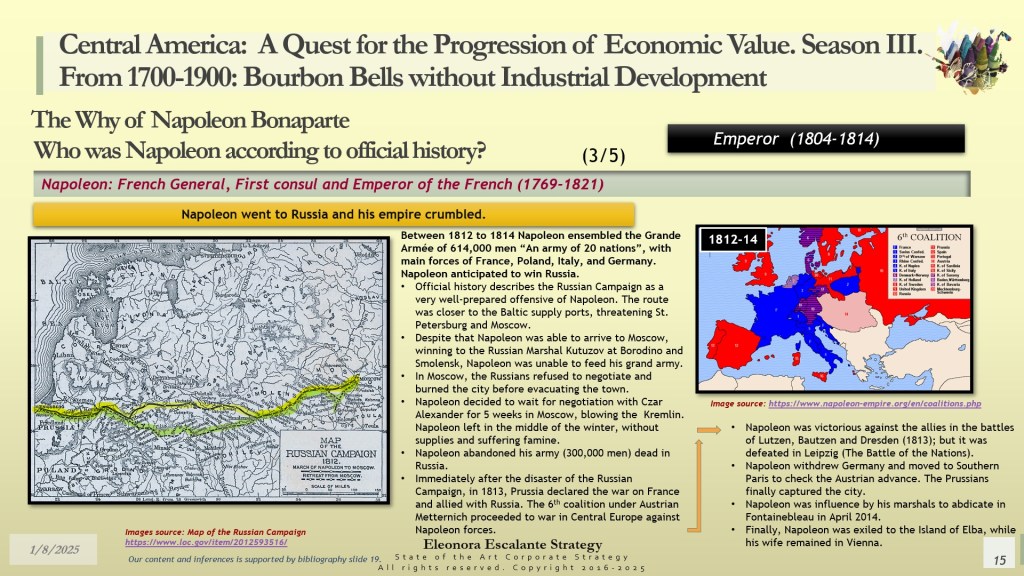
We invite you to read our presentation below. It is a journey of 18 slides that will refresh your mind about the life of Emperor Napoleon. Feel free to share this material with your family and friends. Discuss and debate about it. Follow the bibliography for a greater understanding of each of the 4 life phases of Napoleon. Do not forget to print it and write your notes on it.
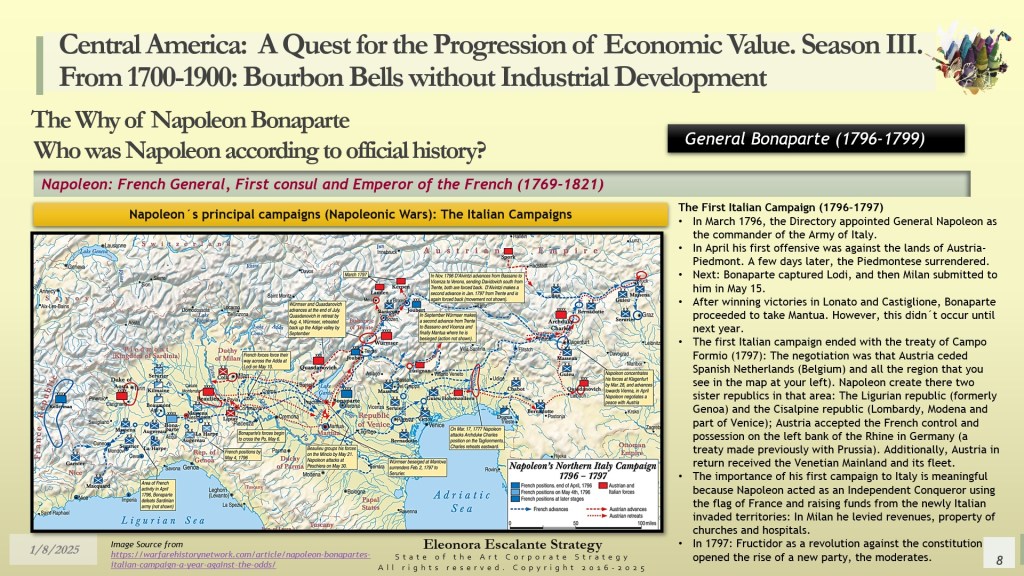
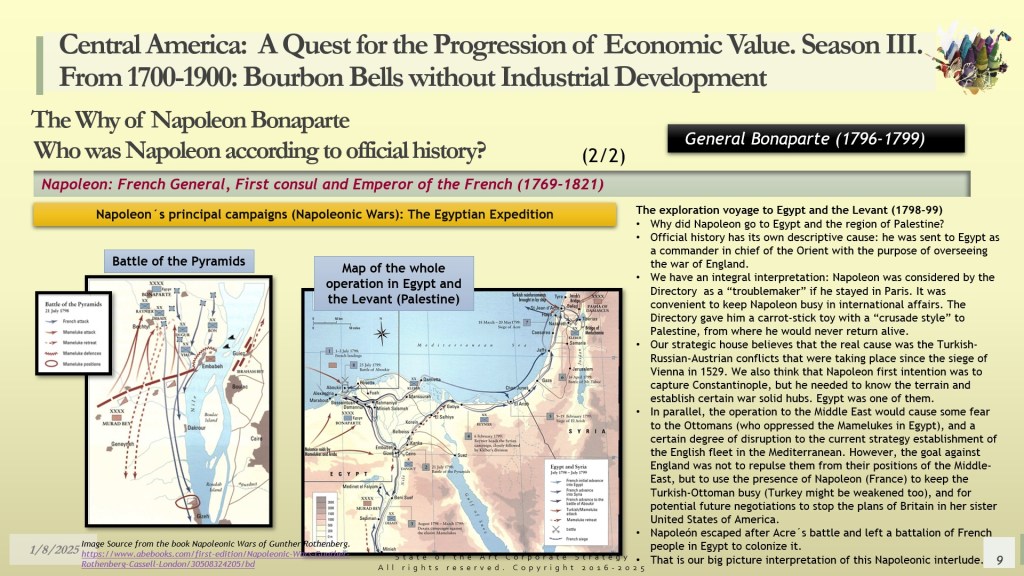
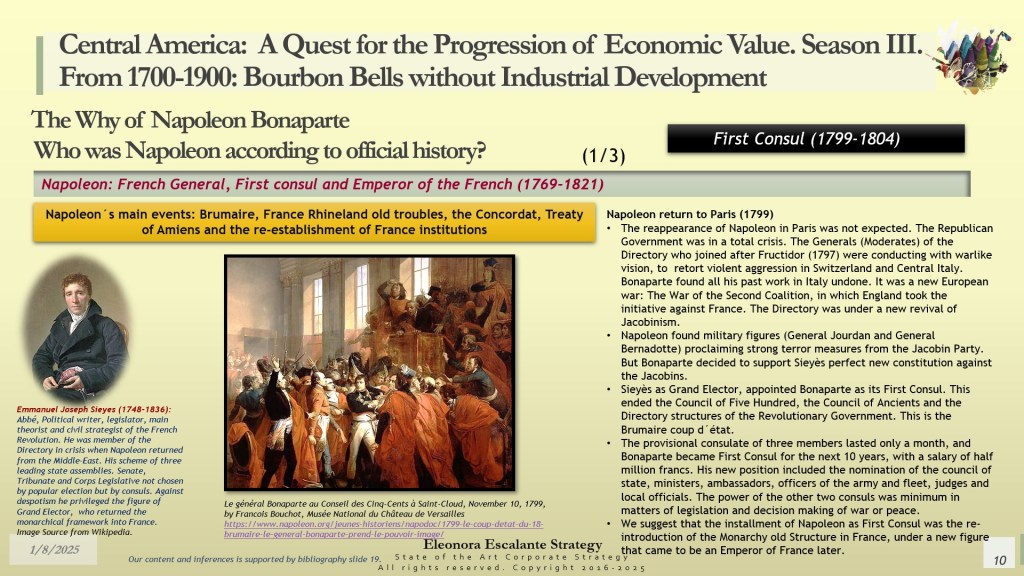
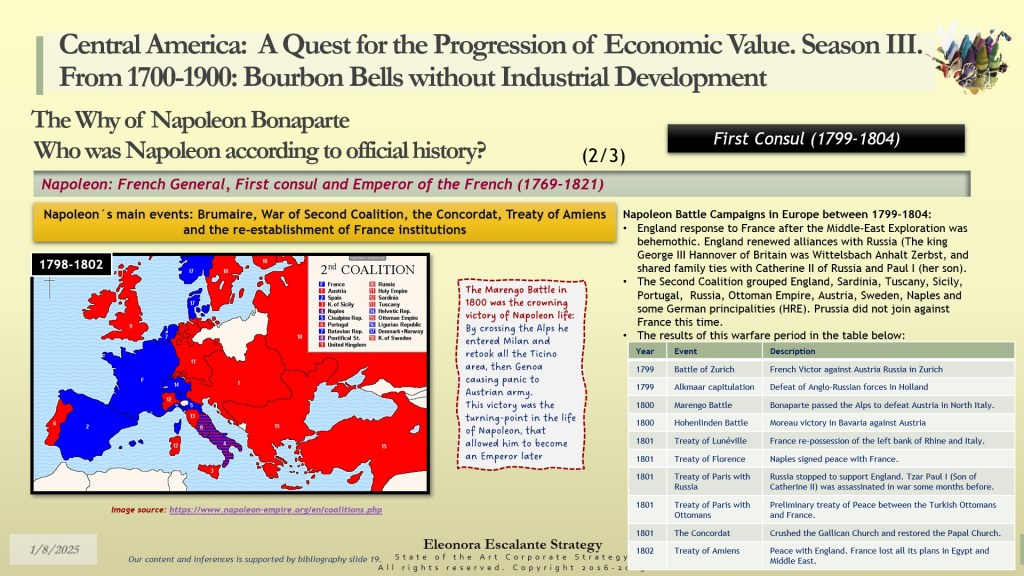
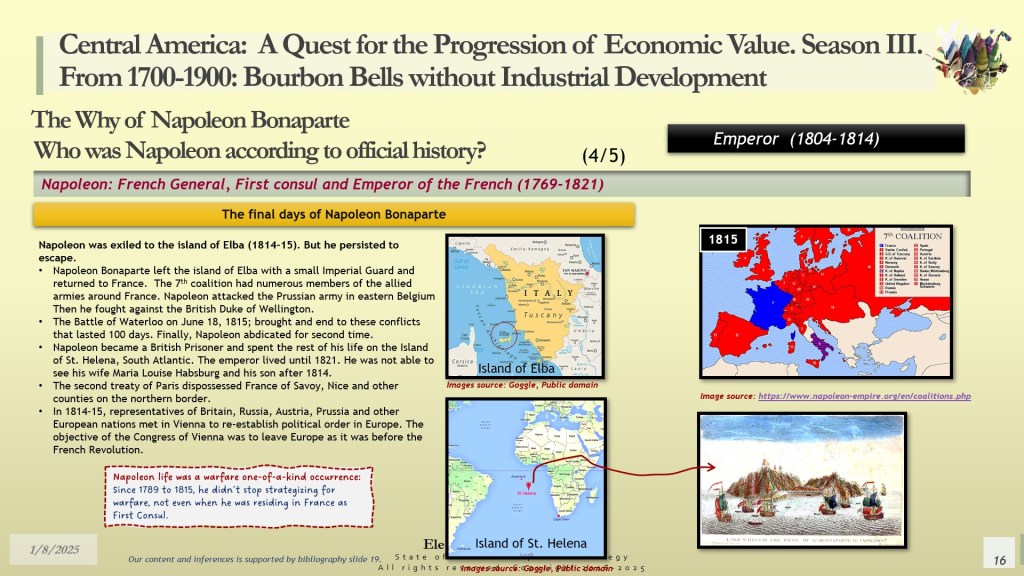
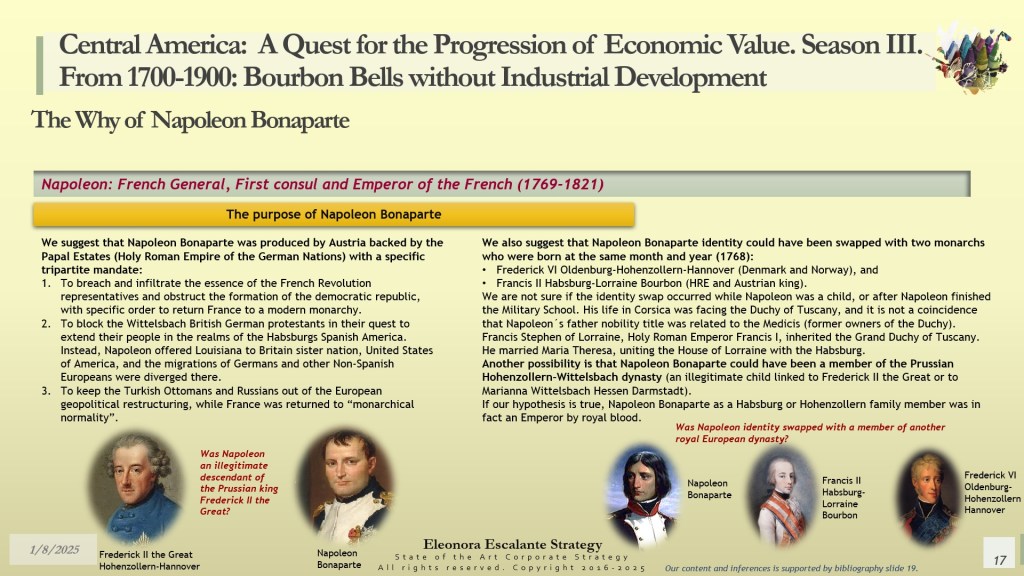
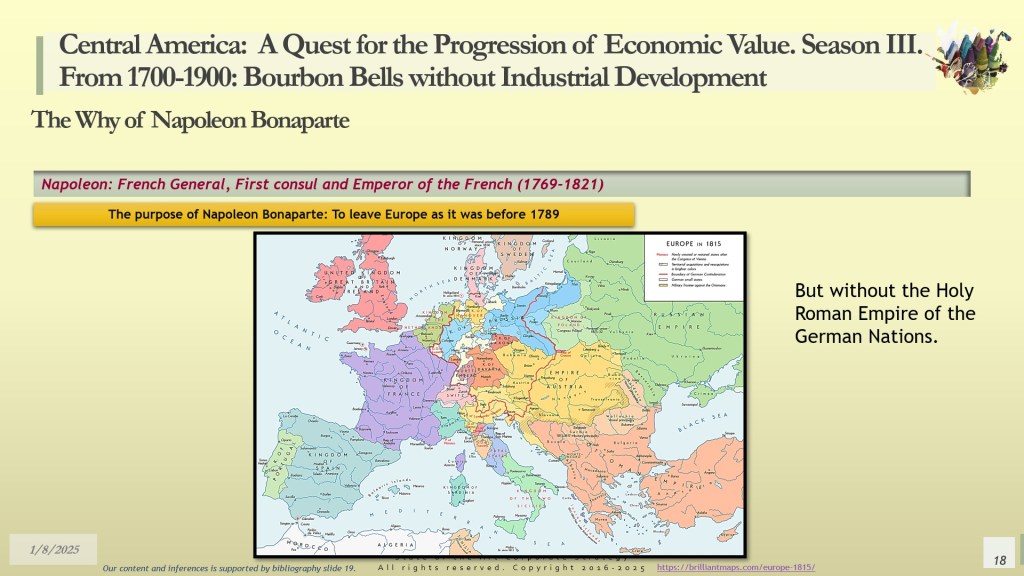
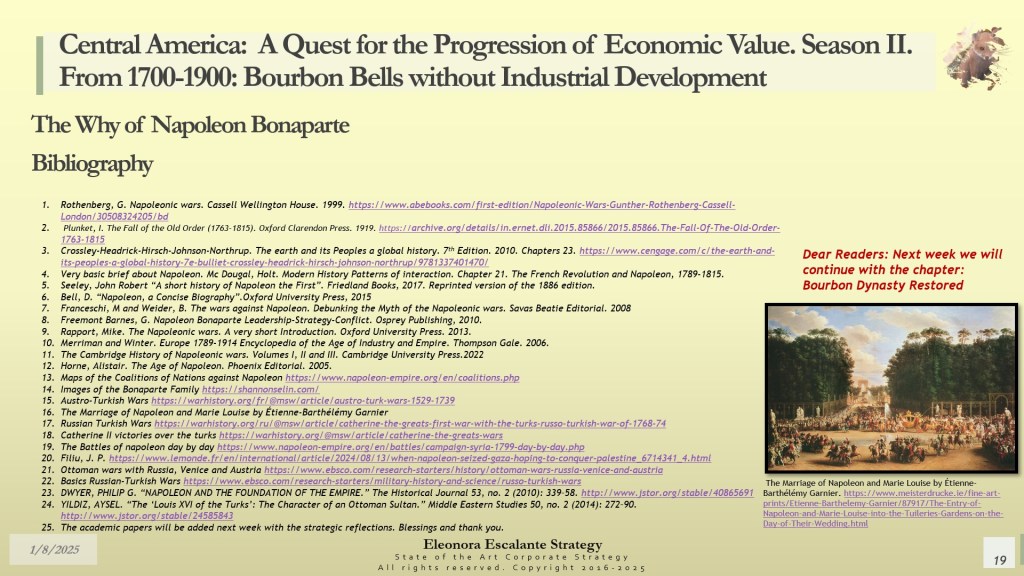
We request that you return next Monday, August 11th, to read our additional strategic reflections on this chapter.
We encourage our readers to familiarize themselves with our Friday master class by reviewing the slides over the weekend. We expect you to create ideas that might be strategic reflections or not. Every Monday, we upload our strategic inferences below. These will appear in the next paragraph. Only then will you be able to compare your own reflections with our introspections.
Additional strategic reflections on this episode. These will appear below on Monday, August 11th, 2025.
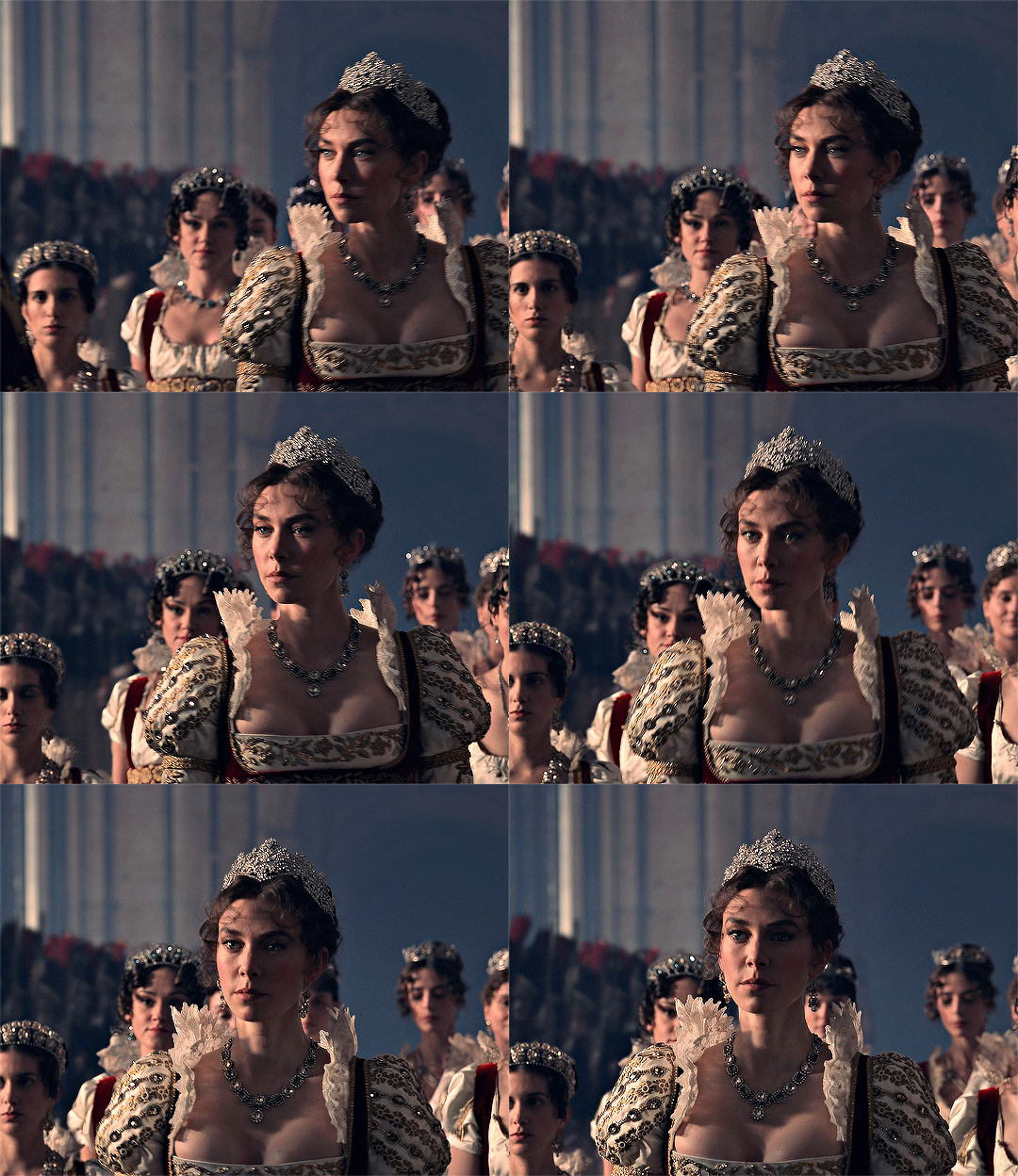
Who was Napoleon Bonaparte according to Official History? Slides 6 to 16.
Our goal was to show you a fluid historiography of Napoleon. We consider that the slides shared last Friday as quite complete and self-explanatory. We will only display some interesting connections that will help us to understand the why and who Napoleon Bonaparte was.
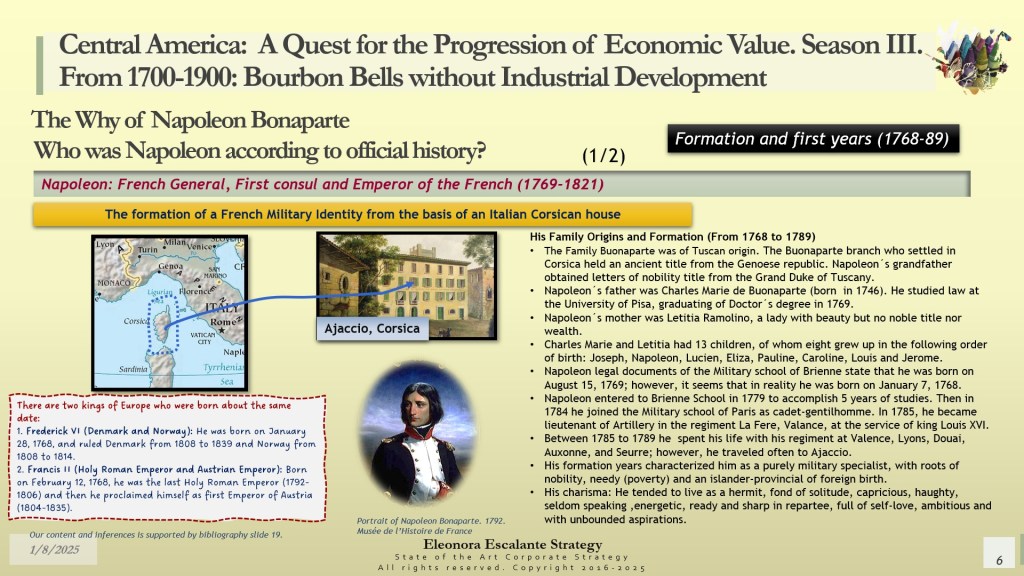
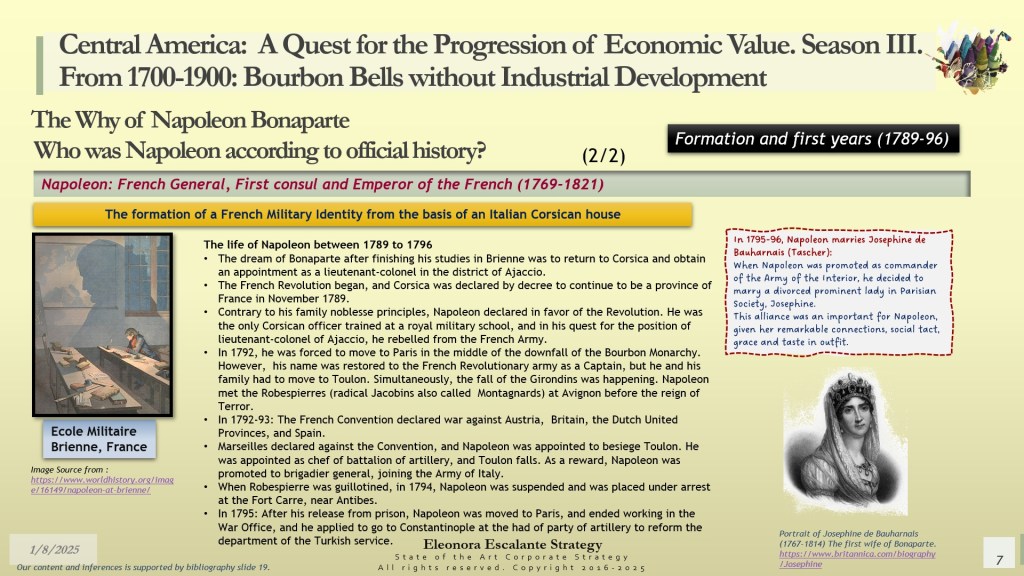
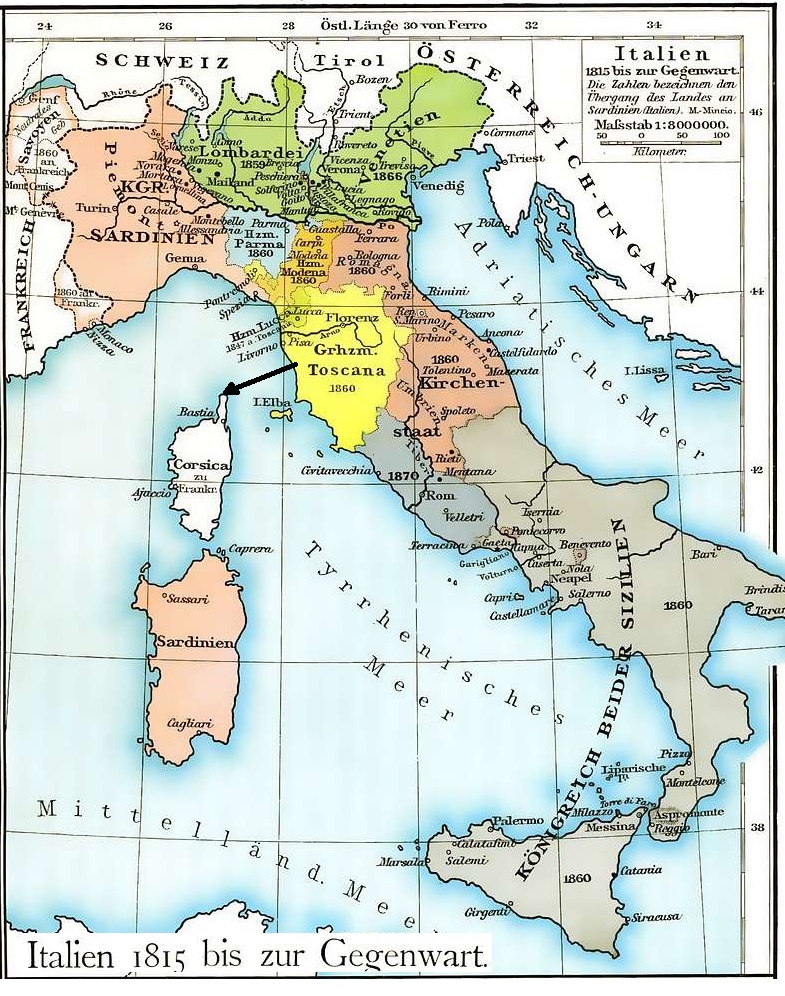
During the childhood of Napoleon, we noticed that he held a certain degree of Nobility, granted by the Duchy of Tuscany to his grandfather under the Medici rule. Napoleon´s place of birth positioned him strategically, on a little island that “coincidentally” was transferred to France from Genoa the same year that Napoleon was born (1768). Although Corsica was under the French, there was a cultural and economic strong connection with the domains of the Grand Duchy of Tuscany, a territory ruled by the Austrian Habsburg-Lorraine family then. The husband of Empress María Theresa Habsburg, Francis I Lorraine, gave his own duchy of Lorraine to the former Polish King Stanislaw Leszczyński when he lost Poland. This occurred in exchange for the Grand Duchy of Tuscany as one of the terms of ending the War of the Polish Succession in November 1738. Peter Leopold I Habsburg-Lorraine (1747-92), son of HRE Francis I, was appointed as the Grand Duke of Tuscany, and he ruled it between 1765 to 1790. Leopold I married María Louisa Bourbon-Wettin, and they had 9 children while living in Firenze (Palace of Pitti and the Villa Poggio Imperiale). One of those children was Francis II Habsburg Lorraine-Bourbon, the last Holy Roman Emperor of Germany. Let´s remember this fact for later.
In reality, who was Napoleon Bonaparte? Bonus material below. Slides 6, 7 and 8.
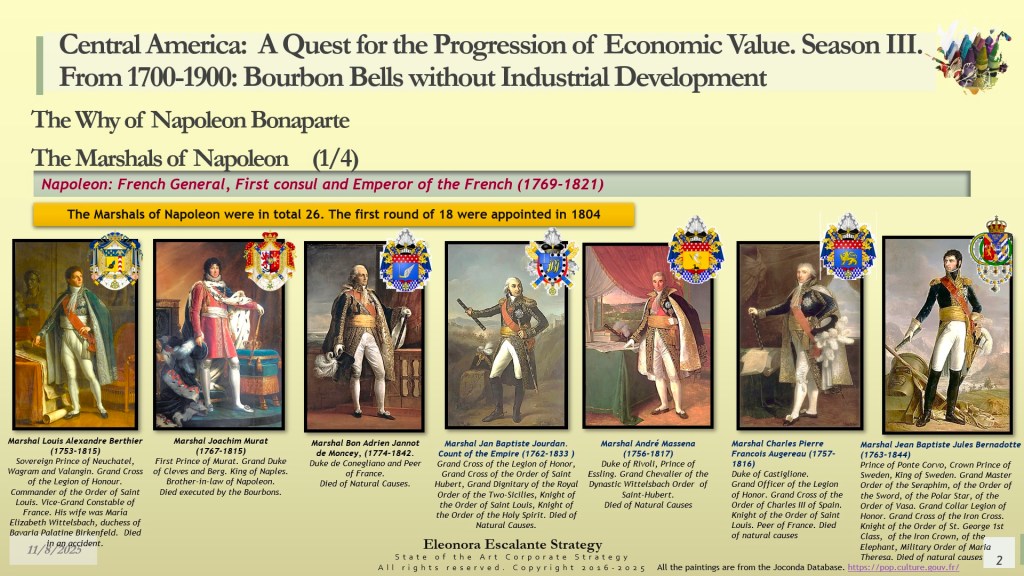
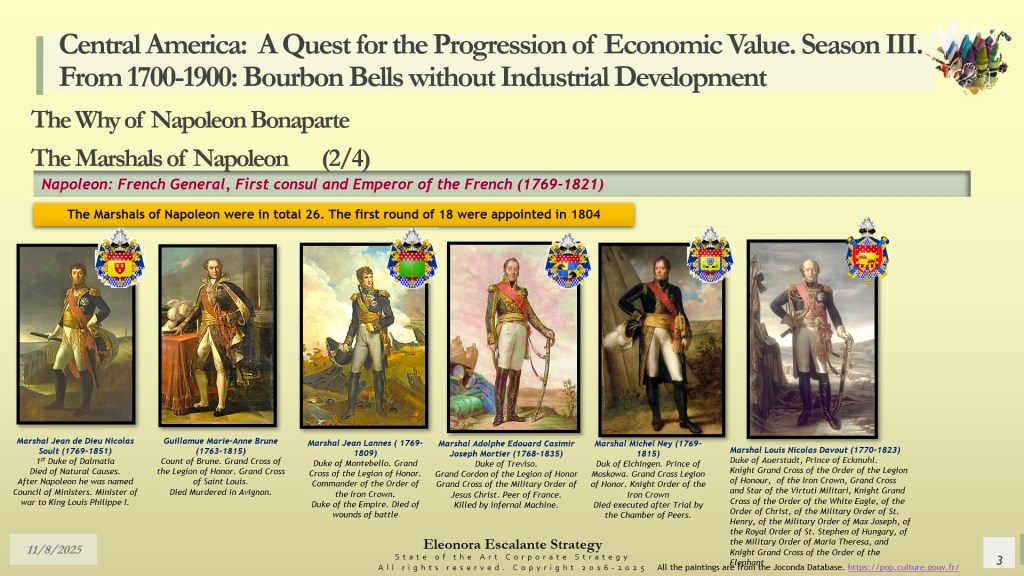
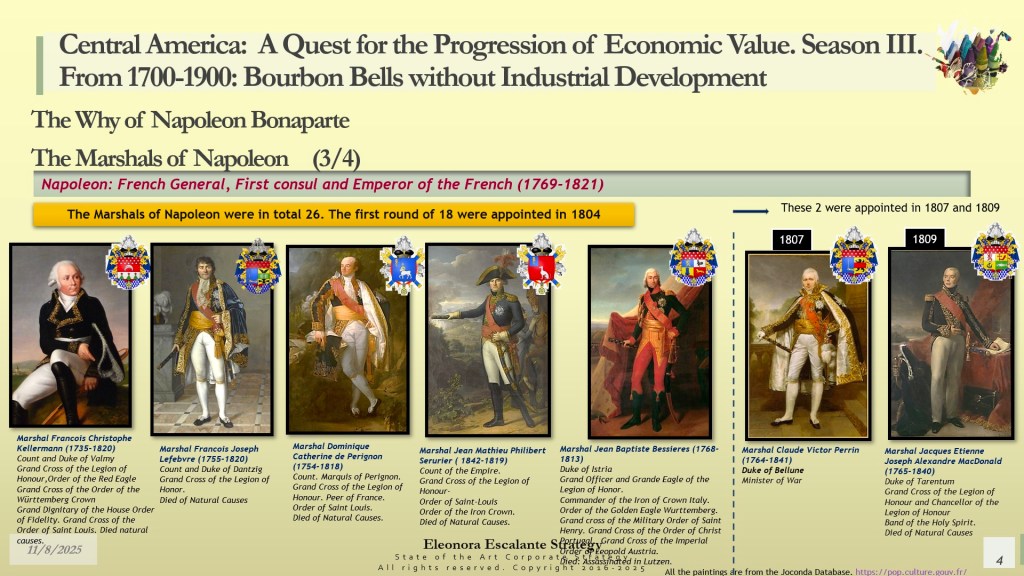
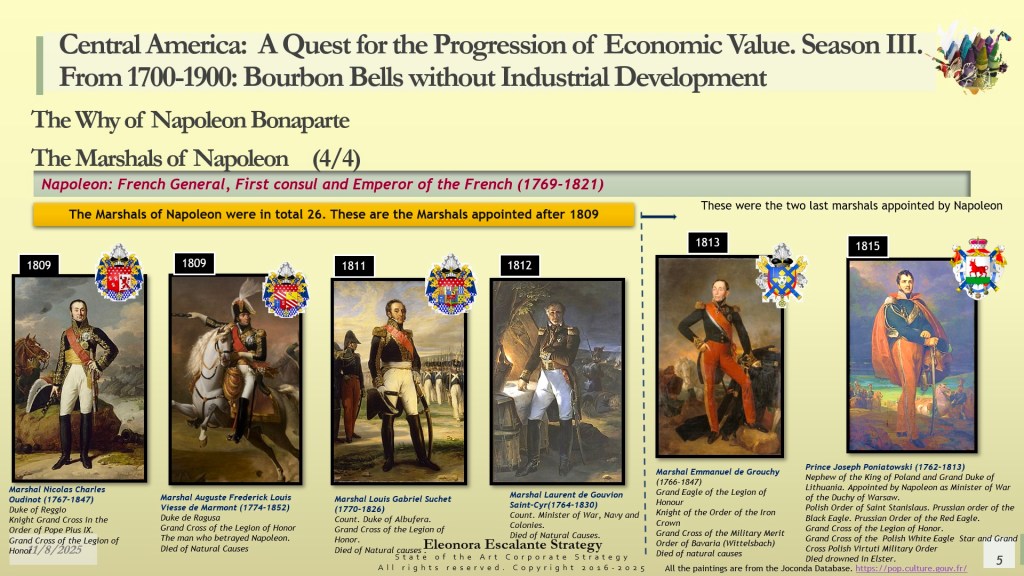
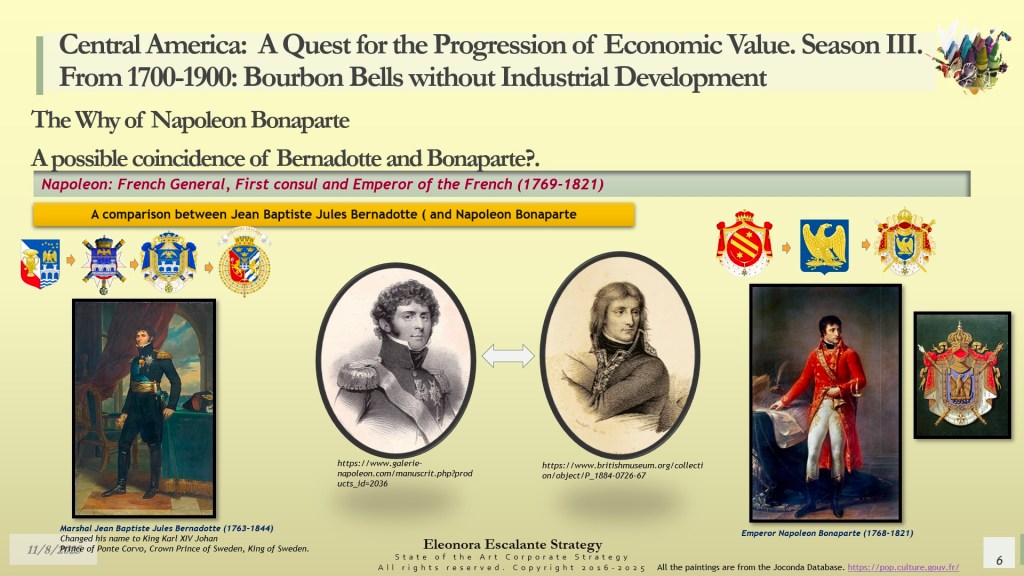
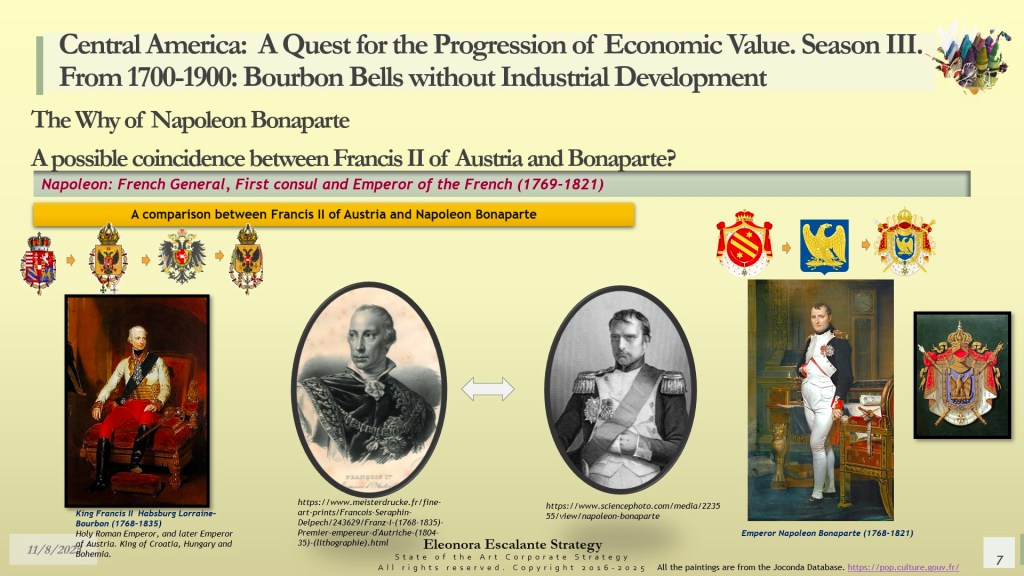
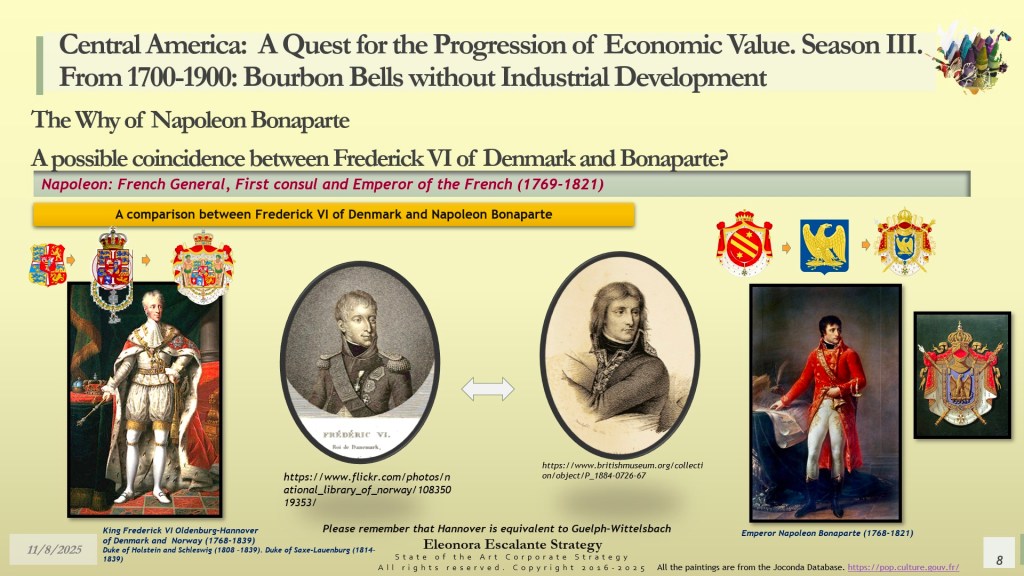
After exploring several alternatives and analyzing the heraldry and the coat of arms of several royals, we suggest three main possibilities:
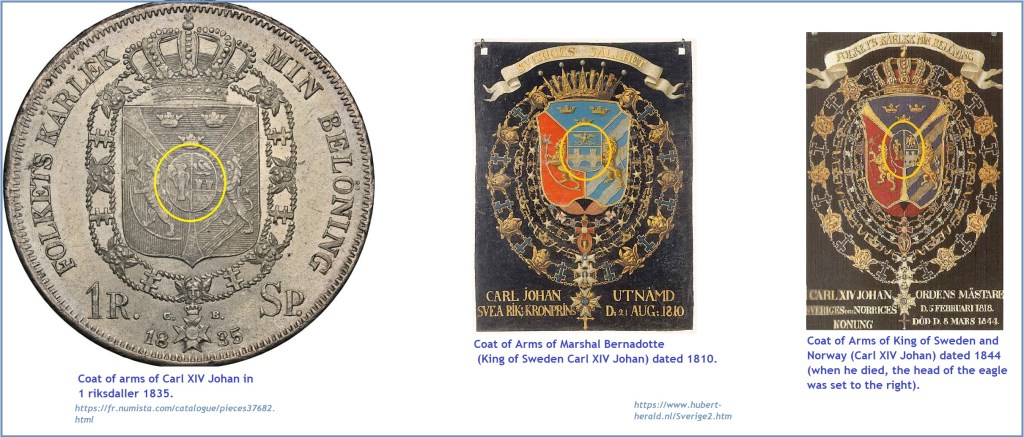
- King Karl XIV Johan (Marshal Jean Baptiste Julius Bernadotte) (1763-1844). See slide 6. Regardless of the storyline of the official narrative, we propose that the reward for the good job of Bonaparte was to name him ruler of the highest kingdoms of Europe: Sweden and Norway. We have filtered numerous portraits, and we have compared him with those of Napoleon (when he was young). Despite the physical similarities, it looks like the heraldry of Bernadotte gives continuity to the Imperial Bonaparte rule. Notice the eagle rising with the sinister head (to the left), wings elevated and inverted in both coats of arms, with the same colors (azure and or). See the image of the king of Sweden’s heraldry below, please. All the heraldic interpretations of this analysis are based on 7 historical books of heraldry that we have shared below (in our bibliography).
- Austrian King and HRE Francis II Habsburg-Lorraine Bourbon (1768-1833): We suggest that King Francis II could have taken the identity of Napoleon (from childhood or after he was imprisoned). It was planned in advance to dissolve the Holy Roman Empire of the German Nations, and decouple from the Bavarians and the Guelph-Wittelsbach (Hannover). The HRE was not needed for Austria´s interests anymore. Napoleon called himself a descendant of Charlemagne, crowned himself as Emperor of France (King of the Romans). The coat of arms of Napoleon includes similar colors to those of Austria, and the similarity of certain illustrations and portraits of Napoleon look alike to those related to young Francis II. Francis II was the nephew of Queen Maria Antoinette (married to the French king Louis XVI). There was a motive for family revenge in his essence. He was also a Bourbon who could have been interested in re-establishing the old and lost status quo of his family.
- King Frederick VI Oldenburg-Hannover (1768-1839): We suggest this last alternative by comparing portraits and by matching the day of birth. In addition, Denmark at this time was ruled by a member of the Oldenburg-Guelph-Wittelsbach family, Frederick VI was part of the Britain dynasty, with direct interests in getting the trophy territory of the French Revolution: Louisiana in North America. Please take notice: Hannover means Guelph-Wittelsbach in our genealogical analysis.
- There is a fourth possibility: Napoleon Bonaparte was a Hohenzollern Prussian descendant. But we couldn´t gather enough evidence to demonstrate it.
If Napoleon Bonaparte were a real king, then as soon as he came to power, his actions and mission would be evident. To be crowned as an emperor was part of his natural strategy. A high royal leader is always accompanied by his military entourage. It was expected that Napoleon would never fight alone, but with the best of the best in military terms. Then, Napoleon was compelled to act with his marshals, all of whom were protecting him and helping him to achieve his mission. We have reviewed each of the biographies of Napoleon´s marshals (we will add the source of the bibliography below), and we suggest that some of them were indeed royal family members (legitimate or not), accompanying Napoleon when he was appointed as First Consul. The rest were members of his original kingdom’s nobility. We believe that Berthier, Murat, Massena, Lannes, Ney, Bessières, Davout, Kellermann, and Poniatowski were concealed princes or kings from the monarchies that were affected by the events of the French Revolution. The rest might have been members of royal houses or duchies (family related), too. To affirm these suggestions means to reject the “official history” origin of all these marshals. The chronicles of his battles and Napoleonic wars are not questioned by our strategy house. We only suggest that their birth distinctiveness was of royal families, and they took the identity of military French to help Bonaparte (under a concealed ID). In consequence, we simply recommend following our “impartial presentiment” as a matter for further investigation and research.
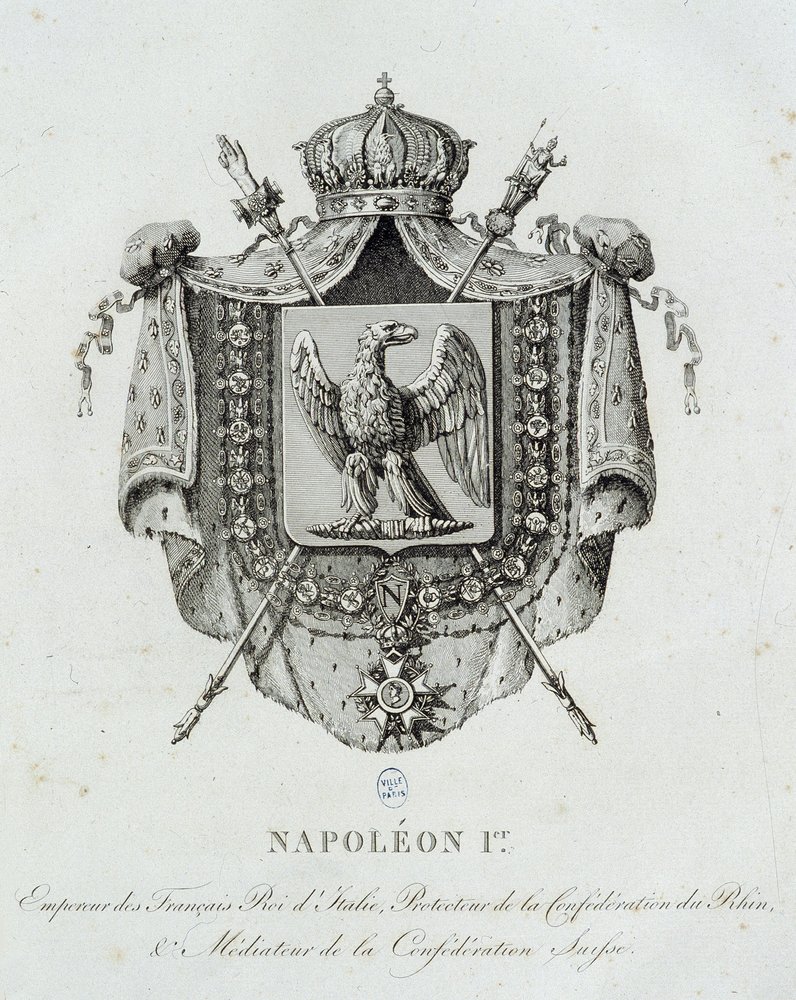
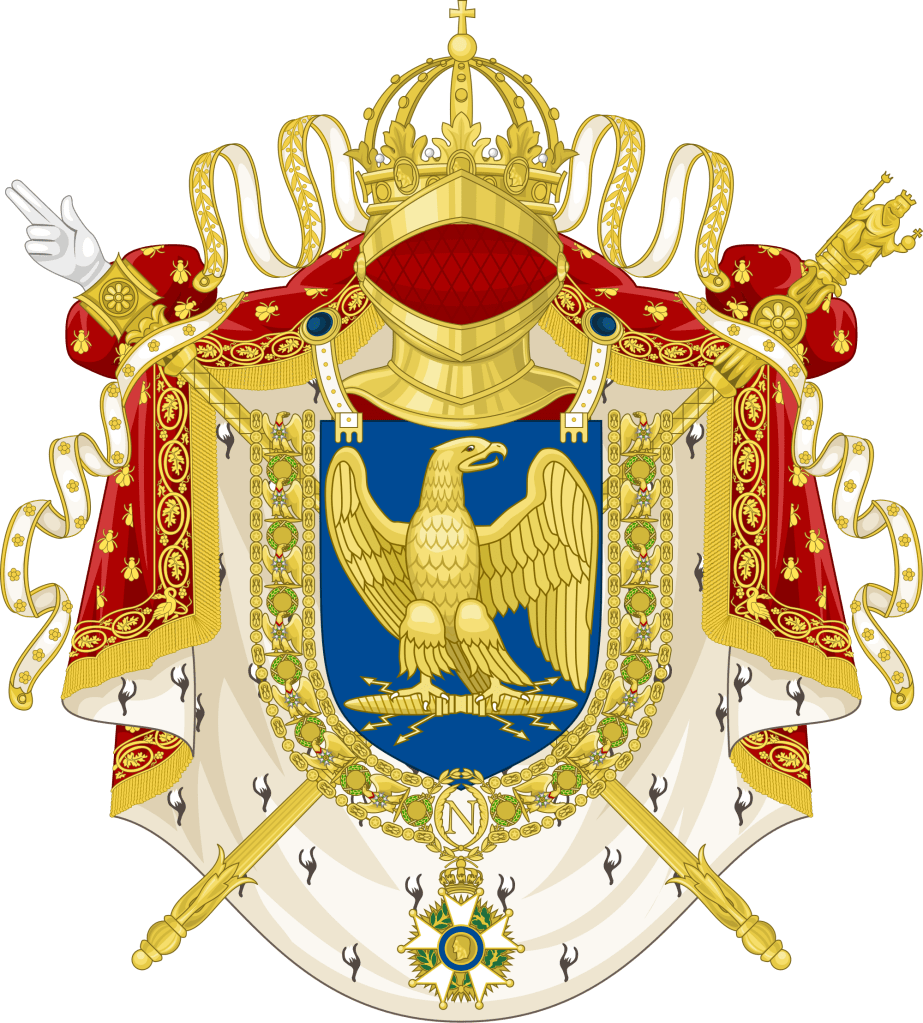
The coat of arms of Napoleon Bonaparte (look above).
When the French Revolution occurred, all the traditional heraldry was prohibited and demolished. When Napoleon introduced himself as Emperor by creating his own imperial coat of arms, he was erasing what the revolutionaries had done. When Napoleon used the same symbols of the highest ranks of the European existing kingdoms: the Roman eagle, the colors blue-azure and gold-or, the bees which replaced all the royal fleurs-de-lys of the French… Napoleon was moving far from the French. What was happening then? So, we were compelled to check the heraldic crowns, the heraldic caps, the patterns for sovereign and non-sovereign heraldic symbols of all the European rulers of his time. What we perceived was a temporary “takeover” of France, using the idea of a new “French Empire”. France was coming out of the Reign of Terror. Then it is an unblemished and robust indication that the person who used the identity of Napoleon Bonaparte was not a commoner; he was a royal, and he was using a clear strategy: to return France to an absolutist monarchy, not a republic. Napoleon comprehended perfectly the original meaning of the eagle head turning to the sinister (Constantinople-Byzantium). However, no matter what eagle we land in, it is clear to us that Napoleon was inspired by the eagles of the Ancient Roman legions, the Roman Eagles of the Caesars, but his eagle had its head looking to the East (in heraldic terms, to sinister). This is a relevant message: Napoleon was not repeating the patterns of the single eagle or double-headed eagles of the Germans, Poles, Prussians, or the Austrians. He was using a different eagle. But it was the Napoleon “justicier” eagle.
Finally, the arms of the Napoleonic Empire are described as: Azure, an eagle rising (its head turned to sinister left), grasping in both claws a thunderbolt or.
The purpose of Napoleon Bonaparte (Slide 17).
The why of Napoleon is clearly defined in slide 17. We have disclosed the tripartite mandate of Napoleon. We will only add some thoughts to them.
- To breach and infiltrate the essence of the French Revolution representatives and obstruct the formation of the democratic republic, with the specific order to return France to a modern monarchy. If Napoleon were a Royal, his mission was to stop the consequences and policies of Revolutionary France. He was working for that goal and nothing else. All the battles in Europe were designed for that objective, including his losses and defeats.
- To block the Wittelsbach British German protestants in their quest to extend their people in the realms of the Habsburg Spanish America. Instead, Napoleon offered Louisiana to Britain’s sister nation, the United States of America, and the migrations of Germans and other non-Spanish Europeans diverged there. The evidence is transparent as the Water, and we have demonstrated it with the number of migrants who left Europe from the Germanic kingdoms to settle in North America and Canada during the 19th century.
- To keep the Turkish Ottomans and Russians out of the European geopolitical restructuring, while France was returned to “monarchical normality”. The Russian campaign was designed specifically as a “smoke curtain” to debilitate Poland (most of the Polish army perished), and even his Marshal Prince Poniatowski lost his life. The Polish kingdom got involved with France because of Maria Leszczynska, the wife of Louis XV. (She was the daughter of the former king Stanislas before the Poland partition by the Prussians, Austrians, and Russians.) Napoleon and his entourage should have identified something that wasn´t right from the start with the Poles. It seems to us that the voyage of Napoleon to Russia was not meaningful for France, but for Poland. The Russians were linked dynastically with the British, and they had no intention to fight or negotiate with Napoleon in Russian territory. At the end, Napoleon´s campaign to Russia looks like a planned suicide, like an intended disaster. Though we suggest it was planned as such by the same Emperor of the French.
- Napoleon was helping the royal Europeans to keep their kingdoms as they were before the French Revolution and the Enlightenment. He succeeded. The Bourbons were restored in France and Spain. Not for enough time. In the meantime, in Spanish America, the Independence movements from the Bourbons were appearing.
To be continued…
Final Statement:
This episode is all about Napoleon Bonaparte’s purpose in Europe. His mandate was skillfully played. His mission in life was accomplished, and probably his reward was very different than what history has told us. We believe that Napoleon’s life did not end on the Island of St. Helena, but he was raised to the highest monarchy of his time, and it wasn´t France.
Announcements:
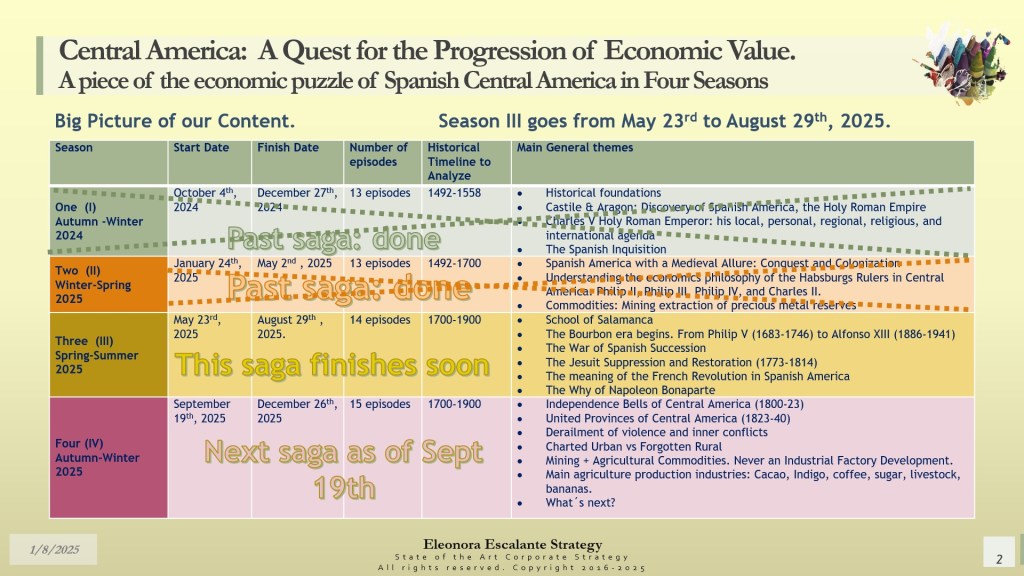
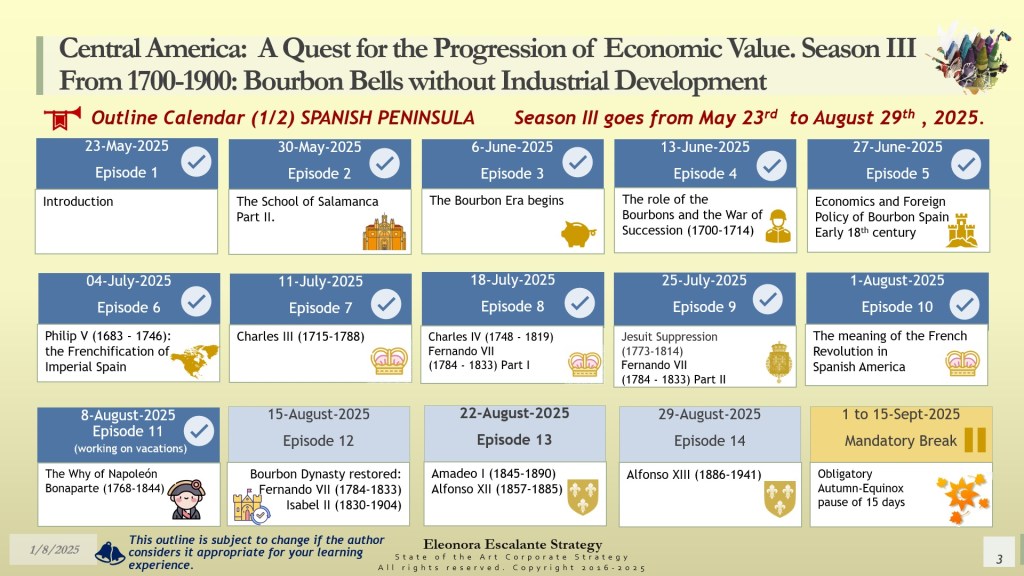
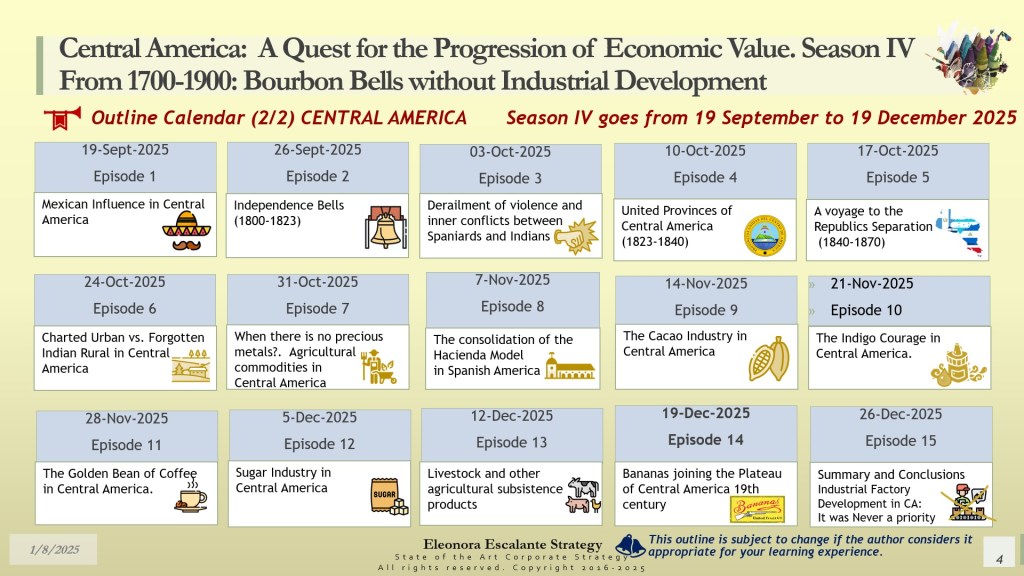
We have changed our schedule for the rest of the year. Please take a look at the outline. We will pause with a short recess from the 29th of August to the 12th of September. We truly need to take some days off. We are exhausted from doing academic analytical reading of more than 100 pages per day. And we do not use Artificial Intelligence at all. After recharging our batteries, we will continue with the rest of the topics under Season VI, as of September 19th. Thank you for your understanding.
Next week, we will continue with the restoration of the Bourbon Dynasty in Spain and France. We will finalize the topic of the next two Spanish Bourbon rulers after the Napoleonic wars: Fernando VII and Isabel II. There is a lot to learn during the following weeks. See you in our next episode. Thank you.
Musical Section.
Season III of “Central America: A Quest for the Progression of Economic Value” has assigned a new instrument for the rest of the year. It is the guitar!. Our selection of music during Season III will continue to explore the delightful music produced between the 17th and 19th centuries, featuring interpretations by virtuoso guitarists. We will embark on selecting the top 29 loveliest guitarists from the last five generations, who played music composed during the time of this saga. We have chosen a Polish guitarist, Marcin Dylla http://www.marcindylla.com/biography/, who plays a lovely sonata from Silvius Leopold Weiss.
Thank you for reading http://www.eleonoraescalantestrategy.com. It is a privilege to learn. Blessings.

Illustrative and non-commercial GIF image. Used for educational purposes. Utilized only informatively for the public good. Source: Public Domain
(1) https://www.frenchempire.net/articles/marshals/
(2) https://www.universalcompendium.com/tables/his/napmar.htm
(3) all the paintings of the Marshals from https://pop.culture.gouv.fr/
Heraldry bibliography:
(1) Woodward-Burnett. A treatise on Heraldry, British and Foreign. With English and French Glossaries 1892. Volumes 1 and 2. https://www.naval-militarypress.com/product/woodward-burnetts-complete-treatise-on-heraldry-british-foreign/
(2) Parker, J. Glossary of terms used in Heraldry https://www.heraldsnet.org/saitou/parker/index.htm
(3) Slater, Stephen. The illustrated book of Heraldry. https://www.barnesandnoble.com/w/the-illustrated-book-of-heraldry-stephen-slater/1113981740
(4) Fox-Davies, A Complete Guide to Heraldry. https://www.abebooks.com/book-search/title/complete-guide-heraldry/author/fox-davies-arthur-charles/
(5) Friar, Stephen. A dictionary of Heraldry. https://archive.org/details/dictionaryheraldry
(6) Elvis Charles Norton. A dictionary of Heraldry https://archive.org/details/dictionaryofhera00elvi
(7) Boutell, Charles. Heraldry- Historical and Popular https://archive.org/details/heraldryhistoric00bout
Coat of Arms of Napoleon:
(1) https://www.meisterdrucke.ie/fine-art-prints/French-School/1027342/Coat-of-Arms-of-Napoleon-I—in-‘Armorial-General-of-the-French-Empire’-by-H.-Simon.html
(2) http://www.bridges.rem33.com/books/vonValborth_Napoleon.htm
Disclaimer: Eleonora Escalante paints Illustrations in Watercolor. Other types of illustrations or videos (which are not mine) are used for educational purposes ONLY. All are used as Illustrative and non-commercial images. Utilized only informatively for the public good. Nevertheless, most of this blog’s pictures, images, and videos are not mine. Unless otherwise stated, I do not own any lovely photos or images.
 Eleonora Escalante Strategy Strategic Reflections Think Tank