
Central America: A Quest for the Progression of Economic Value. Bonus Season V. Episode 13. Banana Republics Part 2.
Dear incredible readers:
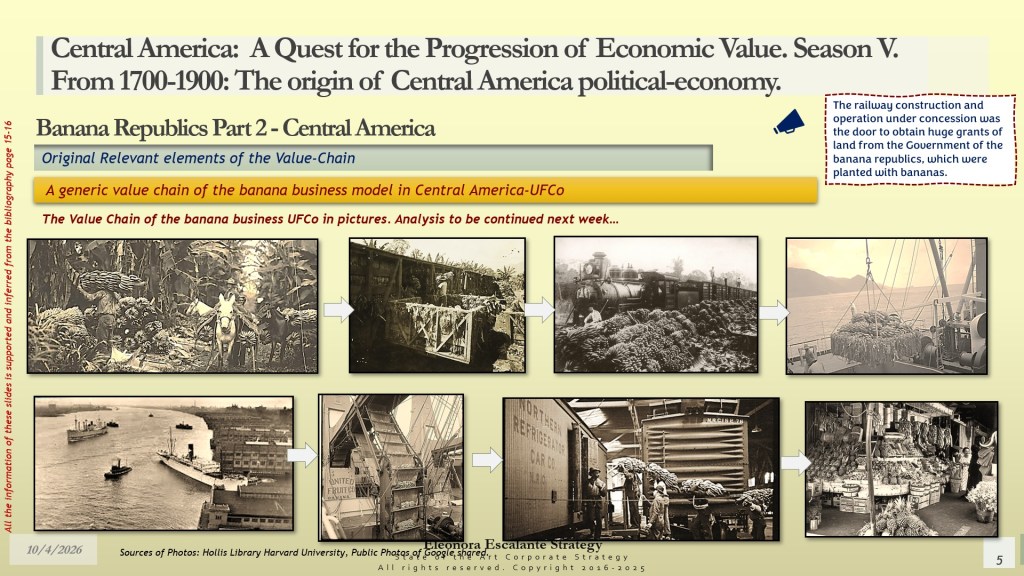
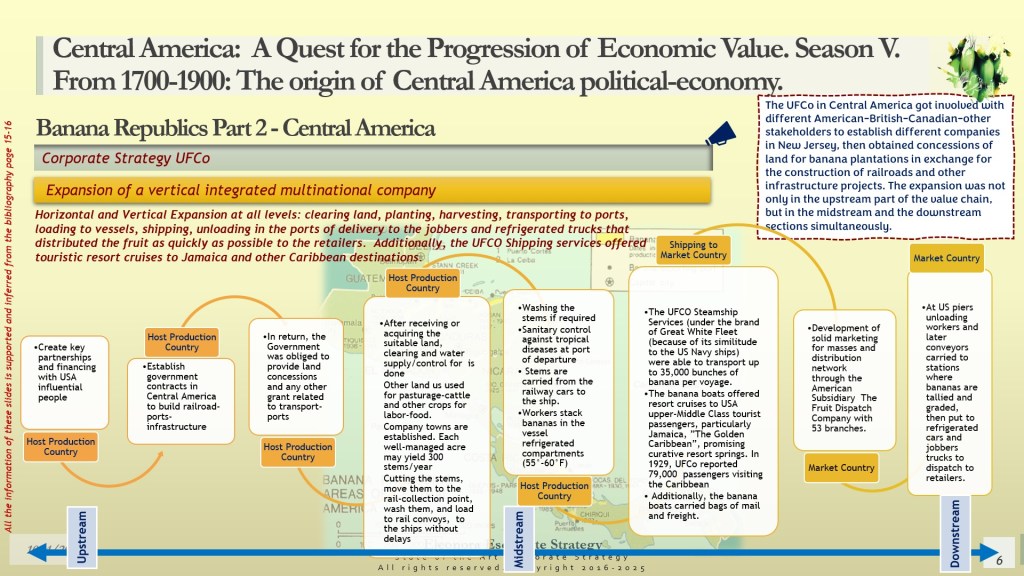
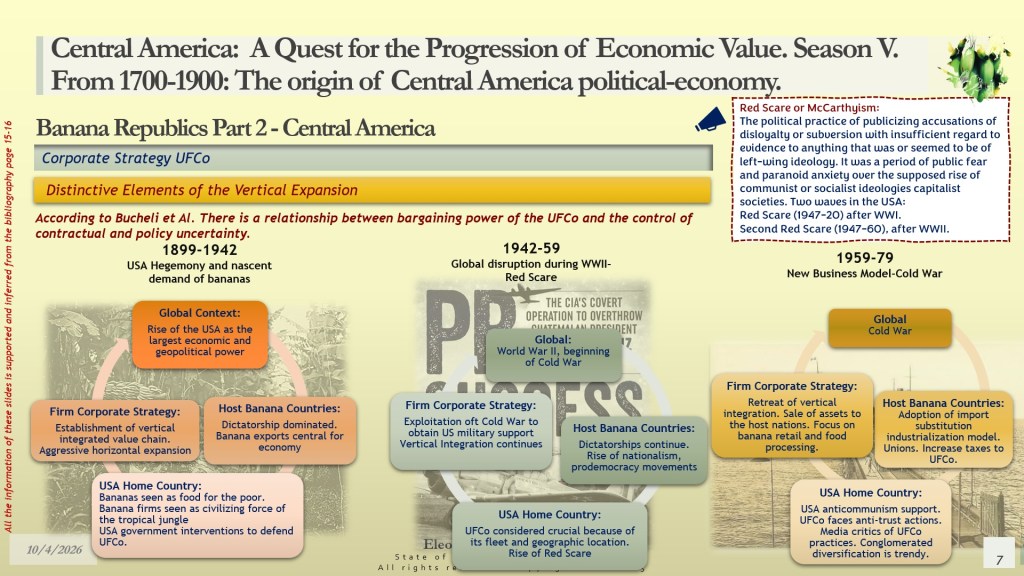
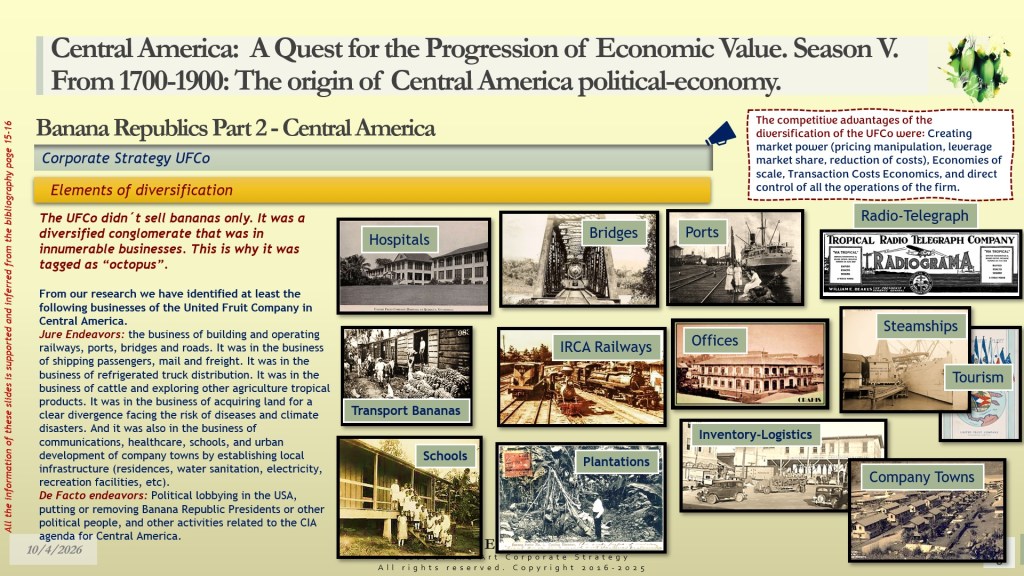
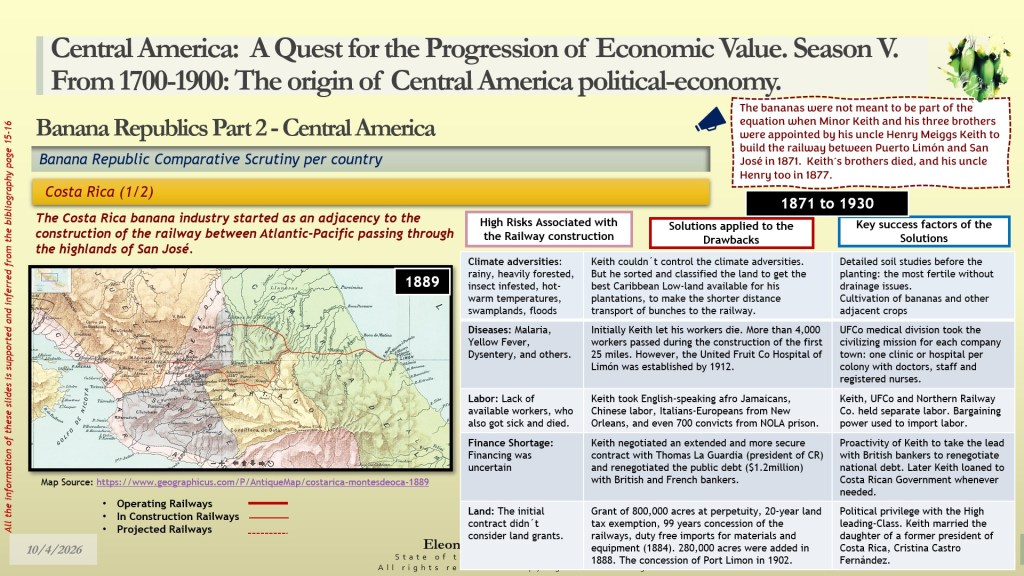
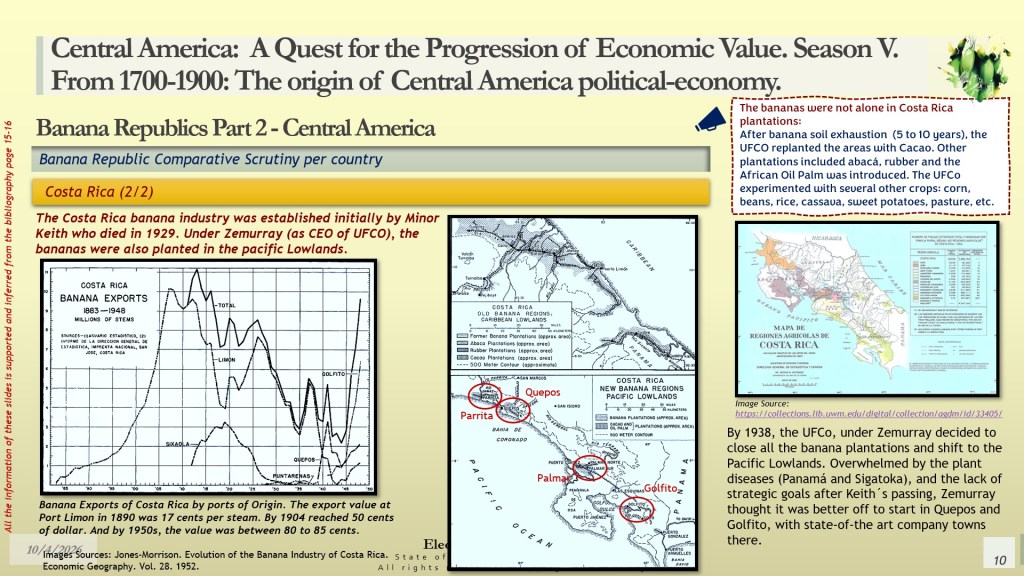
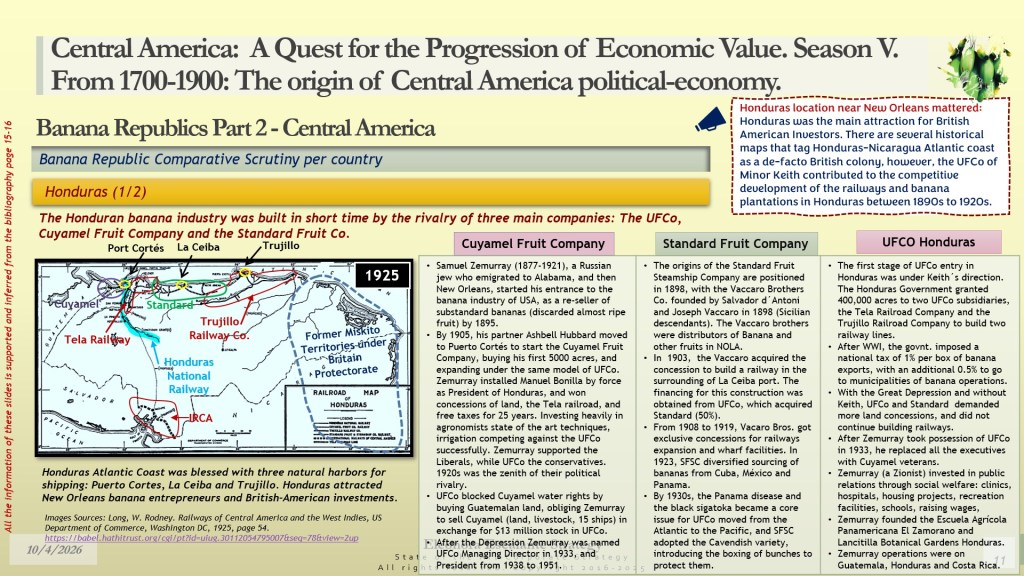
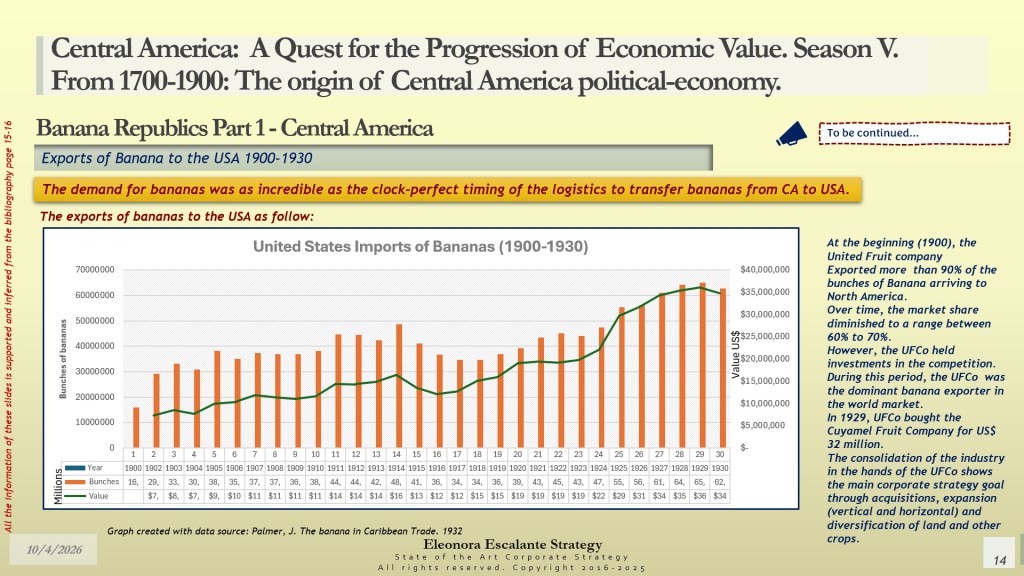
Here we are, believe it or not, this is our last episode about the Banana Republics under the vision of Minor Keith and then Samuel Zemurray. We are not going to cover the spell on how the UFCo was directly related to the coup d´etat against Guatemalan President Jacobo Arbenz in 1954. Our goal with the Banana Republics was to provide the elements of the roots of the United Fruit Company in the region of Central America, and we have focused all our energy on the period between 1870 and 1930. Minor Cooper Keith died in 1929, and a few years later, Keith was replaced with a new controversial figure from the UFCo competition, Samuel Zemurray (1877-1961). We have covered the diversification, the vertical integration, and international horizontal expansion. The corporate strategy actions related to stability and retrenchment strategy took place after 1930, when Zemurray took the lead of the UFCo.
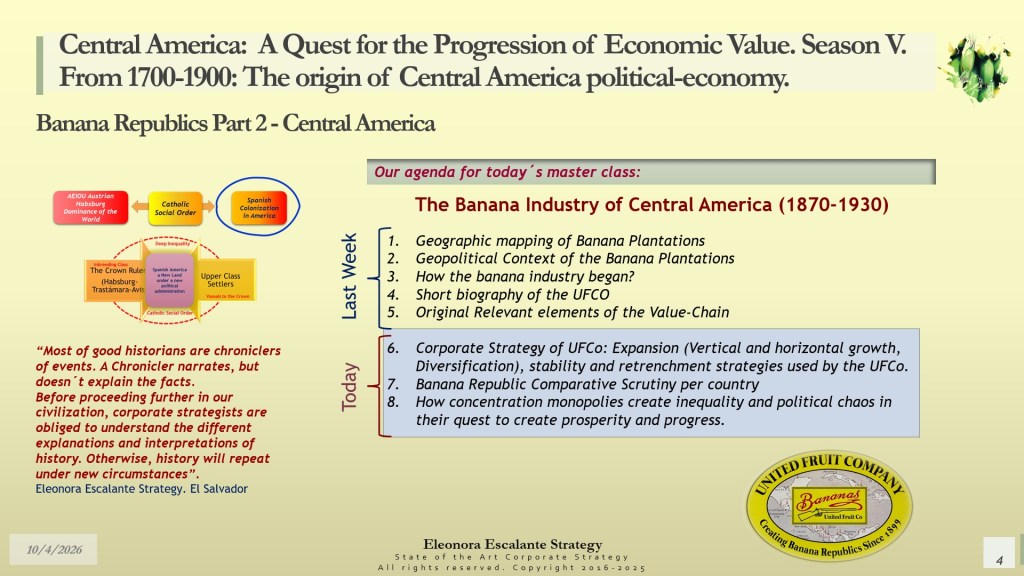
Our agenda for today is about three topics:
1. Corporate Strategy of UFCo
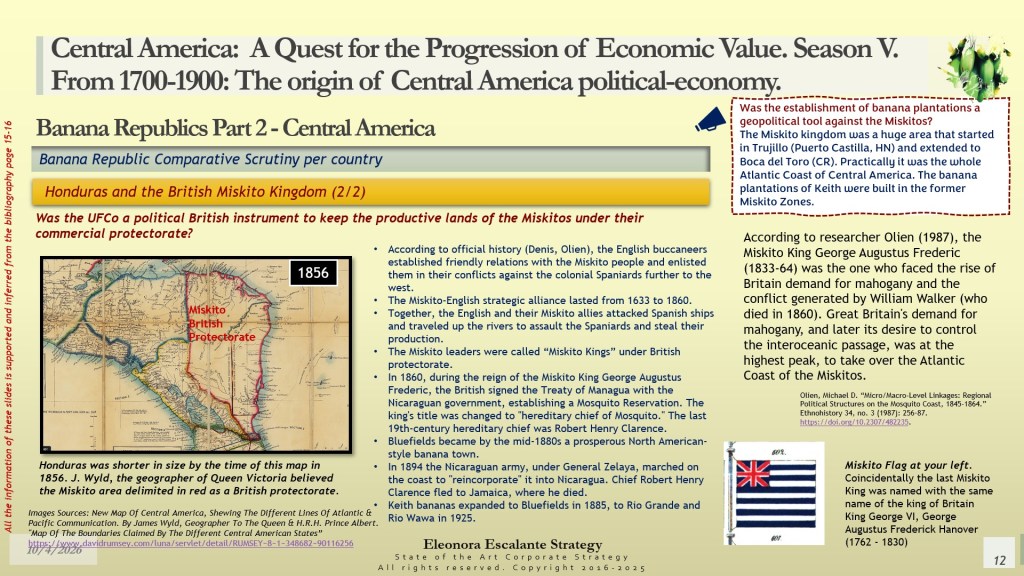
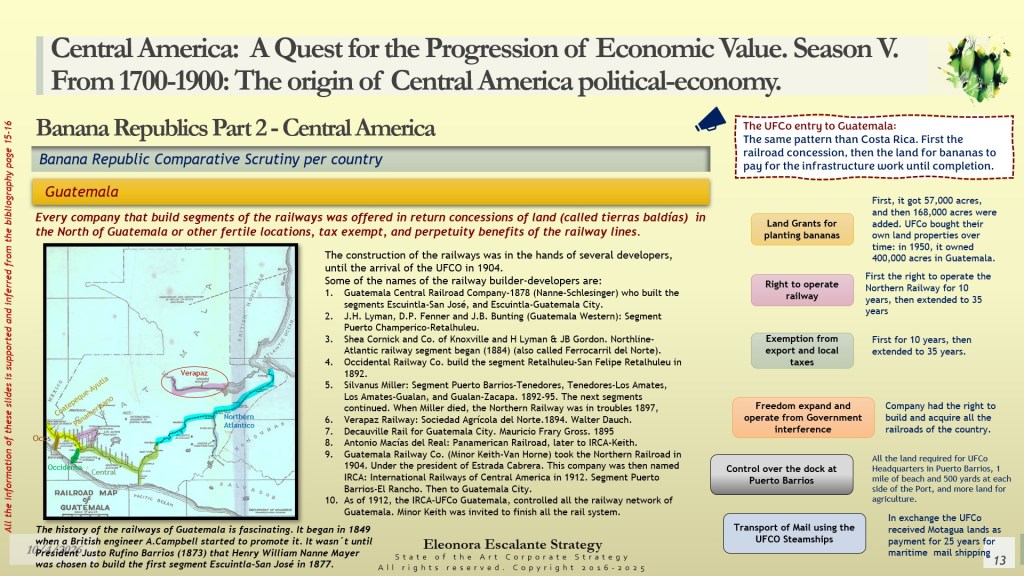
2. Banana Republic Comparative Scrutiny per country: We have included here Honduras, Costa Rica, and Guatemala. Colombia-Panamá is out of our geographical radar, and Belize-British Honduras was not included. El Salvador was not portrayed as a banana plantation.
3. Finally, the last theme is “How concentration monopolies create inequality and political chaos in their quest to create prosperity and progress”.
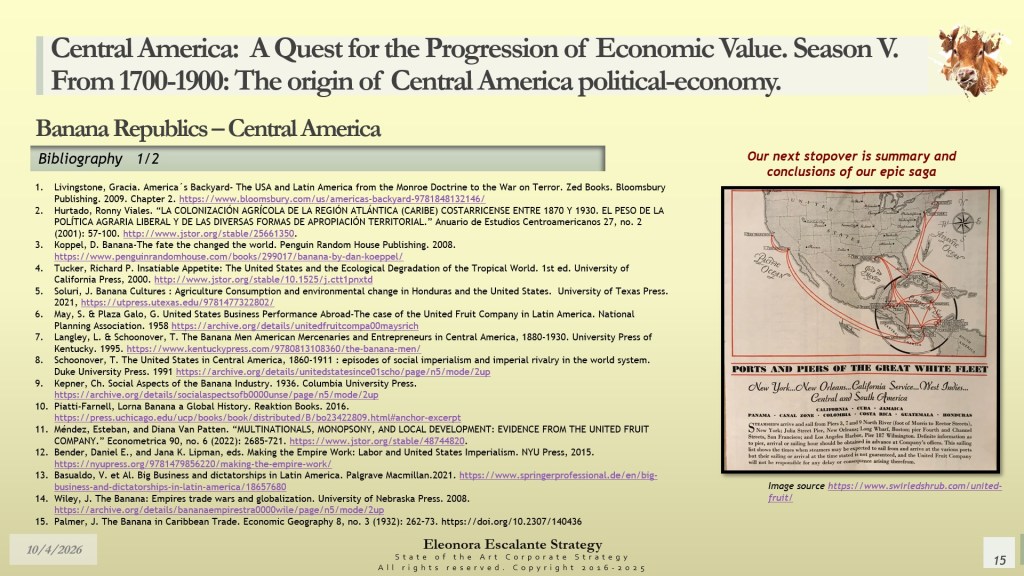
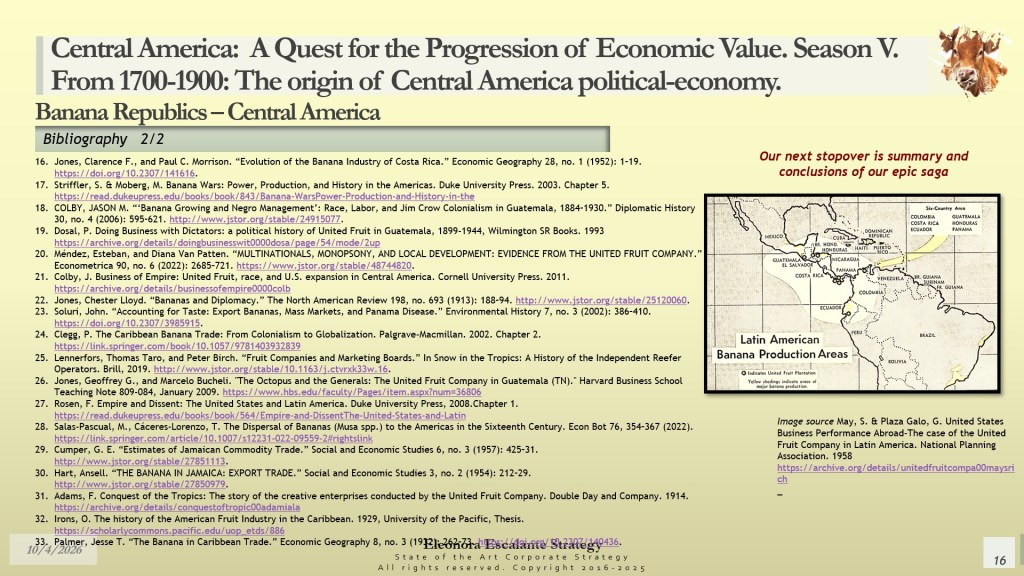
Find our reference material for your strategic reflections below. Feel free to download and share it with your family and friends. Do not forget to print it, and keep it in your binder. You never know if, one day, all this content will be of help to anyone involved in corporate strategy decision-making. The UFCo – Guatemala is a Harvard Business School case study (prepared in 2022 by my peers, Geoffrey Jones and Marcelo Bucheli); consequently, it is a significant resource for anyone interested in learning about global and international strategy in corporations. Our strategy house has added additional historical elements to this Harvard case study that might be relevant for the students.
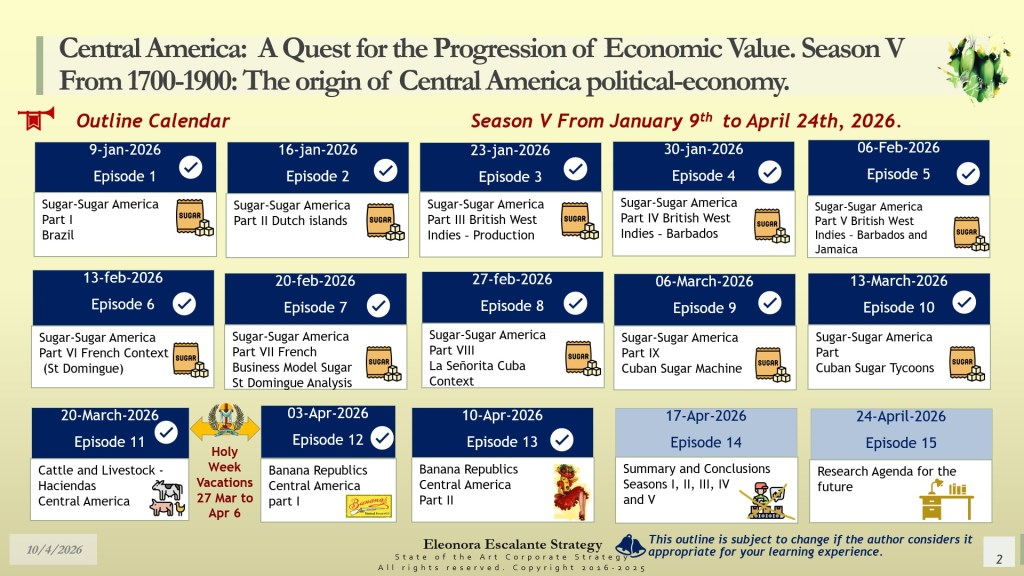
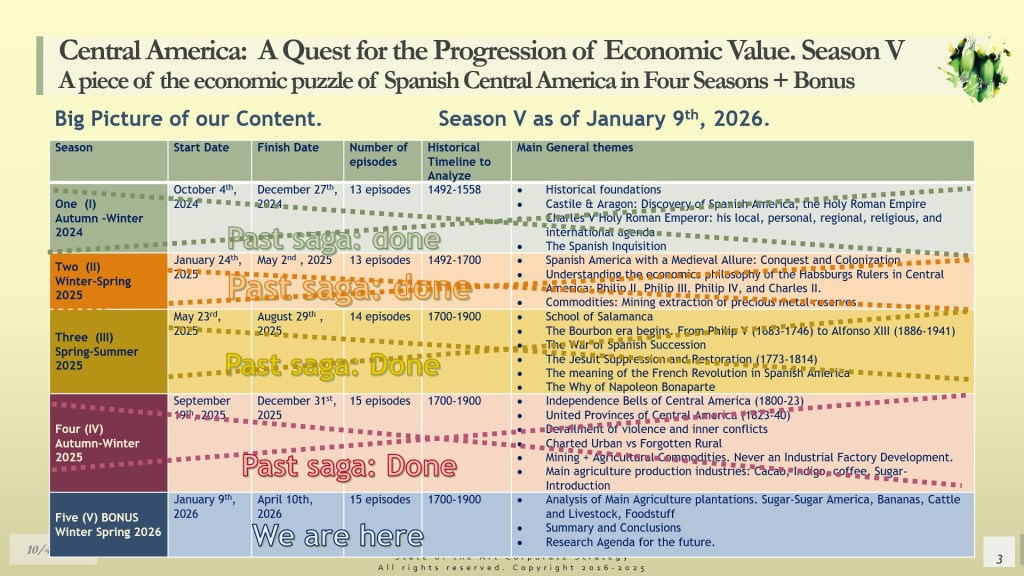
We kindly ask that you return next Monday, April 13th, 2026, to review our extra strategic reflections on this chapter.
We encourage our readers to familiarize themselves with our Friday master class by reviewing the slides over the weekend. We expect you to create ideas that are or are not strategic reflections. Every Monday, we upload our strategic inferences below. These will be discussed in the next paragraph. Only then will you be able to compare your own reflections with our introspection. We always give our students a couple of days to prepare well before our final reflection.
Additional strategic reflections on this episode. These will be in the section below on Monday, April 13th, 2026.
Strategic Reflections on “Central America: A quest for the progression of economic value. Bonus Season V. Episode 12. Banana Republics Part 2“. To be uploaded after the weekend.
Closing Words.
The importance of learning about the Banana Republics lies in the mega dimension of the endeavor that took the region by storm. To build a banana empire, moving bananas to consumers in North America and Europe, using vertical integration, horizontal growth, and diversification could not have ocurred without the geopolitical support of the top spheres of influence of the White House and its agencies. Additionally, several elements made us consider the role of MNCs in emerging and developing economies. On the one hand, without the entrance of UFCo, several infrastructure, communications, and connectivity projects would have never been built. However, on the other hand, when the interests of the international corporations collide with
the economic interests of the majority of the population and the leaders of that nation, there is always greenfield chaos and social disruptions. Inequality is the consequence of not building business models to help the working class leave the low-poverty levels and jump into the middle class. Societies without a robust middle class are affected by companies such as UFCo, because once they exit, they don´t leave anything behind, but ruins of a productive engine that did not impact the improvement of the living conditions of the citizens of the host country. In the case of the digital AI era, the same story of UFCo can repeat again and again with the new AI Techie moguls who are well-skilled to act (using the same strategies) as UFCo did in the past.
Announcement.
The saga “Central America, a Quest for the Progression of Economic Value” is almost accomplished. Our last episode will be on April 24th. Next, we will take 3 weeks of maintenance pause, to return with the Summer Saga: Coffee-Cacao Strategy 101 for Family Farm small-holders.
Musical Section.
During our closing bonus season V, we will return to the symphonic, philharmonic, or chamber orchestra compositions. Today, we have selected the Asia-Pacific Youth Symphony Orchestra Festival, Exchange Concert II. With the Hong Kong Children’s Symphony Orchestra
26 December 2018
Thank you for reading http://www.eleonoraescalantestrategy.com. It is a privilege to learn. Blessings.

Sources of reference and Bibliography utilized today. All are listed in the slide document. Additional material will be added when we upload the strategic reflections.
Disclaimer: Eleonora Escalante paints Illustrations in Watercolor. Other types of illustrations or videos (which are not mine) are used for educational purposes ONLY. All are used as Illustrative and non-commercial images. Utilized only informatively for the public good. Nevertheless, most of this blog’s pictures, images, and videos are not mine. Unless otherwise stated, I do not own any lovely photos or images.
 Eleonora Escalante Strategy - Strategic Reflections Think Tank