
Central America: A Quest for the Progression of Economic Value. Bonus-Season V. Episode 17. Summary and Conclusions of Season IV.
Dear beloved readers:
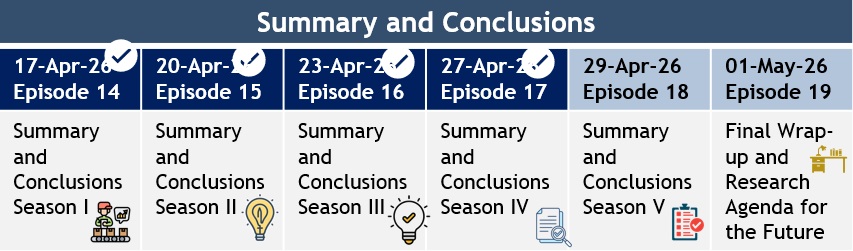
Find the summary of all the content of Season IV. We have tried to highlight the most important takeaways. The last chapter about sugar will be the first one of the summary of Season V, which will be published on Wednesday, the 29th.
The feudal system was not automatically abolished in America during the 17th to 18th centuries. Spain was under the Franco Regime, when Spanish America was still accommodating its economy with feudal, ingrained structures that were in the mentality of the new landholders. The study of the kingdom of Guatemala is not only for those of us who live in this region, but it is also revealing for those who live in Europe and America. The miracle of the United States was the shift after the American Revolutionary War (1775-83), and how that country, full of German-European migrants, ascended in less than 160 years to become the first world power. The reason for it is very simple: the USA became more prominent because of a lack of competitors. Most of the European powers were reduced to ashes after World War II. Germany was apparently cut in half, while all the new German-British-Dutch-Polish Americans prospered in their new land: The USA.
After the end of the 19th century, when Queen Victoria Hanover ** Mecklenburg-Strelitz/Saxe Coburg Saalfield Reuß died in 1901, and all the heads of European Empires were entangled by genetic reasons to Great Britain. Even the Bourbons. The Habsburg Empire (Austrian Branch) was already weakened after the Holy Roman Empire disappeared. We suggest that the two World Wars were part of the last attempts of the Bourbon constellation of families to retake the power after their decay from the French Revolution. However, empires always preserve a certain kind of dynastic custom practice, which is tied to the “family belonging”, and then, suddenly, can re-emerge later on, under a new dynastic umbrella. The AEIOU plan of the Habsburgs was shattered by the Welf of Brunswick-Luneburg, helped by the Wittelsbach. Let´s explore our summary below.
** Hanover means Guelph or Welf of Brunswick Luneburg-Wittelsbach
Please download and print the slides. We have delicately produced them over the weekend. Read each of the episodes of Season IV again, because it is worth it for your understanding of how the world began with agricultural capitalism, and how it was leveraged by the industrialists of the iron transportation connectivity and multiple factories in America.
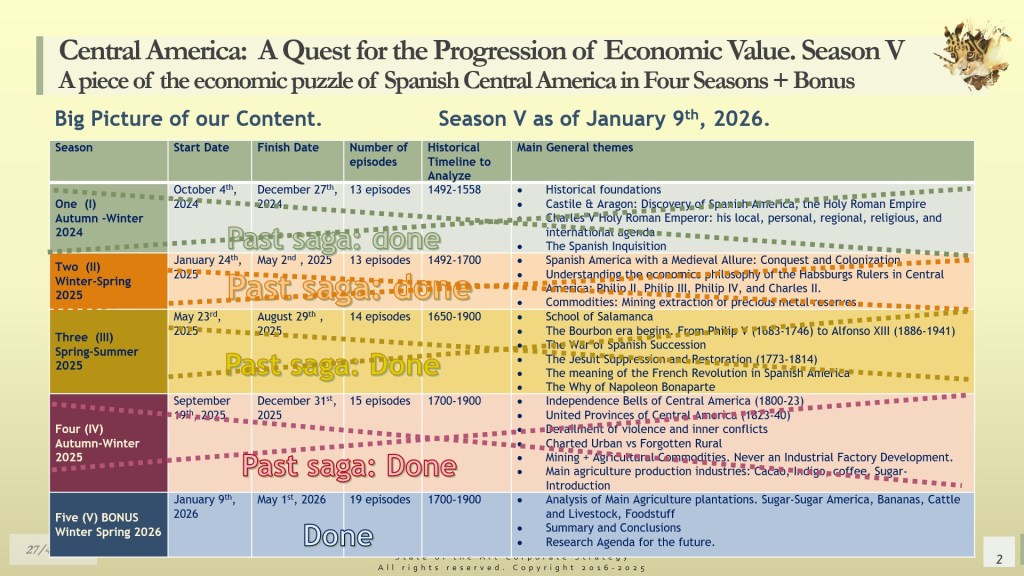
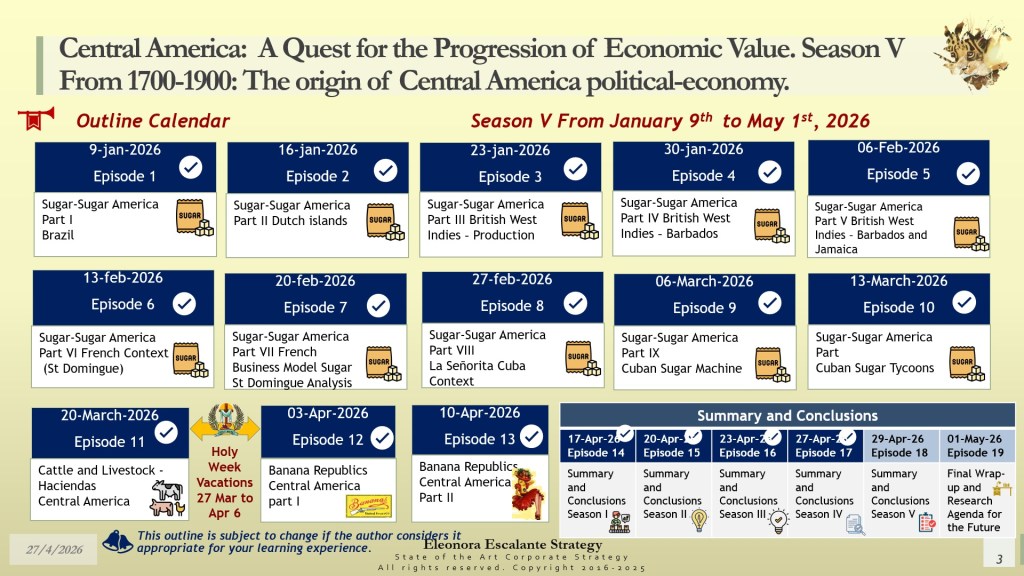
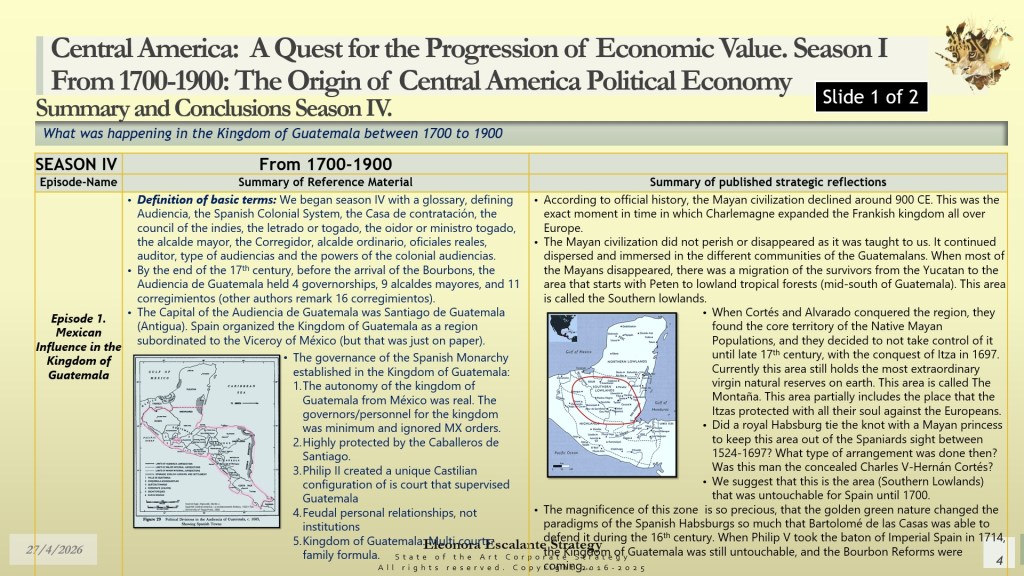
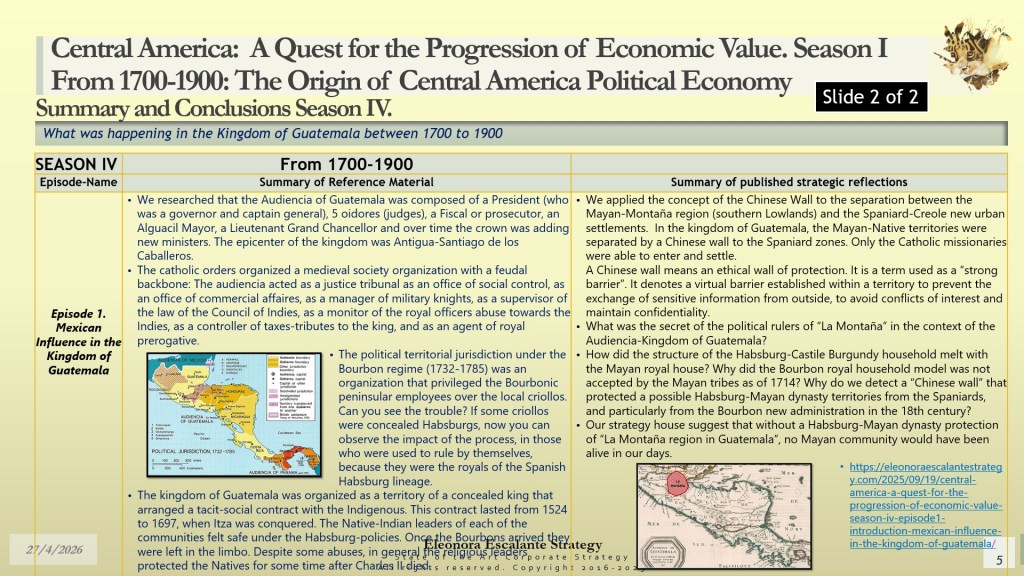
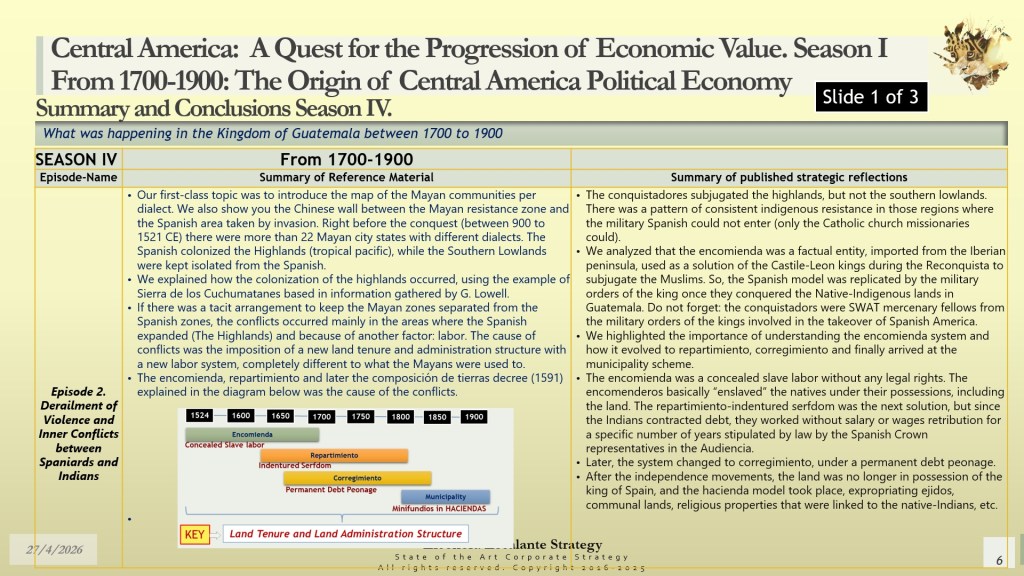
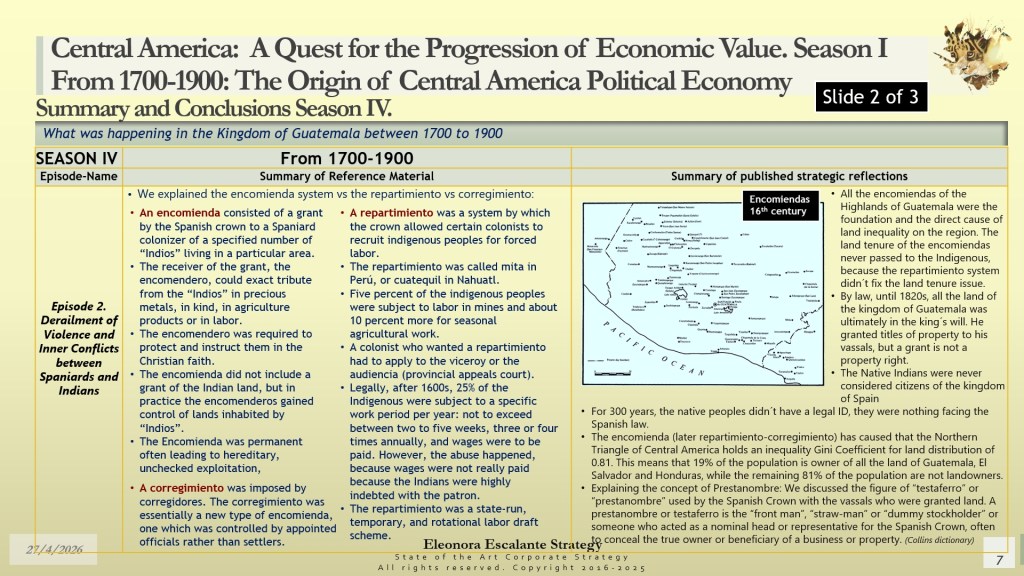
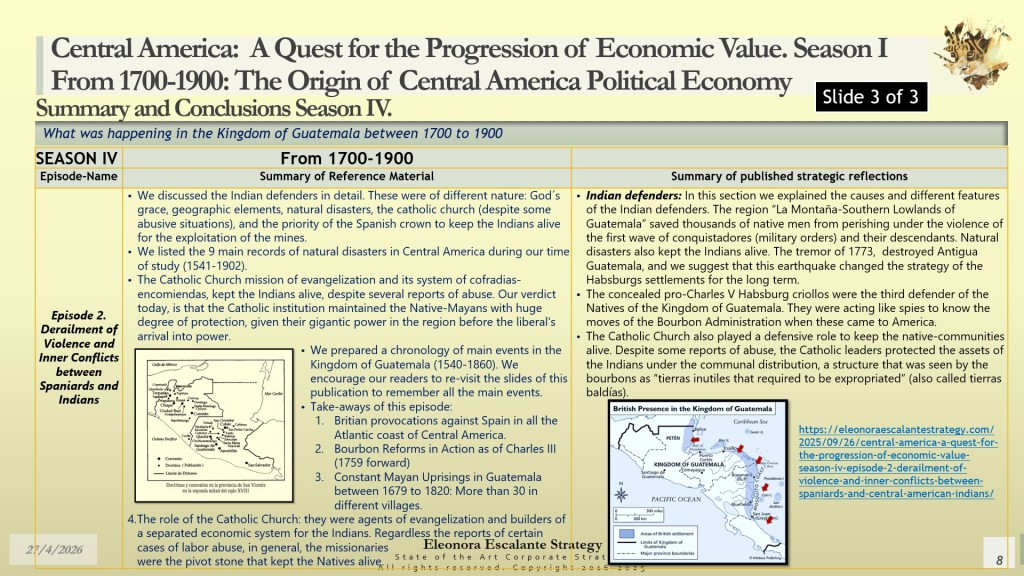
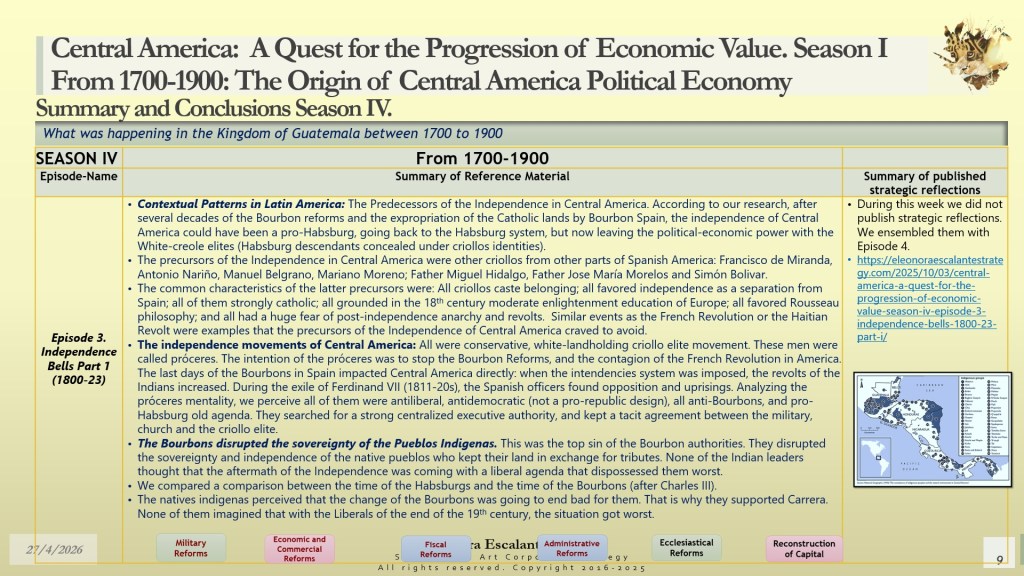
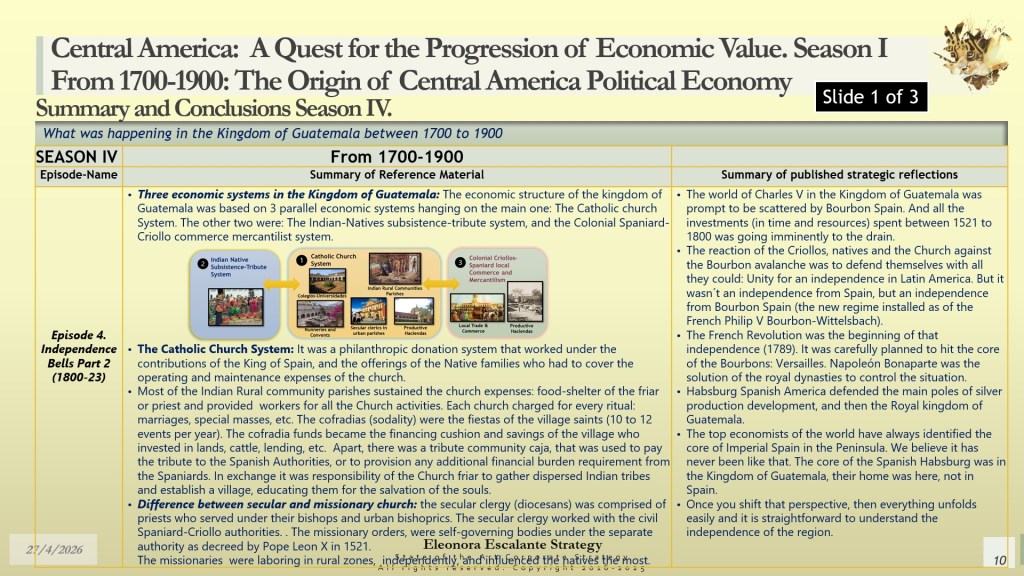
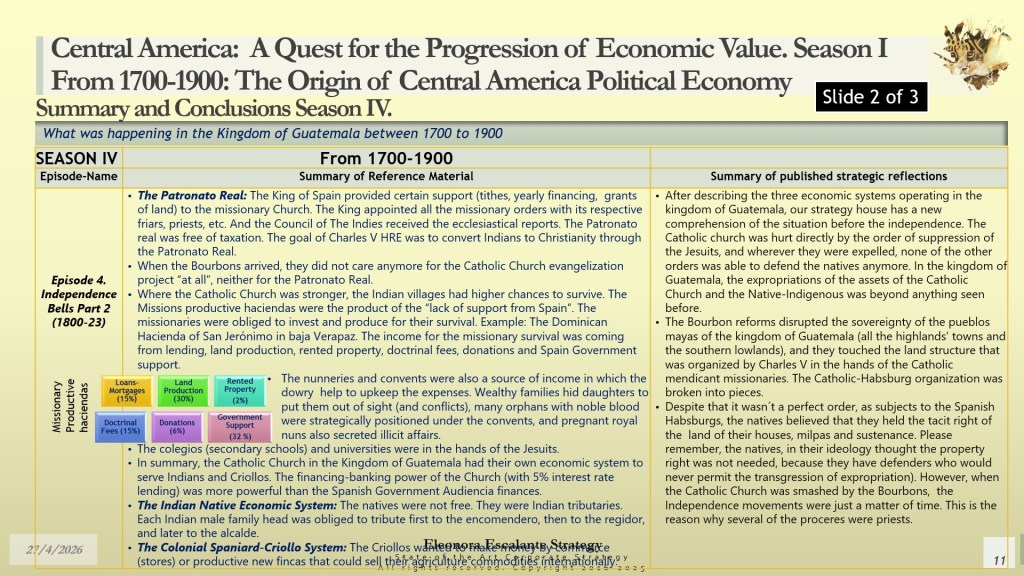
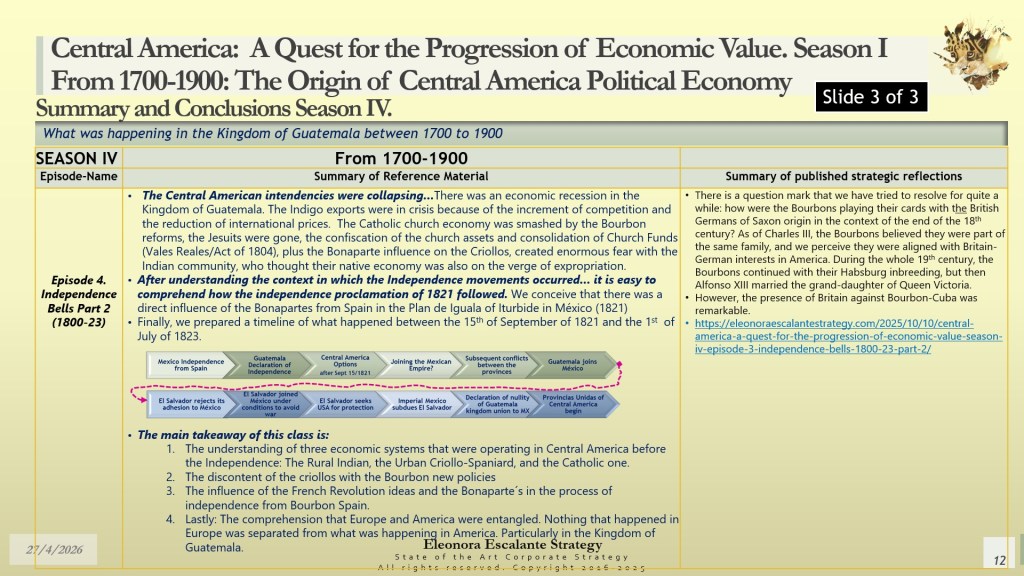
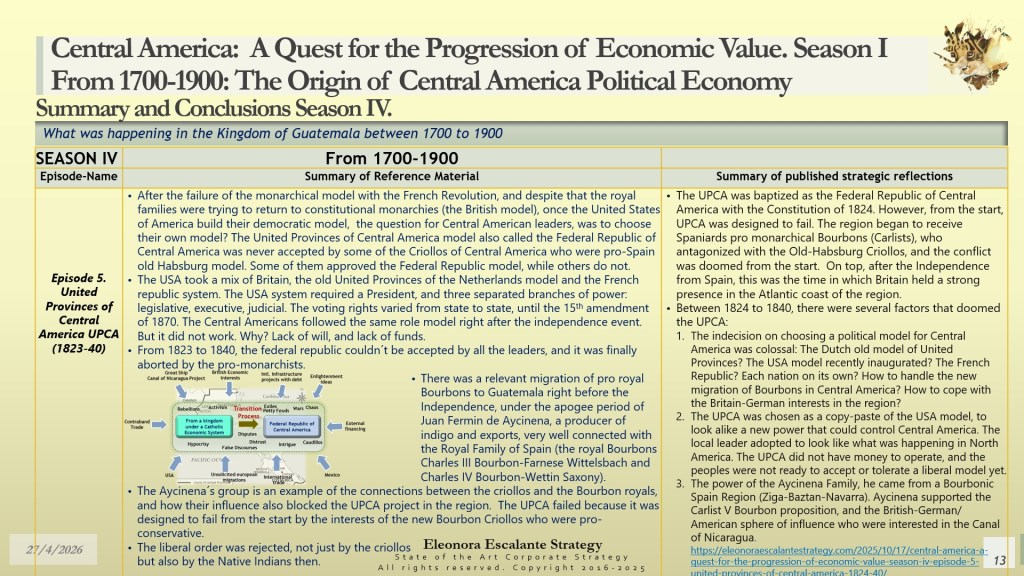
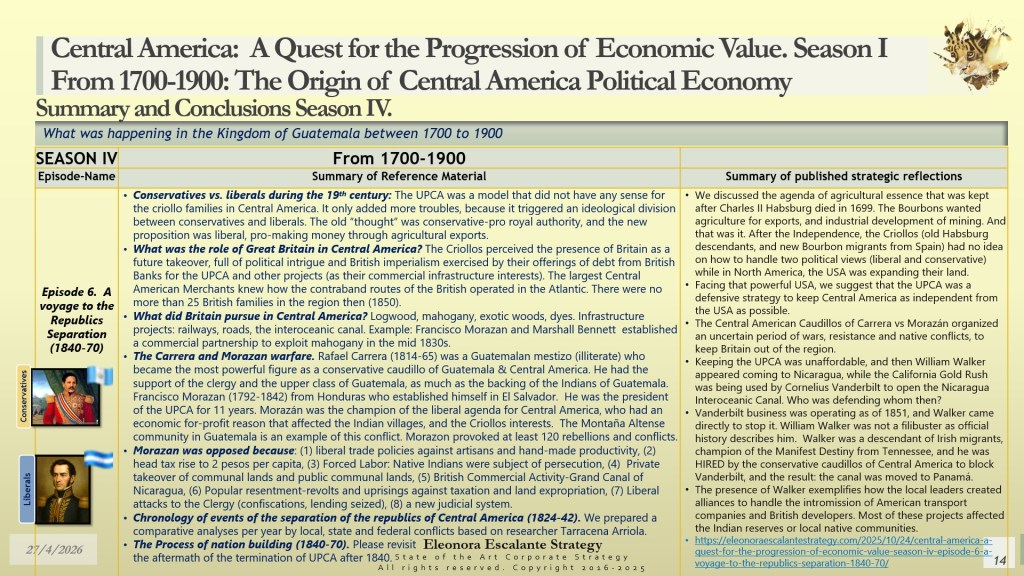
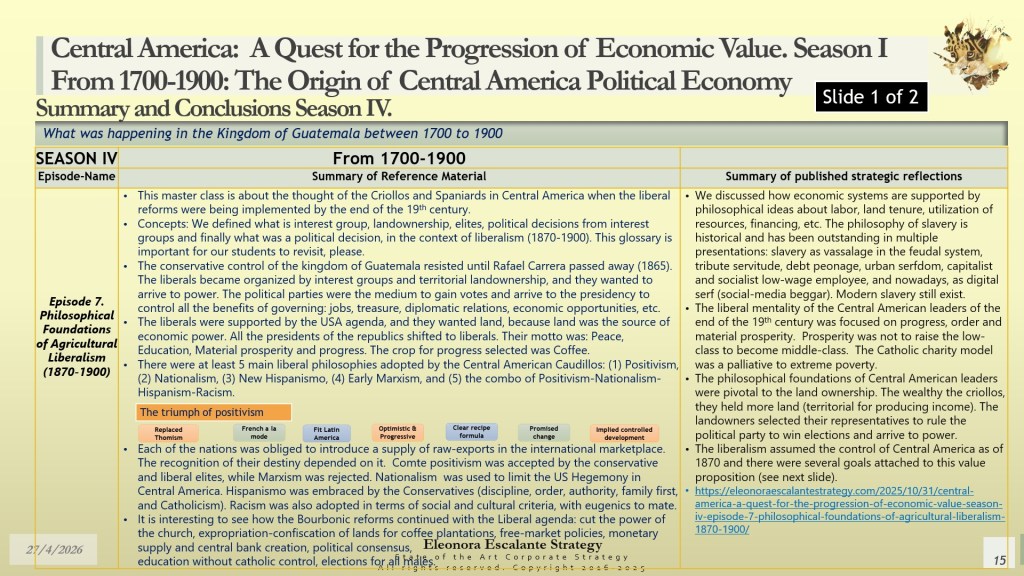
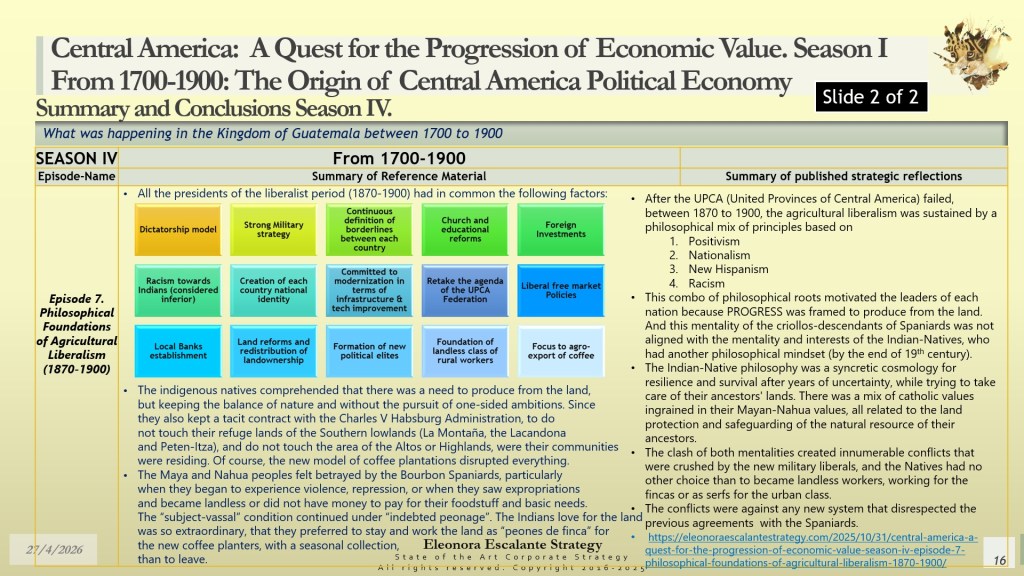
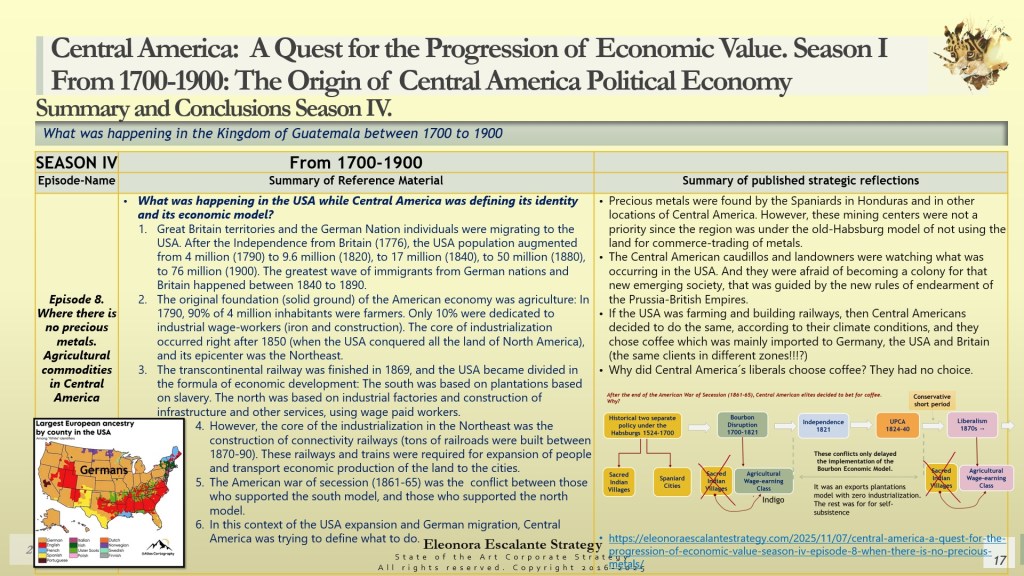
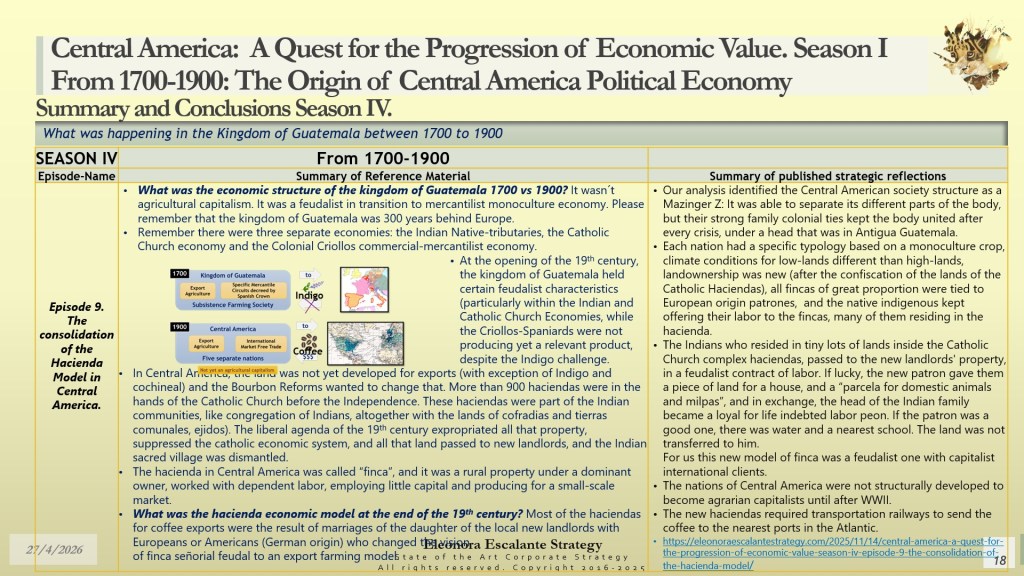
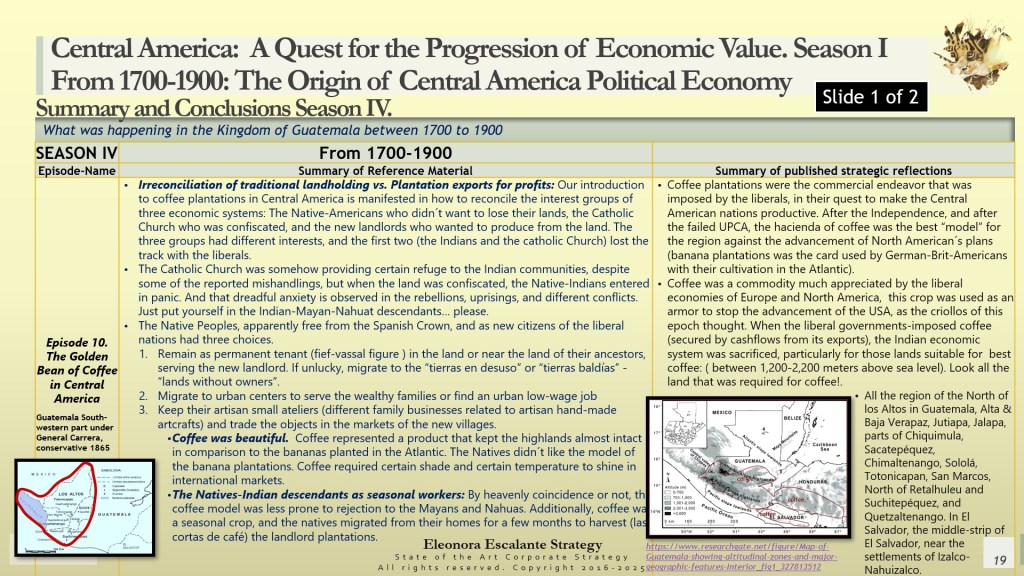
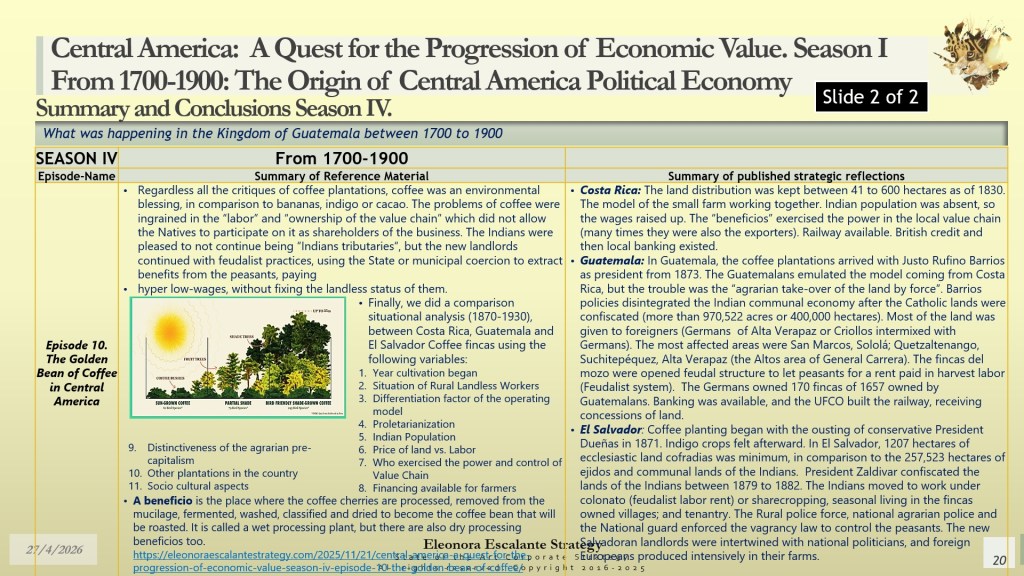
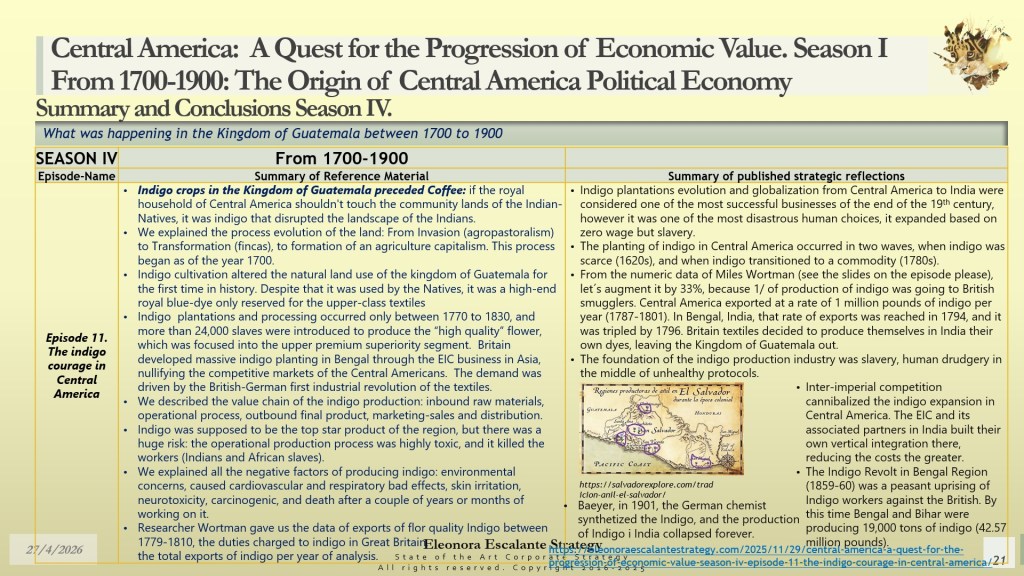
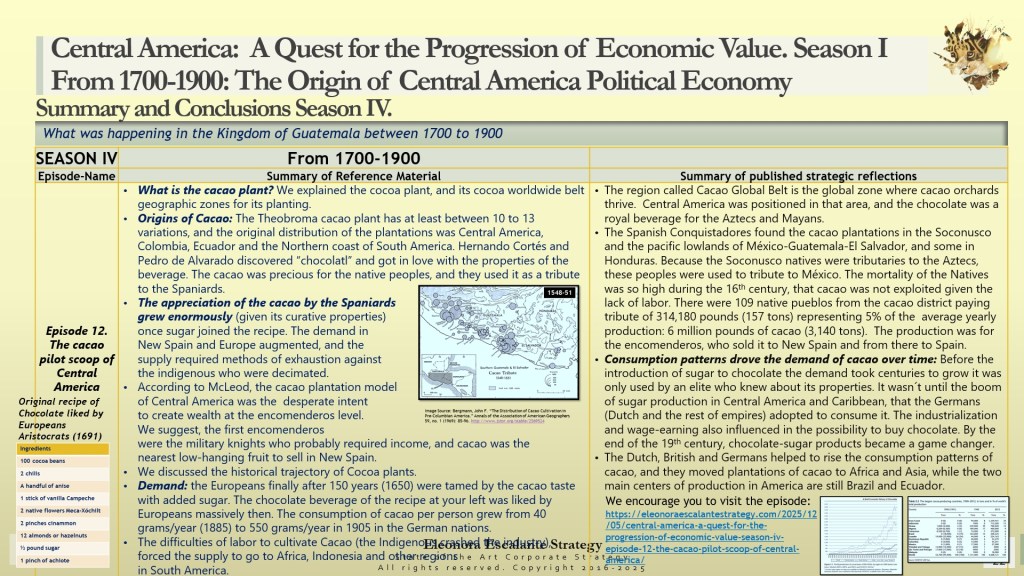
Central America: A Quest for the Progression of Economic Value. Episode 17. From 1700 to 1900: The Origin of Central America’s Political Economy. Summary and Conclusions. Season 4.
The disgrace of Central America was to be entangled indirectly with the upper geopolitical conflicts of those who wanted to rule the new American Continent. The Habsburgs and later Bourbons were the pioneers of the economic exploitation of this Hispanic region. In the Kingdom of Guatemala, the Spanish Habsburgs created a tacit strategic alliance with the Native Indians during the first 200 years after the conquest by Hernán Cortés. When the Bourbons arrived (as of 1700), panic unfolded among the Criollos and natives, particularly with the liberals who wanted to make the land productive, using their European philosophy of the usufruct of the land. There is a rule of thumb that comes from the German nations, including those related to the Northern part of Germany (particularly the United Provinces and Prussia), that is ingrained in their philosophy: Resources should be productive. And land (which was abundant in America) required inhabitants and ways to profit from those resources. While Germany and Britain were busy with the industrialization of their resources, focusing on energy for transportation, in America, the avalanche of German-speaking new inhabitants was the stimulus to put the land to work. Urban centers profited from other industries, while most of the USA was dedicated to agricultural capitalism. Most economists believe that it was industrialization that allowed the growth of the USA. It is not correct. It was the solid foundation of agriculture that allowed industrialization to emerge. While this was happening in North America, the region of Spanish America was lagging behind.
From here, we encourage our readers to read all the slides provided above. There are six key takeaways from Season IV:
- If our hypothesis about the kingdom of Guatemala as the core royal household of the Spanish Habsburgs is true, why did the Bourbons continue to install liberalism after the Independence? We believe that after the earthquake of 1773, the Habsburgs residing in Antigua Guatemala moved out of there. Now, let´s look at the situation with another explanation from the macro point of view of the monarchical strategic alliances. The Bourbons-Braganza were tied to the Wittelsbach. The Hanover dynasty of Queen Victoria was in reality the Welf of Brunswick-Luneburg-Wittelsbach. During the 19th century, the German-British royal family was entangled genetically with all the kingdoms of Europe, and as a block, this new German emerging dynasty was competing with the Old Habsburg constellation of families (who were mingled with the French Bourbons too). The takeover of the USA was effected by Germans from all the nations who were born between Switzerland and the United Provinces. All these new migrants were populating North America as of 1853. Now, let´s put ourselves in the shoes of all the Spanish-speaking new nations (probably led by Criollos concealed Habsburgs) that were watching the USA. I am sure all of them were afraid of what could happen next, unless they were part of the same interest dynastic group.
- Let´s see the former kingdom of Guatemala, segmented into 5 new Central American Nations. What happened with the tacit contract between the Spanish Habsburg descendants and the Native Indians of Guatemala? After the independence, the Indians stopped being tributaries to Spain, but they did not want to be tributaries to the new nascent empire, the USA. The natives´ lands, appropriate for coffee, as the main resource in Central America, were the issue here. Most of the Indian villages were positioned in the most suitable lands for coffee. A new administration of German emerging dynastic rulers was taking over their lands for coffee, using the liberal president’s agenda and military enforcement (in the repressive style of the Bourbons). What to do? The derailment of violence and inner conflicts of the Indigenous began.
- The United Provinces of Central America (UPCA), called the Federal Republic of Central America, was not going to happen. It was a failure from the start. Why? Because all the groups of the new countries (including the Indians) perceived that it was the mechanism to be seized by the new USA power. It was better to act as a Mazinger Z, appearing separated fragmented republics, but united by tacit de facto, than to appear aggregated together as a possible new subject to American interests. Remember that the USA was looking anxiously to build the interoceanic canal, and the United Fruit Company entered the region to build railways and banana plantations at the same time that coffee was being planted.
- The philosophical foundation of the agricultural pre-capitalism in Central America was a mix of positivism, nationalism, new hispanism, and racism. After the emergence of Marxism, a new philosophical dialectic was prompted to create more damage than the French Revolution in Latin America. Why? Because the lower-class peasants were utilized and unfairly treated (for political reasons), many were later repressed. The reign of terror of the National Rural Guards forced the peasants (indians) to leave their tierras to new landowners.
- The consolidation of the hacienda model in Central America was not like the Mexican one. Each country in Central America had its own land structure, particularly Costa Rica. This is the reason why Costa Rica holds a robust middle-class, because the coffee finca estates were distributed in sizes between 41 and 600 hectares.
- Finally, when exploring in detail the three plantation models adopted in Central America: Cacao, Indigo, and Coffee, we discovered the same pattern, in three different time moments: the goal was to dispossess the land of the Indian Natives, either by subjugation or by legal liberal enforcement.
Repeating: We recommend that all our bibliophiles read our summary of the slides above, as it will be reasonable for you to remember each of the theme details.
Announcement:
The next saga: Coffee-Cacao Strategy 101 for Family Farm small-holders will begin on May 22nd. We are close to finishing this marvelous academic saga. Only two more publications and we are done. Our next and last summary is about recent publications; consequently, we will go directly to list them.
So happy, aren´t you!
Musical Section.
Today is the turn for one of the most relevant symphonic orchestras in the world that would be treasured by your ears. The name is the Royal Concertgebouw Orchestra from the Netherlands, directed on this occasion by Gianandrea Noseda. The artwork is the Bolero of Maurice Ravel. For more information about the orchestra, click below:
https://www.concertgebouworkest.nl/en/ and its headquarters https://www.concertgebouw.nl/en/our-history
Thank you for reading http://www.eleonoraescalantestrategy.com. It is a privilege to learn. Blessings.

Sources of reference and Bibliography utilized for today´s inferences. The bibliography is listed in each episode and season. Click the respective URL to trace them.
Disclaimer: Eleonora Escalante paints Illustrations in Watercolor. Other types of illustrations or videos (which are not mine) are used for educational purposes ONLY. All are used as Illustrative and non-commercial images. Utilized only informatively for the public good. Nevertheless, most of this blog’s pictures, images, and videos are not mine. Unless otherwise stated, I do not own any lovely photos or images.
 Eleonora Escalante Strategy Strategic Reflections Think Tank