
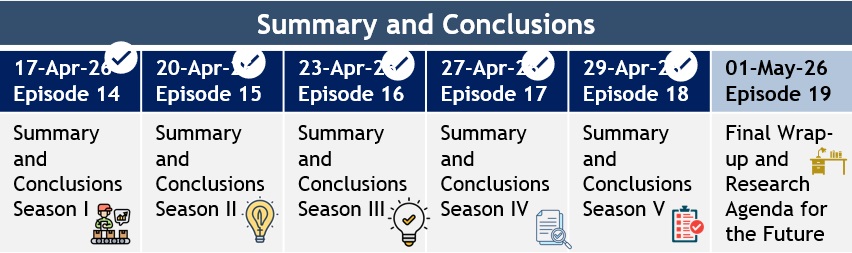
Strategic Reflections on A Quest for the Progression of Economic Value. Bonus-Season V. Episode 18. Summary and Conclusions Season V.
Strategic Reflections on A Quest for the Progression of Economic Value. Bonus-Season V. Episode 18. Summary and Conclusions Season V.
Heading into mental obscurity. A second dark age. The conclusion of season V is straightforward. The entire world is heading towards an age of mental obscurity (an age of moron-damaged brains that are completely dependent on applications powered by the Internet). The lack of ethical criteria to filter and regulate all these innovations ignited a reactor chain of different types this time: a unique unlawful class of high-tech entrepreneurs who designed their products and services using an excessive use of the combo of the technologies under the acronym of NAIQIs (Nanotechnologies, Artificial Intelligence, Quantum computing, and the Internet). These 5 technological advancements have been applied across all existing industries, and more than 70% to 80% of job positions will be replaced by artificial intelligence, either immediately or over time. Under the North American Industry Classification System, there are 20 economic sectors. And each of them has industry groups. All these industries hold jobs that are currently at risk of being totally replaced by machines. However, to avoid creating panic among populations, leading global consulting authorities have proposed that jobs will be AI-complemented or partially replaced. Eleonora Escalante believes that all jobs can be replaced by the NAIQIs; it is just a matter of time. For us, this new manner of trade-commerce is not based on capitalism, and it is not based on socialism. It is a new “je ne sais quoi” system that no one dares to baptize yet. We have called it the digital begging system, while others have named it technological feudalism. This new “je ne sais quoi” system is affecting the core human showcase of our existence. Particularly, it is giving birth to an inhuman philosophy of life. It is affecting how we manage personal relationships with our families and people, it is distressing the quality of our education, our “savoir vivre,” our daily routines, and ultimately our jobs of today and the future. The digital-virtual era is the result of decades of non-stop innovation in the information technology domain, which ceased to be a tool to enhance our productivity and has become the backbone or the column vertebrae of all that we do. The transition has gone too fast, so in less than 30 years (after the year 2000), we are now on the edge of making the worst mistake of our history. Continuing under the digital begging era is taking us to unnecessarily painful corrections, which can be prevented.
The role of historical corrections. Every historical correction is always excruciating and dreadful. Historical corrections come in different ways. Some are the consequence of human actions: stock exchange crashes, economic recessions or depressions, domestic conflicts, political-economic seizures, commercial isolations, embargoes, massive spills, global wars, the horrible holocaust, nuclear attacks, pollution, lost civilizations, or massive migrations. Other historical rectifications come as the consequence of natural disasters: drought, volcanic eruptions, natural fires, famine, floods, hurricanes, earthquakes, tsunamis, hot or cold waves, or rapid temperature flips linked to climate change, a meteor hitting the world, environmental hazards, and pandemics.
We are not considering historical corrections as a divine punishment or as the apocalyptic end of the world. God has given us free will, and we end up reaping what we plant. But after learning in this saga about the last 500 years that followed the discovery of America, we are convinced that historical corrections occur (natural or because of human actions). The historical corrections are embedded in the most heartbreaking cry for help, when the pathway of civilization is going wrong, or it requires attention to be fixed, because it is organically ill, or it is leading us to pure madness.
Now, Artificial Intelligence (which for us includes automation and robotics) is being rolled out at the virtual level and at the physical level (applied to manufacturing and factories). The Artificial Intelligence applied to manufacturing is being considered in industries such as utilities, food, apparel, pulp and paper, chemical, plastics, rubber, metals, machinery, computer and electronics, transportation, merchant wholesalers of durable and non-durable goods, retail, warehousing, communications, publishing and broadcasting, finance, etc. The employment of the NAIQIs in all these manufacturing industries is undeniable, and it has happened gradually. But after the invention of the Smartphone (2008), the direct utilization of the NAIQIs went from linear to hyper-exponential. What are the economic sectors that have been affected the most by the usage of NAIQIs technologies during the last 30 years? The answer is all of them. However, 4 economic sectors have been affected the most, and all of them rely on the power of knowledge development (the knowledge economy):
- Professional, scientific, and technical services: here we find legal advisors, architectural and engineering design, specialized graphic design, management consulting, human resources, environmental, marketing, financial and administrative advisors, scientific research and innovation developers, advertising, etc.
- Educational services: here we find the teachers, instructors at elementary and secondary schools, junior colleges, universities, professional certifications, specialized training, technical and trade schools, and all the industries related to educating, coaching, and tutoring.
- Health care physicians and practitioners: here we find physicians, mental health specialists, experts in all the medical areas, nurses, and social assistants.
- Art creators: in each of the main categories: Painting, Sculpture, Literature, Theater, Cinema, and Music.
- Other support roles in the knowledge economy.
These 4 economic sectors have multiple sub-sectors and industries. The knowledge economy permitted the creation of a middle class based on education, intellectual hard work, expertise, and know-how that did not exist before WWI. Through the knowledge economy, numerous households shifted from extreme poverty or low-class status to the middle class. The foundation of the knowledge economy is based on brain development.
What can your brain do better than a machine? This was before the advent of the utilization of Artificial Intelligence as it is utilized today, because right now all these activities are being absorbed by AI.
| complex problem solving | active learning |
| critical thinking | abstraction to theorize |
| memory | art production and assembling in coordination with others |
| modifying behavior in response to experience | association and prediction |
| interpretation | observational induction |
| develop conscience of integrity | organization, classification, and filtering |
| responsibility of action | get rid of unpleasant habits by re-training the mind |
| evaluation of situations-causes & consequences | moral judgment |
| comparative scenarios | wide-ranging decision making |
| analytical formation | information literacy |
| reflection | introspection |
| creativity and imagination | visualization of the macro (big picture) vs the micro (details) |
| intuition | perception |
| communication skills (written, oral, gestures) | emotional control |
| discernment of truth (sorting the truth from the false) | reconfigure elements to reinvent or rebuild again |
| capacity to feel pleasure and pain | recognition between the right and wrong |
| review and conclude | synthesis |
| long term planning | merge of thoughts |
| gain knowledge of mistakes | anticipation of crisis for contingencies |
| assessment of patterns | provoke change and resilience |
| reading at level 6.0 PISA | inferring (deductive thinking) |
| acquire other languages (listen, speak, comprehend, write) | numerical calculations (math) and financial analysis |
| geolocation (spatial positioning) | scheduling and using time properly |
Brain Power and the Knowledge Economy.
The knowledge economy was thriving, offering opportunities of 6-figure salaries (more than $100,000 dollars per year), because the level of technological invention and sophistication was low, and the brilliance of thought was paid accordingly. It was pure brain power. Brain power is expensive. Brain power is only omnipresent at the level of a differentiation strategy because each head is different and it is unique. Two people do not think the same, even if they study and are learning in the same place. And no machine could compare to the human talent acquired by education, and later, the aggregated experience. Until the year 2000 (Y2K), the knowledge economy was prospering as a path for those who were developing their intellectual competencies, and it was not possible to be replaced by machines or software because the technological solutions were not designed to substitute the main brain competencies listed above.
The NAIQI Digital Begging era is pursuing a low-cost strategy. However, with the digital begging economy, most of the brain’s abilities are now being replaced by machines, applications, algorithms, and multiple devices, where the protagonist is not the brain, but the machine. The brain is sleeping, while the NAIQIs are performing our knowledge jobs. An algorithm is born by the identification and assessment of patterns. Humans have designed the first loop of the algorithm, and now, the machines can design the algorithms!. Then the machine repeats the cycle again and again when the human requests it. Nowadays, the massive amount of information and big data available for free on the Internet is not dependable, and humans are being manipulated by Artificial Intelligence tools. This is what is happening to the knowledge economy. It has been attacked at the core by the NAIQIs, because it is using untrue data or manipulated data. Generative Artificial Intelligence is replacing the brain power, and it has attracted the CEOs because it promises to be cheap and a substantial cost reduction. The NAIQI Digital Begging era is pursuing a low-cost strategy. And all the brain-power jobs that were created and based on the grooming and delicacy of cerebral skills and competencies are nowadays not demanded, because there is an application that can do it in seconds. What a high-IQ person was able to do in two weeks, an AI application can do in 1 second. In consequence, the job of the well-prepared academic or artist is losing demand, and will not be solicited in the future, because the ubiquity of the platforms of knowledge open AI type (of which Chat GPT is just one of them), is dethroning and hurting the supply-demand game. And it is also nullifying the education that enabled the elevation of these brain competencies.
The NAIQIs are the self-destruction of the brain capabilities that permitted differentiation and were paid for expensively. Every single economic sector requires a bunch of brain-power professionals, who are being replaced by the NAIQI and will not be able to make a living anymore for their families as middle-class. The digital begging era is going to convert people into modern slaves, who will not be cutting cane or bananas, but will be forced to stay at home, sitting for more than 8 hours a day, damaging their spines and nerves. Or the second option will be to compel labor as an essential workforce.
How did we arrive in this situation in the year 2026? How did we push for an NAIQI formula that is condemning our brains to fail? How did we allow the self-destruction of our cognitive evolution by substituting our brainiac processes to become dummy, by using the NAIQIs without any type of control? How did we end up in this mud? How could the listed brain activities be absorbed by the AI?
All these questions came to my mind before starting the saga “Central America: A Quest for the Progression of Economic Value.” We were looking for answers to these inquiries. And we decided to find them in the history of America as of 1492, focusing our efforts on Spanish America only. In the process, we found out that all the empires involved in the economic development of the first industries of this region were entangled with the monarchical context of Europe and North America. So, we have been researching historical evidence for several months. Today, we will concentrate on the three main industries that emerged in Central America during the 18th and 19th centuries: sugar cane farming and sugar production, cattle and livestock, and bananas. In season IV, we already covered indigo, cacao, and coffee.
When we started to study the origins of economic development of Central America, we had to go back in time to the Discovery of America. Hernán Cortés and Pedro de Alvarado conquered this region with the help of royal military knights, and this region was named the kingdom of Guatemala (understood as from the border with Oaxaca, passing to Guatemala, Honduras, El Salvador, Nicaragua, and Costa Rica). This region was superb. It was chosen to keep a low profile as a future royal household for the Spanish-Habsburg dynasty of Castile. And as a household, that implied focusing solely on the main activities required by a household: generating a good input of agriculture and forestry economic sectors. Mining was not relevant enough then, or was kept hidden, and the textiles were developed only for the domestic consumption of the Native communities. Most of the fabrics utilized by the Criollos or Spaniards were imported from Europe or from China. We have discussed all the details about what occurred between 1492 and 1900.
Finally, it was during Season IV and V that we explored the indigo production, the cacao farming, coffee estates, sugar plantations of the Caribbean, and the banana cultivation of the United Fruit Company. We focused only on these industries because those were the most relevant ones pertaining to Central America. This Season V has been mainly about sugar. We dedicated 1 introductory episode to sugar during season IV (the last episode), and 10 episodes on Season V. To summarize, let´s remember what we did.
Sugar-Sugar America.
Episode 1: General Discussion about the Primitive Sugar Value Chain, the rise of sugar crops in the West Indies, and the Brazilian Business Model.
We introduced the sugar cane production primitive value chain (1492) using a drawing plate of Jan van der Straet. From the start, the 2 key performance factors of the sugar industry have always been the quest for high productivity at the lowest possible cost. These two drivers created a global economic system using slave labor. We then continued to explain each of the main elements of sugar production: planting, harvesting, mill processing (crushing the cane, boiling the juice, cooling, curing, drying), storing, and shipping. We also spent some time showing you how the sugar crops triggered a colonization that was of interest to the 5 main empires (Portugal, Spain, France, Britain, and the Dutch).
The rise of the sugar crops occurred because the Portuguese were directly involved in their production before the discovery of America. The demand existed and, by investing in the business, colonial Brazil was developed. We explained how the Portuguese developed communities, intending to produce sugar. Labor was required, and the Portuguese went to look for African slaves in 1500. We analyzed the slave labor, the particularities of the slave trade, and ratios for productivity, and how the Brazilian engenho´s owners were linked to Lisbon, then Antwerp and Amsterdam to access capital, credit, and the refining centers of the raw sugar that was produced in America. The top kingdom using slavery for sugar was the Portuguese. In total, they transported and utilized more than 5.8 million African slaves between 1501 and 1897 for Brazil colonial plantations.
Sugar-Sugar America
Episode 2: Dutch Colonialism and the Dutch Sugar Production Business Model in America.
We explained why the Dutch became important players in the sugar value chain of the Portuguese, because they oversaw the refining and re-export/distribution to all of Europe. Additionally, the trade of African slaves was a solid source of profits. The Dutch might not develop vast territories in Spanish America and the Caribbean. They were traders using the VOC in Asia, and they expanded their factories to several coastlines and Indonesia. The priority for the Dutch was not to become a producer of raw materials, but to buy them and transform, trade, and transport them where the client demand existed. We also explained how the Dutch WIC was formed, and the experiment of Dutch Brazil between 1624 and 1654. We explained the core aspects of Dutch Colonialism. During the 17th and 18th centuries, the Dutch established sugar cane plantations in the Leeward Islands, but particularly in Suriname or Dutch Guiana. We cited multiple details about the Dutch production of sugar researched by several scholars during our period of analysis (slave trade, ship traffic, technological innovation of best practices used in Indonesia, productivity analysis, access to credit, and agency issues). In total, more than 500,000 slaves were carried to the Dutch Atlantic colonies between 1501 and 1867.
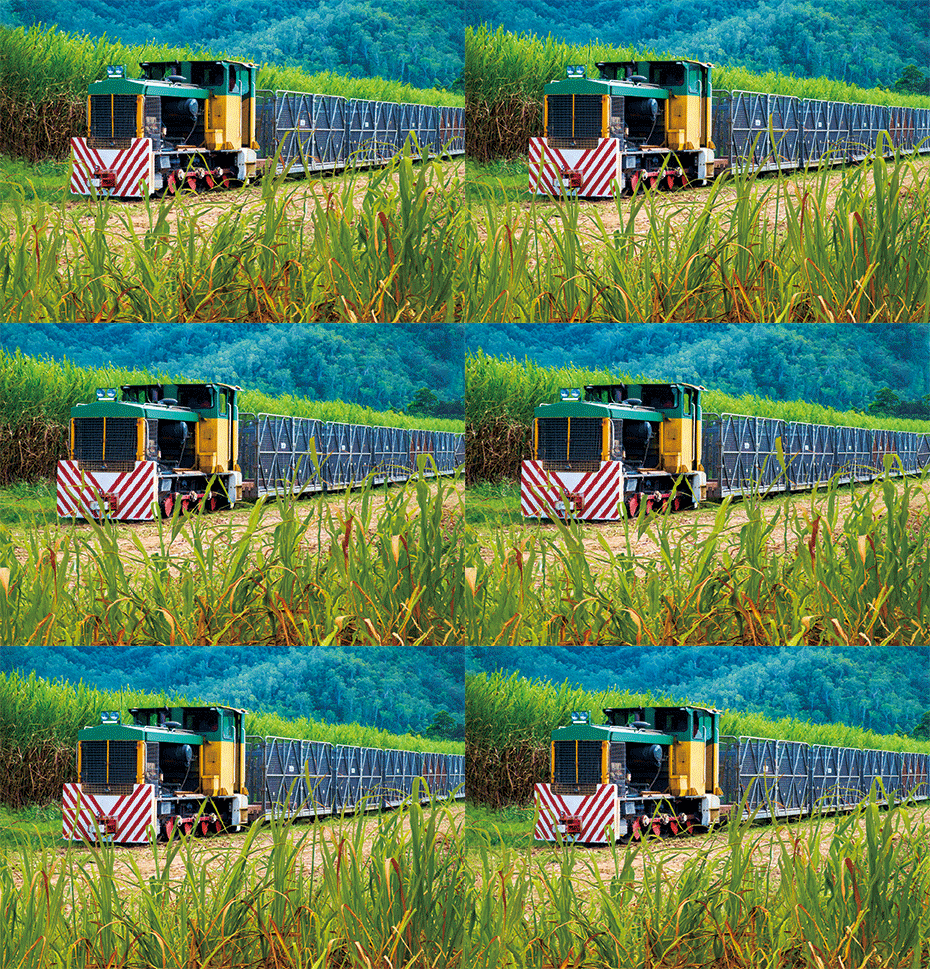
Sugar-Sugar America
Episode 3. The British West Indies Sugar Production Model.
The British settlements in the Caribbean started in the 17th century. We analyzed the presence of sugar crops in the Windward and the Leeward Islands. Most of these islands were captured by Britain during the 17th century. Britain’s priority in the Caribbean was sugar, and the most productive islands were Barbados and Jamaica. The aggregated production from all British colonies surpassed the Portuguese supply to Europe by 1700. We described the essential elements of a revenue and cost structure for a specific analysis based on Klass Ronnback from Gothenburg and J.R. Ward. Our intention was to determine if the sugar planting in the British West Indies was profitable.
Sugar-Sugar America.
Episode 4. The British Sugar Model of Barbados
We decipher the commercial region of the British Atlantic under a new paradigm, not pursuing the logic of continents separated by an ocean, but as a huge lake that kept the flow of trade moving. Sugar was the mechanism of slave trading in that commercial region. The slaves were the most expensive, profitable, and treasured factors or production in the Atlantic economy. We analyzed the circuits of trade involving the British West Indies Sugar plantations: We could identify three triangles. Trade of sugar allowed the trade of slaves, and the surging of agents or the middlemen: overseers, insurance agents, wholesalers, colony representatives, shipping and custom agents, agents of slavery, credit agents, port agents, etc. Britain installed an economic model based on agents, and each agent requested a commission or a % of the economic value of the deal, usually the load of sugar involved in trade. We explained the meaning of a voyage outfitted in the ports (Liverpool, London, Bristol, Rhode Island, Bridgetown-Barbados). Without the labor (slaves), plantations couldn´t produce. The slaves were bought on credit, and the royal families related to the British Dynasties were directly involved in Slave trading. We studied the process of the Royal African Company and its financial mechanisms to buy and sell slaves on credit. Britain was able to develop Barbados as the premium producer of sugar in the world by the year 1700. And unbelievably, the sugar produced in the British Antilles was mainly consumed in Britain and the English American colonies.
Sugar-Sugar America.
Episode 5. The British Sugar Model of Barbados and Jamaica
We explained the Monarchical English Strategy in Barbados and Jamaica, and how the Stuart-Bourbon dynasty got involved in the business during the 17th century. The Western Design was a plan to expand English colonial merchants in Barbados and the rest of the West Indian territories facing the Spanish colonies. Jamaica was producing sugar for exports to England, while Barbados was producing for the Americas. The landholders in Jamaica were wealthy because of the number of slaves on each of their plantations. Between 1670 and 1754, the slaves in Jamaica increased 1272%. We also illustrated to our readers how a planter calculated his costs of raising a plantation in Jamaica (year 1690). The business was profitable. Finally, we exposed the relation between the prices of sugar and war. Every time there was a war in which Britain was involved, the price of sugar went up (the supply of sugar diminished and the price increased). The same applied to the slaves: The intermediation profit between the cost of the slave in the Western Coast of Africa, and the price at which it was sold in the British Sugar islands was in the order of 4X to 5X ratio. In total, more than 3.3 million slaves were carried by and for the British colonies of the Atlantic between 1501 and 1867.
Sugar-Sugar America.
Episode 6. The French sugar model context of the West Indies
We begin this master class by showing you who was who when Saint Domingue was negotiated and acquired by the French Bourbon Empire in 1697. This was the age of Louis XIV Bourbon-Medici/Habsburg. The war of the Grand Alliance, King William´s War, was solved with the Treaty of Rijswijk, and after the war, Spain ceded the western third of Hispaniola to France, which was renamed Saint Domingue (later Haiti). France arrived at the West Indies late, and it occupied, seized, and settled at least 11 colonies, only in the Caribbean Ocean. These territories were called the French Antilles (Grenada, Martinique, Dominique, Guadeloupe, Saint Christophe, Saint Barthelemy, Saint Martin, Saint Croix, St. Lucia, Saint Domingue, and French Guiana or Cayenne). We researched the main French Chartered companies doing business in the Atlantic, and most of them engaged in slavery. All the French Chartered companies were authorized by the Bourbon kings, and we identified 5 main trade circuits. The main ports of slave trade outfitting were Nantes, La Rochelle, Bordeaux, Le Havre, and Saint-Malo. In total, under the French Bourbon Kings, 1.4 million African slaves were carried to the French colonies between 1501 and 1867.
Sugar-Sugar America.
Episode 7. The French Sugar model of Saint-Domingue´s analysis
This episode is numerical. We captured and filtered data about the Saint Domingue sugar operations in the context of the French Empire after King William´s war (after 1697). The French Bourbon dynasty (tied to the Stuarts of England) was exploring North America slowly, and apparently, their competitors were the Spanish Habsburgs, who did not allow them to trade in Spanish America. Nevertheless, when Charles II died, a French Bourbon Wittelsbach (Philip V) took the baton of the Power of Imperial Spain after the War of Spanish Succession. During the 18th century, the French Bourbons were exploring the area called Louisiana (New France). The French colonization of New France was halted by the American Revolutionary War (1775-83), and the USA expanded over the territories of New France afterward. The Bourbons were unstoppable after the Jesuits were expelled from all the colonial territories; however, the French Revolution (1789) dethroned the Bourbon plans in America, not just the French Bourbon aspirations, but also the Bourbons of Spain. The Haitian Revolution began in 1790 in the aftermath of the French Revolution.
After analyzing the context of the colony of Saint Domingue, we continued by illustrating to our readers the production key performance indicators. By 1788 (a year before the French Revolution), the colony of Saint Domingue was the home of 30,000 whites, 25,000 mixed, and 500,000 African Slaves. The ratio of slaves per white person was 16X. R. Stein extrapolated that between 87,000 and 99,000 tons were the total of sugar exported to France from 800 sugar plantations of Saint Domingue. The business was profitable for the producers and the merchants. The French colonies were obliged to send the sugar of Saint Domingue only to French Ports, and from there it was re-exported to Amsterdam (where it was refined), Rotterdam, Hamburg, Bremen, and other Baltic ports. The raw muscovado sugar that was refined in France (a business of the Duke of Orleans descendants) accounted for between 20% to 30% of the total annual arrivals of sugar, and it was reserved for domestic consumption in France. We also completed a comparative analysis of the main ports of sugar trade coming from Saint Domingue (Nantes, Bordeaux, and Marseille). We were interested to show you the costs of refining sugar in France and how the Orleans refineries, next to the Loire River, were making money out of that process. For Eleonora Escalante Strategy, the Haitian Revolution was the Atlantic front of the same French Revolution, and this event demolished the plantation model of France. We show you a detailed chronology of the 18th century to support our inference. After sharing the description of the Haitian Revolution, and the role of the leader of the rebellious slaves, Francois Dominique Toussaint L´Ouverture, who was betrayed by Bonaparte´s army forces.
Sugar-Sugar America.
Episode 8. La señorita Cuba 18th-19th Century
This chapter is the turn for the Spanish Empire’s sugar business model. Under the Spanish Habsburg administration, Cuba did not produce sugar for exports, they held traditional artisan sugar mills for domestic consumption. However, when the Haitian Revolution occurred, the French-Spanish Bourbon coalition decided to move the sugar epicenter of production to Cuba. The Spaniards were not new to sugar production; what was new was the volume size required as of 1783 in the USA. The demand for sugar in Cuba was driven by the US markets. Most of it was produced in the format of muscovado, and it was delivered to the ports of the refinery. After 1759, Cuba began its transformation to a sugar cane monoculture economy, because of the Bourbonic reforms that lifted the old Castilian bureaucratic restraints of trade. Most of the African slave trade to Cuba occurred during the 19th century. Between 1817 and 1877, there were more blacks than whites, while in the rest of the years, the white population outperformed the black slaves. Nonetheless, in total, between 1526 and 1867, the Cuban planters and Spaniards transferred more than 770,000 African slaves, mainly from West Central Africa. We prepared a chronology of major political challenges in Cuba between 1760 and 1900. When the USA abolished slavery in 1865, the sugar industry of Cuba was superior to that of Indonesia. And Havana became the most important trading partner of Cuba. Slave trade continued illegally, and several wars, conflicts, or revolts occurred in the island between 1870 and 1898, the year in which the USA gained total control of Cuba. It is important to study the Cuban sugar model because there is a transition from slave labor to wage-paid labor, plus the application of modern technologies in the modernization of the traditional mills. The Spanish-American War destroyed more than 4/5 of the old traditional artisan sugar mills in 1898, and the industry was forced to rebuild itself with the participation of foreign, mainly USA, investors.
Sugar-Sugar America.
Episode 9: The Cuban Sugar Machine
This masterclass is also a data analytics one. Our inquiry to solve during this session was to find out how the sugar industry of Cuba expanded without slaves, paying cheap labor at the plantations, applying industrialist economies of scale in the new mega-centrales mills? The answer: expansion of the planted territories with cane, and landowning inequality. The set of slides of this episode is particularly important for all of you to revisit and read again. We don´t want to summarize it here because this episode and the next one (chapter 10) are immensely helpful and precious for your learning experience.
Sugar-Sugar America.
Episode 10: The Cuban Sugar Tycoons
The Cuban sugan tycoons expanded the land planted by installing inequality: without aggregating plantations under their ownership, the new sugar mills wouldn´t have yielded the top historical records of sugar for Cuba. When the model shifted from artisan to industrialist, the comparison of before and after is expressed as follows: In 1908, a total of 335,506 hectares of cane produced 1.5 million tons of sugar. By 1945, a total of 1,103,197 sugar cane planted, produced around 5.5 million tons per year. We recommend that our readers read again the slides and analysis related to this episode.
Sugar Sugar America.
Episode 11. Cattle and Livestock Haciendas in Central America
We started our class by revisiting the classification of the haciendas of the region during the period from 1870 to 1930. This was a liberal period; consequently, the land structure of the fincas of the region was large states (coffee farms and bananas), large estate mixed fincas (polyculture farms), and independent family farms. The livestock came with the Spaniards. Stock raising was part of the life of the colonizers, and it was positioned in three main clusters of land all over the region: Highland basins, Tropical lowlands, and Northern México. We analyzed the livestock economy of the Panama western pacific lowlands, the Guatemalan Pacific lowlands and Peten Northern lands; some scattered locations of cattle in El Salvador; the Mountain interior and la Costa zones of Honduras; and the Boaco-Chontales cattle area of Nicaragua. The presence of cattle (Ganado mayor) on pastureland has inevitably caused an important degree of deforestation in Central America. This episode will require additional data that we couldn´t find during our research term.

Sugar-Sugar America.
Episodes 12 and 13. Banana Republics.
The banana plantations were born as a cash-cow business with minimum investments for the Banana pioneer Minor Keith (1848-1929). By coincidence or not, Keith, from Brooklyn, ended up working in the supervision and construction of the first railway of Costa Rica. After negotiating with the liberal Government of Costa Rica, he was able to win a concession of land. All the details of this operation are described in the slides. By 1898, the Keith companies merged with Captain Lorenzo D. Baker of the Boston Fruit Company, and the deal reshuffled the existing players of the industry, consolidating it under one corporation. The result was the foundation of the United Fruit Company (UFCO). The company engaged in multiple industries, vertically integrated: construction and operation of railways, production of bananas, ports, bridges, hospitals, radiotelegraphs, schools, inventory management, steamships, refrigerated shipping, tourism, transportation, and company towns. UFCO didn´t sell only bananas, but it was a diversified conglomerate involved in innumerable businesses. The UFCO grew to unbelievable levels and expanded all over Central America (with the exception of El Salvador). The demand for bananas grew enormously in the American Markets, and the UFCO was able to supply and distribute them through its subsidiary, The Fruit Dispatch Company. UFCO then bought its main competitor in Honduras, the Cuyamel Fruit Company, and from there, after Keith passed, UFCO also pulled Samuel Zemurray (1877-1921), a Russian Jew who was the CEO of Cuyamel previously. The history of the banana industry in Central America is the history of the United Fruit Company, and how its enormous “octopus” diversified size (it established more than 15 banana plantation development districts in the Atlantic and the Pacific, and all the railway construction and operations of the 20th century) was used as an enclave for the North American commercial interests and control of the region. The situation of the UFCO is a case study of Harvard Business School, and multiple research by business economists, not just from the point of view of corporate growth and monopoly, but also from the point of view of market creation and consolidation of land-ownership in weak countries where there is a lack of ethical governance, absence of law enforcement, insufficient regulation, and deficit of transparency with the populations. The economic size (in terms of revenues and profits) of the UFCO surpassed the spending budget of all the Central American nations together, in a time of local military dictators. The USA also used the UFCO to obtain the concession of the Panama Canal, and the UFCO manipulated the USA leaders to assist with interventions/military invasions whenever the corporation considered necessary, in the middle of the local feeble, ineffective business/political environment. One coup d´etat against the Guatemalan President Jacobo Arbenz was caused by the CIA in direct de facto connection with the UFCo. For better understanding, proceed to read the slides and publication of these two recent masterclasses.
Closing words of Season V:
The business models used in the Kingdom of Guatemala, the West Indies territories, the Guianas, and Brazil in the hands of the respective European colonialist empires (Portugal, Spain, France, the Netherlands, and Britain) were based on four extremely immoral foundations:
- The nature of labor: First, at the arrival of the Europeans, the style of labor used with the Indians-Native populations was full slavery under the figure of Indian tributaries. The natives were decimated by mistreatment and sickness. The Native people were considered nothing. A cow was more valuable than an Indian at that time. Only by the grace of God and his mercy did the Indian natives survive in the Catholic villages. People make fun of me about the hypothesis that a Habsburg king fell in love with a Mayan Princess, but that is the only reasonable and solid theoretical explanation I find for why the Mayan-Nahua communities outlasted during the Spanish Habsburg initial colonization of this region (from 1521 to 1700). The Santiago de los Caballeros of Antigua Guatemala was guarded by a knightly military order of top caliber (the equivalent today to the US Navy SEAL or the British Top-Tier Global Special Operations Forces), and no indigenous person would have survived without the direct order’s protection of the King of Spain, who fell madly, deeply, and truly in love with a Mayan Noble. There is no other rational justification for why the Indigenous survived. Some decades later, with the entrance of African Slaves, the labor exploitation was sinister, a transatlantic slave trade business of massive proportions and unfairness, racism towards the African workforce, without minimum quality-of-life standards.
- The nature of the circuits of trade: The empires were feudal and absolutist. Over time, they became mercantilists. Regardless of the independence movements in America, the philosophy of reducing costs in exchange for augmenting the volume of production for great profits did not change in the minds of the merchants, of whom the royal families of Europe were also profiting with.
- The nature of inequality: the land was never distributed fairly in Spanish America. Philosophically, if an Indian Native was a “subject to the crown,” their status was not that of an equal citizen of Spain, but as a “second-tier individual” without legal rights of property, well-paid jobs, and welfare. An Indian tributary was obliged to pay a duty to the crown, and after the independence from Spain, his free landless status did not improve. The feudal system continued until the 20th century. The level of land inequality in the former Kingdom of Guatemala is one of the highest of Spanish America (Gini Coefficient of 0.79 measured in land area, and 0.60 in terms of land value). The level of income inequality is still one of the highest in the world, despite the fact that during the last decade it has been reduced by certain points (data from the World Bank Poverty and Inequality Platform, 2026).
- The nature of the paid wage: The transition from slavery to paid worker was not designed to provide sufficient money or enough means to leave extreme poverty. There was no will or desire to improve the conditions of life of the landless workers. There was no official support to start a respective conversion path to help them to become middle-class. Indeed, a basic income paid wage can´t be universal, because each person has different skills and a level of expertise. Though the level of the bare minimum in Spanish America was too low from the start, in comparison to what the German-British Empire offered to all the German migrants that populated North America after 1853. This situation has triggered colossal migrations of Latin Americans to the United States of America during the last 50 years.
The essence of season V was to demonstrate with historical evidence the progression of economic value in Central America. It implied that a transition from “subjects to the Spanish Crown” to free citizens occurred during the 19th century. Regardless of the type of agrarian commodity (indigo, cacao, coffee, bananas, sugar, cattle-livestock, or foodstuff), the business model was not well designed. We explored multiple business models adopted by the 5 empires when it comes to sugar production. And you have confronted its similarities and differences. The mentality of the leaders of the former kingdom of Guatemala (criollos, Spaniards, or mixed with other Europeans) did not change after independence when it came to labor, land ownership, quality education, and access to capital for most of the low-class population. And this philosophical manner of looking at economic production (reflected in business models of low cost-highest volume) has perpetuated the issues of the past into our days.
When it comes to the digital begging era, the current conditions are worse, because all the jobs that allowed the middle-class to grow (the knowledge economy based on differentiation by education or talented skills) have been hit at the core. In short, if we don´t stop the NAIQIs’ expansion, the ubiquity of their usage will continue draining the brain power. It will cause more poverty and inequality. We dare to suggest that soon, after adopting all the NAIQIs in all the industries, and when the knowledge jobs become totally replaceable by these technologies, the only positions available will be those who are called Essential/Frontline jobs (with super low-paid wages): Roles in healthcare support, logistics, delivery, food production, retail of cheap Chinese products, and sanitation. Terrible destiny awaits us if we do nothing about it.
Announcement:
The next saga: Coffee-Cacao Strategy 101 for Family Farm small-holders will begin on May 22nd. We will finish this beautiful saga on May 1st, the celebration of Workers’ Day in El Salvador. Only one more publication and we will accomplish our goal for this year.
Musical Section.
Today is the turn for one of the most relevant symphonic orchestras in the world that would be treasured by your ears. The name is the Berlin Symphony Orchestra. https://www.berliner-philharmoniker.de/en/. The occasion of the video below shows the director Kirill Petrenko leading the performance of the piece Mahler: Symphony No. 6 – 1. Allegro energico, ma non troppo. Enjoy!
Thank you for reading http://www.eleonoraescalantestrategy.com. It is a privilege to learn. Blessings.

Sources of reference and Bibliography utilized for today´s inferences. The bibliography is listed in each episode and season. Click the respective URL to trace them.
Disclaimer: Eleonora Escalante paints Illustrations in Watercolor. Other types of illustrations or videos (which are not mine) are used for educational purposes ONLY. All are used as Illustrative and non-commercial images. Utilized only informatively for the public good. Nevertheless, most of this blog’s pictures, images, and videos are not mine. Unless otherwise stated, I do not own any lovely photos or images.
 Eleonora Escalante Strategy Strategic Reflections Think Tank