
Cacao and Coffee 101. Success Strategies for Small Farm Holders. Episode 11. Key Resources Part I: Human Capital.
Dear lovely readers:
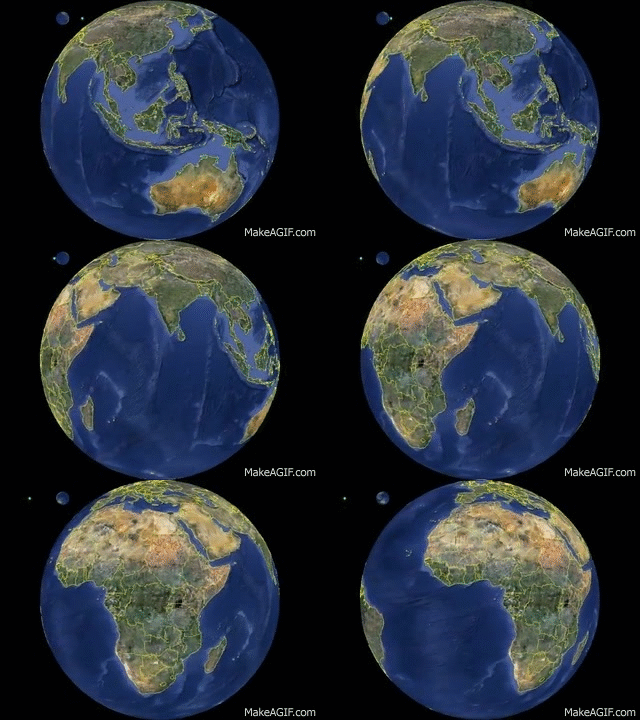
Our masterclass today is about the key resources in the valorous shift of transforming a commodity into a differentiated experience. This is a challenge. When we are facing climate change, higher environmental regulations, and a shift from a Geographical Indication to a Protected Denomination of Origin (PDO) license based on the terroir of the land and the variety of cacao or coffee orchards, the key resources of our business model should be analyzed with extreme care and detail. Beyond raising money to pay dues, working capital, or refinance, obtaining the PDO’s stamp of approval granted by the European Union would be a blessed endorsement for the Tropical Belt nations. If you see it from the International Space Station, 250 miles above our heads, the circumferential zone between the tropic of Cancer and the Tropic of Capricorn is, in reality, a unique garden for the whole planet. Since the Europeans discovered the New World in Asia and America, all of them were genuinely astonished by our beauty. Blessed are those who inhabit there, despite all the climate challenges, it is this zone where most of the precious tropical nuts and fruits grow. It is so important to care for the land as much as the people who are working there.
The key resources for small farmers (those with land below 10 hectares) will be studied in two sessions. Today we will cover the most important subject: people, the farmers. This session material is all about how to increase a balanced formal education that could help our adorable farmers to leave poverty behind. Find the material below. Please print it and save the slides in your files. Study and discuss the material over the weekend. Use your hands: write notes, ask yourself questions. On Monday, we will return to discuss our strategic reflections.
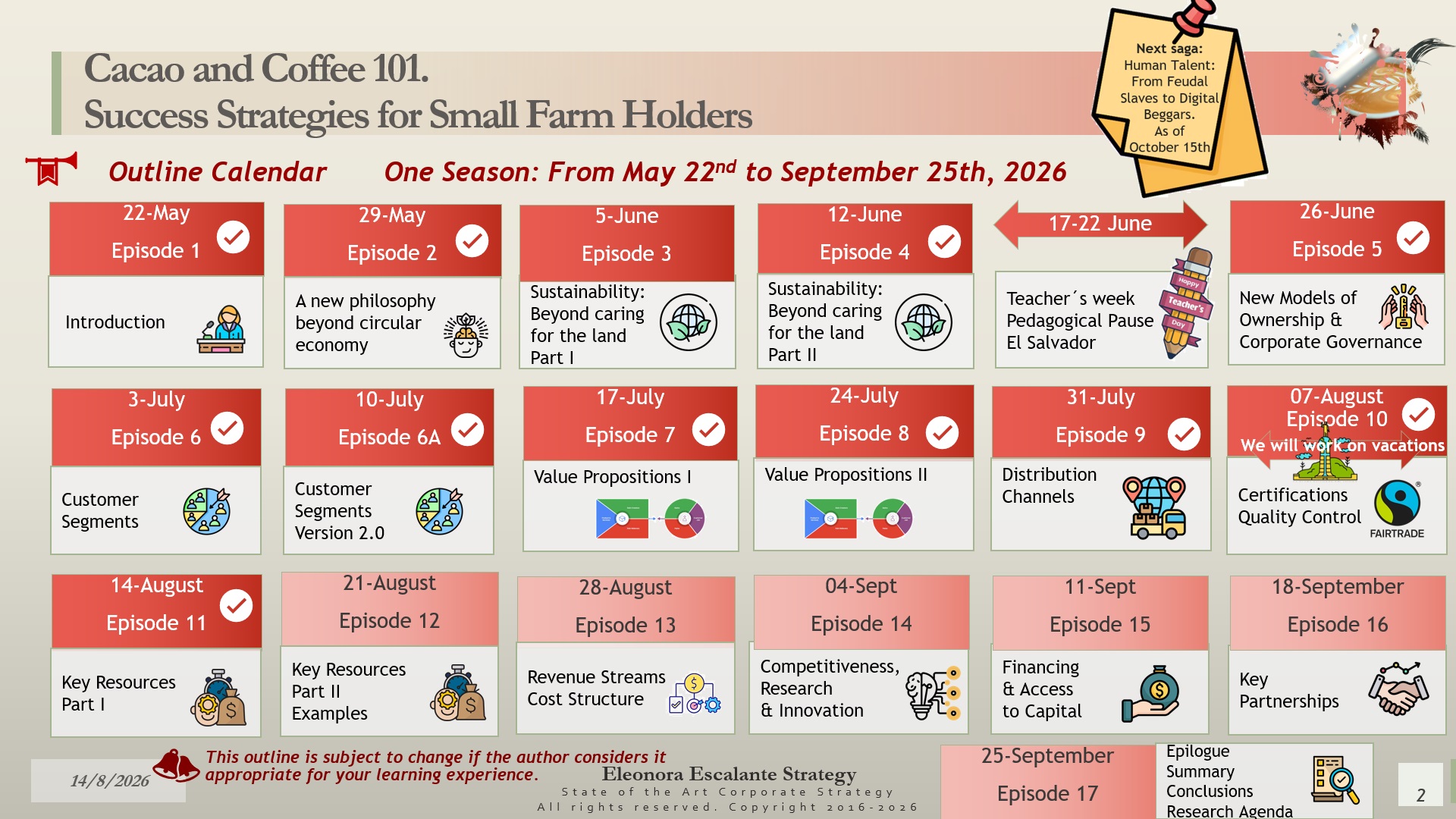
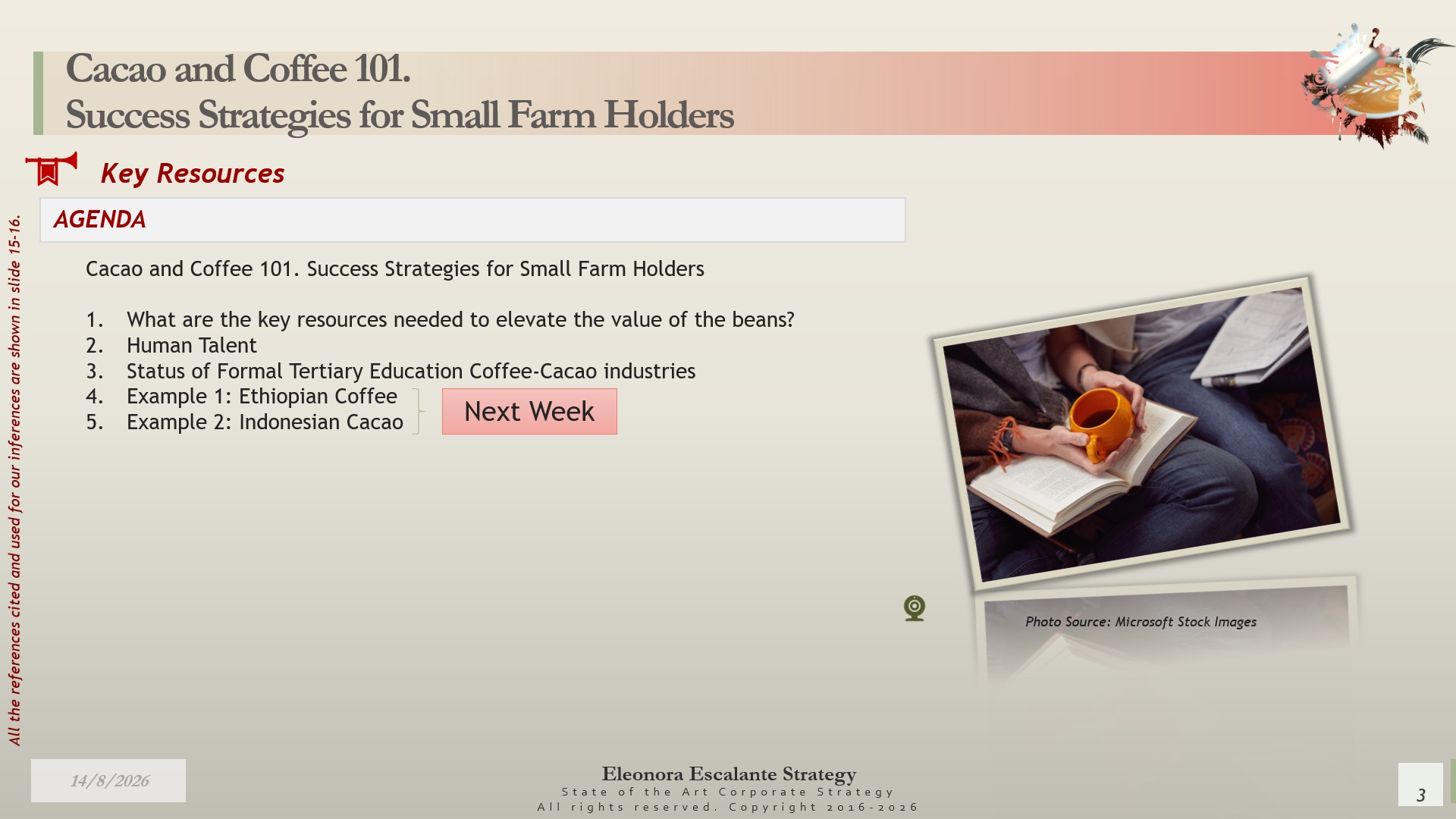
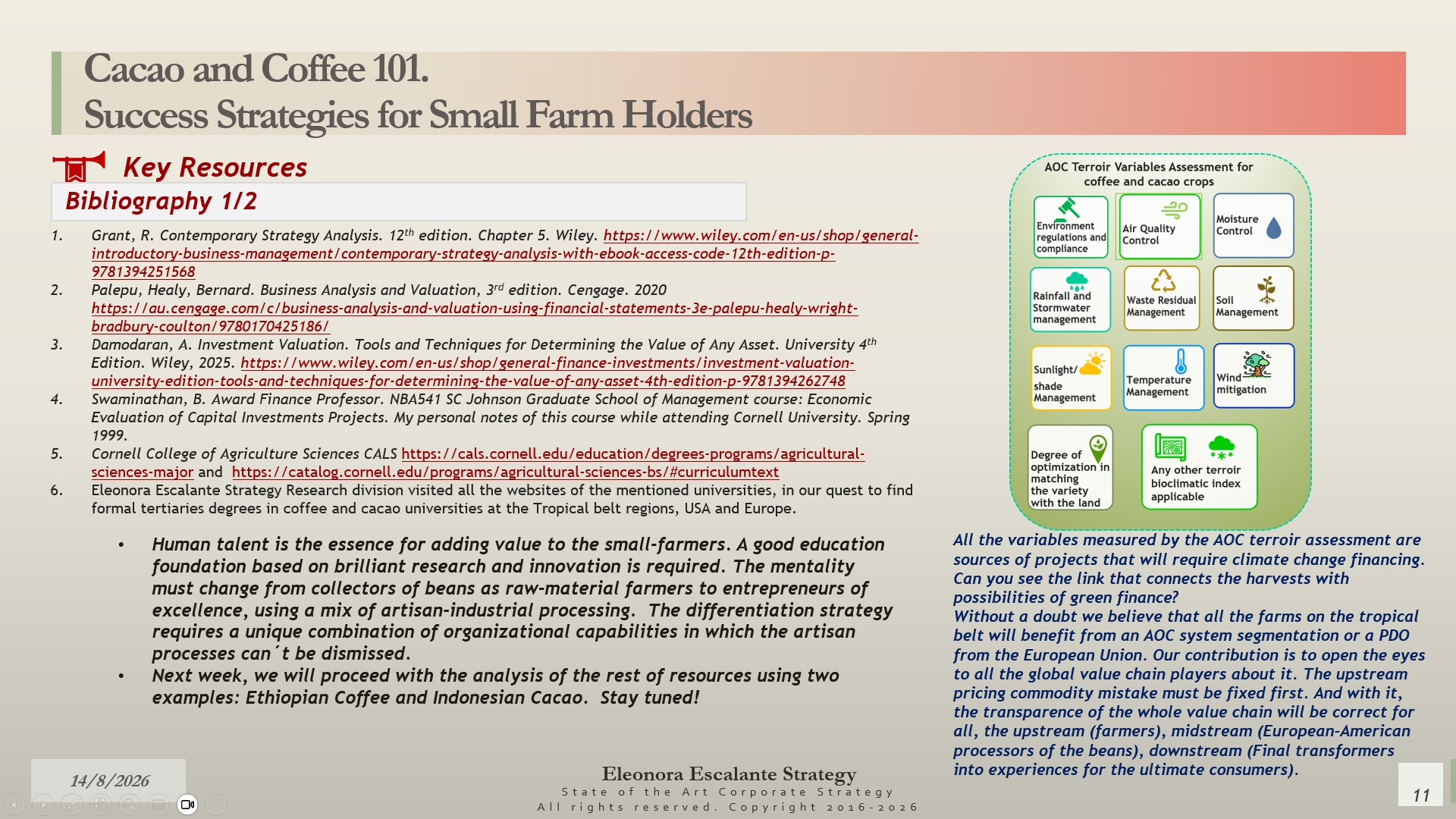
We kindly ask that you return next Monday, the 17th of August, to review our strategic reflections on this chapter.
We encourage our readers to familiarize themselves with our Friday master class by reviewing the slides over the weekend. We expect you to create ideas that are or are not strategic reflections. Every Monday, we upload our strategic inferences below. These will be discussed in the next paragraph. Only then will you be able to compare your own reflections with our introspection. We always give our students a couple of days to prepare well before our final reflection.
Strategic reflections on this episode.
These will be in the section below on Monday, the 17th of August of 2026.
Strategic Reflections. Cacao and Coffee 101. Success Strategies for Small Farm Holders. Episode 11. Key Resources Part 1. Human Capital.
The grooming of human talent.
Since ancient times, humans of different civilizations and cultures have been cherishing human talent. They have respected and primed the development of the brain’s competencies and capabilities, either through formal education under tutors or professors, or through apprenticeships, practice under the master’s supervision, and repetitive experience. Since the world has been known through registered vestiges, regardless of the territory or religious ideology, the most privileged thoughtful communities became the aspirational example, the role model to follow, not because of the huge, massive infrastructure and buildings, but because of the high quality of the brainiac leaders and their contributions (leadership defined under religious or civil frontrunners). The Mesopotamians contributed with the first system of writing and mathematics; the Greeks contributed with their democratic system, philosophy, and formal education. The Egyptians influenced the Mediterranean with more mathematical development and monumental engineering. The Roman engineers promoted the organized system of urban infrastructure and connectivity through roads and aqueducts. The ancient Chinese empires contributed with their discipline, iron casting, trade, and papermaking. The Arab-Islamic people furthered medical scientific methods, algebra, and trigonometry; while the Byzantine Empire helped to keep and preserve the ancient knowledge in repository libraries, serving as a bastion to convert Europe into Christianity. The Phoenicians were the masters of sailing, trading, and commerce. Their navigation capabilities were so elevated for their epoch that there is a connecting theory that suggests they were the true discoverers of America, and not Christopher Columbus. Finally, in the New World, we also find vast traces of human genius development in the Mayans’ astronomic calendar, the Aztecs’ innovative agriculture and networks of trade, and the Incas’ titanic organization of cities, farming irrigation, and connectivity.
The European conquerors of America, Africa, India, and Asia also prized mortal masterminds who could help them to expand their new territories, create inventions, fabricate art, and implement decision-making for their strategic direction. Human talent was rejoiced, praised, and honored by each and all the European entangled dynasties after Charlemagne. From the Habsburg-Castile Aragon Spanish Empire, to the Bourbon-Medici-Valois French dynasty, to the English-German Hanover immense expanded domains (with all the entangled German corollaries of the Welf-Wittelsbach, Hessen-Darmstadt, Brunswick Luneburg, Saxe-Coburg, Mecklenburg-Strelitz, Reuss, etc.), to the Prussian Hohenzollerns, to other German-Russian nobility ramifications, to the Italian Savoy clan linked to the Bourbons through the Farnese; every single kingdom during the last 12 centuries not only depended on the most talented, but also put special attention to train them. Substantial engagement was placed on seeking and hunting for brilliant people, no matter the social status of their cradle. The gift of thinking properly for good decision-making, producing wealth, or developing art and architecture was not insignificant. It was the most important priority for any kingdom´s heads or State superiors of the families mentioned above.
If grooming human talent has been the crucial rule of thumb in every single period of our past, it is clever to start this episode with human capital, the most prominent resource that will be required to transform the coffee and cacao industries at the upstream levels of the Tropical Belt Nations of the world.
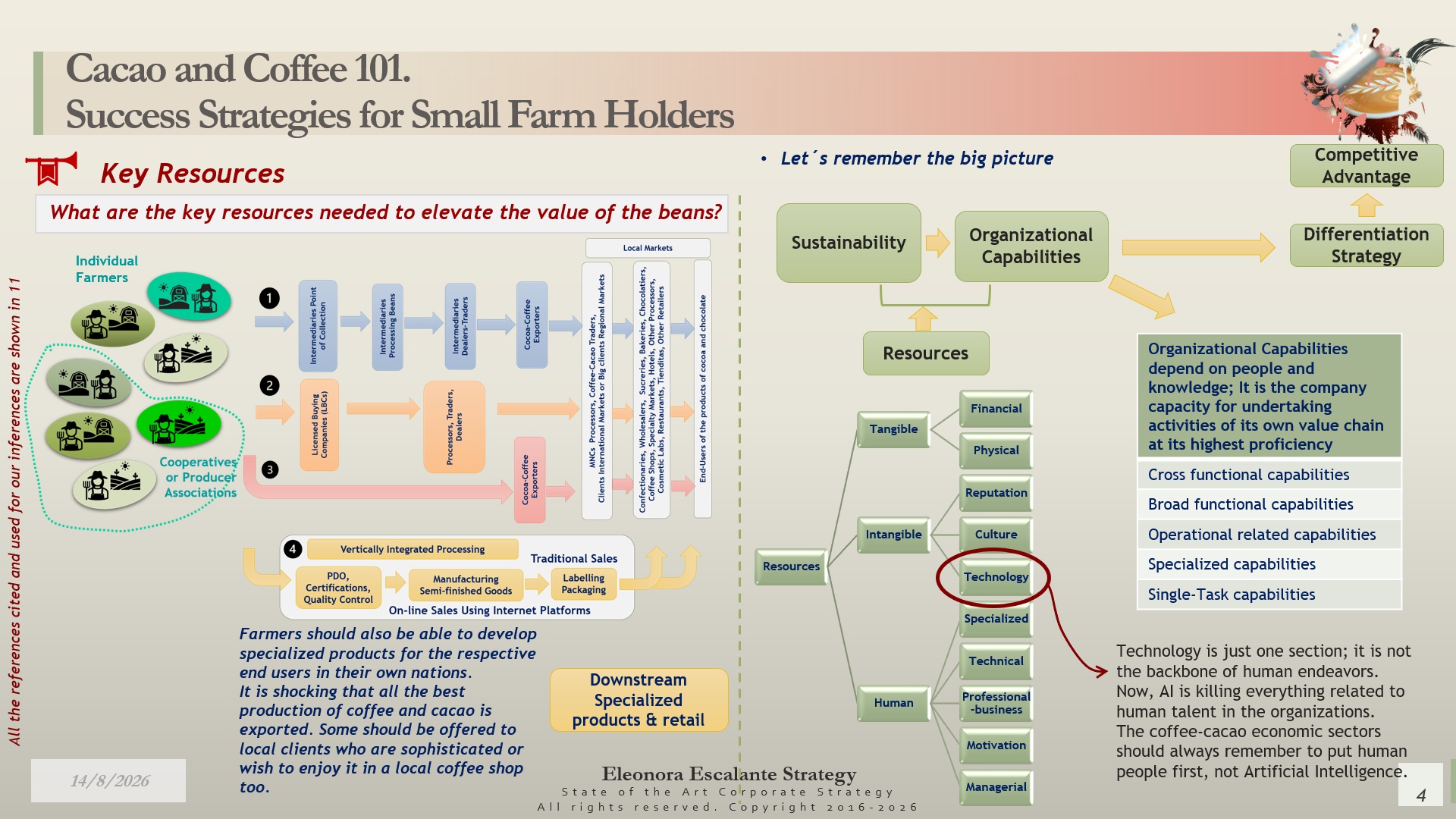
What are the key resources needed to elevate the value of the beans? Slides 4-5.
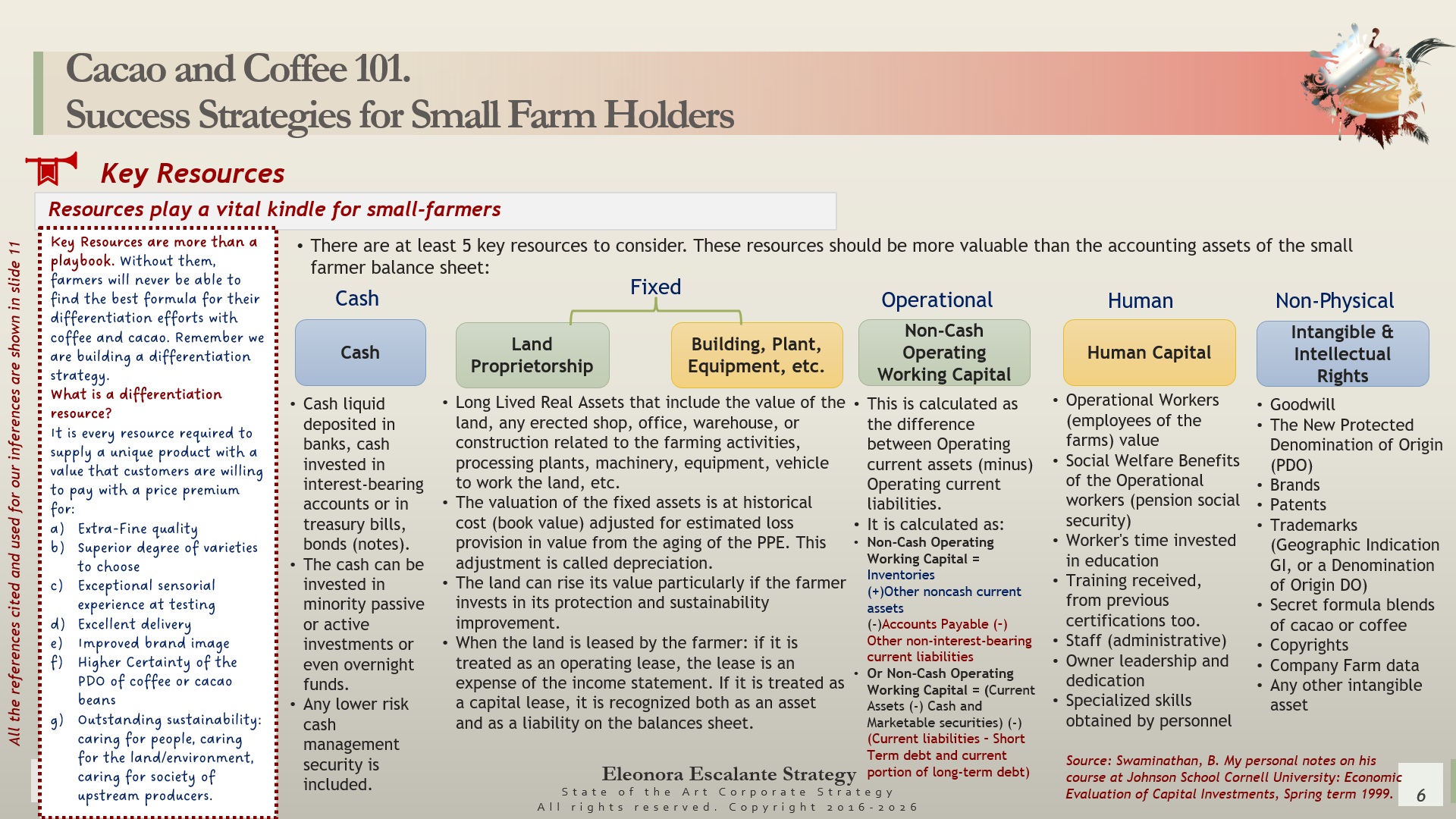
In the poor tropical nations, to build up a family business dedicated to agriculture of the special beverages and confectionery industries is more than an odyssey. It requires rewriting history. But this time with knowledge and diplomacy, not with wars or conflicts. We should remind all the means required for our economic ventures to raise the value of the coffee and cacao operations. The most popular classification of those resources is: (1) Tangible Resources; (2) Intangible Resources; and (3) Human Talent. Yet, it is easier to segment them into 5 groups (see slide 6):
- Cash (liquid money, savings deposits at banks, financial instruments, investment securities, treasury notes, bonds, bills, etc.). It is any marketable security that is easy to sell and immediately transform into cash.
- Fixed assets (land, properties, warehouse, office, animal barns, office, shops, windmills, coffee or cacao trees, processing plants, equipment, machinery, vehicles to work the land, etc.)
- Non-Cash Operating Working Capital: Operating current assets (minus) Operating current liabilities.
- Human Capital (the subject of this episode and the most important of all the resources)
- Intangible assets and intellectual rights: goodwill, the new Protected Denomination of Origin to be obtained under the EU grant, brands, patents, trademarks, secret formula blends, copyrights, company farm data, any other intangible assets.
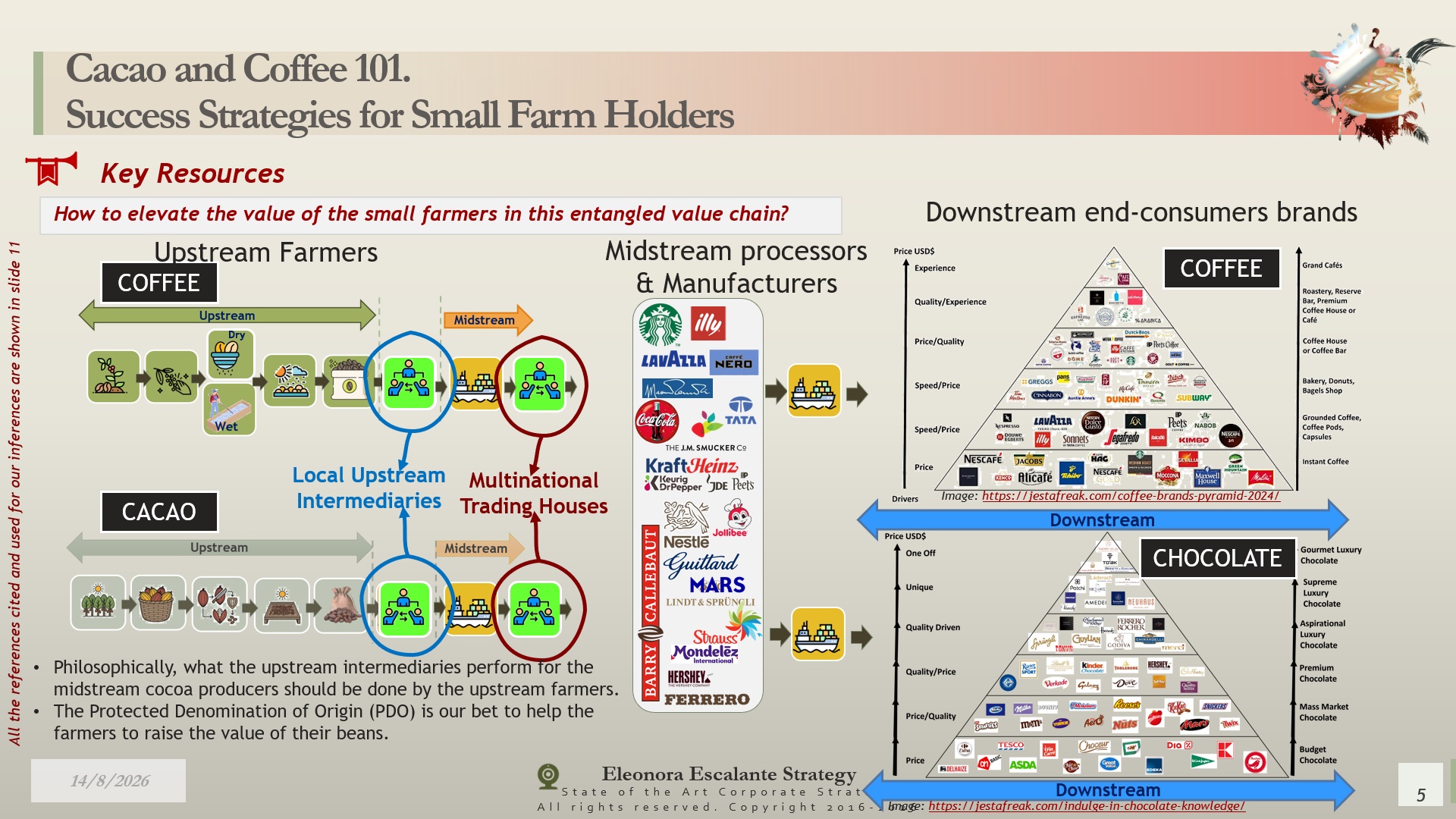
Each small farmer will be able to construct them beyond their current knowledge. Each farmer is able to build them if their governments help them with a correct industry ecosystem, policies, agricultural plans, good ethical banking, and with the help of international donors. The point is to change the mentality of the farmers. Because these farms belong to the upstream section in poor countries, whose main objective is to produce good-quality beans complying with the standards of the midstream intermediaries or buyers (local or multinational trading houses), then we might be tempted to consider that the upstream farmers’ work is simple, or it is easy to do. Even if we only take into consideration the bulk low-cost strategy of delivering green beans, or cocoa dry beans at the farm gate, there is a huge responsibility in the hands of the farmers. The flavor, aromas, and quality of the further manufactured products depend on the quality of those beans.
Farmers should feel empowered and secure to shift from producers of bulk beans to semi-manufactured products for exports, or downstream products-services (like local coffee shops or bakeries). Once the resources are gathered, little by little, each family should start to build their own organizational capabilities. This process is an art. It takes time, and it takes a lot of discernment to knit the special formula mix of products and services. At the moment, families are simply obtaining working capital to produce beans to sell them as soon as possible at the farm gate. When the mentality of the family shifts, then each family business should think about how to organize the resources and capabilities of their own value chain and decide how to integrate all their jobs to be done at the farm, with high integrity, at the highest proficiency. To do that, the organization of the farm is founded on people who perform tasks of different categories: operational, specialized, cross-functional, broad functional, etc.
Our strategic advice has been to elevate the value of the beans through a PDO license that could increase the revenues of the farmers. However, there is an imminent conflict of interest with the intermediaries and multinational trading houses, which have been profiting from the quality control and commissions from the midstream processors and manufacturers. In one phrase: the intermediaries are the bottleneck between the farmers and the processors in developed nations. Midstream buyers don´t see it as a bottleneck but as an agent needed in the value chain. How to solve this problem? Can you see the conflict of interest there?
Our earliest solution is through the PDO (Protected Denomination of Origin) tied with other resources, of which the most important is the human talent development of the small farmers.
Resources play a vital role for small farmers. Slides 7 to 10.
If we wish to elevate the value of the beans at the farm-gate, then we must stop thinking in terms of low-cost strategy. We need to start imagining our product offer in terms of a differentiation strategy. Every single small farmer head, once he or she obtains the PDO and starts the superior education process, will enter into a caterpillar season to become a butterfly. It won´t happen overnight. Speaking of human talent, it will require that each family decides who of the members or how many of them will be prepared to knock on the door of the university. University is mandatory for at least one member of the family. The more, the merrier. And education should be granted under special programs with economic support (scholarships). The online education given on the Internet is not enough. It can provide a methodical recipe, but without the theoretical “why” that cements the brainiac capacity, it will be hard for them to establish a visionary strategy for three generations ahead. It is in the university that people learn to improve, cultivate, think, and advance in their theoretical knowledge that later will be polished with practice. Without human capital development at the university level, any other certificate has been prepared with the purpose of maintaining the production of coffee and cacao at the upstream farm gate as a bulk commodity for exports.
Conversely, then, if we want to differentiate our coffee and cacao, people have to learn to differentiate themselves with a formal education degree that could help them to return to their farms (once their studies are completed) and raise their formula of success using a differentiation strategy. It is in the university that people learn about all the theoretical technical background that is used for agriculture, business, economics, soil health, sustainability, and business ethics. An education without business ethics is useless. More than ever, it is important to teach a course of ethics applied to the rest of the courses of each year. Only then do students learn the moral behind how to implement their ideas into action, without hurting anyone else in intent. It is in the university that morality about how to do integral business is scheduled within the curriculum of subjects, at every single year of the university program. Most of the issues that we are experiencing with the digital-technological Artificial Intelligence rollout are caused by non-ethical considerations of individuals who are leading this wave, not just in product-service design, but also while facing competition. Artificial Intelligence has come to create chaos, doubts, and an enormous theft of ideas from others. It is a cannibalization strategy. And believe it or not, those who have designed AI could be erudite in technological matters, but we are convinced that none of them received formal education in business ethics matters. A person may hold a Ph.D. or keep multiple university degrees, but without ethics at the core, they are mentally handicapped.
Why does university matter?
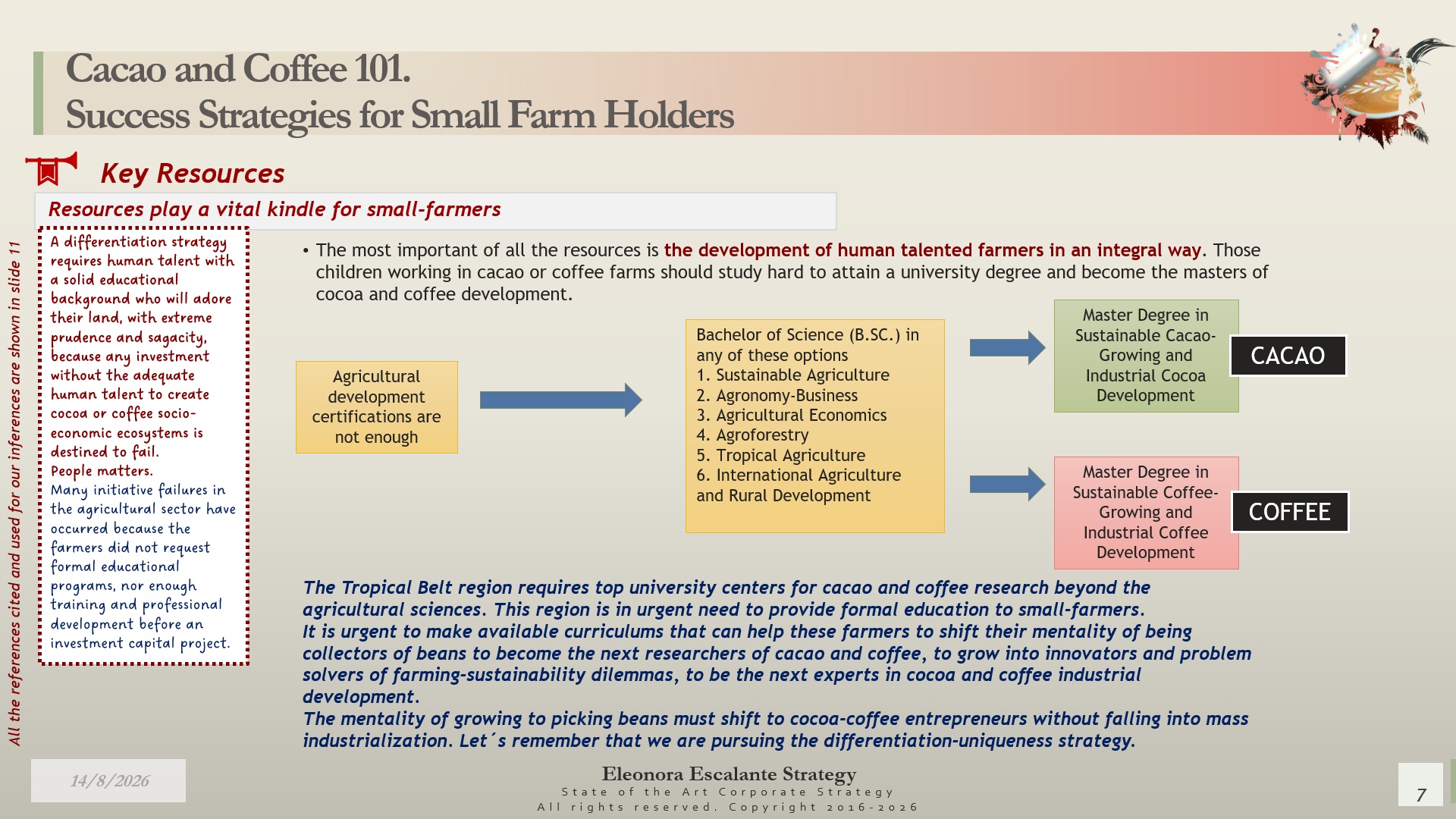
Here, each cacao or coffee family must encourage and plan that at least one of their teens should attend university and obtain a Bachelor of Science degree in agriculture with several options (according to the preference of the student). We have listed 7 options: Sustainable agriculture, agribusiness, agricultural economics, agroforestry, tropical agriculture, international agriculture and rural development, sustainable farming. This is the core foundation for at least one member of a small-holder farm family. Then, if possible, a master’s degree is also essential if the farm scheme or scope of business requires it. See slide 7.
The importance of a university degree in sustainable agriculture is beyond the title. The new graduates are required to be trained as entrepreneurs of their own destiny. Shifting the mentality of bulk bean growers to specialized cacao-coffee producers will only occur if they are knowledgeable enough to manage the farm and create an adequate coffee and cacao economic ecosystem with multiple variants of products under a differentiation strategy.
The Cornell CALS program. Slide 8.
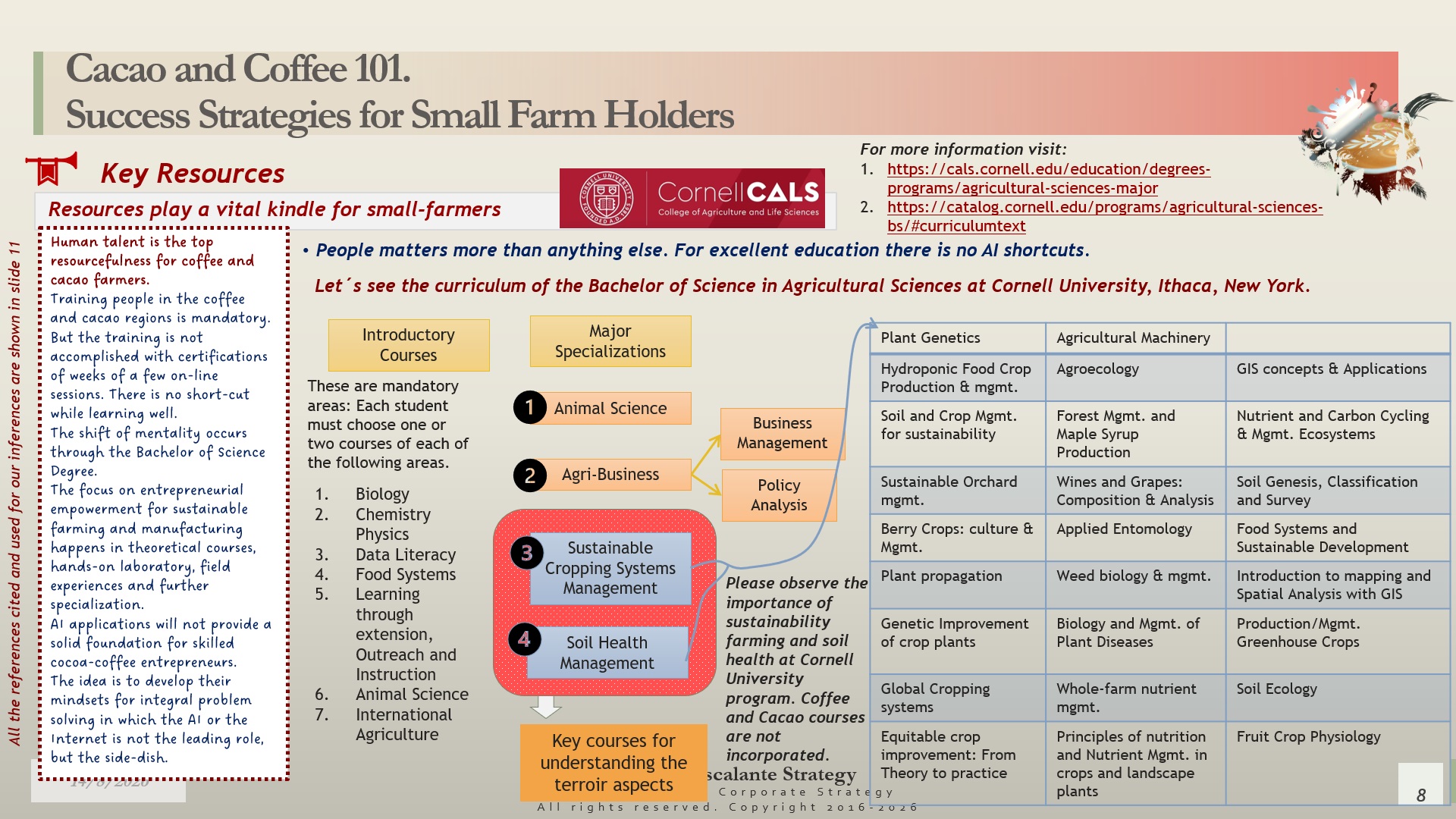
Let´s see the curriculum of the Bachelor of Science in Agricultural Sciences at Cornell University, Ithaca, New York. This program has been ranked as the number 1 in the United States of America for many decades. As a Cornellian alumnus, at the time of my integration into Cornell, the Agricultural Economics program was the “cream of the crop” in the world. Agriculture at Cornell has always been in the top 10 US rankings, beating 100 other universities in America. Globally, the Cornell CALS program is always situated between the top 20. It is an agriculture powerhouse of knowledge, combining Ivy League rigor with practical farming research. This is why we chose it for this episode as a reference point. However, there are other excellent universities with outstanding agricultural-economics-forestry-sustainability programs, such as Wageningen University in the Netherlands, Purdue University, University of California at Davis, Swedish University of Agricultural Sciences, ETH Zurich, Texas A&M, China Agricultural University, Norwegian University of Life Sciences, and Ghent University in Belgium.
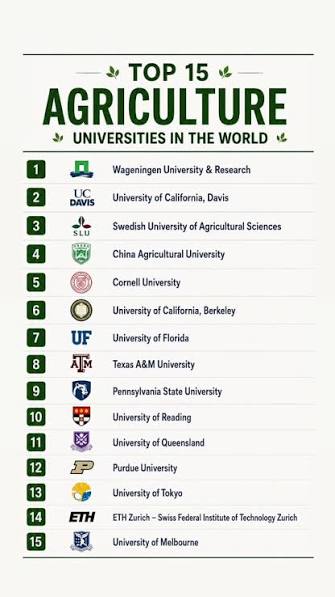
The importance of holding a top academic reference example in these matters helps us to understand the curriculum of courses, and the weight that is given to topics such as sustainable cropping systems, agri-business, forestry protection, and soil health management. Although Cornell doesn´t show specific courses in coffee and cacao, our strategy house found more non-tropical belt universities with cutting-edge research centers, programs, and master’s degrees with coffee and cacao specializations as ZHAW-Switzerland, Penn State University, University of Reading-UK, University of Nottingham-UK, University of Tokyo-Japan, University of Hawaii, and the University of Trieste and Udine-Ernesto Illy program in Italy.
Universities located in Tropical Belt nations with interests in coffee and cacao. Slide 9.
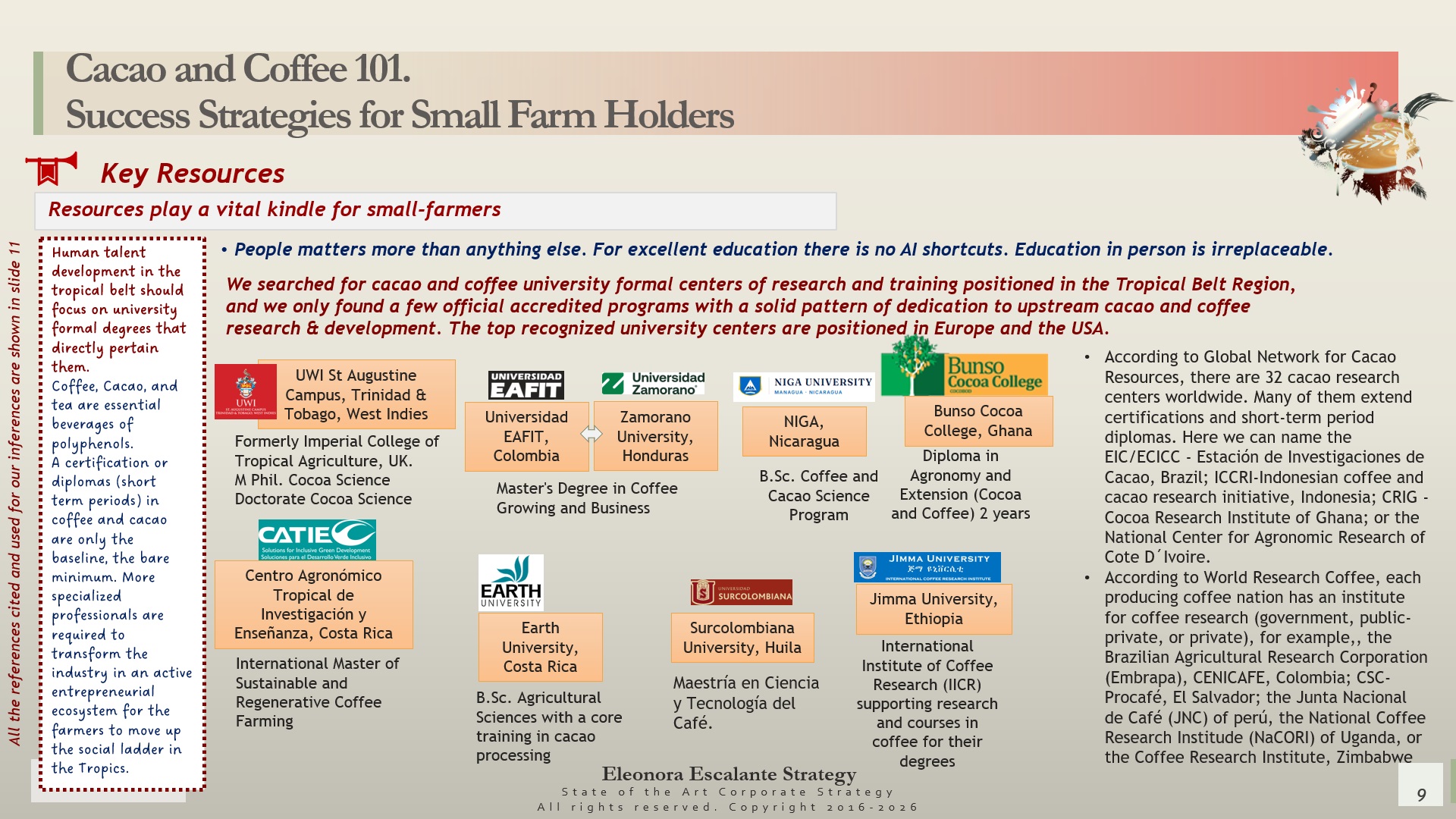
Sadly, only a few universities are offering specific programs with specialization in coffee and cacao. We can count them on the fingers of our hands. Slide 9 shows the most important ones located in Costa Rica, Colombia, Honduras, Trinidad & Tobago, Brazil, Ghana, and Ethiopia. There are courses about coffee or cacao offered at several agricultural programs, but these are general and do not cover all that is required for cacao or coffee planters to raise the value of their beans. Given the lack of tertiary education in coffee and cacao sustainable development, there exists a global network of cacao and coffee research centers, sponsored by the midstream and downstream main big players, and the sponsors of the International Coffee Organization (ICO) and the International Cocoa Organization (ICCO). It is important to remark that for agricultural excellence education, there are no AI shortcuts. Education in person, through learning by doing, is irreplaceable.
Future university education for coffee and cacao farmers. Slide 10.
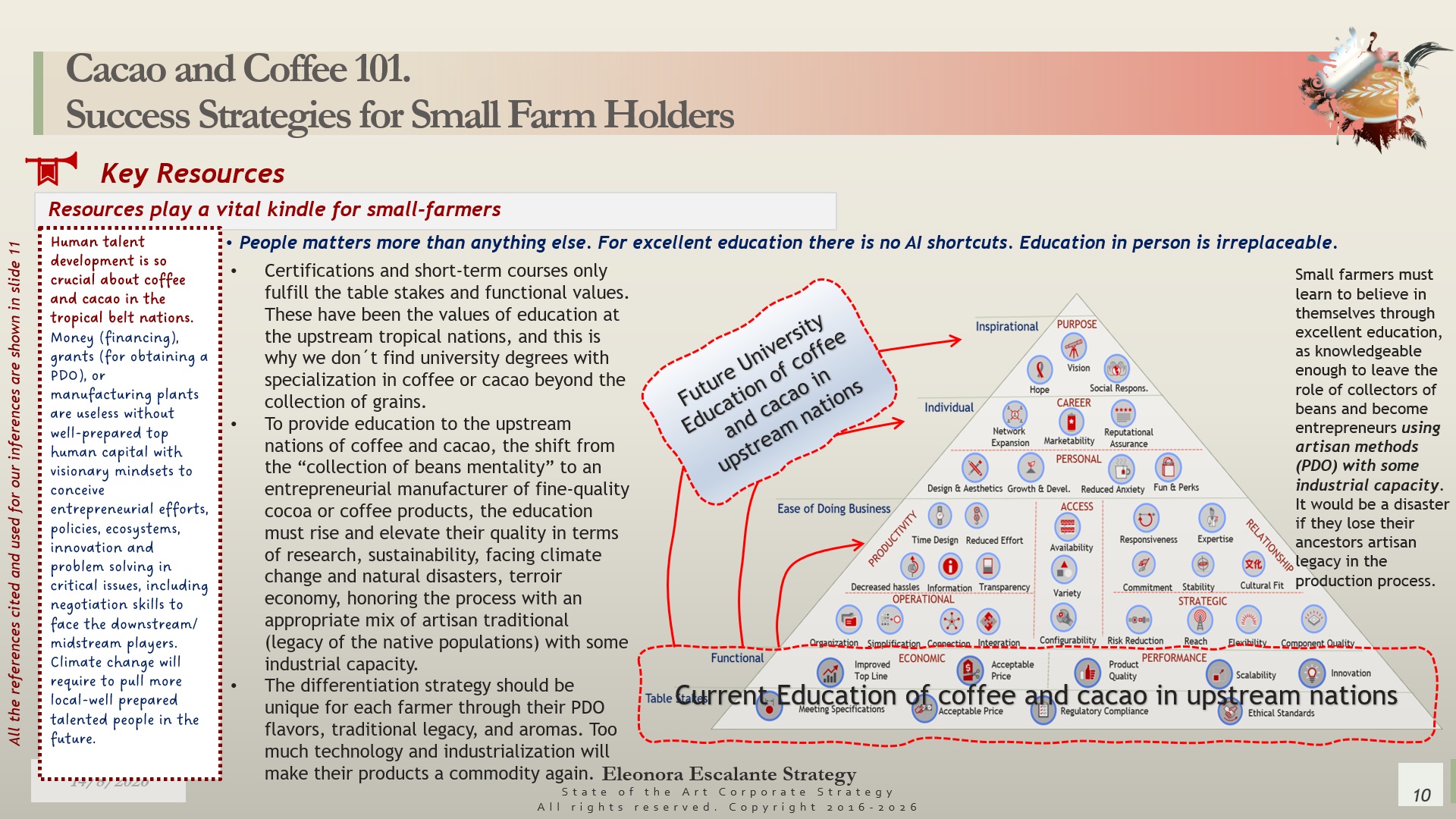
Human talent development to the highest possible level is crucial in coffee and cacao at the universities located in the tropical belt nations. Particularly, the agricultural programs offered at the main universities of Brazil, Vietnam, Colombia, Honduras, the rest of Central America, Uganda, and Indonesia are required to build majors in coffee and/or master’s degrees or doctorates. When we land on cacao, the universities of Côte d’Ivoire, Ghana, Ecuador, Cameroon, Nigeria, Malaysia, and Perú are also required to build programs about cacao, not just in farming, but also in processing and retailing. It is important to foster an equivalent curriculum of courses as if the students were at Cornell, Purdue, the University of California-Davis, ETH Zurich, the University of Massachusetts-Amherst, Swedish and Norwegian Universities of Agricultural Sciences, etc. A design educational project to raise the quality of existing university education in coffee and cacao is not an option; it is mandatory. Our strategy house recommends that professors from these top European and American universities could initiate and build exchange programs, in which they could travel to each of the tropical belt nations, train the professors, and help them to build the curricula of courses as similar as theirs. The exchange of professors, either moving to the coffee or cacao nation, and the other way around, tropical nation professors going into a year exchange to the top remarkable universities in Europe, China, or America will help enormously. Additionally, by merit, the top students could go to continue their graduate studies at these universities, with grants or fellowships that could help them afford their education abroad, with the commitment to return to their state of origin after completion of their studies.
The centers of research located in each of the tropical nations hold limited budgets and many times lack the correct ecosystem to impact beyond farming. It is hard to be located in the tropics; not all the tropical belt nations’ students have access to CIRAD-France, or the Coffee Excellence Center of Switzerland, or the University of Trieste-Ernesto Illy chocolate master program. Most of the research that is done in the tropical belt nations pertains to the upstream needs and wants. Only.
In Brazil, two universities have been training agricultural professionals with remarkably solid foundations: The University of São Paulo and the State University of Campinas (UNICAMP). Neither of them offers specific majors or master’s in coffee specialization, but their repository of academic papers about coffee research is vast and ample. The Instituto Agronômico de Campinas (IAC) is the backbone of Brazil’s coffee genetic experiments and technical practices, with more than 140 years of its establishment. Additionally, Central America, Indonesia, Ethiopia, Vietnam, Ghana, and Côte d’Ivoire have also been working on improving the variety mix of coffee and cacao species. Moreover, it is interesting to observe that around 10 Chinese universities appear in the top 25 ranking of agricultural sciences of the US News Report 2025.
Closing words. Including ethics education in research, practices, and agri-business training at the tropical belt universities for coffee and cacao students.
Our company is committed to demonstrating that we do not use artificial intelligence in any way while teaching and publishing. Artificial intelligence blocks cerebral capacities and makes research superfluous, an abandoned negligence. People using Generative AI to write or discover patterns are losing their foundational background and are cheating, stealing intellectual property, and hurting academia. To reinforce this affirmation is the product of years of putting ethics at the core of our priorities as a strategy house. This is a perfect example of building core moral values at the backbone of our activities. For us, it is more important to do our job well, slowly if you wish to call it, but with our traditional methods. We can´t hurt the academic world by using AI; if we use it, we dishonor our profession and our standing name that has taken more than two decades to build. In the case of cacao and coffee farmers attending university programs (either locally or abroad), it is essential to pair ethical tracks applied to each of the courses of the curricula that students receive per year. An outstanding tertiary superior education without ethics at the core is useless. Why? Because without ethics, research can be used to harm (when scientific discoveries are used to pursue monetary gains while affecting the integral well-being of people and the environment). Food is related to agricultural sciences. University programs in agriculture and research-related programs are so important for human survival and well-being. The inclusion of coffee and cacao programs at the university should be here to help, not to harm humanity and the people working in each segment of the global supply chains. The shift of mentality occurs at the universities, and we truly expect that each tropical nation on earth could offer top educational programs to all the small farmers who are reading these publications.
Announcement. Our next episode is about the rest of “key resources” for small farmers; this time we will illustrate the subject using what we promised last week: Ethiopian coffee and Indonesian Cacao. You will have to wait to see these examples until next week. There is so much to explain about them.
Musical Section.
This saga is committed to raising the traditional musical instruments and their respective musicians over the digitally produced sounds. This saga is dedicated to the chamber orchestras.
Today, we have chosen the Park Avenue Chamber Symphony under the direction of David Bernard. The piece is played at the Special Music School High School Concerto Competition Winners’ Concert 2024, at Merlin Hall, Kaufmann Music Center, New York. The Kaufman Music Center’s Special Music School is the New York’s only K-12 public school prioritizing an intensive, immersive, and musically focused education without financial barriers.
The interpretation is: W.A. MOZART – Symphony No. 25 in G Minor, K. 183
Enjoy!
Thank you for reading http://www.eleonoraescalantestrategy.com. It is a privilege to learn. Blessings.

Sources of reference and bibliography utilized for today´s inferences. The bibliography is listed on the last slide of the reference reading material. Click the respective URL to trace them.
Bibliography in this post: This will be added accordingly with the strategic reflections.
Disclaimer: Eleonora Escalante paints Illustrations in Watercolor. Other types of illustrations or videos (which are not mine) are used for educational purposes ONLY. All are used as Illustrative and non-commercial images. Utilized only informatively for the public good. Unless otherwise stated, I do not own any lovely photos or images.
 Eleonora Escalante Strategy Strategic Reflections Think Tank